The Best Studio Monitors in 2026, Ranked by the Engineers Who Mix on Them
Yamaha, Adam Audio, Genelec, Neumann, Focal. Gavler's community ranks the reference monitors worth buying — from $179 starters to $1,999 midfields.
The 2026 studio-monitor market has settled into a clear shape. The under-$500 tier is a four-way race between Yamaha, KRK, JBL, and PreSonus that has not meaningfully changed in two product cycles. The $500-to-$1,000 mid-tier is where the most refinement has happened — Adam Audio's A7V brought DSP room correction into the price range, Neumann's KH 120 II added Mathematically Modeled Dispersion to a reference-class 5.25-inch box, and Focal's Slatefiber cone in the Alpha 65 Evo brought genuine French monitor engineering down from the Solo series. Above $1,000, Genelec still owns the professional consensus, with the 8040B remaining the monitor that mastering engineers, broadcast facilities, and Grammy-winning bedroom producers all reach for when budget allows.
May is one of the better months on the calendar to buy. The 2026 refresh wave is fully shipped, graduation-season and tax-return retail sales are active at Sweetwater and B&H, and the prior-generation flagships from the late-2025 cycle are at their cheapest before fall speculation begins. Gavler's community has ranked ten of them by lived experience — pick the monitor you would actually put in your next control room rebuild, not the one with the most marketing budget. The picks below are pulled from the live Best Studio Monitors list.
How the Rankings Work
One vote per person on the Best Studio Monitors list. Pick the monitor you would put on stands tomorrow morning before the first mix session — the one you trust on the master bus and tolerate on a four-hour edit pass. Switched monitors mid-project because of a room move, a translation problem, or an upgrade path? Move your vote. The result is a ranking built on what real engineers actually mix on, not what a brand paid a YouTuber to demo on a Tuesday.
The Top Picks
Yamaha HS8 — The Modern Reference Standard
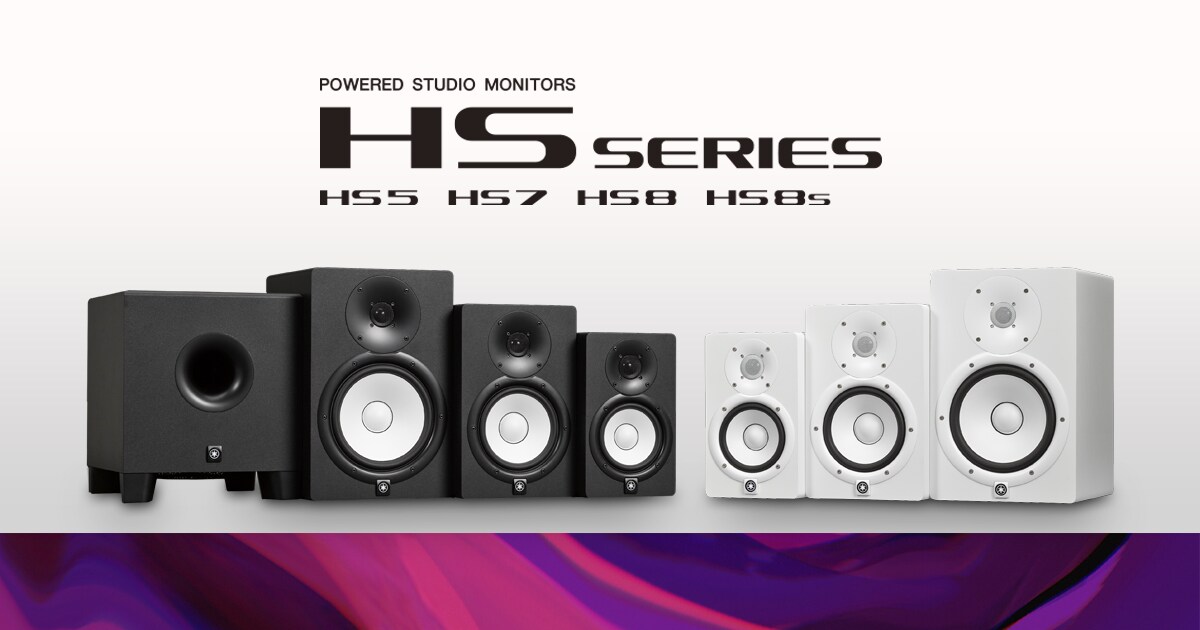
Yamaha HS8
Yamaha's HS8 delivers a flat, uncolored frequency response that reveals every detail in your mix — for better or worse.
Amazon affiliate · price subject to change
The HS8 has earned a reputation that earlier-generation Yamaha monitors only hinted at — it is the modern-day NS-10. The 8-inch white polypropylene woofer and 1-inch dome tweeter run from a bi-amplified design delivering 75 W to the LF and 45 W to the HF, producing 120 W of combined clean output that fills mid-sized control rooms without breaking a sweat. The frequency response extends from 38 Hz to 30 kHz at -10 dB, which means meaningful low-end decisions are possible without a subwoofer in most rooms. The rear-panel room control and high-trim switches compensate for boundary proximity and acoustic anomalies without requiring external DSP.
What sets the HS8 apart from competitors in this price range is the commitment to flat. There is no hyped low end to flatter your kicks, no scooped midrange to make vocals easier to mix, and no sparkly top end to add false air. Sound On Sound has called the HS8 a translation reference for under $500, and the cabinet's industrial 10.2 kg construction kills internal resonance in a way that cheaper monitors do not. The honest caveat: the HS8 is fatiguing for long casual listening sessions, which is by design. Buy these as tools, not as hi-fi speakers. 38 community votes and a 9.7 score reflect three product generations of accumulated trust.
Adam Audio A7V — The Ribbon-Tweeter DSP Pick
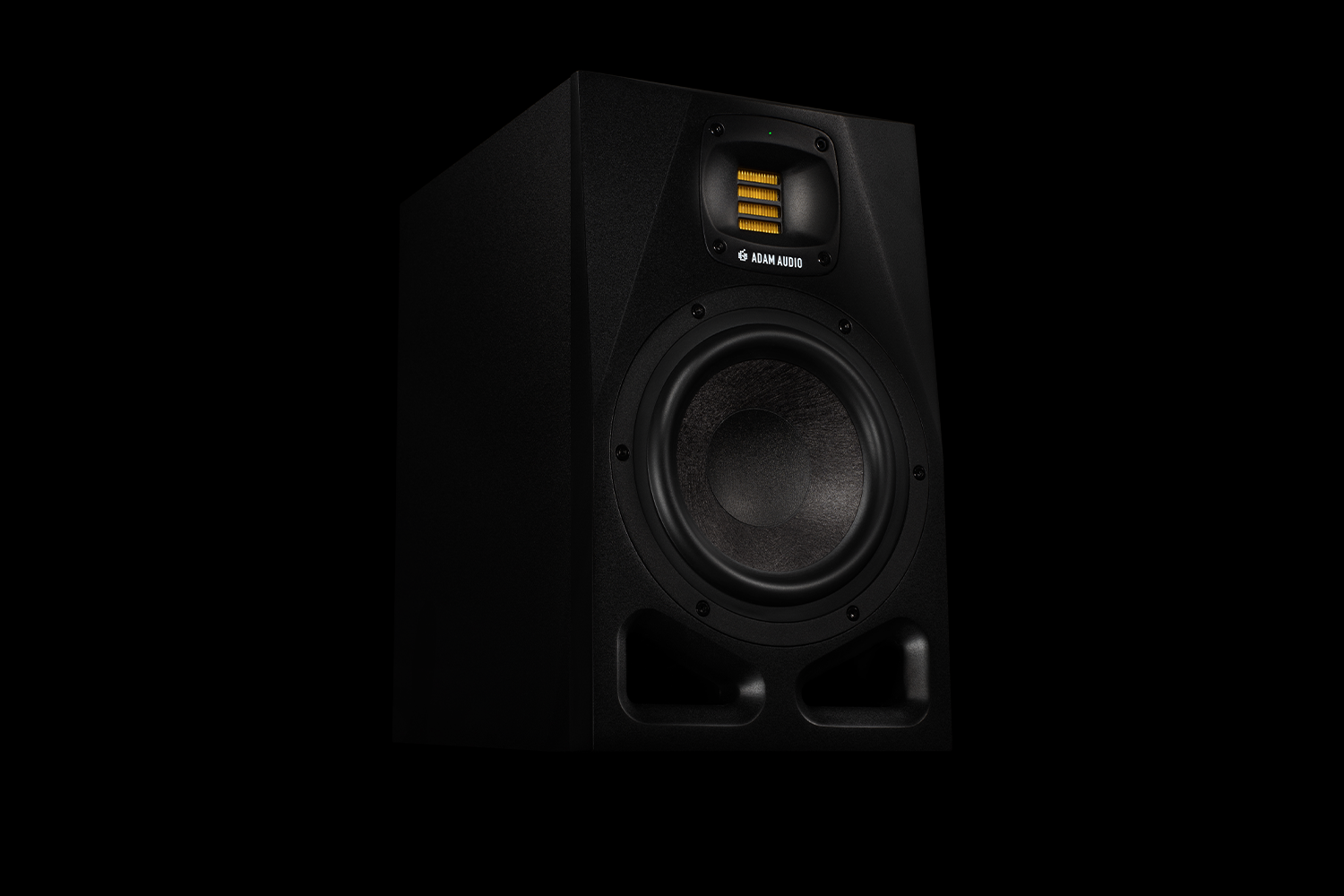
Adam Audio A7V
Adam's X-ART tweeter reveals transient detail other monitors miss, while onboard DSP tames difficult rooms.
Amazon affiliate · price subject to change
The A7V is the culmination of three decades of Adam Audio's X-ART folded-ribbon tweeter work. The proprietary tweeter moves air roughly four times faster than a conventional dome, producing transient detail and high-frequency extension that is immediately obvious on first listen — cymbal shimmer, vocal sibilance, reverb tails, and room ambience all gain a dimensionality that dome tweeters cannot replicate. The 7-inch carbon-and-glass-fiber composite woofer pairs with a substantial onboard DSP engine that integrates with Sonarworks SoundID Reference for measurement-based room correction. That feature alone justifies a meaningful chunk of the price for engineers working in untreated rooms.
The 100 W Class-D amp on the LF and 50 W on the HF deliver real headroom for control rooms up to 30 square meters, the frequency response reaches down to 39 Hz at -6 dB, and the HPS waveguide creates a wide sweet spot that does not collapse when you shift listening position. The honest framing, per multiple gear-forum threads: the X-ART can sound slightly bright in untreated rooms, and the DSP correction is genuinely necessary for that — not a marketing add-on. For engineers who want top-end clarity without external hardware, the A7V at $749 each is the most refined option in the mid-tier. 34 votes and a 9.5 score.
Genelec 8040B — The Professional Consensus
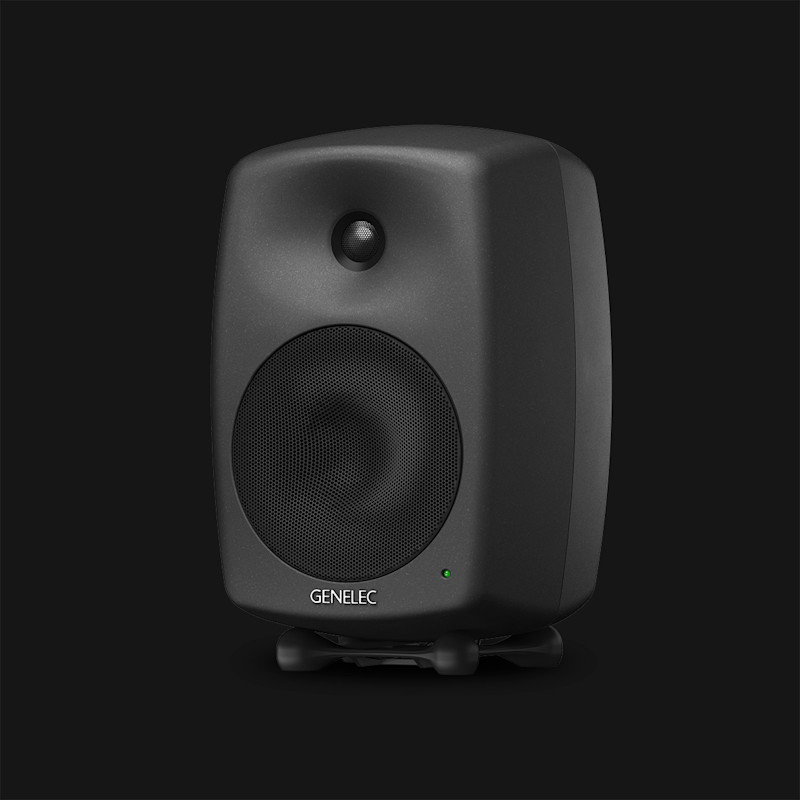
Genelec 8040B
Genelec's iconic aluminum enclosure eliminates cabinet resonance, delivering reference midrange clarity for critical listening.
Amazon affiliate · price subject to change
The 8040B is the monitor mastering engineers, broadcast facilities, and Grammy-winning producers all reach for when budget allows. The 6.5-inch woofer extends down to 41 Hz, the 0.75-inch metal-dome tweeter sits inside Genelec's Directivity Control Waveguide for flat on- and off-axis response, and the Minimum Diffraction Enclosure delivers a sound stage with pinpoint imaging that none of the cheaper monitors on this list can match. The cabinet construction is die-cast aluminum rather than MDF, which kills internal resonance more thoroughly than any wood-cabinet competitor in the price range. 90 W to the LF and 90 W to the HF produce up to 105 dB SPL — enough headroom for any project-studio mixing scenario short of full orchestral recording.
The 8040B is documented in "Billie Eilish: The World's a Little Blurry" as the monitor that Eilish and Finneas mix on, and the same model appears in studios from Capitol Records to BBC Radio control rooms. Iso-Pod stands decouple cabinet vibration from the desk, and Intelligent Signal Sensing puts the monitor into low-power standby after a few minutes without a signal. The honest caveat: the 8040B is unforgiving on untreated rooms — these monitors expose acoustic problems other speakers politely hide. For engineers who have treated their room or are willing to, this is the cheapest credible professional-tier answer. 30 votes and a 9.4 score.
KRK Rokit 7 G5 — The DSP-Corrected Value Pick
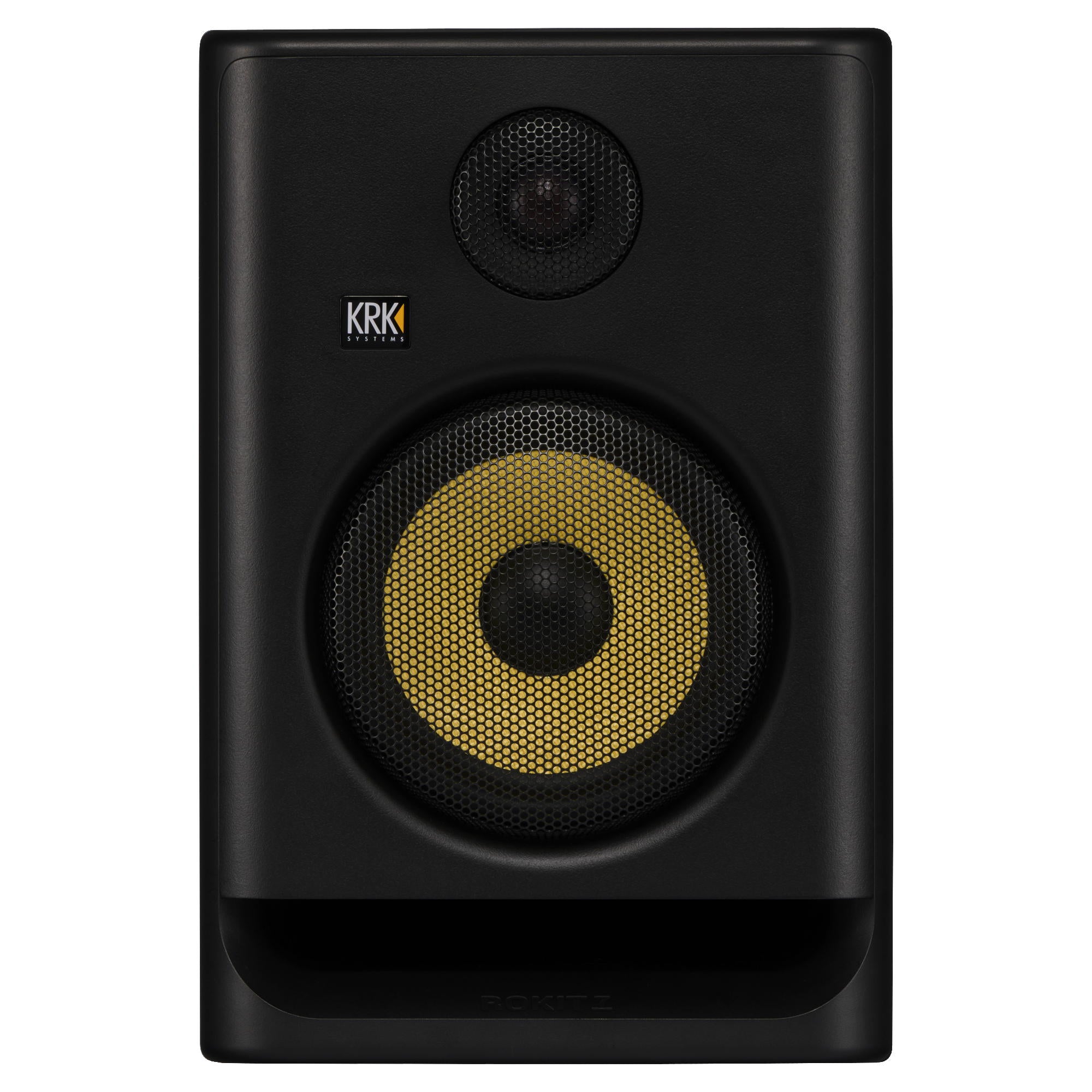
KRK Rokit 7 G5
The fifth-generation Rokit brings app-based room correction and a warm voicing that makes long mixing sessions comfortable.
Amazon affiliate · price subject to change
KRK's Rokit line has been a fixture in home studios for two decades, and the fifth-generation G5 is the most refined version yet. The 7-inch glass-aramid composite woofer and matching tweeter run from a 145 W Class-D amplifier with onboard DSP that pairs with the free KRK app for visual EQ adjustment, room correction presets, and a built-in spectrum analyzer that helps users dial in the response for their actual listening position. The front-firing port is a real practical advantage in small rooms — these can sit closer to a wall than the rear-ported HS8 without bass buildup.
The voicing leans slightly warm compared to the relentlessly flat Yamaha, which makes long mixing sessions easier on the ears at the cost of some translation accuracy. For producers working in EDM, hip-hop, trap, and bass-heavy genres where low-end emphasis matters more than reference-grade neutrality, the Rokit's coloration is a feature rather than a bug. For singer-songwriter, classical, and broadcast work where flat response is mandatory, the HS8 is the better pick. At $349 each the Rokit 7 G5 undercuts the HS8 by $100 with more onboard DSP and a wider, more forgiving sweet spot. 28 votes and a 9.2 score.
The Performance Tier
Focal Alpha 65 Evo — The French Engineering Pick
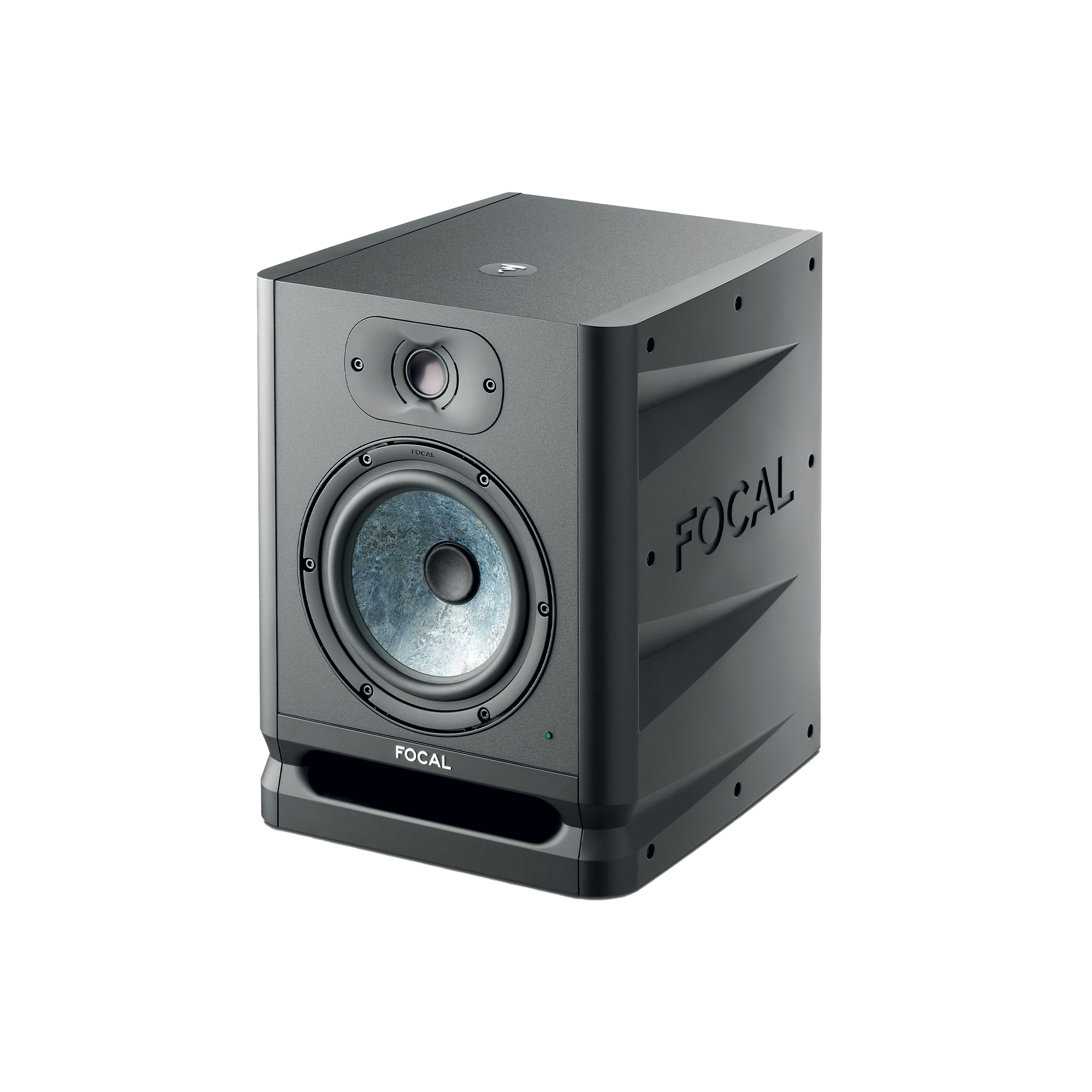
Focal Alpha 65 Evo
Focal's Slatefiber cone and aluminum-magnesium tweeter deliver a natural, detailed midrange that excels at vocal-heavy mixes.
Amazon affiliate · price subject to change
Focal brought the Slatefiber recycled-carbon woofer cone down from the Solo and Trio series into the Alpha Evo range, and the resulting monitor punches well above its price. Tape Op called the 65 Evo "a genuinely effective studio monitor, revealing recording maladies as well as successes," Sound On Sound rated the low-end work as noticeably tighter than the original Alpha line, and MusicRadar consistently flagged the bright, open top end and excellent spatial separation. The aluminum tweeter and 6.5-inch Slatefiber woofer run from 80 W of Class-D bi-amplification, the frequency response extends down to 40 Hz, and rear-panel XLR plus RCA plus TRS inputs give more connection flexibility than most monitors in this tier.
The honest framing: the Alpha 65 Evo is not as forward in the midrange as the Yamaha HS8 or the Adam A7V, which means vocal-heavy production benefits from cross-referencing on a brighter monitor. For producers working with acoustic instruments, jazz, and electronic music where space and separation matter more than midrange forwardness, this is the most distinctive monitor in the mid-tier. At $549 each the Alpha 65 Evo sits between the KRK Rokit 7 G5 and the Adam A7V, and the Slatefiber low-end work is the differentiator that justifies the spend over the Rokit. 32 votes and a 9.1 score.
JBL 308P MkII — The Sweet-Spot-Width Pick
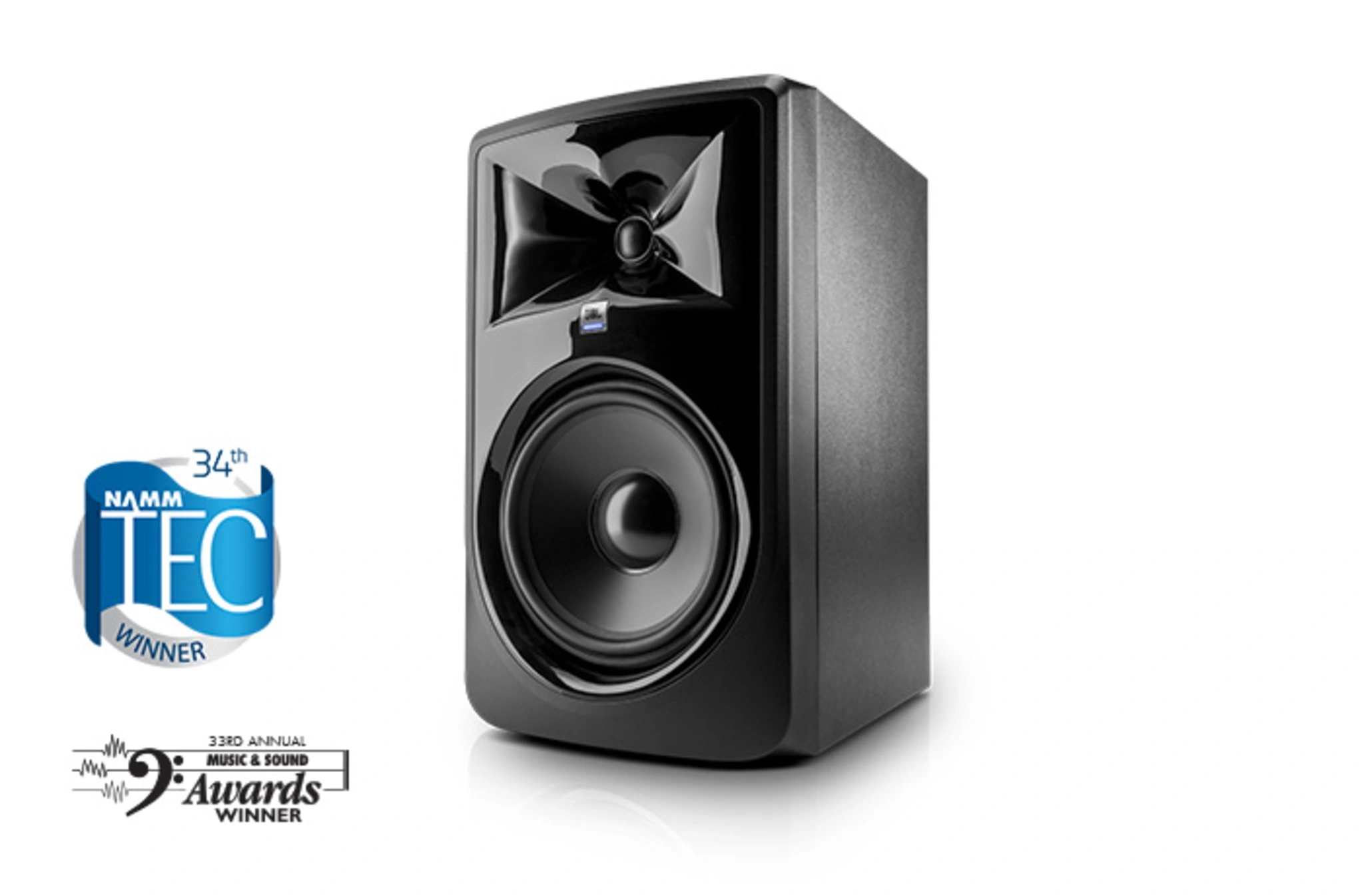
JBL 308P MkII
JBL's Image Control Waveguide creates an expansive listening area, making the 308P MkII forgiving of imperfect positioning.
Amazon affiliate · price subject to change
JBL's patented Image Control Waveguide is the technical headline on the 308P MkII — it creates an ultra-wide sweet spot that lets engineers move around the mix position without losing stereo accuracy. For producers who track and mix in the same room and need to step away from the listening position frequently, this is a real workflow advantage that the more focused-imaging monitors on this list do not provide. The 8-inch woofer and 1-inch tweeter run from 112 W of bi-amplified Class-D power, the frequency response reaches down to 45 Hz, and the boundary EQ compensation switches on the rear panel address desk and wall reflections without external DSP.
The honest caveat: the 308P MkII has a slight emphasis on the low end that makes it less analytical than the Yamaha HS8. The 308P sounds rich and full out of the box in a way that producers working on club-ready dance music will love and engineers working on detail-critical broadcast or mastering will need to compensate for. For DJ-producers and home studios where the listening position changes regularly, this is the rational pick at $299 each — and one of the best monitors-per-dollar on this list. 26 votes and a 9.0 score.
The Specialist Tier
Neumann KH 120 II — The Reference-Class Detail Pick
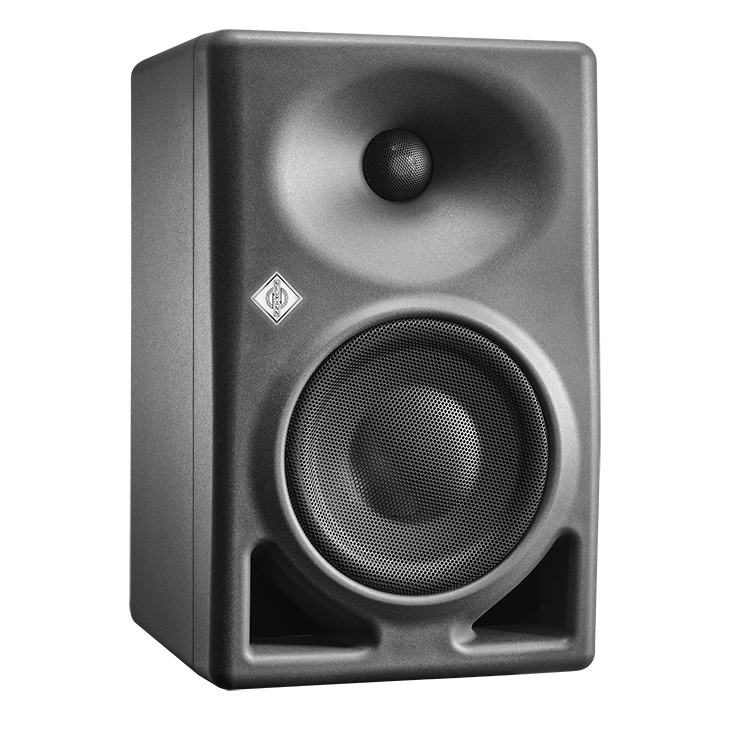
Neumann KH 120 II
Mathematically optimized waveguide and DSP alignment deliver reference-grade accuracy in a compact nearfield monitor.
Amazon affiliate · price subject to change
Neumann's microphone heritage shows up in the KH 120 II's mathematically-modeled approach to dispersion. The Mathematically Modeled Dispersion waveguide is engineered for accurate sound distribution both horizontally and vertically, which means the imaging holds together off-axis in a way no other monitor in this price range achieves. The onboard DSP supports alignment-free placement and integrates with Neumann's MA 1 automatic monitor alignment system for measurement-based room correction. The 5.25-inch woofer and 1-inch tweeter run from amplification that delivers the kind of low-distortion output mastering engineers expect from monitors costing twice as much.
The KH 120 II is one of the most honest-sounding monitors in its price range — every detail of the mix is exposed, every room mode is revealed, every reflection is heard. The honest framing: this is a precision tool, and it does not tolerate poor acoustics. The 5.25-inch woofer also means low-end extension stops around 50 Hz, so bass-heavy production benefits from a paired subwoofer or a larger monitor like the HS8 for cross-referencing. At $799 each this is the best detail-resolution-per-dollar on the list, ranked 7th because the smaller woofer and the room-treatment demand keep it from being the right monitor for every home studio. 24 votes and an 8.8 score.
PreSonus Eris E5 XT — The Untreated-Room Budget Pick
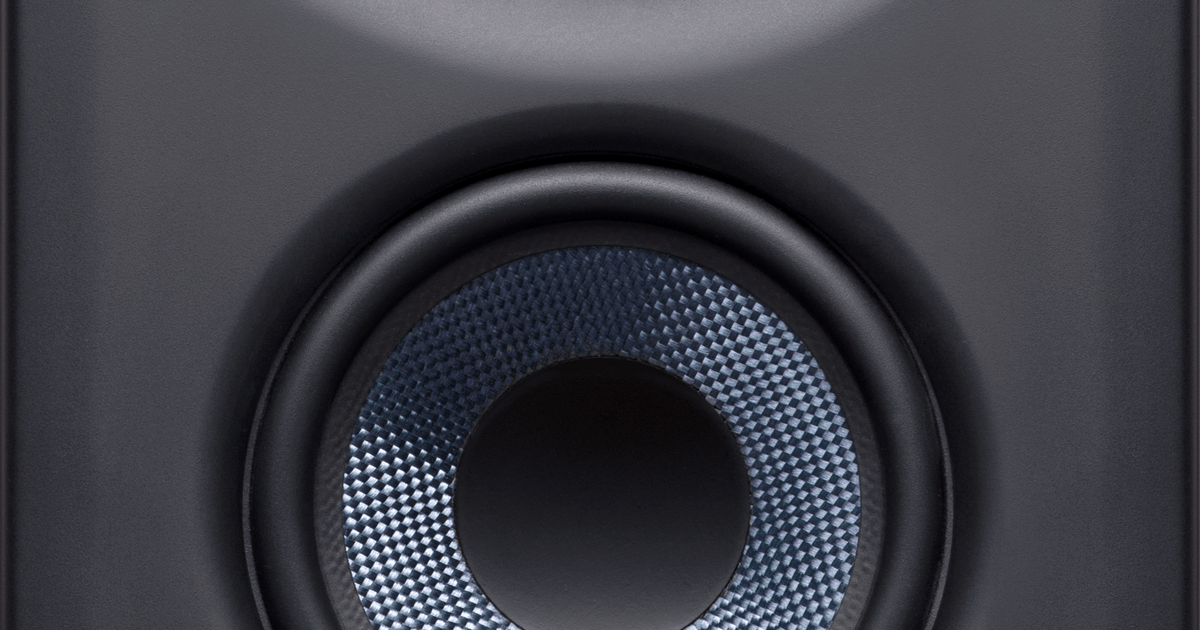
PreSonus Eris E5 XT
The EBM waveguide and rear-panel tuning controls let you adapt the Eris E5 XT to any room for under $200.
Amazon affiliate · price subject to change
The Eris E5 XT delivers more on-monitor tuning controls than any other monitor on this list — three low-cut options at flat, 80 Hz, and 100 Hz, three acoustic-space settings for free-standing, near-wall, and corner placement, plus mid and high trim knobs that adjust ±6 dB. The 5-inch woven-composite woofer and 1.25-inch silk-dome tweeter run from 80 W of Class-AB amplification through the EBM waveguide for controlled dispersion. The result is a monitor that genuinely compensates for the rooms that real home-studio buyers actually have — bedrooms, corner desks, and shared-purpose rooms without treatment.
The honest framing: the Eris E5 XT does not measure as flat as the Kali LP-6 V2 in a treated room, but most buyers in this price range do not have a treated room. The on-monitor tuning lets the Eris adapt to bad acoustics in a way that the Kali cannot. For first-time monitor buyers in an apartment bedroom or a shared workspace, the Eris is the more forgiving spend. For producers committed to room treatment or working in a purpose-built control room, the Kali is the better measured monitor. At $179 each the Eris is the cheapest entry on this list, and the only monitor we would recommend without reservations to a buyer in an untreated room. 22 votes and an 8.6 score.
Kali Audio LP-6 V2 — The Measured-Performance Budget Pick
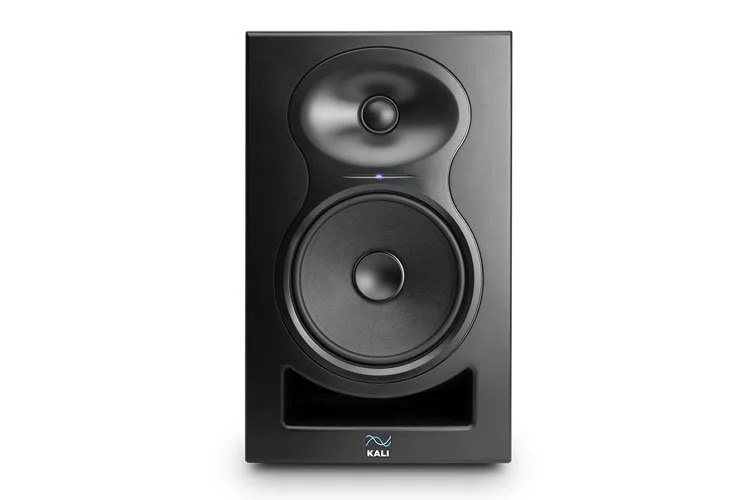
Kali Audio LP-6 V2
Kali's innovative waveguide and practical boundary compensation make the LP-6 V2 one of the most acoustically adaptable budget monitors available.
Amazon affiliate · price subject to change
Kali Audio's 3D-printed waveguide and dual-layer voice coil deliver measured frequency response accuracy that consistently outperforms competitors at twice the price. Audio Science Review consistently rates the LP-6 V2 among the most acoustically accurate monitors under $500, the boundary-EQ dipswitches on the back panel provide six placement-adjustment configurations, and the high excursion of the dual-layer voice coil delivers low-frequency extension that is unusual for a 6.5-inch driver at this price. The result is a monitor that, in a treated room, delivers reference-class performance for $199.
The honest caveat: the LP-6 V2 has no on-monitor EQ beyond the boundary dipswitches, which means it does not adapt to a bad room the way the PreSonus Eris does. If you can treat your listening position with foam panels, bass traps, and proper isolation, the Kali will outperform monitors costing two or three times more. If you cannot treat your room, the Eris is the more forgiving choice. Kali Audio is one of the most respected new-generation monitor brands of the last decade, and the LP-6 V2 is the model that established that reputation. 20 votes and an 8.4 score.
Dynaudio LYD 48 — The Midfield Reference Pick
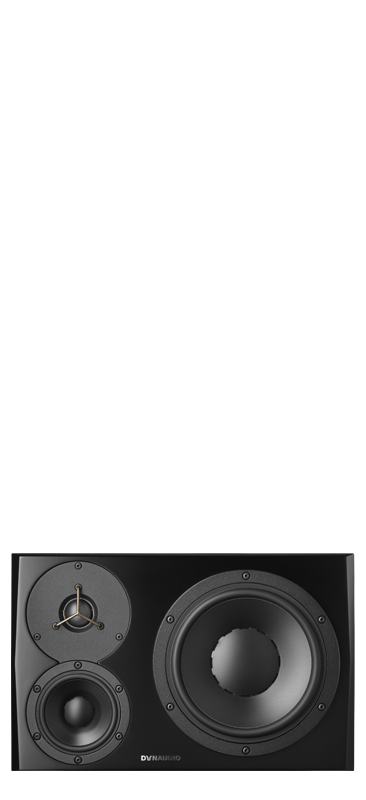
Dynaudio LYD 48
Dynaudio's flagship 3-way design uses a dedicated midrange driver for crossover-free vocal reproduction with massive headroom.
Amazon affiliate · price subject to change
The LYD 48 is the only midfield monitor on this list and the only three-way design. Dynaudio's dedicated midrange driver eliminates the crossover region around 2 kHz that plagues two-way designs — the entire vocal range sits within a single driver, which means vocal-heavy mixing benefits from a coherence and presence that no two-way nearfield can match. The Class-D amplification delivers massive headroom for large control rooms, the silk-dome tweeter and Esotec-derived midrange driver carry Dynaudio's signature smooth top end, and the rear-panel DSP includes voicing presets, position-based correction, and a sound balance control that adjusts the entire frequency response shape.
The honest framing: the LYD 48 is the wrong monitor for a small room. The three-way design and 8-inch low driver expect a listening triangle of at least three meters and a treated room large enough to support the bass extension below 30 Hz. For commercial studios, post-production facilities, and home-studios with purpose-built control rooms, the LYD 48 is the right midfield monitor at the price — well below the typical $3,000-and-up midfield tier from Genelec and Neumann. At $1,999 each this is the most expensive monitor on this list, ranked 10th not because of acoustic compromise but because most Gavler users are working in nearfield-sized rooms where a midfield is the wrong tool. 18 votes and an 8.2 score.
Buying Guide: The Three Decisions That Matter
Nearfield or midfield — pick based on your room, not your aspirations. The single largest variable in studio-monitor selection is the size of your control room. Nearfields expect a one-to-two-meter listening triangle and work in rooms from 8 square meters up. Midfields expect a three-to-five-meter triangle and require a treated room of at least 30 square meters with bass traps and absorption panels. The Dynaudio LYD 48 is the only midfield on this list and the only monitor that demands a purpose-built room. Every other monitor here is a nearfield and will translate better than a midfield in any home-studio context. Aspirational thinking — "I'll buy midfields and grow into them" — produces worse mixes for years until the room finally supports the speakers.
Treat the room before you upgrade the monitor. A $179 PreSonus Eris E5 XT in a treated room will produce better mixes than a $1,350 Genelec 8040B in an untreated bedroom. Bass traps in the room corners, broadband absorption at the first reflection points, and a desk that does not amplify low-mid resonance are worth more than every speaker upgrade short of the $3,000 mastering tier. For buyers spending under $1,000 on monitors, allocating $200-to-$400 of that budget to acoustic treatment will deliver more mix improvement than buying the next monitor up. The exception is monitors with strong on-monitor EQ correction — the PreSonus Eris E5 XT and the Adam Audio A7V with Sonarworks DSP both adapt to untreated rooms in a way that pure analog monitors cannot.
The 2025 model is almost always the smart spring buy. Studio-monitor refresh cycles run 24 to 36 months, and the prior-generation flagship typically drops 10 to 20 percent in the May-to-July spring-sale window. The Adam Audio A7V has been at $749 since launch but routinely sees $649 sale pricing through Sweetwater and B&H. The KRK Rokit 7 G5 drops from $349 to $299 reliably during graduation-season promotions. The Focal Alpha 65 Evo regularly hits $499 from its $549 MSRP. The exceptions are the Yamaha HS8 (which never meaningfully discounts) and the Genelec 8040B (which is rarely discounted but never raises in price either). For a 2026 home-studio buyer, watching the sale calendars at Sweetwater, B&H, Reverb, and the manufacturer-direct stores from now through early July is the most reliable way to save 10 to 20 percent without sacrificing model currency.
Architecture first — nearfield vs midfield, then room and listening distance, then mix vs hi-fi. The full decision tree is in our Studio Monitor Buying Guide. Then buy from the live Best Studio Monitors ranking. If you are building out a full creator-tools setup, the Gavler Audio hub now anchors community-ranked picks across studio monitors, USB microphones, audio interfaces, and headphone amps and DACs — four lists in total. For the desk side of the same creator workflow, the Best Mechanical Keyboards brief covers the input devices that engineers and producers reach for when the monitor decision is settled. And for engineers who also work in the field, the Best Mirrorless Cameras brief covers the picture side of the audio-video creator stack.
See all 10 products ranked by the community
Best Studio Monitors
See Full Rankings →272 community votes cast
Common Questions
The Yamaha HS8 tops Gavler's community ranking with a 9.7 score and 38 votes. The HS8's brutally flat frequency response — extending from 38 Hz to 30 kHz at -10 dB — is the reason it has become a modern reference standard. Sound On Sound and MusicRadar both place it among the most trustworthy translation monitors near its price, and the bi-amplified 120 W design (75 W LF + 45 W HF) delivers clean headroom in mid-sized control rooms. The honest caveat: the HS8 is unflinchingly honest, which means it can be fatiguing for long casual listening — but that is the point. If you want flattering, buy hi-fi speakers. If you want monitoring, this is the cheapest credible answer at $449 each.
Nearfields are correct for most home studios. The general rule is that the speaker-to-listener distance should be one to two meters for nearfields, which matches almost every project studio and bedroom mix room ever built. Midfields like the Dynaudio LYD 48 expect a three-to-five-meter listening triangle and a treated room large enough to support it — typically over 30 square meters with bass traps and absorption panels. If your room is smaller than a two-car garage, a nearfield will translate better than a midfield because room reflections will not have time to color the signal between speaker and ear. Go midfield only when you have a purpose-built control room and a separate set of nearfields for cross-referencing.
These two answer different questions. The Yamaha HS8 is the cheapest credible 8-inch nearfield with class-leading low-end extension to 38 Hz, which means you can make bass decisions without a subwoofer in most rooms. It runs $449 each. The Neumann KH 120 II is a 5.25-inch reference-class monitor with Mathematically Modeled Dispersion waveguide and onboard DSP for room correction — it costs $799 each but resolves detail that the HS8 simply cannot reach. Pick the HS8 if your room is over 12 square meters and bass extension matters. Pick the KH 120 II if your room is smaller, your work is detail-critical (mastering, classical, jazz, voiceover), and you have a subwoofer or do not need below 50 Hz. Studios with budget for both run the HS8 as the workhorse and the KH 120 II as the detail-check reference.
The PreSonus Eris E5 XT at $179 is the cheapest credible answer with carbon-fiber LF cone construction, EBM waveguide for controlled dispersion, and rear-panel acoustic tuning controls (three low-cut options, three room-placement presets, plus mid and high trim knobs) that the Kali Audio LP-6 V2 lacks. The Kali Audio LP-6 V2 at $199 has the better measured frequency response — Audio Science Review consistently rates it higher than the Eris on raw acoustic performance — and the 3D-printed waveguide and dual-layer voice coil deliver more low-end excursion than its size suggests. The right pick depends on whether you can treat your room (Kali wins) or need on-monitor EQ to compensate for an untreated room (Eris wins). For first-time buyers with an untreated bedroom, the Eris is the more forgiving spend. For producers committed to acoustic treatment, the Kali is the better monitor.
The Genelec 8040B is the consensus answer among professionals. The 6.5-inch woofer extends down to 41 Hz with Genelec's Directivity Control Waveguide and Minimum Diffraction Enclosure, delivering pristine off-axis response and rock-solid imaging that mastering engineers need to confirm tonal decisions across the entire listening position. The 8040B is documented in Billie Eilish's 'The World's a Little Blurry' as the monitor she and Finneas use in the studio that produced six Grammy wins. At $1,350 each it is a real spend but well below the typical $3,000-and-up mastering monitor tier, and the cabinet construction and ISS power-management features mean these monitors will outlast most studio careers. The honest caveat: the 8040B is unforgiving on poorly treated rooms — these monitors expose acoustic problems other speakers hide.
Spring is one of the better windows for studio gear buying. Major retailers like Sweetwater, B&H, and Reverb run pre-summer sales tied to graduation season and tax-return spend, with discounts of 10 to 20 percent on most powered nearfields. Manufacturers refresh model lines in the late fall ahead of NAMM in January, which means prior-generation flagships from late 2025 and early 2026 are now at their cheapest before the next refresh cycle starts speculation in October. The Yamaha HS8 has been at the same $449 MSRP for years and rarely discounts meaningfully, but the Adam Audio A7V, KRK Rokit 7 G5, and Focal Alpha 65 Evo all see real markdowns in the May-to-July window. If you are upgrading a home studio this summer, buying now is the right call.
Rankings come from community votes by engineers and producers who actually mix on the monitors. Each user gets one vote on the Best Studio Monitors list — pick the monitor you would put in your next control room rebuild, not the one with the most marketing budget. Switched monitors after a room change or a workflow shift? Move your vote. No affiliate commissions or manufacturer sponsorships influence the ranking. Vote totals at the time of publication appear next to each pick on the live list.
Products Mentioned
Jump to the full ranking and community verdict for each pick named above.
- Yamaha HS8Audio · Best Studio Monitors
- Adam Audio A7VAudio · Best Studio Monitors
- Genelec 8040BAudio · Best Studio Monitors
- KRK Rokit 7 G5Audio · Best Studio Monitors
- Focal Alpha 65 EvoAudio · Best Studio Monitors
- JBL 308P MkIIAudio · Best Studio Monitors
- Neumann KH 120 IIAudio · Best Studio Monitors
- PreSonus Eris E5 XTAudio · Best Studio Monitors
- Kali Audio LP-6 V2Audio · Best Studio Monitors
- Dynaudio LYD 48Audio · Best Studio Monitors