The Best Tennis Rackets in 2026, Ranked by Players Who Actually Compete With Them
Wilson, Babolat, HEAD, Yonex. Gavler's community ranks the rackets worth restringing — from Sampras-lineage frames to the spin monster Nadal still swings.
Tennis rackets in 2026 are a mature market and that is the story. The arms race of the last decade — Auxetic, Aeromodular, FeelFlex, FlexForce — has produced a generation of frames where the differences are real but narrow, and the right racket for any given player has more to do with swing style, technique, and feel preference than with which company has the latest construction acronym. Wilson, Babolat, HEAD, and Yonex still own the top of the men's and women's pro tours, but the gap between them and the second tier (Tecnifibre, Dunlop, Prince) is smaller than the marketing budgets would suggest.
Which racket should you actually restring? Gavler's community has ranked ten of them by lived experience. The picks below are pulled from the live Best Tennis Rackets list — built on votes from players who have logged hundreds of match hours, hit through every condition, and rotated frames across multiple seasons to find the one they keep coming back to.
How the Rankings Work
One vote per person on the Best Tennis Rackets list. Pick the racket you are restringing this week — the one you would grab out of the bag tomorrow morning before a 9am league match. Switched frames mid-season? Move your vote. The result is a ranking that reflects what real competitive players are actually swinging on real courts, not what brands paid Roger or Rafa to wave around.
The Top Picks
Wilson Pro Staff 97 v14 — The Modern Player Frame

Wilson Pro Staff 97 v14
The Pro Staff lineage stretches from Sampras to Federer, and the v14 honors that legacy with a Braid 45 layup for precise, buttery feel. At 315g strung, it rewards clean ball-striking with pinpoint placement.
Amazon affiliate · price subject to change
The Pro Staff lineage runs from Sampras to Federer to today's v14, and the new version is the most comfortable iteration in years. Wilson's Paradigm Bending construction optimizes the flex between the hoop and the shaft, and the aramid fibers borrowed from the original Pro Staff 85 give the frame the kind of buttery dwell-time-on-the-strings sensation that has defined this line for three decades. At 315g unstrung with a 21.5mm constant beam, the 16x19 string pattern, and a 10-points-headlight balance, it is a true player racket and it plays like one.
Tennis Warehouse's playtest described it as feeling closer to the RF97 than to the v13, with a noticeably bigger sweet spot and meaningfully better stability through contact. The 2026 community verdict mirrors the lab review: 34 votes, the highest count on the list, and a 9.6 score that reflects the depth of player loyalty this frame still commands. The honest trade-off: it is not the racket for an advanced intermediate still developing strokes. The Pro Staff rewards technique, not effort. If you have the technique, this is the pick.
Babolat Pure Aero 2023 — The Spin Monster, Refined
Babolat Pure Aero 2023
Nadal's frame of choice gets Aeromodular beam shaping for faster racket-head speed and more topspin RPMs. The 2023 revision dials back the stiffness slightly, adding comfort without sacrificing the spin ceiling that defines this franchise.
Amazon affiliate · price subject to change
Nadal's frame of choice gets its most thoughtful revision in years. The 2023 Pure Aero keeps the Aeromodular beam shaping that made this line the spin reference for the last decade — flattened throat geometry that cuts air resistance, faster racket-head speed, more topspin RPMs — but Babolat dialed back the stiffness from the prior generation to add comfort. The result is a frame that still produces tour-level spin without the arm punishment that drove some Pure Aero loyalists to demo competitors.
At 300g unstrung and $249 it sits at the approachable end of the player-frame spectrum, which is why it has stayed the most-used spin racket on the men's tour through three product cycles. Tennis Warehouse's review framed the upgrade succinctly: the unique playability of the Aero gives it a higher ceiling than safer all-rounders for players who gel with the style. If you generate your offense through topspin from the baseline, this is still the racket to beat.
HEAD Speed Pro 2024 — The Flat-Hitter's Precision Tool
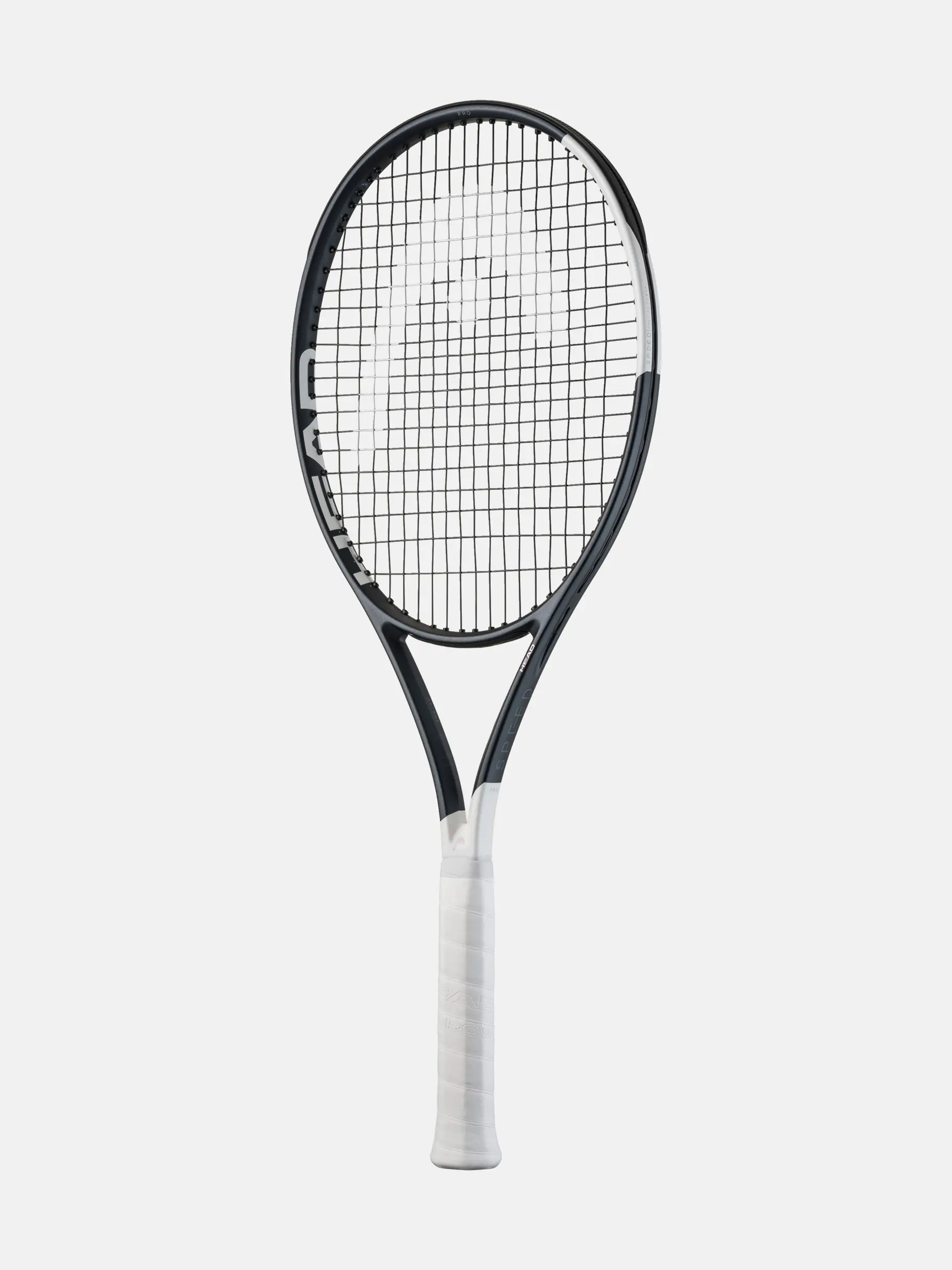
HEAD Speed Pro 2024
Djokovic's weapon — the Speed Pro 2024 uses Auxetic construction that opens the string bed on impact for a larger sweet spot. The 18x20 string pattern gives elite-level control for flat hitters who paint lines.
Amazon affiliate · price subject to change
Djokovic's weapon, refreshed. The 2024 Speed Pro uses HEAD's Auxetic construction — an open-cell geometry that flexes outward on impact to enlarge the effective sweet spot — paired with an 18x20 string pattern that is the only true 18x20 on this top-five list. The combination is purpose-built for flat hitters who paint lines: maximum directional control, minimum unintended ball rotation, longer string life than any open-pattern competitor.
At 310g and $259, it is the racket of choice for advanced players whose offense comes from depth and angle rather than topspin. If you have ever felt the Pure Aero's spin geometry was working against your flat groundstrokes, the Speed Pro is the natural alternative. The 18x20 pattern does ask more of your technique — you have to swing through to generate pace because the string bed will not do it for you — but for players who already do, the precision is unmatched in the modern field.
Yonex EZONE 98 2024 — The Friendly Player Frame
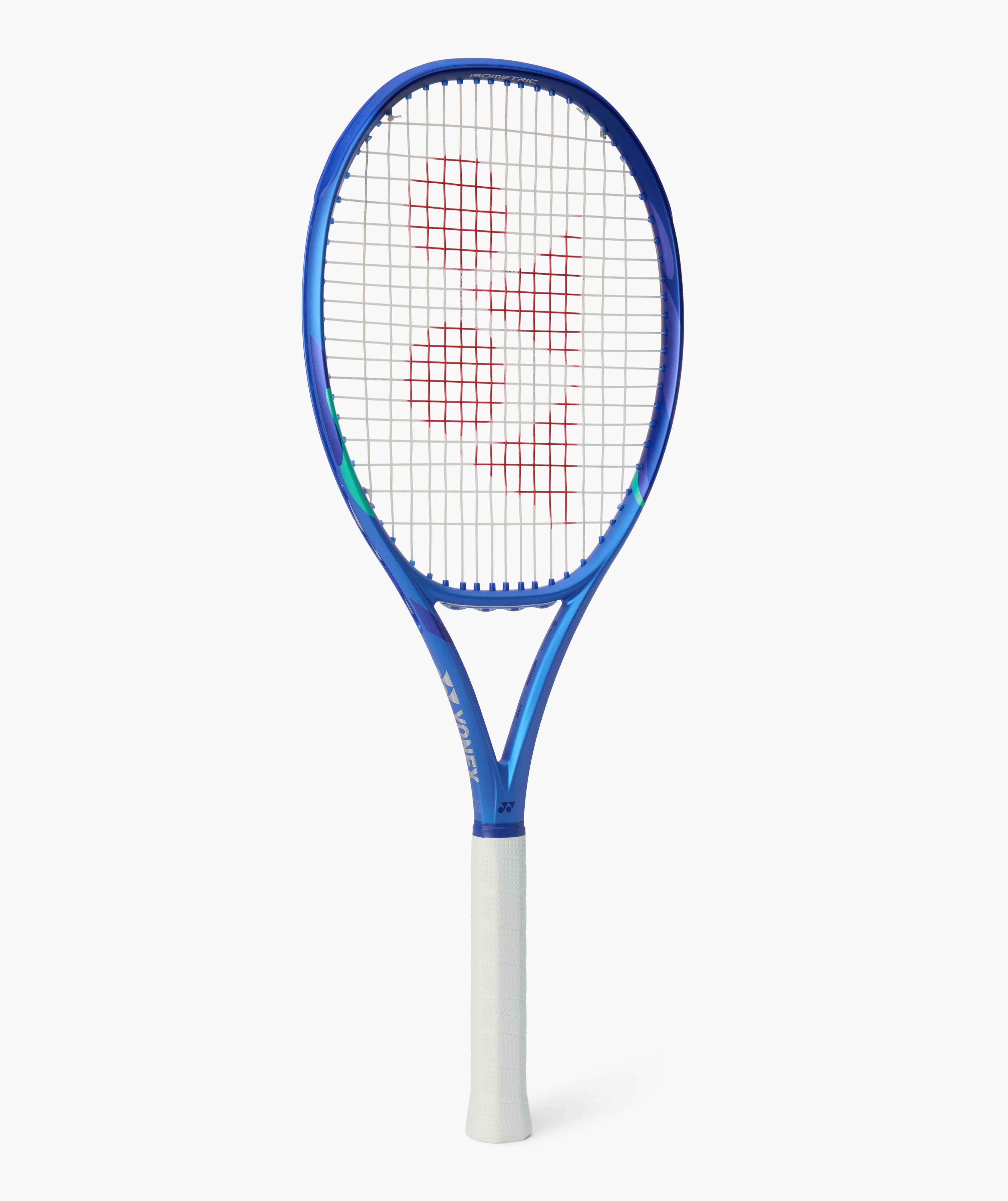
Yonex EZONE 98 2024
Yonex's isometric head shape creates 7% more sweet spot than conventional oval frames. The 2024 EZONE 98 adds a graphite-and-2G-Namd Flex Force layup that generates effortless power from compact swings.
Amazon affiliate · price subject to change
Yonex's isometric head shape — squared at the top rather than rounded — creates roughly 7% more sweet-spot area than conventional oval frames, and the 2024 EZONE 98 is the cleanest expression of what that geometry can do. The graphite-and-2G-Namd Flex Force layup makes it the most arm-friendly modern player frame on this list, with vibration dampening mesh in the handle and bagworm threads in the throat that absorb harshness without dulling feedback.
Tennis.com framed the EZONE versus Pure Aero choice well: the Yonex is the safer starting point for a wider audience, while the Babolat has the higher ceiling for the specific player who gels with its style. At 305g and $249, the EZONE 98 is the racket most pros and serious club players would recommend to a player demoing a 98-inch player frame for the first time. Easy power, generous sweet spot, comfortable contact, and the rare distinction of a player racket that does not punish off-center hits.
The Performance Tier
Wilson Blade 98 v9 — The Connected-Feel Control Racket

Wilson Blade 98 v9
The Blade's FeelFlex technology bends the throat on contact for a connected, pocketed sensation that control players crave. Version 9 adds DirectConnect to the handle for cleaner vibration feedback on every stroke.
Amazon affiliate · price subject to change
The Blade has always been the racket for players who care more about feel than about raw performance numbers, and the v9 leans into that philosophy. FeelFlex construction bends the throat on contact for the pocketed sensation that Blade loyalists describe as the racket "talking back," and the v9 adds DirectConnect to the handle for cleaner vibration feedback on every stroke. The 21mm thin beam, 62 stiffness rating, and braided graphite-and-basalt layup all serve the same goal: maximum information from the string bed to the hand.
At 305g and $259, it is meaningfully less stiff than the Pro Staff or Speed Pro and rewards players who play with touch — slice backhands, drop shots, all-court tactics. The trade-off is moderately less power and spin than the headline frames. If you are a feel-first player who shapes points with shot variety rather than overpowering rallies, this is the racket. 30 community votes confirm it has the loyalty to back the loyalty story.
Babolat Pure Drive 2024 — The Best-Selling Racket, Quietly Improved
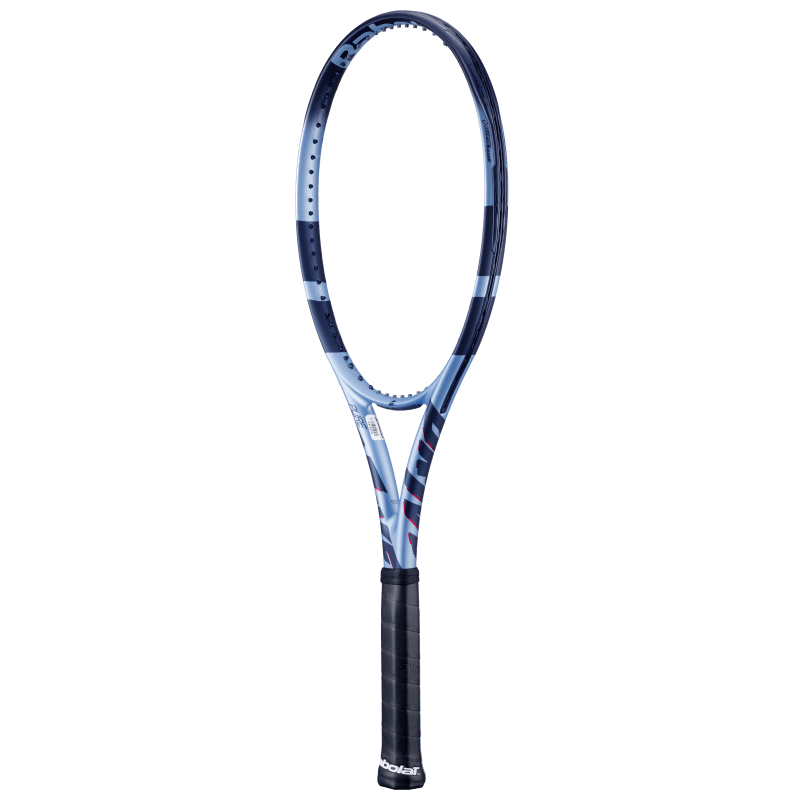
Babolat Pure Drive 2024
The best-selling racket in the world for a reason — the Pure Drive delivers easy power and spin access right off the shelf. The 2024 version adds an HTR System insert for improved vibration filtering without losing the iconic pop.
Amazon affiliate · price subject to change
The Pure Drive is the best-selling tennis racket in the world for a reason and the 2024 revision is the version that finally addresses the one persistent complaint. The new HTR System insert in the throat absorbs the harsh vibrations that drove some players to demo competitors despite loving the easy power and spin access. The iconic Pure Drive pop is unchanged — open string pattern, stiff frame, lively response — but the impact harshness is meaningfully reduced.
At $239 it is also the value pick of the top six. For advanced intermediates and tournament players who want a frame that produces results right off the shelf with minimal technique demands, this is the racket. The community ranking reflects a slight popularity ceiling — 24 votes versus 34 for the Pro Staff — because elite players tend to graduate to true player frames, but for players who want the most usable power on this list at the most accessible weight, the Pure Drive is the answer.
The Specialist Tier
HEAD Gravity Pro 2023 — The Modern Topspin Player Frame
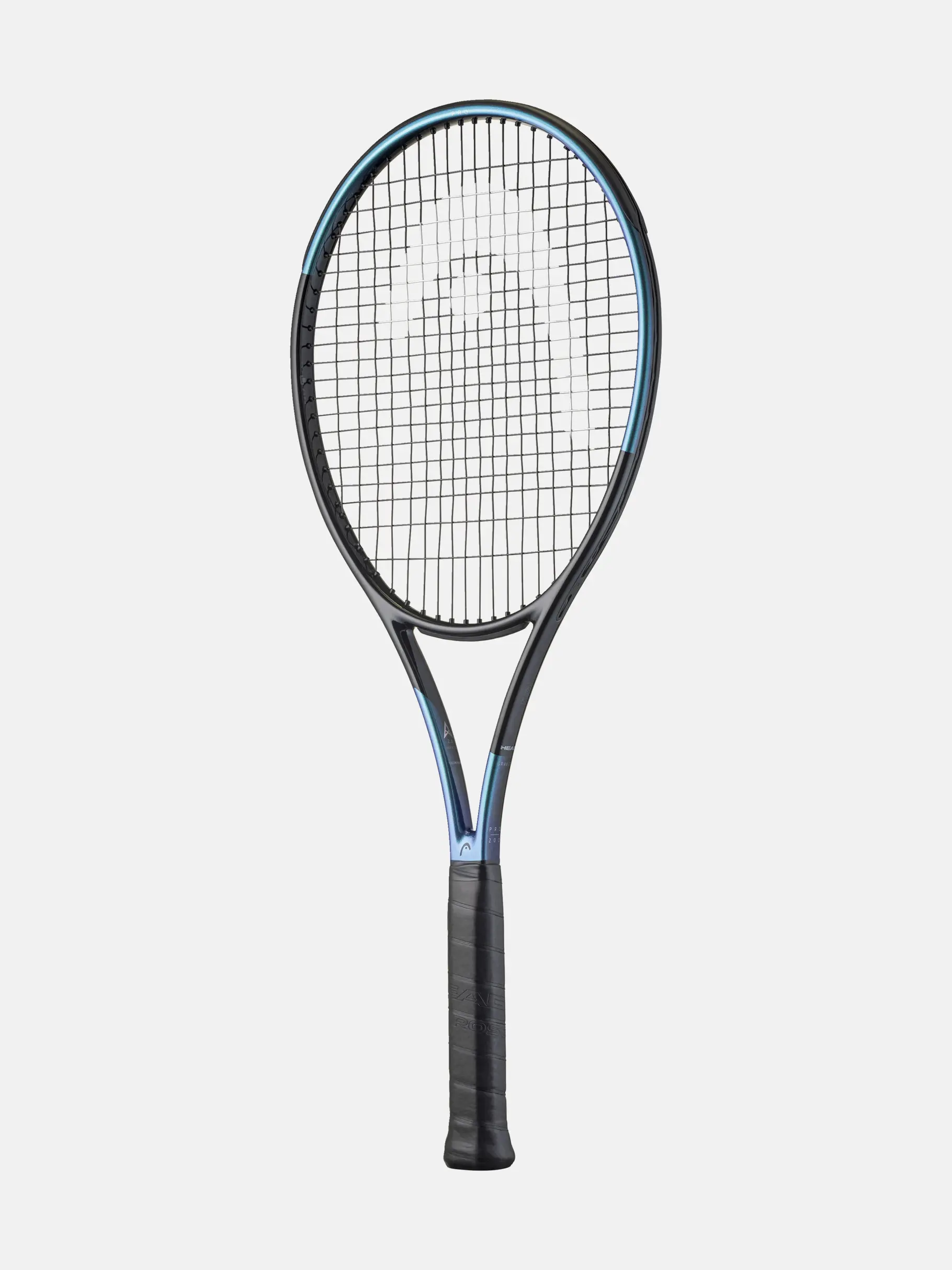
HEAD Gravity Pro 2023
Alexander Zverev's frame. The Gravity Pro's teardrop head lifts and widens the sweet spot in the upper hoop where modern topspin players make contact, and its Auxetic-tuned flex gives it one of the softest, most connected feels in the control category.
Amazon affiliate · price subject to change
Zverev's racket, designed around an unconventional theory: most modern players swing with topspin and finish high on the follow-through, so why does every player frame still have the sweet spot centered in the hoop? The Gravity Pro's elongated head shape extends the sweet spot toward the tip — exactly where modern topspin contact actually happens. At 305g it is the lightest true player frame on this list, which makes it the natural step-up for advanced intermediates moving from a tweener.
The 18x20 string pattern is borrowed from the Speed Pro line but the construction priorities are different — Gravity is built for spin-and-control players rather than flat-and-control. If you are a modern baseliner whose contact point is consistently above shoulder height and your two-handed backhand finishes over the opposite shoulder, this is the frame designed for your strokes.
Tecnifibre TF-40 305 — The Player's Player Racket
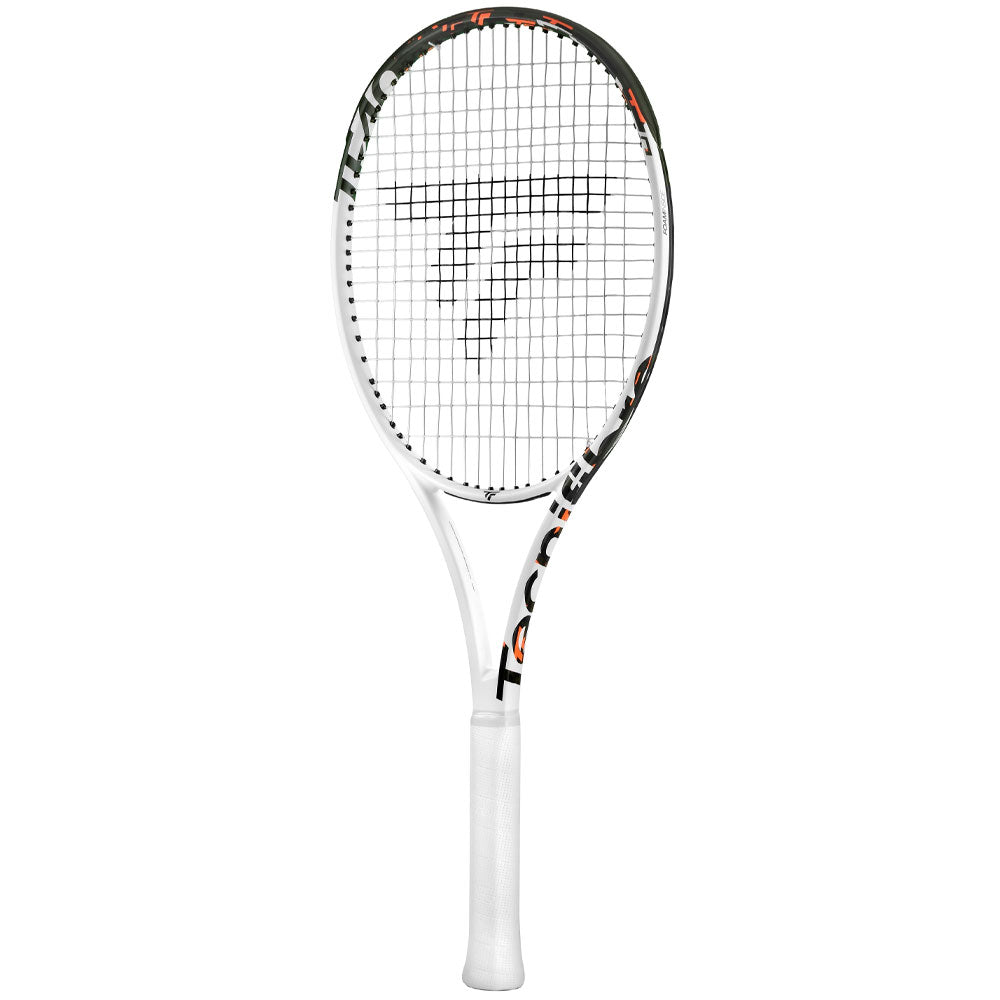
Tecnifibre TF-40 305
Tecnifibre's RS Sharp beam and Foam Inside filling give the TF-40 305 (18x20) a plush, connected feel that's rare in a dense-pattern control frame. At 305g it's the most maneuverable true player's control racket here, delivering pinpoint precision without the harsh response most 18x20s are known for.
Amazon affiliate · price subject to change
Tecnifibre's RS Section beam geometry — a tapered profile that varies thickness from the throat to the tip — gives the TF-40 a blend of flexibility and stability that heavier player frames cannot quite match. The 305g spec makes it the most maneuverable true control racket on this list, which is why touring pros who prioritize quickness at the net (think serve-and-volley dabblers) keep landing on it. At $229 it is also $30 cheaper than the Wilson and HEAD flagships, which is meaningful when you restring three frames a month during tournament season.
This is the cult pick on this list. Tecnifibre does not have the marketing volume of Babolat or Wilson, but the players who switch to a TF-40 tend to stay. 20 community votes and a 8.6 score reflect a small but loyal user base that has found something the bigger brands do not quite replicate.
Dunlop CX 200 — The Sleeper Control Frame
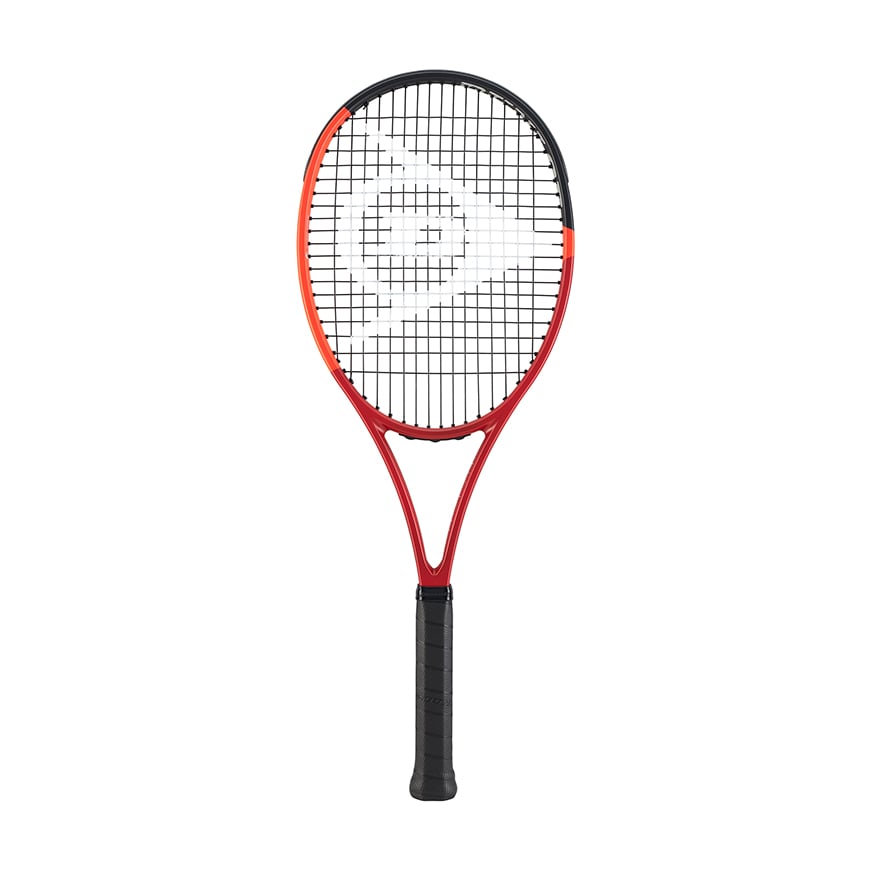
Dunlop CX 200
Dunlop's CX 200 pairs a flexible 21.5mm box beam with Sonic Core Infinergy and Vibroshield damping for a plush, comfortable feel, while new Powergrid Stringtech adds more spin than the CX line has ever had. A classic all-court control frame for players who want feel over firepower.
Amazon affiliate · price subject to change
Dunlop's Sonic Core Infinergy foam is genuinely useful technology — embedded in the racket throat, it dampens harsh vibrations on off-center hits while keeping the string bed lively at the contact point. The CX 200 is also the most-affordable true control frame on this list at $219, and the build quality is meaningfully ahead of where Dunlop was in their early-2020s revival period.
For advanced players who want a Pro Staff-class control experience without the Pro Staff price or the heft, this is the under-the-radar pick. 18 community votes and an 8.4 score reflect the same pattern as the Tecnifibre — small loyal user base, frames that punch above their tier. If your budget is $220 and you want a player frame rather than a tweener, the CX 200 is the most defensible spend.
Prince Phantom 100P — The Spin-Friendly Value Pick
Prince Phantom 100P
Prince's thinnest, most flexible player's frame — a 59-RA box beam with TeXtreme and Zylon that melds plush comfort with pinpoint control. The open 16x18 pattern adds spin and a soft, arm-friendly response, though power is modest by design. A control connoisseur's stick, not a spin cannon.
Amazon affiliate · price subject to change
Prince has been quietly building a credible 2020s line and the Phantom 100P is the most-pronounced argument for it. TeXtreme+ carbon layup produces an ultra-light hoop that generates racket-head speed effortlessly — the kind of frame that helps players who do not have the strength to muscle a 315g Pro Staff but still want to hit through the ball. The 100 sq in head adds a 2-3% sweet-spot boost over the 98s above, and the open 16x18 string pattern (the only 16x18 on this list) maximizes spin potential.
At $209 it is the cheapest racket on this list and the easiest spend if you are stepping up from a sub-$150 entry frame. The trade-off is the off-court reputation — Prince has not been on tour at scale in a decade, which costs the brand mindshare. If you do not care about pro endorsement and just want a good racket for your game, the Phantom 100P is the most credible value pick in the 2026 field.
Buying Guide: The Three Decisions That Matter
Weight and balance, not brand. The single biggest predictor of how a racket plays is the weight, balance point, and resulting swingweight. A 315g 10-points-headlight player frame plays nothing like a 300g even-balanced tweener regardless of which brand made it. If you are demoing for the first time, start with the 305-310g range — the Yonex EZONE 98, HEAD Gravity Pro, or Wilson Blade 98 v9 — and move heavier or lighter based on how it feels through a full match. Most rec-tournament players land somewhere between 300g and 315g unstrung.
String pattern matters less than you think. The 16x19 versus 18x20 distinction is real but smaller than racket marketers admit. Frame stiffness, beam width, and string choice have a bigger impact on how a racket plays than the pattern. If you generate spin naturally through technique, you can hit topspin with an 18x20. If your strokes are flat, an open 16x19 will not magically add rotation. The honest decision is between 16x19 (more spin potential, more sweet spot) and 18x20 (more directional control, longer string life), not a categorical "spin racket" versus "control racket" framing.
Comfort beats raw performance. Tennis elbow ends more careers than mid-pack ranking. The two arm-friendliest frames on this list — the Yonex EZONE 98 and the Babolat Pure Drive 2024 — also happen to be the racket most pros recommend to first-time demo players. If you have any history of arm or wrist issues, prioritize the comfort layer over the spin ceiling. A racket you can swing comfortably for two hours is worth more than a racket that produces 2 mph faster forehands but leaves your elbow flared after a third set.
For the full community ranking with current prices and live vote counts, head to Gavler's Best Tennis Rackets list. Architecture first — a thin-beam control frame vs a spin tweener vs a comfort hoop — is the tennis-racket buying guide. If you are also shopping the broader sports category, the Gavler Sports hub covers the full set of community-ranked picks across tennis, running, surfing, pickleball, golf, road biking, and ski helmets. For golfers who also play, architecture first — fairway finder vs tight window vs last-gen value — is the golf-driver buying guide, then Best Golf Drivers. For racket-sport players who also play pickleball, tour carbon vs a kitchen reset vs a paddle under $150 is the pickleball-paddle buying guide, then Best Pickleball Paddles.
See all 10 products ranked by the community
Best Tennis Rackets
See Full Rankings →250 community votes cast
Common Questions
The Wilson Pro Staff 97 v14 tops Gavler's community ranking with a 9.6 score. At 315 grams unstrung with a 16x19 string pattern and 21.5mm constant beam, it is the modern descendant of the Sampras and Federer Pro Staffs — a control-oriented player frame that rewards clean ball-striking with pinpoint placement and the famously connected Pro Staff feel. Tennis Warehouse's playtest described the v14 as the most comfortable Pro Staff in years thanks to Paradigm Bending construction that softens the firmness of the v13. The honest caveat: at 315g it is a true player racket and not the right pick for advanced intermediates still developing technique.
Yes. The 2023 Pure Aero is the most-used spin racket on the men's tour, and Nadal's preferred frame for most of his career. Aeromodular beam shaping cuts air resistance for faster racket-head speed, the 16x19 string pattern bites into the ball, and the 300g spec is approachable for advanced players who do not want to swing a true 315g player frame. The 2023 revision dialed back the stiffness from the prior generation, which made the frame meaningfully more comfortable without sacrificing the spin ceiling. If you generate your offense through topspin from the baseline, this is still the pick.
The Wilson Pro Staff 97 v14 and HEAD Speed Pro 2024 are the consensus picks among 4.5+ players who prioritize control. The Pro Staff offers the most classic player feel — buttery dwell time on the strings thanks to Braid 45 and aramid construction — and rewards clean technique. The HEAD Speed Pro is the more modern option with an 18x20 string pattern and Auxetic construction that opens the string bed on impact, giving flat hitters who paint lines the largest sweet spot in the true-control category. Pick the Pro Staff if you value feel; pick the Speed Pro if you hit flat and value precision.
These two answer different questions. The Pure Aero is the better pick if you are an aggressive baseliner who wants maximum top-end power and spin from a stiffer 300g frame — its higher swingweight and Aeromodular geometry create the highest spin ceiling on this list. The Yonex EZONE 98 is the better pick if you prioritize comfort and a friendly sweet spot — its isometric head shape gives 7% more usable string-bed area than conventional oval frames, and the 2G-Namd Flex Force layup makes it the most arm-friendly modern tweener. Tennis.com framed the choice well: the Aero has the higher ceiling for players who gel with it; the EZONE is the safer starting point for a wider audience.
The Babolat Pure Drive 2024 at $239 is the consensus answer — the best-selling racket in the world has been refined for 18 years and the 2024 version's HTR System insert finally addresses the lingering complaint about harshness without losing the iconic Pure Drive pop. For control players, the Dunlop CX 200 at $219 and Tecnifibre TF-40 305 at $229 punch well above their price tier — both deliver true player-frame feel for less than the Wilson or HEAD flagships. The sleeper value pick is the Prince Phantom 100P at $209, which uses TeXtreme+ carbon to deliver a light hoop that generates racket-head speed effortlessly.
16x19 (more open) gives you more spin potential and a slightly larger sweet spot, at the cost of less string-bed control. 18x20 (denser) gives you more directional control and longer string life, at the cost of less spin and a slightly smaller sweet spot. The Pure Aero, Pure Drive, Yonex EZONE 98, Wilson Blade 98, and Prince Phantom 100P all use 16x19. The HEAD Speed Pro 2024 uses 18x20. For most rec-tournament players the difference is smaller than racket marketing suggests — frame stiffness, weight, and balance matter more than string pattern in shaping how a racket actually plays.
Rankings come from community votes by people who actually compete with the rackets. Each user gets one vote on the Best Tennis Rackets list — pick the frame you are restringing this week. Switched frames mid-season? Move your vote. No affiliate commissions or sponsorships influence the ranking. Vote totals at the time of publication appear next to each pick on the live list.
Products Mentioned
Jump to the full ranking and community verdict for each pick named above.
- Wilson Pro Staff 97 v14Sports · Best Tennis Rackets
- Babolat Pure Aero 2023Sports · Best Tennis Rackets
- HEAD Speed Pro 2024Sports · Best Tennis Rackets
- Yonex EZONE 98 2024Sports · Best Tennis Rackets
- Wilson Blade 98 v9Sports · Best Tennis Rackets
- Babolat Pure Drive 2024Sports · Best Tennis Rackets
- HEAD Gravity Pro 2023Sports · Best Tennis Rackets
- Tecnifibre TF-40 305Sports · Best Tennis Rackets
- Dunlop CX 200Sports · Best Tennis Rackets
- Prince Phantom 100PSports · Best Tennis Rackets