The Best Pickleball Paddles in 2026, Ranked by Players Who Actually Compete
JOOLA, Selkirk, Paddletek, CRBN. Gavler's pickleball community ranks the paddles worth carrying — from $89 entry composites to $249 carbon flagships.
Pickleball is the fastest-growing sport in America for the sixth consecutive year, and the paddle market has matured accordingly. The 2026 lineup is the first that genuinely separates pro-level performance from recreational equipment — and the gap between a $99 starter and a $249 flagship is no longer just about marketing. Carbon friction surfaces, thermoformed perimeters, and foam-injected edge walls are now the table stakes for serious play.
Which paddle should you actually buy? Gavler's community has ranked ten of them by lived experience. The picks below are pulled from the live Best Pickleball Paddles list — built on votes from players who have lived with these paddles through dozens of sessions, tournament weekends, and the kind of repeated impact that exposes which paddles last and which ones do not.
How the Rankings Work
One vote per person on the Best Pickleball Paddles list. Pick the paddle you would put in your bag if a clubmate asked you tomorrow — just one. Changed paddles? Move your vote. The result is a ranking that reflects what real players are actually carrying right now, not what manufacturers paid to feature.
The Top Picks
JOOLA Ben Johns Hyperion CFS 16 — The One the Pros Use
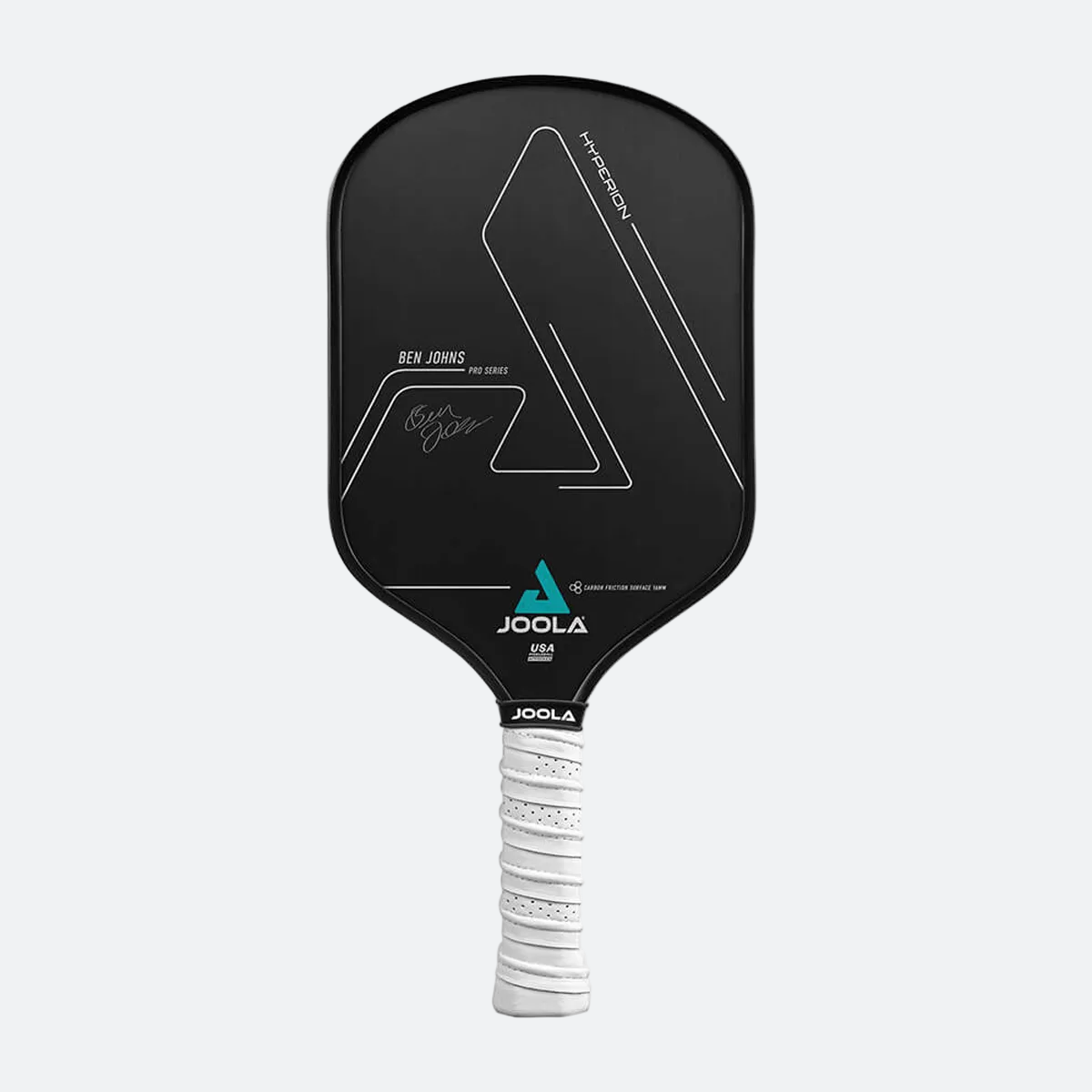
JOOLA Ben Johns Hyperion CFS 16
The paddle that dominates pro tours — Ben Johns' signature CFS 16 uses a carbon friction surface for devastating spin rates. Elongated shape and 16mm core deliver the power-control balance that redefined competitive pickleball.
Amazon affiliate · price subject to change
The Hyperion CFS 16 is the paddle Ben Johns has used to stay world number one across multiple seasons, and the community has ranked it accordingly: 9.7 overall score, 38 votes, the top of the list. The carbon friction surface generates more spin than any paddle at any price point most reviewers have tested. The 16mm polymer core gives it the dwell time you need for soft third-shot drops and dinks, while the carbon-forged handle and Hyperfoam Edge Wall keep the sweet spot consistent across the entire face.
The honest caveat: this is a paddle for players who can carry the weight. At 8.4 oz with a head-heavy balance, the Hyperion rewards strong wrists and forearms. Players coming from a lighter composite paddle should expect a one-to-two-week adjustment period before the timing locks in. For all-court power players, that adjustment pays off in spin numbers competitive paddles cannot match.
Selkirk Vanguard Power Air Invikta — The Power Player's Pick
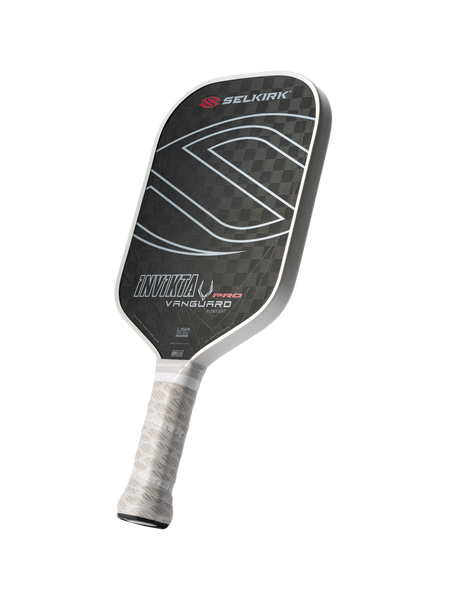
Selkirk VANGUARD Pro Invikta
Selkirk's Air Dynamic Throat channels airflow to reduce drag on fast swings without sacrificing head stability. The elongated Invikta shape is a favorite among power players who need reach at the kitchen line.
Amazon affiliate · price subject to change
Selkirk's Air Dynamic Throat is the marketing line, but what it actually does is route airflow around the throat to reduce drag without losing head stability — meaning faster swings without sacrificing the head weight that drives power. The elongated Invikta shape extends reach at the kitchen line by roughly half an inch, which sounds trivial until you measure how often that decides a hands battle.
At $219 it is the most expensive of the second-tier picks, but Selkirk's build quality is the rationale. Vanguard cores hold up to tournament play better than most polymer competitors, and the company's customer service ranks consistently at the top of the category. For power players who do not want the JOOLA's weight penalty, the Invikta is the next pick down.
Paddletek Bantam EX-L Pro — The Touch and Control Specialist
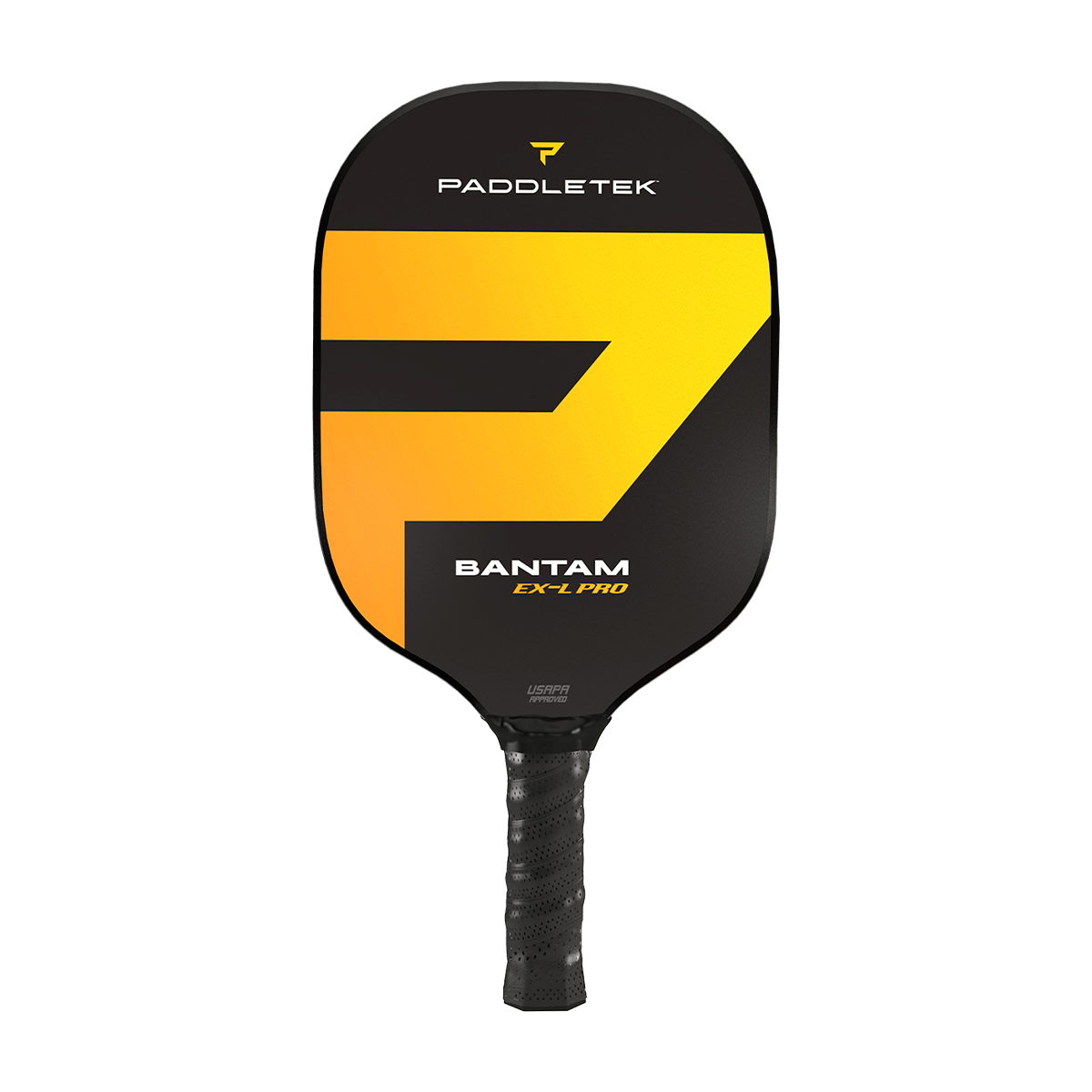
Paddletek Bantam EX-L Pro
Paddletek's flagship polymer honeycomb core delivers one of the softest, most controlled touches in the game. The EX-L Pro's balanced weight distribution makes it exceptionally forgiving on off-center hits.
Amazon affiliate · price subject to change
Paddletek's polymer honeycomb core is the softest, most forgiving feel in the top tier — the kind of paddle that makes drop shots feel automatic. The balanced weight distribution rewards off-center contact with surprisingly little drop in pace, which translates to a paddle that flatters touch players without punishing the occasional miss-hit.
The Bantam EX-L Pro is the right call if you grew up playing tennis or table tennis and value finesse over raw power. It will not generate the spin numbers a CRBN or JOOLA does, but it will keep more soft shots in play during long dink rallies — which is where most points are won at the 4.0+ level.
Engage Pursuit Pro MX — The Spin and Consistency Pick
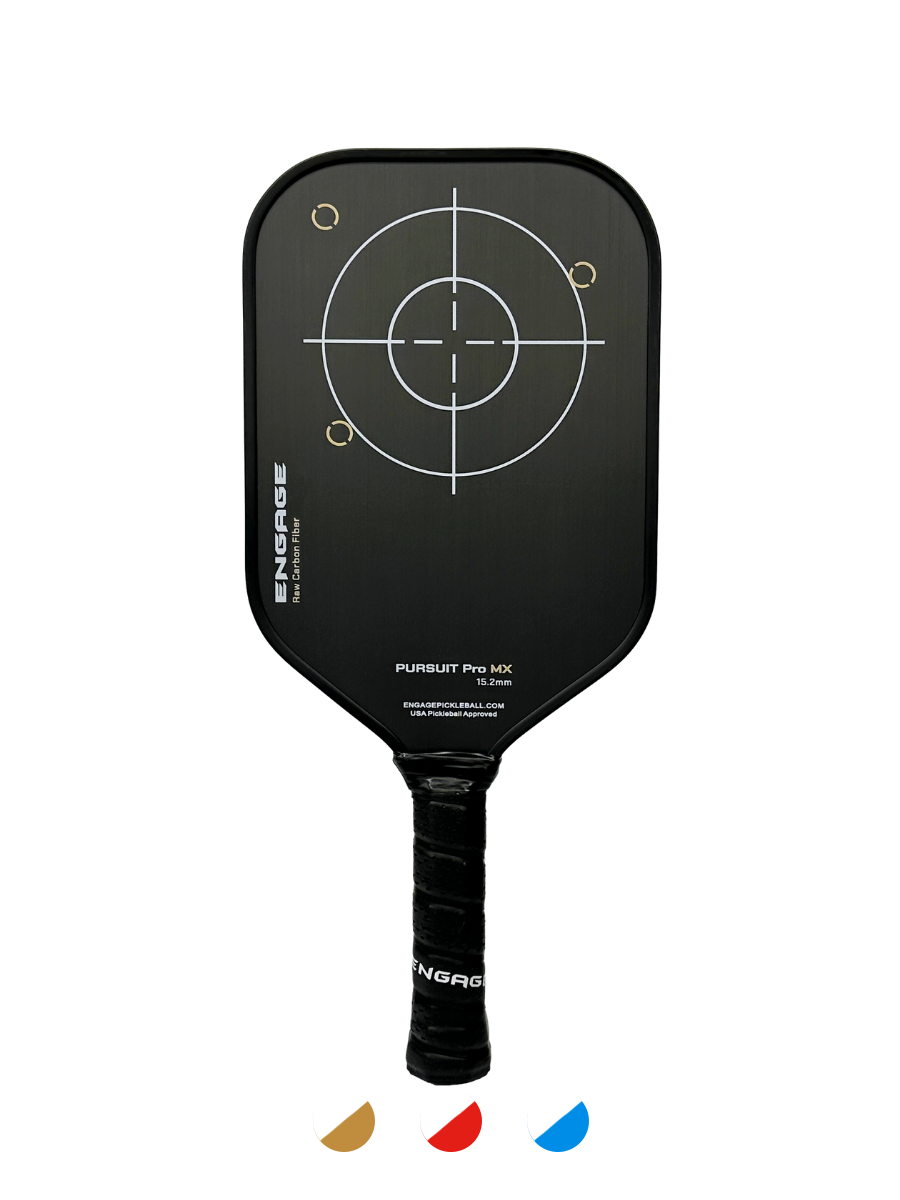
Engage Pursuit Pro MX
The Pursuit Pro MX pairs a raw Toray T700 carbon face with Engage's 13mm ControlPro polymer core, tuned to hold spin and feel consistent across temperature swings. An elongated shape and Vortex Barrier edge push the sweet spot nearly edge to edge — the paddle most Engage pros actually play.
Amazon affiliate · price subject to change
Engage's ControlPro chemical-bonded skin is a specific solution to a real problem: most carbon faces lose grip in cold weather and gain it back in heat, which makes spin generation inconsistent. The Pursuit Pro MX holds spin numbers across a 40-degree temperature swing better than any paddle in this tier. The wide-body shape produces one of the most generous sweet spots of any flagship paddle — particularly forgiving for tennis converts who are still timing the smaller paddle face.
At $199 it is the value play of the spin-and-control tier. If you split time between indoor winter play and outdoor summer play, this is the paddle that performs the most consistently across both.
The Mid-Tier Sweet Spot
CRBN 1X Power Series — The Raw Carbon Standout
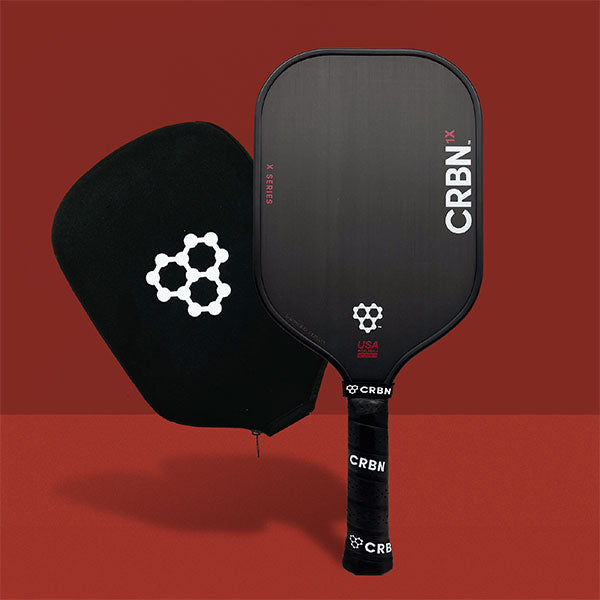
CRBN 1X Power Series
Raw carbon fiber face with no paint layer means maximum grit for spin generation right out of the box. The 1X Power's thermoformed edge construction eliminates dead spots along the paddle perimeter.
Amazon affiliate · price subject to change
CRBN's calling card is unpainted, raw carbon fiber straight from the layup. No paint layer means no progressive grit loss as the paint wears — the textured carbon is the structural face, and it stays gritty until the paddle structurally fails. The thermoformed edge construction eliminates the dead zones that plague cheaper paddles around the perimeter, which matters more than spec sheets imply: a paddle with even a half-inch dead zone at the top costs you points whenever you slap a defensive volley.
At $199 it is the cleanest expression of the modern thermoformed-and-raw-carbon paddle. If the JOOLA is too head-heavy for your hands, the CRBN 1X delivers most of the power and roughly the same spin in a more neutral balance.
Franklin Ben Johns Signature — Tour-Level Tech for $149
Franklin Ben Johns Signature
Franklin's collaboration with Ben Johns brings tour-level polypropylene core technology to a mid-range price point. The 13mm core thickness emphasizes touch and feel over raw power, suiting all-court players.
Amazon affiliate · price subject to change
Franklin's collaboration with Ben Johns brings the polypropylene core technology of the JOOLA tour line to a $149 price point. The 13mm core is thinner than the flagship 16mm offerings, which trades absolute power for added touch and feel — the right choice for all-court players who want the brand pedigree without the prosumer weight.
This is the paddle to recommend to a friend who has played for six months and is finally ready to outgrow their starter composite. It is also the budget pick that does not feel like a budget pick: build quality matches Franklin's tour line, and the warranty support is identical.
The Value Tier
HEAD Radical Pro, Onix Evoke Premier Pro, Selkirk AMPED S2 — Under $170, Worth Carrying
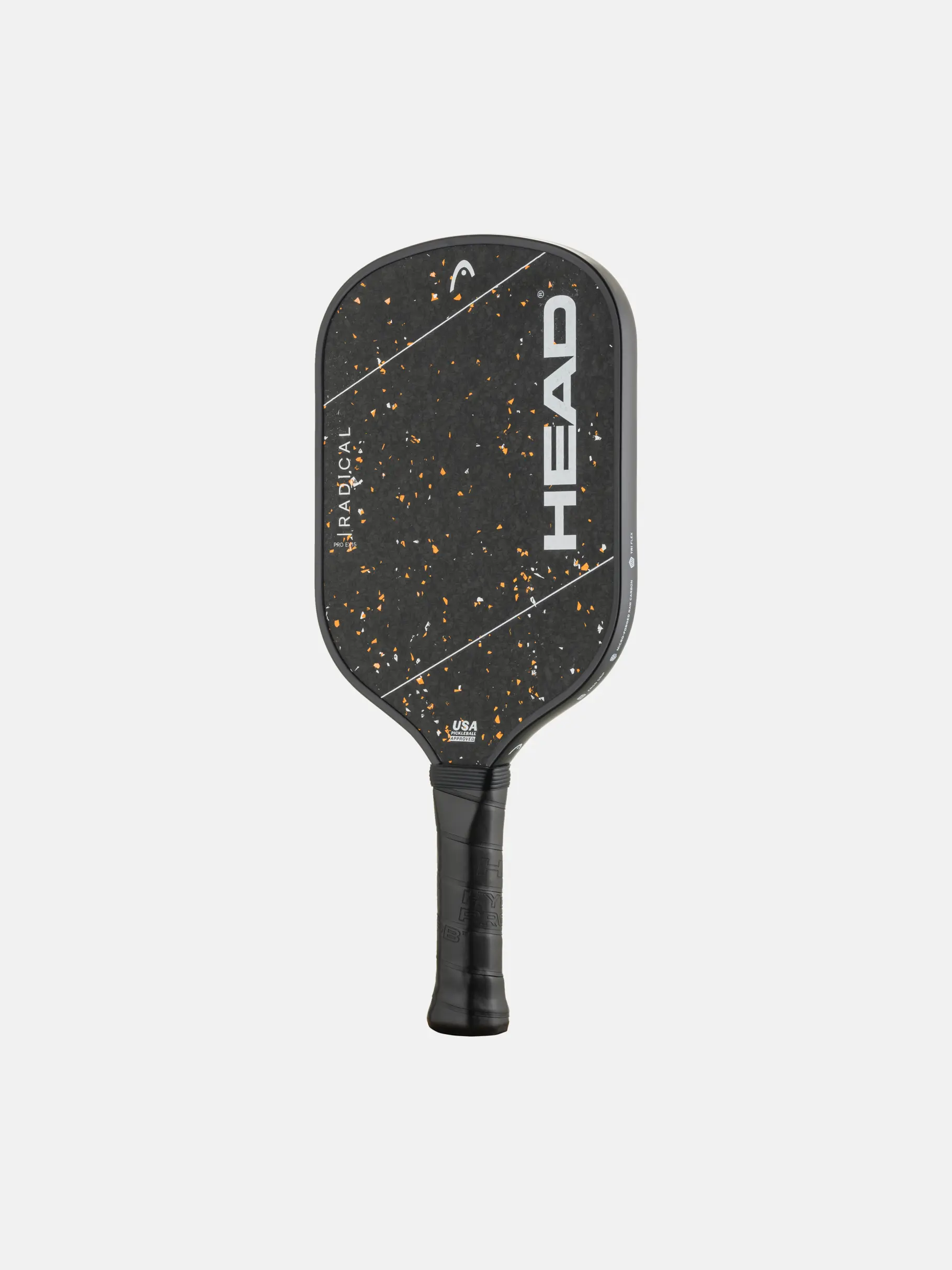
HEAD Radical Pro
HEAD's Comfort Grip System reduces vibration at contact, making it one of the most arm-friendly paddles for players with elbow concerns. The optimized tubular construction adds torsional stability on volleys.
Amazon affiliate · price subject to change
The HEAD Radical Pro deserves a specific call-out for arm-friendliness. The Comfort Grip System dampens contact vibration noticeably more than competing paddles, which makes it the right pick for players with tennis elbow or any history of forearm strain. It is not the most powerful paddle on the list, but for players who need to play through soreness, it is the right tool.
The Onix Evoke Premier Pro and Selkirk AMPED S2 round out the under-$170 tier with composite faces that produce a satisfying pop without the harshness of a thermoformed power paddle. Both are credible recommendations for recreational players in their second year of play who want a real upgrade over a starter paddle.
Vulcan V1100 — The Best Sub-$100 Paddle on the Market
Vulcan V1100
The Vulcan V1100 delivers genuine raw Toray T700 carbon and a full 16mm core at a sub-$100 price, undercutting the flagships by more than half. Built with pro Jay Devilliers, it's a heavier elongated power frame — real carbon spin and put-away pace on a budget.
Amazon affiliate · price subject to change
The Vulcan V1100 at $89 is the pick for players genuinely committed to a budget — and the only sub-$100 paddle on the list because most are not worth carrying. Vulcan's textured polypropylene face holds enough grit for serviceable spin, the edge guard is well-built, and the paddle survives club-level play for a full season before showing wear. For first-paddle buyers, gift recipients, or players outfitting a court for community pickup, this is the answer.
Buying Guide: The Three Decisions That Matter
Carbon vs composite. Raw carbon faces (JOOLA, CRBN, Engage) generate more spin and hold grit longer; composite faces (Onix, Selkirk AMPED) are softer, more forgiving, and cheaper. If you drive and slice, buy carbon. If you mostly drop and dink, composite is fine.
Weight and balance. Most players land in the 7.8-8.2 oz range. Heavier paddles (Hyperion at 8.4 oz) reward power players with strong wrists; lighter paddles favor hand speed at the kitchen. Head-heavy balance favors driving; even balance favors all-court play.
Shape — wide-body vs elongated. Wide-body shapes (Engage Pursuit Pro MX, Onix Evoke Premier Pro) have the most forgiving sweet spots and are the right shape for tennis converts. Elongated shapes (JOOLA Hyperion, Selkirk Invikta) extend reach at the kitchen line and reward players with refined hand-eye timing.
For the full community ranking with current prices and live vote counts, head to Gavler's Best Pickleball Paddles list. Architecture first — tour carbon vs a kitchen reset vs a paddle under $150 — is the pickleball-paddle buying guide. Tennis converts shopping a 98-inch frame first should start with thin-beam control vs a spin tweener vs a comfort hoop in the tennis-racket buying guide, then Best Tennis Rackets. If you are also shopping the broader sports category, the Gavler Sports hub covers the full set of community-ranked picks across pickleball, tennis, running, road biking, golf, surfing, and ski helmets.
See all 10 products ranked by the community
Best Pickleball Paddles
See Full Rankings →273 community votes cast
Common Questions
The JOOLA Ben Johns Hyperion CFS 16 sits at the top of Gavler's community ranking with a 9.7 score and 38 votes. It is the paddle the men's number-one player has used to dominate the pro tour, and the carbon friction surface generates spin numbers that competitive paddles 18 months ago could not produce. The honest caveat: at 8.4 oz it is on the heavier side, and the head-heavy balance asks for some forearm strength on long sessions. For all-court power and spin players who can carry the weight, it is the consensus best paddle on the market.
For a paddle that will hold up to two or three sessions a week and not feel limiting as you improve, plan to spend $150-250. The $200-250 carbon-fiber tier is where the meaningful technology lives — thermoformed cores, raw carbon faces, foam-injected edge walls. Below $150, paddles are functional but use older composite faces and thicker polymer cores that cap spin generation. Below $100, paddles are best treated as starter equipment you will outgrow within a season. The Vulcan V1100 at $89 is the exception — durable enough for true club play.
Raw carbon fiber faces (JOOLA CFS, CRBN 1X, Engage Pursuit Pro MX) generate more spin out of the box and hold their grit longer because the surface is the structural material, not a paint coating. Composite faces — fiberglass or older graphite — are softer, more forgiving on touch shots, and noticeably cheaper. If you play mostly third-shot drops and dink rallies, composite is fine. If you drive, slice, and hit topspin rolls, carbon is the right answer. The 2026 mid-tier ($150-200) is where carbon technology has finally trickled down — Franklin's Ben Johns Signature is a good example.
Most players are best served by paddles in the 7.8-8.2 oz range. Lighter than 7.8 oz makes power shots harder and tires the wrist on volleys. Heavier than 8.4 oz puts strain on the elbow and slows hand speed at the kitchen line. Tennis converts often gravitate to heavier paddles for the ball-striking feel they are used to; players coming from racquetball or table tennis usually prefer lighter, more maneuverable shapes. The HEAD Radical Pro on this list is the most arm-friendly option for players with elbow concerns.
Yes for any sanctioned tournament play. The USA Pickleball approval list is updated continuously, and all 10 paddles on Gavler's ranking are currently USAPA-approved as of this writing. If you are buying for tournament-level play, double-check the official USAPA paddle list before purchasing — manufacturers occasionally release new generations that take a few months to clear approval, and a paddle pulled mid-season is unusable in sanctioned events.
Thermoforming injects foam into the paddle perimeter and bonds the entire structure under heat and pressure. The result is a stiffer, more uniform sweet spot that does not deaden at the edges, plus measurably better durability. Most paddles released in the past two years use some form of thermoforming — including all of Gavler's top five. The Engage Pursuit Pro MX and CRBN 1X Power Series are the cleanest examples in the $199 tier. The technology matters most for power players who hit hard off-center.
Rankings come entirely from community votes by people who actually play with the paddles. Each user gets one vote on the Best Pickleball Paddles list — pick the paddle you would recommend above all others. No affiliate commissions or sponsorships influence the ranking. Vote totals at the time of publication are listed alongside each pick on the live list.
Products Mentioned
Jump to the full ranking and community verdict for each pick named above.
- JOOLA Ben Johns Hyperion CFS 16Sports · Best Pickleball Paddles
- Paddletek Bantam EX-L ProSports · Best Pickleball Paddles
- Engage Pursuit Pro MXSports · Best Pickleball Paddles
- CRBN 1X Power SeriesSports · Best Pickleball Paddles
- Franklin Ben Johns SignatureSports · Best Pickleball Paddles
- HEAD Radical ProSports · Best Pickleball Paddles
- Onix Evoke PremierSports · Best Pickleball Paddles
- Vulcan V1100Sports · Best Pickleball Paddles