The Best Surfboards in 2026, Ranked by Surfers Who Actually Paddle Out
Channel Islands, Lost, Firewire, DHD. Gavler's surf community ranks the boards worth carrying — from $179 foamies to $899 asymmetric customs.
The 2026 surfboard market is in an interesting place. The pro tour is still riding refined PU shortboards — the templates Mick Fanning, Kelly Slater, and Filipe Toledo have been winning on for a decade. Meanwhile, the recreational market has split: Firewire and Torq are pushing EPS-epoxy construction that rides almost as well and lasts twice as long, while soft-top brands like Catch Surf and Wavestorm have made surfing accessible to a generation of new riders. The gap between a $179 foamie and an $899 asymmetric custom is no longer just about performance — it is about what kind of surfer you want to be.
Which board should you actually carry? Gavler's community has ranked ten of them by lived experience. The picks below are pulled from the live Best Surfboards list — built on votes from surfers who have lived with these boards through hundreds of sessions, dawn patrols, travel trips, and the kind of repeated impact that exposes which shapes hold up and which ones do not.
How the Rankings Work
One vote per person on the Best Surfboards list. Pick the board you would put under your arm tomorrow if a clubmate texted asking what to ride — just one. Changed boards? Move your vote. The result is a ranking that reflects what real surfers are actually paddling out on right now, not what brands paid to feature.
The Top Picks
Channel Islands Sampler — The All-Conditions Daily Driver
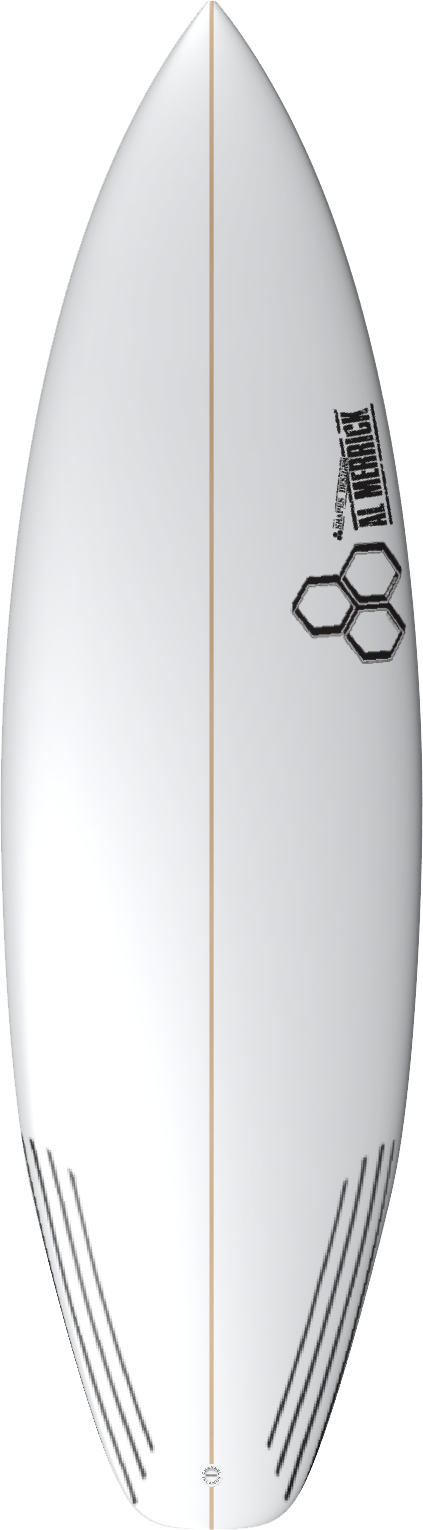
Channel Islands Sampler
Al Merrick's Sampler blends the Biscuit's paddle power with a refined tail rocker for above-the-lip surfing. The squash tail and subtle hip keep it loose in the pocket while the fuller outline paddles into everything.
Amazon affiliate · price subject to change
Al Merrick built the Sampler as a Biscuit derivative for surfers who wanted Biscuit-grade paddle power without giving up the responsiveness of a proper shortboard. The squash tail and subtle hip keep it loose in the pocket, while the fuller outline and pulled-in rocker line through the middle let it generate speed in conditions that would stall most performance shortboards. It is the board you ride 200 days a year, not the one you reserve for the perfect swell.
The honest caveat: this is a hybrid, not a pure performance shape. For surfers chasing maximum vertical performance in head-high-and-up clean waves, the DHD MF DNA or JS Monsta Box at this same price point will outperform it. For the broadest range of conditions on a single board — the criterion that matters most for the average surfer's quiver — the Sampler is the right call. Order it two to three inches shorter than your usual shortboard.
Lost Puddle Jumper HP — The Small-Wave Specialist
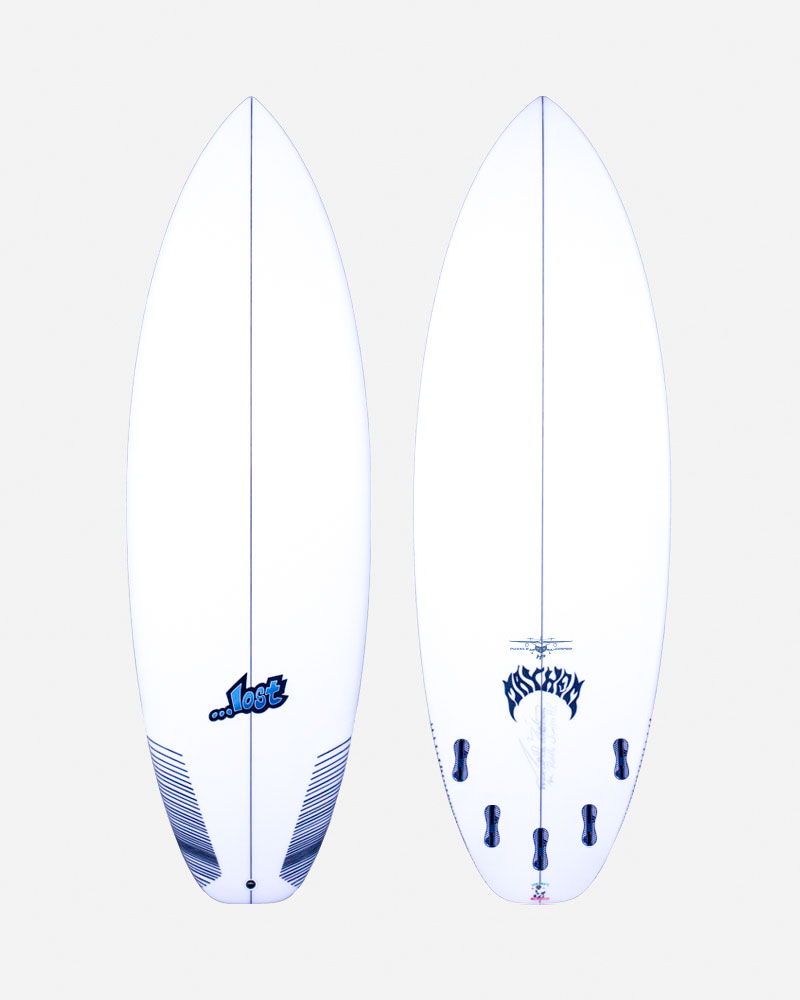
Lost Puddle Jumper HP
Matt Biolos refined the original Puddle Jumper with a pulled-in nose and performance tail rocker for more vertical surfing. It catches waves like a fish but surfs rail-to-rail like a proper shortboard.
Amazon affiliate · price subject to change
Matt Biolos refined the original Puddle Jumper into the HP by pulling in the nose and adding tail rocker, which made the board legitimately surfable in waves with shape rather than just usable in mush. The flatter rocker through the center keeps it gliding across the dead spots that kill most small-wave boards, while the steeper rail rocker lets it pivot off the top in pockets a flatter board would skip past.
This is the small-wave board the rest of the small-wave market is chasing. Stab Magazine's joyride test called it one of the best all-round options in the category, and the votes back that up — 34 of them, second on the list. If you live somewhere with more knee-to-shoulder days than head-high days, this is the board to ride.
Firewire Seaside & Beyond — The Travel and Durability Pick
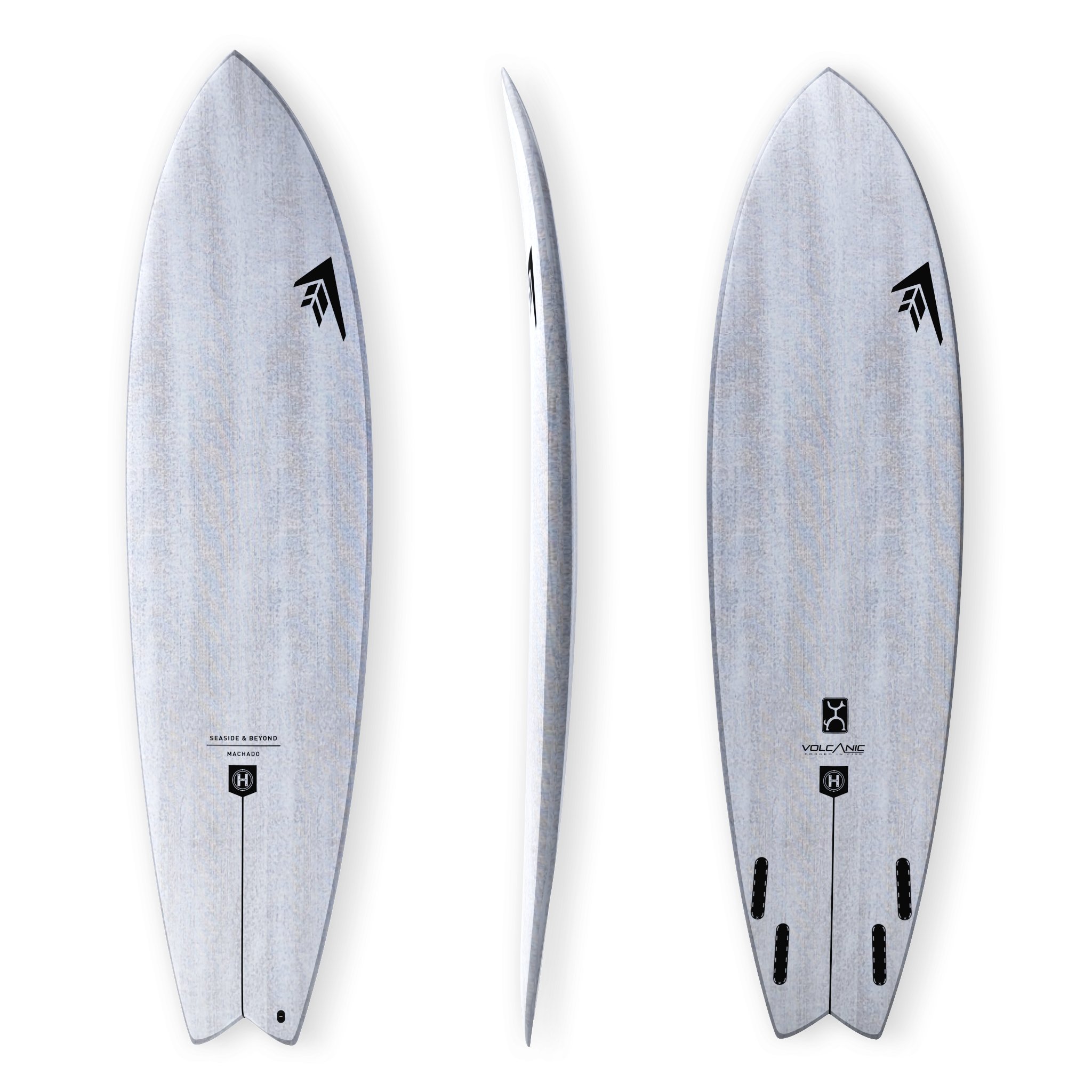
Firewire Seaside & Beyond
Dan Mann's Seaside gets the 'Beyond' treatment with added length and a five-fin convertible setup. Firewire's Helium construction keeps it featherweight while adding the durability that PU boards can't match.
Amazon affiliate · price subject to change
Dan Mann's original Seaside was a wide-tail twin-fin throwback. The "Beyond" variant adds length, a five-fin convertible setup, and Firewire's Helium construction — an EPS core wrapped in a syntactic foam stringer system that comes out of the shaping bay roughly 30 percent lighter than a comparable PU board with similar flex. That weight savings becomes real when you are paddling out at low tide or carrying the board down a cliff trail.
The Helium build is also the durability story. PU boards crease, ding, and go yellow within a year of regular travel; a Helium Firewire shrugs off airline baggage handlers and rental-car roof racks. At $849, it is the most expensive of the top three, but it is also the only board on this list designed to survive a year of plane trips without becoming a project.
JS Monsta Box — The Drive-Through-Flat-Sections Shape
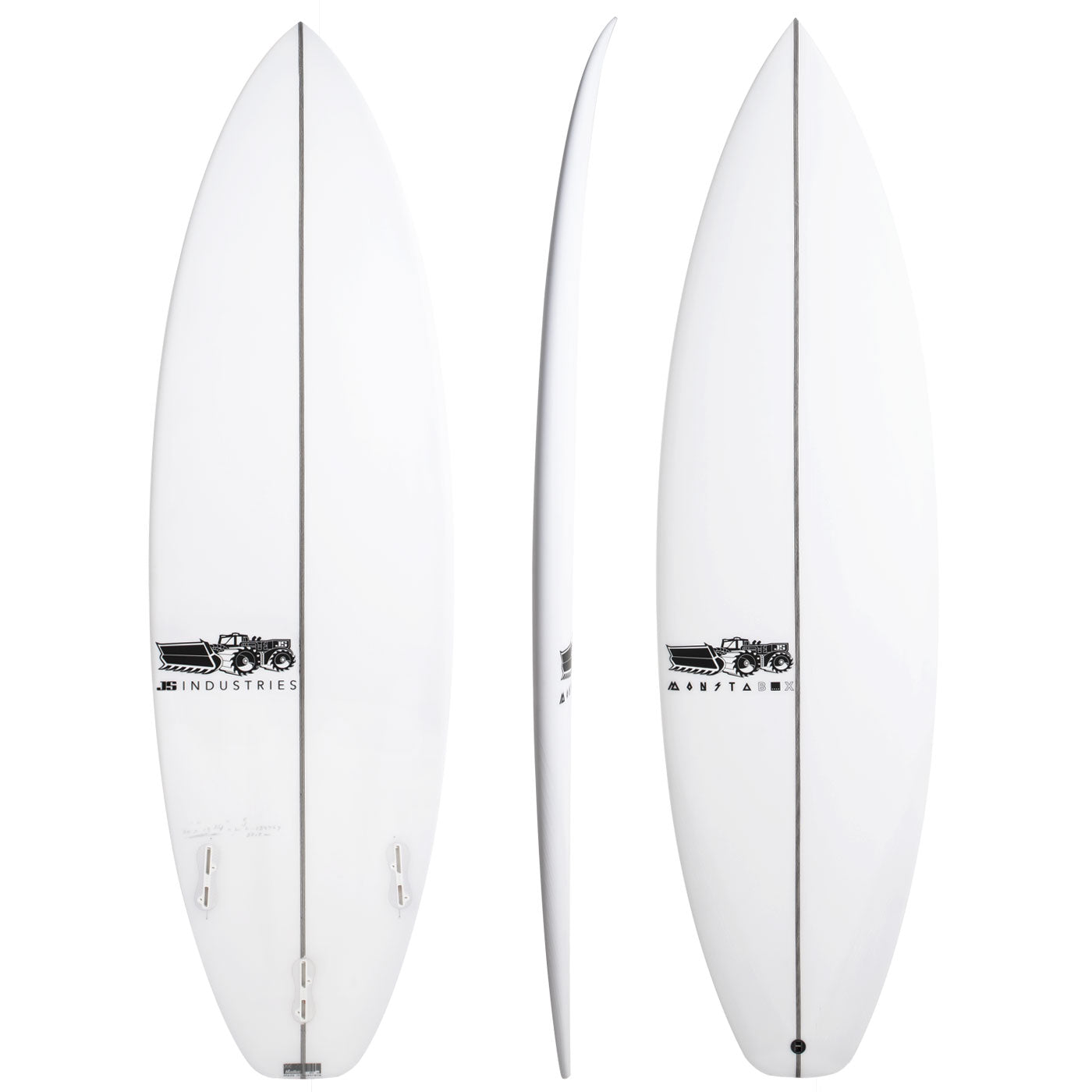
JS Monsta Box
Jason Stevenson's Monsta Box pairs a flat deck with a vee-to-concave bottom, giving it drive through flat sections where most hybrids stall. The swallow tail adds hold in hollow waves up to head-high.
Amazon affiliate · price subject to change
Jason Stevenson's Monsta Box is the answer to a specific complaint about hybrids: most of them stall through flat sections and require a pump to get back to speed. The flat deck pairs with a vee-to-concave bottom that channels water cleanly and keeps the board driving when other shapes would ask for a pump. The swallow tail adds hold in the steeper sections of head-high waves — the kind of hollow pocket where a squash tail tends to slide out.
At $749 it is the value play of the high-performance hybrid tier. JS has the Australian shaping pedigree and team-rider feedback loop that Channel Islands and Lost draw from, and the Monsta Box has been in the lineup long enough that the design is dialed. If you found the Sampler slightly too stubby for your style, the Monsta Box is the next pick over.
The Performance Tier
DHD MF DNA — The Pro Shortboard for the Rest of Us
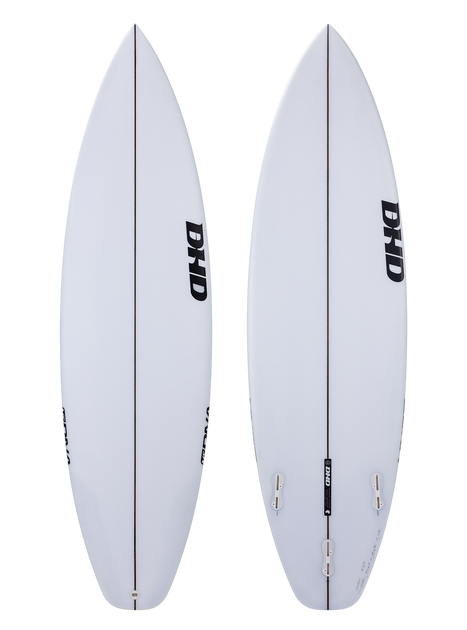
DHD MF DNA
Darren Handley's design for Mick Fanning — a pure performance shortboard with single-to-double concave and medium rocker. Three world titles were won on variations of this template, and the DNA distills it to its essence.
Amazon affiliate · price subject to change
Darren Handley shaped Mick Fanning into three world titles, and the DNA is the production-board distillation of that shaping language. Single-to-double concave through the bottom, medium rocker, refined rails — every line on this board is what a competitive shortboard is supposed to be. It is a board that demands clean waves and a surfer with the timing to use them, and it rewards both with vertical performance that hybrids cannot match.
This is not a daily driver for the average surfer. Below shoulder-high, the DNA will frustrate you; above shoulder-high in clean conditions, it is one of the best stock shapes you can buy. Reserve it for the good days. At $699, it is also one of the best values in the pro-shortboard tier.
Hayden Shapes Hypto Krypto — The Crossover Everyone Has Tried
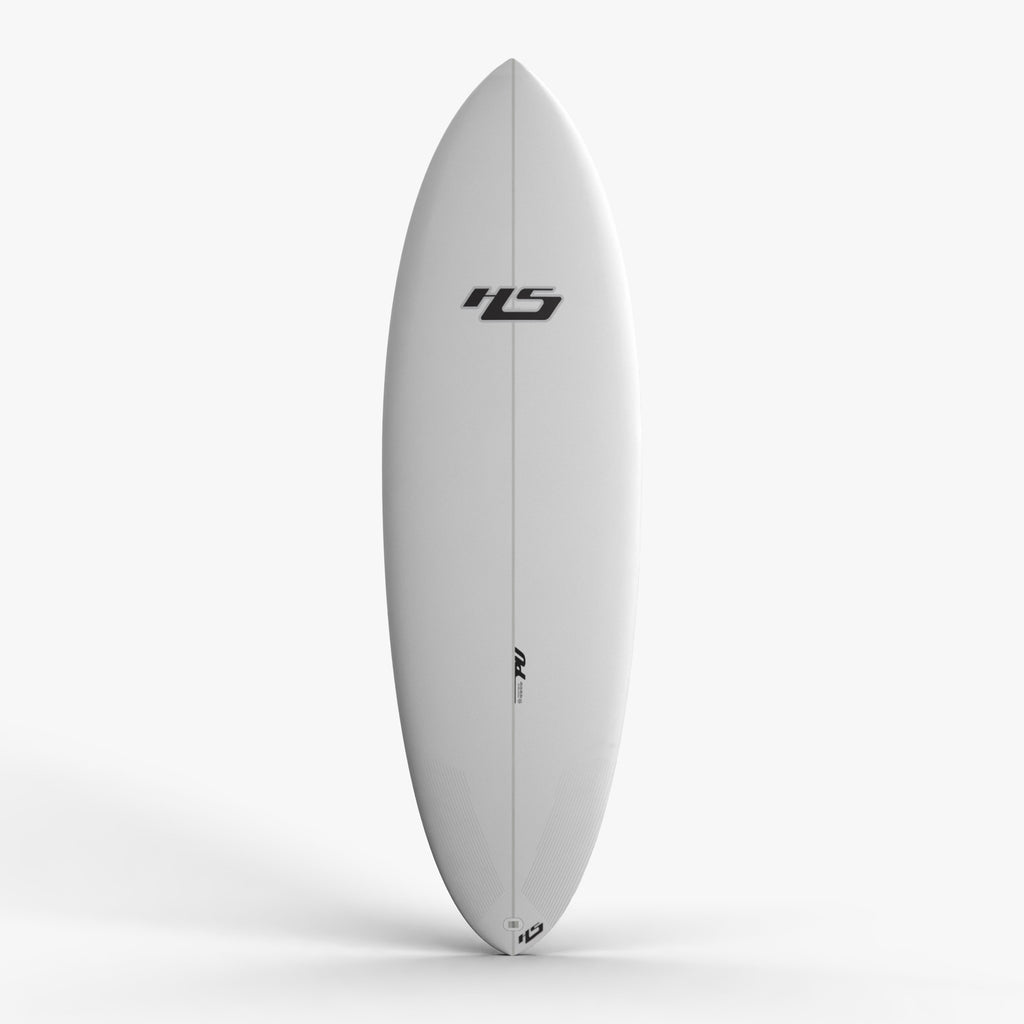
Hayden Shapes Hypto Krypto
The Hypto Krypto's round tail and generous volume make it the crossover board that surfers of all levels gravitate toward. FutureFlex construction gives it a lively flex pattern that traditional PU can't replicate.
Amazon affiliate · price subject to change
The Hypto Krypto is the most-ridden board of the past decade for a reason: the round tail and generous volume make it the rare crossover that genuinely works for beginners moving up from foamies and intermediate surfers chasing more performance. Hayden Cox's FutureFlex construction adds a lively flex pattern that traditional PU does not match — the board snaps back out of turns in a way that feels more energetic than its dimensions suggest.
If you have been surfing for under three years and want one board to take you through the next two, the Hypto Krypto is the consensus pick. It is also the board that consistently shows up in shop rental fleets, which tells you everything about its durability and approachability.
Album Surf Disasym — The Asymmetric for the Curious

Album Surf Disasym
Album's asymmetrical design gives different rail curves for frontside and backside turns, matching how your body actually rotates. It's a conversation starter in the lineup and genuinely changes how you approach waves.
Amazon affiliate · price subject to change
Album's asymmetric shapes are the most accessible expression of the asym design language. The toe-side rail is shaped for the open frontside turn; the heel-side rail is pulled in for the more compact backside turn. The biomechanical argument is that your body rotates differently in each direction, and a symmetric board compromises both. The practical argument is that most surfers will feel the difference within a half-dozen sessions if they have ridden a single shape for years.
At $899 it is the most expensive board on this list, and the right purchase only for surfers who already own a couple of shortboards and are looking to expand their turn vocabulary. For first or second boards, skip it. For year-five-and-beyond surfers in plateau, an asym is the most legitimate way out.
The Value and Beginner Tier
Torq TET Mod Fun — The Indestructible Progression Board
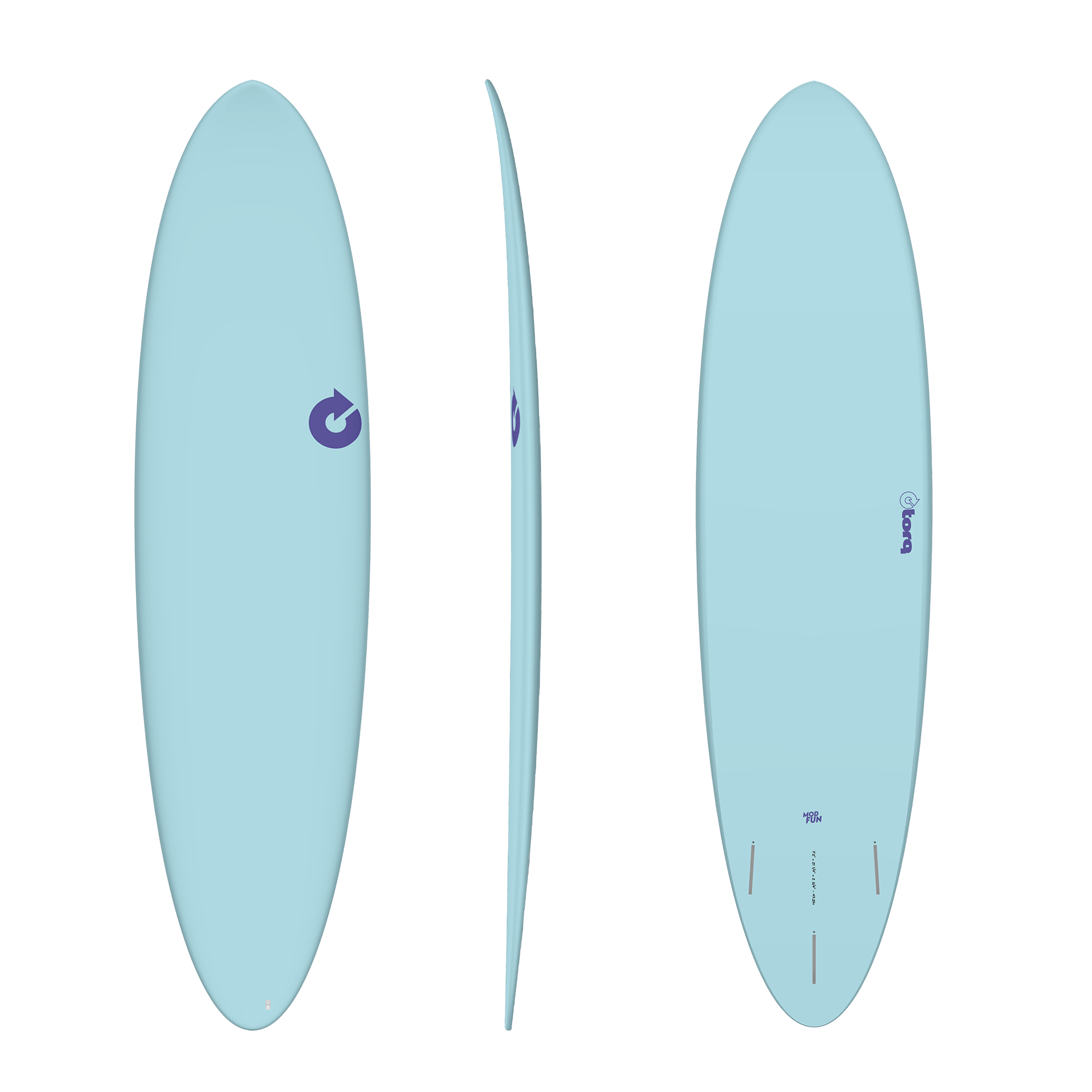
Torq TET Mod Fun
Torq's Tec Epoxy Technology wraps an EPS core in a virtually indestructible shell that shrugs off dings. The Mod Fun shape is the ideal progression board — enough rocker to duck dive, enough volume to catch everything.
Amazon affiliate · price subject to change
Torq's Tec Epoxy Technology is the right answer to the most common beginner-to-intermediate problem: dings. The TET construction wraps an EPS core in an epoxy shell that genuinely shrugs off the kind of impact that would crease a PU board. The Mod Fun shape pairs that with enough rocker to duck dive (eventually) and enough volume to catch waves in the small-wave conditions where most surfers spend their first two years.
At $499, the TET Mod Fun is the pick for surfers in their first or second year who want a board that will survive their learning curve. It is not the most performance-oriented shape on the list, but it is the one most likely to still be in your quiver three summers from now.
Catch Surf Odysea Log — The Soft Top That Earns Its Spot
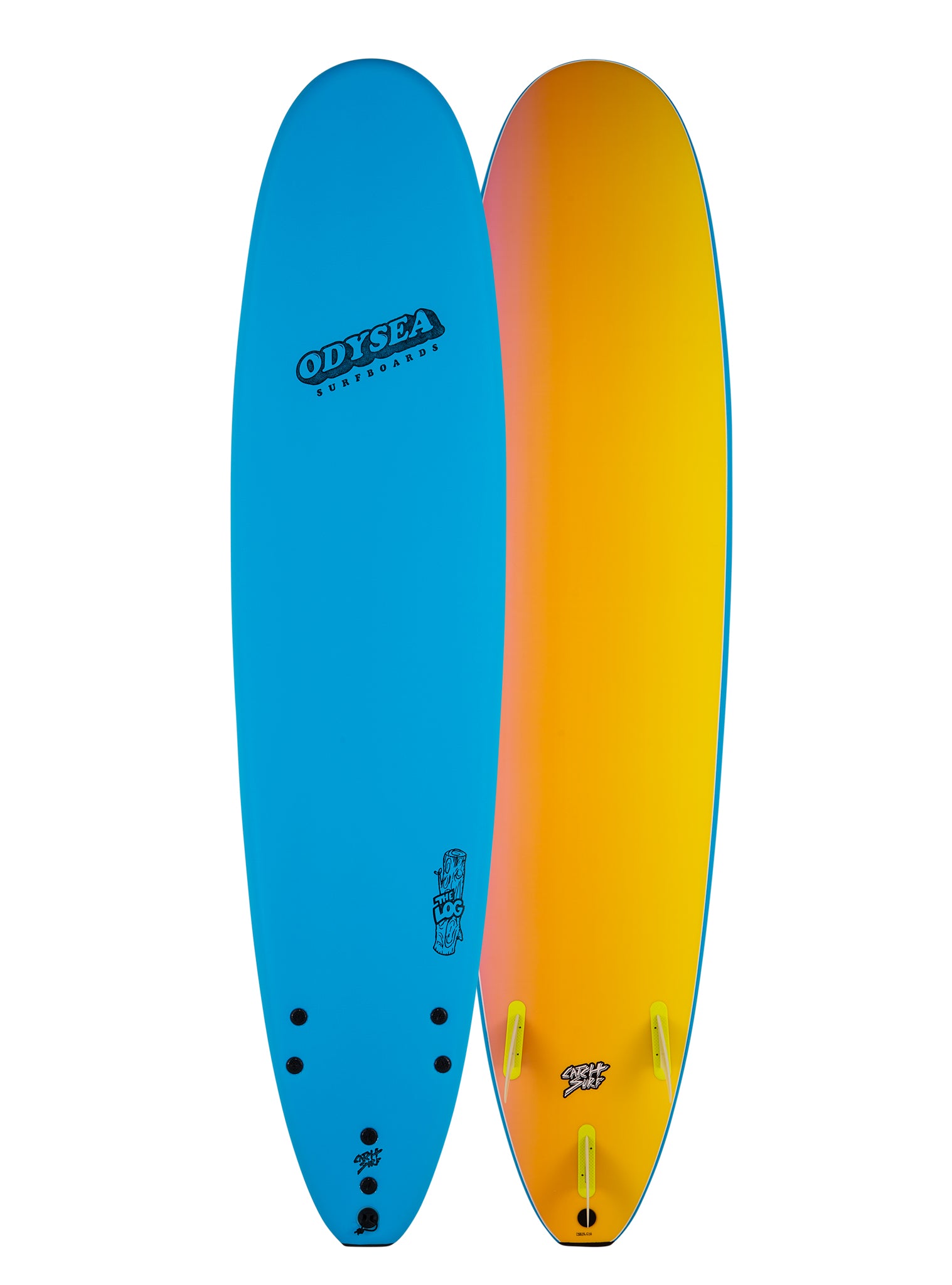
Catch Surf Odysea Log
The Odysea Log turns any day into a fun session — soft-top construction means no wax, no dings, and no stress. Its tri-fin setup and forgiving rocker make it the best board for introducing friends to surfing.
Amazon affiliate · price subject to change
The Odysea Log is the soft top that intermediate surfers actually keep. Soft-top construction means no wax, no dings, no stress about leaning it against a fence. The tri-fin setup and forgiving rocker make it the right board to introduce friends to the sport without buying them their own setup, and it is genuinely fun to ride in summer mush days when your real boards would be paddling slugs.
At $349, it occupies the same role in many quivers that a fish or longboard does in others — the small-day, mellow-session board that keeps you in the water on days you would otherwise skip.
Wavestorm 8' Classic — The Costco Legend
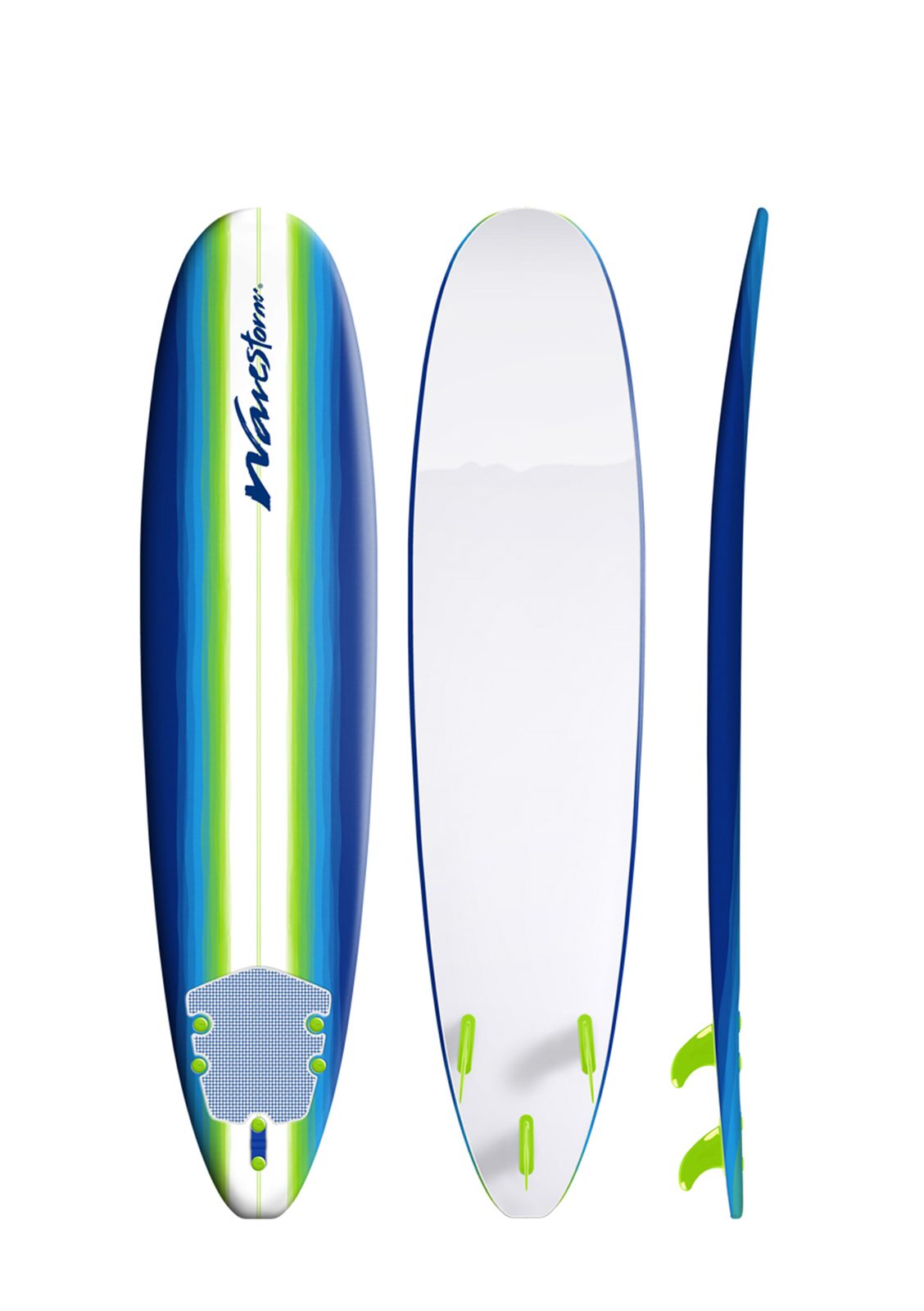
Wavestorm 8' Classic
The Costco legend that launched a million surf careers — the Wavestorm's soft foam and stable 8-foot platform make it nearly impossible not to stand up. At under $200, it's the most fun-per-dollar in surfing.
Amazon affiliate · price subject to change
The Wavestorm is the board that launched a million surf careers. Soft foam, an 8-foot platform, three soft fins, and a $179 price tag at Costco. It is nearly impossible not to stand up on, which is exactly the point — the Wavestorm exists to get you past the most discouraging part of learning to surf, which is the first 50 sessions where you cannot reliably catch waves.
Buy one for any friend who says they have always wanted to try surfing. Keep one in the garage for the friend who comes to visit. It is also a perfectly acceptable board for adults who want to log in slow point waves without buying a $1,200 longboard. The fun-per-dollar ratio is unmatched in the sport.
Buying Guide: The Three Decisions That Matter
Volume, not length. Length is a vanity number; volume in liters is what determines how easily a board paddles and catches waves. Intermediate surfers in average conditions ride boards in the 28-36 liter range. Beginners should add 30-40 percent. Channel Islands, Lost, JS, and DHD all publish full volume-to-rider-weight charts on their websites — use them.
Construction matters more than shape, until it does not. EPS-epoxy boards (Firewire, Torq) are lighter, more durable, and survive travel and learning curves that would destroy a PU board. PU-polyester boards (most Channel Islands, Lost, JS, DHD stock) flex differently, ride differently, and are what every pro on tour rides for a reason. For your first two boards, EPS is the smarter purchase. Once you know what you want, PU has the edge.
Hybrid first, performance shortboard second. Unless you live somewhere with consistent overhead, clean waves, your daily-driver board should be a hybrid: Sampler, Puddle Jumper HP, Hypto Krypto, Monsta Box. Reserve the pure performance shortboards (DNA) for the days they were built for. Beginners and intermediates who buy a high-performance shortboard as their first or second board will spend most of their sessions catching nothing.
For the full community ranking with current prices and live vote counts, head to Gavler's Best Surfboards list. If you are also shopping the broader sports category, the Gavler Sports hub covers the full set of community-ranked picks across surfing, pickleball, tennis, running, road biking, golf, and ski helmets.
See all 10 products ranked by the community
Best Surfboards
See Full Rankings →254 community votes cast
Common Questions
The Channel Islands Sampler tops Gavler's community ranking with a 9.6 score. Al Merrick's design pairs Biscuit-style paddle power with a refined tail rocker, which lets intermediate and advanced surfers ride it as a daily driver in waves from knee-high to overhead. The honest caveat: it is a hybrid shape, not a pure performance shortboard. Pro-level surfers chasing maximum vertical performance in good waves will reach for the DHD MF DNA or JS Monsta Box. For the broadest range of conditions on a single board, the Sampler is the consensus pick.
For a board that will hold up to a year of regular surfing without limiting your progression, plan to spend $700-900 for a stock production model. The $749-849 tier from Lost, Channel Islands, Firewire, JS, and DHD is where the meaningful design work lives — refined rocker lines, contemporary outlines, and quality glassing. Below $500, the technology gap widens noticeably. Custom hand-shaped boards from local shapers run $900-1,500 and are worth the premium once you know what you want. Soft tops like the Catch Surf Odysea Log and Wavestorm sit in their own category — under $400 and built to be abused.
PU (polyurethane foam with polyester resin) is the traditional construction, and most pro shortboards still ship in PU because shapers and team riders prefer the flex pattern. EPS (expanded polystyrene with epoxy resin) is lighter, more buoyant, and significantly more durable — a Firewire Helium or Torq TET will survive ding-prone travel that would total a PU board. For travel, learning, and progression, EPS is the right call. For pure performance feel in clean waves, PU still has the edge. Most surfers end up with one of each over time.
Volume in liters is more useful than length. As a starting point, intermediate surfers in average conditions ride between 28 and 36 liters; that translates roughly to your weight in kilos times 0.4 to 0.5. Beginners should add 30-40% to that volume number for a wider, thicker board that catches waves easily. For the boards on this list, Channel Islands, Lost, JS, and DHD publish full size charts on their websites with rider weight and skill recommendations. Order at least one liter higher than you think if you surf less than three times a week.
A real option. The Catch Surf Odysea Log and Wavestorm are not training-wheels boards you outgrow in two months — plenty of intermediate surfers keep one in the quiver for small-day fun and for friends who are visiting. The Wavestorm specifically launched a generation of surf careers and remains one of the most fun-per-dollar purchases in the sport. Soft tops also save you constant dings, wax management, and the cost of new boards while you learn. The trade-off: they will not surf like a true performance board once you are riding the lip and pumping for speed.
An asymmetric board has different rail and tail curves on the toe-side and heel-side because your body rotates differently in frontside vs. backside turns. The Album Surf Disasym is the most accessible asym in production. The argument for asym is biomechanical — your forward foot does different work in each direction, and a symmetric board compromises both. The argument against is that most surfers do not ride a board long enough to feel the asymmetry's benefit. If you have ridden the same shape for two-plus years and want to expand your turn vocabulary, an asym is worth the experiment.
Rankings come from community votes by people who actually surf the boards. Each user gets one vote on the Best Surfboards list — pick the board you would put under your arm tomorrow if a friend asked. Switched boards? Move your vote. No affiliate commissions or sponsorships influence the ranking. Vote totals at the time of publication appear next to each pick on the live list.
Products Mentioned
Jump to the full ranking and community verdict for each pick named above.
- Channel Islands SamplerSports · Best Surfboards
- DHD MF DNASports · Best Surfboards
- JS Monsta BoxSports · Best Surfboards
- Lost Puddle Jumper HPSports · Best Surfboards
- Firewire Seaside & BeyondSports · Best Surfboards
- Hayden Shapes Hypto KryptoSports · Best Surfboards
- Album Surf DisasymSports · Best Surfboards
- Torq TET Mod FunSports · Best Surfboards
- Catch Surf Odysea LogSports · Best Surfboards
- Wavestorm 8' ClassicSports · Best Surfboards