Lost Puddle Jumper HP.
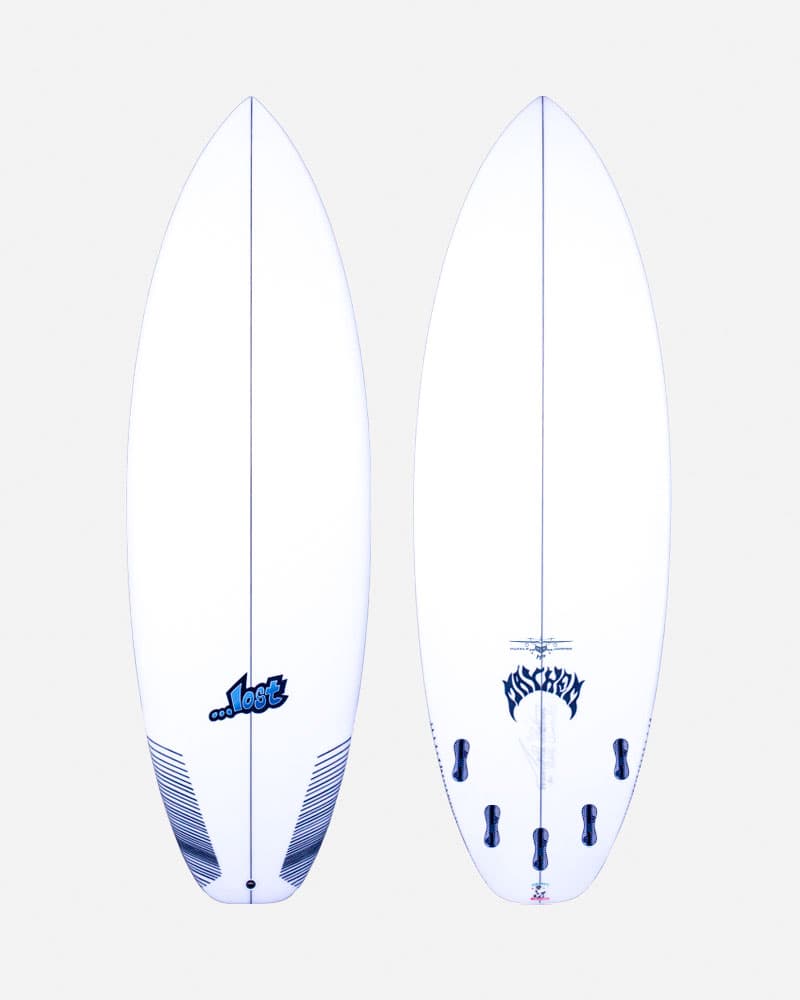
Matt Biolos refined the original Puddle Jumper with a pulled-in nose and performance tail rocker for more vertical surfing. It catches waves like a fish but surfs rail-to-rail like a proper shortboard.
The Verdict.
Gavler Meta-Score
“The benchmark small-wave board — the one shapers point to when someone says "there aren't any waves." The stubby, high-volume outline paddles into nothing, the concave-to-vee bottom keeps it fast and loose, and the HP's pulled nose lets you surf it vertically instead of just gliding. Run it as a quad for speed or a thruster for control, and size it several inches down. It gets overwhelmed in bigger, hollower surf — but that's not what it's for.”
The Gavler Verdict
The Gavler Review.
Lost Puddle Jumper HP Review: The Small-Wave Board Shapers Actually Ride
The Lost Puddle Jumper HP ranks 2nd on Gavler's Best Surfboards list with a score of 9.5, and it holds that spot as the board shapers themselves point to when a customer says there's nothing to surf. Matt Biolos of '...Lost designed the original Puddle Jumper specifically for small, gutless conditions and called it, in his own words, "the best small-wave board I've ever made." The HP variant sharpens that idea: a pulled-in nose and added tail rocker let it surf more vertically than the original's wide, glide-first shape, without giving up the stubby, high-volume outline that makes it catch waves other boards simply can't.
Where it fits: a specialist, not a one-board quiver
This is a groveler in the purest sense — a board built to solve one problem extremely well rather than do a little of everything. The short, stubby, wide-nosed outline packs volume forward in the board, which is what lets it paddle into ankle-high and knee-high waves that would leave a standard shortboard dead in the water. Where the HP earns its name over the standard Puddle Jumper is in what happens once you've actually caught the wave: the pulled-in nose and extra tail rocker give it the ability to surf with real vertical intent instead of just gliding down the line.
That specialization is also the board's honest limit. Surfd, describing the same small-wave groveler category the Puddle Jumper competes in, notes boards built this way are "made to paddle easily, catch waves early, and keep your sessions alive even when the surf is soft" — which is precisely the job here, and precisely why it isn't meant to replace a proper shortboard once the swell has real size and shape.
In use: speed, release, and genuine versatility through the fin setup
The mechanics behind the board's speed are straightforward and well-proven. A single concave running into vee through the tail delivers down-the-line speed while giving clean release off the back foot — the same fundamental bottom contour that shows up across the small-wave category, tuned here for a stubbier, higher-volume platform. The five-fin box is the more distinctive feature: it lets you run the board loose and fast as a quad, which maximizes speed and drive in weak surf, or switch to a more controlled thruster setup when you want predictability over outright speed. That flexibility is a real, tangible advantage over boards locked into one fin configuration, and it means the same board can adapt to slightly different kinds of small-wave days rather than forcing a single riding style.
Sizing guidance from shapers and retailers is consistent: ride it roughly 3 to 5 inches shorter than your standard shortboard. Because so much of the board's volume sits forward and through the middle, that size reduction doesn't cost you paddle power the way it would on a more traditional outline — it's the entire design logic of the board, not a workaround.
Strengths
- Best-in-class small-wave paddle power. The stubby, wide-nosed outline is built specifically to catch waves other boards miss, carrying volume exactly where you need it to paddle into ankle-high to chest-high surf.
- Genuine vertical surfing ability for a groveler. The HP's pulled nose and added tail rocker set it apart from glide-only small-wave boards — you can actually hit the lip and surf with intent rather than just draw long, flat lines.
- Five-fin convertibility. Run it as a quad for maximum speed and looseness, or a thruster for more control — a real point of difference from single-configuration boards in the same category.
- Shaper pedigree that matters. Matt Biolos didn't just design a small-wave board; he built the one he considers his best work in the category, and the HP is a direct, deliberate refinement of that original.
The trade-offs — who should skip it
The Puddle Jumper HP is unambiguously a specialist, and that's the trade-off worth naming clearly. It's devastating from ankle-high slop to chest-high beach break, but as the surf gets overhead and powerful, the wide planshape that makes it paddle so well starts to feel like a lot of board underfoot — this is a small-wave weapon, not a one-board quiver you can take into bigger, more powerful conditions and expect the same performance.
It also isn't the board to reach for if you want maximum glide with minimum effort. The HP specifically trades some of the original Puddle Jumper's easy-glide character for a more vertical, performance-oriented ride — surfers who want the mellower original experience should look at the base Puddle Jumper rather than the HP.
How it compares
Against its own podium, the Puddle Jumper HP is the more specialized small-wave tool. The Channel Islands Sampler, ranked 1st, covers a wider range of conditions and skill situations — it's built to be a genuine step-down board that still surfs like a shortboard once a wave has some push, where the Puddle Jumper HP leans harder into pure small-wave performance. The Firewire Seaside & Beyond, ranked 3rd, solves the small-wave problem differently again, prioritizing effortless glide over the HP's vertical, quad-driven speed. If your local break is reliably weak and you want a board that turns those days into your best sessions rather than your most frustrating ones, the Puddle Jumper HP's specialization is exactly the point.
The Gavler verdict
At 9.5, the Lost Puddle Jumper HP earns its place just behind the Sampler by doing one job better than almost anything else on the market: turning small, weak, gutless surf into genuinely fun sessions. Matt Biolos' own assessment of the original design — "the best small-wave board I've ever made" — still holds up in the refined HP version, and the five-fin convertibility gives it more range within its specialty than most competitors offer. The honest trade-off is that specialty itself: this is a dedicated groveler, not a one-board answer for bigger, more powerful surf. For surfers whose local conditions rarely deliver more than chest-high, that's not really a trade-off at all.
Common Questions
It works across skill levels because the high volume and stubby outline make wave-catching easy, but it rewards intermediate-to-advanced surfers most — the pulled-in nose and added tail rocker on the HP version specifically exist to let more experienced surfers ride it vertically instead of just gliding. A true beginner will get more out of a wider, more forgiving soft-top or fish first.
Shapers and retailers consistently suggest roughly 3 to 5 inches shorter than your standard shortboard. The stubby, wide-nosed outline carries enough volume forward that you don't lose paddle power by sizing down aggressively — that's the entire point of the design.
The original Puddle Jumper, which Matt Biolos of '...Lost called 'the best small-wave board I've ever made,' is a wider, glide-focused outline. The HP ('high performance') pulls in the nose and adds tail rocker so it surfs more vertically, trading a little of the original's easy glide for the ability to actually turn hard and hit the lip when a wave allows it.
Yes. It ships with a five-fin box setup, so you can run it as a loose, fast quad for maximum small-wave speed or switch to a thruster for more control and predictability — a real advantage over boards locked into a single fin configuration.
Where to Buy.
Prices checked regularly
90-day price history
Price History
Steady at $749 for the entire 90-day tracking window — no increases, no discounts, across 91 tracked days.
Tracked daily across retailers. Vote Want itabove and we’ll alert you the moment the price drops.
Some links are affiliate links — Gavler may earn a commission. This never affects rankings or scores. Learn more.
Precision Engineering
Stubby, High-Volume Outline
A wide nose and forward volume let you paddle into small, weak waves early.
Concave-to-Vee Bottom
Single concave into vee through the tail delivers speed with release off the back foot.
Five-Fin Convertible
Run it loose and fast as a quad or more controlled as a thruster.
Technical Specifications
The Scoreboard
The 9.5 reflects its status as the default small-wave recommendation across shaper and tester roundups. It sits just behind the Sampler because it's a more specialized groveler — devastating in weak surf, less of a true one-board quiver as waves build.
Cast Your Vote
Do you think Lost Puddle Jumper HP deserves the #2 spot in Best Surfboards?
Global Critique
“The best small-wave board I've ever made.”
“Made to paddle easily, catch waves early, and keep your sessions alive even when the surf is soft.”
More from Best Surfboards.
See how other top picks compare in this category.