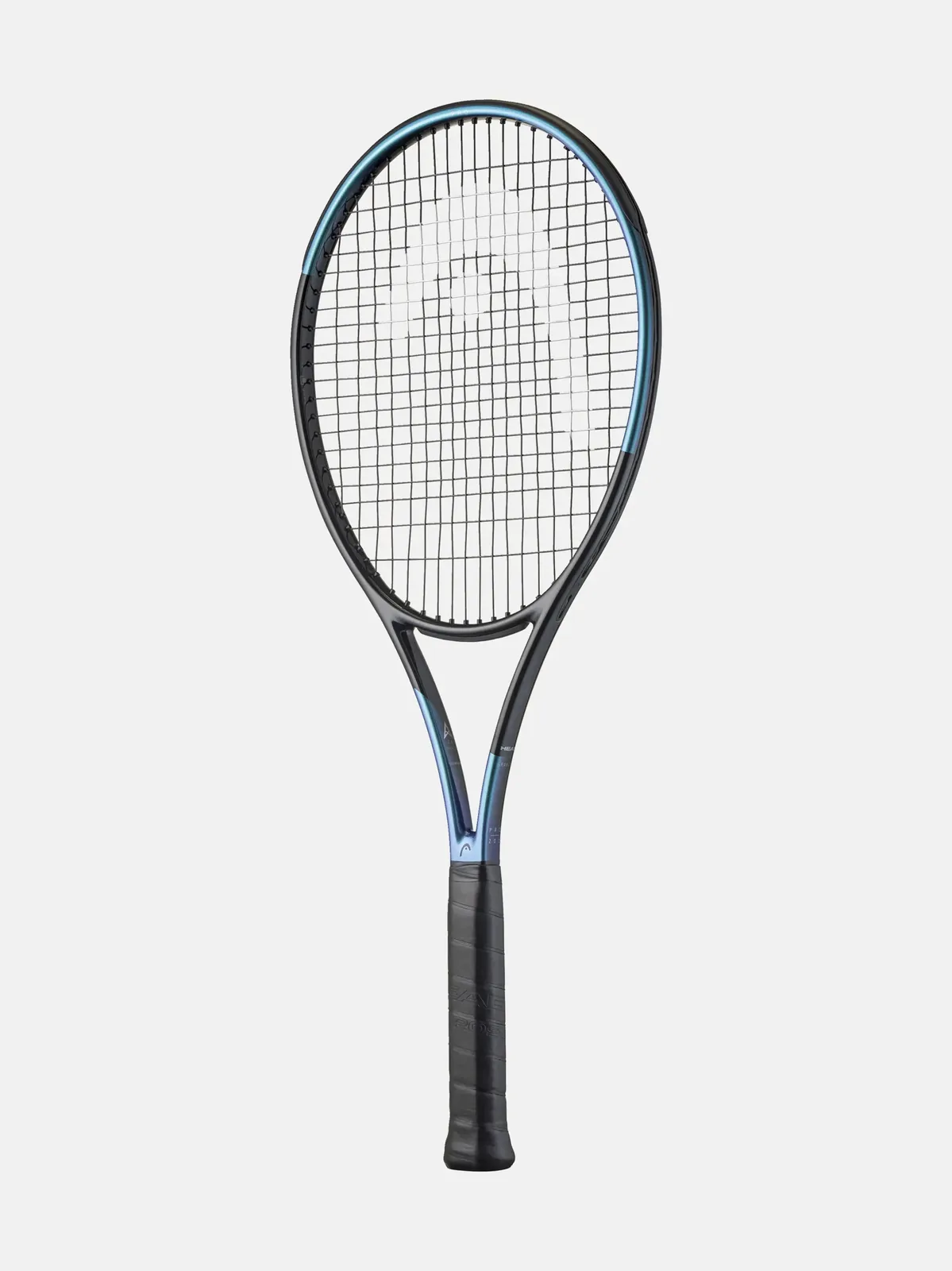
HEAD Gravity Pro 2023.
Alexander Zverev's frame. The Gravity Pro's teardrop head lifts and widens the sweet spot in the upper hoop where modern topspin players make contact, and its Auxetic-tuned flex gives it one of the softest, most connected feels in the control category.
The Verdict.
Gavler Meta-Score
“The best-feeling control frame HEAD makes, and the reason it's on tour. The teardrop head and Auxetic flex deliver precision, comfort, and a connected response that stiffer players' frames can't match, and testers struggled to find real faults. But it's a demanding stick: 315g, an 18x20 pattern, and low-power by design mean you supply the pace. Ideal for advanced players with fast, full swings; power-seekers and improvers should look lighter.”
The Gavler Verdict
The Gavler Review.
HEAD Gravity Pro 2023 Review: Zverev's Control Frame, Tested
The HEAD Gravity Pro 2023 is the reason Alexander Zverev plays HEAD, and Tennis Warehouse's playtest team struggled to find much to criticize about it. Ranked seventh on Gavler's Best Tennis Rackets list with an 8.8, it's a full player's control frame built around a distinctive teardrop head shape and HEAD's Auxetic construction — a combination that testers repeatedly described as one of the best-feeling racquets they'd hit. The trade-off is inherent to what it's built to do: at 315g unstrung with a tight 18x20 pattern, this frame supplies control, not free pace, and it asks for a fast, committed swing to reward you for using it. Advanced players will love it. Improvers and power-seekers should look elsewhere on this list.
What it actually is
The Gravity Pro is HEAD's flagship control frame, and its signature feature is a teardrop head shape that shifts the sweet spot up and out toward the tip — precisely where players hitting with heavy topspin tend to make contact. The 2023 update layers HEAD's Auxetic construction on top of that shape, a material engineered to flex and smooth out the feel at impact rather than transmitting shock directly to the arm. The combination is meant to solve a specific problem: giving a demanding, low-power control frame a plush, comfortable feel that stiffer player's racquets typically sacrifice.
At 100 square inches with an 18x20 string pattern, a 62 stiffness rating, and a swingweight in the low 340s, the spec sheet reads like a classic full player's frame — heavy, dense, and built for players who generate their own power rather than borrowing it from the racquet.
In use
Tennis Warehouse's testing team reached for words that rarely all land on the same frame: "words like precision, stability, feel and control describe the updated Gravity Pro — one of the best-feeling racquets, with enough power to compete but beating stiffer racquets on precision, versatility and comfort." That's a meaningful claim from a team that plays dozens of frames a year — precision and comfort don't usually coexist this cleanly, since comfort-focused flex often comes at the cost of feedback.
What stood out most in the same testing was the consistency of praise across different parts of the court: "everyone on the playtest team had praise for the Gravity Pro from the baseline and the net, with negative comments few and far between." Tennis.com's analysis zeroed in on why the shape works the way it does: "the teardrop shape elevates and widens the sweet spot in the upper portion of the hoop, where modern players most frequently make contact" — a direct engineering response to how today's topspin-heavy game is actually played, rather than a legacy shape carried over from an earlier era of tennis.
Strengths
The teardrop head and Auxetic flex together deliver a feel that testers consistently rated above stiffer, more traditional player's frames — precision and comfort in the same racquet is a genuinely difficult combination to engineer, and the Gravity Pro's playtest reception suggests HEAD pulled it off. The 18x20 pattern is the backbone of its control identity, trading spin-friendly launch angle for a lower, more predictable trajectory and pinpoint placement — exactly what an advanced player wants when they're already generating their own spin and power through technique. And the fact that Tennis Warehouse found praise from both the baseline and the net suggests the frame doesn't have a weak zone; it performs consistently across the whole court rather than excelling in one area and falling short in another.
The trade-offs — who should skip it
The trade-off here isn't hidden — it's the defining characteristic of the frame. At 315g unstrung (332g strung) with an 18x20 pattern and a swingweight in the low 340s, this is a full player's stick that demands a fast, committed swing. Players without that swing speed won't generate enough pace to make the low-power design work in their favor; they'll simply feel underpowered. This is not a forgiving tweener frame, and it's not built to flatter shorter, slower swings the way a more power-oriented frame is.
If you're looking for a frame that gives you free power rather than asking you to supply it, the Babolat Pure Drive 2024 one rank up on this list is the more forgiving, power-first alternative. If you're stepping up from a tweener frame and aren't sure you're ready for a full 18x20 player's stick, it's worth trying before you commit — this is a racquet that rewards technique rather than compensating for its absence.
How it compares
On Gavler's tennis racket list, the Gravity Pro sits just below the Babolat Pure Drive 2024, and the contrast is instructive: the Pure Drive is the power-and-forgiveness pick, while the Gravity Pro is the control-and-feel pick for players who've already got the game to use it. Both are excellent frames aimed at different swing styles rather than different skill tiers — the choice comes down to whether you want the racquet to add pace or add precision.
The Gavler verdict
An 8.8, reflecting genuine praise from Tennis Warehouse and Tennis.com for the Gravity Pro's precision, feel, comfort, and net-to-baseline versatility — testers called it one of the best-feeling frames they'd tested, and struggled to find real faults. It's held just below the podium by its low-power, technique-demanding character and the premium heft of a full 18x20 player's frame. Buy it if you're an advanced player with a fast, full swing who values plush comfort and pinpoint placement over easy power — it's the reason Alexander Zverev plays it on tour. Power-seekers and improvers should look lighter.
Common Questions
For advanced players with fast, full swings, yes. It ranks seventh on Gavler's Best Tennis Rackets list with an 8.8, and Tennis Warehouse's playtest team called it one of the best-feeling racquets they've hit. The catch is real: at 315g unstrung with an 18x20 pattern, this is a demanding player's frame that gives you control rather than free power.
Advanced players and strong 4.0-plus hitters with long, fast strokes who value plush comfort, pinpoint placement, and a soft, arm-friendly response. It is Alexander Zverev's frame of choice on tour, which signals exactly the caliber and swing style it rewards.
Anyone looking for effortless power or a lighter, more forgiving tweener frame. The dense 18x20 string pattern and 315g heft demand real technique to unlock, and players without a fast, committed swing will find it underpowered compared to a more power-oriented frame like the Babolat Pure Drive.
The teardrop hoop shifts and widens the sweet spot up and toward the tip of the racquet — exactly where players hitting with heavy topspin tend to make contact, according to Tennis.com's playtest analysis. That's a deliberate design choice distinct from the more traditional oval or round head shapes on most control frames.
Where to Buy.
Prices checked regularly
90-day price history
Price History
Steady at $249 for the entire 90-day tracking window — no increases, no discounts, across 91 tracked days.
Tracked daily across retailers. Vote Want itabove and we’ll alert you the moment the price drops.
Some links are affiliate links — Gavler may earn a commission. This never affects rankings or scores. Learn more.
Precision Engineering
Teardrop Head + Auxetic Construction
The distinctive teardrop hoop lifts and widens the sweet spot toward the upper string bed where topspin players make contact, while HEAD's Auxetic material flexes at impact for a soft, connected, comfortable feel.
315 g Unstrung, 4 pts Head-Light
A full player's weight (332 g strung, swingweight in the low 340s) that supplies stability and plow-through but asks for a fast, committed swing to generate pace.
18x20 String Pattern
The dense pattern is the backbone of the Gravity Pro's precision and control, trading spin-friendly launch for a lower, more predictable trajectory and pinpoint placement.
Technical Specifications
The Scoreboard
The 8.8 (expert 89 / community 86) reflects Tennis Warehouse and Tennis.com praise for the Gravity Pro's precision, feel, comfort, and net-to-baseline versatility — one of the best-feeling frames tested — held just below the podium by its low-power, technique-demanding character and the premium heft of a full 18x20 player's frame.
Cast Your Vote
Do you think HEAD Gravity Pro 2023 deserves the #7 spot in Best Tennis Rackets?
Global Critique
“Words like precision, stability, feel and control describe the updated Gravity Pro — one of the best-feeling racquets, with enough power to compete but beating stiffer racquets on precision, versatility and comfort.”
“Everyone on the playtest team had praise for the Gravity Pro from the baseline and the net, with negative comments few and far between.”
“The teardrop shape elevates and widens the sweet spot in the upper portion of the hoop, where modern players most frequently make contact.”
More from Best Tennis Rackets.
See how other top picks compare in this category.
A Thin-Beam Control Frame, a Spin Tweener, or a Comfort Hoop?
A 71-RA hangtag is the wrong first question. Thin-beam control, spin tweener, or comfort hoop is the frame. Then shop Gavler's live ranking.
The US Open Starts August 30. Don't Buy Your Favorite Pro's Racket.
The pros at the US Open aren't playing the rackets with their names on them. Here's why chasing a pro's frame is a mistake — and what to buy instead.
The Best Tennis Rackets in 2026, Ranked by Players Who Actually Compete With Them
Wilson, Babolat, HEAD, Yonex. Gavler's community ranks the rackets worth restringing — from Sampras-lineage frames to the spin monster Nadal still swings.