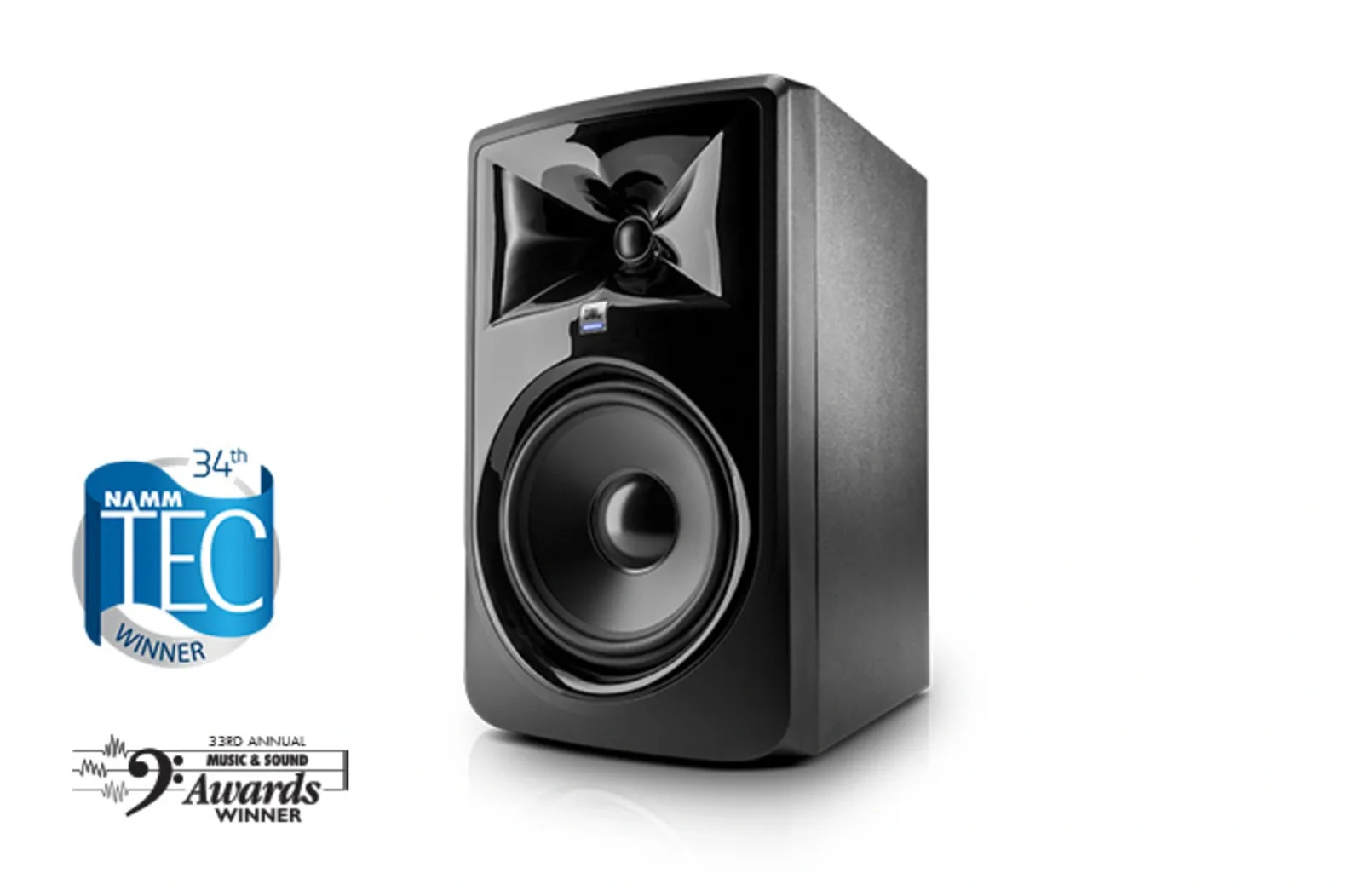
JBL 308P MkII.
JBL's Image Control Waveguide creates an expansive listening area, making the 308P MkII forgiving of imperfect positioning.
The Verdict.
Gavler Meta-Score
“The 308P MkII's wide sweet spot is its killer feature — it makes mixing more forgiving of imperfect room setup and positioning, which is the reality of most home studios. JBL's professional pedigree shines through in the waveguide technology, and the $299 price makes these monitors an outstanding value for anyone building their first serious monitoring setup.”
The Gavler Verdict
The Gavler Review.
JBL 308P MkII Review: The Monitor That Forgives Your Untreated Room
The JBL 308P MkII ranks number six on Gavler's Best Studio Monitors list with a 9.0, and its case for existing is refreshingly practical: most home studios don't have a perfectly centered, acoustically treated listening position, and this monitor is specifically engineered to not punish you for that. It's for producers building their first serious monitoring setup in a real room with real furniture and real compromises. Mix Online summed it up well, calling it "a great near- and midfield solution suitable for mixing music, editing video, or other tasks requiring monitoring accuracy" that "punches well above its price point." The trade-off is bass control that's a step behind the pricier competition — a fair exchange at $299 per speaker.
What it is
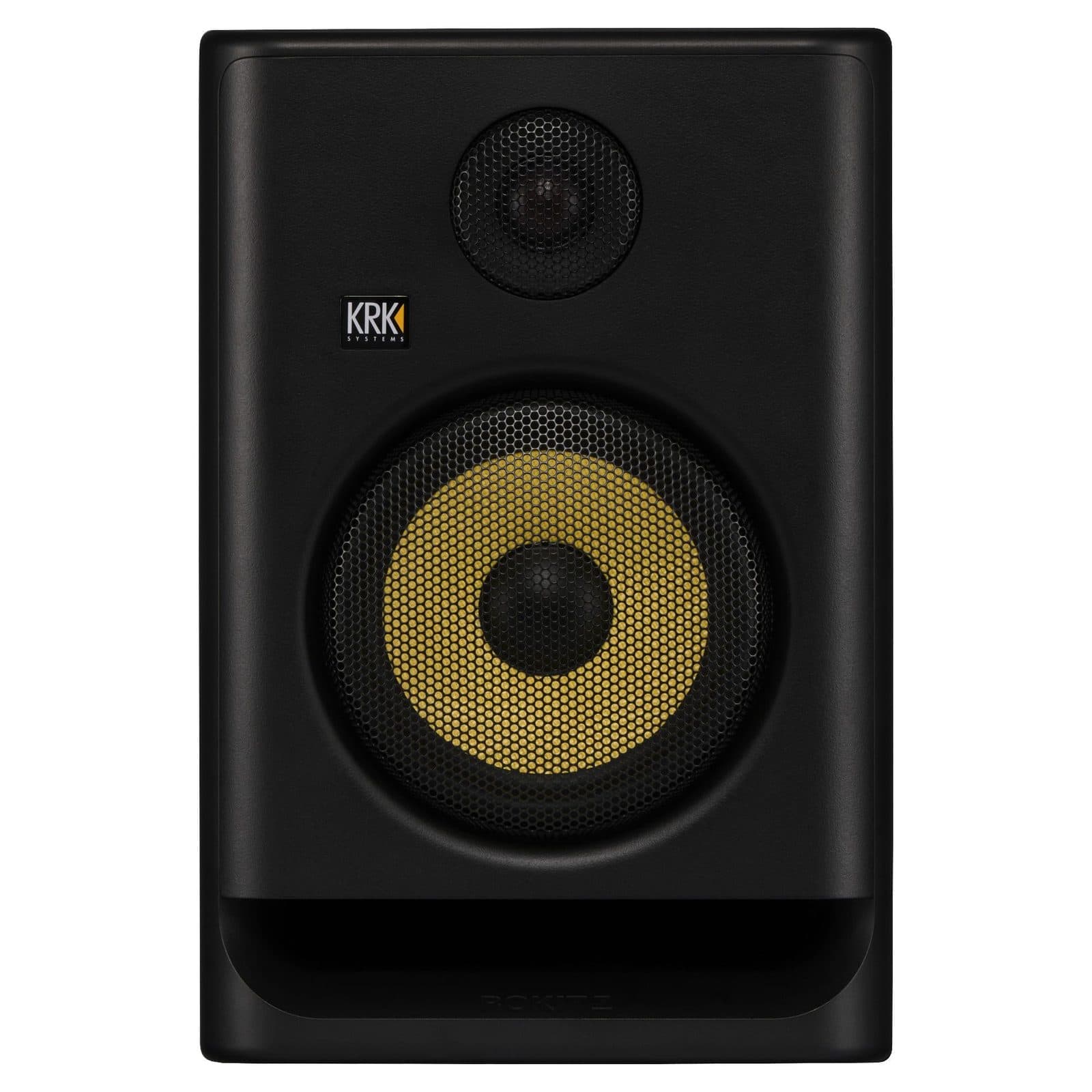
The 308P MkII's headline feature is JBL's patented Image Control Waveguide, adapted down from the company's flagship M2 Master Reference Monitor used in professional mastering and film scoring facilities. The waveguide controls the tweeter's dispersion pattern to match the 8-inch woofer's radiation pattern at the crossover frequency, which is the technical way of saying it creates an unusually wide, stable sweet spot. Most nearfield monitors demand you sit in a narrow, precisely centered position for accurate stereo imaging; the 308P MkII is engineered to be far more tolerant of an off-center chair or an asymmetrical desk.
The 8-inch long-throw woofer uses a Slip Stream low-frequency port to extend bass response down to 43Hz, while the 1-inch soft dome tweeter handles 1.7kHz up to 24kHz. Bi-amplified Class-D amplification delivers 56W to each driver — 112W total — which is more than sufficient headroom for nearfield monitoring at typical nearfield distances. The rear panel includes boundary EQ settings tuned for desktop, soffit, and free-standing placement, plus an HF trim control, giving you some ability to compensate for a monitor placed close to a wall or in a corner. At 8.1kg per speaker, build quality is solid MDF construction with robust XLR and TRS connectors — commendable at this price.
In use
JBL's own engineering claim is bold but backed by lineage: the Image Control Waveguide was "originally developed for JBL's flagship M2 Master Reference Monitor" and "ensures an acoustically seamless transition between the low- and high-frequency transducers," providing "an immersive soundstage with precise imaging." Trickle-down technology from six-figure mastering monitors to a $299 nearfield is a genuine value story, not just marketing language, and the imaging performance backs it up in practice.
Mix Online's real-world assessment is the most useful independent data point here: the 308P MkII is "a great near- and midfield solution suitable for mixing music, editing video, or other tasks requiring monitoring accuracy — the patented Image Control Waveguide does an excellent job of delivering a wide sweet spot, and it punches well above its price point." That's a publication that reviews interfaces and monitors across every price tier drawing a direct line between the waveguide technology and real-world monitoring accuracy, not just a wider-sounding stereo field.
B&H Photo's editorial coverage gets specific on the technical side: "dual 56W Class-D amplifiers powering an 8-inch low-frequency woofer and a woven-composite 1-inch neodymium tweeter deliver a frequency response of 45Hz to 20kHz with a peak SPL of 112dB — great sounding monitors with rich highs and tight bass at the price." The 112dB peak SPL figure is worth noting for anyone tracking loud sources or working in a larger room — there's real headroom on tap here beyond typical nearfield listening levels.
Strengths
- An unusually wide, stable sweet spot. The Image Control Waveguide's dispersion matching means mixing decisions don't shift dramatically if you lean forward, sit slightly off-center, or share the room with a second listener.
- An 8-inch woofer at a 5.25–6.5-inch price. Most monitors under $350 use smaller woofers; the 308P MkII's larger driver gives it genuine low-end extension to 43Hz without needing a subwoofer for most material.
- Real headroom. A 112dB peak SPL rating gives more volume ceiling than typical nearfield use requires, useful for tracking sessions or larger rooms.
- Boundary EQ that solves a real problem. The desktop, soffit, and free-standing settings directly address the placement compromises most home studios are forced into.
The trade-offs — who should skip it
- Bass control trails the category leaders. Gavler's scoring notes are direct: "experts note the bass response is slightly less controlled than the Yamaha HS8." If your genre depends on precisely defined low-end (electronic, hip-hop, anything bass-forward), the HS8's tighter bass reproduction may be worth the extra $150 per speaker.
- It's not the most analytically flat monitor here. The wide sweet spot and forgiving voicing come with a slightly less surgical midrange than the Yamaha HS8 or Neumann KH 120 II — a reasonable trade for a monitor built to be forgiving rather than clinical.
- The green power LED doubles as a signal indicator, which is a minor design quirk worth knowing rather than a real flaw — some users find it slightly distracting in a dark room.
How it compares
Within the same list, the 308P MkII sits one rank below the Focal Alpha 65 Evo, which trades JBL's wide sweet spot and 8-inch bass extension for a more musically refined, vocal-focused midrange from Focal's Slatefiber cone — at nearly double the price. One rank above the 308P MkII, the Yamaha HS8 remains the more ruthlessly accurate industry reference, at the cost of demanding a more precisely centered listening position to get its full benefit. For a home studio where the desk isn't perfectly symmetrical and the budget tops out around $300 per speaker, the 308P MkII is the more forgiving, and arguably more practical, choice.
The Gavler verdict
A 9.0, driven by strong community enthusiasm for the wide sweet spot and the price, tempered by expert notes that bass control is a step behind pricier competitors. The JBL 308P MkII earns its rank by solving a problem most budget monitors ignore: the reality that home studios rarely have a perfectly centered, acoustically neutral listening position. At $299 per speaker, it's an outstanding value pick for anyone building their first serious monitoring setup in a room that isn't purpose-built — which describes almost everyone.
Common Questions
Yes, especially for home studios with imperfect room setups. Mix Online called it 'a great near- and midfield solution... the patented Image Control Waveguide does an excellent job of delivering a wide sweet spot, and it punches well above its price point.' At $299 per speaker it ranks sixth on Gavler's Best Studio Monitors list with a 9.0, and the main trade-off is that bass response is slightly less tightly controlled than pricier 8-inch competitors like the Yamaha HS8.
It's a waveguide derived from JBL's flagship M2 Master Reference Monitor that shapes the tweeter's dispersion pattern to match the woofer's radiation pattern at the crossover point. In practice, this creates a much wider listening area — you can move your head, shift your chair, or mix from an off-center position without the stereo image collapsing or the tonal balance shifting significantly, which matters a lot in rooms that were never acoustically designed.
Buy the HS8 if you want the more established, ruthlessly flat industry reference and your listening position is fixed and centered. Buy the 308P MkII if your room or desk setup makes consistent centered listening difficult — the wider sweet spot from JBL's waveguide is specifically engineered to be forgiving of the imperfect positioning that's the reality of most home studios, and it saves you $150 per speaker in the process.
Not for most home studio use — the 8-inch long-throw woofer extends to a genuine 43Hz. Gavler's scoring notes flag that bass response is 'slightly less controlled' than the Yamaha HS8's, so producers doing heavy sub-bass work in electronic or hip-hop genres may still want a dedicated subwoofer, but it's not a requirement for typical mixing and production.
Where to Buy.
Prices checked regularly
90-day price history
Price History
Steady at $299 for the entire 90-day tracking window — no increases, no discounts, across 91 tracked days.
Tracked daily across retailers. Vote Want itabove and we’ll alert you the moment the price drops.
Some links are affiliate links — Gavler may earn a commission. This never affects rankings or scores. Learn more.
Precision Engineering
Image Control Waveguide
JBL's patented waveguide matches tweeter and woofer dispersion at the crossover for an ultra-wide, stable sweet spot.
112W Bi-Amplified
Dual 56W Class-D amplifiers deliver clean, balanced power with sufficient headroom for nearfield monitoring.
Boundary EQ
Rear-panel EQ settings for desktop, soffit, and free-standing placement adapt the monitor to your room configuration.
Technical Specifications
The Scoreboard
Community especially values the wide sweet spot and affordable price. Experts note the bass response is slightly less controlled than the Yamaha HS8 but praise the overall value proposition.
Cast Your Vote
Do you think JBL 308P MkII deserves the #6 spot in Best Studio Monitors?
Global Critique
“Originally developed for JBL's flagship M2 Master Reference Monitor, the Image Control Waveguide ensures an acoustically seamless transition between the low- and high-frequency transducers and provides an immersive soundstage with precise imaging.”
“A great near- and midfield solution suitable for mixing music, editing video, or other tasks requiring monitoring accuracy — the patented Image Control Waveguide does an excellent job of delivering a wide sweet spot, and it punches well above its price point.”
“Dual 56 W Class-D amplifiers powering an 8-inch low-frequency woofer and a woven-composite 1-inch neodymium tweeter deliver a frequency response of 45 Hz to 20 kHz with a peak SPL of 112 dB — great sounding monitors with rich highs and tight bass at the price.”
More from Best Studio Monitors.
See how other top picks compare in this category.
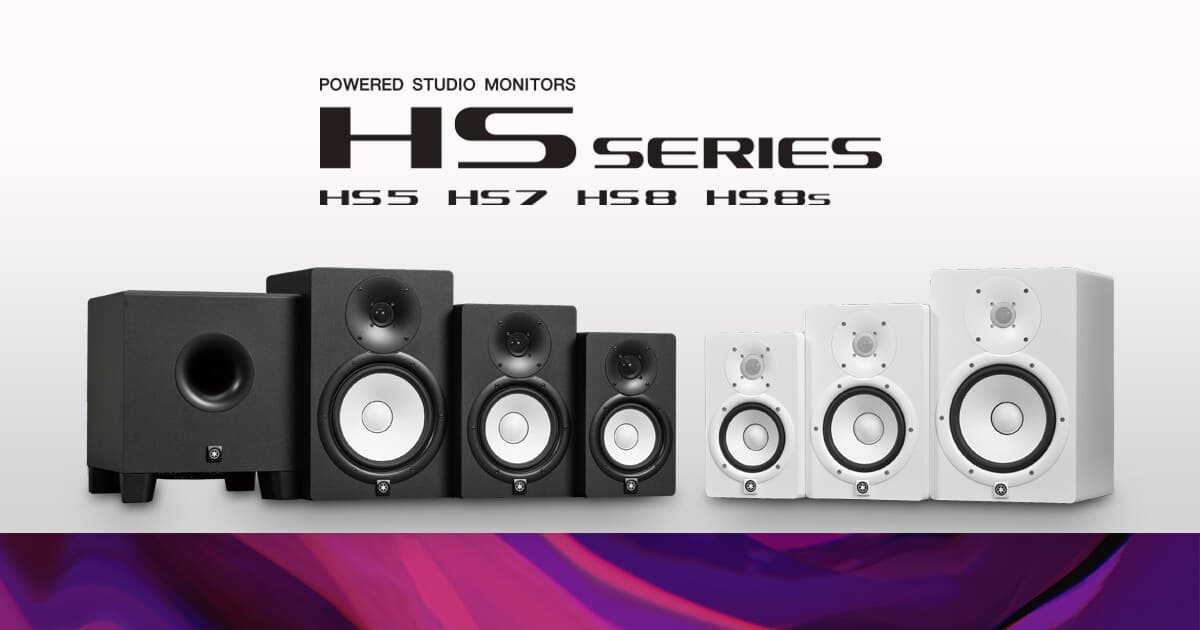
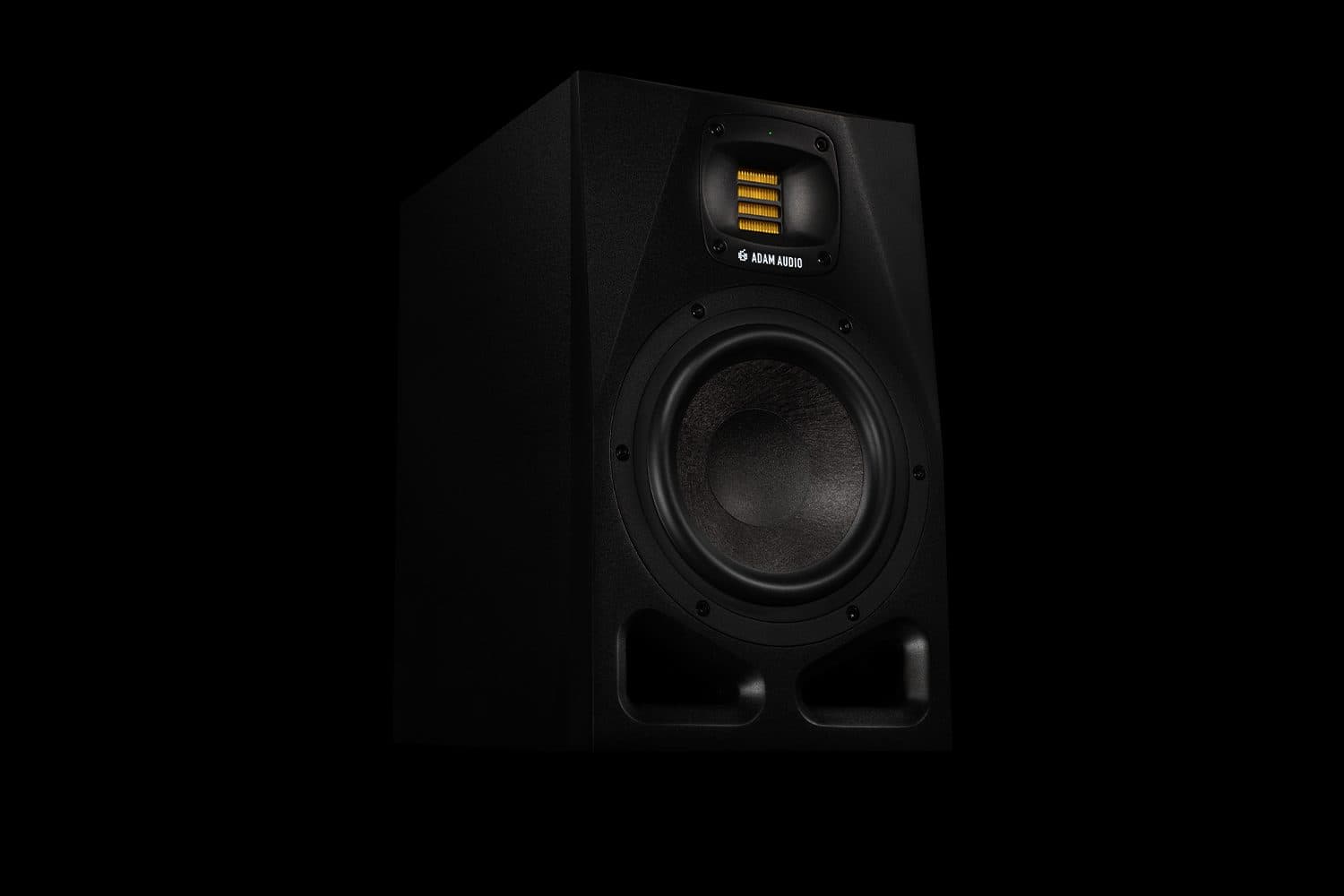
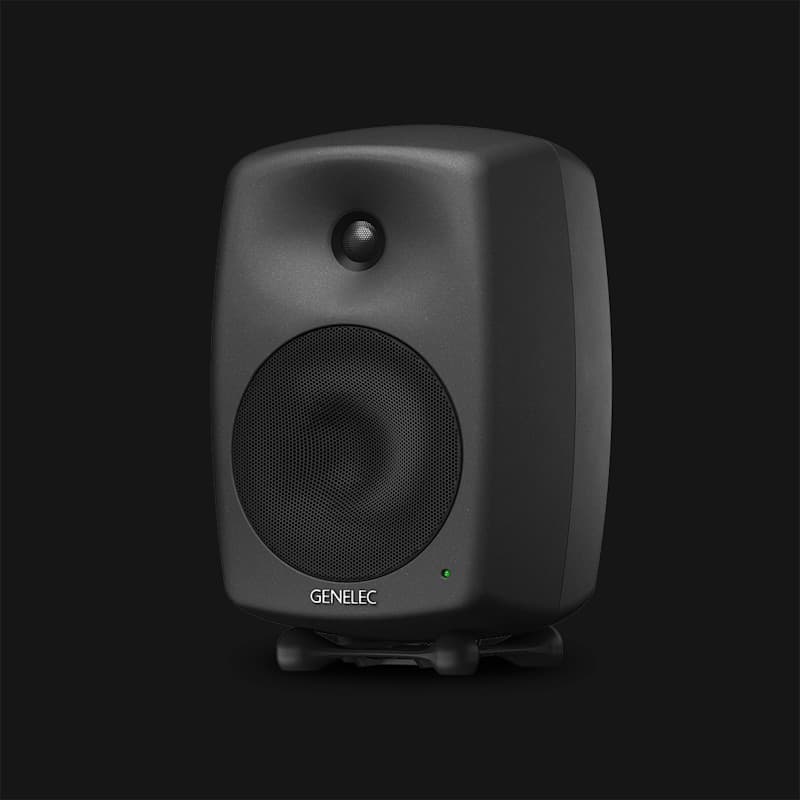
Before You Buy Studio Monitors, Size the Room
Driver hangtags are the wrong first question. Nearfield vs midfield, room, and mix vs hi-fi come first. Then shop Gavler's live ranking.
The Best Studio Monitors in 2026, Ranked by the Engineers Who Mix on Them
Yamaha, Adam Audio, Genelec, Neumann, Focal. Gavler's community ranks the reference monitors worth buying — from $179 starters to $1,999 midfields.