Kali Audio LP-6 V2.
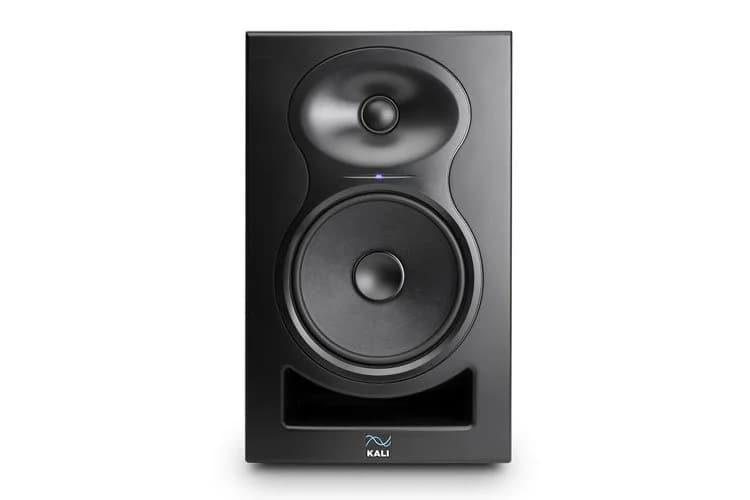
Kali's innovative waveguide and practical boundary compensation make the LP-6 V2 one of the most acoustically adaptable budget monitors available.
The Verdict.
Gavler Meta-Score
“The LP-6 V2 is proof that great monitoring does not require a large budget — it requires smart engineering. Kali's 3D-printed waveguide and boundary EQ switches solve real-world problems that most budget monitors ignore. At $199, these monitors deliver accuracy that competes with products at twice the price, making them the smartest entry-level investment in monitoring today.”
The Gavler Verdict
The Gavler Review.
Kali Audio LP-6 V2 Review: Engineering Its Way Around a Budget
The Kali Audio LP-6 V2 ranks number 9 on Gavler's Best Studio Monitors list with an 8.4, and it's the monitor for anyone who has to work in a bad room and can't afford to fix it. Its 3D-printed waveguide and eight-switch boundary EQ address placement problems that most budget monitors simply pretend don't exist. The trade-off is power headroom — 80 watts total limits maximum SPL compared to larger designs. As Audio Science Review put it after Klippel Near-Field Scanner testing, the LP-6 V2 is "the most cost-effective option for users requiring 6.5-inch monitoring with comprehensive DSP room correction capabilities."
What it is
Kali Audio's core pitch is applying large-format monitor engineering to small-format prices, and the LP-6 V2 is the clearest evidence it works. The 3D-printed waveguide isn't a cost-cutting shortcut — additive manufacturing lets Kali produce complex geometry that would be prohibitively expensive to injection-mold, which is how a $199 monitor ends up with dispersion control that Gavler's own data says is "typically reserved for monitors costing three to four times as much."
The 6.5-inch woofer and 1-inch textile dome tweeter split 80 watts (40W + 40W) through a Class-D amplifier, reaching a rated 39Hz to 25kHz — genuinely extended bass for the cabinet size, achieved through careful port tuning and a long-throw woofer rather than raw power. The rear panel carries eight DIP switches: separate settings for free-standing, wall, corner, and desk placement, plus LF and HF trim, each based on measured acoustic corrections rather than guesswork.
In use
Independent bench testing backs Kali's engineering claims rather than just repeating them. Erin's Audio Corner measured "anechoic on-axis linearity comes in at plus-2.51 / minus-1.99 dB with extension to roughly 50 Hz, F3 at or below 42 Hz, harmonic distortion staying below 3 percent under 1.7 kHz at 96 dB/1 m, and smooth horizontal directivity" — and noted "a pair will put you at around 102 dB with respectable linearity." Those are numbers you'd expect from monitors well north of $199.
Audio Science Review's Klippel-based measurements (per ANSI/CTA-2034-A R-2020) reached the same conclusion from a different testing methodology, and Higher Hertz summed up the appeal directly: "Phenomenal budget monitors — the 3D-printed waveguide controls dispersion with precision typically reserved for monitors costing three to four times as much, and the boundary EQ switches solve real-world placement problems most budget monitors ignore." That's the throughline across every independent source: the LP-6 V2 isn't just cheap, it's smart about being cheap.
Strengths
- Boundary EQ switches are based on real measured data, not arbitrary presets — genuinely useful for desks, corners, and walls, the exact placements most home producers are stuck with.
- Bass extension to 39Hz is unusually deep for a 6.5-inch driver at this price, achieved through port tuning rather than brute-force power.
- Independent measurements confirm the marketing. Both Erin's Audio Corner and Audio Science Review's Klippel testing back up Kali's dispersion and linearity claims — this isn't a case of a manufacturer grading its own homework.
- Community enthusiasm is unusually high. Gavler's scoreNote records that "many compare the LP-6 V2 favorably to monitors costing $400+."
The trade-offs — who should skip it
Power is the honest limitation. Gavler's own scoreNote flags that "experts praise the boundary EQ and waveguide design but note the power output limits maximum SPL." At 80 watts total, the LP-6 V2 is built for realistic nearfield mixing distances, not for filling a large room or mixing at loud, sustained volumes. If you need serious headroom for a bigger space, or you're mixing genres that demand loud monitoring for extended sessions, the Dynaudio LYD 48 further down this same list — a 180-watt, 3-way midfield design — is the more appropriate (and considerably pricier) tool.
How it compares
The LP-6 V2 sits at rank 9, directly behind the PreSonus Eris E5 XT at rank 8 — the two are the closest head-to-head comparison on this list. The PreSonus counters with continuously variable rear-panel EQ knobs rather than fixed-position switches, and it undercuts the Kali by about $20, but its bass extends only to 48Hz against the Kali's 39Hz. If your room forces awkward placement — desk-bound, corner-crammed — the Kali's measured boundary corrections are the more rigorously engineered fix. If you want finer-grained tonal adjustment and don't mind losing a few Hz of bass extension, the PreSonus is the better fit. Both are a significant step below the Neumann KH 120 II at rank 7 in price, and neither pretends to compete with it in absolute resolution — but both get remarkably close for the money.
The Gavler verdict
An 8.4 for a monitor whose central promise — smart engineering compensating for a small budget — is verified independently, not just claimed. The 3D-printed waveguide and boundary EQ switches solve real placement problems, and the measured performance from Erin's Audio Corner and Audio Science Review both confirm it isn't hype. Buy the LP-6 V2 if your room dictates awkward monitor placement and you want data-driven correction rather than guesswork. Skip it if you need serious SPL headroom for a larger space — that's a job for a bigger, pricier monitor further up the food chain.
Common Questions
Yes, especially if placement is a constraint. It ranks ninth on Gavler's Best Studio Monitors list with an 8.4, and Audio Science Review calls it 'the most cost-effective option for users requiring 6.5-inch monitoring with comprehensive DSP room correction capabilities.' At $199 it delivers measured performance most budget monitors don't approach.
Independent testing from Erin's Audio Corner found 'anechoic on-axis linearity comes in at plus-2.51 / minus-1.99 dB with extension to roughly 50 Hz, F3 at or below 42 Hz, harmonic distortion staying below 3 percent under 1.7 kHz at 96 dB/1 m, and smooth horizontal directivity' — genuinely competitive numbers for the price.
Eight DIP switches apply tested corrective filters for free-standing, wall, corner, or desk placement, plus separate LF/HF trim. They're based on measured acoustic data rather than arbitrary presets, which is why Gavler's data describes them as 'the next best thing' to acoustic treatment for producers who can't afford room correction hardware.
Where to Buy.
Prices checked regularly
90-day price history
Price History
Steady at $199 for the entire 90-day tracking window — no increases, no discounts, across 91 tracked days.
Tracked daily across retailers. Vote Want itabove and we’ll alert you the moment the price drops.
Some links are affiliate links — Gavler may earn a commission. This never affects rankings or scores. Learn more.
Precision Engineering
3D-Printed Waveguide
Additive manufacturing enables complex waveguide geometry that controls dispersion with precision typically reserved for premium monitors.
Boundary EQ Switches
Eight DIP switches cover every placement scenario — desk, wall, corner — with measured corrective filters for each.
Extended Bass Response
Careful port tuning and long-throw woofer design achieve 39Hz extension that is remarkable for the cabinet size and price.
Technical Specifications
The Scoreboard
Community is especially enthusiastic about the value — many compare the LP-6 V2 favorably to monitors costing $400+. Experts praise the boundary EQ and waveguide design but note the power output limits maximum SPL.
Cast Your Vote
Do you think Kali Audio LP-6 V2 deserves the #9 spot in Best Studio Monitors?
Global Critique
“Anechoic on-axis linearity comes in at plus-2.51 / minus-1.99 dB with extension to roughly 50 Hz, F3 at or below 42 Hz, harmonic distortion staying below 3 percent under 1.7 kHz at 96 dB/1 m, and smooth horizontal directivity — a pair will put you at around 102 dB with respectable linearity.”
“The most cost-effective option for users requiring 6.5-inch monitoring with comprehensive DSP room correction capabilities — measurements were performed using Klippel's Near-Field Scanner per ANSI/CTA-2034-A R-2020.”
“Phenomenal budget monitors — the 3D-printed waveguide controls dispersion with precision typically reserved for monitors costing three to four times as much, and the boundary EQ switches solve real-world placement problems most budget monitors ignore.”
More from Best Studio Monitors.
See how other top picks compare in this category.
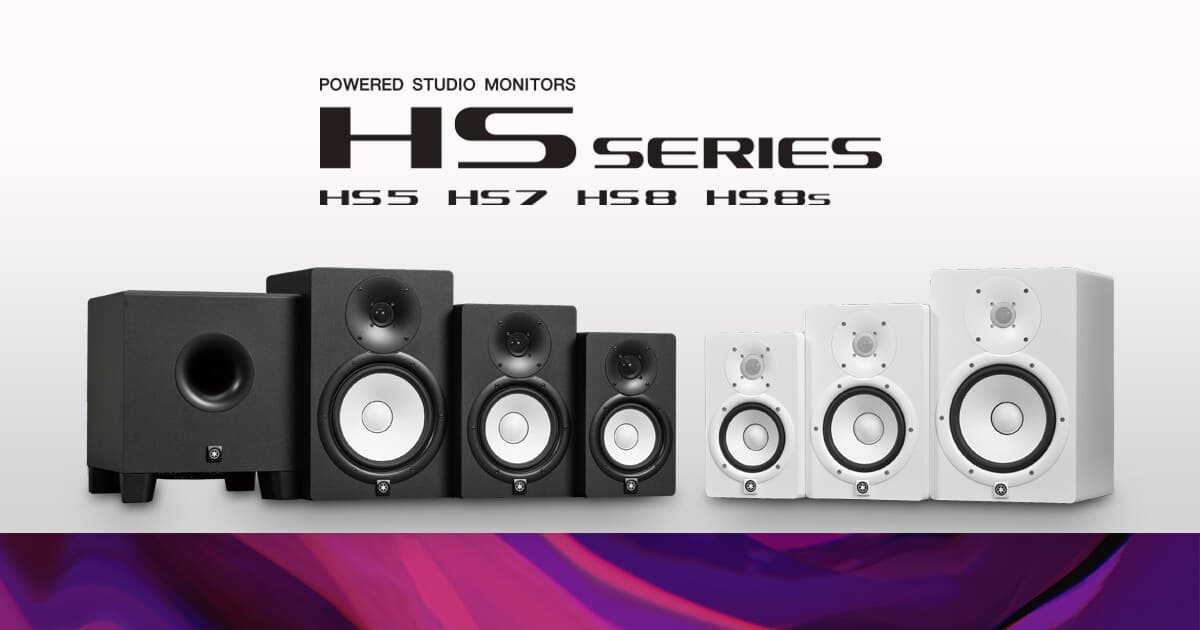
Before You Buy Studio Monitors, Size the Room
Driver hangtags are the wrong first question. Nearfield vs midfield, room, and mix vs hi-fi come first. Then shop Gavler's live ranking.
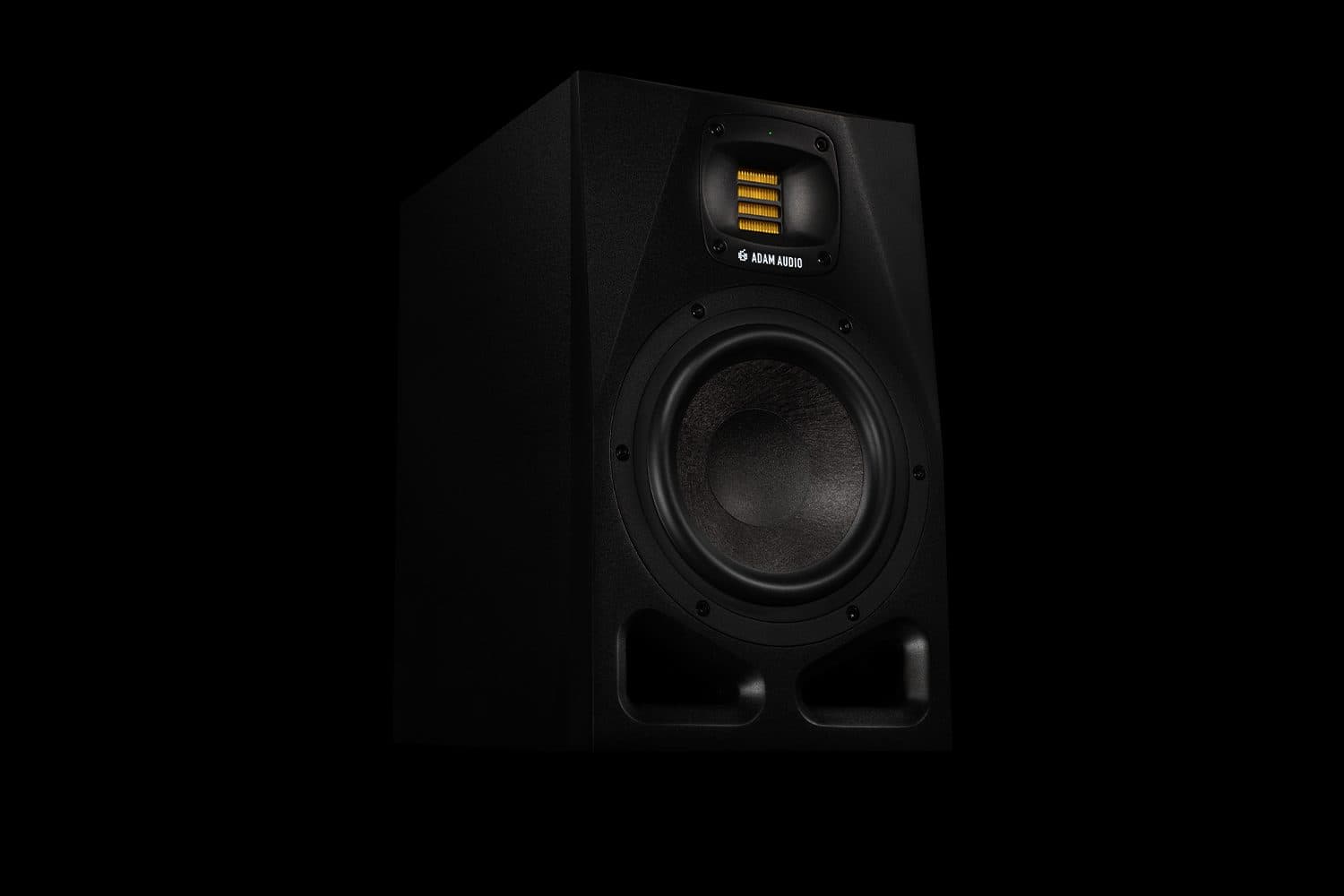
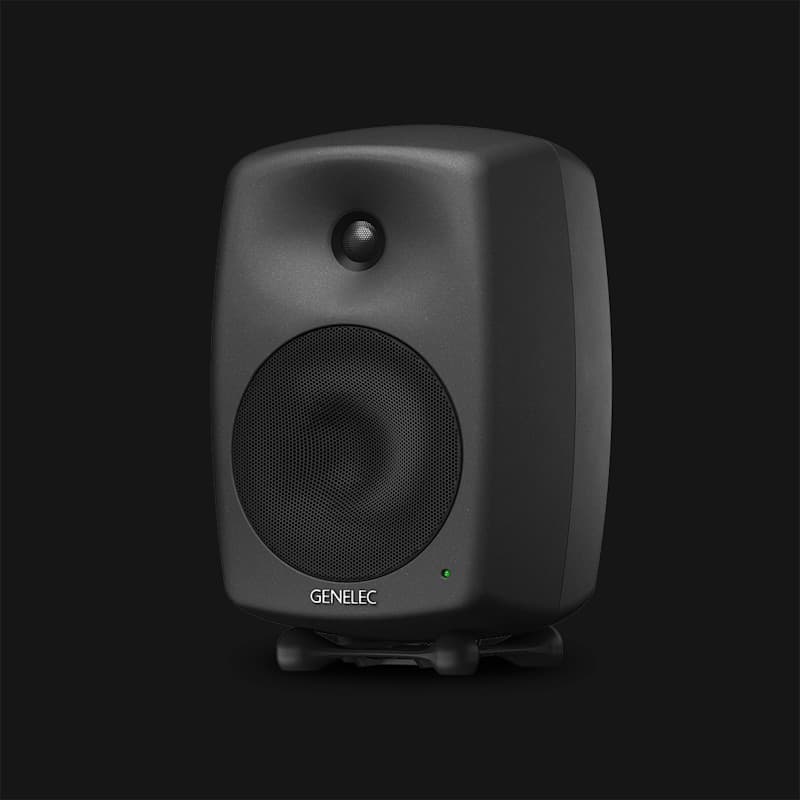
The Best Studio Monitors in 2026, Ranked by the Engineers Who Mix on Them
Yamaha, Adam Audio, Genelec, Neumann, Focal. Gavler's community ranks the reference monitors worth buying — from $179 starters to $1,999 midfields.