The Best USB Microphones in 2026, Ranked by Streamers, Podcasters, and Producers Who Talk Into Them Daily
Shure, Blue, Rode, Elgato, Audio-Technica. Gavler's community ranks the USB mics worth buying — from a $59 dynamic to the $269 podcast standard.
The 2026 USB-microphone market has fully matured. Five years ago the only realistic options were the original Blue Yeti and a handful of compromised condensers, and most podcasters either lived with the room noise or bought a proper XLR rig. Today the under-$300 USB segment includes broadcast-grade dynamics with dual USB and XLR outputs (Shure, Samson, Rode), studio-character condensers with high-resolution conversion (Audio-Technica, Adam Audio adjacent), streaming-specific designs with onboard DSP and clip protection (Elgato, HyperX), and budget dynamics that cost less than dinner for two and reject more room noise than condensers costing three times the price (Fifine). The shape of the market is clear: dynamics for untreated rooms, condensers for quiet rooms, and a small set of all-rounders for buyers who refuse to choose.
May is one of the better months on the calendar to buy. The spring graduation-and-tax-return retail cycle is fully active at Sweetwater, B&H, and Amazon, the 2026 refresh wave from Shure, Rode, and Elgato is fully shipped, and the prior-generation flagships from the late-2025 cycle are at their cheapest before fall speculation begins. Gavler's community has ranked ten of them by lived experience — pick the microphone you would actually put on your next desk setup, not the one with the most marketing budget. The picks below are pulled from the live Best USB Microphones list.
How the Rankings Work
One vote per person on the Best USB Microphones list. Pick the microphone you would put on your desk tomorrow morning before the first record button is pressed — the one you trust on a four-hour podcast edit pass, a six-hour stream, or a vocal scratch take. Switched microphones mid-project because of a room move, a noise problem, or a workflow upgrade? Move your vote. The result is a ranking built on what real creators actually talk into, not what a brand paid a YouTuber to demo on a Tuesday.
The Top Picks
Shure MV7+ — The Broadcast Standard
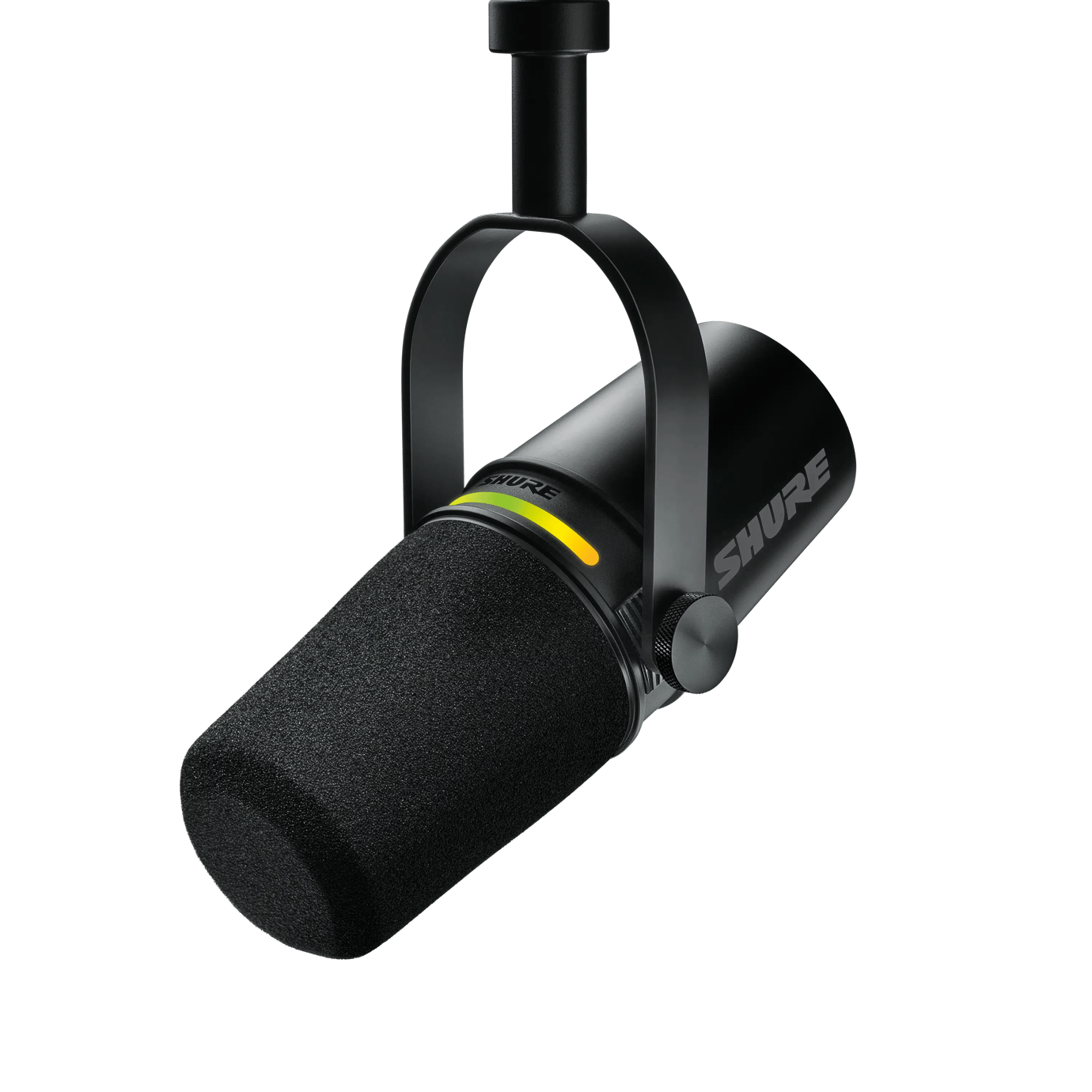
Shure MV7+
Shure's upgraded MV7+ delivers broadcast-ready vocal isolation with the flexibility of USB-C and XLR connections.
Amazon affiliate · price subject to change
The MV7+ is the closest thing the USB-microphone world has to a consensus best-in-class pick. The dynamic capsule is voice-optimized in a way that condenser elements simply cannot match — it rejects keyboard clatter, HVAC hum, off-axis voices, and room reflections with the kind of authority that makes untreated bedrooms and home offices sound like proper recording spaces. The dual USB-C and XLR output is the smartest design choice in the category: plug into a laptop today, slot into a Rodecaster Pro 2 or a Universal Audio interface tomorrow, never replace the microphone. The touch-panel LED on the body handles gain, mute, monitor mix, and DSP toggles without diving into software menus.
The ShurePlus MOTIV desktop app provides real-time DSP processing — auto-level, EQ, compressor, limiter — that effectively builds a channel strip into the microphone for users who do not want to learn audio engineering. Tom's Guide called the MV7+ a stylish, expensive, feature-packed evolution of an already-loved podcast mic. TechCrunch reviewed the update as making the best USB podcast mic better. The honest caveat: at $269 the MV7+ is the most expensive USB microphone on this list, and the SM7B at $399 plus an interface is still the broadcast standard if you are willing to build the full rig. For everyone who wants 90 percent of broadcast quality without the hardware buildout, the MV7+ is the right answer. 42 community votes and a 9.7 score reflect the broad consensus.
Blue Yeti X — The Polar-Pattern Versatile
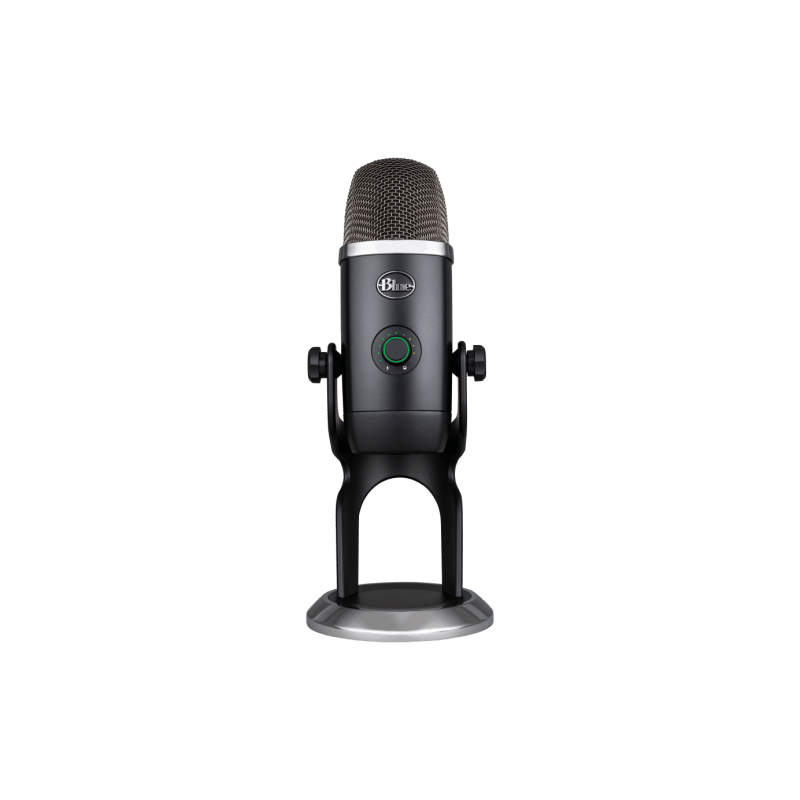
Blue Yeti X
The Yeti X captures rich, detailed audio in four polar patterns with built-in metering and voice processing software.
Amazon affiliate · price subject to change
The Yeti X is the professional evolution of the microphone that single-handedly created the USB-microphone category. The four-capsule condenser array delivers four selectable polar patterns — cardioid, omnidirectional, bidirectional, stereo — that cover every recording scenario from solo podcasting through round-table interviews through ASMR through music tracking. The 24-bit and 48-kilohertz conversion is clean, the multi-function smart knob handles gain, headphone volume, blend, and mute with intuitive press-and-turn operation, and the LED metering ring on the front of the microphone provides real-time visual feedback on input levels — eliminating the gain-staging guesswork that trips up first-time buyers.
The Blue VO!CE software (available through Logitech's G HUB) adds broadcast-style voice processing, vocal effects, and HD audio samples that simulate the sound of expensive outboard gear. The honest framing: the Yeti X is a condenser, which means it picks up room noise that the Shure MV7+ and Samson Q9U dynamics reject. Multiple comparison reviews have confirmed that the Yeti X picks up keyboard noise, HVAC hum, and even footsteps from upstairs in untreated rooms. For buyers in quiet recording environments who want polar-pattern versatility, the Yeti X is the most flexible USB microphone on the market. For buyers in noisy real-world apartments, the MV7+ or Q9U is the better technical match. At $169 the Yeti X undercuts the MV7+ by $100, which is a meaningful difference for first-time buyers. 38 votes and a 9.5 score.
Rode NT-USB Mini — The Under-$100 Studio Pick
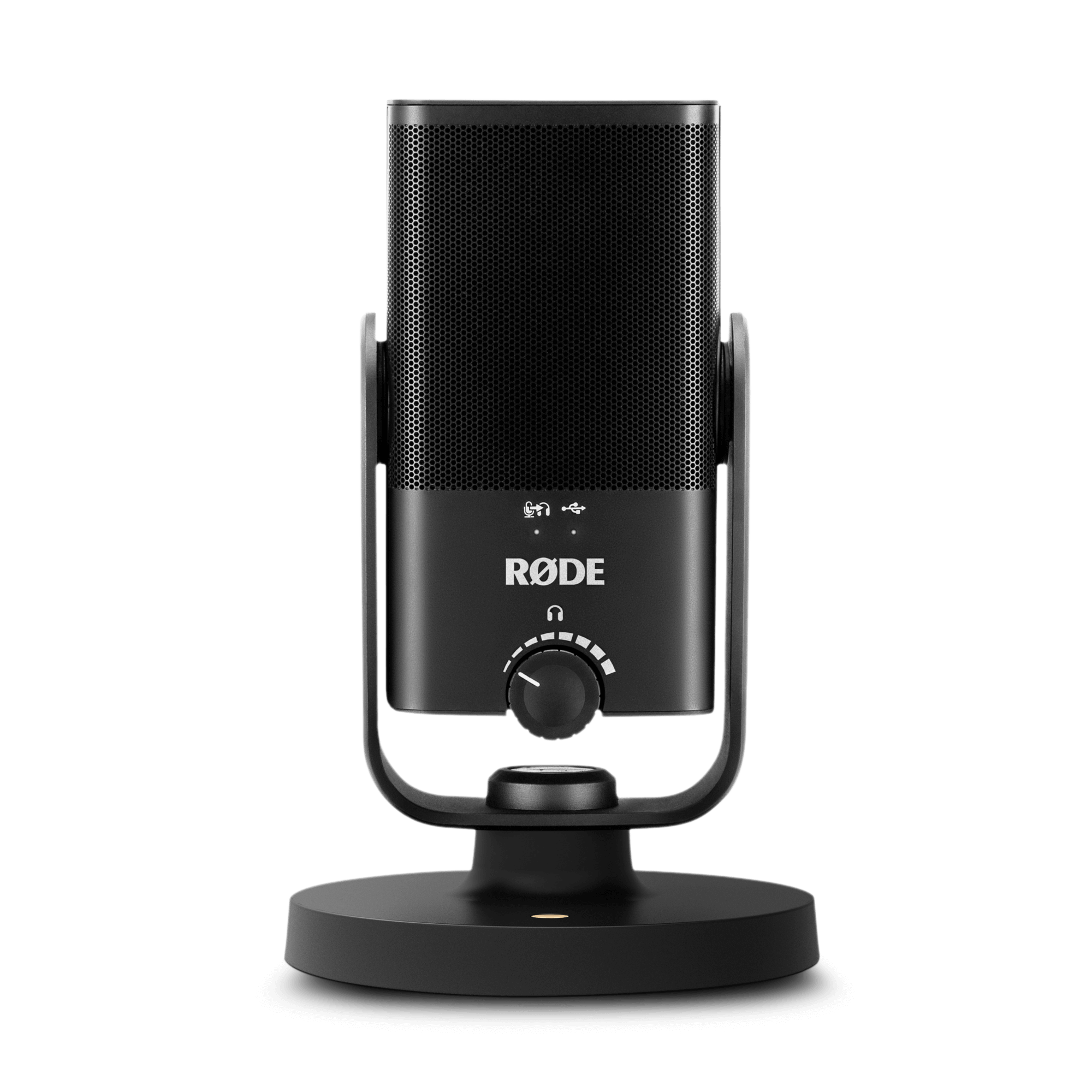
Rode NT-USB Mini
Rode's studio condenser capsule with built-in pop filter and headphone output delivers podcast-ready audio in a tiny form factor.
Amazon affiliate · price subject to change
Rode distilled decades of studio-microphone expertise into the smallest, most affordable package the Australian manufacturer has ever produced. The condenser capsule is derived from Rode's acclaimed NT series, and the resulting sound — vocal warmth, presence, detail without harshness — immediately distinguishes the Mini from the commodity USB condensers crowding the under-$100 tier. MusicRadar called the Mini a highly desirable USB mic that combines great features with a compact, stylish design at an attractive price. Tom's Guide noted that it captures all frequencies with depth and rich warmth. Podcastage rated it the best USB microphone under $100.
The design is a masterclass in thoughtful engineering at a budget price. The integrated pop filter reduces plosive energy without external accessories. The magnetic desk-stand mount uses a detachable 360-degree swivel that clicks securely into the weighted base and releases with a gentle pull — far more elegant than the threaded mounts on competing products. The built-in headphone output provides zero-latency direct monitoring with a blend control. Full compatibility with Rode Connect podcasting software unlocks the Mini's onboard compressor, noise gate, and APHEX processing — the same broadcast-quality processing that Rode includes in its $700-and-up Rodecaster mixers. At $99 the Mini is the cheapest credible way to get genuine Rode studio quality. The trade-off is cardioid-only and no XLR — for the price, those are reasonable compromises. 34 votes and a 9.3 score.
Elgato Wave:3 — The Streaming Specialist
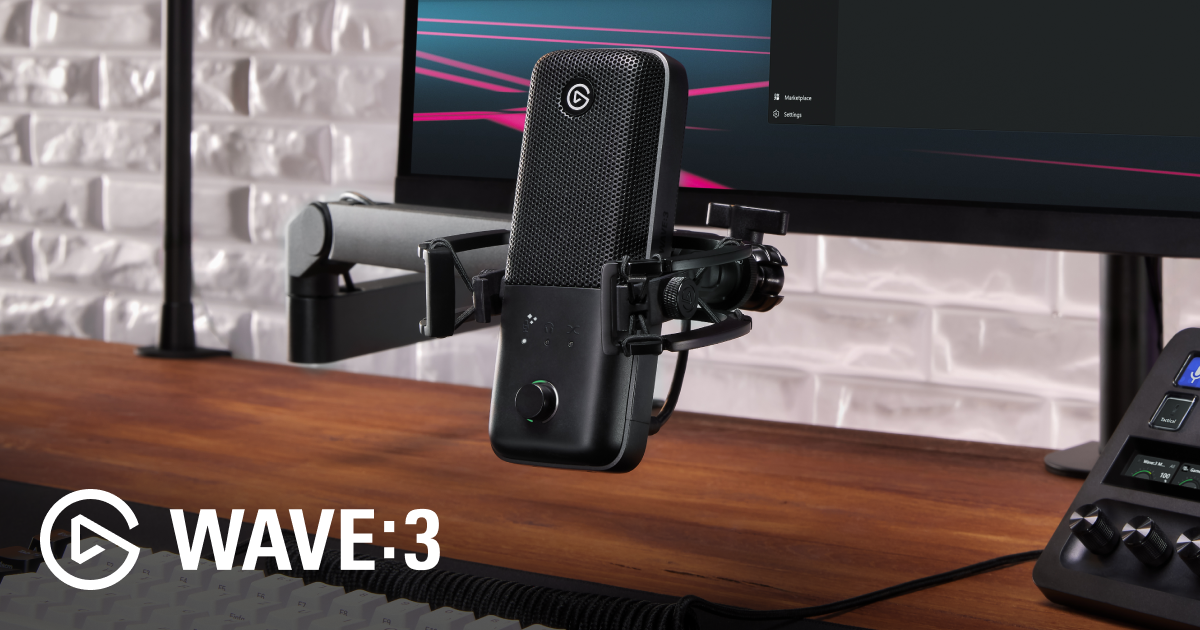
Elgato Wave:3
Elgato's proprietary Clipguard uses a secondary signal path to make clipping virtually impossible during live streams.
Amazon affiliate · price subject to change
The Wave:3 solves a problem every streamer has experienced: the moment you get excited, laugh loudly, or react to a jump scare, your audio clips and your viewers hear distorted garbage. Elgato's proprietary Clipguard technology addresses this with an elegant engineering solution — the microphone runs a secondary internal signal path at a lower gain level, and when the primary path clips, the Wave:3 seamlessly crossfades to the secondary path, capturing the loud moment cleanly. The result is audio that stays clean even when input levels spike dramatically. No other USB microphone on this list has anything comparable.
The 17mm electret condenser capsule is voice-optimized with a warm, present tone that sits well in a stream mix without aggressive EQ. The 24-bit and 96-kilohertz digital conversion is overkill for streaming but provides headroom for the internal DSP and future-proofs the microphone for higher-quality applications. Wave Link — Elgato's desktop mixing software — transforms the Wave:3 into a virtual mixing console with up to eight audio sources routed independently to the stream output and the headphone monitor. This replaces a hardware mixer like the GoXLR at the software layer, which is a real $300 value-add. Seamless Stream Deck integration lets you assign mute, gain, and mixing controls to physical buttons. The honest caveat: this is a condenser, and it picks up room noise that the MV7+ would reject. For dedicated streamers in a controlled room, the Wave:3 is purpose-built in a way no competitor matches. 30 votes and a 9.2 score.
The Performance Tier
Audio-Technica AT2020USB-X — The Music-Friendly Studio Capsule
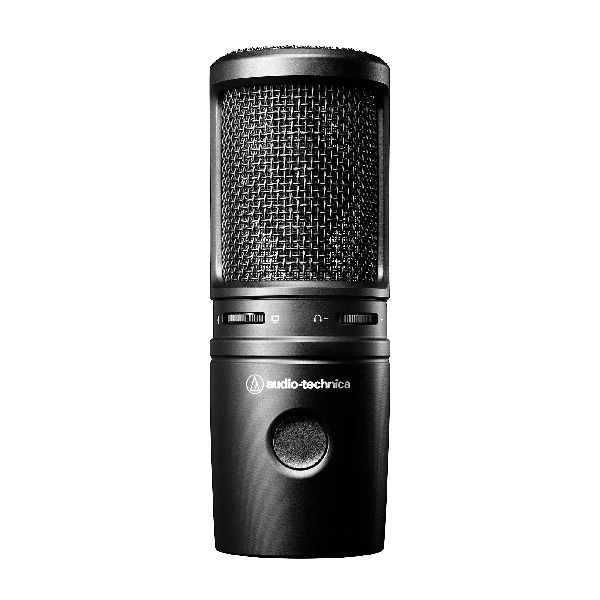
Audio-Technica AT2020USB-X
The AT2020's warm, detailed character gets a USB-X upgrade with 24-bit/96kHz conversion and built-in monitoring.
Amazon affiliate · price subject to change
The original AT2020 is one of the most-recorded-on microphones in history — it has appeared on countless albums, podcasts, and voice-over sessions since launch. The AT2020USB-X brings that legendary capsule to the USB world with conversion quality that does justice to the original. The 16mm back-electret condenser element delivers the AT2020's signature warm, detailed character with a natural presence peak that flatters voice without the harshness that cheaper condensers exhibit, and the 24-bit and 96-kilohertz USB-C conversion preserves the nuance and dynamic range that lower-resolution converters compress and discard.
What sets the AT2020USB-X apart is the musical quality of the capsule. Vocals have warmth and presence, acoustic guitar recordings have body and shimmer, and even ambient recordings have a three-dimensional quality that voice-optimized microphones cannot replicate. The built-in headphone amplifier provides zero-latency monitoring with a mix dial on the body, and the touch-sensitive mute button offers silent muting during sessions. For content creators who record music alongside voice content — singer-songwriters, instrument demonstrators, audio-fiction producers — the AT2020USB-X is the most musical USB microphone in its price range. The honest framing: this is a condenser, so a quiet room helps. At $149 it is a studio-quality condenser that happens to have USB-C, not a USB microphone that aspires to studio quality. 28 votes and a 9.1 score.
HyperX QuadCast S — The Streamer-First Visual Pick
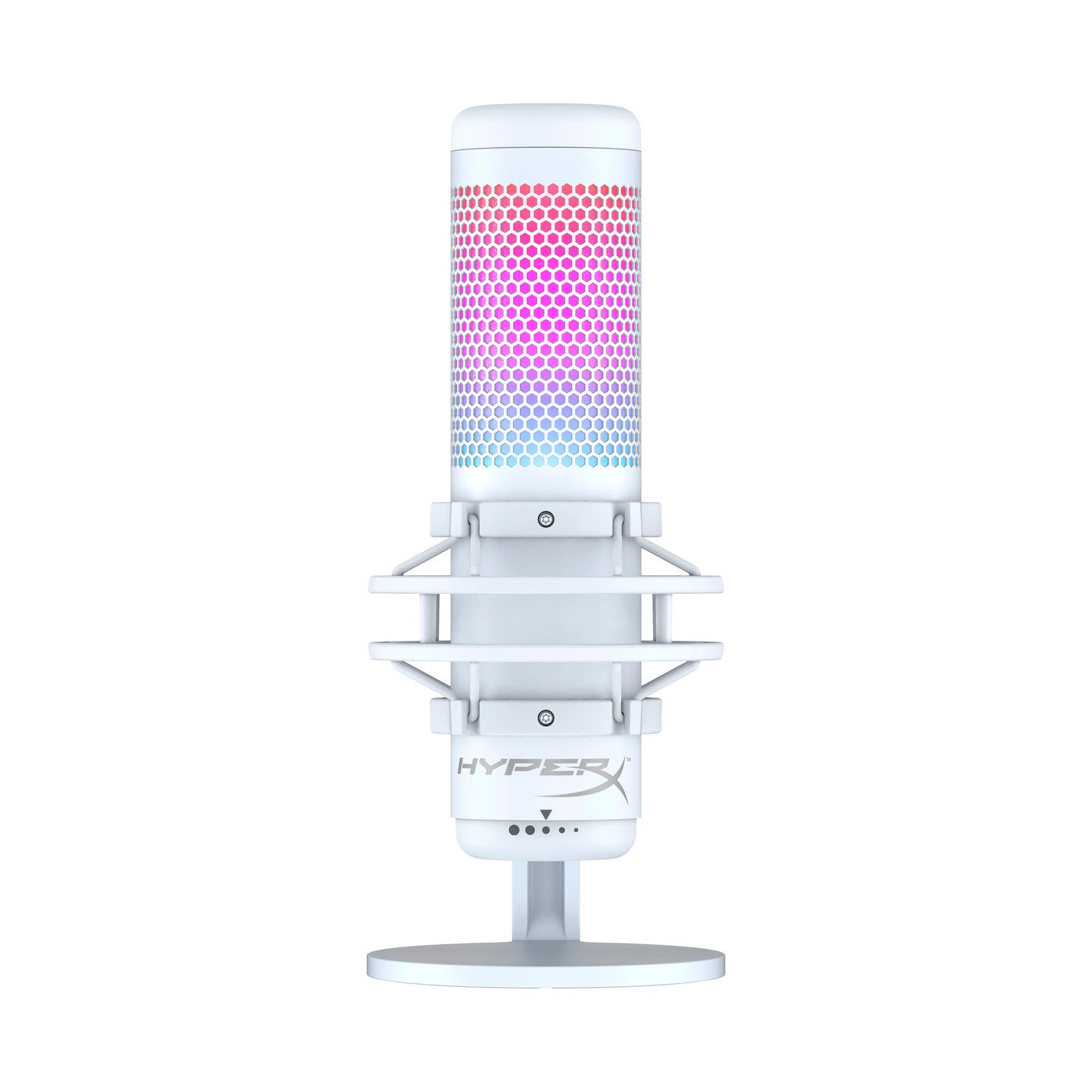
HyperX QuadCast S
The QuadCast S combines striking RGB lighting with an internal shock mount and four polar patterns for gaming and streaming.
Amazon affiliate · price subject to change
The QuadCast S is unabashedly designed for gamers and streamers who want their microphone to be part of the visual experience as much as the audio chain. The dynamic RGB lighting syncs with HyperX's NGENUITY software and compatible peripherals for unified setup aesthetics, the tap-to-mute sensor on top provides instant silent muting with an LED color change confirming state, and the internal elastic shock mount absorbs desk vibrations and keyboard impacts without an external suspension cradle. The three 14mm electret condenser capsules enable four selectable polar patterns — cardioid, bidirectional, omnidirectional, stereo — via a dial on the bottom.
Audio quality is solid for a gaming-focused condenser. The frequency response covers 20 Hz to 20 kHz with a presence boost around 3 to 5 kHz that helps voice cut through game audio and music in a stream mix. The 24-bit and 48-kilohertz conversion is clean. The included mount adapter works with standard 3/8-inch and 5/8-inch threads. The honest framing: the QuadCast S is a condenser optimized for visual presence as much as acoustic isolation, so the Shure MV7+ at the same general price tier delivers more analytical accuracy and better noise rejection — but neither has the visual impact of the QuadCast S on stream. For gamers and streamers who value aesthetics alongside audio quality, this is the most complete out-of-box package available. $159, 32 votes, and a 9.0 score.
The Specialist Tier
Samson Q9U — The Budget Broadcast Dynamic
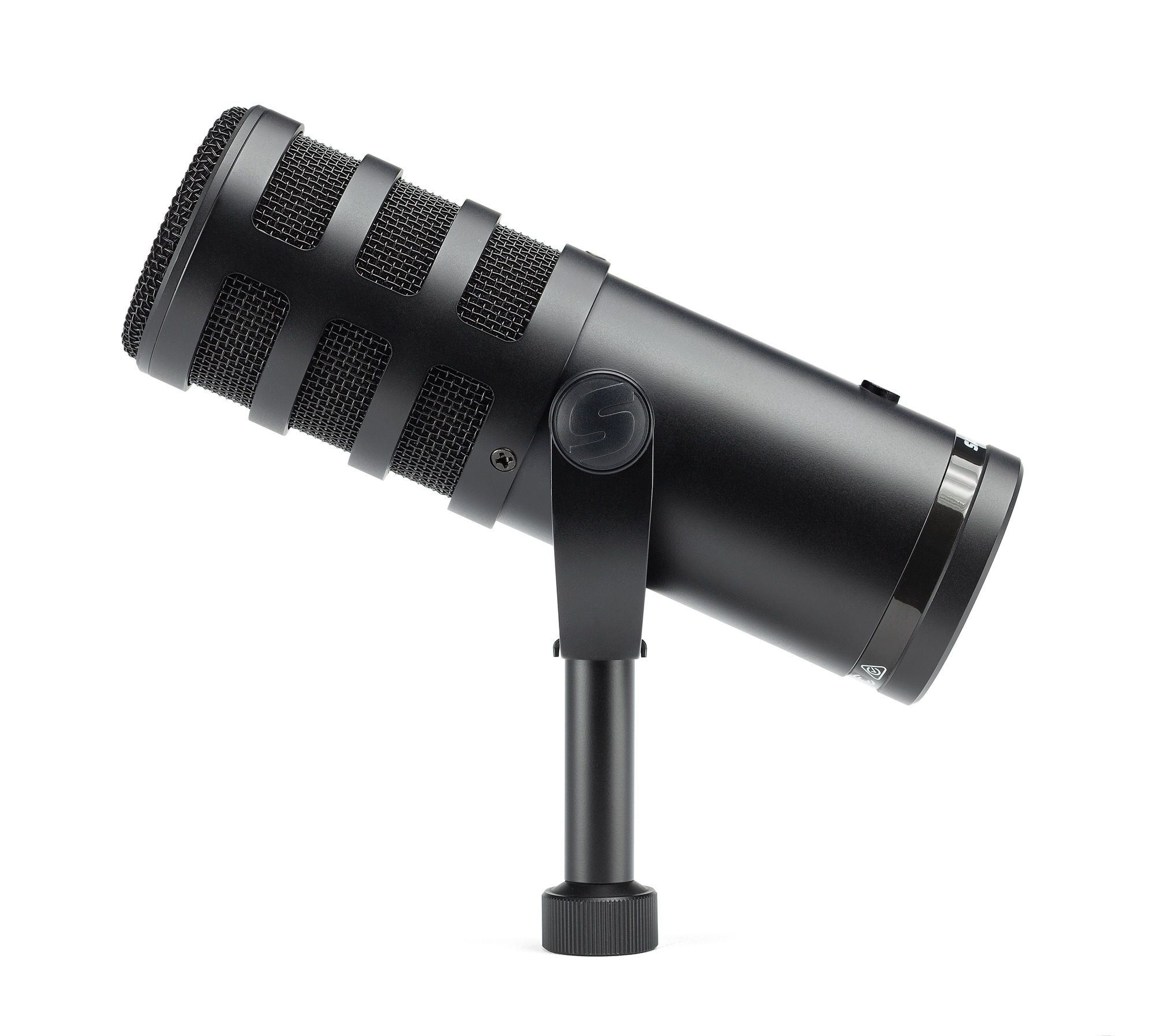
Samson Q9U
The Q9U's dynamic capsule rejects room noise while dual USB-C and XLR outputs provide a professional growth path.
Amazon affiliate · price subject to change
The Q9U occupies a unique slot: it is one of the few dynamic USB microphones with both USB-C and XLR outputs at well under $200, which puts it in direct competition with the Shure MV7+ at almost half the price. The dynamic capsule rejects room noise, keyboard clatter, and off-axis sound with the same authority that makes the MV7+ effective in untreated rooms. The 24-bit and 96-kilohertz USB conversion is impressive for the price, and the 3-position low-cut filter (flat, 75 Hz, 150 Hz) on the rear panel addresses bass proximity effect — the phenomenon where directional microphones boost low frequencies as the speaker gets closer.
The trade-off versus the Shure is in the software ecosystem (Samson's is basic compared to ShurePlus MOTIV) and a small build-quality gap (good, but not quite Shure-level). The audio quality is genuinely competitive. For podcasters who want broadcast-grade noise rejection and dual-output flexibility without the Shure premium, the Q9U is the smart spend. The 3-position low-cut filter is a practical feature that more expensive microphones should copy. $149, 24 votes, and an 8.8 score reflect a microphone that does the core job well at a price that makes the MV7+ harder to justify for budget-conscious buyers.
Rode PodMic USB — The Auto-Gain Beginner's Dynamic
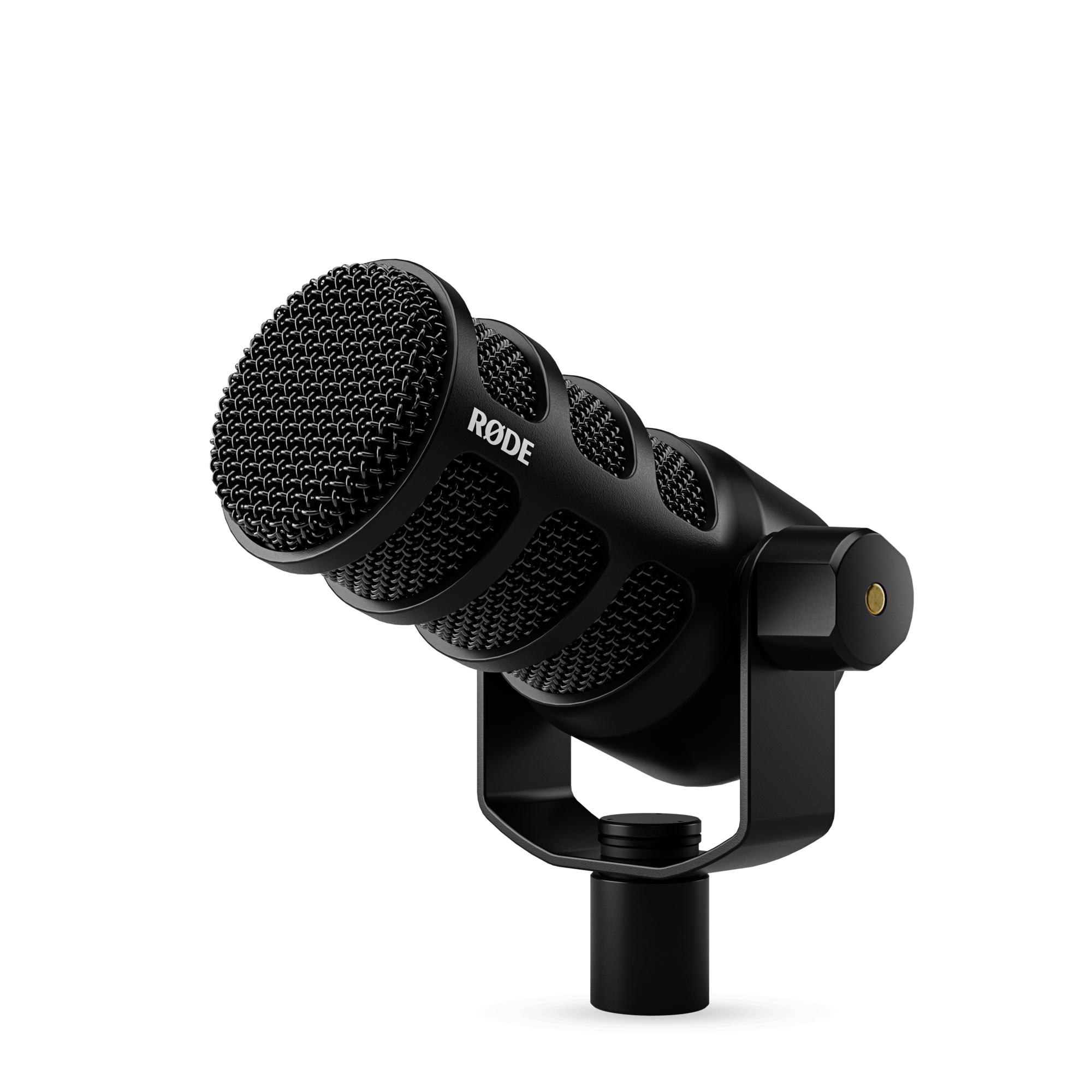
Rode PodMic USB
Rode's end-address dynamic mic handles gain staging automatically for consistent recording levels across any USB setup.
Amazon affiliate · price subject to change
The PodMic USB takes the broadcast voice character of Rode's popular PodMic and adds USB-C connectivity with internal DSP that handles gain staging automatically. For first-time podcasters, this is genuinely transformative — the microphone adapts to input levels dynamically, maintaining clean, present voice capture without the user-error gain mistakes that produce clipping or noise-floor problems on every other USB microphone. The dynamic capsule rejects room noise like the Shure MV7+ and Samson Q9U, and the end-address design (you speak into the top, not the side) feels more natural and positions better on desk stands and boom arms.
The 24-bit and 48-kilohertz USB-C output runs Rode's APHEX processing — exciter, big-bottom, compressor, noise gate — through the companion Rode Connect desktop app. This is the same broadcast-quality processing Rode licenses from the legendary APHEX brand and ships in its Rodecaster Pro 2 mixers, and including it on a $99 USB microphone is borderline absurd value. Dual USB-C and XLR output, all-metal construction, and an integrated swing mount round out the package. For new podcasters who want professional results without learning audio engineering, the PodMic USB is the most beginner-proof microphone on this list. $99, 22 votes, and an 8.6 score.
Fifine K688 — The Sub-$60 Dynamic Giant-Killer
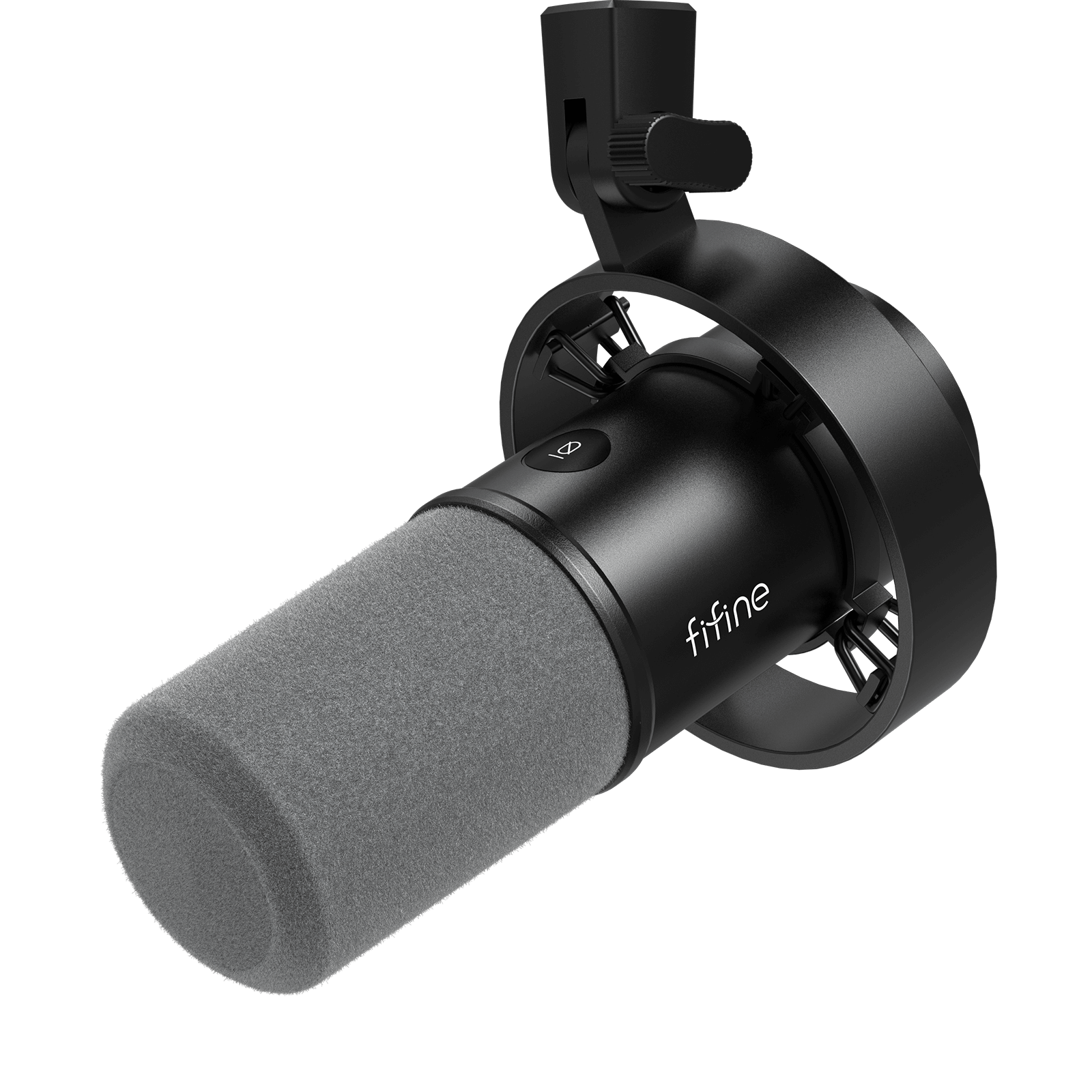
Fifine K688
The K688 packs a dynamic capsule, RGB lighting, and a headphone jack into the most affordable serious USB microphone available.
Amazon affiliate · price subject to change
The K688 is the microphone that makes audio enthusiasts question everything they know about pricing. Under $60 buys a dynamic capsule with real noise rejection, RGB lighting, a built-in headphone jack, and a metal-chassis build that feels like it should cost three times as much. The dynamic capsule is the key differentiator at this price — virtually every other USB microphone under $75 uses a condenser element, which captures and amplifies room noise that the K688's dynamic capsule politely rejects. For first-time streamers, students, and budget-conscious podcasters in untreated rooms, the noise-rejection advantage alone justifies the recommendation.
The frequency response is tailored for voice clarity with a presence boost around 3 to 5 kHz that helps voice cut through game audio and music in a stream mix. The 16-bit and 48-kilohertz conversion is adequate for streaming and podcasting, though it lacks the headroom and dynamic range of the 24-bit alternatives on this list. The built-in headphone jack provides direct monitoring, the front-panel volume and gain dials give real-time control without software, and the RGB lighting is customizable through touch controls on the body. The honest framing: the K688 will not replace a Shure MV7+ or a Rode PodMic USB on outright audio quality. But it does not need to — it delivers roughly 80 percent of the performance at 20 percent of the price. For under $60, the dynamic noise rejection alone makes the K688 worth recommending over condenser alternatives twice the price. $59, 20 votes, and an 8.4 score.
Razer Seiren V3 Chroma — The Razer Ecosystem Pick
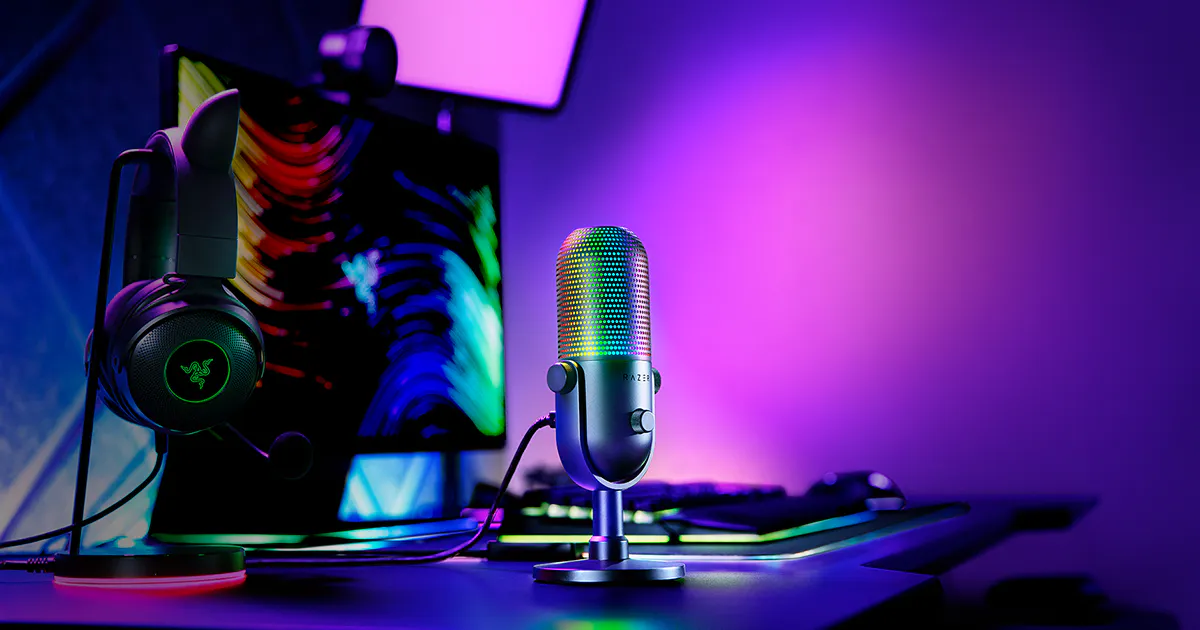
Razer Seiren V3 Chroma
Razer's 25mm condenser captures clear, detailed audio while Chroma RGB syncs with your entire Razer setup.
Amazon affiliate · price subject to change
The Seiren V3 Chroma is built for Razer ecosystem enthusiasts who want their microphone to integrate seamlessly with their existing keyboard, mouse, headset, and accessory lighting. The Chroma RGB ring at the base supports 16.8 million colors and syncs with Razer Synapse software, creating unified lighting effects across every Razer peripheral. But the V3 Chroma is more than a light show — the 25mm condenser capsule is Razer's largest ever, capturing voice with a clarity and detail that represents a genuine step up from previous Seiren models.
The cardioid polar pattern is optimized for front-address voice capture, with a 20 Hz to 20 kHz frequency response that covers the full range of the human voice with room to spare. The 24-bit and 48-kilohertz USB-C conversion is clean and reliable, the built-in analog gain control on the front provides real-time level adjustment without diving into software menus, and the tap-to-mute sensor on top provides instant silent muting with the RGB ring changing color to confirm mute state — a visual cue immediately readable during intense gameplay. Razer's approach prioritizes simplicity and visual integration over feature overload: no multiple polar patterns, no DSP processing, no companion app for audio effects. For committed Razer users, the Seiren V3 Chroma is the natural microphone choice. For buyers who do not own other Razer peripherals, the Elgato Wave:3 and Audio-Technica AT2020USB-X deliver better software ecosystems at similar prices. $129, 18 votes, and an 8.2 score.
Buying Guide: The Three Decisions That Matter
Dynamic or condenser — pick based on your room, not your aspirations. The single largest variable in USB-microphone selection is the acoustic quality of your recording space. Dynamic capsules (Shure MV7+, Samson Q9U, Rode PodMic USB, Fifine K688) reject room noise, keyboard clatter, HVAC hum, and off-axis voices in a way that condensers cannot. Condensers (Blue Yeti X, Rode NT-USB Mini, Elgato Wave:3, Audio-Technica AT2020USB-X, HyperX QuadCast S, Razer Seiren V3 Chroma) deliver a more open, detailed sound with better high-frequency extension but capture every reflection, hum, and click in the room. The rule from podcast engineers: if you can hear traffic outside, a refrigerator from your recording position, or a partner on a call in the next room, buy a dynamic. If your recording space is genuinely quiet, a condenser will sound more refined. Aspirational thinking — "I will treat the room someday" — produces worse-sounding podcasts and streams in the meantime.
Dual USB and XLR matters more than you think. Of the ten microphones on this list, four ship with both USB-C and XLR outputs: Shure MV7+, Samson Q9U, Rode PodMic USB, and (sort of, via the original PodMic) the Rode ecosystem. The dual-output design is the smartest insurance policy in the category. A USB-only microphone is locked to its onboard preamp and conversion forever, and the moment you upgrade to a proper audio interface or a podcast-mixer like a Rodecaster Pro 2, the microphone becomes the bottleneck. A USB-plus-XLR microphone runs USB today and slots into XLR hardware tomorrow without the microphone changing — which is the difference between a $150 spend that you replace in eighteen months and a $150 spend that survives three studio rebuilds. If your budget is between $99 and $300 and you might ever want a proper interface, prioritize dual output.
The 2025 model is almost always the smart spring buy. USB-microphone refresh cycles run 24 to 36 months, and the prior-generation flagships typically drop 10 to 20 percent in the May-to-July spring-sale window tied to graduation and tax-return retail spend. The Shure MV7+ has been at $269 since launch but routinely sees $249 sale pricing through Sweetwater and B&H. The Blue Yeti X drops from $169 to $129 reliably during graduation-season promotions. The Audio-Technica AT2020USB-X and Elgato Wave:3 both see real markdowns in this window. The exceptions are the Rode NT-USB Mini and Rode PodMic USB (both at $99 since launch and rarely discounted because the price is already the floor) and the Fifine K688 (which is already $59 and not going lower). For a 2026 home-creator buyer, watching the sale calendars at Sweetwater, B&H, Amazon, and the manufacturer-direct stores from now through early July is the most reliable way to save 10 to 20 percent without sacrificing model currency.
For the full community ranking with current prices and live vote counts, head to Gavler's Best USB Microphones list. Architecture first — dynamic vs condenser, then room, then DSP vs plug-and-play. The full decision tree is in our USB Microphone Buying Guide. If you are building out a full creator-audio setup, the Gavler Audio hub now anchors community-ranked picks across studio monitors, USB microphones, audio interfaces, and headphone amps and DACs — four lists in total. Architecture first for speakers — nearfield vs midfield in the studio-monitor buying guide, then the ranking story in The Best Studio Monitors in 2026. For the desk-side input devices that streamers and podcasters live on, the Best Mechanical Keyboards brief is the natural complement to the microphone in front of your face.
See all 10 products ranked by the community
Best USB Microphones
See Full Rankings →288 community votes cast
Common Questions
The Shure MV7+ tops Gavler's community ranking with a 9.7 score and 42 votes. The MV7+ is the closest a USB microphone has come to the broadcast-standard SM7B in untreated rooms — the dynamic capsule rejects keyboard noise, HVAC hum, and off-axis sound with the kind of authority that condenser microphones in the same price range cannot match. Tom's Guide and TechCrunch both placed it at the top of their 2024 and 2026 podcast-mic rankings, and the dual USB-C plus XLR output means it works directly on a laptop today and slots into a proper interface and mixer setup later without a microphone upgrade. The honest caveat: at $269 it is the most expensive USB microphone on this list, and buyers in quiet treated rooms will get most of the same quality from cheaper condenser picks. For anyone recording in a bedroom, spare room, or home office without acoustic treatment, the MV7+ is the right answer.
Dynamic is correct for most home podcasters. Dynamic capsules have a tighter cardioid pickup pattern and a lower sensitivity than condenser elements, which means they reject room reflections, keyboard noise, HVAC hum, and off-axis voices with the kind of authority that condensers cannot match. The Shure MV7+, Samson Q9U, Rode PodMic USB, and Fifine K688 on this list are all dynamic. Condensers like the Blue Yeti X, Rode NT-USB Mini, Audio-Technica AT2020USB-X, and Elgato Wave:3 deliver a more open, detailed sound with better high-frequency extension that benefits singing, instrument capture, and ASMR work — but only in rooms with some acoustic treatment. The general rule from podcast engineers: if you can hear traffic outside or a refrigerator from your recording position, you want a dynamic. If you cannot, a condenser will sound more refined.
These two answer different questions. The Shure MV7+ at $269 is a broadcast-quality dynamic with USB-C and XLR outputs and a touch-panel LED for gain, mute, and monitor control. The Blue Yeti X at $169 is a four-capsule condenser with selectable cardioid, omnidirectional, bidirectional, and stereo polar patterns and an LED metering ring that makes gain staging visual. Pick the MV7+ if you record in an untreated bedroom, home office, or shared space — the dynamic capsule will reject the noise that the Yeti X will pick up and amplify. Pick the Yeti X if you have a quiet recording environment, want polar-pattern versatility for solo plus interview plus round-table work, or value the LED metering and Blue VO!CE software for beginner-friendly gain control. The Yeti X also costs $100 less, which matters for first-time buyers. Streamers and podcasters working from controlled rooms often choose the Yeti X; podcasters working from real-world apartments choose the MV7+.
The Rode NT-USB Mini at $99 is the consensus answer for condenser quality. Rode's NT-series capsule heritage is audible in every recording — vocals have warmth and presence that cheaper USB condensers cannot replicate, the magnetic desk mount system is brilliantly practical, and the built-in pop filter and headphone output deliver podcast-ready audio out of the box. MusicRadar called it one of the best USB microphones available, and Podcastage rated it the best USB microphone under $100. The Rode PodMic USB at $99 is the dynamic alternative — its automatic gain staging and APHEX processing make broadcast-quality voice capture genuinely beginner-proof, and the dual USB-C plus XLR output provides a real upgrade path. The Fifine K688 at $59 is the ultra-budget pick — its dynamic capsule rejects room noise that condensers in this price range capture and amplify, and the build quality punches well above the price. For quiet rooms pick the Rode NT-USB Mini. For noisy rooms pick the Rode PodMic USB or the Fifine K688.
These are different jobs. For music recording (vocals, acoustic guitar, instruments) the Audio-Technica AT2020USB-X at $149 is the consensus pick — the AT2020 capsule is one of the most-recorded-on studio condensers in history, the 24-bit and 96-kilohertz conversion preserves the nuance that voice-optimized microphones discard, and the musical character flatters acoustic sources in a way that broadcast-tuned dynamics cannot. For podcasting the Shure MV7+ at $269 or the Samson Q9U at $149 are the right picks — the dynamic capsules reject room noise that condensers amplify, the voice-optimized frequency response sits forward in the mix without aggressive EQ, and the dual USB plus XLR output provides growth into proper podcast hardware. The Yeti X is the only microphone on this list that does both jobs competently, but it does neither as well as the dedicated picks. If you only buy one and your work straddles both worlds, the Yeti X is the rational compromise. If you do mostly one and a little of the other, buy for the primary job.
Spring is one of the better windows for content-creator gear buying. Major retailers like Sweetwater, B&H, and Amazon run pre-summer sales tied to graduation season and tax-return spend, with discounts of 10 to 20 percent on most USB microphones in the under-$300 range. The Shure MV7+ rarely drops below $249 but it does so in the May-to-July window. The Blue Yeti X has hit $129 in past graduation sales. The Audio-Technica AT2020USB-X and Elgato Wave:3 both see real markdowns in this window. Manufacturers refresh model lines in the late fall ahead of NAMM in January, which means prior-generation flagships from late 2025 and early 2026 are now at their cheapest before the next refresh cycle starts speculation in October. If you are starting a podcast, launching a YouTube channel, or upgrading a streaming setup this summer, buying now is the right call. Father's Day in mid-June is the secondary discount peak.
Rankings come from community votes by streamers, podcasters, and producers who actually talk into the microphones daily. Each user gets one vote on the Best USB Microphones list — pick the microphone you would put on your next desk setup, not the one with the most marketing budget or the prettiest unboxing video. Switched microphones after a room change, a workflow shift, or a content-format pivot? Move your vote. No affiliate commissions or manufacturer sponsorships influence the ranking. Vote totals at the time of publication appear next to each pick on the live list.
Products Mentioned
Jump to the full ranking and community verdict for each pick named above.
- Shure MV7+Audio · Best USB Microphones
- Blue Yeti XAudio · Best USB Microphones
- Samson Q9UAudio · Best USB Microphones
- Rode NT-USB MiniAudio · Best USB Microphones
- Elgato Wave:3Audio · Best USB Microphones
- Audio-Technica AT2020USB-XAudio · Best USB Microphones
- HyperX QuadCast SAudio · Best USB Microphones
- Rode PodMic USBAudio · Best USB Microphones
- Fifine K688Audio · Best USB Microphones
- Razer Seiren V3 ChromaAudio · Best USB Microphones