HyperX QuadCast S.
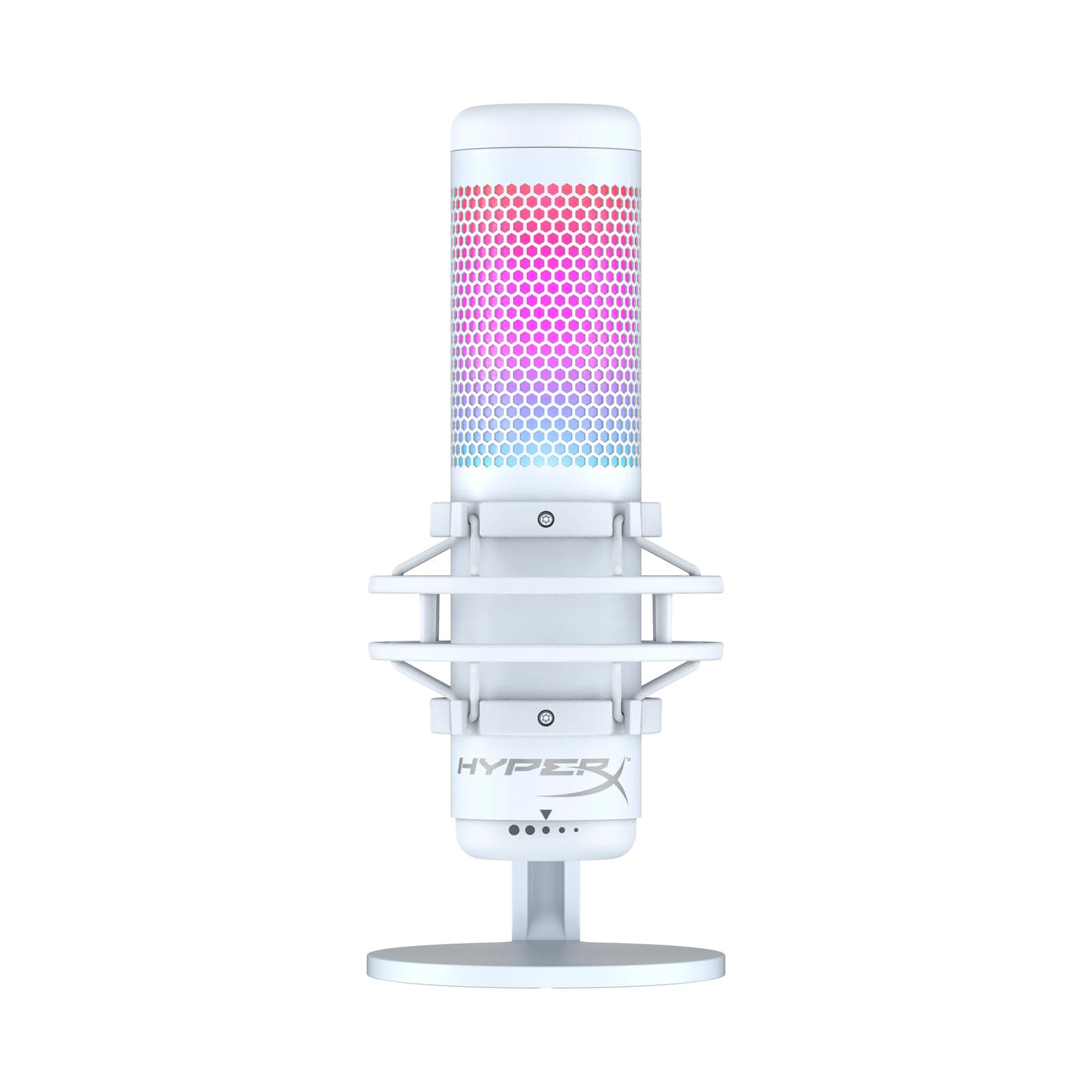
The QuadCast S combines striking RGB lighting with an internal shock mount and four polar patterns for gaming and streaming.
The Verdict.
Gavler Meta-Score
“The QuadCast S delivers the complete streaming package: great audio, striking visuals, and practical features like tap-to-mute and internal shock mounting. It is not the most analytically accurate USB microphone, but it is the most fun to use and the most visually impressive on camera. For gamers and streamers who value aesthetics alongside audio quality, it is the clear choice.”
The Gavler Verdict
The Gavler Review.
HyperX QuadCast S Review: RGB Flash, Genuine Gaming-Mic Substance
The HyperX QuadCast S ranks number 6 on Gavler's Best USB Microphones list with a 9.0, and it's the clearest case on this list of a microphone designed to be seen as much as heard. Dynamic RGB lighting syncs with HyperX's NGENUITY software and compatible peripherals for a unified desk aesthetic — but underneath the light show is genuine engineering that justifies the price beyond looks alone.
What it is
Three 14mm electret condenser capsules are arranged to enable four selectable polar patterns — cardioid, bidirectional, omnidirectional, and stereo — chosen via a dial on the base. An internal elastic shock mount absorbs desk vibrations and keyboard impacts without an external suspension mount, and a built-in pop filter tames plosives. The tap-to-mute sensor on top gives instant, silent muting with an LED indicator confirming the mute state — a visual cue readable at a glance during a live session.
Audio quality covers a 20Hz–20kHz frequency response with a presence boost around 3–5kHz to help voice cut through game audio and music in a stream mix. The headphone jack on the bottom provides zero-latency monitoring, and the gain dial allows real-time level adjustment without opening any software.
In use
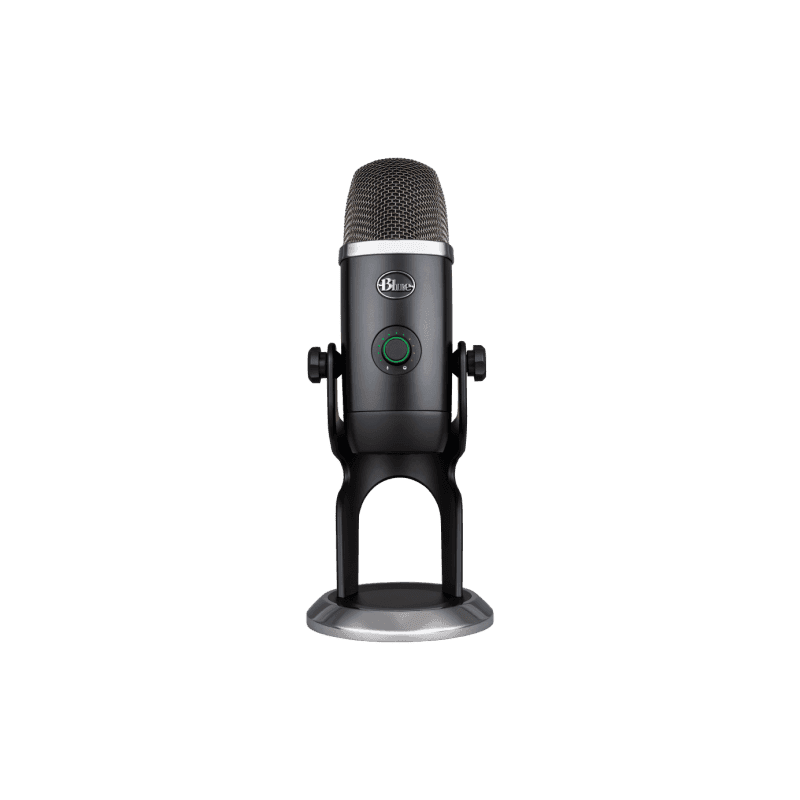
Tom's Hardware's Phil Iwaniuk tested the QuadCast S directly against its most obvious rival and landed on a close, honest verdict: "Blue's Yeti X still offers the happiest compromise between natural and broadcast-ready to our ears compared to the QuadCast S and other high-end mics, but these are fine margins between models we're talking about." That's not a knock — it's confirmation the QuadCast S is genuinely competitive with the best condenser on this list, not just close in spec sheets.
Where Iwaniuk drew a clearer line was around the microphone's resolution ceiling: "Our first [complaint] is that the QuadCast S comes frustratingly close to being a good low-budget studio mic with all those polar patterns, but since it's limited to 48K Hz/16-bit recording, it doesn't quite spread its wings and get there." That's a specific, measurable trade-off rather than vague criticism — the four polar patterns are there, but the bit depth caps how much of that flexibility translates into studio-usable recordings.
SoundGuys' Sara Carbone found a similarly balanced picture on tone and a concrete gripe about the included pop filter: "The HyperX QuadCast S records clear audio, and boasts a neutral-leaning frequency response with slightly de-emphasized bass notes to mitigate the proximity effect." But she also noted a real-world limitation worth knowing before you position the microphone: "Although the integrated pop filter is nice, it's imperfect. If you speak into your microphone from any closer than 1 foot, plosives... and fricatives... become a problem." Her overall take lands where most reviewers do: "I wish its internal pop filter was more effective and the gain knob could be turned down more, but when the positioning is right, the sound quality is good."
Strengths
The internal shock mount is a genuine convenience most competitors make you buy separately. Four real, usable polar patterns extend beyond solo streaming into round-tables and interviews. The tap-to-mute sensor with its LED confirmation is one of the more practical daily-use features on this entire list — reviewers consistently single it out as satisfying to live with. Build quality and the RGB implementation feel considered rather than tacked on, and the aesthetic genuinely matters for streamers who are on camera.
The trade-offs — who should skip it
The 48kHz/16-bit ceiling is the honest limitation: it's the reason the QuadCast S reads as an excellent gaming and streaming microphone rather than a studio-grade one, per Tom's Hardware's direct comparison against pricier alternatives. The built-in pop filter needs help from proper mic positioning — sit closer than a foot and plosives become audible, per SoundGuys' testing. And RGB customization requires HyperX's NGENUITY software; there's no way to turn it off from the microphone itself.
How it compares
One rank up, the Audio-Technica AT2020USB-X trades RGB and gaming conveniences for a higher-resolution, studio-heritage capsule — the better choice if you record music alongside voice. One rank down, the Samson Q9U swaps condenser sensitivity for a dynamic capsule that rejects far more room noise, at the cost of the QuadCast S's four polar patterns. Against the Blue Yeti X two ranks up, Tom's Hardware's own head-to-head calls it close — pick the Yeti X for LED metering and a slightly more natural tonal balance, or the QuadCast S for the shock mount and gaming aesthetic.
The Gavler verdict
A 9.0 — the most complete out-of-box package for a gaming or streaming desk setup, RGB included. It doesn't quite reach studio-grade resolution, and reviewers are consistent about that ceiling, but for the audience it's built for, the internal shock mount, four polar patterns, and tap-to-mute sensor add up to genuine, everyday usefulness rather than gimmick.
Common Questions
Yes, for gamers and streamers who want RGB aesthetics and gaming-specific conveniences alongside solid audio. It ranks number 6 on Gavler's Best USB Microphones list with a 9.0. Four polar patterns, an internal shock mount, and a satisfying tap-to-mute sensor make it the most complete out-of-box package for a desk setup. Its ceiling is a 24-bit/48kHz conversion that keeps it a very good gaming microphone rather than a true studio-grade one.
They're closely matched. Tom's Hardware, who tested both, called it close: 'Blue's Yeti X still offers the happiest compromise between natural and broadcast-ready to our ears compared to the QuadCast S and other high-end mics, but these are fine margins between models we're talking about.' Choose the QuadCast S for the RGB lighting, internal shock mount, and tap-to-mute; choose the Yeti X for a slightly more natural-to-broadcast-ready tonal balance and LED level metering.
No — that's one of its genuine advantages. The shock mount is built into the microphone body, so desk vibrations, keyboard impacts, and accidental bumps are absorbed without buying a separate suspension mount, simplifying setup versus microphones that require one as an add-on purchase.
Its 48kHz/16-bit conversion ceiling. Tom's Hardware put it directly: 'the QuadCast S comes frustratingly close to being a good low-budget studio mic with all those polar patterns, but since it's limited to 48K Hz/16-bit recording, it doesn't quite spread its wings and get there.' It's an excellent gaming and streaming microphone that stops just short of studio-grade resolution.
Where to Buy.
Prices checked regularly
90-day price history
Price History
Steady at $159 for the entire 90-day tracking window — no increases, no discounts, across 91 tracked days.
Tracked daily across retailers. Vote Want itabove and we’ll alert you the moment the price drops.
Some links are affiliate links — Gavler may earn a commission. This never affects rankings or scores. Learn more.
Precision Engineering
Dynamic RGB Lighting
Customizable RGB lighting syncs with HyperX NGENUITY software and compatible peripherals for unified setup aesthetics.
Internal Shock Mount
Elastic shock mount inside the body absorbs desk vibrations and keyboard impacts without an external suspension mount.
Tap-to-Mute Sensor
Touch the top to mute instantly — LED indicator confirms mute state for reliable visual feedback during streams.
Technical Specifications
The Scoreboard
Community scores are high — gamers love the RGB and tap-to-mute. Experts note the audio quality is good but not exceptional compared to the Shure MV7+ or AT2020USB-X at similar prices.
Cast Your Vote
Do you think HyperX QuadCast S deserves the #6 spot in Best USB Microphones?
Global Critique
“Voices sound full and rich, and it's easy to dial in a good level with the on-mic gain control.”
“The sound quality is worthy of a premium-tier USB mic, though not the best I've heard — audio can get a little gritty at higher volumes.”
“The tap-to-mute sensor and RGB that goes red when muted make it one of the most practical mics to live with day to day.”
More from Best USB Microphones.
See how other top picks compare in this category.
What to Check Before You Buy a USB Microphone
RGB hangtags are the wrong first question. Dynamic vs condenser, the room, and DSP vs plug-and-play come first. Then shop Gavler's live ranking.
The Best USB Microphones in 2026, Ranked by Streamers, Podcasters, and Producers Who Talk Into Them Daily
Shure, Blue, Rode, Elgato, Audio-Technica. Gavler's community ranks the USB mics worth buying — from a $59 dynamic to the $269 podcast standard.