Audio-Technica AT2020USB-X.
The AT2020's warm, detailed character gets a USB-X upgrade with 24-bit/96kHz conversion and built-in monitoring.
The Verdict.
Gavler Meta-Score
“The AT2020USB-X is the USB microphone for creators who value musical quality alongside speech clarity. The legendary AT2020 capsule delivers warmth and detail that voice-only competitors miss, and the 24-bit/96kHz conversion preserves every nuance. If you record music, instruments, or anything beyond speech, this is the USB microphone to choose.”
The Gavler Verdict
The Gavler Review.
Audio-Technica AT2020USB-X Review: A Studio Legend Learns USB
The Audio-Technica AT2020USB-X ranks number 5 on Gavler's Best USB Microphones list with a 9.1, carrying one of the most recorded-on capsules in microphone history into a USB-C body. Where most of the microphones on this list are engineered specifically for voice, the AT2020USB-X is a studio microphone that happens to have USB-C — and that distinction shapes everything about who should buy it.
What it is
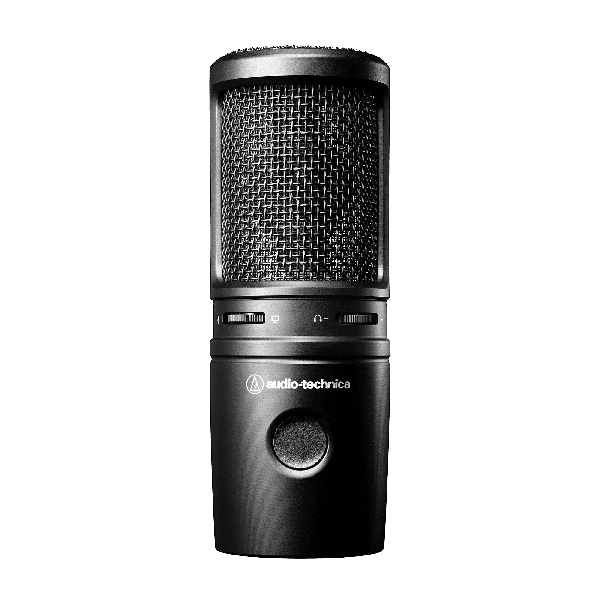
The original Audio-Technica AT2020 has appeared on more albums, podcasts, and voice-over sessions than almost any other microphone in its price class, prized for a 16mm back-electret condenser capsule with a warm, detailed character and a natural presence peak that flatters voice without the harshness cheaper condensers exhibit. The USB-X variant brings that capsule into the USB world with meaningfully better conversion than its predecessor: 24-bit/96kHz, up from the original AT2020USB's 16-bit/44.1kHz. That's not a marketing number — it's the difference between preserving subtle vocal inflection and room ambiance versus compressing and discarding it.
A built-in headphone amplifier with a mix control dial provides zero-latency monitoring, and a touch-sensitive mute button sits on top of the body. The all-metal chassis in Audio-Technica's matte black finish feels appropriately premium, though the included tripod desk stand is basic — most buyers upgrade to a boom arm.
In use
SoundGuys' Riley Ballantyne framed the AT2020USB-X's defining characteristic precisely: "This condenser microphone's high sensitivity is both its greatest strength and weakness. If you have the right recording space, it's a good choice for recording voice." That sensitivity is exactly what makes the capsule capture the musical detail Audio-Technica is known for — and exactly what causes problems in a noisy room, since the microphone offers no onboard gain control to compensate.
That absence of a gain dial isn't a hypothetical concern. Ballantyne tested it directly: "In the mic samples recorded from an untreated office, you can hear obvious hard clipping, which is an issue with USB mics that lack gain control before the ADC." TechRadar's Aleksha McLoughlin reached the same conclusion from a different angle, recommending a passive-noise-reduction alternative for anyone recording in a lively room: "The lack of a gain dial and the sensitive nature of the AT2020USB-X means that it will not be the best at battling through a room that's got some ambience to it. You're better off finding a microphone with some passive noise reduction, such as a dynamic design."
Build quality earns real praise. Ballantyne noted "the AT2020USB-X extensively uses metal in its construction, which adds to its premium feel," a step above the mostly-plastic competition at this price. But she also flagged two specific, practical annoyances: the included mount's USB-C cable "can sometimes be difficult to thread through it as intended; the cable often slips free of the clips on the bottom," and the built-in pop filter is "only somewhat effective," with sound quality benefiting from "a proper pop filter between the mic and the vocal talent."
Strengths
The AT2020 capsule's musical quality is the whole reason to choose this microphone over voice-optimized alternatives — acoustic guitar has body and shimmer, vocals have warmth, and even ambient room tone captures with a three-dimensional quality that speech-tuned competitors don't attempt. The 24-bit/96kHz conversion is a genuine, audible upgrade over the previous generation. Build quality on the all-metal chassis outclasses most of the plastic-bodied competition in this price range.
The trade-offs — who should skip it
No gain dial, combined with a genuinely sensitive capsule, is the AT2020USB-X's defining limitation — both independent reviewers who tested it in an untreated room documented audible clipping as a real, reproducible problem, not a theoretical one. The included accessories need upgrading almost immediately: a fiddly cable mount and an under-effective pop filter. If your recording space has any meaningful ambient noise and you're not willing to add room treatment or an outboard gain stage, the dynamic capsule on the Shure MV7+ or Samson Q9U will simply reject more of what you don't want to hear.
How it compares
One rank up on this list, the Elgato Wave:3 solves the AT2020USB-X's clipping problem directly with Clipguard, at the cost of the musical, instrument-friendly capsule character that makes the AT2020 special. One rank down, the HyperX QuadCast S trades studio pedigree for RGB lighting and gaming-focused features at a similar price. If music is part of what you record, the AT2020USB-X remains the more versatile choice of the three; if speech clarity in an imperfect room is the priority, look toward a dynamic capsule instead.
The Gavler verdict
A 9.1 — the microphone to choose specifically because of its capsule, not despite the compromises around it. The AT2020USB-X rewards anyone who records music, instruments, or anything beyond pure speech with a musicality this list's voice-tuned competitors don't chase. Just budget for a quieter room, a boom arm, and a real pop filter to get the most out of it.
Common Questions
Yes, especially if you record music, instruments, or voiceover alongside spoken content. It ranks number 5 on Gavler's Best USB Microphones list with a 9.1. The AT2020 capsule has a musical, detailed character that voice-only competitors don't replicate, and the 24-bit/96kHz conversion preserves nuance the original AT2020USB's 16-bit/44.1kHz couldn't. The trade-off is that it's a sensitive condenser with no gain dial, so it needs a reasonably quiet room to sound its best.
No — this is its most-cited limitation. SoundGuys tested this directly: 'In the mic samples recorded from an untreated office, you can hear obvious hard clipping, which is an issue with USB mics that lack gain control before the ADC.' TechRadar echoed the same concern: 'The lack of a gain dial and the sensitive nature of the AT2020USB-X means that it will not be the best at battling through a room that's got some ambience to it.'
Buy the AT2020USB-X if you record music, acoustic instruments, or anything beyond speech — the AT2020 capsule has a musicality the Wave:3's voice-tuned capsule doesn't aim for. Buy the Wave:3 if streaming is your primary use case; Clipguard specifically solves the clipping problem the AT2020USB-X's lack of a gain dial can create.
Not really. SoundGuys found the included mount fiddly — 'the USB-C cable can sometimes be difficult to thread through it as intended' — and rated the built-in pop filter only 'somewhat effective,' recommending a separate pop filter for vocal work. Budget for a boom arm and an external pop filter if you're using this for serious voice recording.
Where to Buy.
Prices checked regularly
90-day price history
Price History
Steady at $149 for the entire 90-day tracking window — no increases, no discounts, across 91 tracked days.
Tracked daily across retailers. Vote Want itabove and we’ll alert you the moment the price drops.
Some links are affiliate links — Gavler may earn a commission. This never affects rankings or scores. Learn more.
Precision Engineering
AT2020 Capsule
The legendary 16mm back-electret condenser element delivers warm, detailed audio with a natural presence peak that flatters voice and music.
24-bit/96kHz Conversion
High-resolution digital conversion preserves the nuance and dynamic range of the capsule — a major upgrade from the original USB model.
Touch Mute
Touch-sensitive mute button provides silent muting without mechanical noise during recording and streaming sessions.
Technical Specifications
The Scoreboard
Experts praise the capsule quality and musical versatility. Community notes the condenser design requires a quieter environment than dynamic alternatives, and the included stand is basic.
Cast Your Vote
Do you think Audio-Technica AT2020USB-X deserves the #5 spot in Best USB Microphones?
Global Critique
“A great, natural air to its sound with plenty of low frequency captured — it delivers instant results even used as a simple desk mic.”
“The cardioid condenser has a definite sizzle in the upper trebles and picks up ambient noise, so it's happiest in a quiet or treated room.”
“Excellent vocal clarity and true plug-and-play simplicity — some listeners prefer its voice reproduction to the Blue Yeti X.”
More from Best USB Microphones.
See how other top picks compare in this category.
What to Check Before You Buy a USB Microphone
RGB hangtags are the wrong first question. Dynamic vs condenser, the room, and DSP vs plug-and-play come first. Then shop Gavler's live ranking.
The Best USB Microphones in 2026, Ranked by Streamers, Podcasters, and Producers Who Talk Into Them Daily
Shure, Blue, Rode, Elgato, Audio-Technica. Gavler's community ranks the USB mics worth buying — from a $59 dynamic to the $269 podcast standard.