The Best Camera Lenses in 2026, Ranked by the Photographers Who Shoot Them
Sony, Canon, Nikon, Sigma, Tamron, Fuji — Gavler's community ranks the lenses worth buying, from a $629 prime to a $2,798 pro telephoto.
Lenses are the part of a camera system that actually decides how your photos look, and they are the part most people underinvest in. A body gets replaced every few years as sensors improve; a great lens outlives three or four of them. In 2026 the good news is that the gap between "best" and "good enough" has never been smaller — third-party makers like Sigma and Tamron now build glass that holds its own against first-party flagships at half the price, and even the entry-level f/1.8 primes from Nikon and Sony are sharp enough to embarrass lenses that cost three times more.
Late May into June is also one of the better windows to buy. Memorial Day sales are live at B&H, Adorama, and Amazon, and the stretch toward Father's Day is when retailers discount lenses and bundle accessories — and a lens is a far better gift for a photographer than another body that obsoletes in a year. Gavler's community has ranked ten of them, across full-frame and APS-C, by lived experience behind the camera. The picks below pull from our four community lens rankings — the Best Standard Zoom Lenses, Best Telephoto Zoom Lenses, Best Portrait Lenses, and Best Wide-Angle Prime Lenses.
How the Rankings Work
One vote per person on the Best Camera Lenses list. Pick the lens you would mount for tomorrow's shoot — the standard zoom you trust for a full wedding day, the portrait prime that nails skin tone, or the value pick that freed up budget for a second lens. Because the list spans systems and focal lengths, a $629 Nikon prime and a $2,798 Sony telephoto compete on the same page, judged by the same question: is this the glass working photographers actually reach for? The result is a ranking built on use, not ad spend.
The Top Picks
Sony FE 24-70mm f/2.8 GM II — The Benchmark Standard Zoom

Sony FE 24-70mm f/2.8 GM II
The benchmark standard zoom. Sharper, lighter, and faster-focusing than the original GM — the only 24-70 most Sony shooters will ever need.
Amazon affiliate · price subject to change
The GM II is the lens that ended the prime-versus-zoom argument for most Sony shooters. The original GM softened noticeably as you zoomed toward 70mm; the Mark II stays crisp across the entire range and into the corners even wide open, while shedding nearly 200 grams down to 695g. Four linear motors drive autofocus fast enough to keep pace with Sony's quickest bodies. The only real knock is the $2,298 price — but this is the lens that replaces a wide, a normal, and a short-telephoto prime, so it earns its place on the camera. 42 votes and a 9.7 score put it at the top.
Canon RF 50mm f/1.2L USM — The Portrait Statement Piece
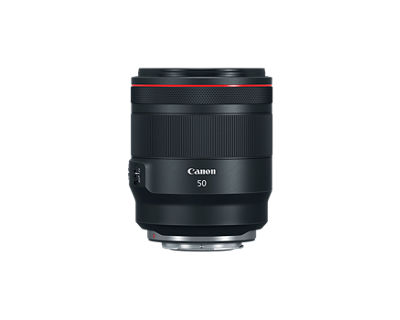
Canon RF 50mm f/1.2L USM
Canon's optical statement. Razor-thin depth of field, perfect rendering wide-open, and the kind of subject separation that defines a portrait look.
Amazon affiliate · price subject to change
The RF 50mm f/1.2L is the lens Canon built to prove the RF mount was worth switching for. Wide open, the plane of focus is tack-sharp while backgrounds dissolve into a three-dimensional bokeh that reviewers consistently call painterly, and skin tones render beautifully on Canon's latest bodies. It is not a versatile everyday lens: at 950 grams it is heavy, at $2,299 it is expensive, and f/1.2 demands precise technique to nail focus. But for portrait, wedding, and fine-art shooters, no other 50mm produces images quite like this. A 9.5 score and 36 votes.
Sony FE 70-200mm f/2.8 GM OSS II — The Lightest Pro Telephoto

Sony FE 70-200mm f/2.8 GM OSS II
29% lighter than the original with faster AF and improved close-focus. The telephoto zoom for sports, wildlife, and event shooters.
Amazon affiliate · price subject to change
Sony took the most-used professional telephoto zoom and cut nearly a third of its weight — from 1,480g to 1,045g — making it the lightest 70-200mm f/2.8 from any major brand, lighter even than Canon's RF version. The remarkable part is that the optics improved at the same time: the center is sharp from f/2.8 and performance stays even across the whole range, with close-focus down to 0.4m at the wide end adding genuine versatility. At $2,798 it is a serious investment, but it is the rare lens you can carry all day without fatigue. 30 votes and a 9.4 score.
Nikon Z 70-200mm f/2.8 VR S — Nikon's S-Line Flagship
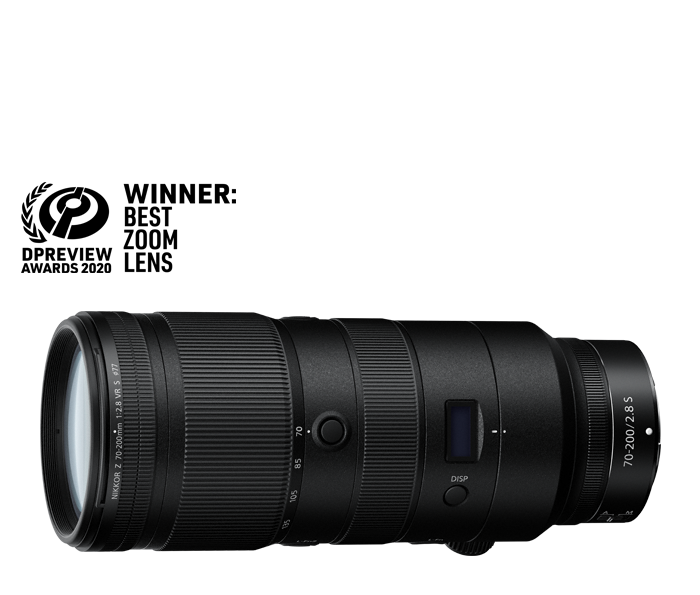
Nikon Z 70-200mm f/2.8 VR S
Nikon's S-line flagship telephoto. Tack-sharp wide open, internal zoom, and dual-axis VR that earns its place on the Z9 and Z8.
Amazon affiliate · price subject to change
This is the telephoto that Z-mount shooters waited for, and it delivers: sharpness wide open at f/2.8 that holds into the extreme corners at every focal length, an internal-zoom design that keeps balance on a gimbal and dust out of the barrel, and dual-axis VR that pairs with the Z8 and Z9's in-body stabilization. DXOMARK rates its optical performance among the best in class. The trade-off versus Sony's GM II is weight — at 1,360 grams it is the heavier lens — but the image quality and build justify it. At $2,696 with a 9.2 score and 25 votes.
Sigma 35mm f/1.4 DG DN Art — The Value-Conscious Pro Prime
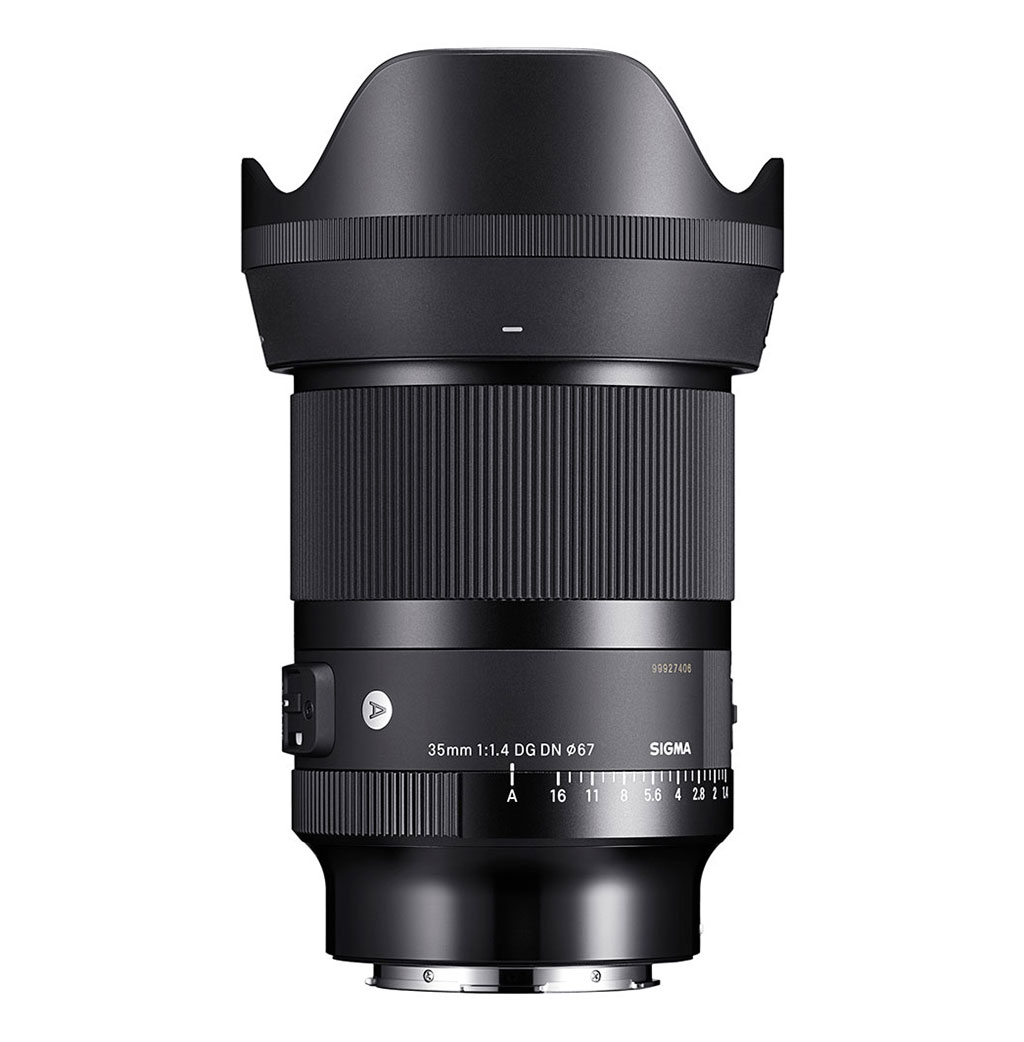
Sigma 35mm f/1.4 DG DN Art
Sigma's mirrorless redesign of an Art classic. Lighter, faster-focusing, and weather-sealed — the value-conscious 35mm pro lens.
Amazon affiliate · price subject to change
The lens that launched the Art revolution, redesigned from scratch for mirrorless: lighter, faster-focusing, and weather-sealed for the first time. It is sharp at f/1.4 and razor-sharp by f/2, with low chromatic aberration, clean distortion, and build quality OpticalLimits puts on par with the best first-party glass. At $899 it delivers roughly 90 to 95 percent of what Sony's or Canon's $1,400-plus 35mm f/1.4 lenses do, and it comes in Sony E and Leica L mounts. For photojournalists, street, and documentary shooters, this is the obvious recommendation. 31 votes and a 9.1 score — the highest-ranked prime here that does not cost over two thousand dollars.
Sony FE 85mm f/1.4 GM II — The Wedding-and-Headshot Workhorse
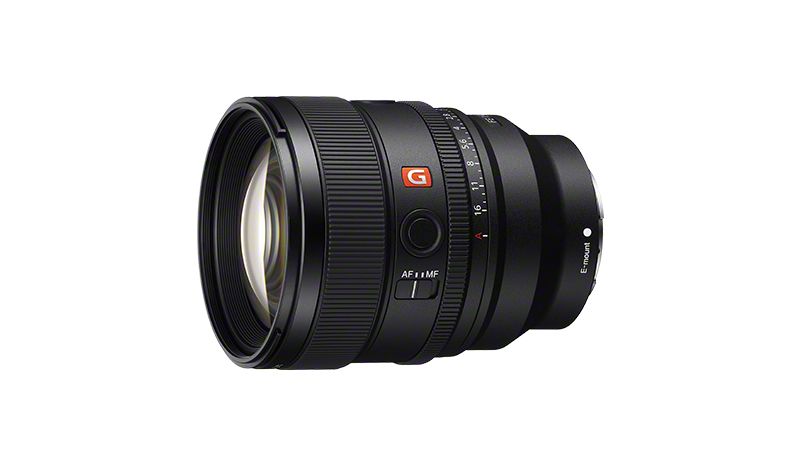
Sony FE 85mm f/1.4 GM II
About 20% lighter than the original GM with faster, quieter AF. The portrait prime that shows up at every wedding and headshot session.
Amazon affiliate · price subject to change
The 85mm is the classic portrait focal length, and the GM II is the one Sony shooters overwhelmingly choose. The Mark II's headline change is weight — down from 820g to 642g, turning a fatiguing lens into one you can shoot for a ten-hour wedding day — paired with quieter, faster autofocus that works for video too. Rendering is everything a G Master portrait lens should be: sharp on the eye, creamy behind it. The 0.85m close-focus limits frame-filling headshots, and at $1,798 the f/1.8 sibling tempts budget buyers. But for working portraitists, this is the pick. A 9.0 score and 28 votes.
Tamron 28-75mm f/2.8 Di III VXD G2 — The Smart-Money Standard Zoom
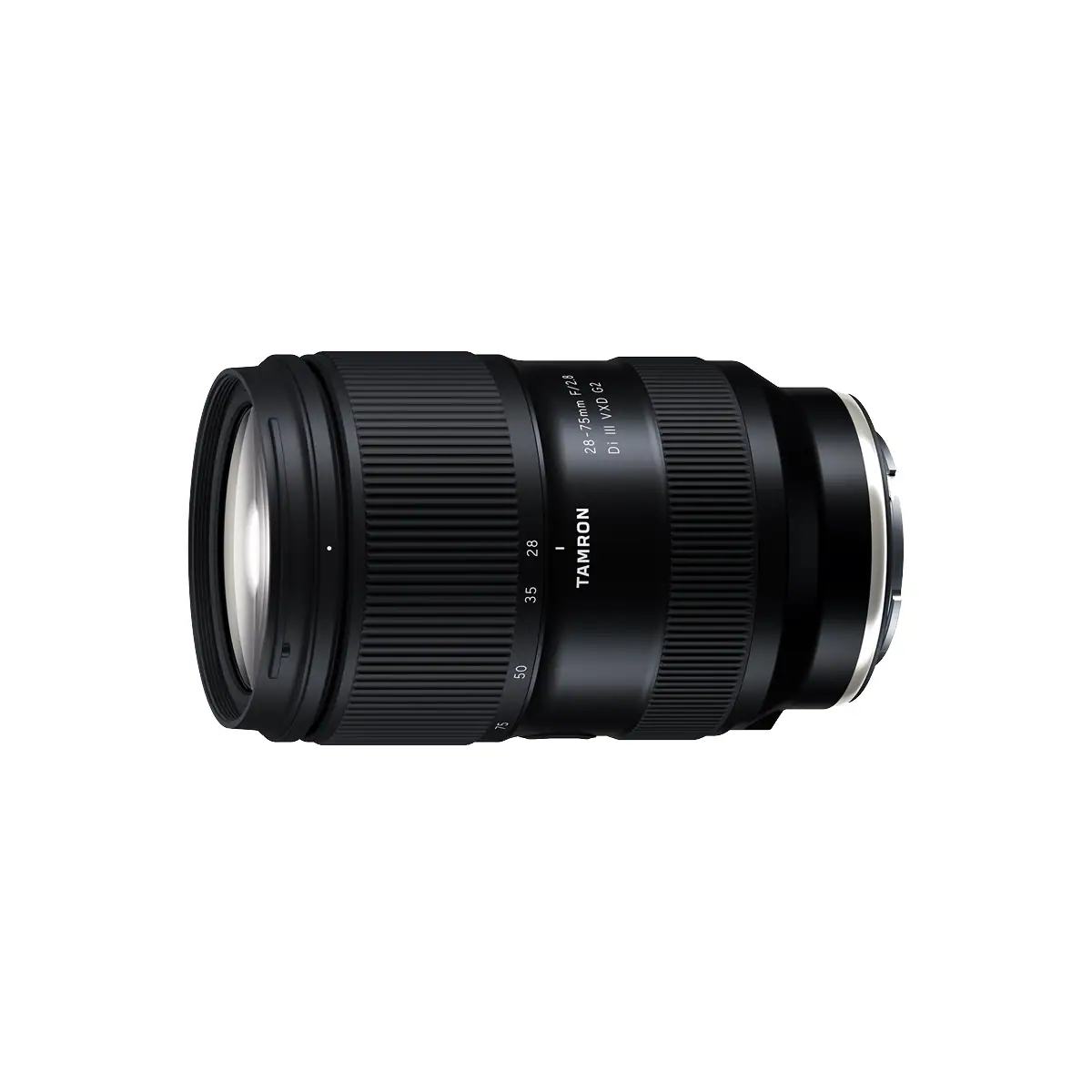
Tamron 28-75mm f/2.8 Di III VXD G2
The standard zoom that makes you question whether to spend three times more. Sharp, fast-focusing, and shockingly affordable for its class.
Amazon affiliate · price subject to change
The Tamron is the lens that makes spending $2,298 on the Sony GM II a hard sell for most people. Center sharpness at f/2.8 is genuinely difficult to separate from the GM II in real shooting, the G2 revision sped up autofocus, and close-focus drops to 0.18m for tabletop work. You give up the 24mm wide end (it starts at 28mm) and a little extreme-corner sharpness — that is the entire compromise. At $899 and 540 grams, it is the rational choice for portraits, events, and travel. 27 votes and an 8.9 score, with community ratings even higher than the experts' on pure value.
Canon RF 24-70mm f/2.8L IS USM — The Stabilized Workhorse
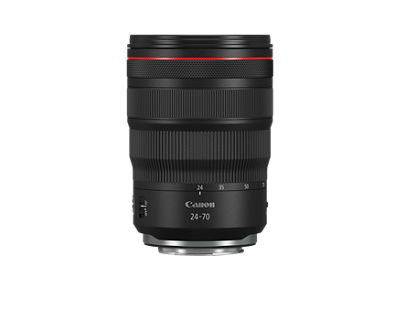
Canon RF 24-70mm f/2.8L IS USM
Canon's only standard zoom with image stabilization in this class. A do-everything workhorse for the R5 and R5 Mark II.
Amazon affiliate · price subject to change
Canon's standard zoom holds a distinction no rival matches: it is the only 24-70mm f/2.8 in its class with built-in optical stabilization, up to 5 stops that coordinate with the R5 and R5 Mark II's in-body IS for handheld shots at shutter speeds that would normally need a tripod. For event and documentary shooters working handheld in low light, that advantage is real. L-series build and Nano USM autofocus round it out. The catch is price — at $2,399 it is the most expensive standard zoom here, and third-party RF options undercut it sharply for tripod-based work. An 8.8 score and 23 votes.
Fujifilm XF 56mm f/1.2 R WR — The Fuji Portrait Reason-to-Switch
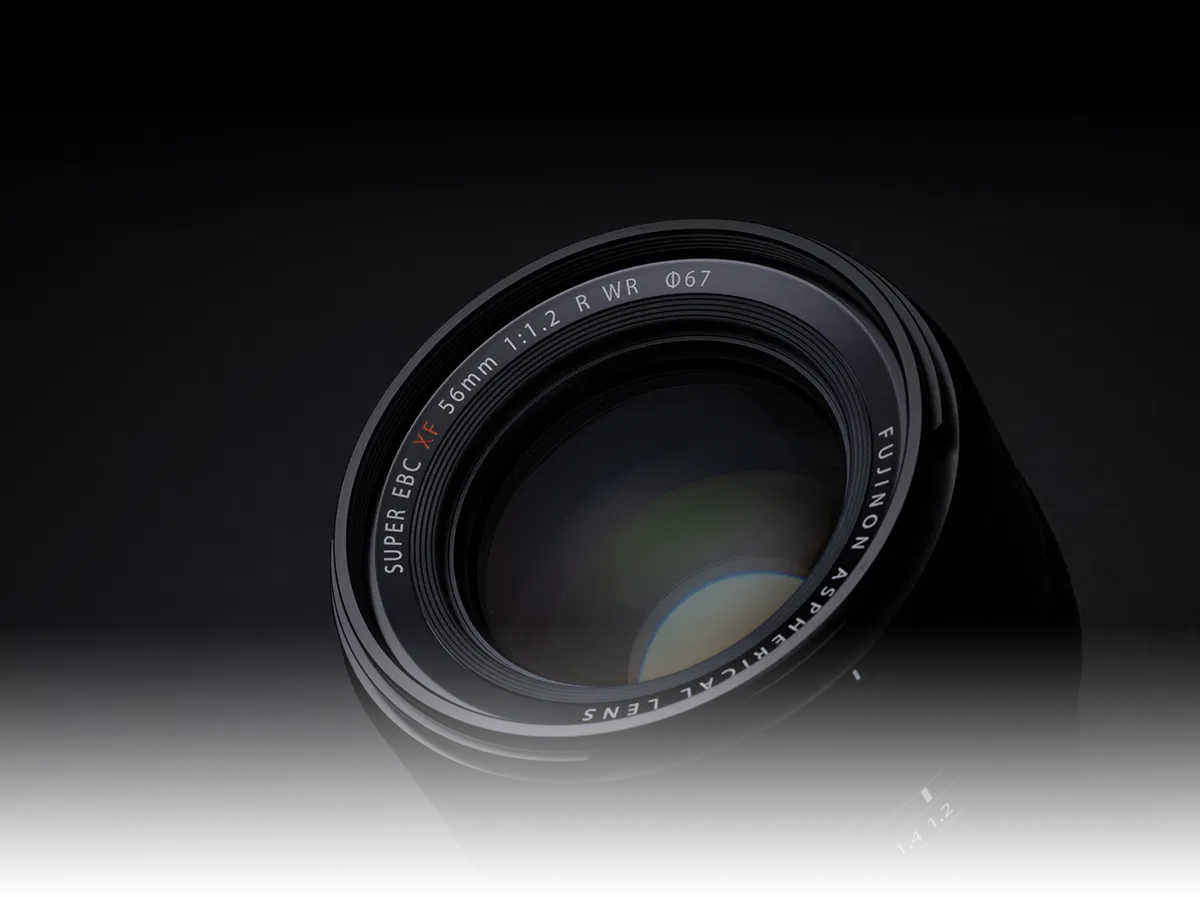
Fujifilm XF 56mm f/1.2 R WR
The redesigned Fuji portrait prime. Weather-sealed, faster-focusing, and an even smoother out-of-focus rendering than the original 56mm.
Amazon affiliate · price subject to change
On Fuji's APS-C sensor, the 56mm gives an 85mm-equivalent field of view with an f/1.2 aperture, producing depth-of-field separation that APS-C usually cannot deliver — paired with Fuji's film simulations, it makes straight-out-of-camera portraits that many shooters prefer to anything they could edit. The WR revision addressed the original's two weak spots: an improved (if still measured) autofocus motor and weather sealing across 9 seal points. Autofocus is fine for portraits rather than fast action, and APS-C f/1.2 still does not quite equal full-frame f/1.4 for separation, but at $999 and 445 grams, this is the single most compelling reason to shoot portraits on the Fuji X system. 22 votes and an 8.6 score.
Nikon Z 50mm f/1.8 S — The f/1.8 That Embarrasses f/1.4
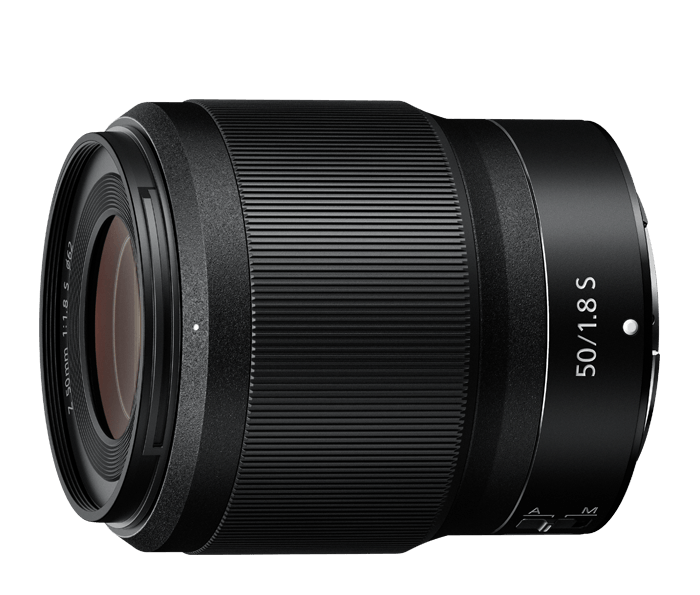
Nikon Z 50mm f/1.8 S
The benchmark for what an f/1.8 prime can be. Sharp from corner to corner wide open at a price that makes f/1.4 alternatives hard to justify.
Amazon affiliate · price subject to change
The Z 50mm f/1.8 S redefined what an f/1.8 prime can be. Where budget fifties have always been sharp in the center and soft in the corners, this one is sharp edge-to-edge from wide open, leaning on the Z-mount's optical advantages to deliver performance that genuinely rivals f/1.4 primes costing twice as much. S-line build quality, silent autofocus, and a de-clickable aperture ring for video round it out. At $629 it is the cheapest lens on this list and, for many Nikon Z shooters, the first one to buy after the kit zoom. An 8.4 score and 24 votes.
Which One Should You Buy?
If you want one lens that does almost everything, buy a standard zoom: the Sony FE 24-70mm f/2.8 GM II is the benchmark, but the Tamron 28-75mm f/2.8 G2 gives you most of it for $899 and is the right call for most people. Canon shooters who work handheld in low light should look at the stabilized RF 24-70mm f/2.8L IS. For portraits, the Canon RF 50mm f/1.2L and Sony FE 85mm f/1.4 GM II are the full-frame standard-bearers, with the Fujifilm XF 56mm f/1.2 R WR carrying the flag on APS-C. For telephoto reach, it comes down to system — the Sony 70-200mm GM II if weight matters most, the Nikon Z 70-200mm VR S for outright optics. And if you are upgrading from a kit lens on a budget, the Sigma 35mm f/1.4 Art and Nikon Z 50mm f/1.8 S are the two best-value primes here.
Whatever system you shoot, the lens is the upgrade that improves every photo you take from here on — far more than the next body will. See where the community ranks each one, and cast your own vote, on the Best Standard Zoom Lenses, Best Telephoto Zoom Lenses, Best Portrait Lenses, and Best Wide-Angle Prime Lenses lists, or browse the rest of our Photography coverage — including the Best Mirrorless Cameras to mount these on and the Best Photography Lighting to shoot them under. Faces are a distance first: 50 vs 85 vs 135 in the portrait-lens buying guide, then Best Portrait Lenses. A 24-70 is a range first: f/2.8 vs f/4 in the standard-zoom buying guide, then Best Standard Zoom Lenses. Reach is 70-200 vs 500–600 in the telephoto-zoom buying guide, then Best Telephoto Zoom Lenses. Street, astro, and interiors are 35 vs 24 vs 20 in the wide-angle buying guide, then Best Wide-Angle Prime Lenses.
See all 10 products ranked by the community
Best Standard Zoom Lenses
See Full Rankings →264 community votes cast
Common Questions
The Sony FE 24-70mm f/2.8 GM II tops Gavler's community ranking with a 9.7 score and 42 votes. The reason it ranks first is not that it is a Sony lens — it is that it solved the one real weakness of the original GM, which softened as you zoomed toward 70mm, and now stays sharp corner-to-corner across the whole range while shedding nearly 200 grams. Amateur Photographer calls it the best general-purpose zoom for E-mount to date. The honest caveat is the $2,298 price. But a 24-70mm f/2.8 is the one lens that replaces a wide, a normal, and a short-telephoto prime, so for a working Sony shooter it is the lens that lives on the camera. If you shoot Canon or Nikon, the equivalent answer is the Canon RF 24-70mm f/2.8L IS or the Nikon Z 70-200mm f/2.8 VR S.
Buy the Tamron 28-75mm f/2.8 G2 unless you have a specific reason not to. At $899 it delivers center sharpness that is genuinely hard to separate from the $2,298 Sony GM II in real-world shooting, and it weighs less. You give up two things: the 24mm wide end (the Tamron starts at 28mm, which matters for architecture and tight interiors) and the last bit of extreme-corner sharpness. For portraits, events, street, and travel, neither is a deal-breaker, and the $1,400 you save buys another lens. Choose the GM II if you need 24mm, if you shoot fast action where its quad-motor autofocus pulls ahead, or if you are a professional who simply wants the best standard zoom made. For most people, the Tamron is the smarter purchase.
Three lenses on this list punch far above their price. The Sigma 35mm f/1.4 DG DN Art ($899) gives you roughly 90 to 95 percent of a first-party 35mm f/1.4's optical quality, with weather sealing, at well under the cost of Sony's or Canon's version — OpticalLimits flatly calls it a winner that is affordable relative to its performance. The Tamron 28-75mm f/2.8 G2 ($899) is the value standard zoom. And the Nikon Z 50mm f/1.8 S ($629) is the cheapest lens here yet sharp enough wide open to make Nikon's own f/1.4 primes hard to justify. If you want one rule: a great third-party prime or a well-chosen f/1.8 beats a mediocre f/1.4 every time.
Buy a zoom first if you are still learning what focal lengths you actually use. A 24-70mm f/2.8 or 28-75mm f/2.8 covers wide, normal, and short-telephoto in one lens, so you can shoot a wedding, a trip, or a product session without changing glass — and after a few months you will know whether you reach for 35mm, 50mm, or 85mm most. Then buy a prime in that focal length for the wider aperture, lighter weight, and the rendering a zoom cannot match. Buy a prime first only if you already know your style: a portrait shooter should start with an 85mm (or a 56mm on Fuji APS-C), a street or documentary shooter with a 35mm, and a generalist with a 50mm.
On full-frame, the Canon RF 50mm f/1.2L USM (9.5, 36 votes) and the Sony FE 85mm f/1.4 GM II (9.0, 28 votes) are the two to beat. The Canon renders with a three-dimensional bokeh that reviewers describe as painterly, though at 950 grams and $2,299 it is a heavy, expensive specialist with no stabilization. The Sony 85mm is the wedding-and-headshot workhorse — the Mark II shed about 20% of its weight, so you can shoot it all day. On a budget, the Sony 85mm has an f/1.8 sibling for a third the price. On Fuji APS-C, the XF 56mm f/1.2 R WR gives you an 85mm-equivalent look with weather sealing and Fuji's color science straight out of camera.
Late May into June is one of the better windows of the year. Memorial Day sales run at B&H, Adorama, and Amazon through the end of the month, and the run-up to Father's Day is when retailers discount glass and bundle filters or hoods. A lens is also a far better gift than a camera body for the photographer in your life, because it does not chase a sensor-upgrade cycle — a good lens bought today is still relevant a decade from now and holds its resale value better than almost anything else in a camera bag. If you have been shooting a kit zoom and waiting to upgrade, this is the season to do it.
Rankings come from community votes by photographers who actually shoot this glass. Each person gets one vote on the Best Camera Lenses list — pick the lens you would mount for tomorrow's shoot, not the one with the biggest marketing budget. The list spans full-frame and APS-C systems and every focal length, so a $629 prime and a $2,798 telephoto can sit on the same page. No affiliate commissions or manufacturer sponsorships influence the order. Vote totals at the time of publication appear next to each pick on the live list, which had 286 votes cast across ten lenses when this was written.