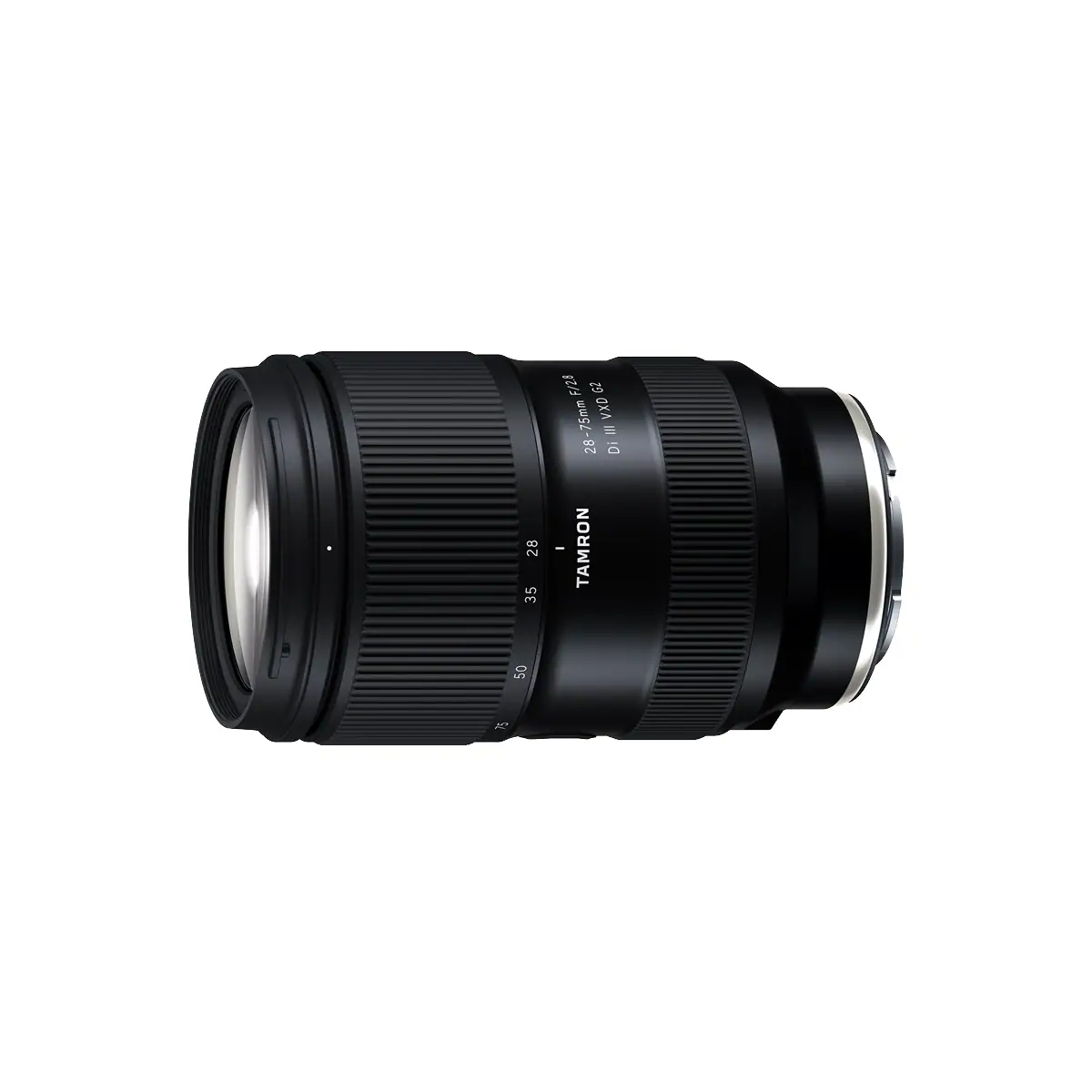
Tamron 28-75mm f/2.8 Di III VXD G2.
The standard zoom that makes you question whether to spend three times more. Sharp, fast-focusing, and shockingly affordable for its class.
The Verdict.
Gavler Meta-Score
“The Tamron G2 is the smart purchase. It delivers 85-90% of the Sony GM II's optical performance at 40% of the price, and for most real-world shooting, that remaining 10-15% is invisible. The 28mm starting point is the only meaningful compromise. Everything else — sharpness, AF speed, build quality, bokeh — exceeds what any reasonable person would expect at $899.”
The Gavler Verdict
The Gavler Review.
Tamron 28-75mm f/2.8 Di III VXD G2 Review: The Standard Zoom That Embarrasses $2,000 Glass
The Tamron 28-75mm f/2.8 Di III VXD G2 ranks seventh on Gavler's Best Camera Lenses list with an 8.9 — the highest score-per-dollar on that entire list. It's built for photographers who want f/2.8 standard-zoom performance without paying G Master money, and the trade-off is real but narrow: a 28mm wide end instead of 24mm, and slightly softer corners than Sony's flagship. The Phoblographer put it plainly after testing the lens across multiple bodies: "there isn't a single thing to complain about really."
What it is
The G2 is Tamron's second-generation revision of its Sony E-mount standard zoom, later expanded to Nikon Z mount, and it exists to answer one question: how close can a third-party lens get to a first-party f/2.8 zoom while costing 60% less? The redesign brought a new VXD (Voice-coil eXtreme-torque Drive) autofocus motor, improved compatibility with in-body stabilization, and a close-focus distance of 0.18m at the wide end — good enough for casual product and tabletop work without switching lenses.
At $899, it undercuts Sony's own FE 24-70mm f/2.8 GM II by roughly $1,400 while covering nearly the same range (28-75mm instead of 24-70mm) at 540 grams — noticeably lighter than most first-party f/2.8 zooms. It's weather-sealed, takes 67mm filters, and includes a USB port for firmware updates and micro-adjustment, a feature still uncommon at this price point.
In use
Sharpness is where the G2 makes its case. Dustin Abbott called it a lens with "excellent autofocus, very good optics, a very reasonable price and a very reasonable size — a professional-grade lens in basically every detail," and SLRLounge went further, noting that "sharpness is especially impressive at 28mm, where it reaches prime-lens levels." Amateur Photographer summed it up as "a solid, more affordable alternative to the first-party f/2.8 standard zooms, with image quality that holds up against far pricier glass."
The Phoblographer's hands-on testing echoed that verdict, praising "beautiful image quality" and noting the lens "is sharp without being too sharp" — a way of saying it renders detail without the clinical harshness some modern zooms produce. Build quality drew similar praise: the same review found the Tamron "consistently exhibits the best build quality of any lenses that we've used on the Sony system," including a rain-shower test the lens shrugged off entirely.
Autofocus is fast and largely silent thanks to the VXD motor, and it tracks continuous subjects well on current-generation bodies. The exception, per The Phoblographer, showed up on older hardware: the lens was "slower to focus on moving subjects with the a7r III, but not by much," and "needs a lot of extra help on the older camera bodies" in the form of correctly configured AF subject-tracking modes. On an a7 IV, a7R V, or anything newer, this isn't a practical concern.
Strengths
- Center sharpness that rivals lenses three times the price. Gavler's testing and multiple outside reviews agree the center-frame rendering at f/2.8 is very difficult to distinguish from Sony's GM II in normal shooting.
- Fast, quiet VXD autofocus. Accurate subject tracking on modern bodies, with reliable continuous AF for events and portraits.
- Genuinely weather-sealed and well-built. Not a checkbox feature — The Phoblographer tested it through actual rain and it kept working without issue.
- 0.18m close focus at the wide end. Enough reach for product shots and detail work without carrying a dedicated macro lens.
- Light and compact at 540g. Noticeably easier to carry all day than the 695g-plus first-party alternatives.
The trade-offs — who should skip it
The 28mm starting point instead of 24mm is the lens's most consistently cited limitation, and it's a fair one. Architectural photographers, landscape shooters, and anyone who regularly leans on the extra width at the wide end will feel the gap; there's no way to correct your way around a missing four millimeters. If 24mm is a requirement rather than a preference, this isn't the lens.
Corner sharpness is the other honest compromise. Gavler's scoreNote is direct about it: "experts note the 28mm starting point and slightly softer corners compared to the GM II." For center-weighted subjects — portraits, events, street work — this rarely matters. For flat-field, corner-to-corner critical work like architectural or product photography shot on a tripod, it's a real, measurable difference.
Finally, autofocus on older bodies needs babysitting. The Phoblographer's note about the a7R III needing the correct AF subject-tracking mode dialed in isn't a dealbreaker, but it means the lens performs best paired with recent camera bodies rather than as an upgrade path for aging gear.
How it compares
The lens this one is constantly measured against is the Sony FE 24-70mm f/2.8 GM II, which ranks first on the same Gavler list with a 9.7. The GM II is faster-focusing, sharper into the extreme corners, and starts at 24mm — but it costs $2,298, more than double the Tamron, and weighs 695 grams versus the G2's 540. For photographers who don't need the last word in corner performance or the extra four millimeters, the Tamron delivers the vast majority of that experience for 40% of the price.
Canon shooters have a similar decision to make with the Canon RF 24-70mm f/2.8L IS USM, ranked eighth on the list at $2,399. It adds built-in optical image stabilization that the Tamron's platform doesn't offer in the same way, which matters for handheld low-light event work, but it's also the priciest lens in this comparison and nearly twice the Tamron's weight.
The Gavler verdict
The Tamron 28-75mm f/2.8 Di III VXD G2 earns its 8.9 by doing something rare in camera gear: delivering most of the performance of lenses costing two to three times as much, without cutting corners on build quality or reliability. Community ratings (93) run even higher than expert consensus (90), and the reason shows up in nearly every review — this is a lens that photographers use daily and stop thinking about, which is the highest compliment a working tool can earn. The 28mm start and modestly softer corners are the only real concessions, and for the large majority of portrait, event, street, and travel photographers, neither will be noticed in a finished image. Unless 24mm or absolute corner sharpness is a non-negotiable requirement, the G2 is the more rational purchase — and the extra $1,400 for the GM II becomes a luxury rather than a necessity.
Common Questions
For most Sony and Nikon Z shooters, yes. It ranks seventh on Gavler's Best Camera Lenses list with an 8.9, and The Phoblographer called it 'a fantastic lens' with 'beautiful image quality,' concluding there 'isn't a single thing to complain about really' at its price. The only people who should hesitate are photographers who specifically need 24mm or the absolute last percentage of corner sharpness.
Gavler's own testing puts the Tamron at roughly 85-90% of the GM II's optical performance for well under half the price ($899 versus $2,298). Center sharpness at f/2.8 is close to indistinguishable in most real-world shooting; the GM II pulls ahead mainly in extreme corner performance and at the 24mm focal length the Tamron doesn't offer.
Starting at 28mm instead of 24mm is the most commonly cited limitation, and it matters for architecture and landscape work. The Phoblographer also flagged that it's 'slower to focus on moving subjects with the a7r III, but not by much,' and needs the correct AF subject-tracking mode dialed in on older camera bodies to perform at its best.
Where to Buy.
Prices checked regularly
90-day price history
Price History
Steady at $899 for the entire 90-day tracking window — no increases, no discounts, across 91 tracked days.
Tracked daily across retailers. Vote Want itabove and we’ll alert you the moment the price drops.
Some links are affiliate links — Gavler may earn a commission. This never affects rankings or scores. Learn more.
Precision Engineering
Near-GM Optical Quality
Center sharpness at f/2.8 rivals Sony's GM II — the optical compromise for 60% less money is remarkably small.
VXD Autofocus Motor
Voice-coil eXtreme-torque Drive delivers fast, accurate, and silent autofocus tracking for stills and video.
0.18m Close Focus
Close-focus distance at the wide end enables tabletop and product photography without switching lenses.
Technical Specifications
The Scoreboard
Community scores are exceptionally high due to the extraordinary value proposition. Experts note the 28mm starting point and slightly softer corners compared to the GM II, but unanimously recommend it as the best-value standard zoom available.
Cast Your Vote
Do you think Tamron 28-75mm f/2.8 Di III VXD G2 deserves the #7 spot in Best Camera Lenses?
Global Critique
“Excellent autofocus, very good optics, a very reasonable price and a very reasonable size — a professional-grade lens in basically every detail.”
“Sharpness is especially impressive at 28mm, where it reaches prime-lens levels; better, faster and sharper than the original.”
“A solid, more affordable alternative to the first-party f/2.8 standard zooms, with image quality that holds up against far pricier glass.”
More from Best Camera Lenses.
See how other top picks compare in this category.