Sony FE 24-70mm f/2.8 GM II.
The benchmark standard zoom. Sharper, lighter, and faster-focusing than the original GM — the only 24-70 most Sony shooters will ever need.

The Verdict.
Gavler Meta-Score
“The GM II is the best standard zoom ever made for any mirrorless system. It's lighter, sharper, and faster than the lens it replaces, and it renders images with a quality that makes dedicated primes a luxury rather than a necessity. If you shoot Sony, this is the one lens that should live on your camera.”
The Gavler Verdict
The Gavler Review.
Sony FE 24-70mm f/2.8 GM II Review: The Zoom That Replaces Three Primes
The Sony FE 24-70mm f/2.8 GM II sits at number one on our Best Camera Lenses list with a 9.7, and it's there because it did something standard zooms rarely manage: it made photographers stop debating whether a zoom could match a prime. Buy it if you shoot Sony E-mount and want one lens that genuinely replaces a bag full of primes. The only real objection is price — at $2,298, it's a serious investment, and Sigma's 24-70mm f/2.8 Art undercuts it if budget outweighs the last percentage point of autofocus speed and corner sharpness.
What it actually is
The GM II is the redesign of Sony's flagship standard zoom, and the headline number is weight: Sony shaved 200 grams off the original GM while improving sharpness across the entire frame, particularly in the corners at wider apertures where the first version showed softness. Four XD linear autofocus motors drive focus fast and quietly enough to keep pace with the A9 III's 120fps burst rate — a standard zoom tracking action with the speed normally reserved for a dedicated sports prime.
Optically, the lens uses Sony's latest aspherical and ED glass elements to deliver what reviewers describe as prime-like resolution across the zoom range. At 24mm, architectural lines stay straight with minimal distortion; at 70mm, portrait-distance subjects separate cleanly from the background thanks to an 11-blade circular aperture. Nano AR coating II keeps flare and ghosting under control in backlit situations that would trip up older zoom designs. At $2,298 and 695 grams with full weather sealing, it's priced and built as a professional tool.
In use
The core claim reviewers make about the GM II is that it closes the gap between zoom and prime performance, and the testing backs that up. Amateur Photographer called it "the best-quality general-purpose zoom for the E-mount system to date," adding that it "addresses the few shortfalls of its predecessor" — a pointed comparison to the lens it replaces, not just a generic compliment. Cameralabs was more specific about where the improvement shows: "unlike the Mark I, which softened as you zoomed in, the II stays crisp across the range, with corners that hold up well even at f/2.8." That's the exact failure mode of the original lens, directly addressed.
The-Digital-Picture's studio comparison found the same pattern holds at the telephoto end, historically the weakest point for standard zooms: "in the studio it surpassed expectations, handily besting the version I lens — it is considerably sharper at the long end of the range." For working photographers, that consistency across the zoom range — not just at one favorite focal length — is what turns a standard zoom from a compromise into a primary lens.
Where it shines
- Autofocus fast enough for anything you'll shoot. Four XD linear motors keep pace with 120fps burst shooting on Sony's fastest bodies, which means the lens isn't the bottleneck even for sports or wildlife work at 24-70mm range.
- One lens instead of three. A 24mm wide-angle, a 35mm street focal length, and a 50-70mm portrait range all live in a single weather-sealed 695-gram body — a real advantage for wedding and event photographers who can't swap primes mid-ceremony.
- Corner-to-corner sharpness that holds up wide open. The improvement over the original GM isn't marginal — testers specifically call out corners holding up at f/2.8, which is where standard zooms traditionally struggle most.
The trade-offs — who should skip it
This is the best standard zoom on the market, not the cheapest, and the honest reasons to buy something else are specific:
- Budget is the deciding factor. At $2,298, this is a premium lens. Sigma's 24-70mm f/2.8 Art undercuts it significantly on price, at the cost of some autofocus speed and corner performance.
- You need in-lens image stabilization. The GM II relies on Sony's in-body stabilization rather than optical stabilization of its own. Canon's RF 24-70mm f/2.8L IS builds stabilization into the lens itself, which matters more for handheld video work.
- You already own primes that cover this range. If you're a dedicated prime shooter who values the absolute widest apertures or the smallest, lightest kit for a single focal length, a zoom — even this one — isn't solving a problem you have.
How it compares
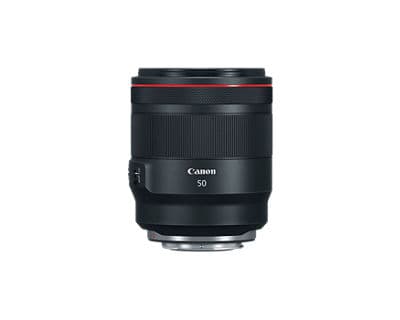
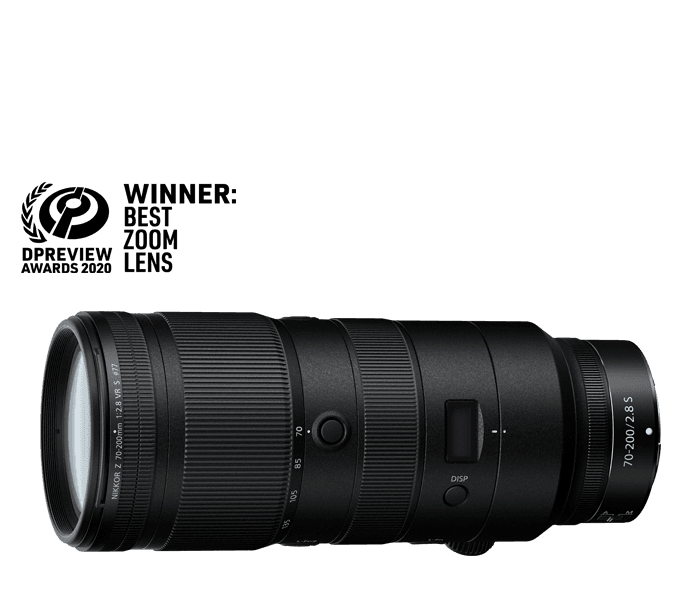
On its own list, the GM II sits above two other Gavler-ranked lenses worth cross-shopping. The Canon RF 50mm f/1.2L USM at rank two is a completely different tool — a single-focal-length portrait specialist built for razor-thin depth of field rather than versatility — and it's the pick for photographers whose priority is one perfect rendering over range. The Sony FE 70-200mm f/2.8 GM OSS II at rank three is the natural companion lens, not a competitor: pair it with the 24-70mm GM II and most E-mount photographers have their entire working kit covered in two lenses.
The GM II's case isn't that it beats every prime at every focal length — it's that it gets close enough, across enough of the frame, that carrying three lenses stops being worth the weight for most working photographers.
The Gavler verdict
A 9.7, with expert scores (97) and community scores (95) both near-unanimous — the tightest consensus of almost any lens on the list. The GM II is the best standard zoom ever made for any mirrorless system: lighter and sharper than the lens it replaces, fast enough to track anything you'll shoot, and good enough optically that dedicated primes become a luxury rather than a necessity. If you shoot Sony, this is the one lens that should live on your camera. If price is the constraint, the Sigma 24-70mm f/2.8 Art is the value alternative worth considering instead.
Common Questions
For most Sony E-mount shooters who need one lens to cover everything, yes. It ranks first on Gavler's Best Camera Lenses list with a 9.7, and reviewers consistently call it the best standard zoom ever tested — not just for Sony, but for any mirrorless system. At 2,298 dollars it isn't cheap, but it replaces a 24mm wide-angle, a 35mm street lens, and a 50-70mm portrait prime in one weather-sealed body.
Substantially. The Mark II is 200 grams lighter, sharper across the frame — especially in the corners at wide apertures, where the original showed softness — and focuses faster thanks to four XD linear motors that can keep pace with 120fps burst shooting. Reviewers describe the improvement as addressing essentially every shortfall of the first version.
The Canon adds image stabilization, which the Sony lacks, but it's heavier and more expensive. If in-lens stabilization matters to your work — handheld video, for example — the Canon is worth considering. For most stills shooters, the Sony's autofocus speed and corner sharpness make it the stronger overall pick, and Sony bodies' in-body stabilization covers much of what the lens itself doesn't.
For most work, no. Reviewers describe its sharpness across the zoom range as prime-like, and it covers the three focal lengths — wide, standard, and short telephoto — that most photographers reach for primes to cover. Dedicated primes still win in extreme low light or for the absolute widest apertures, but the GM II closes that gap further than any standard zoom before it.
Where to Buy.
Prices checked regularly
90-day price history
Price History
Steady at $2,298 for the entire 90-day tracking window — no increases, no discounts, across 91 tracked days.
Tracked daily across retailers. Vote Want itabove and we’ll alert you the moment the price drops.
Some links are affiliate links — Gavler may earn a commission. This never affects rankings or scores. Learn more.
Precision Engineering
Prime-Level Sharpness
Latest aspherical and ED elements deliver corner-to-corner sharpness that rivals dedicated prime lenses across the zoom range.
695g Weather-Sealed Body
200 grams lighter than the original GM with full dust and moisture sealing for all-weather professional use.
4 XD Linear AF Motors
Quad linear motors drive autofocus fast enough to track subjects at 120fps burst — silent, precise, and nearly instantaneous.
Technical Specifications
The Scoreboard
Near-unanimous expert acclaim — multiple outlets call it the best standard zoom ever tested. Community ratings reflect the exceptional optical quality tempered only slightly by the $2,298 price point.
Cast Your Vote
Do you think Sony FE 24-70mm f/2.8 GM II deserves the #1 spot in Best Camera Lenses?
Global Critique
“The best-quality general-purpose zoom for the E-mount system to date — it addresses the few shortfalls of its predecessor.”
“Unlike the Mark I, which softened as you zoomed in, the II stays crisp across the range, with corners that hold up well even at f/2.8.”
“In the studio it surpassed expectations, handily besting the version I lens — it is considerably sharper at the long end of the range.”
More from Best Camera Lenses.
See how other top picks compare in this category.