Sony FE 70-200mm f/2.8 GM OSS II.
29% lighter than the original with faster AF and improved close-focus. The telephoto zoom for sports, wildlife, and event shooters.

The Verdict.
Gavler Meta-Score
“The GM OSS II is the best 70-200mm f/2.8 ever made. It's lighter than everything else, sharper than everything else, and focuses faster than everything else. The weight savings alone would justify the purchase — the optical improvements make it a generational leap.”
The Gavler Verdict
The Gavler Review.
Sony FE 70-200mm f/2.8 GM OSS II Review: The Lightest Pro Telephoto Ever Made
The Sony FE 70-200mm f/2.8 GM OSS II holds rank three on Gavler's Best Camera Lenses list with a 9.4, and it earns that spot by solving a problem professional telephoto zooms have lived with for decades: they're heavy. At 1,045 grams, this is 29% lighter than the original GM and lighter than every competing 70-200mm f/2.8 on the market, without giving up the sharpness or speed that photographers pay flagship prices for. Buy it if you carry a telephoto zoom for hours at a time — sports, weddings, wildlife. Skip it only if you genuinely don't need f/2.8 reach often enough to justify the $2,798 price.
What it actually is
The Sony FE 70-200mm f/2.8 GM OSS II rewrites what a professional telephoto zoom should weigh. At 1,045 grams, it handles like a lens a full class smaller than its specs suggest, which matters enormously for sports photographers shooting thousands of frames during a game, wedding photographers moving between ceremony and reception for ten hours straight, and wildlife shooters hiking into remote locations where every gram in the bag is a compromise.
The weight reduction comes without the usual optical trade-off. Sony's latest XA (extreme aspherical) elements and ED glass deliver sharpness at 200mm f/2.8 that rivals dedicated telephoto primes, and four XD linear AF motors drive focus fast enough to track birds in flight, tennis serves, and motorsport without hunting — even paired with the fastest burst rates in Sony's lineup. Close-focus distance has also improved, dropping to 0.4 meters at the wide end and 0.82 meters at telephoto, adding a versatility the original GM lacked: close-up detail shots of rings at weddings or insects in the field, without switching lenses. Optical SteadyShot works alongside in-body stabilization for up to 7 stops of correction, and an 11-blade circular aperture produces bokeh without the "onion ring" patterns that plague lesser aspherical designs.
In use
The weight story checks out in independent testing, not just Sony's marketing. Amateur Photographer confirmed it's "now the lightest 70-200mm f/2.8 on the market — lighter even than Canon's RF version — and it gives up nothing optically to do it." That combination — lightest and still class-leading sharp — is the rare case where a manufacturer's headline claim survives contact with real reviewers.
OpticalLimits backs that up with measured results: "the image center is sharp as a tack from f/2.8, and performance stays very even across the entire zoom range." Even performance across a zoom range is the harder engineering problem than peak sharpness at one focal length — a lens that's excellent at 70mm and merely good at 200mm is a common compromise, and this one avoids it. Fstoppers summarized the achievement bluntly: "the 70-200mm you won't believe: Sony cut nearly a third of the weight and still improved the optics over the original." That's the throughline across every review — this isn't a lighter, slightly-worse version of the original GM; it's lighter and better.
The close-focus improvements matter more in daily use than they might seem on a spec sheet. A 70-200mm that can focus down to 0.82 meters at the telephoto end opens up compressed, isolated detail shots — event details, wildlife close-ups — that used to require a dedicated macro lens or a frustrating hunt for working distance.
Where it shines
- Genuinely the lightest in its class. At 1,045g, this beats every rival 70-200mm f/2.8 from Canon, Nikon, and Sigma — a real, measured advantage, not a marketing rounding error.
- No optical compromise for the weight savings. Sharp from f/2.8, even across the zoom range, with bokeh free of the artifacts that plague lesser aspherical designs.
- Autofocus that keeps up with Sony's fastest bodies. Four XD linear motors track erratic action at 30fps burst rates without hunting — a real requirement for sports and wildlife work, not a nice-to-have.
The trade-offs — who should skip it
There's very little to fault here, but the honest caveats are still worth naming:
- The price is a serious commitment. At $2,798, this is a professional-tier investment, and casual shooters who reach for telephoto range only occasionally may not get their money's worth.
- It's still a 1kg-plus lens. "Lightest in class" is a real achievement, but it's relative — this is still a substantial piece of glass compared to standard zooms or primes, and all-day carry is still a factor to plan around.
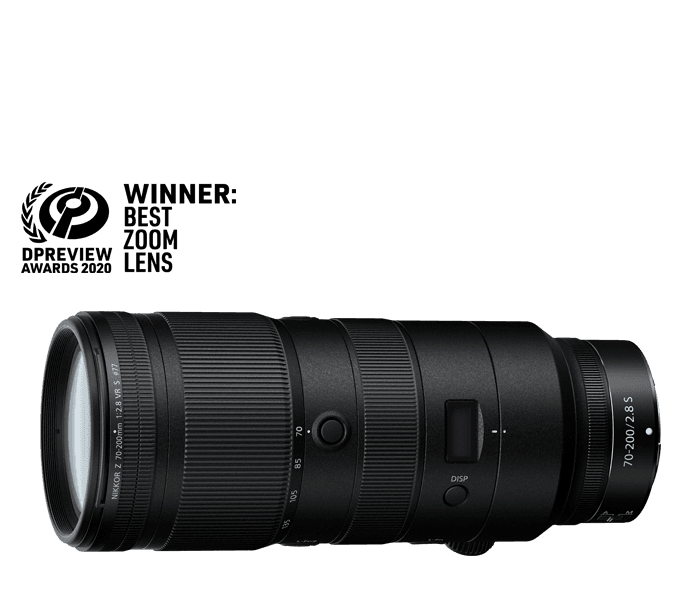
- You shoot on a gimbal. The Nikon Z 70-200mm f/2.8 VR S's internal zoom design keeps a constant length while zooming, which some gimbal-based videographers prefer for balance — this lens extends as it zooms.
How it compares
At rank one on the same list sits the Sony FE 24-70mm f/2.8 GM II, the standard zoom half of most professional Sony kits — Amateur Photographer calls it "the best-quality general-purpose zoom for the E-mount system to date." The two lenses are natural companions rather than competitors: the 24-70 covers wide-to-portrait distances, and the 70-200 GM II picks up where it leaves off, together forming the two-zoom kit most working Sony photographers actually carry.
The more direct rival sits outside Sony's own ecosystem: the Nikon Z 70-200mm f/2.8 VR S. At 1,360 grams, it's noticeably heavier, but its internal zoom design maintains constant length while zooming — better gimbal balance and less dust ingress in the field — and Photography Blog measured sharpness "absolutely stunning" right into the extreme corners, even wide open at f/2.8. For Sony shooters, the weight advantage settles the comparison; for photographers evaluating telephoto zooms across mounts, the Nikon is the closest thing to a genuine rival on sharpness.
The Gavler verdict
A 9.4, with expert consensus (95) and community rating (93) both near-unanimous on what this lens delivers — the recurring note across both is simply the premium price, not any performance shortfall. The Sony FE 70-200mm f/2.8 GM OSS II earns its place on Gavler's Best Camera Lenses list by doing something genuinely rare: cutting nearly a third of the weight from an already-excellent lens while improving the optics at the same time. For sports, wildlife, and event photographers who carry a telephoto zoom all day, this is the one to buy.
Common Questions
For sports, wildlife, wedding, and event shooters who carry a telephoto zoom for hours at a time, yes — it ranks third on Gavler's Best Camera Lenses list with a 9.4, and at 1,045 grams it's the lightest 70-200mm f/2.8 from any major manufacturer without giving up optical performance. At $2,798 it's still a serious investment, so casual shooters who don't need f/2.8 telephoto reach regularly should consider whether they'll actually use the range enough to justify it.
Sony cut the weight by 29% to 1,045 grams, down from the original GM's roughly 1,480 grams. That makes it lighter than every competing full-frame 70-200mm f/2.8, including Canon's RF version and Nikon's Z-mount equivalent.
No — reviewers found no optical compromise. Amateur Photographer noted it's now 'the lightest 70-200mm f/2.8 on the market' while 'giving up nothing optically,' and OpticalLimits measured the image center as sharp from f/2.8 with performance staying even across the entire zoom range.
Both are excellent, but they optimize for different priorities. The Sony is dramatically lighter at 1,045g and built around portability without sacrificing sharpness. The Nikon, at 1,360g, uses an internal zoom design that keeps its length constant while zooming — better balance on a gimbal and less dust ingress — and reviewers rate its sharpness as comparable or superior at 200mm. If weight is your priority, the Sony wins outright; if you shoot on a gimbal or prioritize the internal-zoom mechanical design, the Nikon is a legitimate rival.
Where to Buy.
Prices checked regularly
90-day price history
Price History
Steady at $2,798 for the entire 90-day tracking window — no increases, no discounts, across 91 tracked days.
Tracked daily across retailers. Vote Want itabove and we’ll alert you the moment the price drops.
Some links are affiliate links — Gavler may earn a commission. This never affects rankings or scores. Learn more.
Precision Engineering
XA Aspherical Elements
Extreme aspherical and ED glass deliver prime-rivaling sharpness at every focal length with smooth, artifact-free bokeh.
1,045g Lightweight Design
29% lighter than the original GM — the lightest 70-200mm f/2.8 from any major manufacturer.
4 XD Linear AF Motors
Quad linear motors deliver silent, instantaneous autofocus that tracks action at 30fps burst rates.
Technical Specifications
The Scoreboard
Expert consensus is near-universal: the lightest and sharpest 70-200mm f/2.8 available. Community enthusiasm is high, with the premium price the only recurring note.
Cast Your Vote
Do you think Sony FE 70-200mm f/2.8 GM OSS II deserves the #3 spot in Best Camera Lenses?
Global Critique
“Now the lightest 70-200mm f/2.8 on the market — lighter even than Canon's RF version — and it gives up nothing optically to do it.”
“The image center is sharp as a tack from f/2.8, and performance stays very even across the entire zoom range.”
“The 70-200mm you won't believe: Sony cut nearly a third of the weight and still improved the optics over the original.”
More from Best Camera Lenses.
See how other top picks compare in this category.