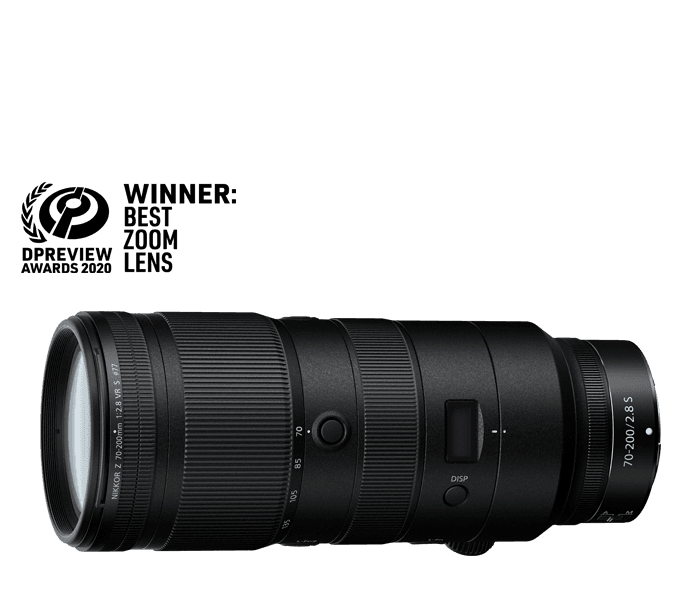
Nikon Z 70-200mm f/2.8 VR S.
Nikon's S-line flagship telephoto. Tack-sharp wide open, internal zoom, and dual-axis VR that earns its place on the Z9 and Z8.
The Verdict.
Gavler Meta-Score
“The Z 70-200mm f/2.8 VR S is the finest telephoto zoom Nikon has ever made, and a strong argument for the Z-mount system's optical superiority. The internal zoom, exceptional sharpness, and synergistic VR with Z-series bodies make it essential for any Nikon shooter who works at telephoto distances.”
The Gavler Verdict
The Gavler Review.
Nikon Z 70-200mm f/2.8 VR S Review: The S-Line Standard, at a Weight Tax
The Nikon Z 70-200mm f/2.8 VR S ranks fourth on our Best Camera Lenses list with a 9.2, and it earns that spot the hard way — through optics, not compromise. This is the telephoto zoom for Nikon Z shooters who need Z9-grade sharpness and an internal zoom that stays balanced on a gimbal, at $2,696. The single biggest trade-off is weight: at 1,360 grams it is not a light lens, and as Photography Life put it after lab testing, "I see only one potential concern with the specifications above: portability. The Z 70-200mm f/2.8 S isn't small or light at all." For photographers who prioritize resolving power and build quality over shaving grams, that's an easy trade to accept.
What it is
The Z 70-200mm f/2.8 VR S is Nikon's S-line flagship telephoto for the Z-mount system — the tier Nikon reserves for lenses meant to define what the mount can do. It uses an internal zoom design, meaning the barrel doesn't extend or retract as you zoom, which keeps the lens's center of balance constant on a gimbal head and reduces the amount of dust and moisture that can work its way into the barrel during field use. Nikon backs that with 21 elements in 18 groups, including six ED elements, two aspherical elements, a fluorite element, and an SR ("short-wavelength refractive") element intended specifically to control chromatic aberration — a specification sheet Photography Life called "a seriously high-end lens," noting that "nearly half of the 21 elements on this lens are some advanced type."
Autofocus runs through Nikon's Silky Swift Voice Coil Motor system, built to keep pace with the Z9's 120fps burst rate, with focus breathing controlled well enough to matter for video shooters racking focus mid-take. Dual-axis VR is rated to 5.5 stops when combined with in-body stabilization on the Z8 or Z9. At $2,696 it sits within a few hundred dollars of the Sony and Canon equivalents, priced as a flagship telephoto rather than a budget alternative.
In use
Sharpness is the lens's headline strength, and it holds up across the frame rather than just in the center. Photography Blog measured it directly: "Throughout most of the zoom range, sharpness is absolutely stunning — right across the frame and into the extreme corners, even wide open at f/2.8." The Phoblographer went further, putting the lens in prime-lens territory: "Sharpness is only a touch removed from a Z-mount prime, the bokeh is spectacular, and the colors are excellent. This is a reason to shoot the Z system." DXOMARK's lab testing backs both of those subjective calls, rating it "among the best-performing 70-200mm f/2.8 lenses we have tested."
Where the marketing claims get a reality check is stabilization. Nikon rates the combined VR-plus-IBIS system at 5.5 stops, but Photography Life's hands-on measurement came in lower: "At 70mm, I consistently got about 3.5 stops of stabilization compared to using the lens with VR turned off; at 200mm, that improved to about 4.5 stops of stabilization." That's still a genuinely useful amount of correction for handheld telephoto work in dim conditions — it's just worth knowing the CIPA-rated number and the number you'll see in the field aren't the same thing, a gap that's common across the industry but rarely gets called out this specifically.
Build quality earns no such caveats. Every switch and button is weather-sealed rubber, the front element carries a fluorine coating that Photography Life confirmed shrugged off "windy, rainy, and dusty conditions" without grime buildup, and the internal zoom means nothing external moves except the controls you touch on purpose.
Strengths
- Edge-to-edge sharpness wide open. Not just center-sharp at f/2.8 — Photography Blog measured stunning resolution into the extreme corners, a rarer trait among 70-200mm zooms than marketing copy suggests.
- Internal zoom, internal focus. Nothing extends, which keeps the lens balanced on a gimbal and — per Photography Life's field testing — kept dust and grime out even in windy, dusty conditions.
- 21-element optical formula with six specialized glass types. Six ED elements, two aspherical elements, a fluorite element, and an SR element is more advanced glass than Nikon puts in almost any other lens, including some of its own primes.
- Full teleconverter compatibility. Nikon's TC-1.4x and TC-2.0x extend it to 280mm f/4 or 400mm f/5.6, useful reach for wildlife shooters who don't want to buy a dedicated super-telephoto.
The trade-offs — who should skip it
The honest compromise here is physical, not optical. At 1,360 grams, this lens weighs almost exactly the same as the F-mount 70-200mm f/2.8E FL VR it replaces — Nikon's mirrorless transition didn't bring the weight savings it brought to many of its other Z lenses, and it's roughly 300 grams heavier than Canon's collapsing RF 70-200mm f/2.8L. If you shoot handheld for hours at a time — weddings, events, sideline sports without a monopod — that difference is felt by the end of the day.
The stabilization gap noted above is the second honest caveat: 3.5 to 4.5 real-world stops is good, not the 5.5-stop figure on the spec sheet. And there's no VR on/off switch on the barrel itself; it has to be toggled through a camera menu, a minor ergonomic miss Photography Life flagged as one of the lens's few handling quirks.
Buyers who shoot primarily on a gimbal, in a studio, or on a tripod won't notice any of this. Photographers who spend all day handholding — and who don't already own Z-mount bodies — should weigh the weight and system cost carefully before buying in.
How it compares
Within its own list, the Z 70-200mm f/2.8 VR S sits directly behind the Sony FE 70-200mm f/2.8 GM OSS II at rank three. Sony's version uses the same internal-zoom philosophy but comes in roughly 300 grams lighter — Fstoppers called it a lens where "Sony cut nearly a third of the weight and still improved the optics over the original." The two aren't cross-shoppable across mounts, but the comparison illustrates where Nikon spent its engineering budget: absolute sharpness and build over minimum weight.
For Nikon shooters weighing portability more heavily, our Canon RF 70-200mm f/2.8L IS USM review covers the opposite design philosophy — a collapsing barrel that trims weight at the cost of teleconverter compatibility entirely, a trade-off the Nikon doesn't force you to make.
The Gavler verdict
A 9.2, and it's earned through optics that DXOMARK, Photography Blog, and The Phoblographer independently rate at or near the top of the 70-200mm f/2.8 category, backed by an internal zoom design built for gimbal and video work. The catch is real but narrow: this is a 1,360-gram lens whose real-world VR performance runs a stop or more below its rated spec. For Z8 and Z9 shooters who prioritize resolving power and all-weather reliability over minimum weight, the Z 70-200mm f/2.8 VR S remains the telephoto zoom to buy — and the strongest argument yet for the Z-mount system's optical ceiling.
Common Questions
For Nikon Z shooters who need a telephoto zoom that holds up on a Z8 or Z9, yes. It ranks fourth on Gavler's Best Camera Lenses list with a 9.2, and The Phoblographer found sharpness 'only a touch removed from a Z-mount prime,' calling it 'a reason to shoot the Z system.' The trade-off is weight: at 1,360 grams it is not a light lens, and Photography Life's real-world VR testing measured meaningfully fewer stabilization stops than Nikon's spec sheet claims.
At 1,360 grams (1,440 grams with the tripod foot), it is close to the F-mount 70-200mm f/2.8E FL VR it replaces, and noticeably heavier than Canon's collapsing RF 70-200mm f/2.8L at 1,070 grams. Photography Life called portability 'the only potential concern' with the lens's otherwise best-in-class spec sheet.
They are not directly cross-shoppable since they use different mounts, but within their own systems both are the reference 70-200mm. The Nikon wins on internal-zoom gimbal balance and edge sharpness; the Sony is roughly 300 grams lighter. If you are already committed to Z-mount, DXOMARK rated the Nikon 'among the best-performing 70-200mm f/2.8 lenses we have tested.'
Where to Buy.
Prices checked regularly
90-day price history
Price History
Steady at $2,697 for the entire 90-day tracking window — no increases, no discounts, across 91 tracked days.
Tracked daily across retailers. Vote Want itabove and we’ll alert you the moment the price drops.
Some links are affiliate links — Gavler may earn a commission. This never affects rankings or scores. Learn more.
Precision Engineering
S-Line Optics
Nikon's highest optical tier delivers edge-to-edge sharpness at f/2.8 with minimal chromatic aberration and distortion.
Internal Zoom Design
Lens length stays constant during zooming — maintains balance on gimbals and reduces dust ingress during field use.
Synergistic VR System
5.5-stop optical VR combines with in-body stabilization on Z8/Z9 for handheld telephoto shooting in dim conditions.
Technical Specifications
The Scoreboard
Experts praise the optical quality and internal zoom design as best-in-class for Nikon. Some community members note the higher weight compared to Sony's GM II, though optical performance is considered comparable or superior.
Cast Your Vote
Do you think Nikon Z 70-200mm f/2.8 VR S deserves the #4 spot in Best Camera Lenses?
Global Critique
“Throughout most of the zoom range, sharpness is absolutely stunning — right across the frame and into the extreme corners, even wide open at f/2.8.”
“Sharpness is only a touch removed from a Z-mount prime, the bokeh is spectacular, and the colors are excellent. This is a reason to shoot the Z system.”
“Great optical performance — among the best-performing 70-200mm f/2.8 lenses we have tested.”
More from Best Camera Lenses.
See how other top picks compare in this category.