The Best Headphone Amps and DACs in 2026, Ranked by the Listeners Who Live in Their Headphones Every Day
Schiit, iFi, FiiO, Topping, Chord, RME, JDS Labs. Gavler ranks the desktop stacks, dongles, and tube amps actually worth buying in 2026.
The 2026 headphone amp and DAC market splits cleanly into three philosophies. The objectivist camp wants transparent measurement-grade performance for less money than ever — Schiit, JDS Labs, FiiO, and Topping have built a category where the prior generation's $2,000 reference performance now sells for $250 in a desktop stack. The character camp wants something the measurements cannot quite explain — Chord's FPGA architecture, xDuoo's classic tube circuits, iFi's analog bass enhancement, all chasing a sound that chip-based transparency does not capture. The portability camp wants desktop quality in a pocket — Questyle's titanium current-mode dongle and FiiO's THX-equipped BTR7 are the two products that prove the smartphone-headphone-amp gap has effectively closed.
May is a strong window for headphone-amp and DAC buyers. Sweetwater, B&H, and the direct manufacturer stores — Schiit Audio, JDS Labs, Chord Electronics — run pre-summer promotions that overlap with graduation gifting season and tax-return spend. Audiophile-focused retailers like Headphones.com and Apos Audio also run May markdowns on the prior-generation flagships from the 2025 refresh wave. Gavler's community has ranked ten of them by lived experience — pick the amp or DAC you would actually put on your next desk, not the one with the prettiest measurement chart. The picks below are pulled from the live Best Headphone Amps and DACs list.
How the Rankings Work
One vote per person on the Best Headphone Amps and DACs list. Pick the amp or DAC you would put on stands tomorrow morning before the first track plays — the one you trust on a four-hour listening session, an evening of careful album comparison, or the late-night reach-for-it-without-thinking moment when a great record demands proper hardware. Switched amps after a headphone upgrade exposed a flaw, after a long listening session revealed treble fatigue, or after a tube swap changed your mind about the whole hobby? Move your vote. The result is a ranking built on what real listeners actually live with, not what a YouTuber demoed on Tuesday.
The Top Picks
Schiit Magni Unity / Modi 5 Stack — The Desktop Reference That Reset Expectations
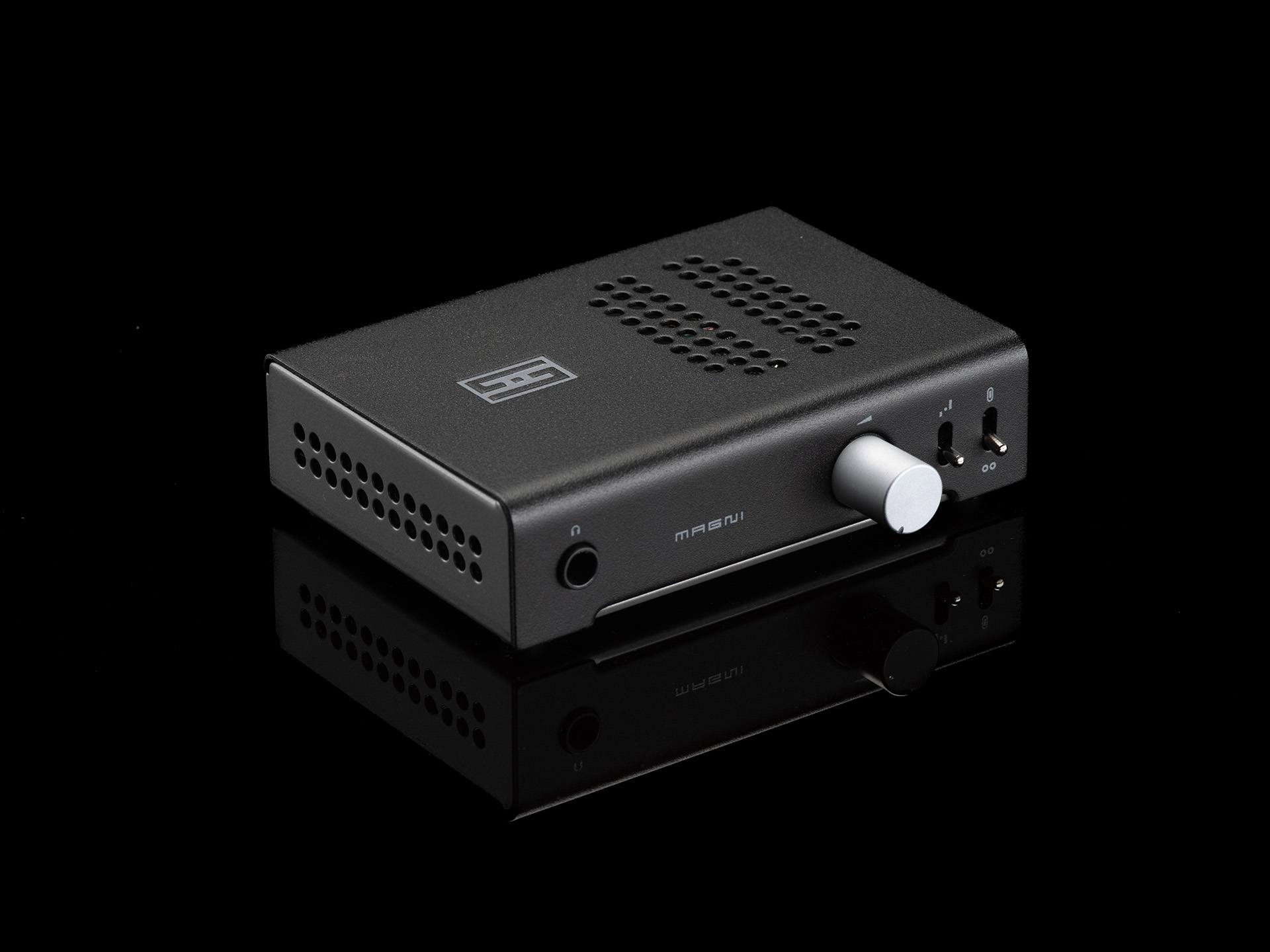
Schiit Magni Unity / Modi 5 Stack
Schiit's Magni Unity amp paired with the Modi 5 DAC delivers transparent, powerful single-ended amplification that drives everything from IEMs to planar magnetics.
Amazon affiliate · price subject to change
The Magni Unity / Modi 5 stack is the desktop reference Schiit fans recommend by reflex, and the reflex is earned. Together the two units cost about $258 — $129 for the Modi 5 DAC, $129 for the Magni Unity amplifier — and deliver a single-ended desktop reference that competes with equipment historically costing three to four times as much. The Magni Unity uses a discrete amplifier topology with serious current delivery, comfortably driving sensitive in-ear monitors at one extreme and demanding planar magnetic headphones like the HiFiMAN Sundara and Audeze LCD-X at the other. The output impedance is vanishingly small, which keeps frequency response consistent across headphone loads, and the noise floor sits well below audibility even with the most sensitive IEMs.
The Modi 5 handles digital-to-analog conversion with USB, optical, and coaxial inputs supporting PCM up to 24-bit/192 kHz. The stacked form factor occupies roughly the footprint of a paperback book, and the units connect via the RCA interconnect Schiit ships in the bundle. AV Gadgets' review flagged the Magni's neutral signature as the reason the focus stays squarely on the music, and PMA Magazine paired the Magni Unity with the HiFiMAN Arya Stealth and called the sub-$1,000 combination a surprisingly great-sounding system. Schiit's manufacturing in Texas and California, the 15-day return policy, and the standard warranty give the stack a reliability story that import-only Chinese alternatives cannot fully match. 34 community votes and a 9.6 score.
iFi ZEN DAC 3 — The Gateway Audiophile DAC, Generation Three
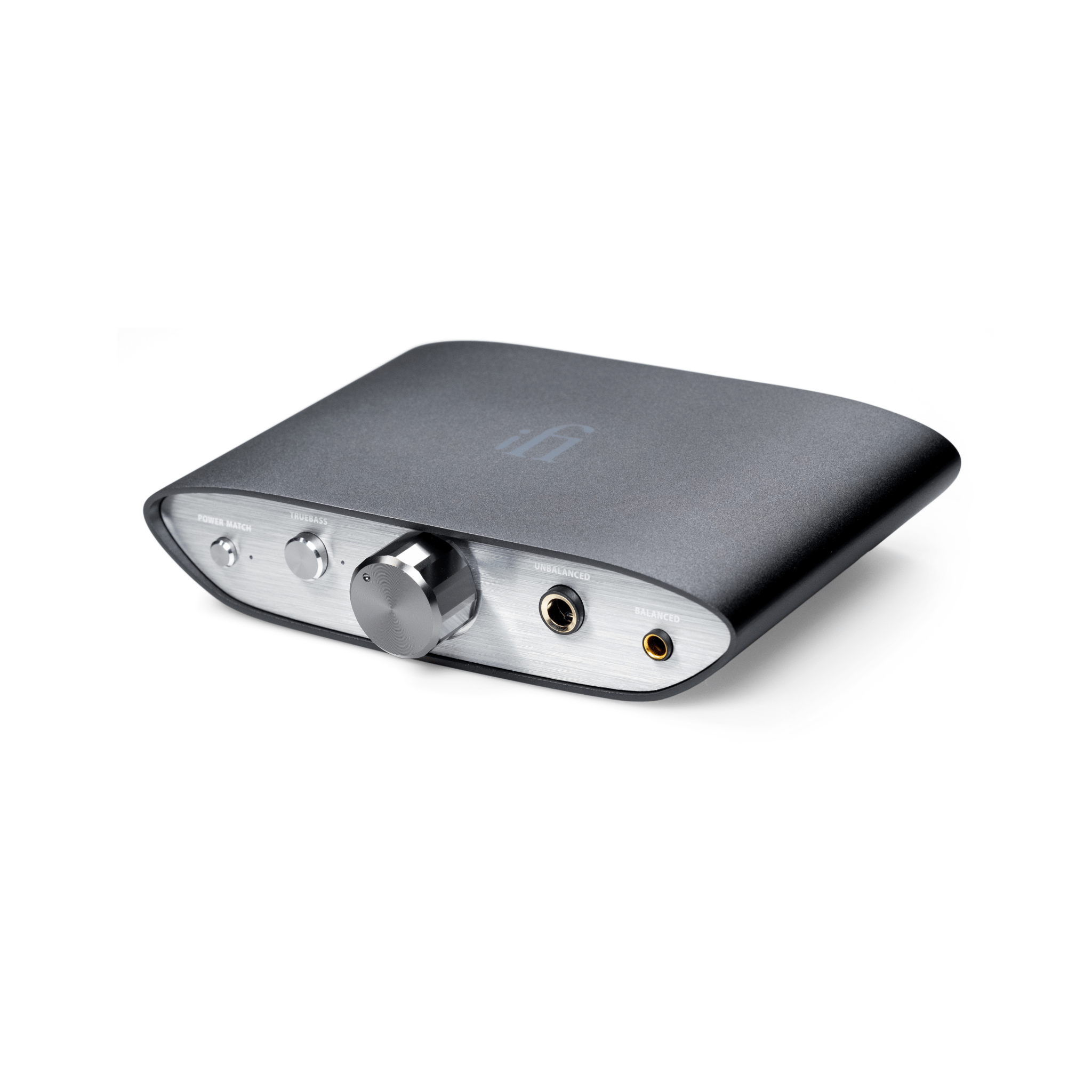
iFi ZEN DAC 3
iFi's ZEN DAC 3 succeeds the V2 with the latest Burr-Brown True Native chip, refined output stage, and unchanged format support.
Amazon affiliate · price subject to change
The iFi ZEN DAC 3 is the gateway audiophile DAC, now in its third generation. The headline change versus the V2 is the move from USB-B to USB-C input, which is the connector users actually wanted and one of the most-requested updates on any iFi forum thread. The Burr-Brown True Native chip handles digital-to-analog conversion with format support that covers everything available in 2026 — Headfonics confirmed the third generation now decodes up to PCM 768 kHz and DSD 512, easily covering every hi-res streaming service and download store on the market. XBass+ replaces the old TrueBass circuit and continues to add clean sub-bass extension without the bloat that conventional bass boost introduces, an effect that is subtle on bass-heavy headphones and transformative on reference and open-back designs that naturally roll off below 50 Hz.
The output stage is unchanged where it works — both balanced 4.4mm Pentaconn and single-ended 6.3mm headphone outputs are on the front panel, with line-level RCA and balanced 4.4mm on the back and a switch that toggles the rear output between fixed and variable. iFi quotes 210 mW into 32 ohms from the single-ended output, rising to 390 mW into 64 ohms from the balanced jack — enough to drive most dynamic and easier planar headphones, though the most demanding loads will still prefer a desktop amp. What Hi-Fi called the ZEN DAC 3 a refined compact DAC that works as well with headphones as it does a hi-fi system, and the only fair caveat from that same review is that its play-it-safe voicing will not satisfy listeners who want a more characterful DAC. For everyone else, the ZEN DAC 3 is the most accessible serious DAC on the market. 36 votes and a 9.5 score.
FiiO K7 — The Measurement Champion at $199
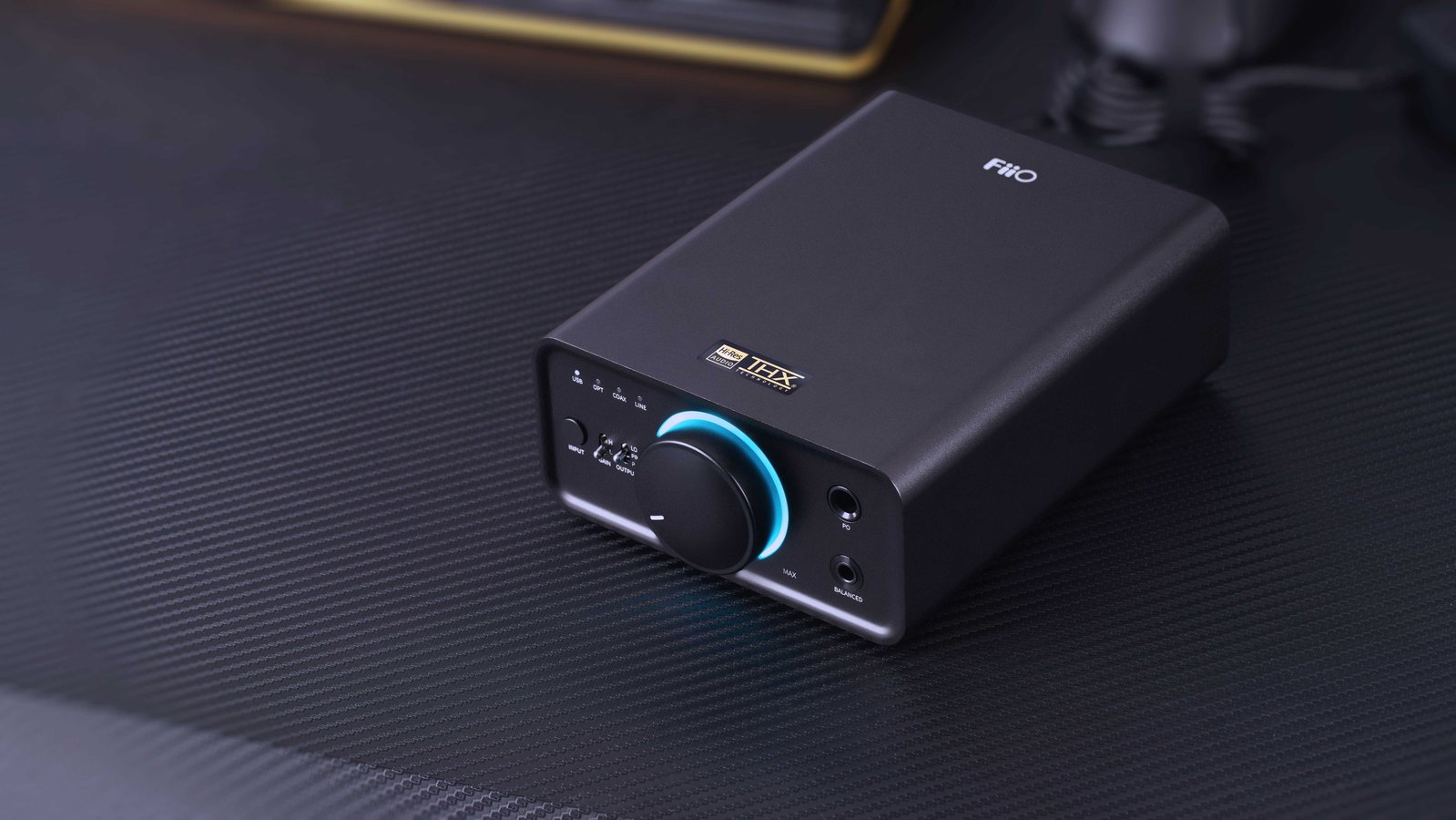
FiiO K7
Reference-level measurements from dual DAC chips and THX-certified amplification with balanced and single-ended outputs.
Amazon affiliate · price subject to change
The FiiO K7 is the desktop DAC/amp that put kilobuck measurement performance in a $199 chassis and forced the rest of the industry to follow. The DAC stage uses dual AKM AK4493SEQ chips — Headfonia notes these are the new and updated version of AKM's critically acclaimed silicon — running in a differential configuration that maximizes dynamic range and minimizes noise. The amplifier stage uses twin THX AAA-788+ modules driving the balanced output to 2 W into 32 ohms, with Headfonics measuring distortion at under 0.00028 percent THD+N at 1 kHz into the same load. The numbers are remarkable for any price tier, and at $199 they are unmatched.
The front panel offers both 4.4mm balanced Pentaconn and 6.35mm single-ended headphone outputs, each driven by its own optimized amplification path. A three-position gain switch on the rear lets you set noise-floor-appropriate sensitivity for IEMs, mid-impedance dynamics, or high-impedance planars. Input flexibility is a K7 strength — USB-C, coaxial, optical, and Bluetooth 5.0 with LDAC cover every reasonable source from a desktop computer to a phone streaming Tidal. Headfonia and Headfonics both rate the K7 as one of FiiO's most musical and engaging products despite the extreme transparency, and Headfonia preferred the K7 to FiiO's pricier K9 Pro ESS on the basis of its more neutral baseline tuning. The brushed aluminum chassis runs cool with no transformer hum, and the smooth-tracking volume potentiometer is one of the better at this price. 30 votes and a 9.3 score.
Topping DX5 — The All-in-One Desktop with a Remote
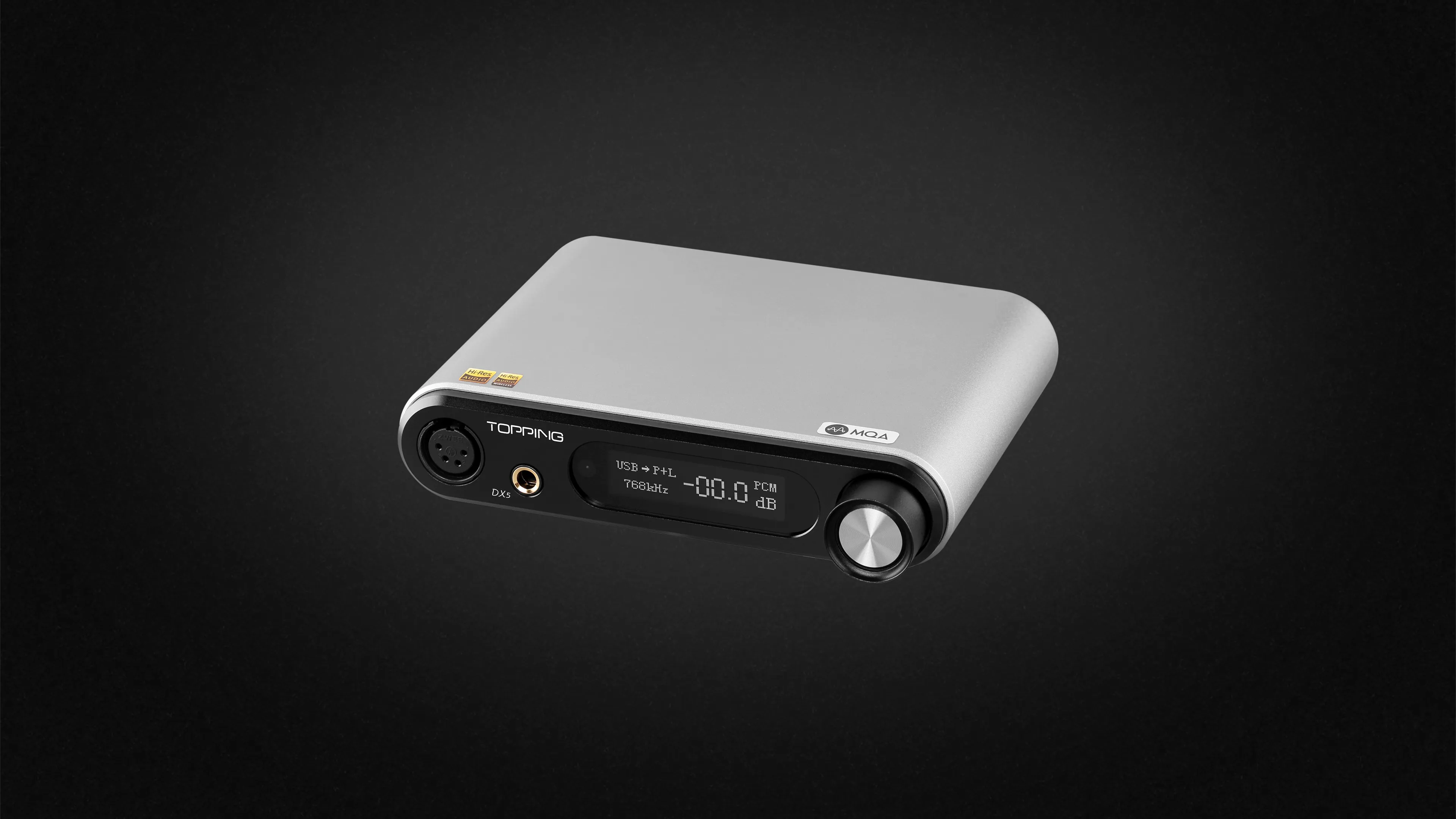
Topping DX5
Topping's DX5 combines dual ESS ES9068AS DACs with NFCA headphone amplification and Bluetooth 5.1 in a sleek all-in-one unit.
Amazon affiliate · price subject to change
The Topping DX5 is the all-in-one desktop DAC/amp for listeners who do not want to build a stack and do not want to manage cables between two boxes. The ESS ES9068AS DAC handles digital conversion with native MQA support, and Topping's proprietary NFCA (Nested Feedback Composite Amplifier) handles headphone amplification with the ultra-low distortion figures that have made Topping a favorite in the measurement community. Headfonia described the DX5 as substantial and dense for its compact footprint — a real indicator that there is genuine hardware inside the chassis rather than just air.
What separates the DX5 from a Schiit stack is the integration. A full-function remote handles volume, input selection, and display brightness from across the room — a convenience that stacked separates do not offer. Bluetooth 5.1 with LDAC, AAC, and SBC support adds wireless streaming for phones and tablets, and the small OLED display on the front shows input source, sample rate, and volume level at a glance. Front-panel outputs include both 4.4mm balanced and 6.35mm single-ended headphone jacks, and the rear panel offers balanced XLR and single-ended RCA line outputs for connecting to powered speakers or external amplifiers. USB, optical, and coaxial digital inputs cover every source type. AudioScienceReview's measurements on the newer DX5 II show that the platform is objectively excellent, and the original DX5 sits on the same technology bedrock. At $299, the DX5 is the most refined single-box DAC/amp solution at this price tier. 28 votes and a 9.2 score.
The Character Picks
Chord Mojo 2 — The Portable DAC That Trusts Its Ears
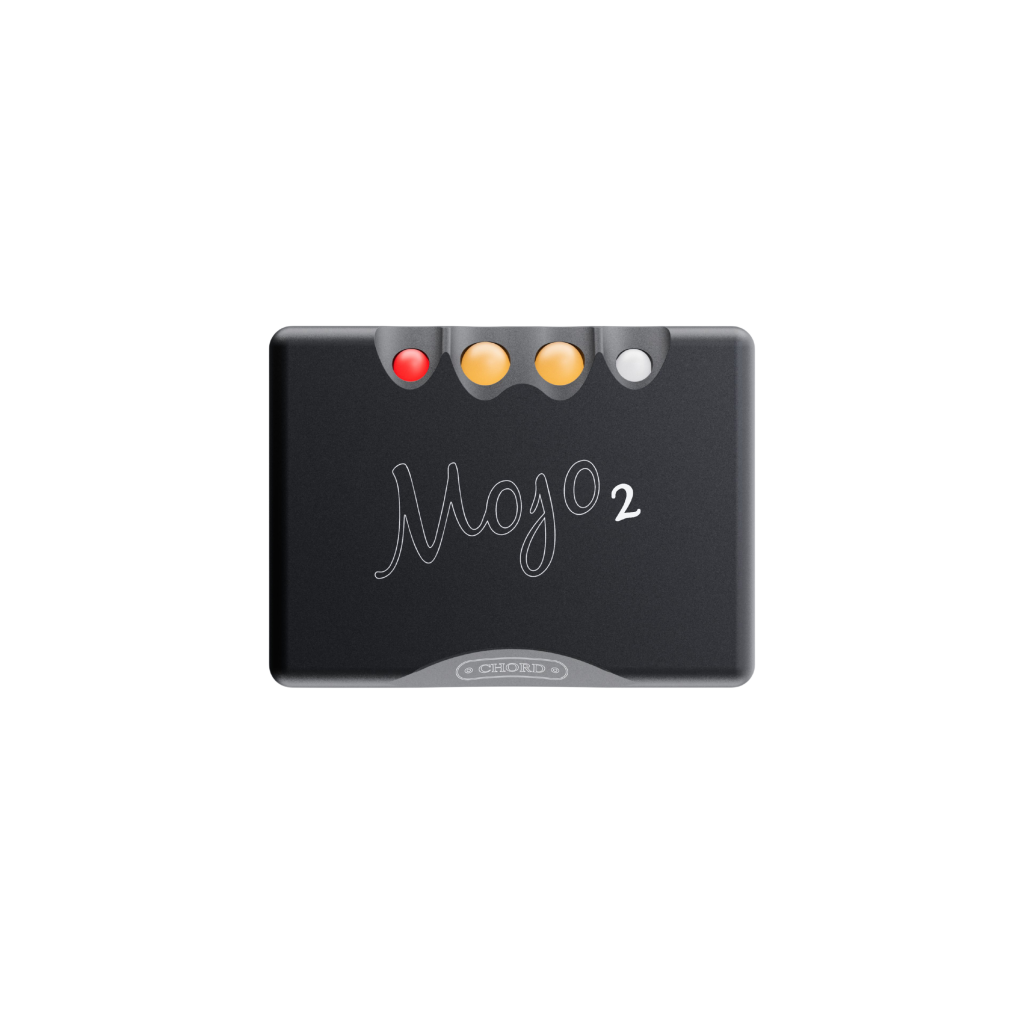
Chord Mojo 2
Chord's proprietary FPGA architecture processes 104 filter taps for unmatched timing accuracy in a pocket-sized portable DAC.
Amazon affiliate · price subject to change
The Chord Mojo 2 is the portable DAC that started a religious movement in audiophile circles, and the religion has held. Chord Electronics does not use off-the-shelf DAC chips — designer Rob Watts implements the entire digital-to-analog conversion on an FPGA, programming the filter algorithms from scratch. The Mojo 2's 104-tap filter is the longest in any portable DAC, and Chord's argument is that temporal precision — how accurately the converter reconstructs the timing of transients and the decay of reverb tails — matters more than the THD numbers chip-based DACs win on. What Hi-Fi called the Mojo 2 the Godfather Part II of DAC sequels, and Darko.Audio named the original Mojo 2 the best DAC of 2022 based on its combination of top-tier audible performance and go-anywhere usability.
The Mojo 2 added a 4-band parametric EQ accessible through the glowing sphere buttons (a Chord trademark), improved battery life of around 8 hours, and dual 3.5mm outputs over the original Mojo. As of 2026 there is now a Mojo 2 4.4 variant that swaps one of the 3.5mm jacks for a 4.4mm Pentaconn balanced output and adds USB-C charging — addressing the original Mojo 2's only two real ergonomic complaints. The sound signature is immediately recognizable: depth, spatial precision, and timing accuracy that chip-based DACs struggle to reproduce. Whether the difference is real or expectation bias is a debate Audio Science Review and Stereophile will never settle. What is settled is the build — a machined aluminum chassis with anodized color finish and tactile sphere buttons that glow color-coded by sample rate. At $675, the Mojo 2 is expensive for a portable DAC, but the cult following persists for a reason. 26 votes and a 9.1 score.
xDuoo TA-26s — The Affordable Gateway to Real Tube Sound
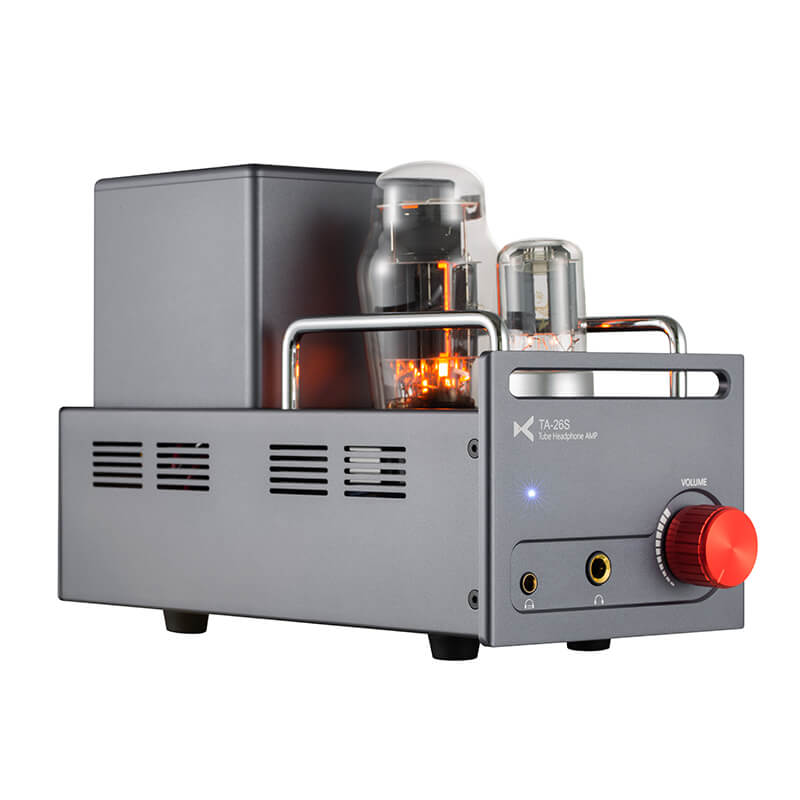
xDuoo TA-26s
A 6N8P + 6N5P OTL tube circuit delivers warm, spacious sound for high-impedance classics like the HD 600.
Amazon affiliate · price subject to change
The xDuoo TA-26s is a proper tube amplifier at a price that makes the tube experience genuinely accessible. The circuit uses a 6N8S driver tube paired with a 6N5P power tube — a classic combination that produces the warm, harmonically rich sound tube enthusiasts describe in almost spiritual terms. The second-order harmonic distortion that tubes naturally generate adds a warmth and spaciousness that solid-state amplifiers simply do not produce, and the effect is most flattering on high-impedance dynamic headphones like the Sennheiser HD 600, HD 6XX, and beyerdynamic DT 880.
The TA-26s delivers approximately 4.5 W into 32 ohms through a single 6.35mm output driven by an output transformer — a proper tube amplifier topology, not a hybrid design with a tube buffer feeding a solid-state output stage. Tube rolling is one of the great pleasures of tube ownership, and the TA-26s supports it with standard tube sockets. Vintage 6SN7 variants can replace the 6N8S, and various 6AS7 and 6080 types can replace the 6N5P — each producing subtle but audible changes in warmth, detail retrieval, and soundstage width. A $15 Russian-made 6N23P will sound noticeably different from a $150 Amperex Orange Globe, and exploring those differences becomes a hobby within the hobby. At $249, the TA-26s is the most affordable way to experience genuine tube amplification with the quality and power to drive serious headphones — not the most transparent or measured amplifier on this list, but the most engaging. 24 votes and a 9.0 score.
The Portable Picks
FiiO BTR7 — The Wireless Bridge to Any Wired Headphone
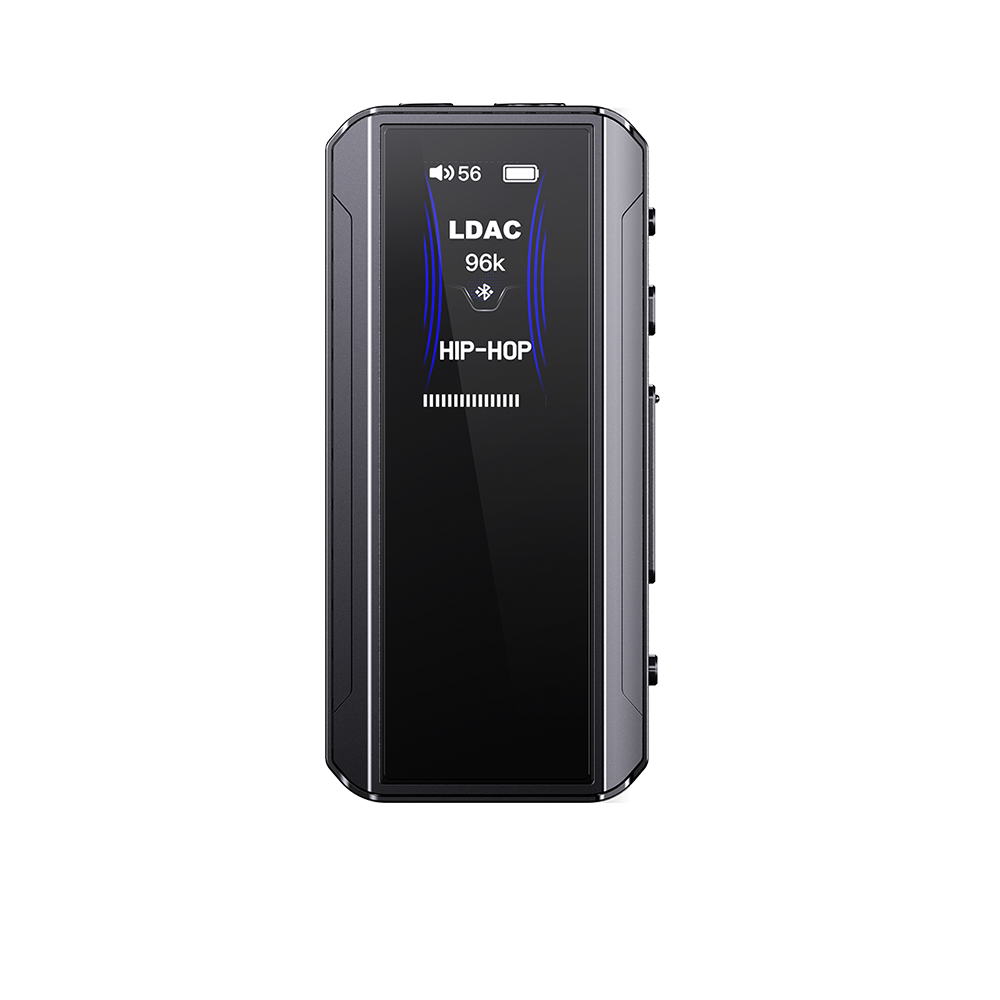
FiiO BTR7
The BTR7 turns any wired headphone into a hi-res Bluetooth receiver with LDAC, aptX Adaptive, and dual ES9219MQ DACs.
Amazon affiliate · price subject to change
The FiiO BTR7 solves the wired-versus-wireless dilemma without forcing you to compromise on headphone quality. Rather than replacing your wired audiophile headphones with Bluetooth models, the BTR7 adds high-res wireless capability to any wired headphone through a pocketable receiver with audiophile-grade internals. Dual ESS ES9219MQ DAC chips handle conversion at the same precision found in FiiO's desktop equipment, and Bluetooth 5.1 supports LDAC at up to 990 kbps, aptX Adaptive, aptX HD, AAC, and SBC. Headfonics highlighted the dual THX module setup as a first in the category at this price, with 88 percent more power on the balanced side and 30 percent more on the single-ended out than the prior BTR5 — figures that explain why the BTR7 drives mid-impedance over-ears that would clip on most dongles.
The balanced 4.4mm Pentaconn output is the BTR7's standout feature — portable Bluetooth receivers with balanced output are rare, and the power delivery through the balanced jack is significantly higher than the single-ended 3.5mm output. Headfonia confirmed the device uses dedicated THX AA-28 amplifier modules rather than the conventional op-amps that dominate this category. The BTR7 also functions as a USB DAC when connected via USB-C, supporting PCM up to 384 kHz and DSD256. The 3.5-inch OLED touchscreen displays codec, sample rate, and battery state at a glance. Battery life is around 9 hours with AAC and 6 hours with LDAC. At $119, the BTR7 is the most cost-effective way to give every wired headphone in your collection a wireless upgrade path. 22 votes and an 8.8 score.
JDS Labs Atom DAC+ — The Transparency Benchmark
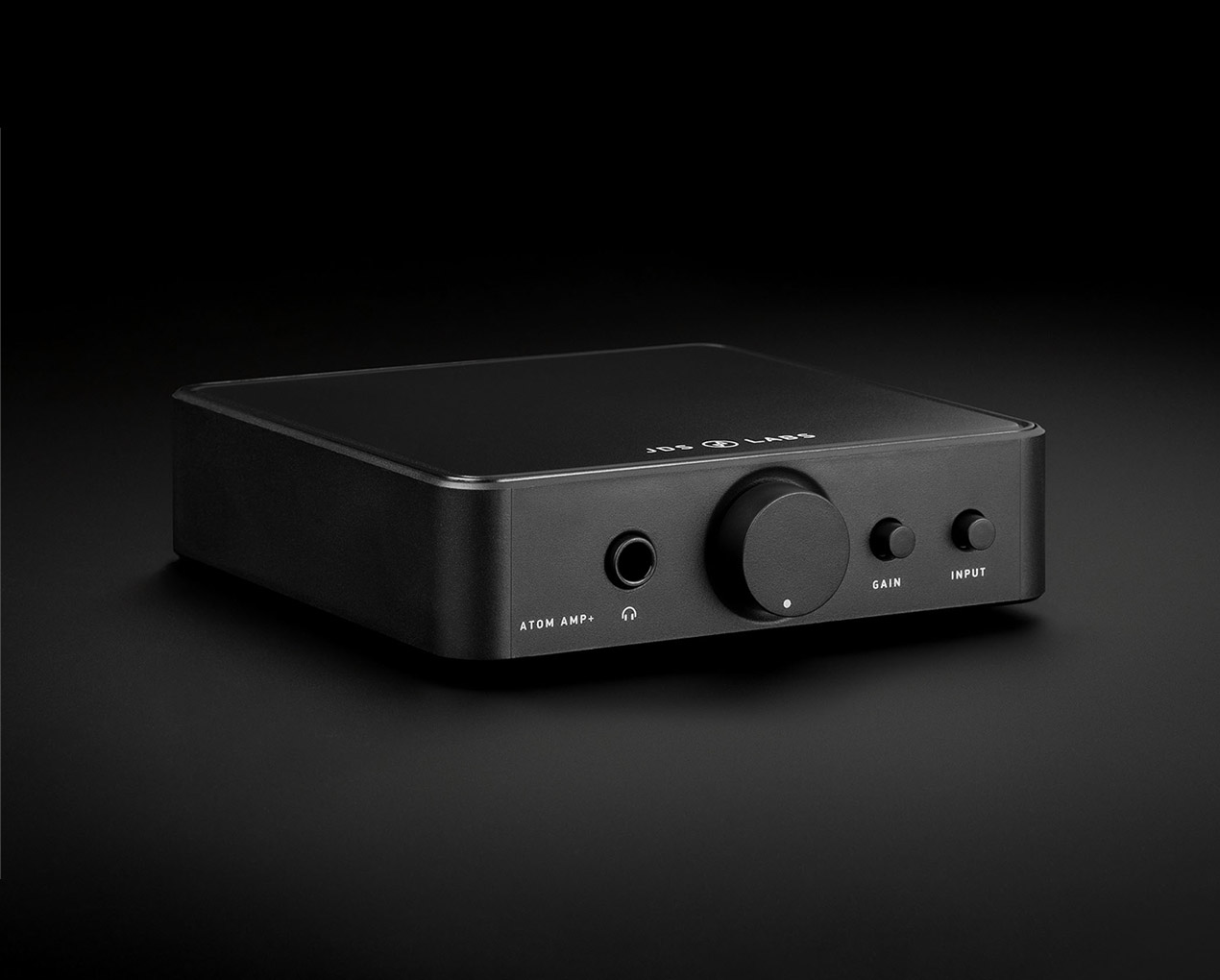
JDS Labs Atom DAC+
The Atom DAC+ is transparently clean — paired with the Atom Amp+, it forms one of the cleanest-measuring stacks money can buy.
Amazon affiliate · price subject to change
The JDS Labs Atom DAC+ exists to answer a simple question: how clean can a DAC be at this price? The answer is startlingly clean. Audio Science Review's measurements put the Atom DAC+ at a SINAD of 112 dB — distortion below -120 dB relative to the test signal, which is utterly inaudible — placing it among the best-performing DACs ever tested at any price. JDS Labs designed around the ESS ES9018K2M chip with careful register optimization and discrete output components chosen for measured performance, and the result is a DAC that adds essentially nothing to the signal it converts.
The Atom DAC+ deliberately omits features that could compromise performance or budget. There is no Bluetooth, no built-in headphone amplifier, no remote control, no display. It does one thing — convert digital audio to analog with virtually no alteration — and it does that one thing better than virtually anything else at its price. Paired with the JDS Labs Atom Amp+ ($109), the two units form a stack that costs $228 total and achieves measurements competitive with separates costing ten times more. The casework is simple but solid, the units are manufactured in Missouri, and JDS Labs' customer support is consistently praised across audiophile forums. For objectivists who want their equipment to disappear and let the recording speak, the Atom DAC+ is the answer at $119. The Atom Amp+ to match is the obvious next click. 20 votes and an 8.6 score.
Questyle M15C — The Premium Titanium Dongle
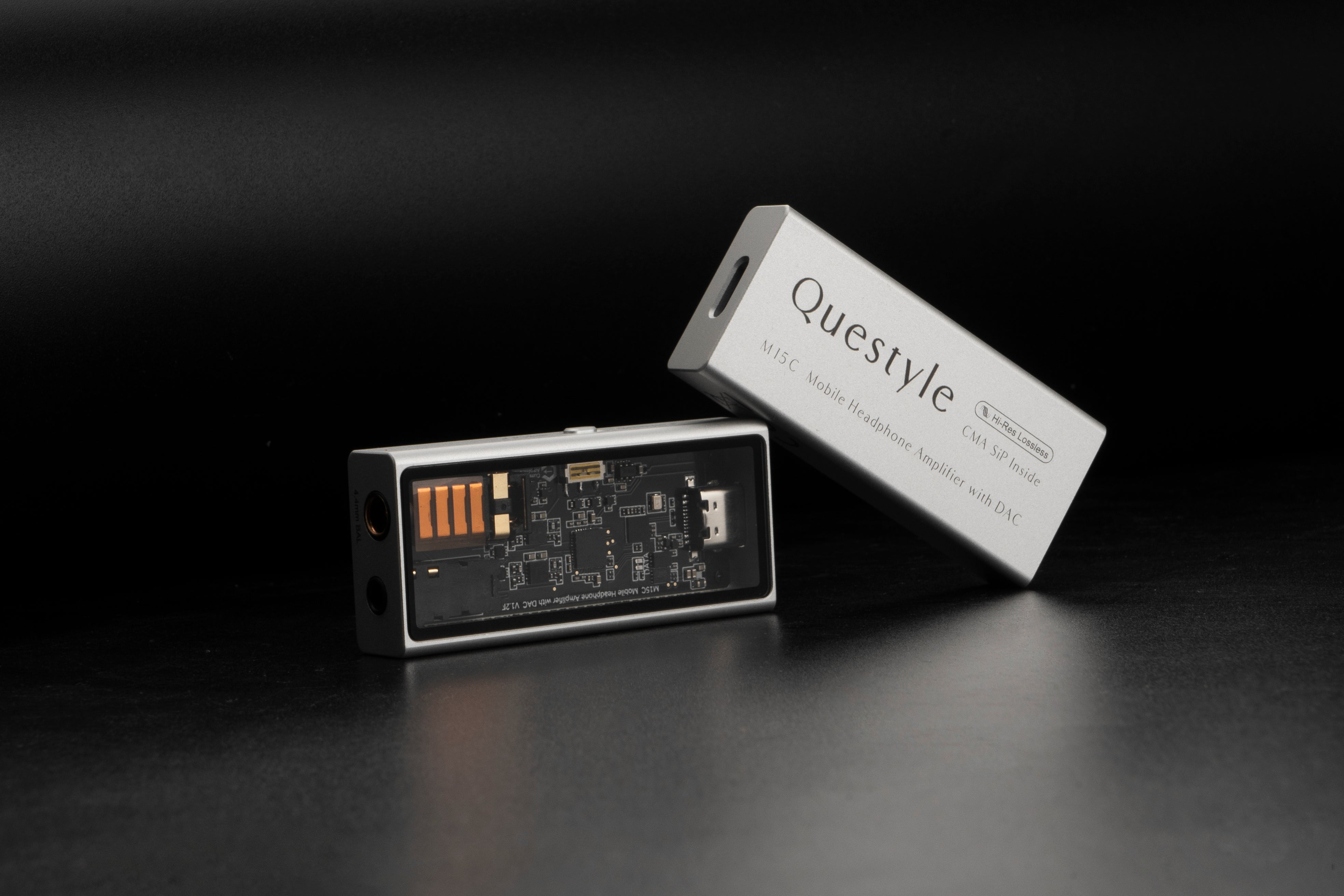
Questyle M15C
The M15C pairs a Cirrus Logic CS43198 DAC with Questyle's current-mode amplification and both 3.5mm and balanced 4.4mm outputs — driving full-size headphones from a USB-C port.
Amazon affiliate · price subject to change
The Questyle M15C is the generation-C refresh of the M15 dongle line, preserving the titanium body and form factor that defined the original while migrating the amplification onto refined current-mode silicon. Inside the chassis — barely larger than a USB flash drive — Questyle has packed their proprietary current-mode amplification technology, which operates on current rather than voltage and which Questyle argues produces lower distortion and more natural transient response than conventional voltage-mode dongle designs. Hi-res format support covers PCM 384 kHz and DSD256, easily handling every streaming service and download store available today.
What distinguishes the M15C from the countless budget dongles flooding the market is the sound quality relative to its size. The current-mode amplification produces a dynamic, engaging presentation with soundstage width and depth that seems impossible from a device this small. Guitars have bite, vocals have presence, and bass has control — qualities that cheap dongles either compress or smear. The titanium chassis serves dual duty: it feels premium in the hand, and the rigidity provides electromagnetic shielding that plastic-bodied dongles cannot match. The honest trade-offs are inherent to the format: battery drain from the host phone is noticeable, the 3.5mm output limits you to single-ended connections, and the demanding planar magnetics will still want a desktop amp. At $249, the M15C is steep for a dongle but cheap for a Questyle product. 18 votes and an 8.4 score.
Schiit Vali 3 — The Hybrid Tube Amp for Practical Audiophiles
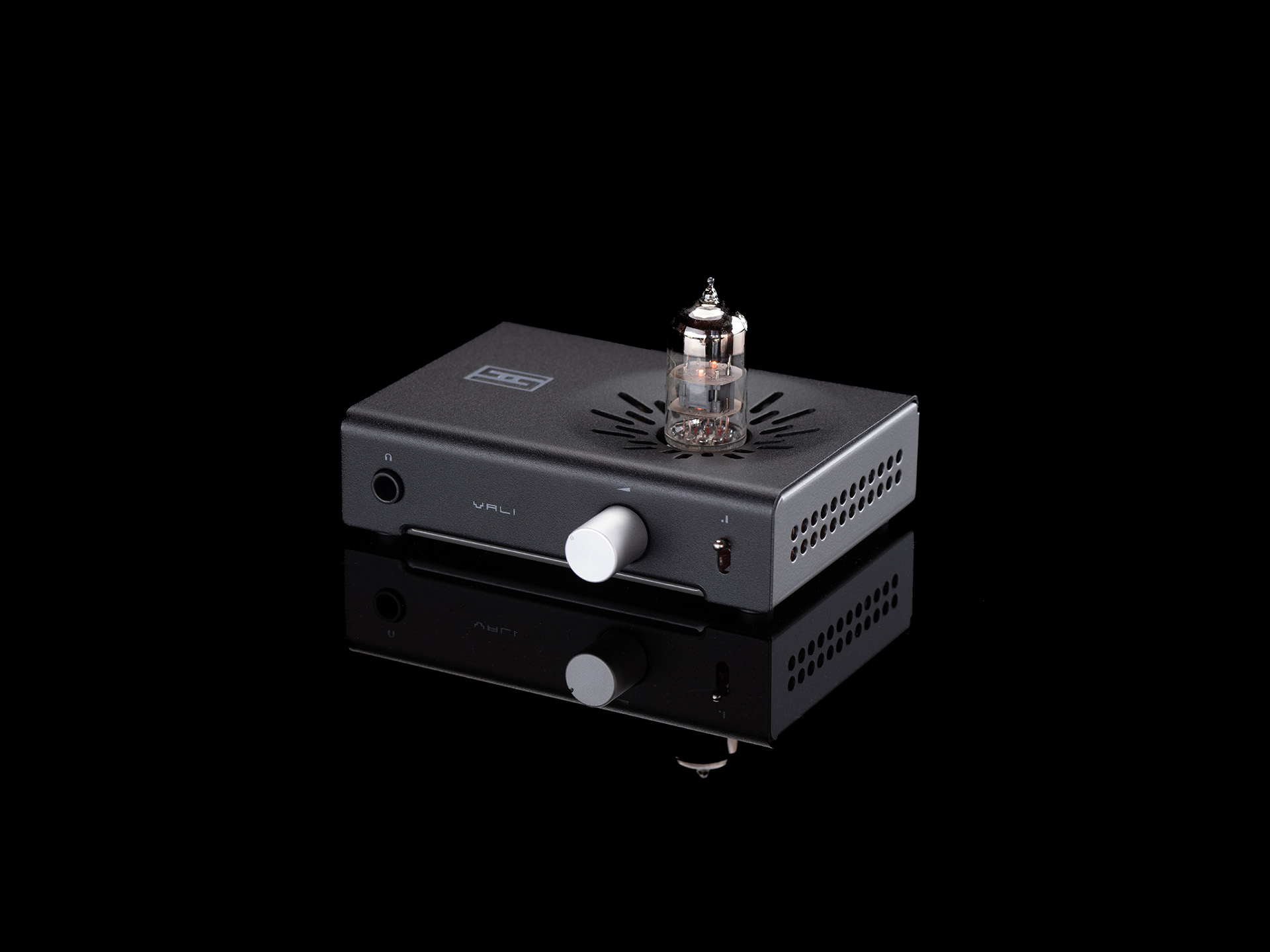
Schiit Vali 3
Schiit's hybrid design uses a 6922 tube for warmth while solid-state output maintains tight bass control and low impedance.
Amazon affiliate · price subject to change
The Schiit Vali 3 is the audiophile's laboratory — a hybrid amplifier that runs a single 6N3P vacuum tube in the gain stage with Class A/B bipolar transistors at the output, offering tube character with solid-state practicality. Darko.Audio called the Vali 3 a better tube headphone amplifier at $149 and noted that the new chassis improves heat dissipation versus the prior Vali design while delivering 1.5 W into 32 ohms — enough to drive most dynamic and many planar headphones with authority. The hybrid topology addresses the primary limitation of pure tube amplifiers: high output impedance that causes frequency response variations with sensitive low-impedance headphones. The Vali 3's solid-state output stage maintains consistent low impedance across loads, which means the same amp works with sensitive IEMs and with high-impedance Sennheiser HD 600s without rebalancing anything.
The 6N3P (a common Soviet-era equivalent to the 2C51 / 396A / 6385) is the stock tube, and Schiit deliberately picked a socket family with broad availability. Vintage 2C51 and 396A variants from Western Electric, GE, and Bendix can be swapped in with no rebiasing, each producing subtle but audible changes in warmth, detail retrieval, and soundstage width. The standard rolling experience runs $15 to $150 per tube and can occupy months of weekend listening. Schiit's manufacturing is the usual standard — boards made in Utah, chassis cut and pressed in California, assembly in Texas, the company's 15-day return policy. At $149, the Vali 3 is the most affordable path to tube-flavored sound with broad headphone compatibility, and the tube-rolling potential means it can evolve with your taste over months and years. 16 votes and an 8.2 score.
Buying Guide: The Three Decisions That Matter
Desktop stack or single-box DAC/amp — pick the upgrade path that matches how you actually buy. Stacked separates like the Schiit Magni Unity / Modi 5 and the JDS Labs Atom DAC+ / Atom Amp+ let you upgrade one component at a time — replace the DAC when conversion gets better, replace the amp when your headphone collection demands more current — and the upgrade cost spreads across years rather than landing in one purchase. Single-box solutions like the iFi ZEN DAC 3, FiiO K7, and Topping DX5 are simpler to deploy and ship with conveniences (remote control, Bluetooth, displays) that separate stacks do not bother with. If you expect to upgrade headphones every year or two and want to evolve your amp and DAC alongside them, build a stack. If you want one device that handles everything and lives on your desk for the next five years, the K7 or DX5 are the rational choices.
Solid-state transparency or tube character — pick the priority that matches your listening philosophy. Solid-state designs from Schiit (Magni Unity), FiiO (K7), Topping (DX5), and JDS Labs (Atom DAC+) emphasize transparency — the amplifier adds nothing audible to the signal it amplifies, letting the headphones and the recording determine the sound. Tube designs from xDuoo (TA-26s) and hybrid designs from Schiit (Vali 3) add second-order harmonic distortion that listeners perceive as warmth, fullness, and spaciousness. Neither philosophy is wrong, and many audiophiles end up owning both. The fastest way to decide which camp you live in is to A/B the Magni Unity against the TA-26s with the same headphones and the same recording — the difference is immediate, and your preference will tell you which direction to invest in for the next decade.
Desktop, dongle, or wireless — pick the use case that matches your actual day. Desktop stacks deliver the most current and the best measurement performance, but they live on a desk and travel poorly. Dongles like the Questyle M15C give you measurement-defying portable sound at the cost of battery drain on your phone and a single-ended-only output. Bluetooth receivers like the FiiO BTR7 add wireless flexibility to wired headphones with audiophile-grade DAC and amp internals — the right answer if you already own headphones you love and want to use them with a phone in your pocket. Most serious listeners end up owning two devices: a desktop reference for home and either a dongle or a BTR7 for everything else. The savings versus an all-wireless headphone setup, given that wired audiophile headphones routinely last a decade, pay for the second device several times over.
Architecture first — desktop stack vs dongle vs tube — lives in the headphone-amp buying guide. For the full community ranking with current prices and live vote counts, head to Gavler's Best Headphone Amps and DACs list. If you are building out a full audiophile-grade desktop setup, the Gavler Audio hub now anchors community-ranked picks across studio monitors, USB microphones, audio interfaces, and headphone amps and DACs — four lists in total, the Audio category cluster now fully covered. Architecture first for speakers — nearfield vs midfield in the studio-monitor buying guide, then the ranking story in The Best Studio Monitors in 2026. The Best Audio Interfaces brief covers the front end of the same signal chain — the box your microphone plugs into before any of this gear matters.
See all 10 products ranked by the community
Best Headphone Amps & DACs
See Full Rankings →254 community votes cast
Common Questions
The Schiit Magni Unity / Modi 5 stack tops Gavler's community ranking with a 9.6 score and 34 votes. Together the two units cost about $258 and deliver transparent, powerful single-ended amplification with enough headroom to drive everything from sensitive in-ear monitors to demanding planar magnetic headphones. Schiit's design philosophy is neutrality first — no euphonic warmth, no tube-like coloration, just gain with a vanishingly low noise floor and a tiny output impedance that keeps sensitive IEMs hiss-free. AV Gadgets' review of the Magni Unity flagged its neutral signature as the reason the focus stays on the music, and the Texas-built chassis feels like equipment that should cost three times the price. For audiophiles building their first proper desktop stack, the Magni Unity / Modi 5 combination is still the answer that resets buyer expectations across the entire category.
The iFi ZEN DAC 3 at $229 is the consensus pick. What Hi-Fi calls it a refined compact DAC that works as well with headphones as it does a hi-fi system, and Headfonics confirmed the swap to USB-C and decoding up to PCM 768 / DSD 512 against the V2's older silicon. The signature sound iFi built the brand on — transparent, smooth, slightly warm, with a treble that is pleasant rather than analytical — carries forward. XBass+ replaces the old TrueBass circuit and adds clean sub-bass extension that makes open-back headphones feel full without sounding bloated. The balanced 4.4mm output pushes more power (390mW into 64 ohms) than the single-ended 6.3mm jack, and the line output switches between fixed and variable for use as a preamp into active speakers. The honest caveat from What Hi-Fi: the play-it-safe voicing will not suit listeners who want a more characterful DAC.
These two desktop amps answer different questions. The Schiit Magni Unity / Modi 5 stack at about $258 is single-ended only, neutral and transparent, with Schiit's signature low noise floor and a robust American warranty backed by their 15-day return policy. The FiiO K7 at $199 is a fully balanced design with dual AKM AK4493SEQ DACs and twin THX AAA-788+ amplifier modules — Headfonics measured under 0.00028 percent THD+N at 1 kHz into 32 ohms and rated the balanced output at 2 W into the same load. Pick the Schiit if you want the clean, no-character desktop reference and a US warranty backed by direct retail support. Pick the K7 if you want a balanced 4.4mm output, measurement-grade transparency, and Bluetooth 5.0 with LDAC for occasional wireless use — Headfonia and Headfonics both rate the K7 as one of FiiO's most musical and engaging products even with the THX modules pulling distortion close to the test-equipment noise floor.
Yes — if you own the right headphones and you understand what you are buying. Tube amps add second-order harmonic distortion that most listeners hear as warmth, fullness, and a wider sense of space. The pairing that converts skeptics is the Sennheiser HD 600 or HD 6XX with a proper tube amp like the xDuoo TA-26s ($249) — the HD 600's neutral voicing combines with the tube's harmonic richness in a way that solid-state amps simply do not replicate. For listeners who want tube character with solid-state practicality, the Schiit Vali 3 at $149 is a hybrid that runs a 6N3P tube in the gain stage with bipolar transistors at the output — Darko.Audio called it a better tube headphone amplifier at $149 and noted the new chassis improves heat dissipation versus the prior Vali. Tube rolling on either amp opens months of tonal exploration. The trade-off is honest: pure transparency lovers should stay with Schiit's solid-state Magni Unity or the FiiO K7.
For most listeners, a desktop stack is the upgrade with the most headroom. The Schiit Magni Unity / Modi 5 stack delivers genuine current to drive demanding planar magnetic headphones — the kind of authority that no USB-C dongle can match because dongles are bus-power-limited by the host device. But if you mostly listen on the move, with IEMs or efficient on-ear and over-ear headphones, the dongle approach is enough. The Questyle M15C at $249 packs current-mode amplification into a titanium chassis barely larger than a USB flash drive and drives full-size headphones with surprising authority. For wireless flexibility on a wired headphone you already love, the FiiO BTR7 at $119 is the right answer — Headfonics highlighted the dual THX module setup with 88 percent more balanced output power than the prior BTR5, plus LDAC, aptX Adaptive, and a balanced 4.4mm jack. Most serious listeners end up owning both: a desktop stack for home and a dongle or Bluetooth receiver for travel.
Measurably, no. Subjectively, many experienced listeners think so. Chord Electronics designs their DACs around an FPGA running designer Rob Watts's custom 104-tap filter rather than an off-the-shelf chip from ESS, AKM, or Cirrus Logic. What Hi-Fi called the Mojo 2 the Godfather Part II of DAC sequels, and Darko.Audio named the original Mojo 2 the best DAC of 2022 based on its top-tier audible performance combined with go-anywhere usability. The argument from Chord is that temporal accuracy — how precisely the DAC reconstructs the timing of transients and the decay of reverb — matters more than the THD numbers that chip-based DACs win on. The argument from the measurement camp is that any DAC with SINAD above 110 dB is audibly transparent, so the Chord premium is paying for timing rather than transparency. The 2026 Mojo 2 4.4 update adds a Pentaconn balanced output and a charge-capable USB-C port, fixing the original's two real ergonomic complaints. For audiophiles who trust their ears, $675 buys the most distinctive portable DAC on the market.
Rankings come from community votes by audiophiles, headphone owners, and listeners who actually live with this equipment every day. Each user gets one vote on the Best Headphone Amps and DACs list — pick the amp or DAC you would put on your desk tomorrow morning before reaching for your headphones, not the one with the highest SINAD score or the splashiest measurement chart. Switched amps after upgrading headphones, after a long listen revealed a fatiguing top end, or after rolling a tube changed your mind? Move your vote. No affiliate commissions or manufacturer sponsorships influence the ranking. Vote totals at the time of publication appear next to each pick on the live list.
Products Mentioned
Jump to the full ranking and community verdict for each pick named above.
- Schiit Magni Unity / Modi 5 StackAudio · Best Headphone Amps & DACs
- iFi ZEN DAC 3Audio · Best Headphone Amps & DACs
- FiiO K7Audio · Best Headphone Amps & DACs
- Topping DX5Audio · Best Headphone Amps & DACs
- Chord Mojo 2Audio · Best Headphone Amps & DACs
- xDuoo TA-26sAudio · Best Headphone Amps & DACs
- FiiO BTR7Audio · Best Headphone Amps & DACs
- JDS Labs Atom DAC+Audio · Best Headphone Amps & DACs
- Questyle M15CAudio · Best Headphone Amps & DACs
- Schiit Vali 3Audio · Best Headphone Amps & DACs