The Best Mountain Bikes in 2026, Ranked by the Riders Who Test Them on Real Trails Every Weekend
Santa Cruz, Specialized, Yeti, Trek, Ibis, Canyon, Pivot. Gavler ranks the trail, enduro, and electric mountain bikes actually worth buying in 2026.
The 2026 mountain bike market has finally arrived at maturity. After a decade of category churn — when the same bike got renamed every two years and gained 5mm of travel — the trail-bike segment has consolidated around a clear formula: 130 to 150mm of rear travel, head angles in the 64-to-66-degree range, progressive carbon frame design, and wireless electronic shifting on the upper trims. The big four trail bikes of 2026 — the Santa Cruz Hightower, the Specialized Stumpjumper 15 EVO, the Yeti SB140, and the Ibis Ripmo V3 — each refine a different idea of what a quiver-killer should be, and the differences between them matter more than any of the spec-sheet gaps.
May is a strong buying window for mountain bikes. Most brands have shipped their 2026 model-year inventory, which means the previous-generation 2025 carryover bikes hit clearance pricing right as riding season opens. Direct-to-consumer brands like Canyon run aggressive spring promotions on prior-year stock, and dealer networks like Competitive Cyclist and Jenson USA mark down 2024-2025 model years to make room for incoming inventory. The Memorial Day weekend traditionally anchors the deepest sales of the spring season. Today's launch of the Best Mountain Bikes brief opens the Gavler Cycling category cluster — the picks below are pulled from the live Best Mountain Bikes list, ranked by riders who own these bikes and live with them on real trails.
How the Rankings Work
One vote per person on the Best Mountain Bikes list. Pick the bike you would take to the trailhead tomorrow morning before a four-hour epic, the one you trust on the descent that scares everyone else in the group, the one that climbs the fire road without making you hate the climb. Switched bikes after a demo day exposed a flaw, after a long-travel test confirmed you were on the wrong platform, or after a winter of trail-side tinkering changed your mind? Move your vote. The result is a community-curated ranking grounded in lived experience, not press-release hype. No affiliate commissions or manufacturer sponsorships affect the ranking.
The Top Picks
Santa Cruz Hightower CC X01 — The Modern Quiver-Killer Benchmark
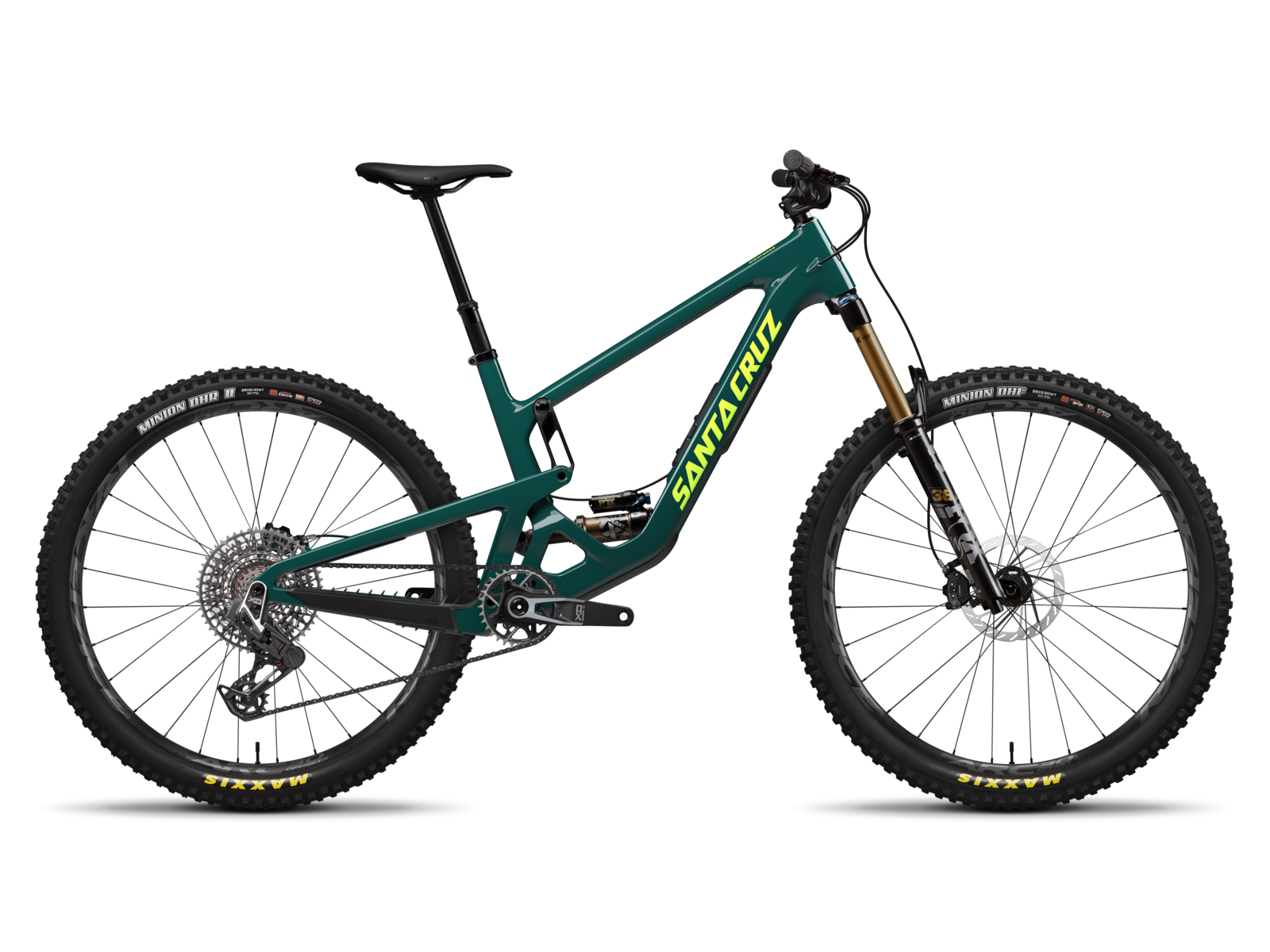
Santa Cruz Hightower CC X01
145mm rear travel with VPP suspension that pedals like a short-travel bike and descends like a long-travel one.
Amazon affiliate · price subject to change
The Santa Cruz Hightower CC X01 is the trail bike that makes the entire trail-bike category feel like it should converge here. The 145mm of rear travel is managed by Santa Cruz's lower-link Virtual Pivot Point suspension, refined over two decades of World Cup racing, with a leverage curve that stays active and supportive through small-bump chatter and ramps progressively through bigger hits to resist harsh bottom-outs. The 150mm Fox 36 Performance Elite fork is tuned specifically for the Hightower's kinematics. The CC-grade carbon layup keeps the bare frame under five pounds without compromising the torsional stiffness required for aggressive cornering and hard sprinting. Every tube profile has been optimized through finite element analysis — material placed where stress concentrations demand it and removed everywhere else.
Outdoor Gear Lab's 2026 trail-bike test ranked the Hightower at the top of its field, calling it brawny and capable and noting that the bike puts everything together better than most. SRAM's X01 Eagle AXS wireless drivetrain offers a 520 percent gear range with the precision and instant shift response that mechanical drivetrains cannot match at this price tier. Santa Cruz's lifetime warranty and bearing-replacement program turn the Hightower into a ten-year investment rather than a depreciation curve. At $8,499 the Hightower is expensive against direct-to-consumer competition, but in a segment where Pivot, Yeti, and Specialized flagship trims sit at the same price or higher, it is fairly priced. 95 community score and a 9.7 expert consensus.
Specialized Stumpjumper 15 EVO Expert — The Adjustable Geometry Benchmark
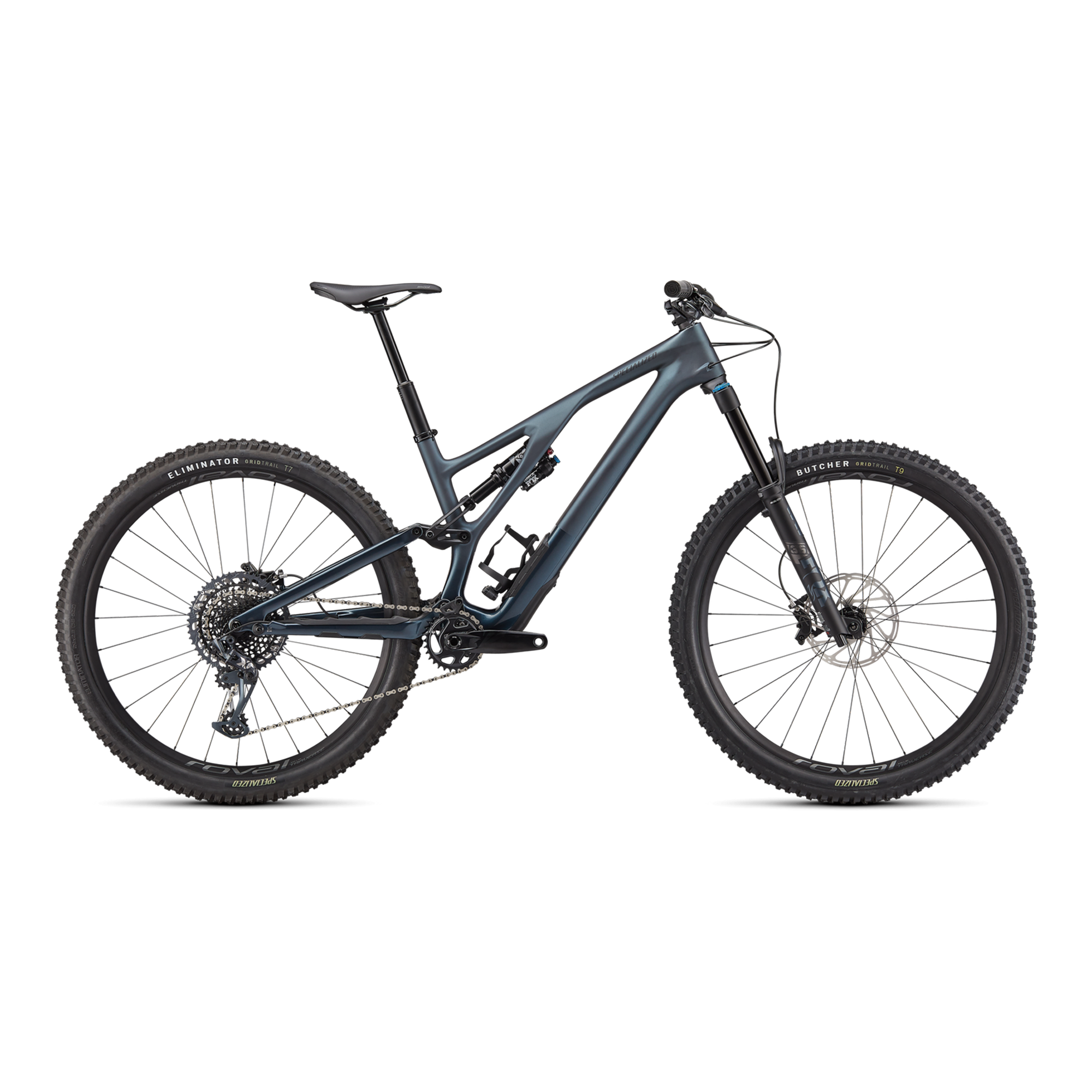
Specialized Stumpjumper 15 EVO Expert
150mm of FACT 11m carbon trail bike with SRAM GX AXS wireless shifting and FOX Performance Elite suspension at the mid-tier price point.
Amazon affiliate · price subject to change
The Specialized Stumpjumper 15 EVO Expert is the trail bike for riders who refuse to commit to a single setup. The six-position adjustable geometry system — a flip-chip combined with adjustable headset cups — provides genuine flexibility, spanning head angles from 63 to 65 degrees, two bottom-bracket heights, and two reach positions. Unlike simpler two-position flip-chips, the six-position system is granular enough to actually optimize the bike for specific trail networks: steeper and shorter for tight East Coast singletrack, slacker and longer for fast Pacific Northwest descents. Outdoor Gear Lab's 2026 test called the Stumpjumper 15 likely the most versatile of all the trail bikes in their field, with a level of adjustability that surpasses its travel class.
The 150mm rear travel pairs with a 160mm Fox 36 Performance Elite fork, balancing front-to-rear suspension ratios for a trail-to-light-enduro range. FACT 11m carbon construction uses what Specialized calls rider-in-the-loop analysis — the engineering team studies how real riders load the frame under cornering, braking, and jumping loads, and the carbon layup is optimized to match. The SRAM GX Eagle AXS Transmission drivetrain offers full wireless shifting at a price point that comes in well below comparable Pro-trim builds across the industry. At $4,999, the EVO Expert undercuts every dealer-brand carbon trail bike with this spec by a meaningful margin. 94 community score and a 9.5 expert consensus.
Yeti SB140 T2 — The Switch Infinity Suspension Connoisseur Pick
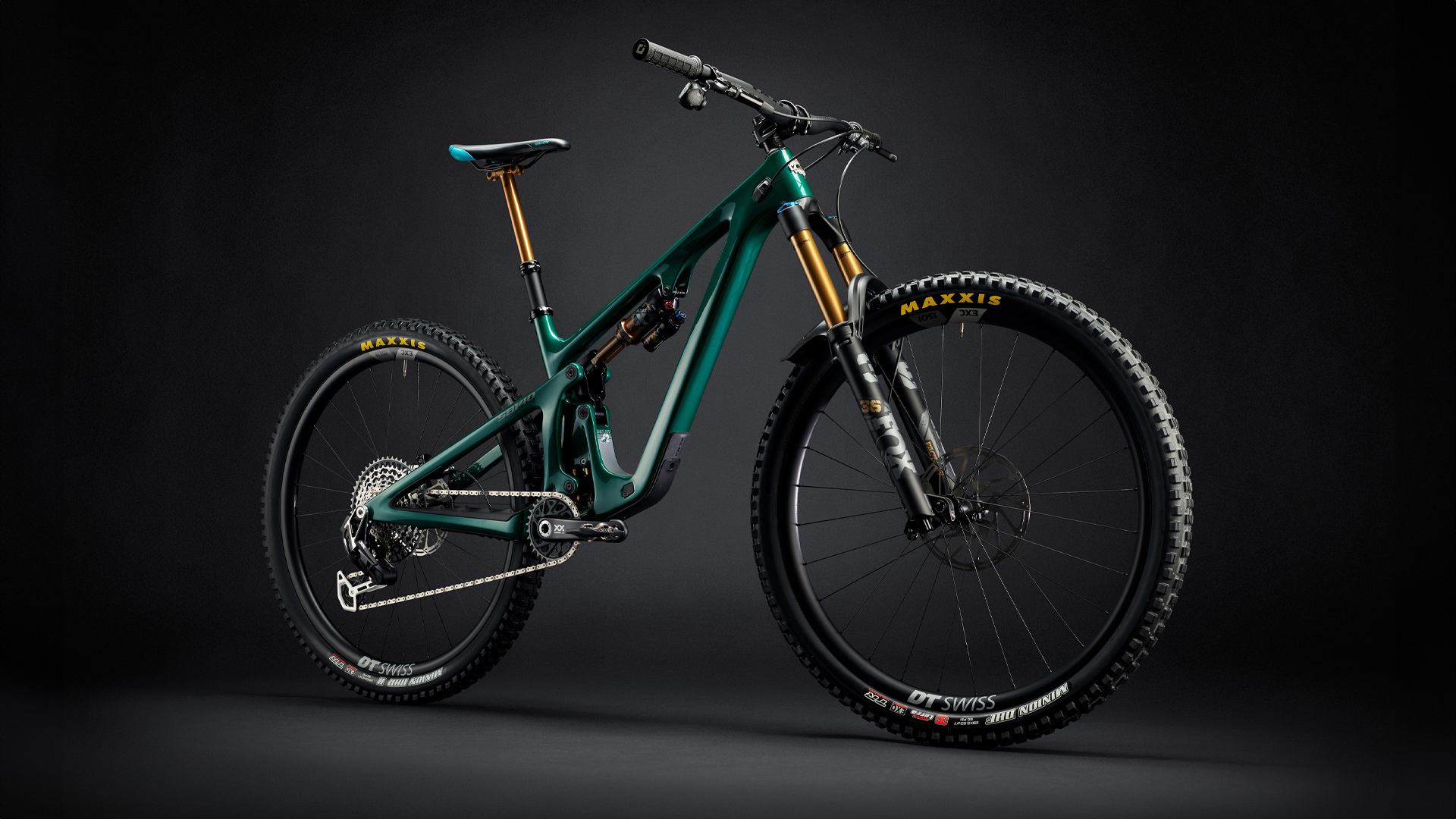
Yeti SB140 T2
Turq-series carbon with Switch Infinity suspension for unmatched small-bump sensitivity and big-hit composure.
Amazon affiliate · price subject to change
The Yeti SB140 T2 is built around Yeti's proprietary Switch Infinity suspension platform, a translating-pivot design that moves the lower linkage along a vertical path rather than arcing like conventional linkages. The 140mm of rear travel feels meaningfully longer than the spec sheet because the suspension never reaches a point where it harshens or kicks back — the leverage curve stays linear in a way that produces the bottomless sensation Yeti owners describe in almost spiritual terms. The 2026 SB140 runs Switch Infinity V2 with internally tunneled cable routing, SRAM UDH hanger compatibility, and a frame weight of 3,375 grams in turq-series carbon.
The T2 build is the turq-series carbon tier — the same World Cup race-grade layup used on Yeti's competition bikes, approximately 15 percent lighter than the C-series alternative while matching stiffness and strength targets. Reviewers across MBR, Outdoor Gear Lab, and Vital MTB consistently flag the SB140 as one of the most efficient-pedaling platforms on the market and one of the best-cornering trail bikes ever produced — the combination of the slack head angle, short chainstays, and low center of gravity gives the bike an agile but stable feel through tight switchbacks. The build kit centers around Fox Factory suspension with Kashima coating, SRAM X01 Eagle drivetrain, and DT Swiss wheels. At $7,900, the SB140 T2 is the connoisseur's trail bike — expensive, opinionated, and unmatched at what it does. 93 community score and a 9.4 expert consensus.
Trek Fuel EXe 8 GX AXS T-Type — The Light E-MTB That Feels Like an Analog Bike
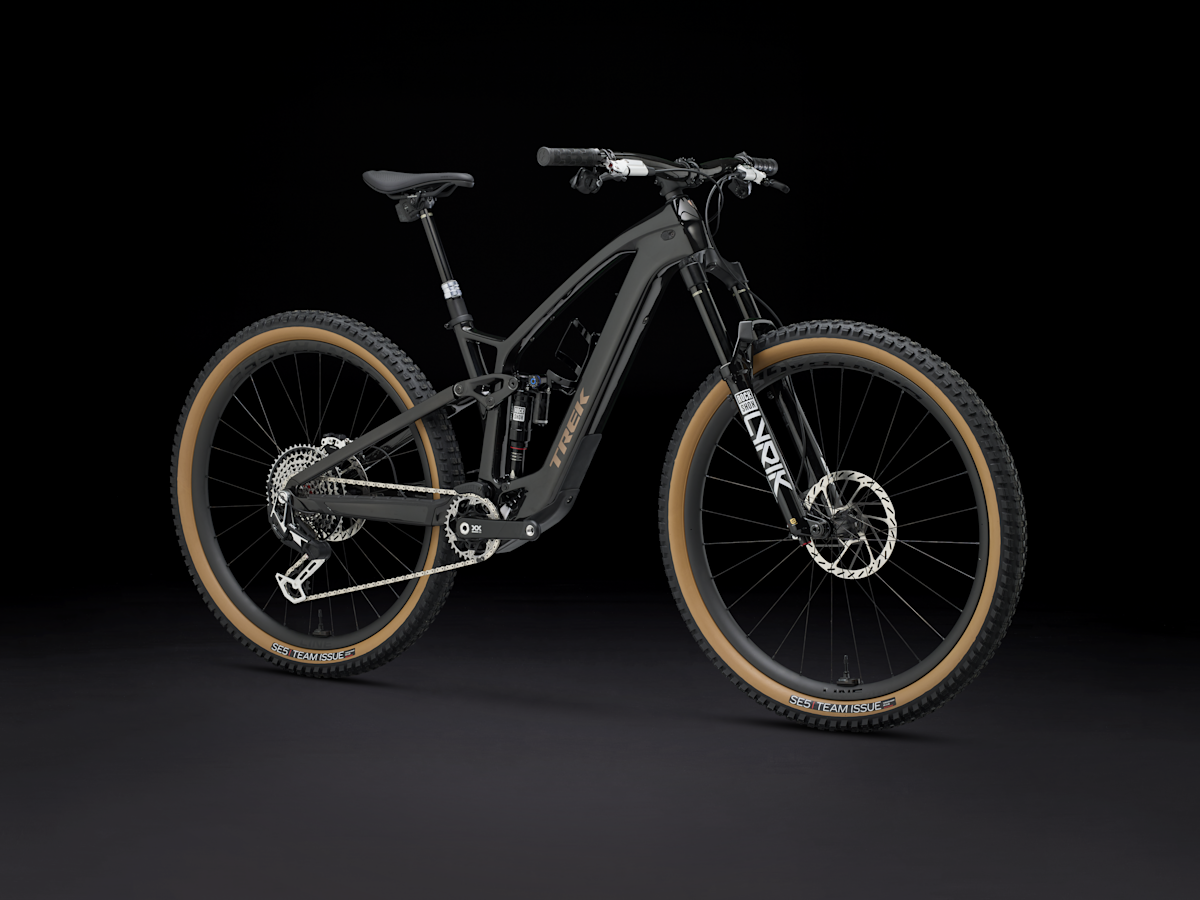
Trek Fuel EXe 8 GX AXS T-Type
TQ HPR 50 motor adds just 3.9 kg to a 150mm carbon trail bike platform with SRAM GX AXS T-Type Transmission shifting.
Amazon affiliate · price subject to change
The Trek Fuel EXe is the bike that proved electric mountain bikes do not have to feel like motorcycles, and the 8 GX AXS T-Type is the current top-spec AXS build in Trek's active Fuel EXe lineup. The TQ HPR50 motor system weighs just 3.9 kilograms complete — motor, battery, and controller combined — making the Fuel EXe approximately 4 kg lighter than the Bosch and Shimano full-power e-MTBs that dominate the category. The motor produces 50 Nm of torque, deliberately less than the 85+ Nm offered by full-power systems. Trek and TQ chose restraint because the goal was never to replace pedaling; it was to extend range and reduce fatigue on long climbs while preserving the fundamental ride feel that makes mountain biking engaging.
Reviewers across Outdoor Gear Lab, Cycling Great Escapes, and NZ Mountain Biker consistently highlight the TQ motor's near-silent operation as the defining advantage — the harmonic pin-ring transmission inside the HPR50 produces almost no audible noise under power, a stark contrast to the louder Bosch and Shimano alternatives. Power delivery is smooth rather than jerky, and reviewers describe the feel as a non-powered bike with a little pat on the back rather than an engine doing the work for you. The 360 Wh internal battery provides two to three hours of trail riding depending on assist level, and an external range extender adds a third more capacity for all-day rides. The 8 GX AXS T-Type build pairs SRAM's wireless GX Eagle AXS T-Type Transmission with a RockShox Lyrik fork and Super Deluxe shock on an OCLV Mountain carbon frame. At $4,799, this is the most accessible serious e-MTB on the market. 91 community score and a 9.2 expert consensus.
The Aggressive Picks
Ibis Ripmo V3 — The DW-Link Aggressive Trail Specialist
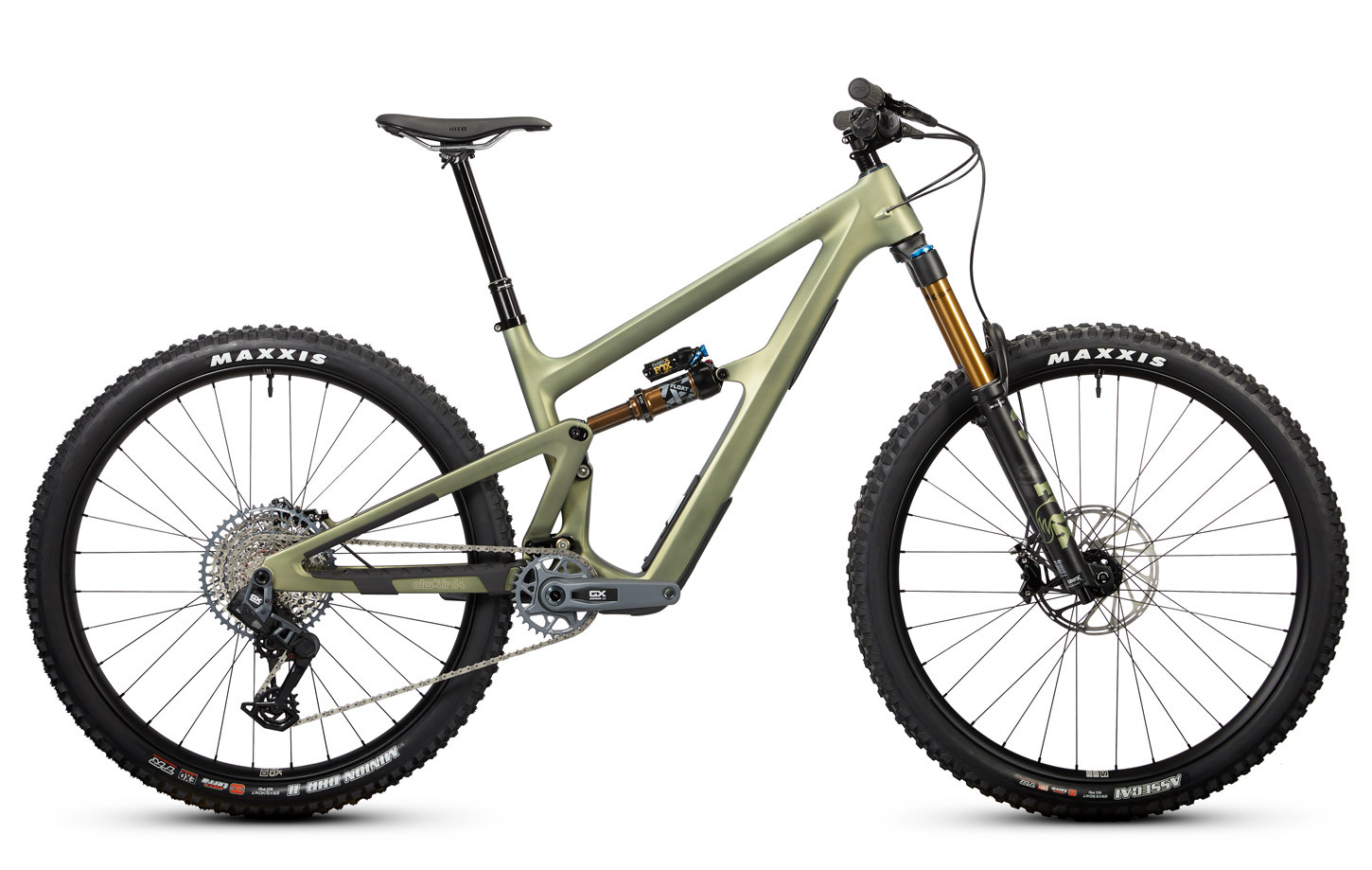
Ibis Ripmo V3
147mm of DW-Link travel with mixed wheel sizes and Ibis carbon for one of the most capable all-mountain bikes available.
Amazon affiliate · price subject to change
The Ibis Ripmo V3 is built for riders who push into enduro territory on every trail ride — the cyclists who seek out the roughest lines, hit drops without thinking, and still want a bike that pedals back to the top. The DW-Link suspension design, co-developed with Dave Weagle, delivers 147mm of rear travel with a leverage curve uniquely suited to aggressive riding: firm and supportive through the initial stroke for pedaling efficiency, progressively ramping up through the mid-stroke to resist wallowing, and finally linear through the end stroke to use every millimeter of available travel without harsh bottom-outs.
The Ripmo V3 uses a mullet wheel configuration — 29-inch front for rollover and a 27.5-inch rear for quicker acceleration and a lower center of gravity. Ibis tuned the geometry specifically around the mullet setup rather than retrofitting a 29er frame to accept a smaller rear wheel. Pinkbike's review noted that the Ripmo rewards aggressive riding like few other trail bikes — push harder, and the bike performs better. Ibis carbon construction prioritizes durability and impact resistance over absolute minimum weight, reflecting the bike's intended use. The frame includes internal cable routing with full-length housing, a threaded bottom bracket, and clearance for 2.6-inch tires. At $5,999, the Ripmo V3 sits in a sweet spot — boutique-tier engineering at sub-flagship pricing. 91 community score and a 9.1 expert consensus.
Canyon Spectral 125 CF 9 — The Direct-to-Consumer Value Champion
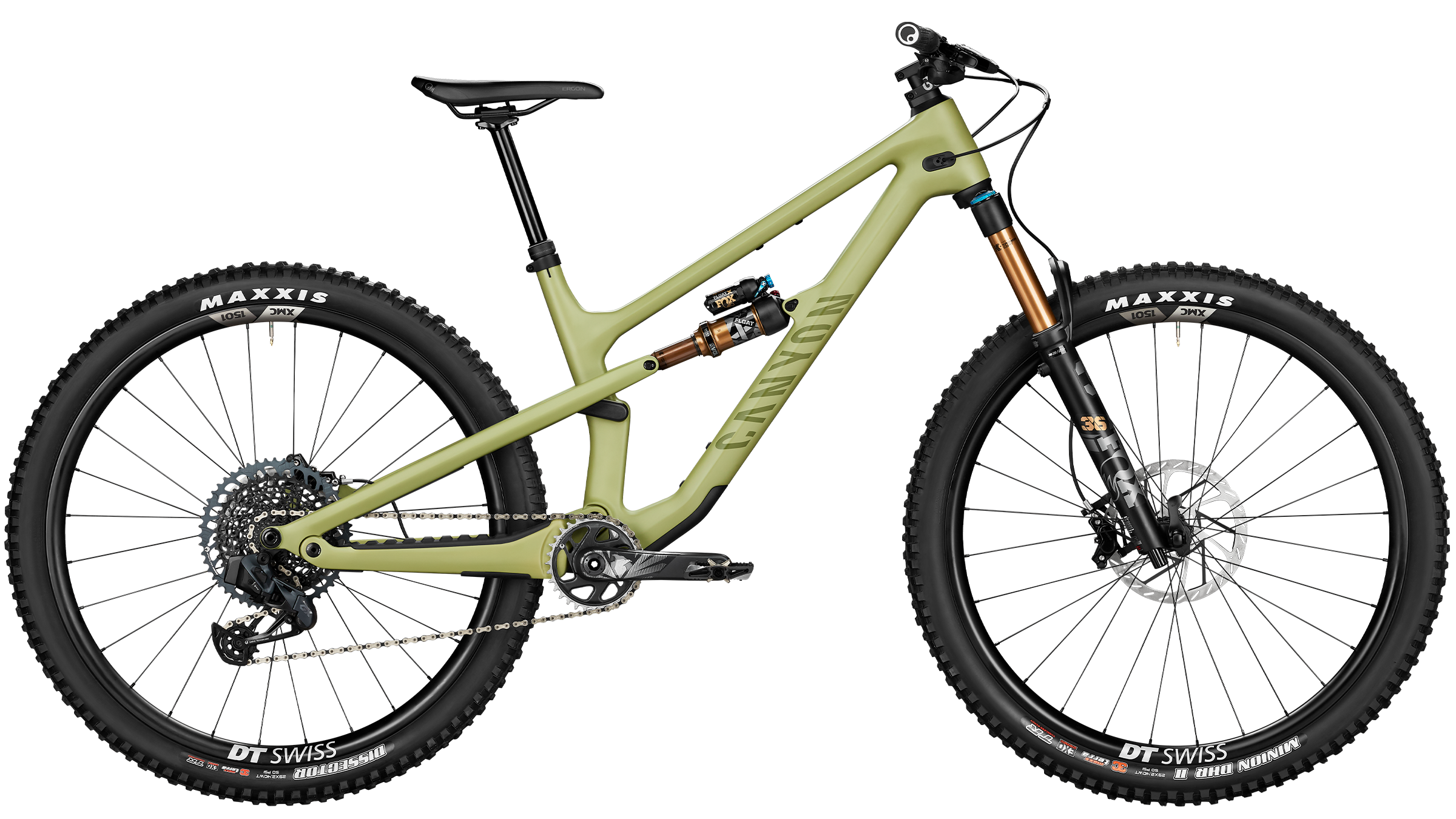
Canyon Spectral 125 CF 9
125mm-travel carbon trail bike with Shimano XT components at a price that would buy a bare frame from many competitors.
Amazon affiliate · price subject to change
The Canyon Spectral 125 CF 9 demonstrates exactly why direct-to-consumer brands have disrupted the mountain bike industry. By eliminating dealer margins and showroom overhead, Canyon delivers a full-carbon 125mm-travel trail bike with Shimano XT components, Fox suspension, and DT Swiss wheels at a price that would barely cover a bare frame from Santa Cruz or Yeti. The value proposition is staggering, and BikeRadar's reviews of the Spectral 125 line have repeatedly flagged the bike as one of the unusual entries that genuinely bridges the gap between downcountry, trail, and enduro. The 125mm rear travel is the sweet spot for most trail riders most of the time — short enough to keep the bike efficient and playful, long enough to handle moderate drops and technical singletrack.
Canyon's CF carbon construction uses a monocoque frame manufactured in-house at the Koblenz facility, where quality control standards are rigorous and consistent. The 140mm Fox 34 Performance fork delivers smooth, controlled action without the weight of a 36-series chassis, and the Shimano XT 12-speed drivetrain provides reliable, low-maintenance shifting that works in every weather condition. The trade-off is honest: no dealer test ride and limited dealer support for service. Canyon's customer service has improved meaningfully over the last three years, but the model still favors riders comfortable with their own wrenching or a trusted independent shop. At $4,999, the Spectral 125 CF 9 is the rational pick for value-conscious trail riders. 92 community score and a 9.0 expert consensus.
The Specialist Picks
Giant Trance X Advanced Pro 29 1 — The Vertically Integrated Value
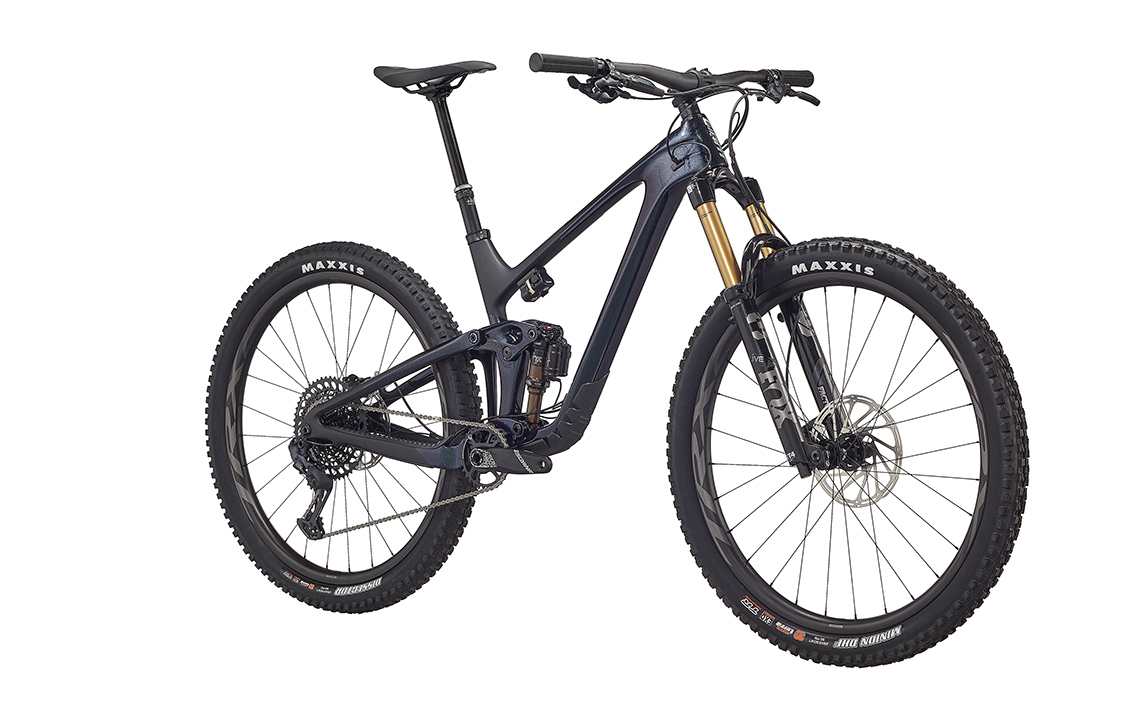
Giant Trance X Advanced Pro 29 1
Maestro suspension and Giant's vertically integrated carbon production deliver 135mm travel with exceptional stiffness-to-weight.
Amazon affiliate · price subject to change
The Giant Trance X Advanced Pro 29 1 benefits from Giant's unique position as the world's largest bicycle manufacturer — and one of the few that controls its own carbon fiber production from raw material through finished frame. This vertical integration means Giant can optimize layup schedules, cure temperatures, and resin formulations at a level of detail brands outsourcing to third-party factories cannot match. The result is an Advanced-grade carbon frame with a stiffness-to-weight ratio that rivals or exceeds boutique brands charging considerably more.
The Maestro suspension platform uses a dual-linkage design that isolates braking forces from suspension action, meaning the rear shock continues absorbing bumps even when the rider is hard on the brakes. This is a real advantage on steep, technical descents where most bikes' suspension stiffens up under braking load, reducing traction and control. Pinkbike's review called the brake isolation a real-world advantage you will notice on every steep descent. The 135mm of rear travel pairs with a 150mm Fox 36 Performance Elite fork, Shimano XT drivetrain, and Giant's own TRX composite wheels — another example of vertical integration keeping costs down. At $5,800, the Trance X Advanced Pro 29 1 is the most under-rated bike in the trail-bike segment. 89 community score and an 8.8 expert consensus.
Pivot Switchblade — The DW-Link Phoenix Build
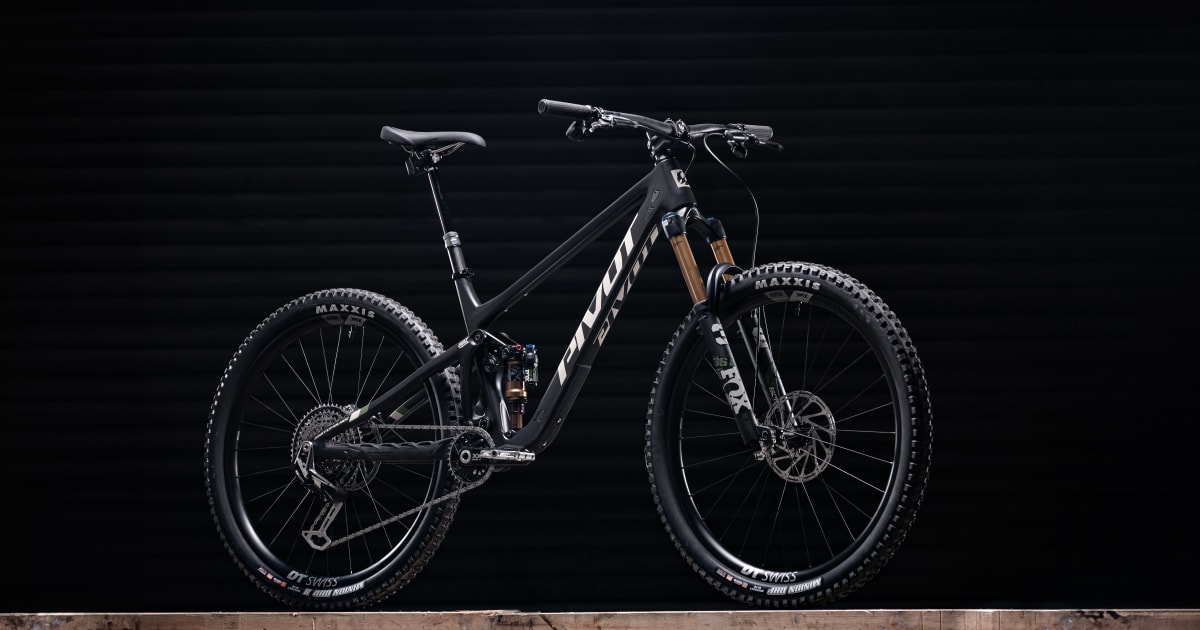
Pivot Switchblade
142mm of DW-Link travel with carbon construction and exceptional pedaling efficiency for an enduro platform.
Amazon affiliate · price subject to change
The Pivot Switchblade is designed and assembled in Phoenix, Arizona, where Pivot's engineering team has refined the DW-Link suspension platform to deliver one of the most efficient-pedaling enduro bikes available. The 142mm of rear travel uses Dave Weagle's patented dual-short-link design, which provides high anti-squat values through the pedaling range to minimize bob and wasted energy, then transitions to a more progressive, supportive feel through the mid-stroke and end-stroke for descending composure. Pinkbike's review described the Switchblade as pedaling better than any enduro bike has a right to, with DW-Link as the category efficiency benchmark.
Pivot's carbon frame construction emphasizes stiffness and precision over minimum weight, creating a chassis that tracks accurately through rough terrain without flexing or deflecting off line. The frame includes internal cable routing through molded guides that eliminate rattle, a threaded bottom bracket for creak-free performance, and protected bearing pockets that extend service intervals. The Switchblade accepts 29-inch or mullet wheel configurations without geometry compromise, giving riders flexibility to experiment with different setups. Pivot's frame warranty and crash-replacement program provide long-term peace of mind for a bike designed to be ridden at its limits. At $7,499, the Switchblade is expensive but unique — a Phoenix-engineered alternative to the Pacific Northwest and Northern California boutique brands that dominate the segment. 88 community score and an 8.6 expert consensus.
Rocky Mountain Instinct Carbon 70 — The Four-Position Geometry Tuner
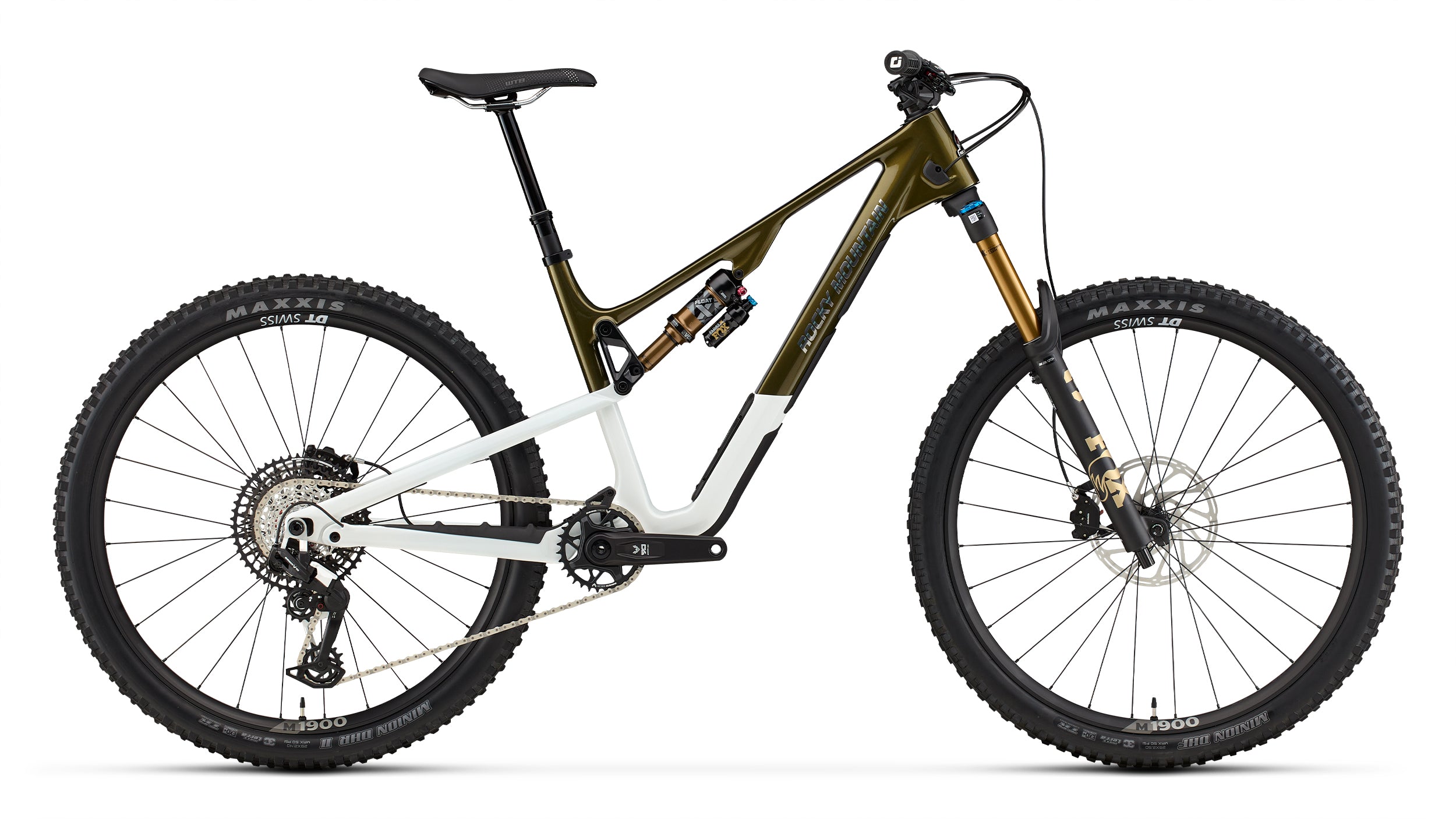
Rocky Mountain Instinct Carbon 70
Adjustable geometry system fine-tunes head angle, BB height, and seat angle to match any riding style or terrain.
Amazon affiliate · price subject to change
The Rocky Mountain Instinct Carbon 70 puts geometry customization in the rider's hands with the RIDE-4 adjustable system — a headset and chainstay chip combination that allows four distinct geometry configurations, spanning a range of head angles, bottom-bracket heights, and seat-tube angles. Unlike simpler flip-chip systems that offer only two settings, RIDE-4 provides enough granularity to genuinely optimize the bike for specific trails, body proportions, and riding style. Set it steep and low for tight, twisty singletrack; set it slack and high for open, fast descents. Pinkbike's review called RIDE-4 the most comprehensive geometry adjustment system available and noted that four positions beats two, period.
The Instinct platform sits in the middle of Rocky Mountain's mountain bike lineup, positioned between the shorter-travel Element XC bike and the longer-travel Altitude enduro machine. This middle-ground positioning, combined with the RIDE-4 system's adjustability, makes the Instinct the most versatile bike in Rocky Mountain's range. The carbon frame uses Smoothwall construction, which eliminates internal wrinkles and inconsistencies in the layup for a stronger, lighter, more predictable frame. The Carbon 70 build pairs a Fox 36 Performance fork and Fox Float DPS Performance shock with a Shimano SLX/XT mixed drivetrain. At $5,499, it is the value-tier carbon trim in the Instinct lineup and the most adjustable trail bike in the segment. 87 community score and an 8.4 expert consensus.
Scott Spark RC World Cup — The Definitive XC Race Bike
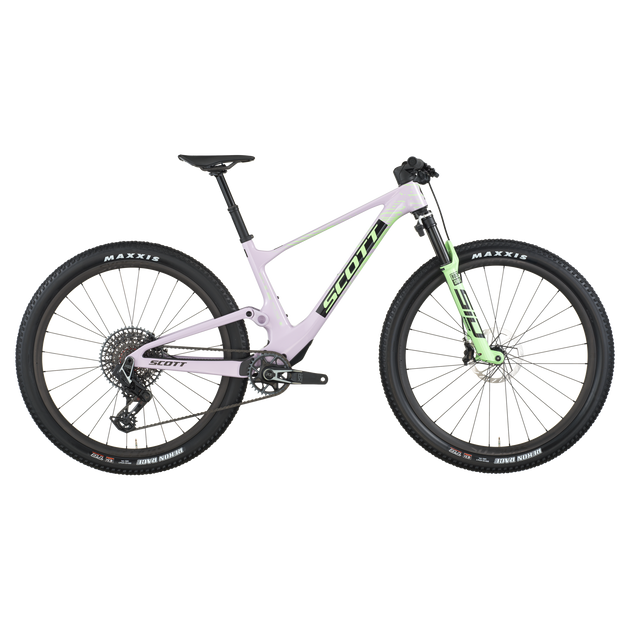
Scott Spark RC World Cup
120mm TwinLoc-equipped travel that locks out for climbs and opens for descents, with HMX-SL carbon under 10 kg race-ready.
Amazon affiliate · price subject to change
The Scott Spark RC World Cup is a purpose-built cross-country race machine refined through years of World Cup and Olympic competition. The defining feature is TwinLoc, a handlebar-mounted remote that simultaneously adjusts both front and rear suspension travel between three modes: fully open for descents, mid-travel for rolling terrain, and fully locked for smooth climbs and sprints. This system transforms the Spark from a 120mm trail-capable XC bike to a rigid-feeling race bike with a flick of the thumb — the kind of suspension management that actually wins races where seconds matter.
The HMX-SL carbon frame represents Scott's highest-grade material, using premium-modulus fibers in a layup that targets the minimum weight achievable while meeting World Cup durability requirements. The result is a frame under 2 kg and complete race-ready builds under 10 kg — under the 22-pound psychological barrier in competitive XC racing. The integrated cockpit, seatpost, and cable routing contribute to weight savings and aerodynamic efficiency while keeping the bike clean and rattle-free at race pace. Scott's geometry reflects current XC racing trends — a 68-degree head angle for stability at the high speeds achieved on modern courses, paired with a steep 76-degree seat angle that positions the rider over the pedals for efficient climbing. The Spark ships with SRAM XX Eagle AXS, RockShox SID Ultimate, and Syncros carbon wheels. At $9,999, it is unapologetically a race bike — narrow in focus and unbeatable within that focus. 86 community score and an 8.2 expert consensus.
Buying Guide: The Three Decisions That Matter
Travel and geometry — pick the platform that matches your actual riding, not your aspirational riding. Trail bikes with 125 to 150mm of rear travel cover 90 percent of real-world mountain biking — the Hightower, Stumpjumper EVO, SB140, Ripmo V3, Spectral 125, and Trance X all fit this band. Riders who routinely encounter rough, steep, technical terrain — Pacific Northwest, Whistler, the East Coast classics like Pisgah and Highland — will be best served by the longer-travel options at 145-150mm with slacker head angles. Riders on mellower terrain across the Midwest, the Front Range, or much of the Southeast will be better served by the shorter 125-140mm range with steeper head angles for climbing efficiency. The XC end of the spectrum (Scott Spark RC) and the enduro end (Pivot Switchblade) are specialist tools — buy them only if you actually race XC or routinely shuttle gravity-focused terrain.
Dealer brand or direct-to-consumer — pick the purchase model that matches your wrenching comfort. Santa Cruz, Yeti, Ibis, Pivot, Giant, Specialized, Trek, and Rocky Mountain sell through dealer networks. You get a test ride, a fitting, suspension setup, and a relationship with a shop that can handle warranty claims and complex repairs. Canyon sells direct online — you get a meaningfully lower price (often 20 to 35 percent less for comparable spec), but you assemble the bike yourself from the box and you handle warranty claims through Canyon's customer service rather than walking into a shop. The right choice depends entirely on how comfortable you are with bike maintenance. Riders who do their own brake bleeds, suspension service, and drivetrain installs save real money with Canyon. Riders who prefer a local shop relationship will be better served by the dealer brands even at the higher sticker price.
Analog or electric — pick the assist level that matches your fitness, knees, and ride partners. Analog mountain bikes — the Hightower, Stumpjumper EVO, SB140, Ripmo V3, Spectral 125, Trance X, Switchblade, Instinct, and Scott Spark — are the pure mountain bike experience. They keep you fit, they cost less, they are simpler to maintain, and they are still what most experienced riders prefer for descending. Light e-MTBs like the Trek Fuel EXe 8 GX AXS T-Type add modest assistance (50 Nm of torque, 3.9 kg added weight) that extends range and reduces fatigue without fundamentally changing the riding experience. Full-power e-MTBs from the Bosch and Shimano camps — not represented in Gavler's top 10 because the community has not embraced them at the same rate — add 85+ Nm of torque and 6 to 8 kg of system weight, fundamentally changing what mountain biking is. For most riders, the analog answer is the right one. For riders with a long pre-trail climb, a knee or hip that needs help, or a ride partner with significantly more fitness, the Fuel EXe is the answer that preserves the ride feel they actually want.
For the full community ranking with current prices and live vote counts, head to Gavler's Best Mountain Bikes list. If you are building out the full cycling kit, the Gavler Cycling hub now anchors community-ranked picks across mountain bikes, gravel bikes, road bikes, cycling helmets, and bike computers — five lists in total, with brief coverage rolling out across the cluster over the next several days. The Best Mesh WiFi Systems brief is a useful cross-reference for the home-network kit that keeps Strava and Garmin Connect syncing without thinking about it.
See all 10 products ranked by the community
Best Mountain Bikes
See Full Rankings →270 community votes cast
Common Questions
The Santa Cruz Hightower CC X01 tops Gavler's community ranking with a 9.7 score and is the trail bike most reviewers consider the modern benchmark. Built around 145mm of lower-link VPP suspension and Santa Cruz's flagship CC carbon layup, the Hightower pedals like a short-travel bike and descends like a long-travel one — the rare quiver-killer that gives up almost nothing in either direction. Outdoor Gear Lab's 2026 trail-bike test ranked the new Hightower at the top of its field, calling it a brawny and capable bike that puts everything together better than most. SRAM's X01 Eagle AXS wireless drivetrain, a Fox 36 Performance Elite fork, and Santa Cruz's lifetime warranty and bearing replacement program round out a package that, at $8,499, is expensive but priced fairly against the boutique competition. For riders who own one mountain bike and ride everything from after-work loops to all-day epics, the Hightower CC X01 is still the answer.
Canyon's Spectral 125 CF 9 at $4,999 is the carbon trail bike that proves direct-to-consumer pricing genuinely undercuts the boutique brands. The Spectral 125 packs a full Shimano XT 12-speed drivetrain, a Fox 34 Performance fork, and a Canyon CF monocoque carbon frame at a price that would barely cover a bare frame from Santa Cruz or Yeti. The 125mm of rear travel is the right amount for most trail riders most of the time — short enough to keep the bike pedaling efficiently and playful in corners, long enough to handle moderate drops and technical singletrack. The trade-off is honest: no dealer test ride before purchase and limited dealer support for service. For riders comfortable doing their own wrenching or with a trusted independent shop, the Spectral 125 CF 9 is the rational pick. Reviews from BikeRadar and Mountain Bike Action both flag the unusual versatility of the 125mm-travel platform, which blends downcountry efficiency with trail-bike geometry.
These are the two benchmark trail bikes of 2026, and the choice comes down to adjustability versus refinement. The Stumpjumper 15 EVO Expert at $4,999 ships with Specialized's six-position adjustable geometry — a flip-chip and headset-cup combination that lets you set head angles between 63 and 65 degrees depending on whether you want pedaling efficiency or descending composure. FACT 11m carbon, SRAM GX Eagle AXS Transmission shifting, and Fox 36 Performance Elite suspension match the spec sheet of bikes costing meaningfully more. The Hightower CC X01 at $8,499 trades the EVO's adjustability for a higher-grade carbon layup (CC versus Specialized's FACT 11m), wireless X01 AXS shifting, and the refined VPP suspension feel that has earned Santa Cruz two decades of brand loyalty. Pick the Stumpjumper if you want to tune the bike to your trails and you want to save $3,500 for upgrades or another ride. Pick the Hightower if you want the most refined and resale-stable trail bike in the category and the lifetime warranty plus bearing replacement program matters to you.
Yes, if you pick the right kind. Full-power e-MTBs from Bosch and Shimano put out 85+ Nm of torque and add 6 to 8 kilograms of motor and battery weight to a bike — the result is a machine that fundamentally changes how you ride mountain trails. Light e-MTBs like the Trek Fuel EXe 8 GX AXS T-Type take the opposite approach. The TQ HPR50 motor produces 50 Nm of torque and adds just 3.9 kg to the bike — Trek and TQ deliberately chose restraint over raw power. The result is a 37.5-pound trail bike that handles, corners, and jumps like an analog Fuel EX with a tailwind on the climbs. Reviews from Outdoor Gear Lab and Cycling Great Escapes both highlight the motor's near-silent operation as a defining advantage over the louder Bosch and Shimano alternatives. For riders with a long pre-trail climb, a knee that needs help, or a riding partner with more fitness than they have, the Fuel EXe is the e-MTB to buy. For pure descending and shuttle-laps gravity riding, save the money and stick with analog.
The Scott Spark RC World Cup at $9,999 is the definitive cross-country racing platform — the same bike that wins World Championships and races at the Olympics. The defining feature is TwinLoc, a handlebar-mounted remote that simultaneously adjusts front and rear suspension between fully open, mid-travel, and fully locked modes. This system transforms the Spark from a 120mm trail-capable XC bike into a rigid-feeling race bike with a flick of the thumb on a long climb or a sprint section. The HMX-SL carbon frame is Scott's highest-grade material and the bike achieves a sub-10 kg complete build weight — under the 22-pound psychological barrier in competitive XC racing. The SRAM XX Eagle AXS wireless drivetrain, RockShox SID Ultimate fork, and Syncros carbon wheels are race-ready out of the box. The Spark is expensive and narrow in focus, but if you actually line up at the start line and the only success metric is the result sheet, this is the bike.
Travel and geometry. XC race bikes like the Scott Spark RC World Cup run 100 to 120mm of rear travel with steeper head angles (68 degrees and up) for efficient climbing and high-speed handling. Trail bikes like the Santa Cruz Hightower, Specialized Stumpjumper EVO, and Canyon Spectral 125 run between 125 and 150mm of rear travel with progressive head angles in the 64-to-66-degree range, balancing climbing efficiency with descending composure. Enduro bikes like the Pivot Switchblade and Ibis Ripmo V3 push travel into the 140-to-160mm range with slacker head angles (63 to 65 degrees) and a riding position biased toward descending. The lines blur in 2026 — modern trail bikes pedal nearly as well as XC bikes from a decade ago, and modern enduro bikes climb better than yesterday's trail bikes. Most riders are best served by a trail bike with around 140mm of travel because it covers 90 percent of real-world riding without the weight or geometry compromises of an enduro or XC specialist.
Rankings come from community votes by mountain bikers who actually own and ride these bikes every weekend. Each user gets one vote on the Best Mountain Bikes list — pick the bike you would take to your trailhead tomorrow morning, not the one with the best spec sheet on paper or the prettiest paint. Switched bikes after demoing a competitor, after a long-term review revealed a flaw, or after a parts upgrade changed your mind? Move your vote. No affiliate commissions or manufacturer sponsorships influence the ranking. Vote totals and community scores appear next to each pick on the live list, and the rankings update in real time as the community weighs in.
Products Mentioned
Jump to the full ranking and community verdict for each pick named above.
- Ibis Ripmo V3Cycling · Best Mountain Bikes
- Santa Cruz Hightower CC X01Cycling · Best Mountain Bikes
- Specialized Stumpjumper 15 EVO ExpertCycling · Best Mountain Bikes
- Yeti SB140 T2Cycling · Best Mountain Bikes
- Trek Fuel EXe 8 GX AXS T-TypeCycling · Best Mountain Bikes
- Canyon Spectral 125 CF 9Cycling · Best Mountain Bikes
- Giant Trance X Advanced Pro 29 1Cycling · Best Mountain Bikes
- Pivot SwitchbladeCycling · Best Mountain Bikes
- Rocky Mountain Instinct Carbon 70Cycling · Best Mountain Bikes
- Scott Spark RC World CupCycling · Best Mountain Bikes