The Best Gravel Bikes in 2026, Ranked by the Riders Who Race Unbound and Bikepack the Continent
Specialized, Cervélo, Canyon, Trek, Santa Cruz. Gravel bikes for racing, bikepacking, and all-road riding — ranked by riders, not press releases.
Gravel cycling in 2026 has matured past its identity crisis. The "is it a road bike or a mountain bike" debate that dominated the category's first decade is over, and the 2026 lineup reflects a confident answer: gravel bikes are their own thing now, with their own engineering priorities, their own race scene, and their own buying patterns. The big four gravel bikes of 2026 — the Specialized Diverge STR Expert, the Cervélo Áspero-5, the Canyon Grizl CF SLX 8, and the Trek Checkpoint SLR 7 — each refine a different idea of what a serious gravel bike should be, and the differences between them have never been clearer.
May is one of the best buying windows for gravel bikes. Unbound Gravel falls on the first weekend of June, and most major brands ship their 2026 model-year inventory to coincide with the spring gravel-racing calendar. Memorial Day promotions traditionally anchor the deepest sales of the spring season, and direct-to-consumer brands like Canyon run aggressive promotions on prior-year carryover stock right as gravel season opens. Today's gravel-bikes brief opens the second slot of Gavler's Cycling category cluster, following yesterday's Best Mountain Bikes launch. The picks below are pulled from the live Best Gravel Bikes list, ranked by riders who own these bikes and live with them on real gravel.
How the Rankings Work
One vote per person on the Best Gravel Bikes list. Pick the bike you would line up at the Unbound start gate on, the bike you trust on a self-supported five-day route through the desert, the bike that handles the random Tuesday gravel ride from your front door. Switched after a demo at a dealer event, after the long-term flaw revealed itself over 5,000 miles, or after a tire upgrade redefined what the bike could do? Move your vote. The result is a community-curated ranking grounded in lived experience, not press-release hype. No affiliate commissions or manufacturer sponsorships affect the ranking.
The Top Picks
Specialized Diverge STR Expert — The Comfort Benchmark That Redefined the Category
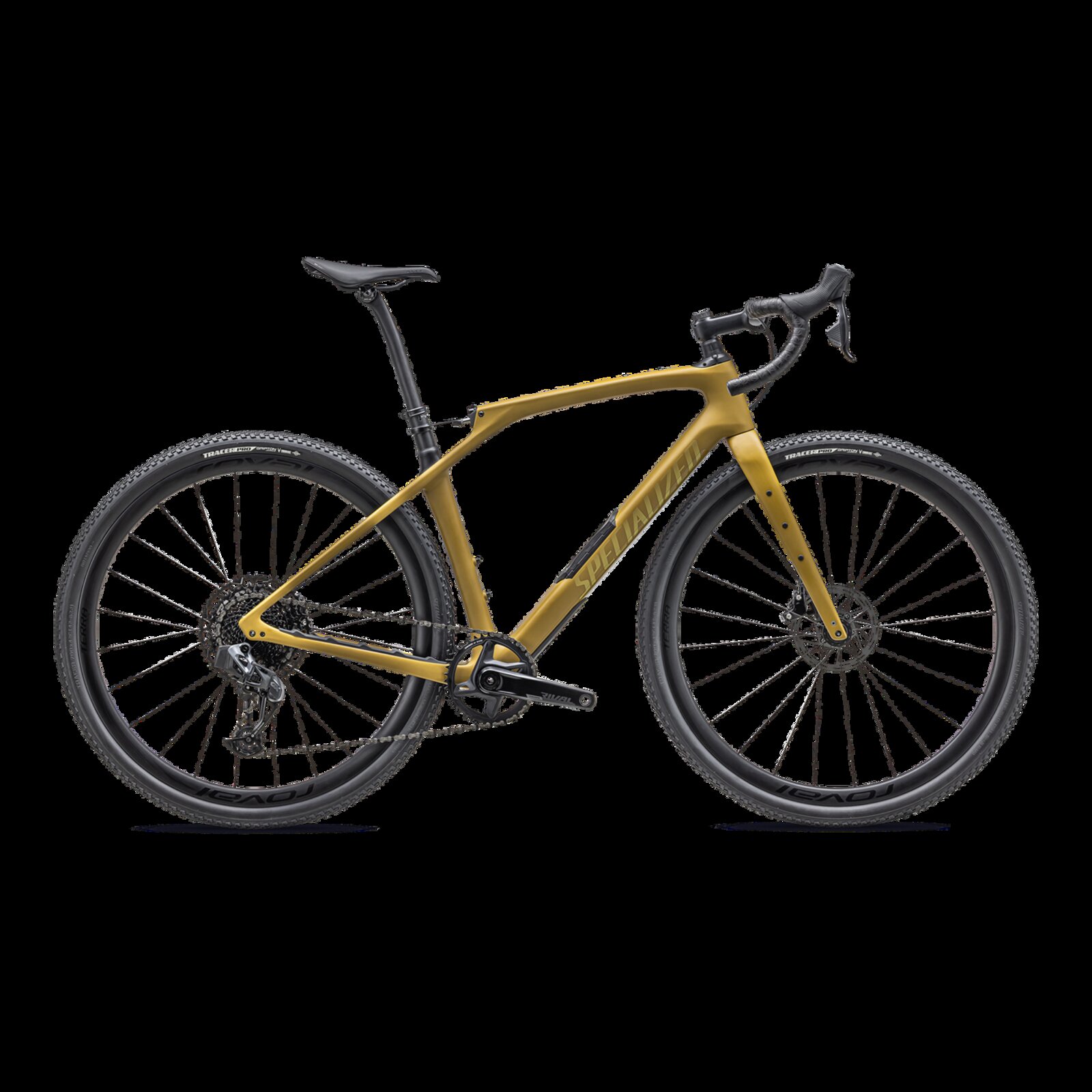
Specialized Diverge STR Expert
30mm of rear suspension travel hidden in the seat tube delivers comfort without traditional linkage weight or complexity.
Amazon affiliate · price subject to change
The Specialized Diverge STR is the first major gravel platform to integrate rear suspension into the frame rather than as a bolt-on accessory, and after three years on the market the verdict is in: it works. The Future Shock Rear system uses a flexible frame post clamped low on the seat tube and connects it to a hydraulic damper integrated into the top tube. The result is 30mm of controlled rear travel that's almost imperceptible on smooth pavement and dramatic on washboard gravel and root-strewn doubletrack.
The engineering trick is that the suspension travel doesn't compromise pedaling efficiency. Because the rear triangle itself is solid — the suspension is in the seatpost system, not in a pivot — there's no bob under power and no wasted watts. Reviewers from BikeRadar to Cyclingnews to Bikepacking.com have all converged on the same observation: riders push descents harder, stay seated through rough sections they would normally have to hover above, and finish long events feeling fresher than they do on rigid gravel bikes.
The Expert build at $6,500 is the middle of the Diverge STR lineup. Shimano GRX 810 mechanical shifting, Roval Terra carbon wheels, Specialized Pathfinder Pro tires in 42mm width, and a frame that clears tires up to 47mm. The setup process for the Future Shock Rear takes some patience — rider weight and preference both meaningfully affect how the system behaves — but once dialed in, it's the most comfortable gravel platform available without a traditional rear shock. For long events on rough surfaces, the Diverge STR Expert is the bike to beat.
Cervélo Áspero-5 — The Aero Specialist Built for Smooth-Dirt Races
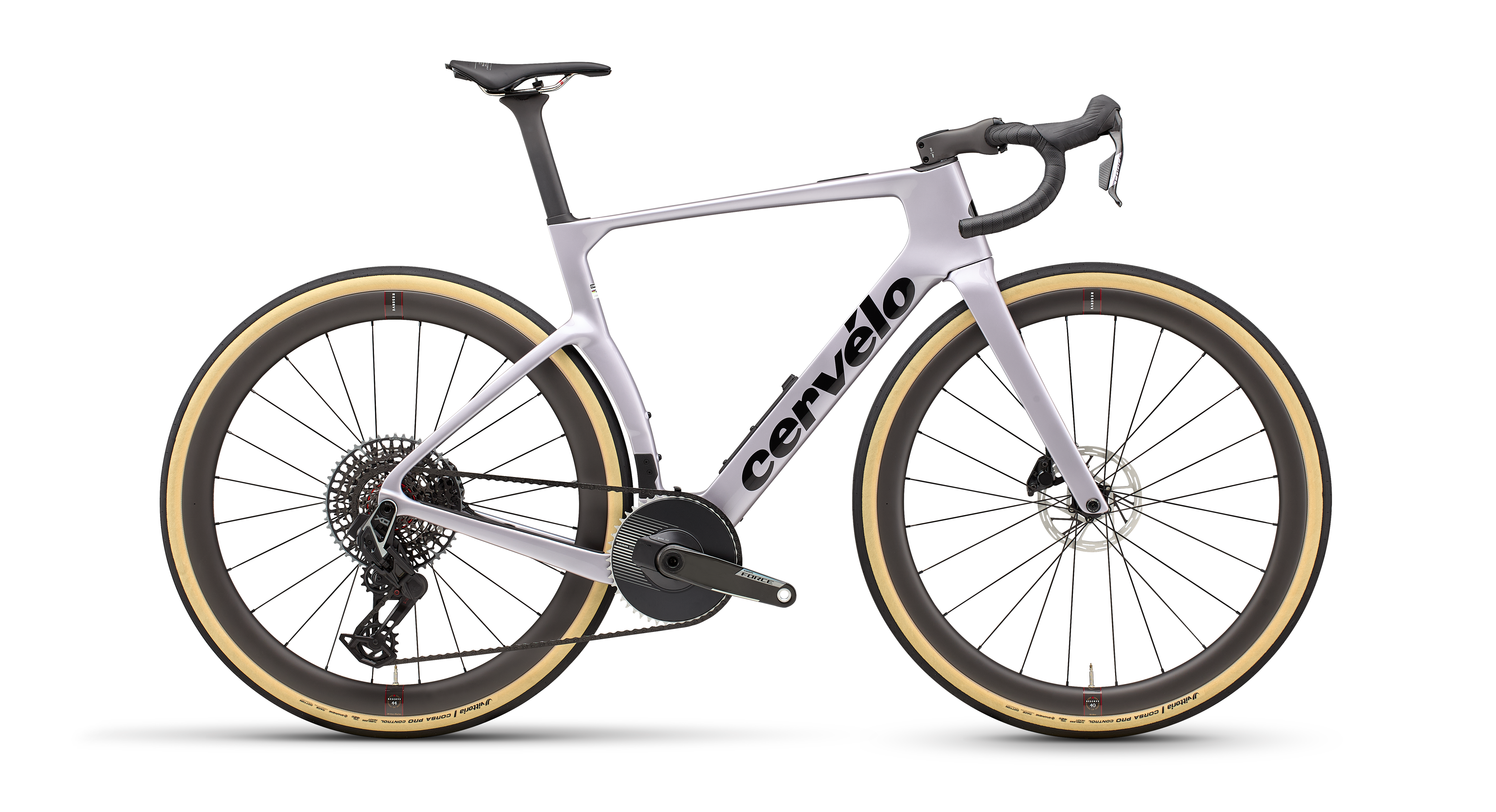
Cervelo Aspero-5
Truncated airfoil tubes and integrated cockpit make it the fastest gravel bike in a headwind, built for Unbound-style racing.
Amazon affiliate · price subject to change
The Cervélo Áspero-5 is unapologetic about what it is: a gravel race bike for events that look more like fast road races on dirt than backcountry expeditions. Cervélo applied the truncated airfoil tube profiles from its S5 road bike to a frame with 45mm tire clearance and called it "the most aerodynamic gravel bike ever created." The marketing claim — 37 watts saved over the previous Áspero at 45 km/h and 34 watts over the nearest competitor — has held up to independent wind tunnel testing.
BikeRadar's full review captured the bike's defining trade-off in its headline: a rapid gravel racer that the tester wouldn't take out in the mud. The narrow tire clearance and aggressive geometry mean the Áspero-5 is the wrong bike for muddy editions of Unbound, for bikepacking, or for technical singletrack — but for events like Mid-South, SBT GRVL, Belgian Waffle Ride, and dry Unbound conditions, it's the fastest gravel tool you can buy. Velo Outside described it as a fast gravel bike that might just replace your road bike, and that summary is closer to the truth than most road riders want to admit.
The semi-integrated cockpit, internally routed brake cables, downtube storage compartment, threaded T47-BBright bottom bracket, and Universal Derailleur Hanger are all engineered around race-bike priorities. The frame is compatible with electronic groupsets only — another concession to the race-focused positioning. At $7,500, the Áspero-5 is expensive, but for riders who measure gravel success in finishing positions, it's the right kind of expensive.
Canyon Grizl CF SLX 8 — The Adventure Specialist From the Direct-to-Consumer Disruptor
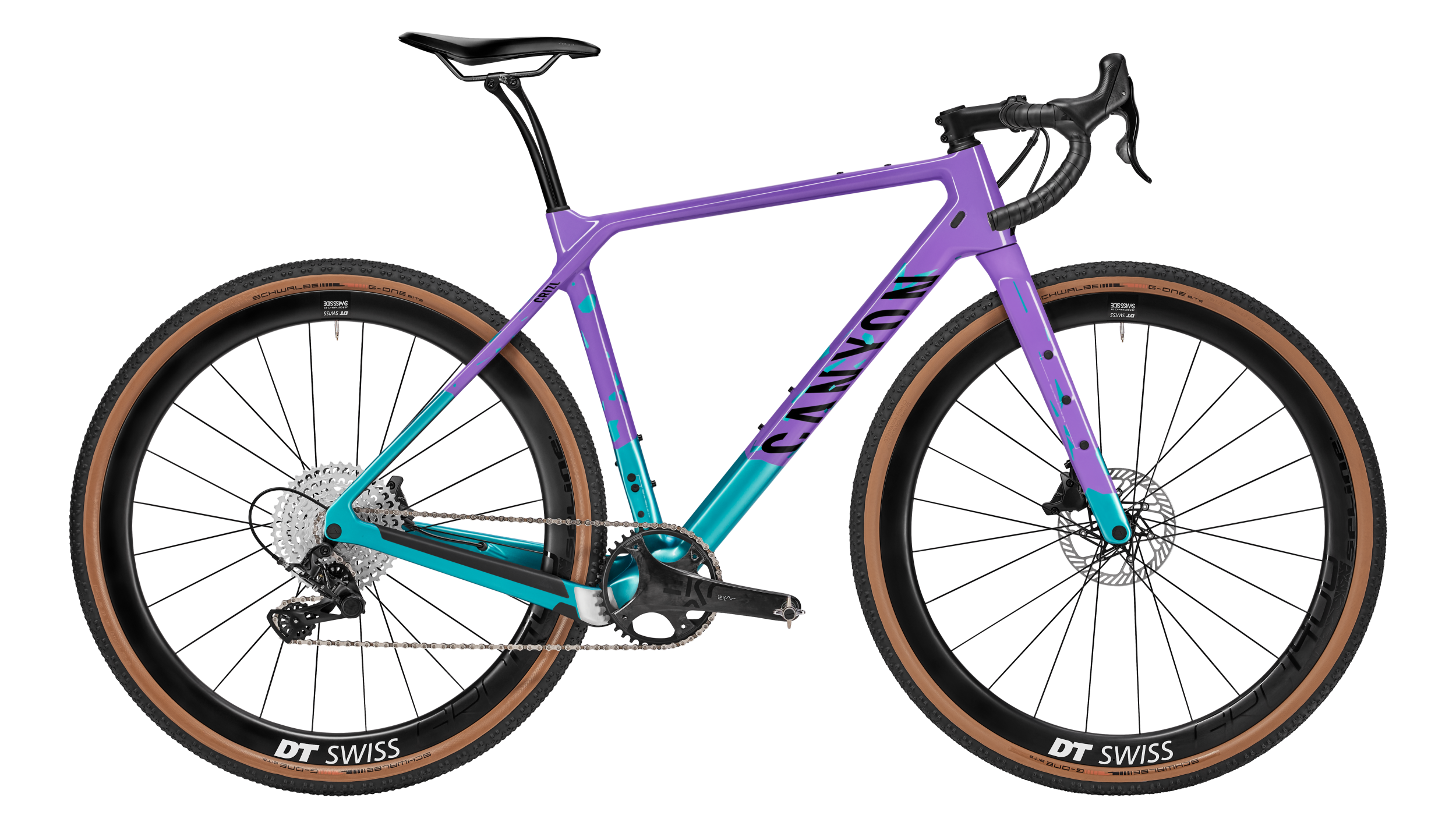
Canyon Grizl CF SLX 8
50mm tire clearance and frame bag mounting points at direct-to-consumer pricing with GRX 800 components.
Amazon affiliate · price subject to change
The Canyon Grizl is positioned as Canyon's adventure-focused gravel platform, distinct from the race-oriented Grail. Bikepacking.com described the Grizl as a Swiss Army Knife of gravel bikes — a frame that occupies the middle of the gravel performance map, designed to race well enough or bikepack well enough that most riders will never feel they bought the wrong tool. That's a hard balance to strike, and the Grizl gets it about right.
The CF SLX variant uses a higher-grade carbon than the CF SL, dropping approximately 100 grams of frame weight while routing Di2 cables through the down tube. The trade-off versus the CF SL is the loss of dropper post compatibility — a deliberate choice for the SLX since dropper posts add weight and complexity that pure-gravel riders rarely use. Tire clearance accommodates 50mm width, which is enough for the roughest gravel routes without trespassing into mountain-bike territory.
The bikepacking-friendly accessory ecosystem is what sets the Grizl apart. Three bottle cage mounts, top tube bag bosses, and two cargo cage mounts on the fork (each rated for 3 kg of luggage) provide carrying capacity that most race-focused gravel bikes lack entirely. Canyon's collaboration with Apidura produced a set of bikepacking bags specifically designed around the Grizl's frame geometry. Shimano GRX 800 hydraulic disc shifting, DT Swiss wheels, and Maxxis Rambler 700×45mm tires complete a build that costs under $4,500 — a price that would barely cover a bare frame from Santa Cruz or Cervélo.
Trek Checkpoint SLR 7 — The Most Versatile Platform in the Roundup
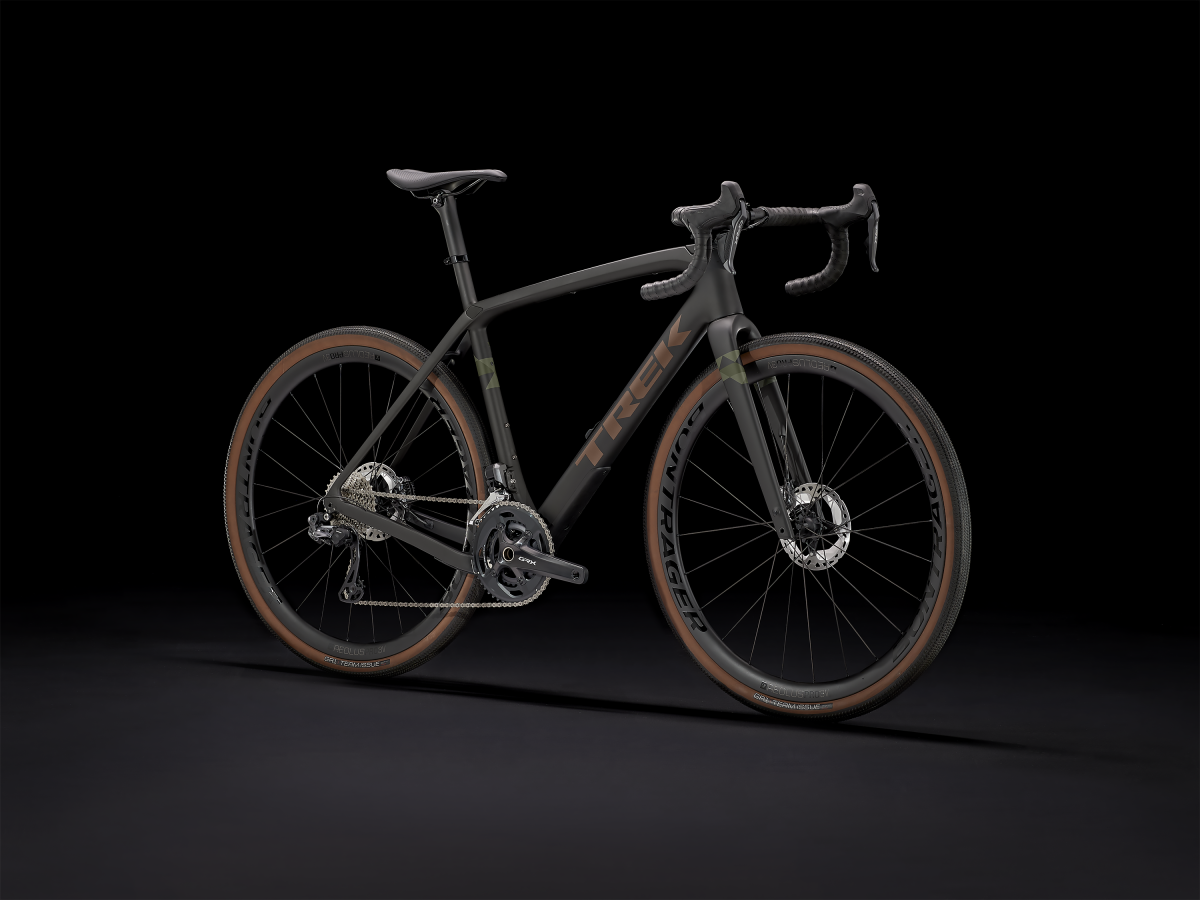
Trek Checkpoint SLR 7
IsoSpeed rear decoupler smooths washboard gravel without sacrificing stiffness, with internal down tube storage and full fender mounts.
Amazon affiliate · price subject to change
The Trek Checkpoint SLR 7 is the platform for riders who want one gravel bike to handle everything — commuting through winter, racing Belgian Waffle Ride in spring, and bikepacking the Great Divide in summer. The IsoSpeed decoupler at the seat tube and top tube junction provides a small but consistent amount of fore-aft seatpost flex that smooths out rough surfaces without adding weight or maintenance complexity. Cycling Weekly described the IsoSpeed effect as not noticeable from the first pedal stroke but valuable over big hits and long days.
The SLR uses Trek's 500-series OCLV carbon — lighter, stiffer, and with a more sophisticated IsoSpeed damper than the SL-tier Checkpoint. SRAM Force AXS wireless shifting, carbon wheels, internal down-tube storage for tools and spares, and full mounting points for fenders, racks, and frame bags make the SLR 7 the most accessory-friendly bike in this roundup. The geometry strikes a balance between race-bike aggressive and adventure-bike relaxed, with a stack height that works for both riding positions depending on how the bar is set up.
At $6,500, the SLR 7 sits at the top of Trek's gravel lineup but undercuts the top builds from Specialized and Cervélo. Trek's global dealer network is the most accessible service infrastructure of any brand on this list — every U.S. metropolitan area has at least one Trek dealer that can provide a test ride, custom fitting, and warranty service. For riders who value dealer support over direct-to-consumer pricing, the Checkpoint SLR 7 is the obvious choice.
The Specialist Picks
Santa Cruz Stigmata CC — The Race-Focused Handler
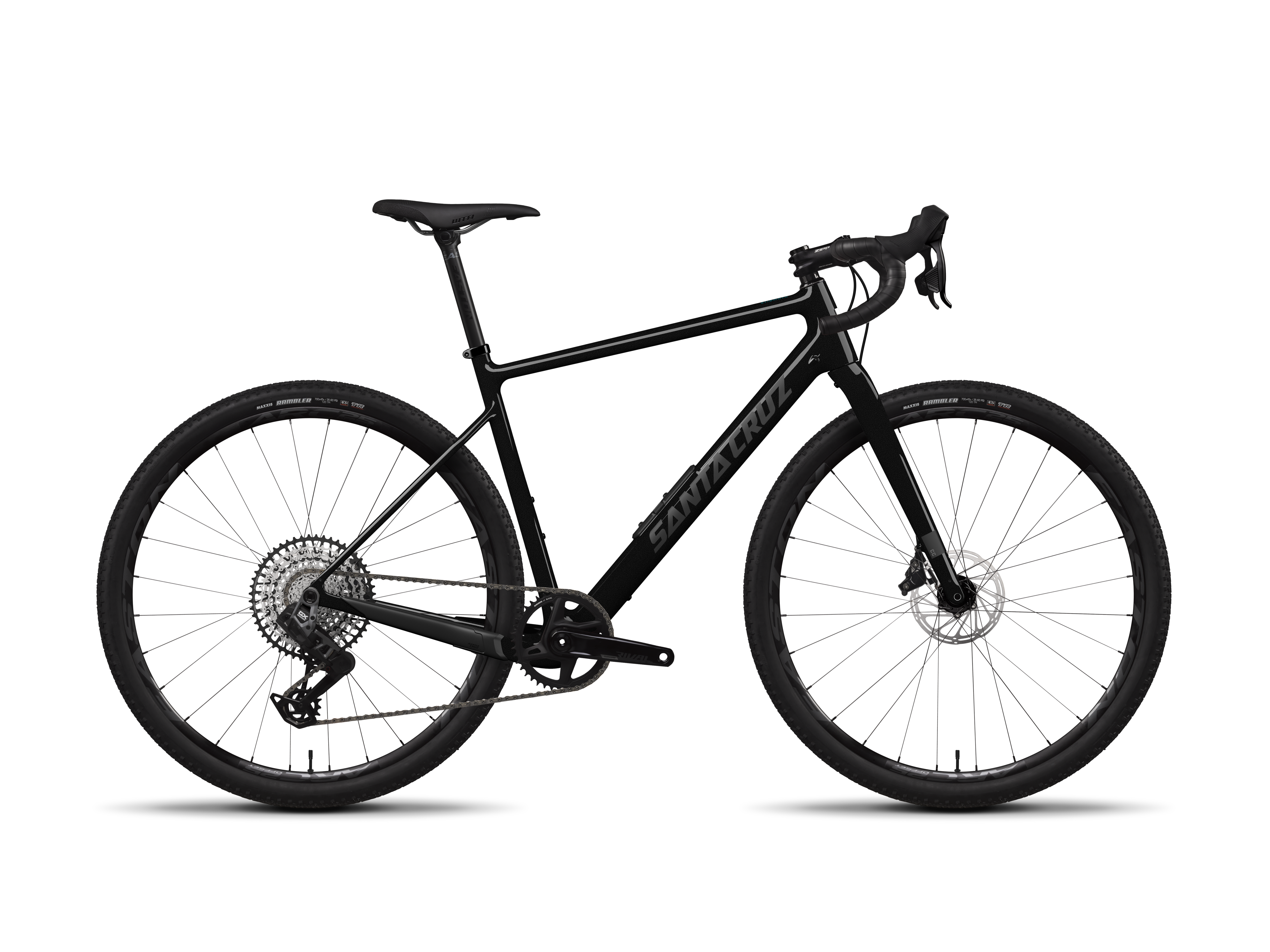
Santa Cruz Stigmata CC
Stiff enough for cyclocross racing with tire clearance and geometry for long gravel events in Santa Cruz's C-carbon layup.
Amazon affiliate · price subject to change
The Santa Cruz Stigmata CC has earned its place as a benchmark for gravel handling. Velo Outside Online called it one of the best-handling gravel bikes in recent memory on just about every kind of dirt, and the V4 redesign grew reach numbers by approximately 30mm across all sizes while slackening the head tube angle to 69.5 degrees — geometry that's more progressive than most road-derived gravel bikes and rewards aggressive descending. Three internally sheathed cable ports and a standard 68mm English threaded bottom bracket make it one of the more home-mechanic-friendly carbon gravel bikes available. Mounting points are limited — this is not a bikepacking platform — but for riders who prioritize handling and serviceability, the Stigmata is the answer.
3T Exploro Max — The Drop-Bar Mountain Bike
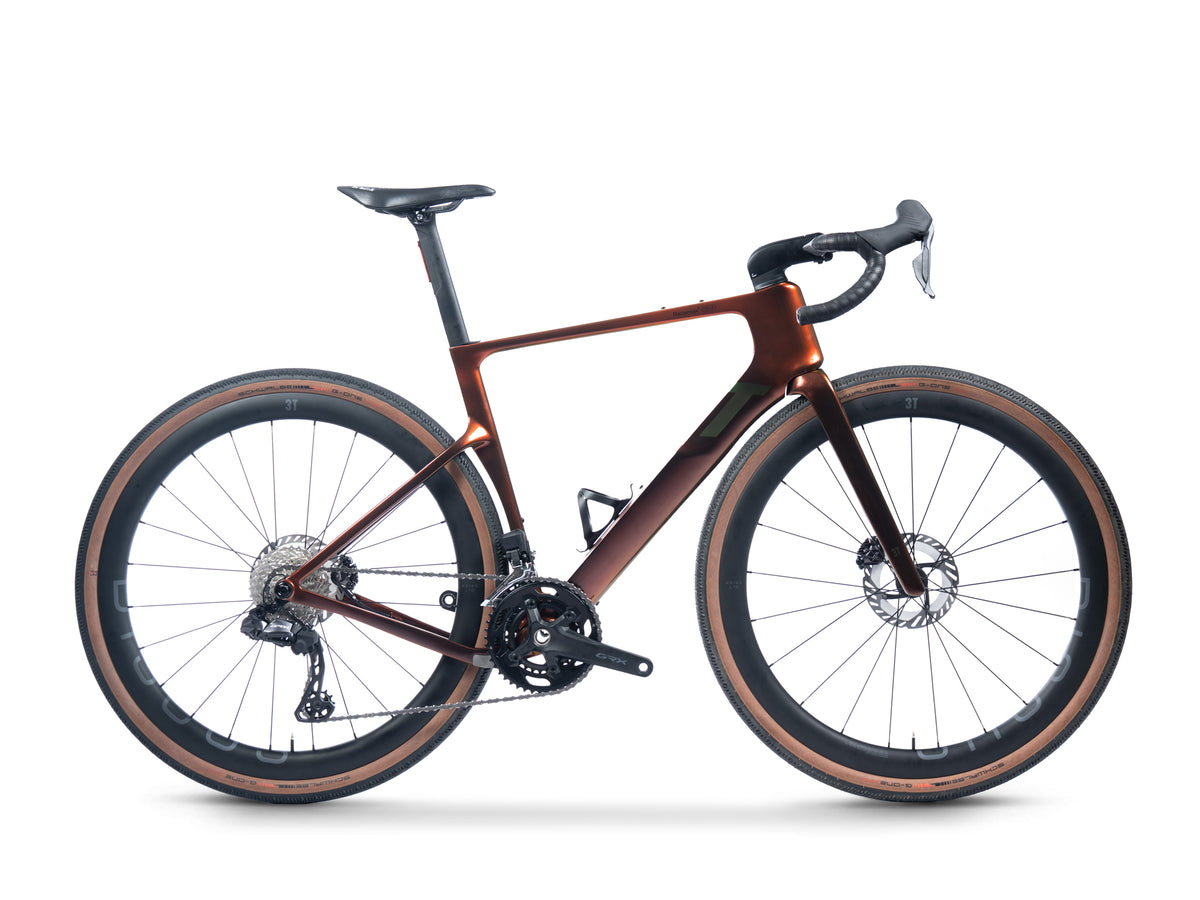
3T Racemax 2
Aerodynamic Sqaero tube profiles with up to 51mm tire clearance, offered in both 1x and 2x builds — a ground-up redesign of 3T's fastest gravel platform.
Amazon affiliate · price subject to change
The 3T Exploro Max is the most genre-bending bike in this roundup. 3T designed it around two convictions: gravel bikes should be aerodynamic, and they should be able to run mountain-bike-wide tires. The frame's Sqaero truncated airfoil tube profiles share their shape with 3T's road bikes, but the internal clearance accommodates tires up to 61mm wide. Run 700c wheels with 40mm tires for fast races; run 650b wheels with 61mm tires for technical singletrack. The same frame handles both configurations without geometry compromise. The 1x-only frame design — no front derailleur ever — keeps the chainstay clearance generous and the drivetrain mud-tolerant. It's not for everyone, but for riders who want one bike to span gravel and singletrack, the Exploro Max is the most versatile drop-bar bike available.
The Value and Specialist Tier
Giant Revolt Advanced Pro 0 — The Value Champion
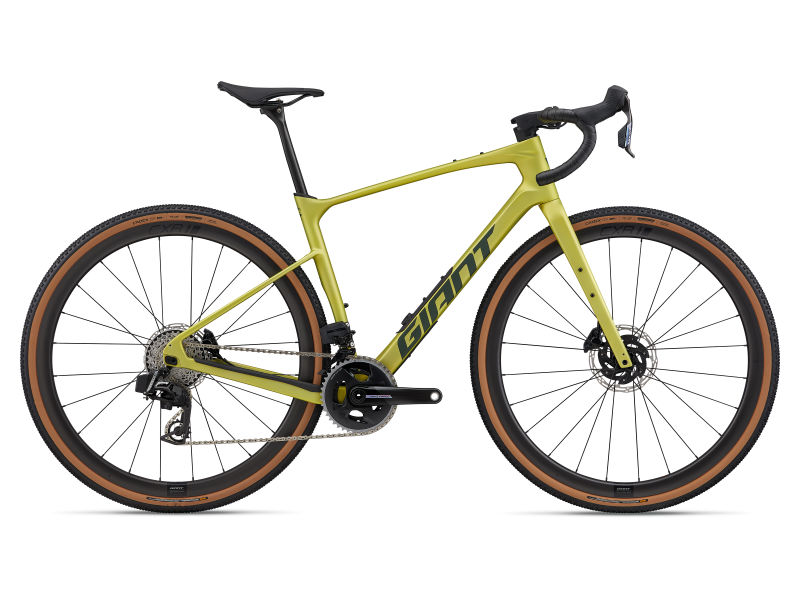
Giant Revolt Advanced Pro 0
D-Fuse seatpost and handlebar absorb vibration without weight or complexity, delivering carbon gravel performance 30% below competitors.
Amazon affiliate · price subject to change
The Giant Revolt Advanced Pro 0 demonstrates Giant's manufacturing advantage as clearly in gravel as it does in mountain biking. Giant's in-house carbon production lets it deliver a full Shimano GRX 800 build with D-Fuse seatpost and handlebar compliance at $4,200 — a price that beats nearly every comparable carbon competitor by 25-30 percent. The D-Fuse system uses D-shaped components that flex laterally to absorb vibration without adding weight or maintenance demands. For riders who don't care about brand cachet and want the most bike for the money, the Revolt Advanced Pro 0 is the rational pick.
Cannondale Topstone Carbon Lefty 1 — The Unconventional Comfort Choice
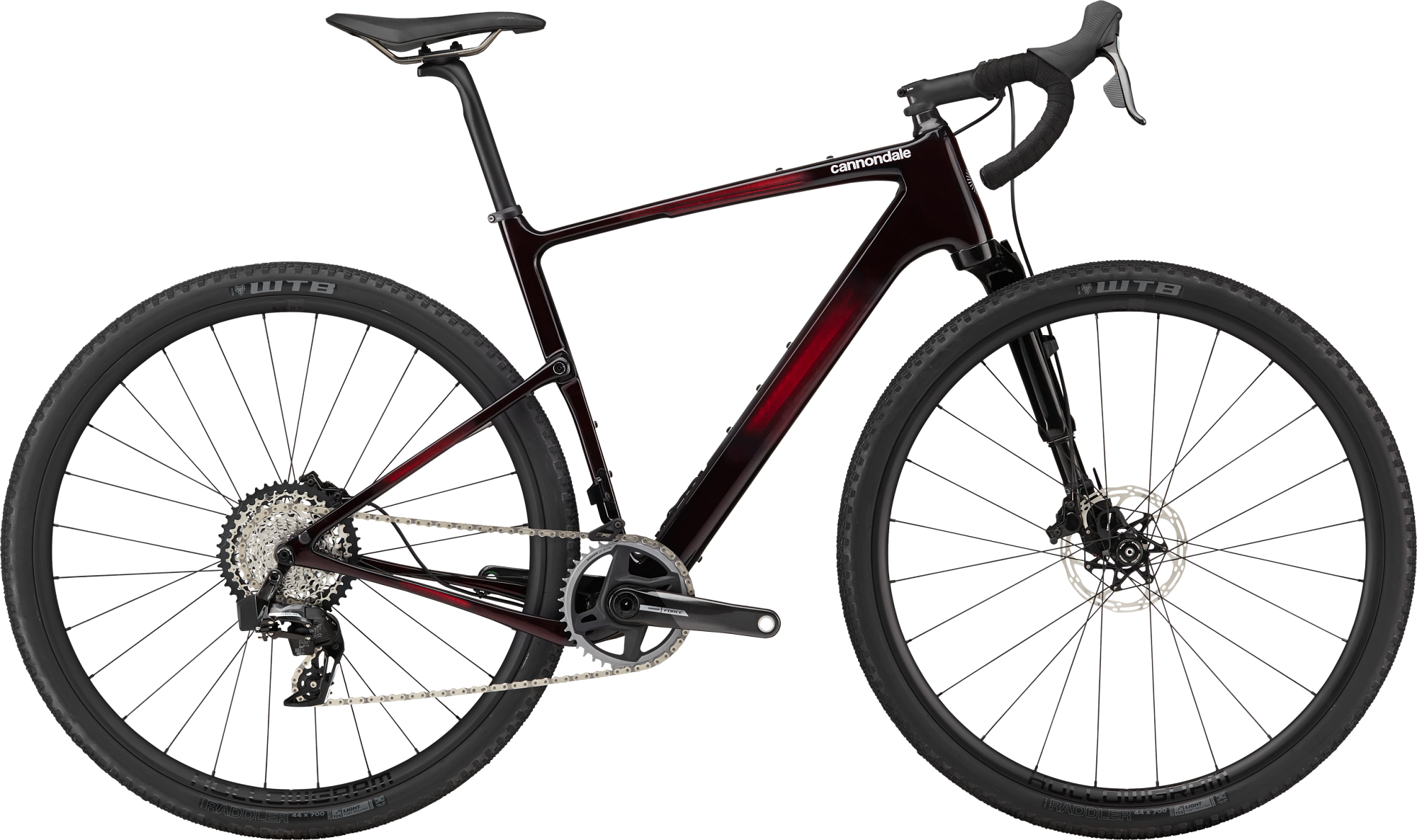
Cannondale Topstone Carbon Lefty 1
Kingpin rear pivot and 30mm-travel Lefty Oliver fork create the most cushioned gravel ride without a traditional rear shock.
Amazon affiliate · price subject to change
The Cannondale Topstone Carbon Lefty 1 is the most visually distinctive gravel bike on the list. The Lefty Oliver fork is a single-sided design adapted from Cannondale's mountain-bike heritage that delivers 30mm of needle-bearing-smooth front suspension. Paired with the Kingpin rear suspension pivot — a single flex point at the seatstay junction that provides approximately 30mm of vertical compliance — the Topstone Carbon Lefty 1 offers the most cushioned gravel ride available outside the Specialized Diverge STR. The Lefty fork is polarizing in appearance, but the engineering is real: BallisTec carbon construction, Shimano GRX 800 shifting, and a balanced front-to-rear suspension ratio create a bike that rewards riders willing to look past convention.
BMC URS 01 One — The Swiss Race Specialist
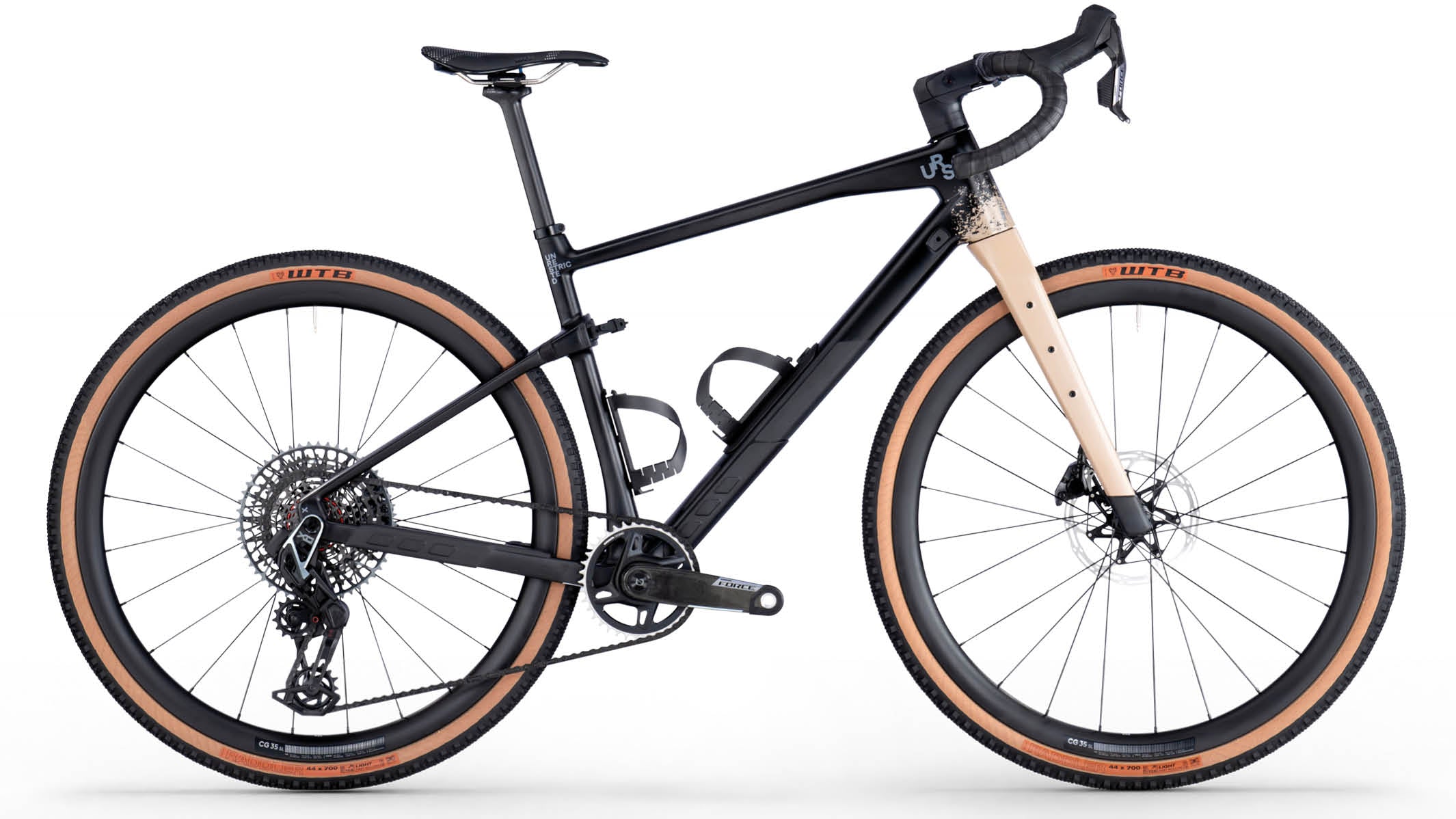
BMC URS 01 One
Pivoting seatstay junction delivers 10mm of rear compliance with race geometry and SRAM Red AXS for performance-focused gravel racing.
Amazon affiliate · price subject to change
The BMC URS 01 One brings Swiss engineering precision to gravel racing. Micro Travel Technology — a pivoting seatstay junction that delivers a carefully calibrated 10mm of rear compliance — is the most subtle compliance system on this list. It smooths high-frequency vibration without ever feeling like suspension under power. The SRAM Red AXS wireless build, Zipp 303 Firecrest carbon wheels, and aggressive race geometry make the URS 01 One a pure performance machine. At $8,500 it's the most expensive bike in this roundup, but for riders who want the finest available components on a Swiss-engineered race frame, it's the right kind of expensive.
Salsa Warbird C GRX 810 — The Self-Supported Specialist
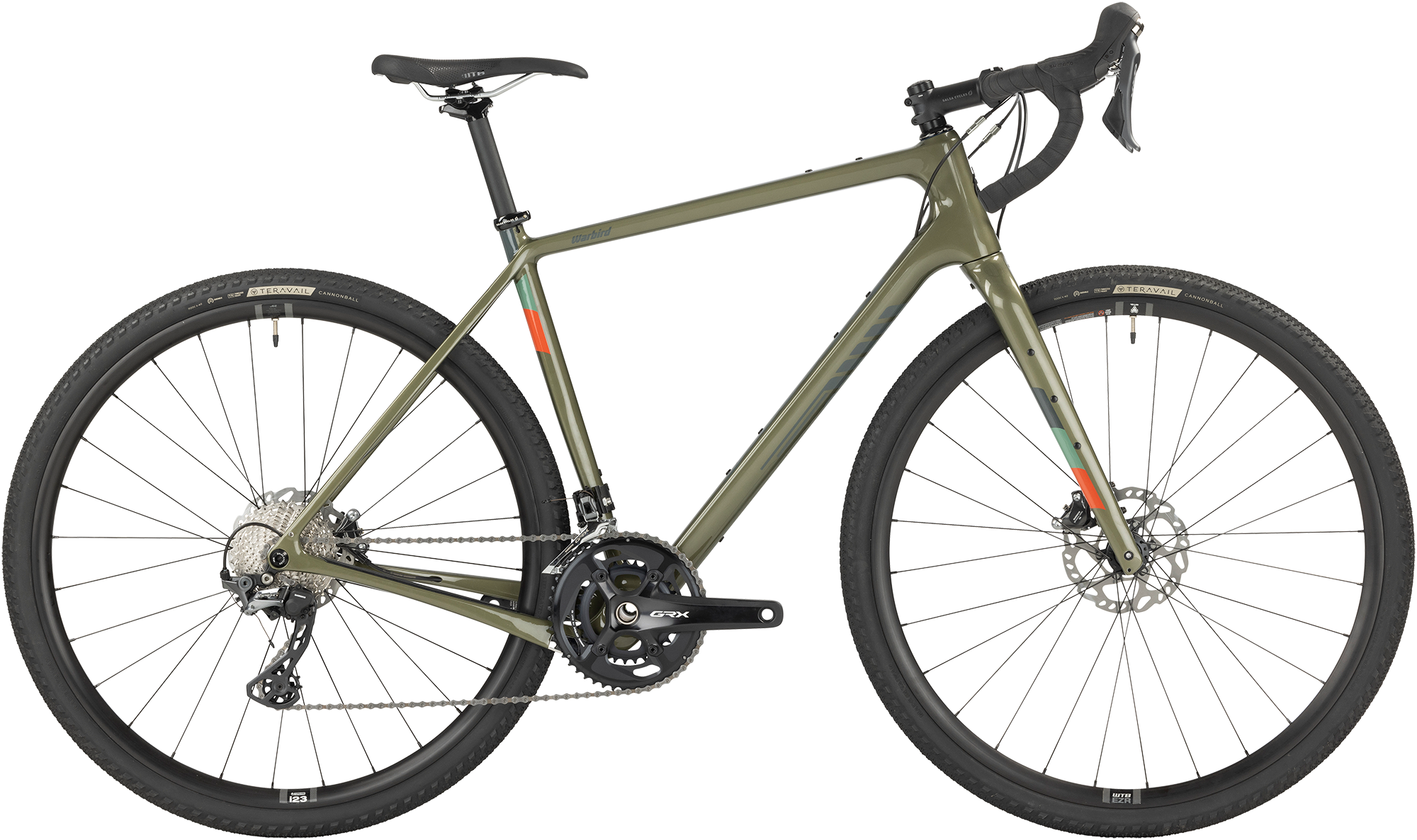
Salsa Warbird C GRX 810
Seatstay flex point smooths gravel chatter with Anything Cage mounts and internal routing for self-supported racing.
Amazon affiliate · price subject to change
The Salsa Warbird C GRX 810 is designed by riders who have completed Unbound Gravel multiple times, and every design decision reflects that self-supported racing DNA. The Class 5 VRS vibration reduction system uses a flex point in the seatstays to smooth gravel chatter without weight or maintenance. Three-pack bosses on the fork legs accommodate Anything Cages for water and gear, and the internal routing accommodates frame bag installation without rattle. The Shimano GRX 810 2x11 build with a 48/31 crankset and 11-34 cassette covers the gear range needed for steep climbs and fast descents alike. At under $4,000 for a carbon frame with full GRX 810, the Warbird is one of the most accessible carbon gravel bikes on the market — and one of the most authentic.
How to Decide: Three Questions That Narrow the Field
Race or adventure? If your weekends involve start gates and finishing times, you're choosing between the Áspero-5 for pure aero advantage and the Stigmata or URS 01 One for race geometry with serviceability. If your weekends involve self-supported routes, frame bags, and water filtering, the Diverge STR, Grizl CF SLX, Topstone Lefty, or Warbird are the right list.
Smooth or rough? Tire clearance is the cleanest proxy for terrain. Bikes that clear 42-45mm tires (Áspero-5, Stigmata, URS 01 One) prioritize speed on smooth dirt. Bikes that clear 50mm or wider (Grizl, Diverge STR, Exploro Max) handle rough chunder, mud, and the surfaces where mountain bikes and gravel bikes overlap.
Dealer or direct-to-consumer? Specialized, Trek, Santa Cruz, BMC, Cannondale, and Salsa sell through dealers with test rides, fitting services, and warranty access. Canyon, 3T, and (in some markets) Cervélo sell direct, offering 25-30 percent pricing advantages but requiring riders to self-serve test rides and service. The math depends on whether you have a trusted independent shop nearby and how much you value the support infrastructure.
What Comes Next
This is the second installment of Gavler's Cycling cluster build. Briefs on the Best Cycling Helmets, Best Bike Computers, and Best Road Bikes are queued for the coming days. For full Gavler Cycling coverage, the Cycling category page collects every list in the category. Riders coming from yesterday's coverage will also find the Best Mountain Bikes brief useful for choosing between trail and drop-bar platforms for mixed-surface riding.
The vote on Best Gravel Bikes is open. Pick the bike you would take to Unbound tomorrow morning — and if your answer changes after a winter of riding the new platform, move your vote. That's how the rankings stay honest.
See all 10 products ranked by the community
Best Gravel Bikes
See Full Rankings →254 community votes cast
Common Questions
The Specialized Diverge STR Expert tops Gavler's community ranking with a 9.7 score and is the gravel bike most riders consider the modern benchmark for rough-surface comfort. The Future Shock Rear system hides 30mm of hydraulically damped rear travel inside the seat tube — invisible on smooth roads, transformative when the surface gets rough. BikeRadar, Cyclingnews, Cyclist, and Bikepacking.com have all reviewed the platform extensively, and the consistent thread is that the rear suspension genuinely changes what gravel bikes can handle without compromising pedaling efficiency. At $6,500 the Diverge STR Expert sits in the middle of the lineup with a Shimano GRX 810 mechanical groupset, Roval Terra carbon wheels, and clearance for 47mm tires. For riders who do long-distance gravel events on rough roads, nothing else delivers this level of comfort without the weight or maintenance of a traditional rear shock.
The Cervélo Áspero-5 at $7,500 is the purpose-built gravel race weapon, and Cervélo's aero engineering pedigree shows on every fast section of an event. Cervélo claims the Áspero-5 saves 37 watts over its predecessor and 34 watts over its nearest competitor at 45 km/h — meaningful numbers across a 200-mile Unbound. The truncated airfoil tubes share their DNA with Cervélo's S5 road bike, and the semi-integrated cockpit alone accounts for six of those watts. BikeRadar's full review described it as a rapid gravel racer that the tester wouldn't take out in the mud, which captures the trade-off accurately: clearance is limited to 45mm tires and the geometry is aggressive. For riders who line up at the front of gravel races and measure success in minutes rather than miles, the Áspero-5 is the fastest tool available.
These two bikes define the opposite ends of the gravel performance spectrum. The Diverge STR Expert at $6,500 prioritizes long-distance comfort with 30mm of hidden rear suspension and 47mm tire clearance — it's the bike for self-supported events, rough roads, and any rider who values staying fresh at hour seven. The Áspero-5 at $7,500 prioritizes pure speed with aero tube profiles, an integrated cockpit, and a stiffness-biased ride that rewards strong legs over technique. The choice comes down to what kind of gravel you ride: if your events run on smoother fire roads and rolling farm gravel where wattage and aerodynamics matter, buy the Áspero. If your rides finish with washboard, baby heads, and rough chunder where suspension actually saves you energy, buy the Diverge STR. Both are excellent at their narrow specialty, and neither is the right bike for the other use case.
Yes — the Grizl CF SLX 8 is one of the most thoughtfully designed bikepacking-capable gravel bikes available, and Canyon's direct-to-consumer pricing makes the value compelling. Bikepacking.com called the Grizl a Swiss Army Knife of gravel bikes, a bike that nestles between gravel racer and dedicated bikepacking rig. The CF SLX frame is approximately 100g lighter than the CF SL with Di2 routing through the down tube. Three bottle cages, top tube bag mounts, and two cargo cages on the fork (each rated for 3kg of luggage) provide the carrying capacity for self-supported multi-day trips, and the 50mm tire clearance handles routes that would defeat a typical gravel race bike. The trade-off is honest: no dealer test ride before purchase and limited service access if something goes wrong. For riders comfortable with their own wrenching or with a trusted independent shop, the Grizl CF SLX 8 is the rational pick under $5,000.
Both share the same frame geometry and IsoSpeed decoupler at the seat tube-top tube junction, but the SLR uses Trek's 500-series OCLV carbon (lighter, stiffer, and with a more sophisticated IsoSpeed damper) while the SL uses 400-series carbon at a meaningfully lower price. The SLR 7 at $6,500 ships with a SRAM Force AXS wireless drivetrain and carbon wheels, while the SL builds top out at mechanical groupsets and aluminum wheelsets. BikeRadar and Cycling Weekly have both reviewed the platform and consistently note that the IsoSpeed system genuinely improves rough-surface comfort, particularly on long days, though the effect is subtle from the first pedal stroke. Internal storage in the down tube and full fender mounts make the Checkpoint equally at home commuting and racing — it's the most versatile platform in this roundup for riders who want a do-everything gravel bike.
If you race cyclocross alongside gravel, the Santa Cruz Stigmata CC at $5,499 is the racier choice — Velo Outside Online called the Stigmata one of the best-handling gravel bikes in recent memory on just about every kind of dirt. The V4 Stigmata grew reach numbers by approximately 30mm across all sizes and slackened the head tube angle to 69.5 degrees, giving it more progressive geometry than the road-influenced gravel bikes that defined the category five years ago. Three internally sheathed cable ports and a standard 68mm English threaded bottom bracket make it one of the more home-mechanic-friendly carbon gravel bikes available. The trade-off is the limited mounting points (this is not a bikepacking platform) and a premium price for the spec level. For riders who care about handling and bike-shop serviceability more than carrying capacity, the Stigmata is the choice.
Rankings come from community votes by riders who actually own and ride these bikes on real gravel — not from marketing copy or sponsored reviews. Each user gets one vote on the Best Gravel Bikes list — pick the bike you would take to your next Unbound, your next bikepacking trip, or your Saturday gravel ride tomorrow morning. Switched bikes after demoing a competitor, after a long event revealed a flaw, or after a wheel or tire upgrade changed your mind? Move your vote. Vote totals and community scores appear next to each pick on the live list, and the rankings update in real time as the community weighs in. No affiliate commissions or manufacturer sponsorships influence the ranking.
Products Mentioned
Jump to the full ranking and community verdict for each pick named above.
- Specialized Diverge STR ExpertCycling · Best Gravel Bikes
- Canyon Grizl CF SLX 8Cycling · Best Gravel Bikes
- Trek Checkpoint SLR 7Cycling · Best Gravel Bikes
- Santa Cruz Stigmata CCCycling · Best Gravel Bikes
- Giant Revolt Advanced Pro 0Cycling · Best Gravel Bikes
- Cannondale Topstone Carbon Lefty 1Cycling · Best Gravel Bikes
- BMC URS 01 OneCycling · Best Gravel Bikes
- Salsa Warbird C GRX 810Cycling · Best Gravel Bikes