Questyle M15C.
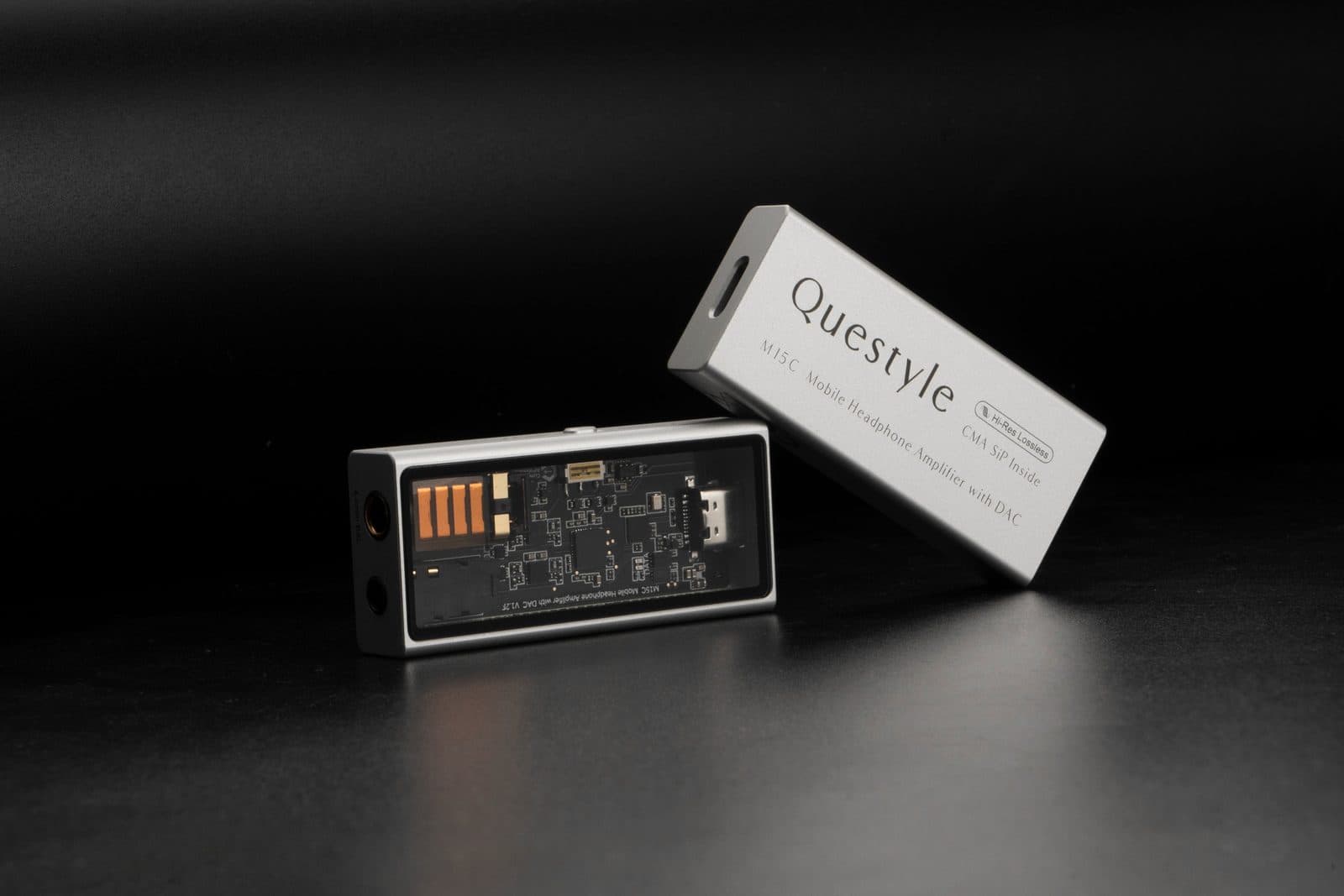
The M15C pairs a Cirrus Logic CS43198 DAC with Questyle's current-mode amplification and both 3.5mm and balanced 4.4mm outputs — driving full-size headphones from a USB-C port.
The Verdict.
Gavler Meta-Score
“The M15C proves Questyle's current-mode amplification scales down without losing its character — and the Cirrus CS43198 gives it a warmer, more forgiving voice than the ESS-based M15i. Add a balanced 4.4mm output and a manual gain switch in a flash-drive-sized body, and it is one of the easiest premium dongles to recommend for IEMs and efficient headphones. Just know the warm tuning trades some outright detail for smoothness.”
The Gavler Verdict
The Gavler Review.
Questyle M15C Review: The Polite Dongle DAC That Knows What It's For
The Questyle M15C ranks number 9 on Gavler's Best Headphone Amps & DACs list with an 8.4, and it's built for a specific listener: someone who wants a portable, balanced-output dongle without the aggressive, detail-forward tuning that ESS-based competitors often lean into. Its Cirrus Logic CS43198 DAC trades some resolution for warmth. It's ideal for IEM users and anyone whose library is dominated by bright or poorly mastered recordings. The trade-off is that outright detail retrieval takes a back seat. ecoustics summed it up cleanly: "The M15c could accurately be described as being the 'polite' model with a greater degree of warmth to its overall sonic signature, and that includes smoothing over rough edges in poor recordings."
What it is
The M15C is the Cirrus-DAC variant of Questyle's M15 dongle line, distinguished from the ESS-based M15i by its CS43198 chip. It fits in a body barely larger than a USB flash drive but carries Questyle's Current Mode Amplification — self-contained SiP modules that operate on current rather than voltage, which Questyle argues produces lower distortion and faster transient response than voltage-mode designs common in this category.
Connectivity covers both a 3.5mm single-ended and a 4.4mm balanced output, plus a manual two-level gain switch and MFi certification for iPhones — a combination Gavler's own data calls "rare in a dongle this small." Format support runs to PCM 384kHz/32-bit and DSD256, comfortably covering the vast majority of real-world listening libraries. It draws power over USB-C from the connected device.
In use
ecoustics is the most detailed independent source on the M15C specifically, and its listening conclusions track closely with the tuning Questyle designed for: "If you are after a warmer, smoother, more forgiving sound, the M15c is your best option from their existing series of portable headphone amplifiers." That's a direct comparison against the rest of Questyle's dongle lineup, not just a general endorsement — useful context for anyone choosing between the M15C and its ESS-based siblings.
On practical versatility, ecoustics found the M15C handled a broad range of gear without issue: "It was impressive to see how the less expensive M15c was rather competent with a wide range of headphones and IEMs." That "less expensive" framing matters — the M15C sits below other Questyle dongles in price while still delivering the balanced output and manual gain switch that usually show up only on pricier units in this category.
Strengths
- Balanced 4.4mm output plus manual gain switch in a flash-drive-sized body is a genuinely rare combination at this price point.
- Warm, forgiving CS43198 voicing smooths over bright or poorly mastered recordings — a real advantage for listeners whose IEMs or headphones already lean aggressive in the treble.
- Current Mode Amplification gives the M15C a distinct sonic identity rather than being a generic dongle running stock reference DAC firmware.
- Broad compatibility. ecoustics found it "competent with a wide range of headphones and IEMs," not narrowly tuned for one use case.
The trade-offs — who should skip it
The warmth is a genuine trade-off, not a free upgrade. Gavler's own scoreNote is specific: "The main trade-off is the warm, smooth CS43198 voicing, which tones down outright detail versus the cooler ESS-based M15i." If you chase every last micro-detail in a recording, or your headphones already sound smooth and could use some added edge, the M15i is the better match. Two other honest caveats carry over from Gavler's verified data: "battery drain on phones and occasionally uneven QC are the recurring nitpicks" — one reviewer received a unit with its signature viewing window partly separated out of the box. And like any dongle, it won't fully satisfy demanding planar magnetic headphones — this is a tool for IEMs and efficient dynamics.
How it compares
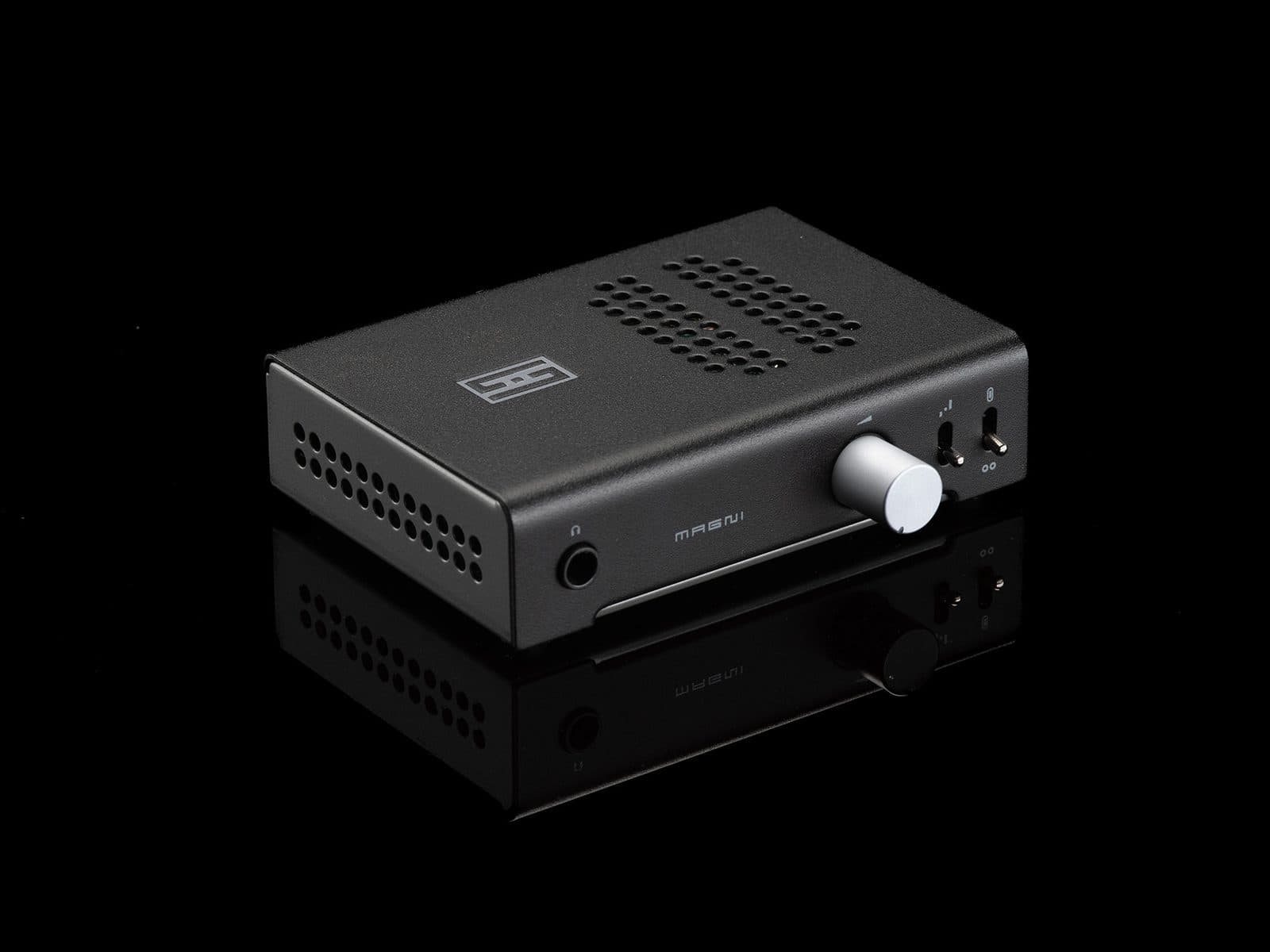
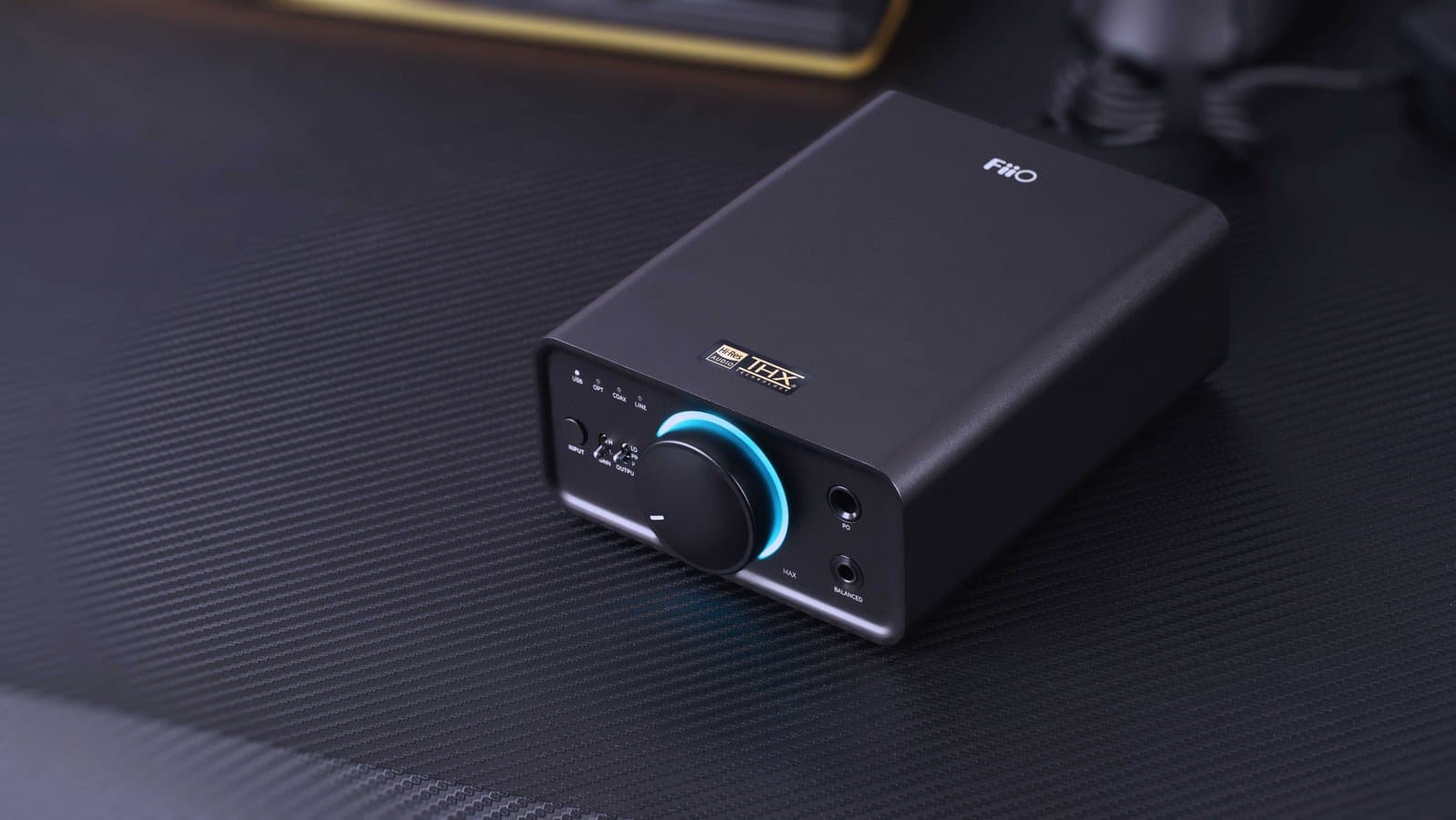
The M15C sits at rank 9 on this list, one spot above the Schiit Vali 3 and two below the FiiO K7 at rank 3. Against the K7 — a desktop unit with real gain-staging flexibility and significantly more power — the M15C's appeal is purely about portability: it goes in a pocket, the K7 sits on a desk. Against the Chord Mojo 2 at rank 5, which is also portable but costs nearly three times as much, the M15C makes a straightforward budget case: you get a balanced output and warm, listenable tuning for a fraction of Chord's FPGA-based price, if you're willing to trade Chord's spatial-accuracy claims for Questyle's more conventional (but still current-mode) approach.
The Gavler verdict
An 8.4 for a dongle that knows exactly what kind of listener it's for — someone who wants balanced power and forgiving warmth in a pocketable package, not the last word in resolution. The M15C's rare combination of a 4.4mm balanced output and manual gain switch at $249 is genuinely hard to find elsewhere, and the CS43198's smoother voicing is a legitimate selling point rather than a compromise, provided you know what you're buying. Choose it over the M15i if your ears (or your recordings) need a bit of forgiveness; choose the M15i instead if detail retrieval matters more to you than smoothness.
Common Questions
Yes, especially for IEM users who want a warmer sound. It ranks ninth on Gavler's Best Headphone Amps & DACs list with an 8.4. ecoustics found the M15C 'was rather competent with a wide range of headphones and IEMs,' and at $249 it's one of the few dongles offering both a balanced 4.4mm output and a manual gain switch.
The 'C' denotes a Cirrus Logic CS43198 DAC in place of the ESS chip used in the M15i. ecoustics describes the practical result directly: the M15C 'could accurately be described as being the polite model with a greater degree of warmth to its overall sonic signature,' trading some outright detail retrieval for smoothness compared to the cooler-sounding M15i.
Yes, that's a known trade-off with dongle DACs in general. Gavler's own scoreNote flags 'battery drain on phones' as one of the recurring nitpicks, alongside occasionally uneven quality control — one reviewer noted their unit's viewing window was partly separated out of the box.
Where to Buy.
Prices checked regularly
90-day price history
Price History
Steady at $249 for the entire 90-day tracking window — no increases, no discounts, across 91 tracked days.
Tracked daily across retailers. Vote Want itabove and we’ll alert you the moment the price drops.
Some links are affiliate links — Gavler may earn a commission. This never affects rankings or scores. Learn more.
Precision Engineering
Current Mode Amplification
Questyle's patented current-mode SiP modules operate on current rather than voltage for lower distortion and faster, more natural transients.
Balanced 4.4mm + Manual Gain
Both a 3.5mm single-ended and a 4.4mm balanced output, plus a manual two-level gain switch — a rare pairing in a dongle this small.
Cirrus CS43198 DAC
PCM up to 384kHz/32-bit and DSD256 with a warm, forgiving voicing that smooths over bright or poorly mastered tracks.
Technical Specifications
The Scoreboard
Experts praise the current-mode technology and the rare balanced-out-plus-manual-gain combo at this price. The main trade-off is the warm, smooth CS43198 voicing, which tones down outright detail versus the cooler ESS-based M15i. Battery drain on phones and occasionally uneven QC are the recurring nitpicks.
Cast Your Vote
Do you think Questyle M15C deserves the #9 spot in Best Headphone Amps & DACs?
Global Critique
“The M15c could accurately be described as being the 'polite' model with a greater degree of warmth to its overall sonic signature, and that includes smoothing over rough edges in poor recordings.”
“If you are after a warmer, smoother, more forgiving sound, the M15c is your best option from their existing series of portable headphone amplifiers.”
“It was impressive to see how the less expensive M15c was rather competent with a wide range of headphones and IEMs.”
More from Best Headphone Amps & DACs.
See how other top picks compare in this category.
Should You Buy a Desktop Stack, a Dongle, or a Tube Amp?
Architecture hangtags are the wrong first question. Desktop stack vs portable dongle vs tube vs solid-state come first. Then shop Gavler's live ranking.
The Best Headphone Amps and DACs in 2026, Ranked by the Listeners Who Live in Their Headphones Every Day
Schiit, iFi, FiiO, Topping, Chord, RME, JDS Labs. Gavler ranks the desktop stacks, dongles, and tube amps actually worth buying in 2026.