The Best Bike Computers in 2026, Ranked by the Riders Who Actually Use Them
Garmin, Wahoo, and Hammerhead GPS units ranked by navigation, training, battery, and display — by the riders who actually use them, not spec sheets.
A bike computer is the one accessory that quietly shapes every ride. It tells you where to turn, how hard you are working, how much climbing is left, and whether you have the battery to finish. It is also the category where the spec sheet lies most often — claimed battery hours rarely survive contact with a bright screen, "smart" features pile up faster than riders use them, and the version number on the box does not always tell you which generation you are actually buying. The 2026 lineup is the most capable it has ever been, and the gap between the flagships and the value picks has never been smaller.
Late May is a natural buying window. Memorial Day weekend brings some of the deepest cycling-tech discounts of the year, and it lands just as summer riding season opens across the northern hemisphere — the moment riders start planning the long events, gravel adventures, and bikepacking trips that expose the weaknesses of an aging head unit. The last two years also reset the category: Garmin's Edge 1050 brought a far brighter display, Wahoo's ELEMNT ACE added a genuinely new sensor, and Hammerhead's Karoo 3 proved an Android-based computer can keep getting better after you buy it. Today's brief opens the fourth slot of Gavler's Cycling category cluster, following Best Mountain Bikes, Best Gravel Bikes, and Best Cycling Helmets. The picks below are pulled from the live Best Bike Computers list, ranked by the riders who use them.
How the Rankings Work
One vote per person on the Best Bike Computers list. Pick the unit you actually rely on — the one whose navigation you trust, whose battery survives your longest day, and whose interface you can operate without fighting it. Got burned by a touchscreen in the rain? Switched apps because setup was painful? Found the battery claim was fiction? Move your vote. The result is a community-curated ranking grounded in real-world use, not press-release hype. No affiliate commissions or manufacturer sponsorships affect the order.
The Top Picks
Garmin Edge 1050 — The No-Compromise Flagship
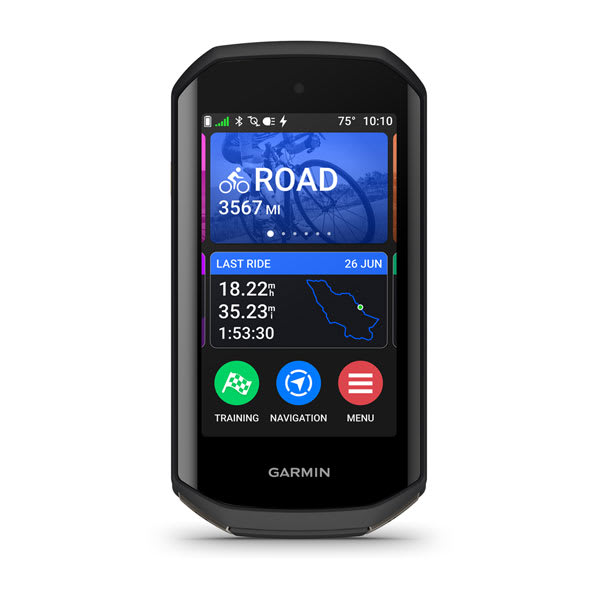
Garmin Edge 1050
Bright 3.5-inch transmissive LCD touchscreen with full-color mapping, ClimbPro 2.0, and the category's deepest training and ecosystem integration.
Amazon affiliate · price subject to change
The Garmin Edge 1050 is the computer for riders who want everything, and it mostly delivers. BikeRadar called it the "brightest and smartest" bike computer Garmin has ever made, thanks to a new transmissive LCD that pushes brightness and color far beyond the transflective screens of past Edge units. The 3.5-inch touchscreen runs at 480x800 and feels smartphone-fast. A speaker replaces the old beeper for spoken navigation cues and a real bell sound, Garmin Pay adds contactless payments, and ClimbPro 2.0 visualizes remaining ascent and gradient for every climb on your route.
Two honest caveats keep it from being perfect. First, there is no solar model — and the brighter screen cut the claimed battery life to 20 hours, down from 35 on the Edge 1040, although battery saver mode stretches that to a claimed 65. As BikeRadar put it plainly, this is Garmin's brightest computer yet, "but there's no solar model." Second, reviewers from Cyclingnews onward note that the touchscreen, brilliant as it is, gets fiddly with sweaty hands or full-finger winter gloves — the one place buttons still win.
What justifies the flagship price is the ecosystem and the depth. Varia radar alerts, power-meter training, inReach satellite messaging, Garmin watch integration, popularity routing, and new paved-versus-unpaved road awareness all live here. No other unit matches this combination of navigation, training, and connectivity — which is exactly why the community votes it to the top.
Wahoo ELEMNT ROAM — The Simplest Setup in Cycling
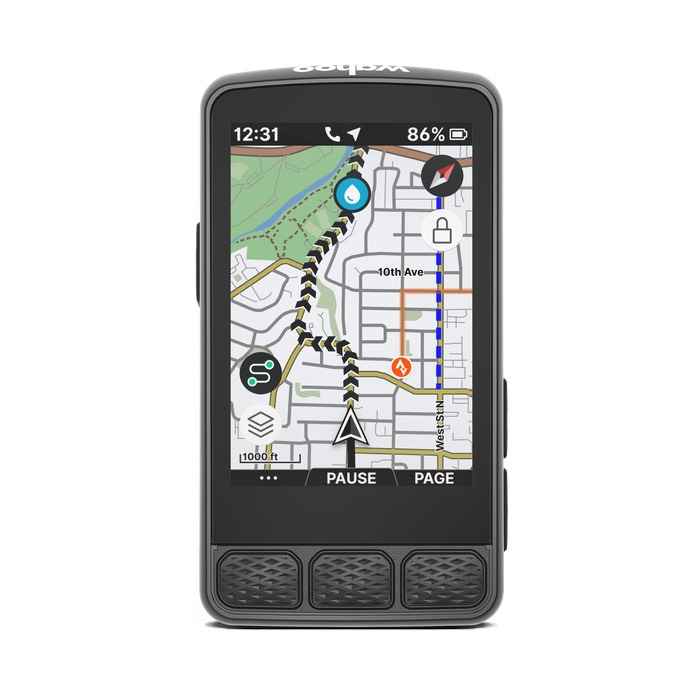
Wahoo ELEMNT ROAM 3
2.7-inch color display with ambient light sensors and the industry's simplest companion app setup — pair, sync, and ride in two minutes.
Amazon affiliate · price subject to change
The Wahoo ELEMNT ROAM takes the opposite philosophy to Garmin's feature-dense approach: do fewer things, but do them exceptionally well. Its signature is setup speed — scan the barcode, pair your sensors in the companion app, sync a route, and ride. Wahoo's app is widely regarded as the best in the category, and almost all configuration happens on your phone's large screen rather than the unit's small one, which keeps the on-bike interface clean.
The standout hardware feature is the LED strip. An array across the top and another down the side flash directional cues for upcoming turns, segment alerts, and even incoming messages — green when you are on course, red when you miss a turn. BikeRadar's review of the latest ROAM highlights how these LEDs let you follow navigation without staring at the screen, a real safety advantage on fast group rides. Multi-band GNSS sharpens GPS accuracy, the buttons were redesigned to work better with gloves, and Wahoo's reliability record for sensor connectivity is among the strongest in the category.
It does less than the Edge 1050 — there is no deep training-analytics suite, and on-device tweaks are fiddly without a touchscreen. That restraint is the point. For riders who value reliability and a painless interface over feature count, the ROAM is the easy recommendation.
Garmin Edge 540 Solar — The Endurance Pick
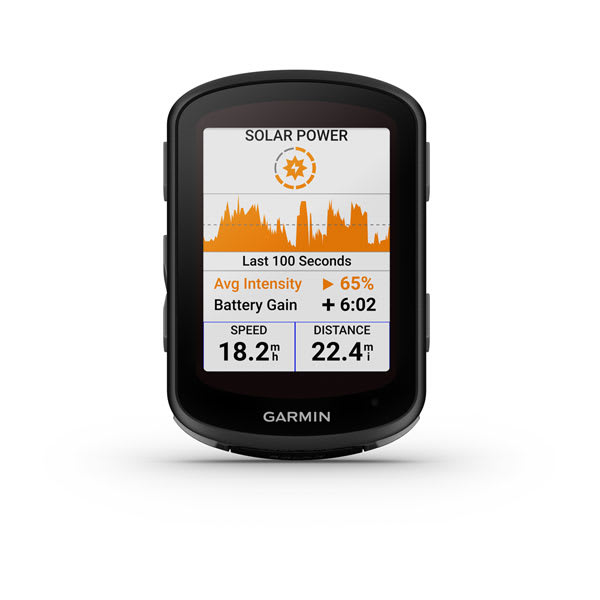
Garmin Edge 540 Solar
Solar charging extends battery beyond 40 hours in sunlight, with button-only controls preferred for glove compatibility and wet weather.
Amazon affiliate · price subject to change
The Garmin Edge 540 Solar targets the rider who prioritizes battery life and bombproof reliability over touchscreen convenience. The button-only interface is a deliberate choice: physical buttons work consistently with gloved hands, in pouring rain, and with sweaty fingers — every condition where touchscreens turn frustrating. For anyone who has stabbed at an unresponsive screen on a winter ride, the 540's buttons are a relief.
Battery life is the headline. Garmin claims 26 hours in standard use and around 32 with solar in ideal conditions, climbing past 40 hours in battery saver mode. The honest caveat, which independent reviewers from Cyclist to road.cc consistently raise: real-world solar gain is modest — often only a few minutes of charge per riding hour in anything less than bright, direct sun — so the solar premium is hard to justify in cloudy climates. Even so, the base battery alone outlasts almost any single-day event and handles multi-day bikepacking without anxiety.
Critically, the 540 packs the same training depth as Garmin's flagship: training load, recovery time, VO2 max estimation, heat and altitude acclimation, suggested workouts, and ClimbPro. For riders who want flagship-grade analytics and multi-day battery at a mid-tier price — and who prefer buttons — it is the thinking cyclist's choice.
Hammerhead Karoo 3 — The Best Touchscreen and the Smartest Software
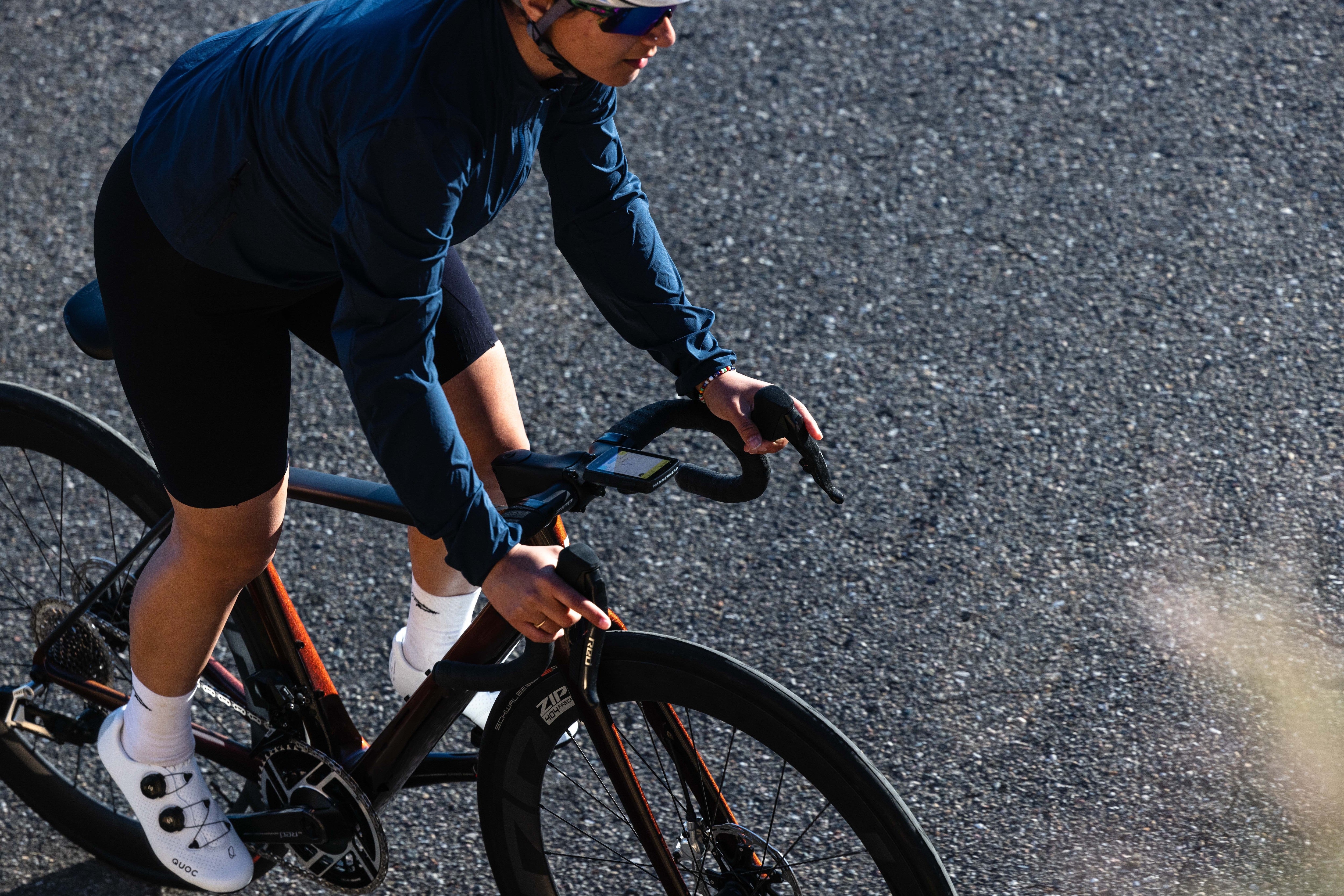
Hammerhead Karoo 3
Android-powered bike computer with high-resolution touchscreen, Climber mode, and post-purchase feature additions via software updates.
Amazon affiliate · price subject to change
The Hammerhead Karoo 3 runs a full Android operating system under the hood, and that architecture is its superpower. Over-the-air updates have consistently added features after purchase, so the unit you buy keeps improving — a genuinely different ownership experience from computers that ship frozen. Reviewers widely consider its touchscreen the best on any bike computer: crisp, responsive, and backed by physical buttons that work in any condition.
The hardware backs up the software. The Karoo 3 doubled its RAM to 4GB, nearly doubled its processor speed, and runs a 3,200mAh battery good for a claimed 15 hours, or 35-plus in battery saver mode. Its Climber feature mirrors Garmin's ClimbPro but works without a planned route, detecting climbs on the fly and showing the gradient profile and distance to the summit. Hammerhead is owned by SRAM, so as BikeRadar notes, AXS drivetrain owners get the deepest integration of any computer — though Shimano Di2 riders should check compatibility before buying.
For riders who want the most modern interface, the most polished maps, and a device that gets better over time, the Karoo 3 rivals Garmin at a more competitive price.
Wahoo ELEMNT BOLT — The Aero Compact
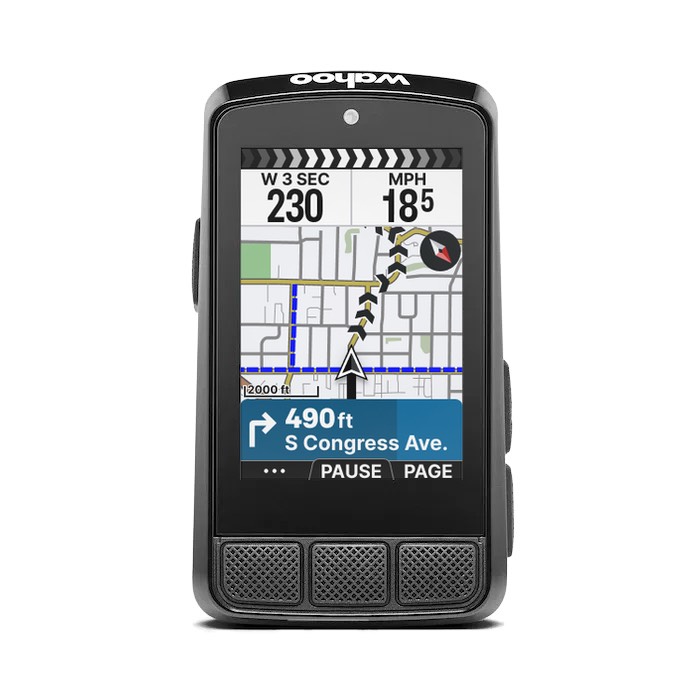
Wahoo ELEMNT BOLT 3
Most ROAM features in a smaller aero package with integrated LED strip for at-a-glance turn-by-turn during fast group rides.
Amazon affiliate · price subject to change
The Wahoo ELEMNT BOLT packs most of the ROAM's strengths into a smaller, more aerodynamic body designed to sit flush in an integrated out-front mount. It shares the ROAM's two-minute companion-app setup, the same reliable sensor connectivity, and the same LED navigation strip that flashes turn cues across the top — brilliant for fast group rides where looking down costs you a wheel.
The trade-off is size: a smaller screen and a smaller battery than the ROAM, plus a tighter view of maps and data fields. For riders who want Wahoo's celebrated simplicity in the most compact, wind-cheating package — and who do not need a large display — the BOLT is the racer's pick.
The Mid-Tier and Value Picks
Garmin Edge 840 — The Touch-and-Button All-Rounder
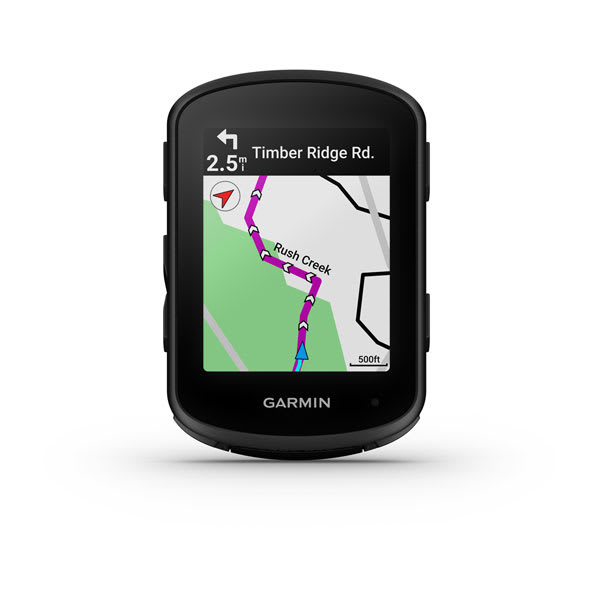
Garmin Edge 840
The only computer with both touchscreen and button inputs, plus training load focus and recovery metrics matching Garmin's watch ecosystem.
Amazon affiliate · price subject to change
The Garmin Edge 840 is the only computer here that lets you choose your input method mid-ride: it pairs a smartphone-responsive touchscreen with a full set of physical buttons. Reviewers praise the touchscreen for staying usable even in heavy rain, with the buttons as a glove-friendly backup. It carries the same training suite as the 540 and 1050 — including Training Status 2.0 and a Real-Time Stamina estimate — and offers an optional solar variant. For riders who cannot decide between touch and buttons, the 840 is the answer: have both.
Sigma ROX 12.0 Sport — The European Value Flagship
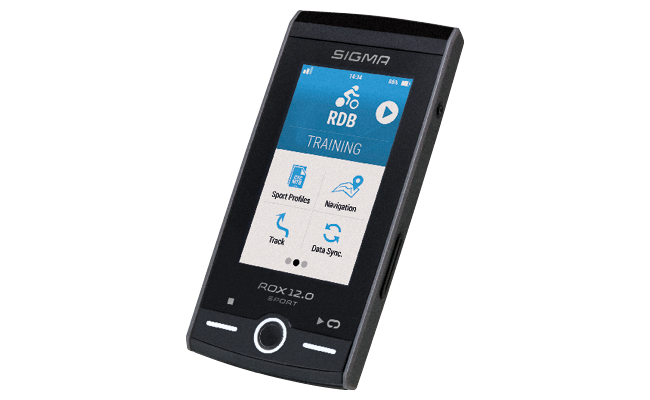
Sigma ROX 12.0 Sport
3-inch touchscreen with offline mapping and dual ANT+/Bluetooth at well under $300 from the German navigation specialist.
Amazon affiliate · price subject to change
Sigma's ROX 12.0 Sport delivers a 3-inch touchscreen, offline mapping, and dual ANT+/Bluetooth connectivity for well under the price of the big-brand flagships. The German brand's navigation and training features punch above their price class, making it a strong pick for riders who want full-color maps and touchscreen convenience without paying flagship money.
Bryton Rider S800 — The Feature-Packed Budget Option
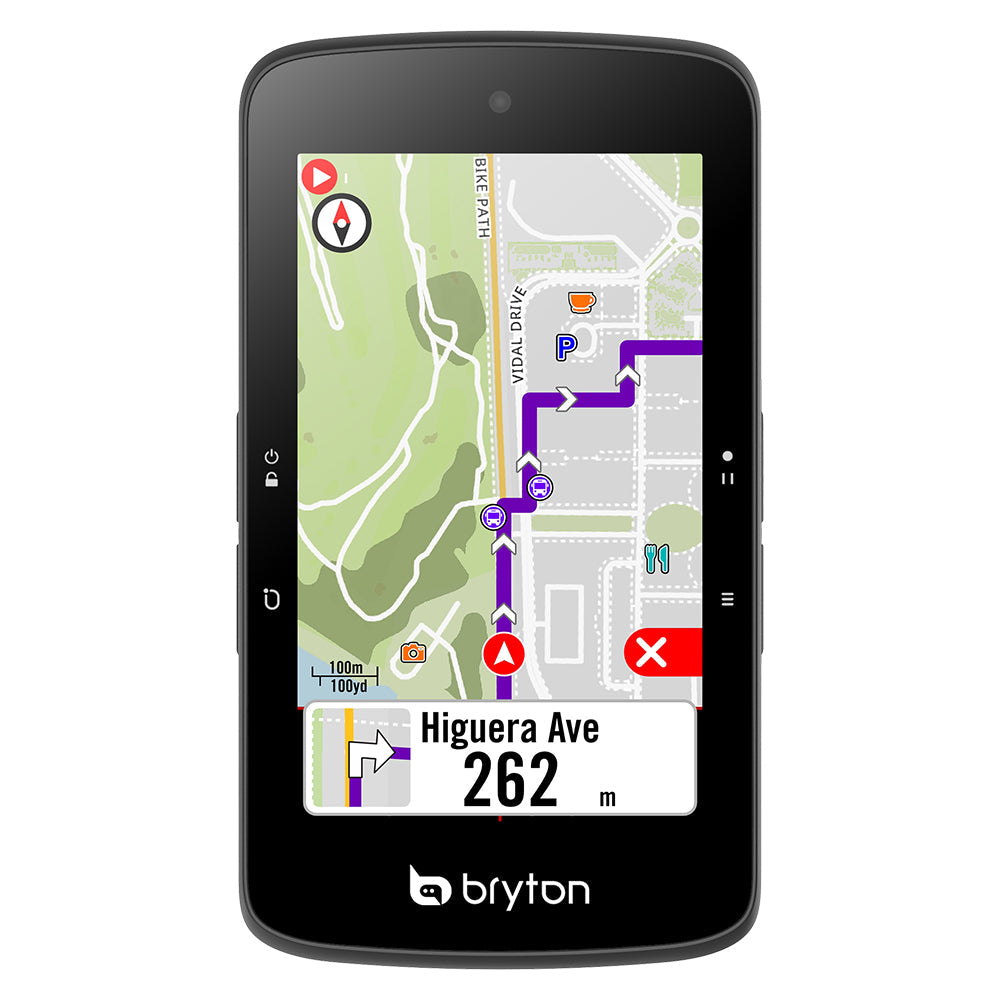
Bryton Rider S800
Color touchscreen with voice destination search, offline maps, and turn-by-turn navigation delivering 80% of the flagship experience at 50% of the cost.
Amazon affiliate · price subject to change
Bryton's Rider S800 brings a color touchscreen, voice search for destinations, and offline turn-by-turn maps at a price that undercuts the established names. It delivers a large share of the flagship experience for a fraction of the cost — the value play for riders who want modern navigation features without the premium badge.
Lezyne Mega XL GPS — The Long-Battery Workhorse
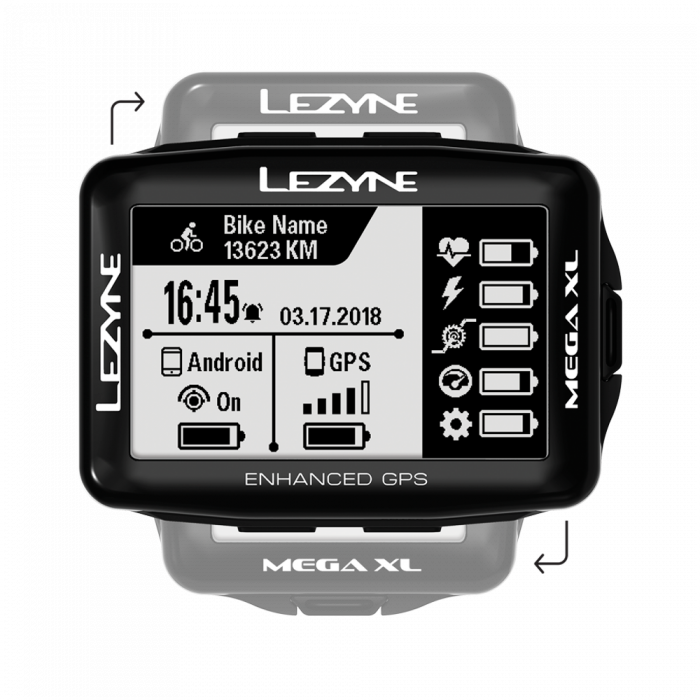
Lezyne Mega XL GPS
The longest GPS battery life in the roundup with a crisp black-and-white display readable in any lighting at an accessible $199 price point.
Amazon affiliate · price subject to change
The Lezyne Mega XL is the endurance and value pick. Its black-and-white display is sharp and readable in any light, and it delivers among the longest GPS battery life in this roundup — ideal for riders who prioritize reliable data recording and multi-day runtime over color maps. For bikepackers and data-focused riders on a budget, it is the workhorse.
Wahoo ELEMNT ACE — The Wind-Sensing Big Screen
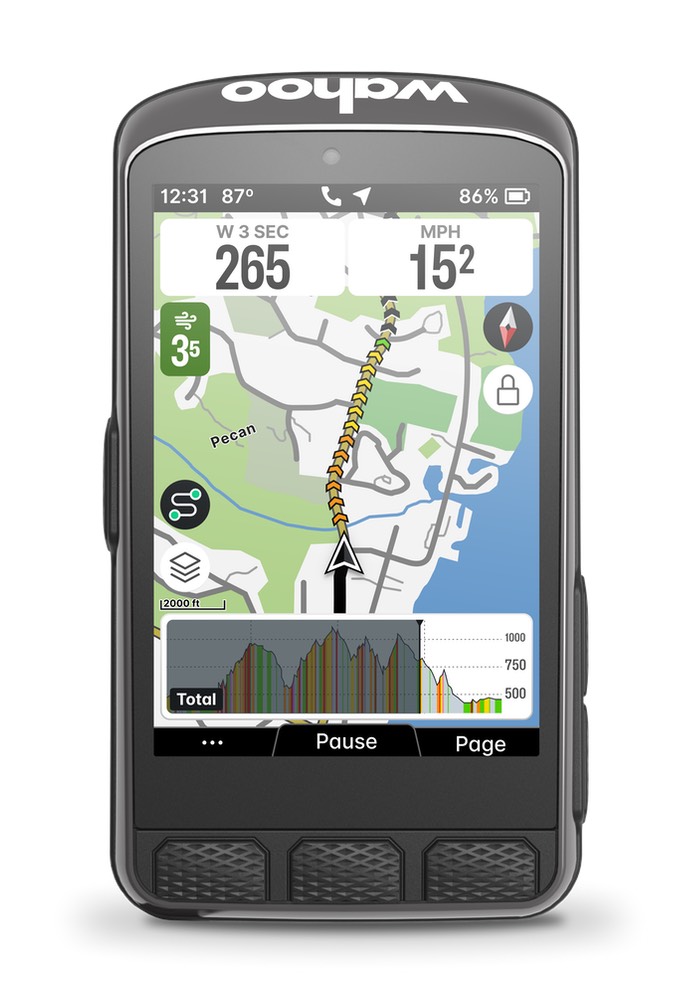
Wahoo ELEMNT ACE
Wahoo's largest 3.8-inch touchscreen plus three buttons, an integrated wind sensor for real-time headwind and drafting data, and the brand's signature simple setup.
Amazon affiliate · price subject to change
Wahoo's top-tier ELEMNT ACE is the brand's first touchscreen computer and its most ambitious. Its 3.8-inch display is the largest of any major bike computer, beating even the Edge 1050, and it retains three physical buttons that work in rain and gloves. The headline feature is an integrated wind sensor that measures air pressure at the front of the unit and combines it with power and speed data to estimate headwind and drafting effectiveness — Wahoo's "Wind Dynamics." It is a premium, large-format option for riders deep in the Wahoo ecosystem who want the newest technology in the category.
How to Decide: Three Questions That Narrow the Field
Flagship features or focused simplicity? This is the first fork. The Garmin Edge 1050, Hammerhead Karoo 3, and Wahoo ELEMNT ACE pile on screens, sensors, and analytics. The Wahoo ELEMNT ROAM and BOLT strip the experience down to navigation, data, and reliability done exceptionally well. Decide whether you will actually use deep training metrics, or whether you mainly want a unit that just works.
Touchscreen, buttons, or both? Touchscreens win for maps and menus but struggle with sweat and gloves; buttons win for foul-weather reliability. If you ride year-round or race in all conditions, a hybrid like the Garmin Edge 840 or Wahoo ELEMNT ACE gives you both. If you prize simplicity and battery, the button-only Edge 540 Solar is bombproof.
How much battery and budget do you need? For multi-day rides and long events, the Edge 540 Solar and Lezyne Mega XL lead on endurance, while the Edge 1050's brighter screen trades battery for visibility. For value, the Sigma ROX 12.0, Bryton Rider S800, and Lezyne Mega XL prove you do not need to spend flagship money for accurate navigation and training data. Match the computer to how far you ride and how much you want to spend — not to the longest spec sheet.
What Comes Next
This is the fourth installment of Gavler's Cycling cluster build, following the Best Mountain Bikes, Best Gravel Bikes, and Best Cycling Helmets briefs, with Best Road Bikes still to come. For full Gavler Cycling coverage, the Cycling category page collects every list in the category.
Architecture first — Garmin maps vs Wahoo setup vs an Android head unit — is the bike-computer buying guide. This page is the ranking story.
The vote on Best Bike Computers is open. Pick the unit you actually trust on your own handlebars — and if a frustrating winter, a dead battery on a long ride, or a better app changes your mind, move your vote. That's how the rankings stay honest.
See all 10 products ranked by the community
Best Bike Computers
See Full Rankings →264 community votes cast
Common Questions
The Garmin Edge 1050 tops Gavler's community ranking. It is Garmin's flagship — a bright 3.5-inch transmissive LCD touchscreen, the deepest training analytics in the category, ClimbPro 2.0 climb visualization, and the widest ecosystem of any GPS unit, from Varia radar to power meters to inReach satellite messaging. But the right computer depends on what you value. If you want the simplest setup and the most reliable interface, the Wahoo ELEMNT ROAM is the answer. If battery life and button reliability matter most, the Garmin Edge 540 Solar runs for days. If you want the best touchscreen and over-the-air feature updates, the Hammerhead Karoo 3 leads. There is no single best computer for every rider — there is the best one for your priorities, which is why Gavler ranks them by the riders who own them rather than by spec-sheet marketing.
They share the same training analytics, the same maps, and the same physical size; the difference is the interface. The Edge 540 is button-only, while the Edge 840 adds a touchscreen on top of a full set of buttons, letting you choose your input method mid-ride. Reviewers consistently praise the 840's touchscreen as smartphone-responsive and note that it stays usable in heavy rain, with the buttons there as a glove-friendly backup. Buy the 540 if you prefer the simplicity and bombproof reliability of buttons and want to save money; buy the 840 if you want the flexibility of touch plus buttons. Both offer optional solar variants, though independent reviewers find the solar upgrade adds only modest battery life in cloudy conditions and is hard to justify for most riders.
No. Despite the solar models in Garmin's lineup like the Edge 540 Solar and 840 Solar, the flagship Edge 1050 does not offer a solar option. Garmin traded solar for a much brighter transmissive LCD display, and the two technologies are difficult to combine. As a result, the Edge 1050's claimed battery life dropped to 20 hours from the 35 hours of the Edge 1040 it replaces, though battery saver mode extends that to a claimed 65 hours. If solar-assisted battery life is your priority, look at the Edge 540 Solar or 840 Solar instead, or the Wahoo ELEMNT ROAM for long runtime without solar.
It depends on your riding conditions. Touchscreens are faster and more intuitive for map panning, course creation, and menu navigation — the Hammerhead Karoo 3 and Garmin Edge 1050 have the best touchscreens in the category. The catch is that touchscreens can get fiddly with sweaty hands or full-finger winter gloves, a criticism reviewers raised even about the flagship Edge 1050. Buttons, by contrast, work reliably in rain, cold, and with gloves every time. The best of both worlds is a unit like the Garmin Edge 840 or Wahoo ELEMNT ACE that pairs a touchscreen with physical buttons, so you get touch convenience when conditions allow and button reliability when they don't.
Navigation quality is close among the top units, but they take different approaches. The Garmin Edge 1050 offers full-color maps, turn-by-turn routing with rerouting, popularity routing that follows roads other riders use, and now distinguishes paved from unpaved roads for ride-specific routing. The Hammerhead Karoo 3, built on Android, has long been praised for crisp on-device map rendering and easy course handling. The Wahoo ELEMNT ROAM keeps navigation simple and reliable, with an LED strip across the top that flashes turn cues so you do not have to look down. For pure mapping detail and routing flexibility the Edge 1050 leads; for simplicity and at-a-glance cues the ROAM is hard to beat.
You do not need a $599 flagship to get excellent navigation and training data. The fundamentals — accurate GPS, turn-by-turn navigation, sensor connectivity, and ride recording — are available across every price tier. The Sigma ROX 12.0 Sport and Bryton Rider S800 deliver touchscreens and offline maps for well under the flagship price, and the Lezyne Mega XL is the long-battery value pick for riders who care more about data recording than color maps. Spending more buys brighter displays, deeper training analytics, larger ecosystems, and refinements like solar charging or wind sensing — real improvements for riders who train seriously or tour for days, but not capabilities every cyclist needs. Match the computer to how you actually ride.
Rankings come from community votes by riders who actually own and use these computers — not from marketing copy or sponsored reviews. Each user gets one vote on the Best Bike Computers list: pick the unit you trust on your own handlebars, on your own rides. Found the touchscreen frustrating in winter? Switched because the battery could not survive a long event, or because a competitor's app made setup painless? Move your vote. Vote totals and community scores appear next to each pick on the live list, and the rankings update in real time. No affiliate commissions or manufacturer sponsorships influence the order.
Products Mentioned
Jump to the full ranking and community verdict for each pick named above.
- Garmin Edge 1050Cycling · Best Bike Computers
- Garmin Edge 540 SolarCycling · Best Bike Computers
- Hammerhead Karoo 3Cycling · Best Bike Computers
- Garmin Edge 840Cycling · Best Bike Computers
- Sigma ROX 12.0 SportCycling · Best Bike Computers
- Bryton Rider S800Cycling · Best Bike Computers
- Lezyne Mega XL GPSCycling · Best Bike Computers
- Wahoo ELEMNT ACECycling · Best Bike Computers