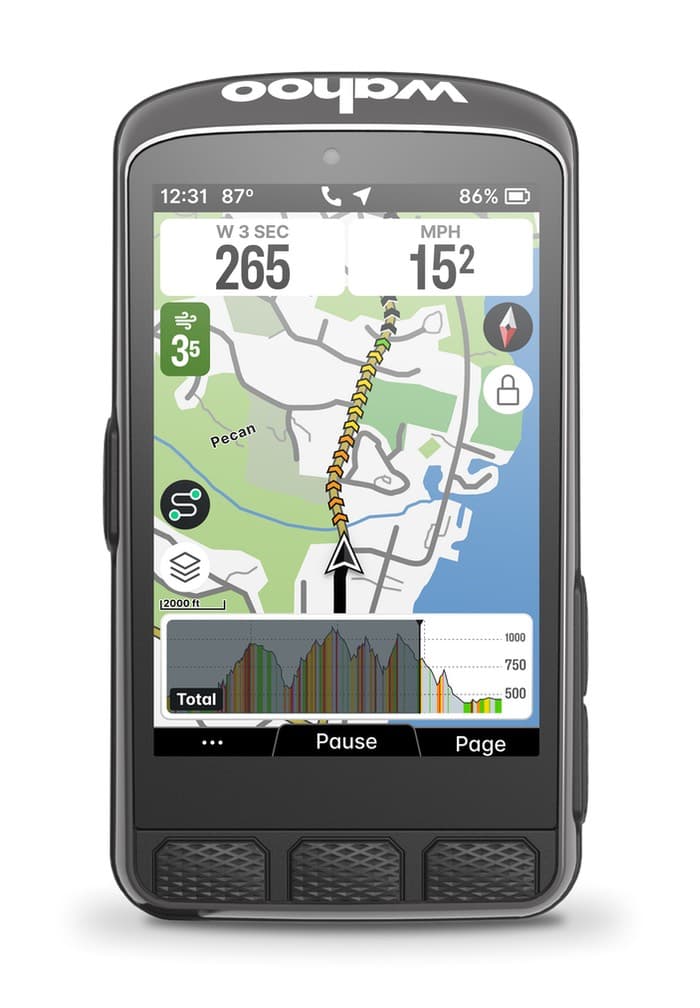
Wahoo ELEMNT ACE.
Wahoo's largest 3.8-inch touchscreen plus three buttons, an integrated wind sensor for real-time headwind and drafting data, and the brand's signature simple setup.
The Verdict.
Gavler Meta-Score
“The ACE is Wahoo's premium statement — the largest screen in the category, the only integrated wind sensor on a mainstream bike computer, and deep structured-training support, all wrapped in Wahoo's signature simplicity. The honest caveats: it's big and heavy on the bars, real-world battery falls short of the 30-hour claim, and at $599 it competes with the more polished Edge 1050. It's the pick for Wahoo-ecosystem riders who want the newest technology and don't mind the size.”
The Gavler Verdict
The Gavler Review.
Wahoo ELEMNT ACE Review: A Great Wind Sensor Bolted to an Expensive Screen
The Wahoo ELEMNT ACE ranks number 10 on Gavler's Best Bike Computers list with an 8.2. It's Wahoo's first touchscreen computer and its most ambitious device yet — a direct answer to the Garmin Edge 1050 built around the largest display the brand has ever shipped. Bikerumor's launch coverage zeroed in on the feature that actually sets it apart from every other computer on this list: "the ELEMNT ACE lands with a wind sensor and increased battery life — the air-pressure sensor that gauges headwind and drafting is the genuine headline." That headline feature is real and unmatched. The rest of the package is capable but crowded, competing against a more mature Garmin flagship at the same $599 price.
What it is
The ACE's 3.8-inch, 16-million-color TFT touchscreen is bigger than the Garmin Edge 1050's 3.5 inches and bigger than the Hammerhead Karoo's 3.2 inches — the largest screen in the category. Wahoo pairs it with three physical buttons that stay usable in rain and with gloves, keeping a thread of the brand's signature simplicity intact even at this premium tier where competitors have moved toward touch-only interfaces.
The genuinely new piece of hardware is the integrated wind sensor. It measures air pressure at the front of the unit and combines that reading with speed and power data to estimate effective air speed in real time, surfacing a live headwind/tailwind field on screen during a ride and generating post-ride "Wahoo Wind Dynamics" metrics that quantify how hard the wind worked against you, or how well you drafted a group. GRAN FONDO's coverage placed it squarely against the category's other size leaders, describing it as "an XXL bike computer with the largest screen of the bunch, stacking up against the Garmin Edge 1050 and Hammerhead Karoo." Beyond the screen and the wind sensor, the ACE brings dual-band GPS, 64GB of storage, deep structured-training integration with TrainingPeaks and Wahoo SYSTM, and radar compatibility with both on-screen and LED alerts.
In use
The wind sensor is the feature every review leads with, and for good reason — it's not an incremental spec bump, it's a genuinely new category of data that no rival mainstream computer offers. Cyclists Hub's assessment captured both sides of that novelty fairly: "the wind sensor is clever and the screen is gorgeous, but it's a big, expensive computer — capable, yet not one most riders were asking for." That's the honest tension at the center of this device. It's technically impressive and Wahoo clearly built something no one else has, but it's answering a question — how hard is the wind working against me, right now — that most riders weren't actively asking their bike computer to solve.
Size and weight follow directly from that 3.8-inch screen. The ACE is the largest, heaviest unit in Wahoo's lineup, and it looks and feels like it on a stem. Battery life is the other honest asterisk: Wahoo's claimed 30 hours falls to closer to 16 hours in real-world use, a gap that matters if you're riding events that stretch past a single well-charged day without a way to top off.
Strengths
The wind sensor genuinely is a first — no other mainstream bike computer measures air pressure to estimate headwind, tailwind, and drafting effect, and Wahoo Wind Dynamics turns that into usable post-ride data rather than just a novelty live readout. The screen is the largest and, by GRAN FONDO's account, among the most striking in the category. Dual-band GPS and 64GB of storage put the ACE's underlying hardware on par with the category's best, and the three physical buttons preserve glove and rain reliability that pure-touchscreen rivals sometimes sacrifice.
The trade-offs — who should skip it
The size and weight are real trade-offs on the handlebar, not just numbers on a spec sheet — this is a big, heavy unit, and riders who prefer a clean, minimal cockpit should look at the smaller ROAM or BOLT instead. The battery gap between claim and reality (30 hours claimed, roughly 16 in practice) is the kind of thing that only becomes a problem mid-event, which makes it worth planning around rather than discovering the hard way. And at $599, the ACE is asking buyers to pay flagship pricing for a first-generation feature set going up against Garmin's considerably more mature Edge 1050 in the same price bracket.
How it compares
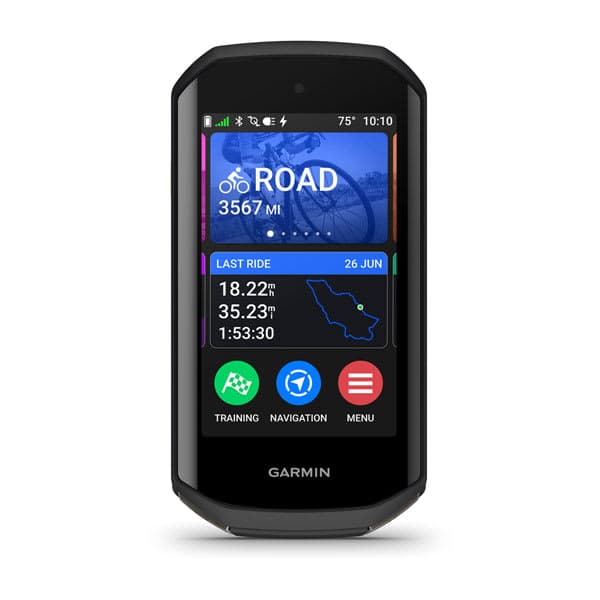
The Garmin Edge 1050, ranked number 1 on this list at the same $599 price, is the ACE's direct rival and, on balance, the more complete computer. It counters with a brighter 3.5-inch screen, ClimbPro 2.0 climb visualization, and Garmin's considerably deeper training analytics and ecosystem — Varia radar, inReach satellite messaging, Garmin Pay, and integration across Garmin's watch lineup. It doesn't have a wind sensor, but its touchscreen and navigation suite are more refined after several hardware generations of iteration.
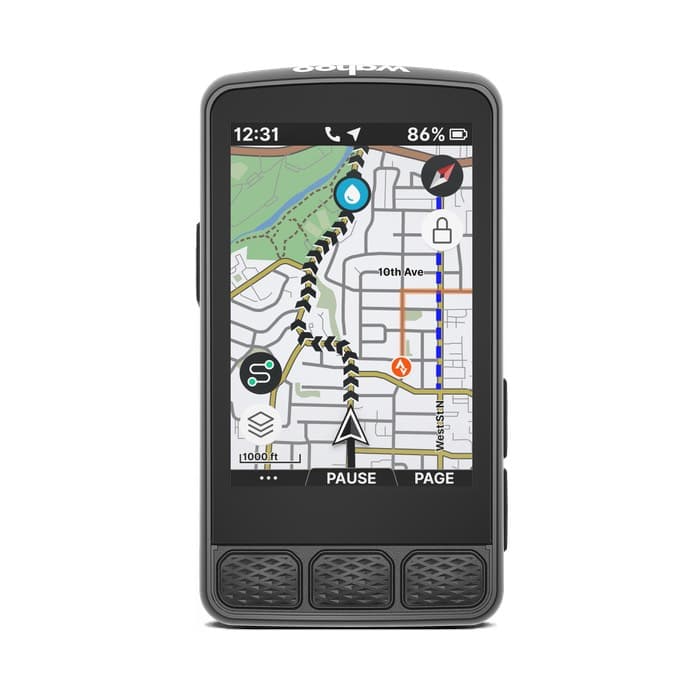
The Wahoo ELEMNT ROAM 3, ranked number 2 at $449, is arguably the more useful recommendation for most Wahoo shoppers. It keeps the brand's signature two-minute setup and LED navigation strip in a smaller, lighter package for $150 less, without the ACE's wind sensor or largest-in-class screen. Riders who value Wahoo's simplicity philosophy over cutting-edge hardware will likely be happier — and $150 richer — with the ROAM.
The Gavler verdict
The Wahoo ELEMNT ACE is a genuine statement product — the wind sensor is a real technological first, and the screen is the biggest and brightest Wahoo has built. But it's a statement aimed at a specific rider: someone deep in the Wahoo ecosystem who wants the newest technology and doesn't mind the size, weight, or a battery claim that overpromises. For everyone else, the more mature Garmin Edge 1050 or the simpler, cheaper Wahoo ROAM 3 will cover more of what you actually need, for the same money or less.
Common Questions
For Wahoo-ecosystem riders who want the newest technology, yes — the integrated wind sensor is genuinely unique, a feature Bikerumor called the 'genuine headline' of the launch. For most other riders, it's a $599 computer competing against the more mature Garmin Edge 1050, and the simpler Wahoo ROAM covers most of the same ground for less.
It measures air pressure at the front of the unit and combines that with speed and power data to estimate effective air speed, showing a live headwind/tailwind reading on screen plus post-ride 'Wahoo Wind Dynamics' metrics. No other mainstream bike computer currently offers this.
Short of the claim. Wahoo quotes 30 hours, but Gavler's data notes real-world testing lands closer to 16 hours — worth planning around if you're riding events longer than a single well-charged day.
Where to Buy.
Prices checked regularly
90-day price history
Price History
Steady at $600 for the entire 90-day tracking window — no increases, no discounts, across 91 tracked days.
Tracked daily across retailers. Vote Want itabove and we’ll alert you the moment the price drops.
Some links are affiliate links — Gavler may earn a commission. This never affects rankings or scores. Learn more.
Precision Engineering
3.8" Largest-in-Class Screen
Wahoo's first touchscreen — a 3.8-inch 16M-color TFT panel bigger than the Edge 1050's, paired with three glove-friendly physical buttons.
Integrated Wind Sensor
Measures air pressure to estimate headwind, tailwind, and drafting in real time — Wahoo Wind Dynamics, a feature no rival offers.
Dual-Band GPS + Training
Multi-constellation dual-band GPS, 64GB storage, and TrainingPeaks/Wahoo SYSTM workout push for on-bike interval execution.
Technical Specifications
The Scoreboard
The wind sensor and largest-in-class screen earn praise, but the score is held back by the unit's size and weight, a real-world battery that falls short of the 30-hour claim, and a $599 price that competes directly with the more mature Garmin Edge 1050. The simpler ROAM covers most of the experience for less.
Cast Your Vote
Do you think Wahoo ELEMNT ACE deserves the #10 spot in Best Bike Computers?
Global Critique
“The ELEMNT ACE lands with a wind sensor and increased battery life — the air-pressure sensor that gauges headwind and drafting is the genuine headline.”
“An XXL bike computer with the largest screen of the bunch, stacking up against the Garmin Edge 1050 and Hammerhead Karoo.”
“The wind sensor is clever and the screen is gorgeous, but it's a big, expensive computer — capable, yet not one most riders were asking for.”
More from Best Bike Computers.
See how other top picks compare in this category.
Garmin Maps, Wahoo Simplicity, or a Mini Android?
Feature-count hangtags are the wrong first question. Garmin maps, Wahoo setup, or an Android head unit is the software. Then shop Gavler's live ranking.
The Best Budget Bike Computer in 2026: Sigma ROX 12.0 vs Bryton S800 vs Lezyne Mega XL
Sigma ROX 12.0 Sport vs Bryton Rider S800 vs Lezyne Mega XL — the best budget bike computer under $300 depends on maps, screen, or battery.
The Best Bike Computers in 2026, Ranked by the Riders Who Actually Use Them
Garmin, Wahoo, and Hammerhead GPS units ranked by navigation, training, battery, and display — by the riders who actually use them, not spec sheets.