The Best Budget Bike Computer in 2026: Sigma ROX 12.0 vs Bryton S800 vs Lezyne Mega XL
Sigma ROX 12.0 Sport vs Bryton Rider S800 vs Lezyne Mega XL — the best budget bike computer under $300 depends on maps, screen, or battery.
The flagship bike computers get the headlines — brighter screens, deeper analytics, wind sensors — but most riders don't need a $599 head unit to get where they're going and log the effort it took. The interesting question in 2026 isn't which computer is best; it's how little you can spend before the compromises start to hurt. The answer, increasingly, is "not much."
Three units define the under-$300 tier, and each one is built around a single decision. The Sigma ROX 12.0 Sport ($249) is the navigator. The Bryton Rider S800 ($299) is the big screen. The Lezyne Mega XL ($199) is the battery. None of them wins across the board, and that's exactly why the choice is easy once you know what you actually want. Memorial Day weekend is the moment to decide — it brings some of the year's deepest cycling-tech discounts, right as summer riding season opens and the long rides that expose a weak head unit begin.
The Specs That Matter
| Spec | Lezyne Mega XL ($199) | Sigma ROX 12.0 Sport ($249) | Bryton Rider S800 ($299) |
|---|---|---|---|
| Display | Monochrome, high-contrast | 3" color touchscreen | 3.4" color touchscreen (MIP) |
| Battery (claimed) | 48 hours | 16 hours (~12h with nav) | 36 hours |
| Navigation | Breadcrumb + basic offline maps | Full OSM maps, 20 EU regions preloaded | Offline OSM maps + voice search |
| Standout | Longest runtime, lowest price | Best routing and map speed | Biggest screen, voice search |
| Weak spot | Maps lack street names; slow Bluetooth | Shortest battery of the three | Clumsy companion app |
Sigma ROX 12.0 Sport — The Navigator
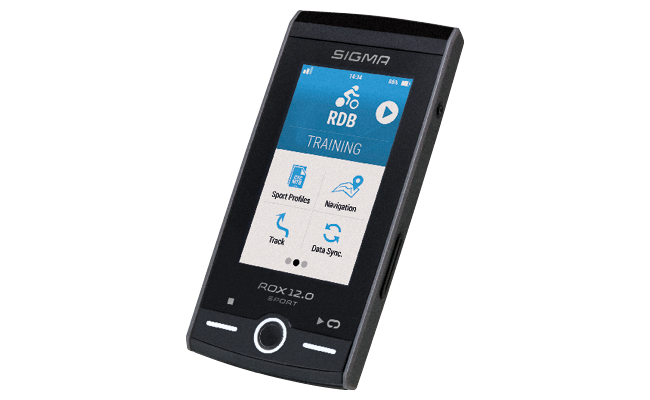
Sigma ROX 12.0 Sport
3-inch touchscreen with offline mapping and dual ANT+/Bluetooth at well under $300 from the German navigation specialist.
Amazon affiliate · price subject to change
Navigation is the ROX 12.0's whole reason to exist, and it's genuinely good. bike-components called routing "easily the best feature," with 20 European OpenStreetMap regions preloaded, free downloadable maps beyond that, and a Draw my Route tool that turns a rough loop sketched on the screen into three ride-ready options in seconds. Reviewers were struck by how quickly it loads and zooms maps — faster than several pricier rivals — and the 3-inch color touchscreen stays readable in direct sunlight, something not every computer can promise.
The trade-off is battery. Sigma claims 16 hours, but with navigation running, testers hit a low-battery warning closer to 12 — fine for almost every single-day ride, short of the longest events. For riders who explore unfamiliar roads and want maps that actually help, the ROX is the most complete sub-$300 unit.
Bryton Rider S800 — The Big-Screen Pick
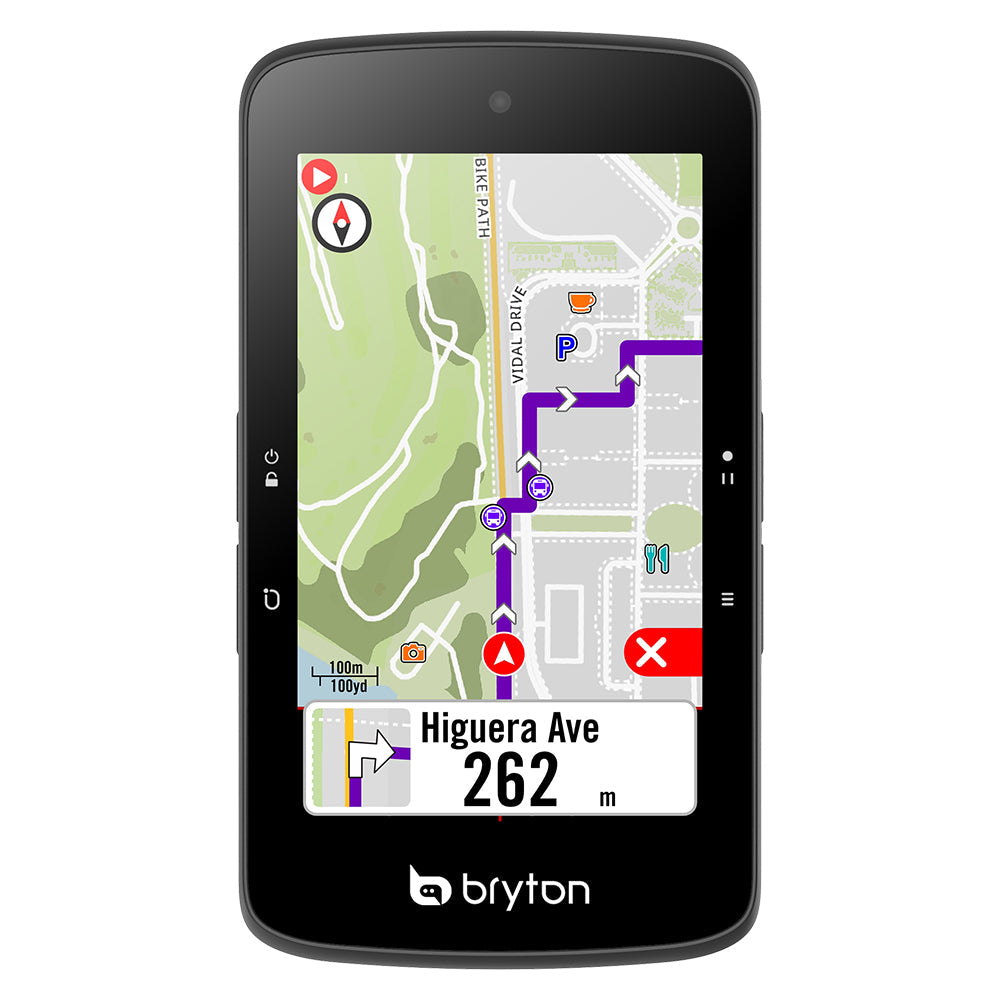
Bryton Rider S800
Color touchscreen with voice destination search, offline maps, and turn-by-turn navigation delivering 80% of the flagship experience at 50% of the cost.
Amazon affiliate · price subject to change
The S800's calling card is hardware. Its 3.4-inch color touchscreen is among the largest in the class, the Memory-in-Pixel panel sips power, and the claimed 36-hour battery is one of the longest you'll find at any price. Cycling Weekly summed it up: the hardware is "so good," the screen "fantastic, fast, responsive and bright," and the battery means you charge "once a week." It even adds voice search — a Google-powered feature (it needs a phone connection) that no Garmin or Wahoo offers.
The recurring complaint is software. The Bryton Active companion app is clumsy to navigate and slow to push routes and ride data to and from the unit — the one place the S800 clearly trails Garmin and Wahoo. If you set up rarely and ride often, that matters less. If you tinker constantly, it'll grate.
Lezyne Mega XL GPS — The Battery King
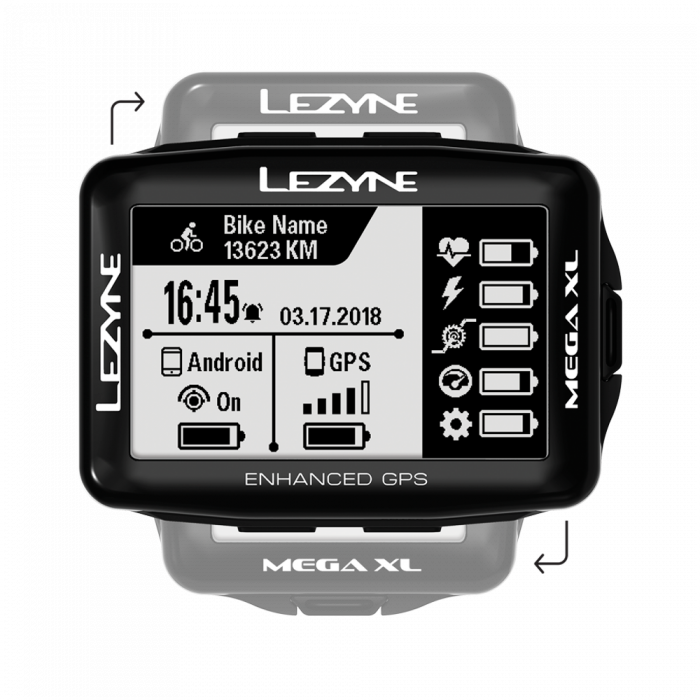
Lezyne Mega XL GPS
The longest GPS battery life in the roundup with a crisp black-and-white display readable in any lighting at an accessible $199 price point.
Amazon affiliate · price subject to change
At $199, the Mega XL is the cheapest of the three and claims the longest battery by a wide margin: 48 hours. Cyclingnews, which rated it one of the best computers you can buy for the money, only had to charge it once across three months of testing. The monochrome high-contrast screen is the reason — it draws a fraction of the power a color display needs and stays sharp in any light.
What you give up is map detail. The Mega XL offers a breadcrumb trail and downloadable offline maps, but Cyclingnews notes the maps are "essentially an overlay" without street names, and Bluetooth transfers are slow. Think of it as a superb data recorder with basic route-following rather than a true navigation device — and price it accordingly against the Sigma.
The Verdict
Buy the Sigma ROX 12.0 Sport if navigation is the job — it routes better and faster than anything else under $300. Buy the Bryton Rider S800 if you want the biggest screen and the longest color-display battery, and you can live with a rough app. Buy the Lezyne Mega XL if you ride long, charge rarely, and care more about logging the ride than mapping it. Each is the right answer to a different question.
All three live on Gavler's Best Bike Computers list, ranked by the riders who actually use them — and they sit alongside the flagships in our full bike computers roundup if your budget stretches further. Garmin vs Wahoo vs Android, before you pick a budget map, is the bike-computer buying guide. Browse the rest of the Cycling category, then cast your vote.
See all 10 products ranked by the community
Best Bike Computers
See Full Rankings →264 community votes cast
Common Questions
It depends on the one thing you care about most. If you want the best navigation, the Sigma ROX 12.0 Sport ($249) is the pick — reviewers call routing its single best feature, with 20 European OpenStreetMap regions preloaded and a Draw my Route tool that builds loops in seconds. If you want the biggest, brightest screen, the Bryton Rider S800 ($299) has a 3.4-inch color touchscreen and a claimed 36-hour battery. If you want the longest runtime and the lowest price, the Lezyne Mega XL ($199) claims 48 hours on a monochrome display. There is no single winner under $300 — there is the one that matches your priority.
The Sigma is the better navigator and the more polished out of the box; the Bryton gives you a larger screen and longer battery for $50 more. Reviewers at bike-components praised how fast the ROX loads, zooms and recalculates maps — faster, in their testing, than pricier rivals — and found the touchscreen readable in direct sunlight. The Bryton's 3.4-inch display is among the biggest in the class and its claimed 36-hour battery outlasts the Sigma's roughly 12 hours of real-world navigation use. The catch with the Bryton is software: nearly every reviewer flags the Bryton Active companion app as clumsy and slow to sync. Buy the Sigma for navigation and polish; buy the Bryton for screen and battery if you can tolerate a rough app.
The 36-hour figure is the manufacturer's claim, and it holds up better than most because of the Memory-in-Pixel (MIP) display, which only redraws the pixels that change. Cycling Weekly, testing the unit, said it 'does seem to never lose power' and charges roughly once a week even with frequent riding. Real-world runtime drops at full brightness and with navigation running constantly, as it does on any computer, but the S800's battery is a genuine strength rather than marketing.
It is adequate for following a route, not for exploring. The Mega XL offers a breadcrumb trail plus downloadable offline maps, but as Cyclingnews notes, the maps act as a basic overlay that doesn't display street names the way Garmin, Wahoo, or Sigma units do. Base maps aren't preinstalled — you download them through Lezyne's desktop app, since syncing over Bluetooth is slow. If turn-by-turn map detail matters to you, the Sigma is the better budget choice; the Mega XL is built around battery life and data recording.
No. Accurate GPS, turn-by-turn navigation, sensor connectivity, and ride recording are available across every price tier, and all three of these units deliver them for under $300. Spending more buys brighter displays, deeper training analytics, larger ecosystems, and refinements like solar charging or wind sensing — real improvements for riders who train seriously or tour for days, but not capabilities every cyclist needs. Match the computer to how you actually ride rather than to the spec sheet.
All three appear on Gavler's Best Bike Computers list, ranked by community votes from riders who own and use them — one vote per person, no affiliate commissions or manufacturer sponsorships. The Sigma ROX 12.0 Sport currently sits highest of the budget trio, followed by the Bryton Rider S800 and the Lezyne Mega XL. Vote totals and community scores appear next to each pick on the live list and update in real time.
Products Mentioned
Jump to the full ranking and community verdict for each pick named above.
Related Articles
Dreame X60 Max Ultra vs Roborock Saros 20: The Two Best Robot Vacuums Fail in Opposite Places
6 min read
ComparisonLG C5 vs Hisense U9N: The Two Best-Value TVs of Prime Big Deal Days Answer Opposite Questions
6 min read
ComparisonA 25% Drone Tariff Lands September 3 — If You Want a DJI Mini, the Clock Is Running
5 min read