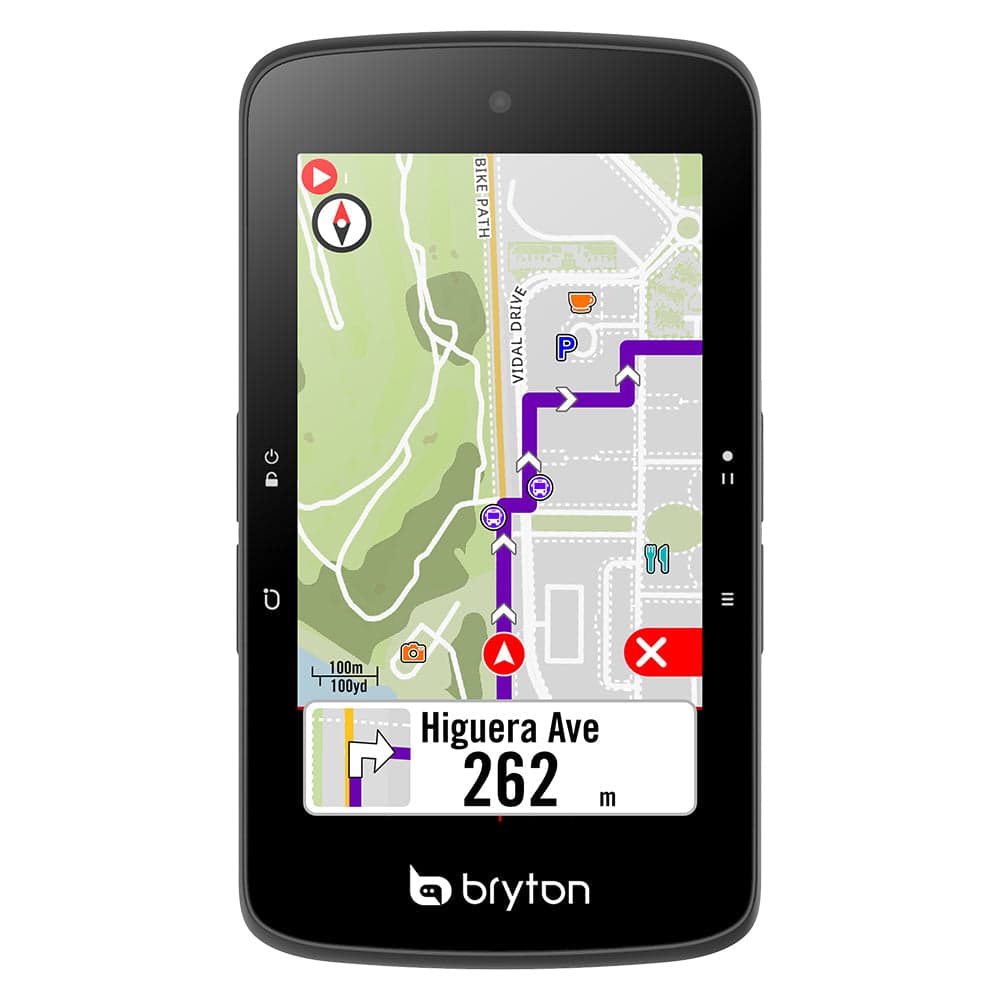
Bryton Rider S800.
Color touchscreen with voice destination search, offline maps, and turn-by-turn navigation delivering 80% of the flagship experience at 50% of the cost.
The Verdict.
Gavler Meta-Score
“The Rider S800 packs a big, bright touchscreen, voice search, and a claimed 36-hour battery into a package costing roughly half a flagship Garmin. The catch is software: the Bryton Active app is clumsy and slow to sync. This is the pick for riders who want hardware value and can tolerate a rough app — not those chasing Garmin-grade polish.”
The Gavler Verdict
The Gavler Review.
Bryton Rider S800 Review: Flagship Hardware, Flagship-Free App
The Bryton Rider S800 ranks number 8 on Gavler's Best Bike Computers list with an 8.6, and it's a genuinely unusual review to write because the hardware and the software pull in opposite directions. Cycling Weekly's verdict captures the split perfectly: "the hardware is so good — the screen is fantastic, fast, responsive and bright, and the 36-hour battery life means you only need to charge it once a week. But sadly the device is let down by the worst mobile app I've ever seen." At $299, roughly half the price of a comparable flagship Garmin, the S800 is the pick for riders who prioritize screen size and battery life over software polish — and who are willing to fight the companion app to get there.
What it is
The Rider S800 is Bryton's flagship navigation and training computer, built around a 3.4-inch color touchscreen — among the largest displays in its price class at 272x451 resolution — using a power-efficient Memory-in-Pixel panel that stays readable in direct sunlight without draining the battery. Bryton claims 36 hours of battery life, and the MIP technology is the reason: it sips power in a way that traditional LCD screens don't, which is why most riders end up charging the unit roughly once a week rather than after every ride.
The headline feature is voice search — tap the microphone and speak a destination rather than scrolling through menus or typing on a small screen. The search itself is Google-powered and needs an internet connection through a paired phone, though actual turn-by-turn navigation once a route is loaded runs on preloaded offline OpenStreetMap data, so it still works without cell service on the ride itself. The device supports both ANT+ and Bluetooth sensor protocols, includes power zones, heart rate zones, and interval support, and Bryton's value pitch is explicit: deliver roughly 80% of the Garmin or Wahoo flagship experience at about 50% of the price, by using slightly less premium materials and a smaller software team than the category leaders.
In use
Cycling Weekly's review is the most thorough independent test Gavler tracked, and its praise for the hardware was unqualified: the touchscreen performance and battery life were singled out as genuine strengths, with the reviewer noting the device "never loses power" in a way that meant charging became a once-a-week chore rather than a daily one. The same review found real substance in the navigation experience specifically: "due to the huge screen, the maps functionality on the head unit is quite good — it's clear what kind of roads are which and the turn-by-turn navigation is great, with auto-rerouting and route retracing." That's a meaningful compliment — auto-rerouting is a feature that separates a genuinely useful navigation computer from one that just displays a static map.
But the app criticism wasn't a minor aside — it was central to the review's framing. Cycling Weekly called the Bryton Active app "the worst mobile app I've ever seen," which is about as unambiguous as a critique gets from a publication that reviews cycling tech constantly. 220 Triathlon's take was more forgiving on balance, concluding "it's this or a Garmin, and I've made my choice — the battery and big touchscreen make a genuine case against the big two," suggesting the hardware advantages can outweigh the software friction for some riders, particularly those who set up routes infrequently and mostly just ride with the device once configured.
Strengths
- Best-in-class battery life. A claimed 36 hours, driven by the power-sipping MIP display, means significantly less charging anxiety than most rivals — Cycling Weekly found it effectively never runs out mid-week.
- A genuinely large, bright touchscreen. At 3.4 inches, the display is bigger than most computers at this price, and Cycling Weekly rated the screen itself as fast, responsive, and bright.
- Voice search is a real differentiator. No Garmin or Wahoo device currently offers this feature — reviewers found it surprisingly accurate at interpreting spoken place names.
- Strong value. At $299, the S800 undercuts comparable flagship computers by roughly $100-200 while matching or exceeding them on screen size and battery.
The trade-offs — who should skip it
- Anyone who relies heavily on the companion app. If you frequently build routes on your phone, sync structured workouts, or expect quick data uploads after a ride, the Bryton Active app's clumsiness will be a persistent frustration, not a minor quirk.
- Riders who want the most polished, mature ecosystem. Garmin and Wahoo have years more software refinement and far deeper third-party integrations. The S800's value proposition depends on riders being willing to accept a rougher software experience in exchange for hardware savings.
- Buyers chasing address-level navigation precision. Voice search handles place names well, but reviewers noted searching specific street addresses can be erratic — riders who navigate primarily by exact address should test this feature carefully before relying on it.
How it compares
The Garmin Edge 840 at rank 6 ($399) is the direct premium alternative — it adds Garmin's dual touchscreen-and-button input, deeper training analytics that unify with Garmin's watch ecosystem, and a far more polished companion app, at roughly $100 more than the S800. The Sigma ROX 12.0 Sport at rank 7 ($249) is the closer budget comparison — both computers chase the same "80% of the flagship experience for less money" positioning, though road.cc found the ROX's navigation and tracking accuracy "superb" with comparatively fewer software complaints than the S800 draws. Riders choosing among the three are weighing screen size and battery (S800), software maturity and training depth (Edge 840), and all-around polish at a slightly lower price (ROX 12.0).
The Gavler verdict
An 8.6, reflecting hardware that legitimately competes with computers costing far more, dragged down — but not disqualified — by a companion app that drew the harshest single line of criticism in any review Gavler tracked for this category. The Rider S800 is a genuine value proposition for riders who prioritize screen size, battery life, and voice search over software polish. Buy it if you can live with an awkward app in exchange for real hardware savings. If app quality and ecosystem depth matter more than price, the Garmin Edge 840 above it on this list is the safer, if pricier, choice.
Common Questions
If you want flagship-level hardware at roughly half the price of a comparable Garmin, yes — with one significant catch. It ranks eighth on Gavler's Best Bike Computers list with an 8.6, and Cycling Weekly praised 'the screen is fantastic, fast, responsive and bright, and the 36-hour battery life means you only need to charge it once a week.' But the same review called the companion app the worst mobile app the reviewer had ever seen. Buy it for the hardware value; go in expecting to fight the software.
Buy the S800 if you want the biggest screen and longest battery life for the money and can tolerate a clumsy companion app — at $299 it costs roughly $100 less than the Edge 840. Buy the Edge 840 if software polish, dual touchscreen-and-button input, and Garmin's deeper training analytics ecosystem matter more to you than saving money; Garmin's app and device sync are dramatically more refined.
Yes — tap the microphone icon and speak a destination, and the Google-powered search returns results without scrolling through menus. It requires an internet connection through your paired phone. Reviewers found it surprisingly effective at interpreting place names, though searching specific street addresses can be erratic.
The Bryton Active companion app. Cycling Weekly was blunt about it, writing the device 'is let down by the worst mobile app I've ever seen' — it's clumsy to navigate and slow to sync routes and ride data to and from the head unit. Everything else about the hardware, from the touchscreen to the battery life, drew consistent praise.
Where to Buy.
Prices checked regularly
90-day price history
Price History
Steady at $300 for the entire 90-day tracking window — no increases, no discounts, across 91 tracked days.
Tracked daily across retailers. Vote Want itabove and we’ll alert you the moment the price drops.
Some links are affiliate links — Gavler may earn a commission. This never affects rankings or scores. Learn more.
Precision Engineering
Voice Search
Tap the mic and speak a destination — Google-powered search (needs a phone connection) that reviewers found surprisingly accurate on place names.
3.4" Color Touchscreen
Among the largest displays in the class (272x451) using a power-efficient Memory-in-Pixel panel that stays readable in sunlight.
36-Hour Claimed Battery
The MIP display sips power — Cycling Weekly found it 'never loses power,' charging roughly once a week even with frequent riding.
Technical Specifications
The Scoreboard
Voice search is a unique and genuinely useful feature. Large display and competitive pricing drive strong community ratings. Software polish lags behind category leaders.
Cast Your Vote
Do you think Bryton Rider S800 deserves the #8 spot in Best Bike Computers?
Global Critique
“The hardware is so good — the screen is fantastic, fast, responsive and bright, and the 36-hour battery life means you only need to charge it once a week. But sadly the device is let down by the worst mobile app I've ever seen.”
“Due to the huge screen, the maps functionality on the head unit is quite good — it's clear what kind of roads are which and the turn-by-turn navigation is great, with auto-rerouting and route retracing.”
“It's this or a Garmin, and I've made my choice — the battery and big touchscreen make a genuine case against the big two.”
More from Best Bike Computers.
See how other top picks compare in this category.
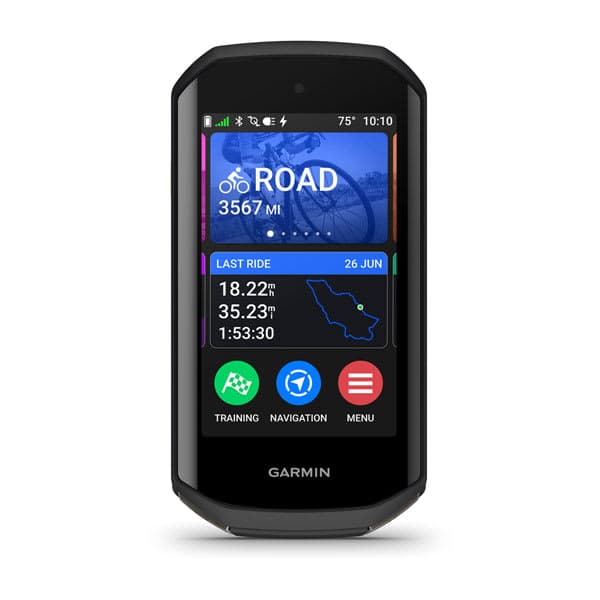
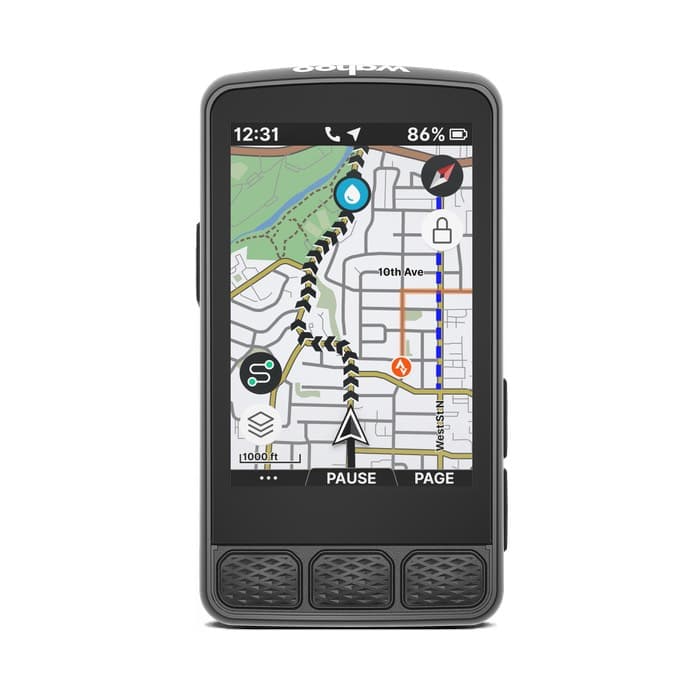
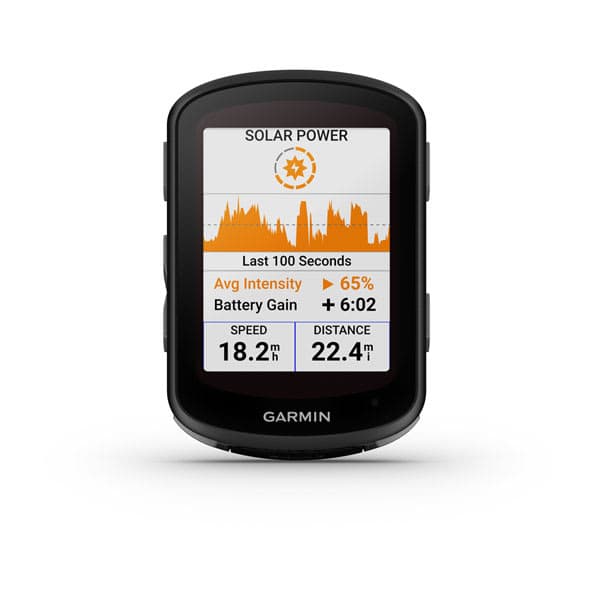
Garmin Maps, Wahoo Simplicity, or a Mini Android?
Feature-count hangtags are the wrong first question. Garmin maps, Wahoo setup, or an Android head unit is the software. Then shop Gavler's live ranking.
The Best Budget Bike Computer in 2026: Sigma ROX 12.0 vs Bryton S800 vs Lezyne Mega XL
Sigma ROX 12.0 Sport vs Bryton Rider S800 vs Lezyne Mega XL — the best budget bike computer under $300 depends on maps, screen, or battery.
The Best Bike Computers in 2026, Ranked by the Riders Who Actually Use Them
Garmin, Wahoo, and Hammerhead GPS units ranked by navigation, training, battery, and display — by the riders who actually use them, not spec sheets.