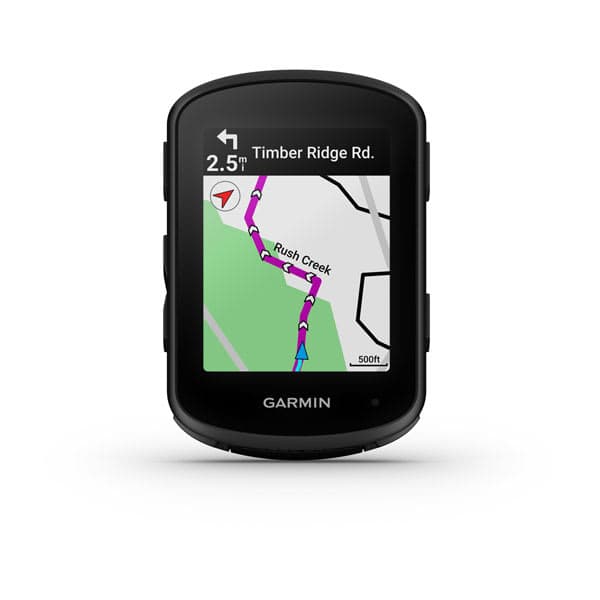
Garmin Edge 840.
The only computer with both touchscreen and button inputs, plus training load focus and recovery metrics matching Garmin's watch ecosystem.
The Verdict.
Gavler Meta-Score
“The Edge 840 is the Goldilocks bike computer — the touchscreen and button combination means you never have to compromise on input method. Training analytics match Garmin's flagship at $200 less, and the unified ecosystem tracking across Garmin devices provides genuine value for multi-sport athletes.”
The Gavler Verdict
The Gavler Review.
Garmin Edge 840 Review: The Goldilocks Bike Computer
The Garmin Edge 840 ranks number 6 on Gavler's Best Bike Computers list with a 9.0, and it earns that spot by refusing to make riders choose between screen size and price. Cyclingnews summed it up well: "The perfect antidote to the rise of the supersize bike computer — full flagship features in a compact, manageable unit." It's the computer for riders who want Garmin's deep training analytics and navigation without paying for the Edge 1050's larger screen and ecosystem extras they may never use.
What it is
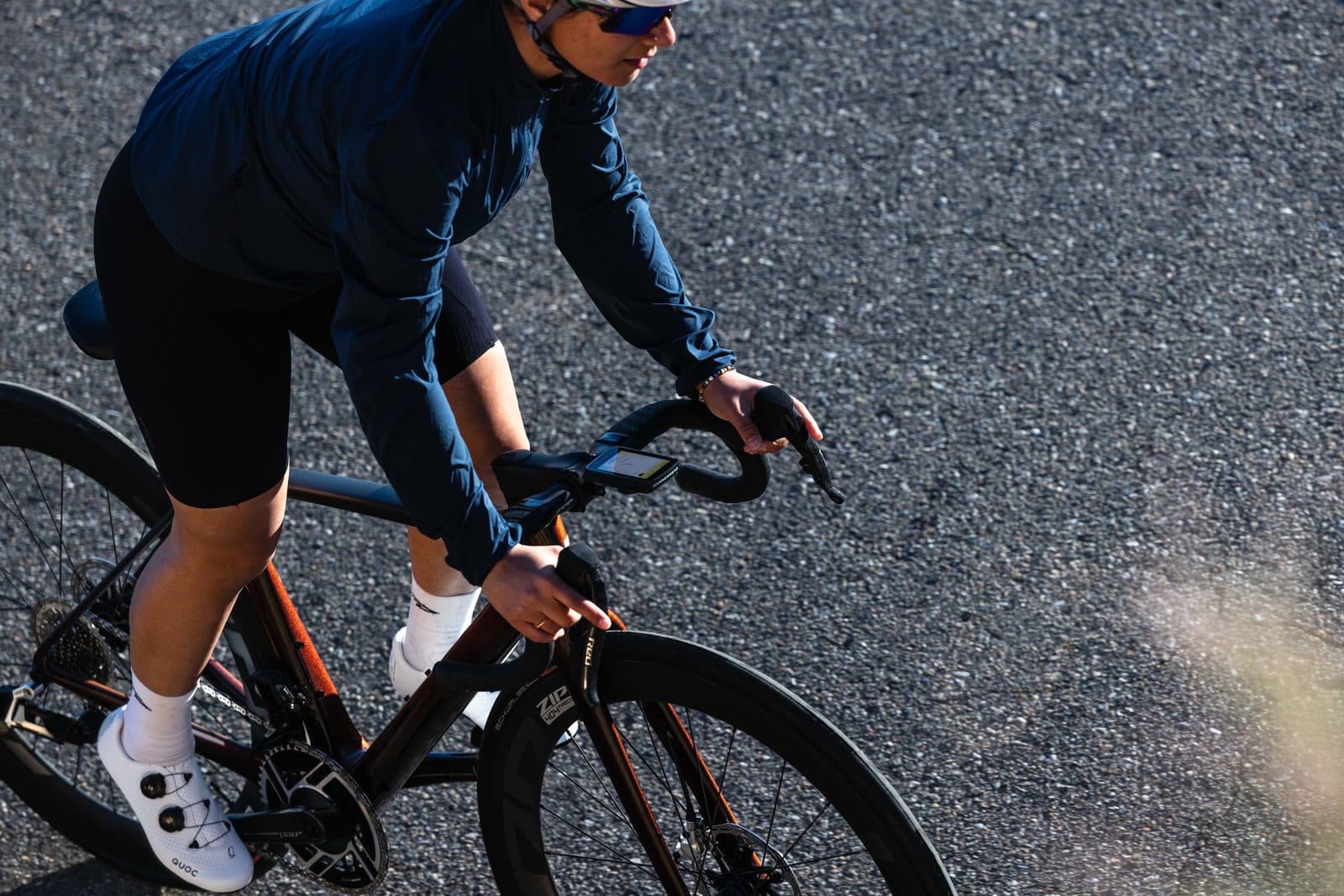
The Edge 840's headline feature is genuinely unique in the category: it's the only bike computer that offers both touchscreen and physical button controls simultaneously, rather than forcing a choice between the two. Scroll through data pages with buttons during a rainy descent, then tap through navigation menus at a sunny rest stop — the interface adapts to whichever input method suits the moment, rather than locking riders into one approach.
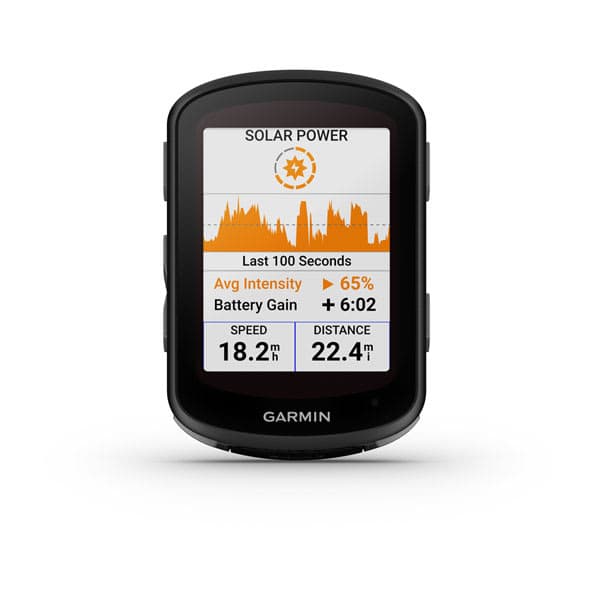
The training analytics suite matches the depth of Garmin's flagship Edge 1050, including Training Status 2.0, training load focus that breaks recent training into anaerobic, high aerobic, and low aerobic categories, recovery time estimation, VO2 max tracking, and a Real-Time Stamina estimate that projects how much a rider has left mid-ride. These metrics sync with Garmin's watch ecosystem, so data from an Edge 840 ride feeds into the same fitness model as Garmin watch activities — a real advantage for multi-sport athletes who want a unified picture of training load rather than isolated device data. The 2.6-inch display uses Garmin's transflective technology, which becomes more readable in direct sunlight than a standard LCD. Navigation includes full-color maps, turn-by-turn routing, and ClimbPro climb visualization. Battery life runs approximately 26 hours per charge on the standard model, roughly 32 hours on the Solar variant, and the unit accepts both ANT+ and Bluetooth sensor connections.
In use
Cycling Weekly's review focused on exactly the feature that sets the 840 apart from single-input rivals: "The touchscreen is excellent and the addition of buttons is very welcome when wearing gloves — as sensitive as a modern smartphone, and unaffected in heavy rain." That last detail matters more than it might seem — touchscreens on other bike computers, including Garmin's own Edge 1050, are consistently flagged by reviewers as unreliable in wet conditions. The 840's button backup means a rider isn't stranded fumbling at a screen that won't register a raindrop-covered fingertip.
BikeRadar's review highlighted Real-Time Stamina as a genuinely useful addition, while also delivering the most practical piece of buying advice in any review of this computer: "Real-Time Stamina is a clever addition that estimates how much you have left, and the solar premium is hard to justify for most riders." That's a rare instance of a reviewer actively steering buyers away from the more expensive variant, and it's a credible one — with roughly 26 hours of standard battery life already covering the longest single-day rides most cyclists will attempt, the Solar's extra six hours only matters for genuinely long unsupported efforts.
Gavler's own scoring notes underline the value proposition directly: the Edge 1050 adds a larger, brighter screen for around $200-300 more, "leaving the 840 as the value-focused all-rounder." That framing is accurate — the 840 isn't a stripped-down budget computer, it's a deliberately right-sized one that keeps the training depth while trimming the screen size and ecosystem reach that not every rider needs.
Strengths
- The only computer with simultaneous touch and button input. Riders never have to compromise on input method — buttons work in rain and gloves, touch works everywhere else.
- Flagship-matching training analytics at a meaningfully lower price. Training Status 2.0, training load, recovery, VO2 max, and Real-Time Stamina match the Edge 1050's depth at $200 less.
- Genuinely sunlight-readable display. The transflective 2.6-inch screen holds up in direct sun better than standard LCD competitors.
- Unified fitness tracking across the Garmin ecosystem. Data syncs with Garmin watches for a single training picture across devices and sports.
The trade-offs — who should skip it
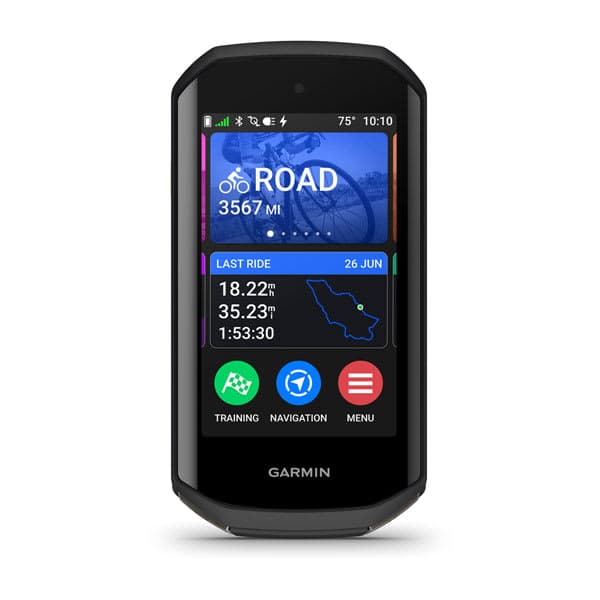
- Riders who want the largest possible screen should look at the Edge 1050. Its 3.5-inch transmissive display and ClimbPro 2.0 dynamic climb tracking are real upgrades the 840 doesn't match.
- The Solar variant is hard to justify for most riders. BikeRadar's assessment stands — unless multi-day unsupported riding is a regular occurrence, the standard 840's 26-hour battery life is already more than most rides require.
- Riders who don't need deep training analytics are paying for depth they won't use. If navigation and basic ride data are all you want, a simpler, cheaper computer like the Wahoo ELEMNT BOLT 3 covers the essentials at a lower price.
How it compares
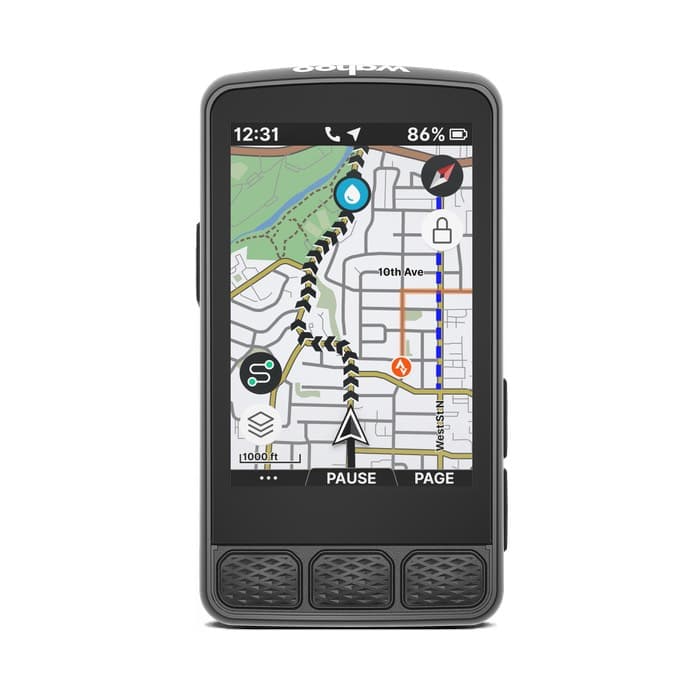
The Wahoo ELEMNT BOLT 3 sits one rank above the Edge 840 at $329 and takes the opposite philosophy — Wahoo's LED navigation strip and streamlined app-based setup prioritize simplicity over Garmin's exhaustive feature depth, at $70 less. It's the better choice for riders who find Garmin's menu structure overwhelming and just want reliable navigation and connectivity. The Sigma ROX 12.0 Sport, ranked one spot below the Edge 840 at $249, undercuts both by a wide margin with offline OpenStreetMap navigation and dual ANT+/Bluetooth connectivity, though Gavler's scoring notes flag that its software polish and ecosystem depth lag behind Garmin and Wahoo. Riders choosing among the three are trading off training-data depth (Edge 840), setup simplicity (BOLT 3), and price (ROX 12.0 Sport).
The Gavler verdict
A 9.0 that reflects a computer that got the sizing decision right — Garmin took its flagship-level training analytics and dual-input reliability and packaged them into a smaller, cheaper unit without meaningfully compromising the experience. The Edge 840 isn't trying to be the most feature-complete computer Garmin makes; it's trying to be the one most riders should actually buy, and the combination of touch-plus-button input and training depth at $399 makes a strong case for that. Buy it if you want serious training data without flagship pricing, and skip the Solar upgrade unless multi-day unsupported riding is a regular part of your calendar.
Common Questions
For riders who want flagship-level training data without flagship pricing, yes. It ranks sixth on Gavler's Best Bike Computers list with a 9.0. Cyclingnews called it 'the perfect antidote to the rise of the supersize bike computer — full flagship features in a compact, manageable unit,' and Cycling Weekly praised the touchscreen as 'unaffected in heavy rain,' with buttons available as a glove-friendly backup.
Buy the Edge 840 if you want the same core training analytics and dual touch-plus-button input at roughly $200 less. Buy the Edge 1050 if you want a larger, brighter 3.5-inch touchscreen, ClimbPro 2.0's dynamic climb tracking, and the deepest ecosystem integration Garmin offers — the 1050 ranks first on this list at $599 versus the 840's $399.
For most riders, no. Gavler's scoring notes are explicit that the solar premium is hard to justify — the standard Edge 840 already delivers roughly 26 hours of battery life, extending to about 32 hours on the Solar variant. Unless you're doing genuinely long, multi-day unsupported rides, the solar upgrade adds cost without meaningfully changing how you use the computer.
Where to Buy.
Prices checked regularly
90-day price history
Price History
Steady at $400 for the entire 90-day tracking window — no increases, no discounts, across 91 tracked days.
Tracked daily across retailers. Vote Want itabove and we’ll alert you the moment the price drops.
Some links are affiliate links — Gavler may earn a commission. This never affects rankings or scores. Learn more.
Precision Engineering
Dual Input Controls
Touchscreen and physical buttons work simultaneously — reviewers note the touch stays usable in heavy rain, with buttons as a glove-friendly backup.
Real-Time Stamina + Training
Training Status 2.0, training load, recovery, VO2 max, and a Real-Time Stamina estimate sync with Garmin watches for unified fitness tracking.
ClimbPro Navigation
Real-time climb visualization with gradient profile and remaining elevation for every ascent on your route.
Technical Specifications
The Scoreboard
Dual input method and training analytics earn strong praise. The Edge 1050 adds a larger, brighter screen for around $200-300 more (note: neither the 840 nor the 1050 is solar — only the 840 Solar variant is), leaving the 840 as the value-focused all-rounder.
Cast Your Vote
Do you think Garmin Edge 840 deserves the #6 spot in Best Bike Computers?
Global Critique
“The touchscreen is excellent and the addition of buttons is very welcome when wearing gloves — as sensitive as a modern smartphone, and unaffected in heavy rain.”
“The perfect antidote to the rise of the supersize bike computer — full flagship features in a compact, manageable unit.”
“Real-Time Stamina is a clever addition that estimates how much you have left, and the solar premium is hard to justify for most riders.”
More from Best Bike Computers.
See how other top picks compare in this category.
Garmin Maps, Wahoo Simplicity, or a Mini Android?
Feature-count hangtags are the wrong first question. Garmin maps, Wahoo setup, or an Android head unit is the software. Then shop Gavler's live ranking.
The Best Budget Bike Computer in 2026: Sigma ROX 12.0 vs Bryton S800 vs Lezyne Mega XL
Sigma ROX 12.0 Sport vs Bryton Rider S800 vs Lezyne Mega XL — the best budget bike computer under $300 depends on maps, screen, or battery.
The Best Bike Computers in 2026, Ranked by the Riders Who Actually Use Them
Garmin, Wahoo, and Hammerhead GPS units ranked by navigation, training, battery, and display — by the riders who actually use them, not spec sheets.