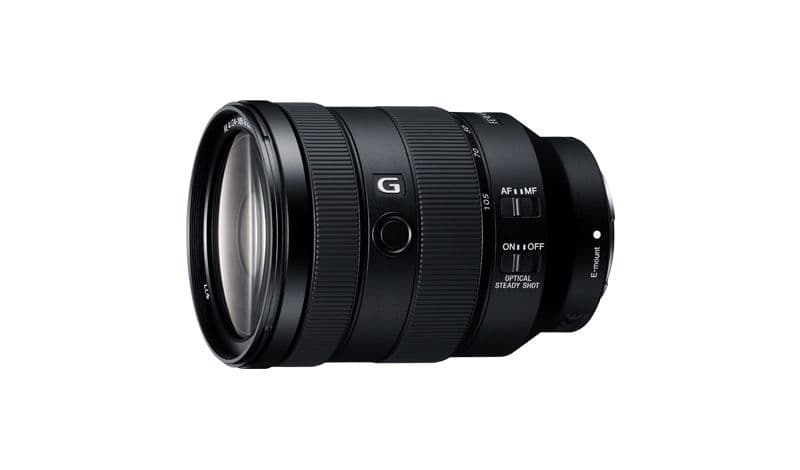
Sony FE 24-105mm f/4 G OSS.
Constant f/4, OSS stabilization, and the extra reach that 24-70s can't match.
The Verdict.
Gavler Meta-Score
“The one-lens travel kit that has lived in Sony pros' bags since 2017: among the sharpest 24-105s DxOMark has tested, solidly built, and stabilized with OSS. It is not cheap for an f/4, and it leans on correction for pronounced distortion plus some lateral CA below 50mm.”
The Gavler Verdict
The Gavler Review.
Sony FE 24-105mm f/4 G OSS Review: The One-Lens Travel Kit That Refuses to Age Out
The Sony FE 24-105mm f/4 G OSS ranks seventh on Gavler's Best Standard Zoom Lenses list with an 8.7, and it has held that kind of position with reviewers since it launched in 2017. It's the lens Sony pros reach for when they need one piece of glass to cover a wedding, a trip, or a documentary shoot without swapping lenses. DxOMark rated its sharpness "among the best we've tested," while flagging the honest catch: "it's good, but it's not exactly inexpensive."
What it is
This is Sony's constant-aperture f/4 answer to the trans-standard travel zoom, spanning wide-angle at 24mm through short telephoto at 105mm — a 4.4x range that a 24-70mm simply can't match. Optical SteadyShot (OSS) provides in-lens stabilization on top of whatever IBIS the camera body offers, and the constant f/4 aperture keeps exposure predictable across the entire zoom range, which matters for run-and-gun shooting where there's no time to recompute settings between focal lengths.
The optical formula runs 17 elements in 14 groups with a 9-blade rounded aperture, a 77mm filter thread, and a minimum focus distance of 0.38m. At 663 grams it's noticeably lighter than Sony's own f/2.8 GM standard zoom, and Amateur Photographer summed up the resulting handling well: the lens is "relatively lightweight, yet feels reassuringly solidly built when you hold it." Ken Rockwell went further on the mechanical side, noting it's "made as well as the $2,200 24-70/2.8 GM," with metal filter threads, a metal mount, and a moisture seal — despite selling at a fraction of that lens's price.
In use
Sharpness is the lens's headline strength. DxOMark's testing found it "among the best we've tested and rivals the Sigma overall," and Ken Rockwell's independent verdict was blunter still, calling the FE 24-105mm f/4 G "the world's best midrange zoom" and "a professional lens at a consumer price." His review listed a long column of "Good" points — sharp wide open at every focal length, excellent bokeh, fast and silent autofocus, a dedicated focus-lock button — and a "Bad" column with a single, telling entry: "Nothing."
That praise comes with an asterisk worth understanding. Both DxOMark and PetaPixel note that a meaningful part of this lens's clean output relies on automatic correction. Sony's cameras apply distortion and shading correction by default, and PetaPixel was direct about what's underneath it: "like many trans-standard zooms, the 24-105mm f/4 is not particularly well corrected for distortion. It suffers from barrel distortion at its shorter focal length, and pincushion distortion at the longer focal lengths." DxOMark separately flagged "some noticeable lateral color at the wider end." None of this shows up in a JPEG straight off a current Sony body or in a Lightroom-profiled RAW file — but it's a real characteristic of the uncorrected optical design, not a marketing footnote.
Autofocus itself draws no such caveats. It's fast, internal, and effectively silent, which makes the lens well-suited to both stills and video, and the OSS system delivers steady handheld results well below typical safe shutter speeds.
Strengths
- Sharpness that holds up against pricier lenses. DxOMark rates it among the best 24-105s it has tested, and multiple independent reviewers reach the same conclusion without prompting.
- Genuinely professional build quality at a mid-tier price. Metal mount, metal filter thread, and weather sealing that Ken Rockwell rated as good as Sony's $2,200 GM zoom.
- A 4.4x zoom range a 24-70 can't offer. 105mm of reach covers portraits and moderate telephoto work that a standard f/2.8 zoom simply can't reach.
- Fast, silent autofocus with a dedicated focus-lock button. Reliable for both stills and hybrid video use.
- In-lens OSS stabilization. Works in tandem with in-body stabilization on newer Alpha bodies for steadier handheld results.
The trade-offs — who should skip it
The distortion profile is the lens's clearest technical weakness. PetaPixel's finding — barrel distortion at the wide end, pincushion at the long end — means the lens depends more than some rivals on in-camera or software correction to look its best. Photographers who shoot uncorrected RAW for architectural or product work, where straight lines matter most, should test this carefully before relying on it.
Price is the second sticking point. DxOMark's own conclusion was measured: "whether that's enough to make it a compelling choice for Sony users is debatable: it's good, but it's not exactly inexpensive." At roughly $1,398, this is a premium price for an f/4 zoom when third-party f/2.8 alternatives exist for less — Gavler's data shows Ken Rockwell listing a current street price closer to $1,298, underscoring that this lens has never been positioned as a budget option.
Finally, this is not the lens for photographers who need f/2.8 for subject isolation or low-light work without leaning on high ISO. The constant aperture is f/4 throughout, and while OSS compensates for camera shake, it does nothing for shallow depth of field or fast shutter speeds on moving subjects.
How it compares
The most direct rival on Gavler's list is the Nikon Z 24-120mm f/4 S, ranked eighth with an 8.6. Photography Life called it "one of the best all-around midrange zooms that I've ever tested," and it's both lighter (630g versus 663g) and cheaper (around $1,096 versus $1,398). The trade-off is stabilization: the Nikon has no in-lens VR at all, leaning entirely on IBIS, which is a real consideration on Nikon's IBIS-less crop bodies. The Sony's OSS makes it the safer choice across a wider range of camera bodies.
For photographers willing to trade reach for speed, the Tamron 28-75mm f/2.8 Di III VXD G2 sits at rank five on the same list at $899 — nearly $500 cheaper than the Sony while offering a full stop faster constant aperture. It gives up 30mm of telephoto reach and OSS stabilization in exchange for that extra stop and a lower price, making it the better pick for shooters who prioritize subject isolation over zoom range.
The Gavler verdict
At 8.7, with community rating (90) edging past expert consensus (88), the Sony FE 24-105mm f/4 G OSS earns its reputation the honest way: owners who live with it daily rate it even higher than the testing outlets that flag its distortion and price. Nearly a decade after launch, it remains the default single-lens answer for Sony shooters who need to cover a trip, an event, or a documentary assignment without changing glass. The pronounced uncorrected distortion and premium-for-an-f/4 price are real, well-documented trade-offs — but for travel, event, and run-and-gun shooters who value range and reliability over the cleanest possible RAW file or the shallowest possible depth of field, this is still the lens that keeps earning its spot in the bag.
Common Questions
For Sony shooters who want one lens to cover a whole trip or event, yes. It ranks seventh on Gavler's Best Standard Zoom Lenses list with an 8.7, and DxOMark found its sharpness 'among the best we've tested,' while Ken Rockwell called it flatly 'the world's best midrange zoom.' Photographers who need f/2.8 or the cleanest uncorrected geometry should look elsewhere.
Both are constant-aperture f/4 travel zooms built around the same philosophy, but the Nikon is newer, lighter at 630g versus 663g, and cheaper at roughly $1,096 versus the Sony's $1,398. The Sony has the longer track record and in-lens OSS; the Nikon relies entirely on IBIS since it has no in-lens stabilization at all, which matters on IBIS-less bodies.
Distortion. PetaPixel found it 'is not particularly well corrected for distortion,' with barrel distortion at the wide end and pincushion distortion at the long end, plus DxOMark flagged 'some noticeable lateral color at the wider end.' Both are handled automatically in Sony's in-camera corrections and Lightroom profiles, but they're real, measurable characteristics of the uncorrected optical design.
Where to Buy.
Prices checked regularly
90-day price history
Price History
Steady at $1,398 for the entire 90-day tracking window — no increases, no discounts, across 91 tracked days.
Tracked daily across retailers. Vote Want itabove and we’ll alert you the moment the price drops.
Some links are affiliate links — Gavler may earn a commission. This never affects rankings or scores. Learn more.
Precision Engineering
Among the Sharpest 24-105s Tested
DxOMark rated its sharpness among the best it has tested, rivaling Sigma's competing zoom across the range.
Optical SteadyShot + Solid Build
OSS stabilization for handheld work in a body Amateur Photographer called reassuringly solidly built, yet light at 663g.
Constant f/4, 4.4x Range
Direct Drive SSM AF with internal focus; a single f/4 aperture from 24 to 105mm for predictable run-and-gun exposure.
Technical Specifications
The Scoreboard
Community (90) edges expert consensus (88): owners prize it as a do-everything travel zoom, while testers note it is pricey for an f/4 and leans on software to correct pronounced distortion and some wide-end lateral CA.
Cast Your Vote
Do you think Sony FE 24-105mm f/4 G OSS deserves the #7 spot in Best Standard Zoom Lenses?
Global Critique
“The Sony FE 24-105mm F4 G OSS has good sharpness; indeed, it is among the best we've tested and rivals the Sigma overall.”
“The FE 24-105mm f/4 is relatively lightweight, yet feels reassuringly solidly built when you hold it.”
“Like many trans-standard zooms, the 24-105mm f/4 is not particularly well corrected for distortion. It suffers from barrel distortion at its shorter focal length, and pincushion distortion at the longer focal lengths.”
“Whether that's enough to make it a compelling choice for Sony users is debatable: it's good, but it's not exactly inexpensive.”
More from Best Standard Zoom Lenses.
See how other top picks compare in this category.

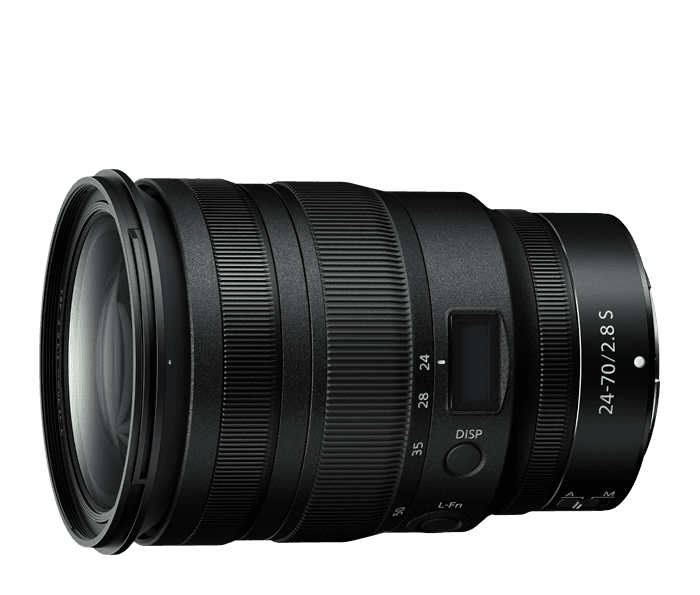
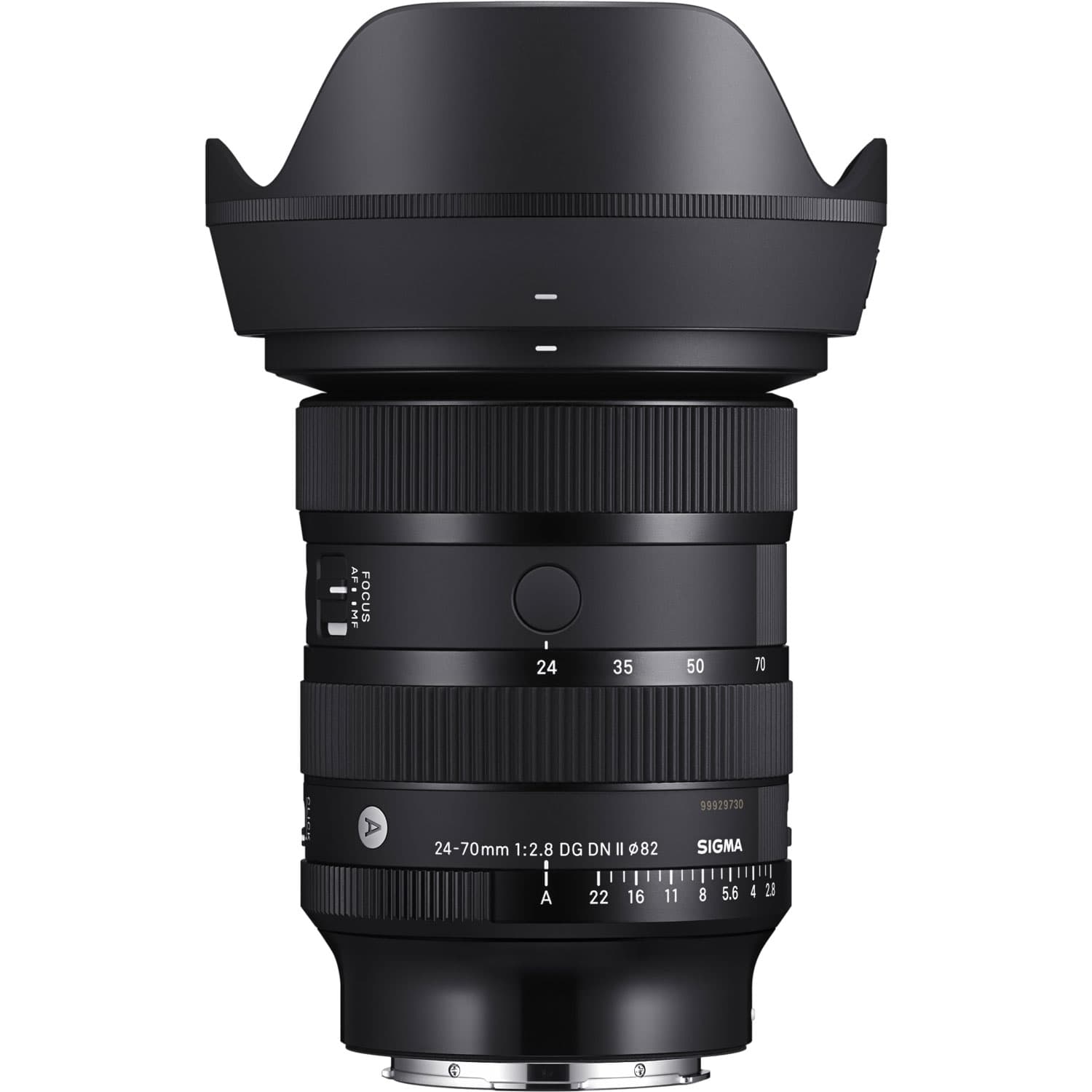
Do You Need f/2.8, or Do You Need 105?
A trinity hangtag is the wrong first question. f/2.8 through 70, or f/4 through 105, is the range you work. Then shop Gavler's live ranking.
The Best Camera Lenses in 2026, Ranked by the Photographers Who Shoot Them
Sony, Canon, Nikon, Sigma, Tamron, Fuji — Gavler's community ranks the lenses worth buying, from a $629 prime to a $2,798 pro telephoto.