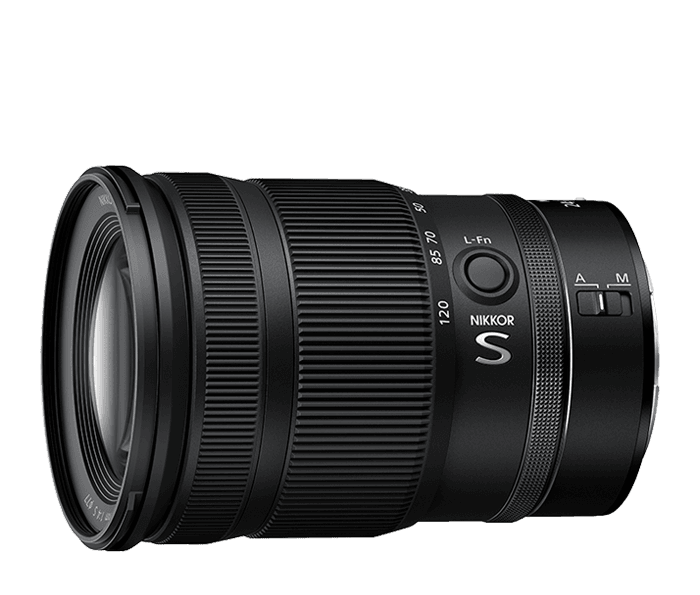
Nikon Z 24-120mm f/4 S.
An S-line zoom punching well above its f/4 price point. The most-recommended single-lens travel kit on the Z system.
The Verdict.
Gavler Meta-Score
“The Z system's best-value one-lens travel kit: Photography Life calls it "one of the best all-around midrange zooms that I've ever tested," often selling under $1,000. Two catches — it has no in-lens VR, so it is a poor match for IBIS-less bodies like the Z50 or Zfc, and it shows significant, complex barrel distortion.”
The Gavler Verdict
The Gavler Review.
Nikon Z 24-120mm f/4 S Review: The Z System's Default Travel Zoom
The Nikon Z 24-120mm f/4 S ranks number 8 on Gavler's Best Standard Zoom Lenses list with a 8.6. It's the lens most Z-mount reviewers reach for first when recommending a single travel or everyday zoom — Photography Life didn't hedge, calling it "one of the best all-around midrange zooms that I've ever tested." The trade-offs are specific rather than dealbreaking: no built-in stabilization, and lab testing that flags real corner softness at the wide end.
What it is
The 24-120mm range spans wide environmental shots to short telephoto reach in a single lens, with a constant f/4 aperture and S-line optical construction — 16 elements in 13 groups with Nano Crystal and ARNEO coatings. At 630g, it undercuts Nikon's own f/2.8 standard zoom significantly in both weight and price, and often street-prices under $1,000, which Dustin Abbott called "one of the absolute cheapest S-Line zoom lenses available." There's no optical image stabilization — a deliberate design choice given every current Nikon Z full-frame body ships with in-body stabilization.
In use
OpticalLimits' full lab review backs up the field praise with numbers. Center sharpness is "downright outstanding throughout the zoom range and that's straight from f/4," with the near-center quality staying very high and border quality "pretty snappy as well." Autofocus draws consistent praise across reviewers — Dustin Abbott found it "fast, quiet, and smooth" — and OpticalLimits confirmed the STM stepping motor AF is "both snappy and silent."
The corners are where the reviews diverge from pure enthusiasm. OpticalLimits found the wide end genuinely compromised: "The corners are good at 24mm. However, the corners suffer from rather strong field curvature at this setting," recommending photographers "pull the focus towards you" for infinity landscape scenes at 24-28mm to compensate. Distortion is also more pronounced than most standard zooms — Dustin Abbott measured "a significant amount of barrel distortion that is fairly complex," where "fully correcting the barrel distortion creates some pincushion distortion in the edges of the frame." OpticalLimits' own testing found 4% barrel distortion at 24mm shifting to 3% pincushion by 120mm, concluding the lens "relies heavily" on in-camera or software correction to look clean — fine for JPEG shooters, worth knowing for raw purists.
The physical zoom mechanism also drew a specific reservation. "We are not a huge fan of the duo-cam design for long-term durability — a single extending tube should be enough, really," OpticalLimits wrote, though the reviewer's own test sample "showed no wobbling whatsoever, even at the 120mm setting."
Strengths
Value is the recurring theme across every review Gavler surveyed. OpticalLimits' formal "Good" list opens with "ultra-sharp center, generally fine borders/corners" and "reasonably priced," and closes with "very close focusing capability" — the lens reaches 0.39x maximum magnification, essentially macro territory for a standard zoom. Sunstars are "quite nicely rendered" from f/11, a small but genuine bonus for landscape shooters working into the evening. And the weather sealing, combined with a metal mount over engineering-plastic barrel, gives it what OpticalLimits called a lens that "feels sturdy" despite its budget-conscious price relative to Nikon's own f/2.8 alternative.
The trade-offs — who should skip it
The lack of in-lens stabilization is the clearest disqualifier: photographers on IBIS-less crop bodies like the Z50 or Zfc lose a meaningful chunk of this lens's handheld low-light usefulness. Landscape and architecture photographers who shoot wide-open at 24mm and care about corner sharpness should also budget time for correction in post, or accept the field curvature as a real limitation rather than a lab-test technicality. And anyone skeptical of extending, duo-cam zoom mechanisms on long-term durability grounds — a reasonable concern OpticalLimits raised explicitly — may prefer a simpler single-barrel design, even at a size or weight cost.
How it compares
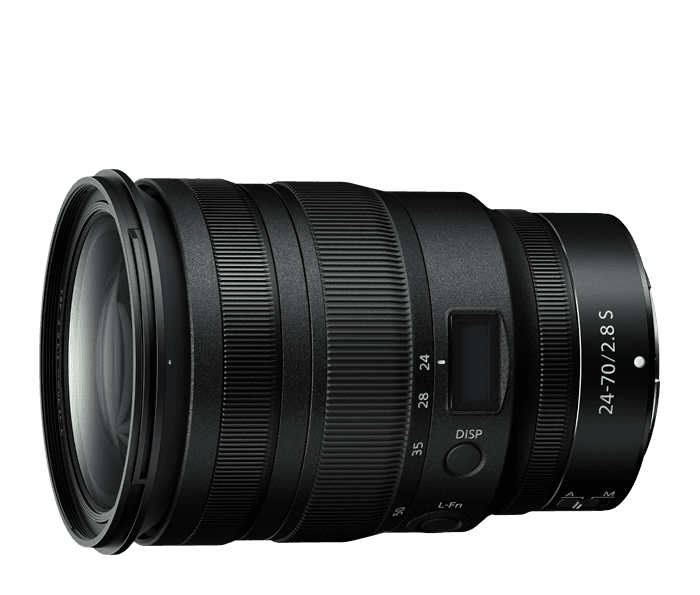
On Gavler's Best Standard Zoom Lenses list, the Sony FE 24-105mm f/4 G OSS, ranked 7, is the closest direct rival in spirit: a similar constant f/4, similar reach, but with built-in Optical SteadyShot that the Nikon lacks — DxOMark rated its sharpness "among the best it has tested," though PetaPixel flagged its own barrel and pincushion distortion issues, so neither lens escapes the standard-zoom distortion trade-off entirely. For Z-mount shooters who specifically want a constant f/2.8 and don't mind more weight and cost, Nikon's own 24-70mm f/2.8 S sits above this lens in the lineup, though it isn't part of Gavler's current standard-zoom rankings.
The Gavler verdict
The Z 24-120mm f/4 S earns its reputation as the Z system's best-value one-lens travel kit. Photography Life's "one of the best all-around midrange zooms" verdict and OpticalLimits' "attractive offering at a reasonable price point" summary both point the same direction: exceptional center sharpness and real-world usability for well under the price of a first-party f/2.8 alternative. The corner softness at 24mm and the lack of in-lens VR are genuine, lab-confirmed caveats — not marketing spin — so IBIS-less shooters and corner-obsessed landscape photographers should weigh them carefully. For everyone else on an IBIS body, this remains the default recommendation.
Common Questions
Yes for most Z shooters who want one travel lens — Gavler scores it 8.6, and Photography Life called it "one of the best all-around midrange zooms that I've ever tested." OpticalLimits agreed it's "an attractive offering at a reasonable price point," often selling under $1,000.
No — it relies entirely on the camera body's in-body stabilization. Photography Life calls this its biggest specification issue, noting it's "fine on an IBIS body" but a poor match for stabilization-less bodies like the Z30, Z50, or Zfc.
Corner performance at the wide end. OpticalLimits' lab testing found "the corners suffer from rather strong field curvature" at 24mm, and its formal cons list also cites "significant" barrel distortion that "relies heavily on distortion auto-correction" to look clean.
Where to Buy.
Prices checked regularly
90-day price history
Price History
Steady at $1,096 for the entire 90-day tracking window — no increases, no discounts, across 91 tracked days.
Tracked daily across retailers. Vote Want itabove and we’ll alert you the moment the price drops.
Some links are affiliate links — Gavler may earn a commission. This never affects rankings or scores. Learn more.
Precision Engineering
S-Line Sharpness at f/4
Three ED and multiple aspherical elements; Photography Life ranks it among the best all-around midrange zooms it has tested.
Fast, Quiet Autofocus
Stepping-motor AF that Dustin Abbott found fast, quiet, and smooth across the 5x zoom range.
Sub-$1,000 S-Line Value
Often street-priced under $1,000 at just 630g — one of the cheapest and lightest S-line zooms Nikon makes.
Technical Specifications
The Scoreboard
Expert consensus (89) sits just below the community's love (90): reviewers rate the optics and value exceptional for an f/4 S-line zoom, with the recurring caveats being the absence of in-lens VR (a problem only on IBIS-less bodies) and complex barrel distortion.
Cast Your Vote
Do you think Nikon Z 24-120mm f/4 S deserves the #8 spot in Best Standard Zoom Lenses?
Global Critique
“Because with the Z 24-120mm f/4 S, Nikon has made one of the best all-around midrange zooms that I've ever tested.”
“The biggest issue with the Z 24-120mm f/4 S's specifications is that it lacks vibration reduction. That's not an issue so long as your camera body has IBIS.”
“There is a significant amount of barrel distortion that is fairly complex. Fully correcting the barrel distortion creates some pincushion distortion in the edges of the frame.”
“Not only is the MSRP lower than competing lenses, but at the time of this review, the Nikkor Z 24-120mm F4 S could be had for under $1000, making it one of the absolute cheapest S-Line zoom lenses available.”
More from Best Standard Zoom Lenses.
See how other top picks compare in this category.

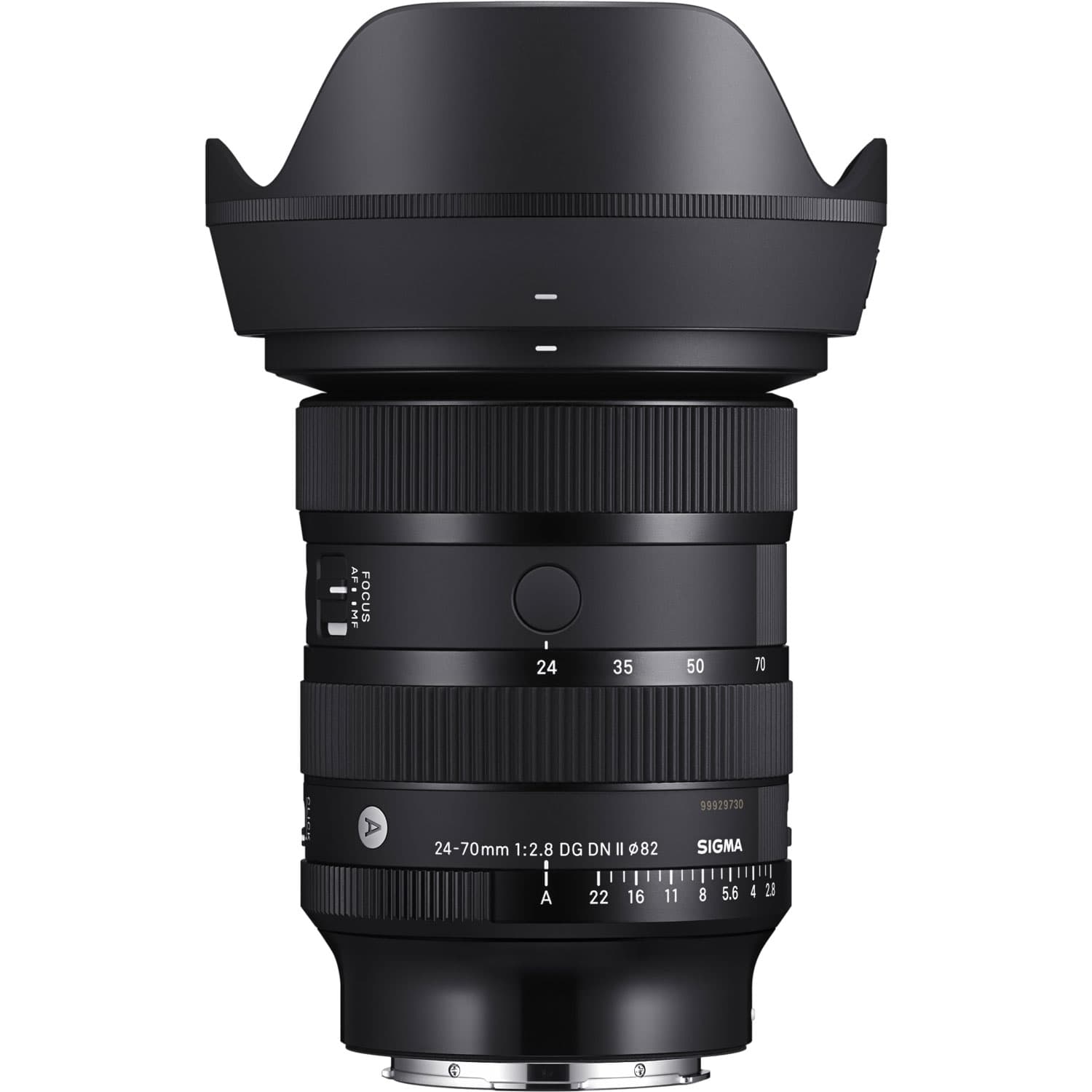
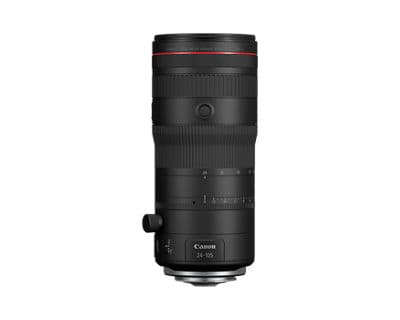
Do You Need f/2.8, or Do You Need 105?
A trinity hangtag is the wrong first question. f/2.8 through 70, or f/4 through 105, is the range you work. Then shop Gavler's live ranking.
The Best Camera Lenses in 2026, Ranked by the Photographers Who Shoot Them
Sony, Canon, Nikon, Sigma, Tamron, Fuji — Gavler's community ranks the lenses worth buying, from a $629 prime to a $2,798 pro telephoto.