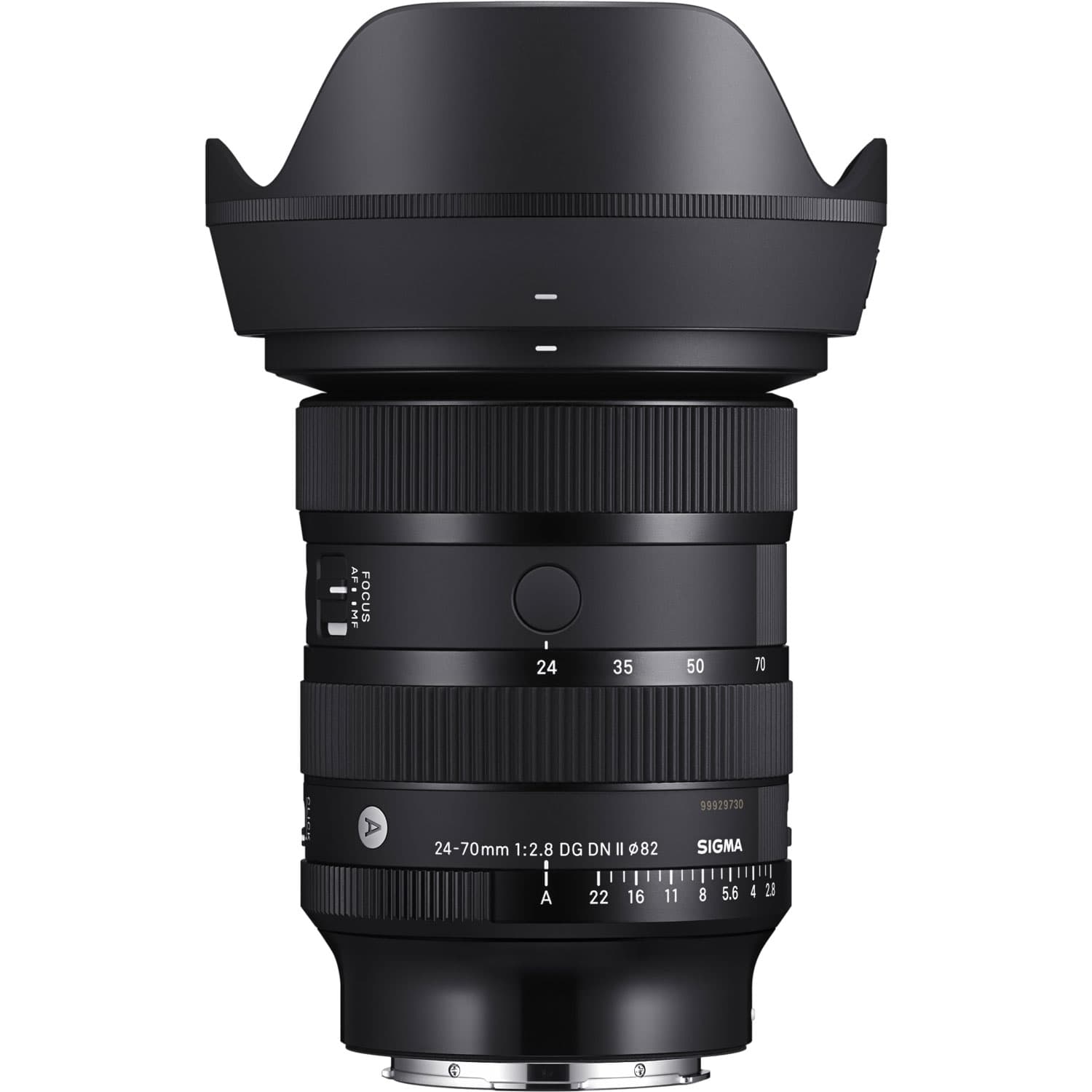
Sigma 24-70mm f/2.8 DG DN II Art.
The redesigned Art delivers GM-class sharpness at half the price. Faster AF, lighter build, and the L-mount/E-mount option that keeps catching first-party off guard.
The Verdict.
Gavler Meta-Score
“The value benchmark for a pro 24-70 on E-mount and L-mount: Dustin Abbott measured roughly 90% of Sony's GM II performance at about half the price, with fast, well-damped AF and minimal focus breathing. The trade-off is more distortion and vignetting than the GM II or Tamron's 28-75 G2, and extreme corners soften at the ends of the range.”
The Gavler Verdict
The Gavler Review.
Sigma 24-70mm f/2.8 DG DN II Art Review: 90 Percent of the GM II for Half the Price
The Sigma 24-70mm f/2.8 DG DN II Art ranks fourth on our Best Standard Zoom Lenses list with a 9.2, and the pitch is simple: near-flagship performance at roughly half the flagship price. At $1,199, Dustin Abbott measured it delivering "at least 90% of the GM's overall performance while costing essentially 50% of the price." The trade-off is real but narrow — more distortion and vignetting at the extremes than Sony's GM II — which makes this the standard zoom for photographers who'd rather spend the savings on a body or a second lens than chase the last 10 percent of optical perfection.
What it is
This is Sigma's second-generation Art-line 24-70mm f/2.8, a ground-up redesign for Sony E-mount and L-mount rather than an update of the original DG DN. Sigma cut weight to 735 grams — down from the first version's 827 grams — while adding an aperture ring with a de-clickable, lockable design, more programmable buttons, and full weather sealing including a rubber gasket at the mount. Cameralabs' Gordon Laing, who tested it directly against Sony's own 24-70mm f/2.8 GM II, put the size difference in context: at 735 grams it's within 40 grams of the Sony (695 grams), while undercutting Nikon's mirrorless 24-70mm f/2.8 (805 grams) and Canon's (900 grams).
Autofocus runs through Sigma's redesigned High-response Linear Actuator (HLA), a linear motor built for speed and video-friendly focus pulls. It's a 19-element, 15-group optical design with 11 rounded aperture blades and an 82mm filter thread, priced at $1,199 against the Sony GM II's roughly $2,300.
In use
Center sharpness is the lens's clearest win, and it's strong enough that reviewers keep comparing it to prime-lens performance rather than zoom-lens performance. Digital Camera World wrote: "We'd be impressed at these center sharpness scores if they were from a prime lens. So considering they're from a zoom, the Sigma Mark II's performance is simply outstanding, even wide open, and at all focal lengths." Cameralabs' hands-on testing backed that up focal length by focal length, finding center sharpness "nice and crisp" at f/2.8 from 24mm through 50mm, with only the 70mm end needing a stop down to f/4 to hit peak crispness.
Autofocus is the other standout. Dustin Abbott's focus-pull testing found "fast, smooth, and well damped" results with "no hunting or settling, and in the middle of the range... very little focus breathing" — a meaningful result for hybrid shooters who use the same lens for stills and video. Cameralabs' testing matched this, describing "no visible hunting" in single-AF mode and "essentially instant" refocusing in continuous AF.
The comparison against Sony's own flagship is where the lens earns its reputation. Cameralabs tested both side by side and concluded the Sigma "comes close to Sony's own 24-70 G Master II which is the best 24-70 2.8 I've tested to date. The Sony still enjoys a mild edge in sharpness, particularly at 70mm f2.8, but I was struck how close they were overall."
Strengths
- Near-prime center sharpness at every focal length. Digital Camera World's wide-open results impressed the reviewers enough to compare it directly to prime-lens performance, not just other zooms.
- HLA autofocus with minimal focus breathing. Dustin Abbott's test found "very little focus breathing" mid-range — a real advantage for video shooters who can't afford visible field-of-view shifts during focus pulls.
- 735 grams and full weather sealing. Lighter than Nikon's and Canon's mirrorless 24-70mm f/2.8 options, with a sealed barrel and rubber mount gasket that Cameralabs confirmed on inspection.
- Roughly half the price of the category benchmark. Abbott's headline number — 90% of the GM II's performance at 50% of its cost — is the entire value proposition, and it holds up under independent testing.
The trade-offs — who should skip it
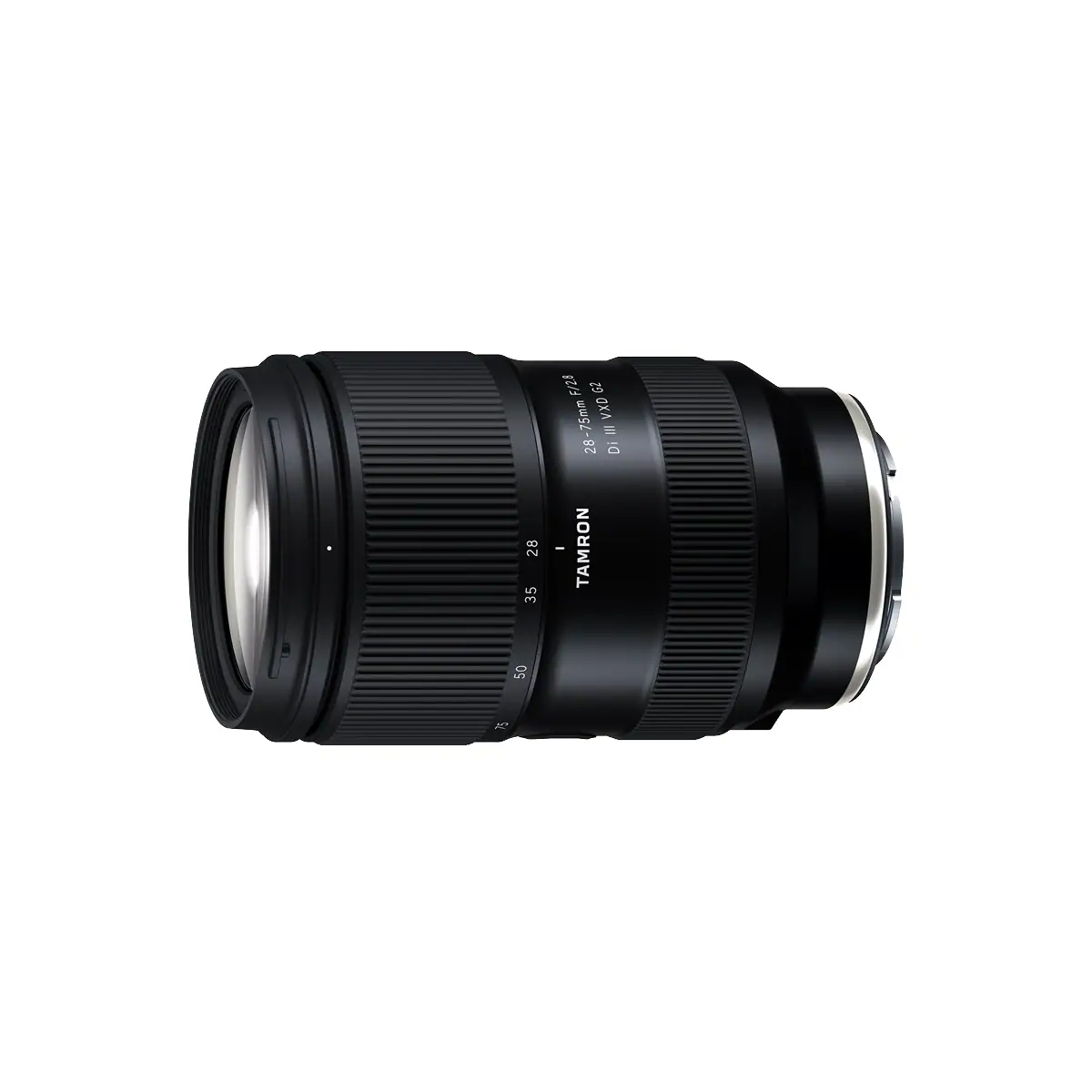
The honest weak point is optical correction, not raw sharpness. Abbott found that both the Sony GM II and Tamron's 28-75mm G2 carry "much lower amounts of distortion and vignette," and what correction they do need is more linear and easier to fix in post. Digital Camera World's testing agreed, finding "room for slight improvement in extreme edge/corner sharpness when using wide apertures at both ends of the zoom range" — a real but minor softness that mostly shows up in pixel-level corner crops, not finished images.
As a third-party lens on Sony bodies, there's also a functional ceiling: Cameralabs noted the Sigma "won't support the fastest burst speeds with AFC on the top Sony bodies, and won't support focus breathing correction either." For most shooters that's invisible in practice, but sports and wildlife photographers running a flagship Sony body at its fastest burst rates should know the limitation exists before buying.
Photographers who need the cleanest possible geometry straight out of camera, or who need every AF feature a Sony flagship body supports, should look at the GM II instead. Everyone else is trading a small, correctable optical gap for a genuinely large price gap.
How it compares
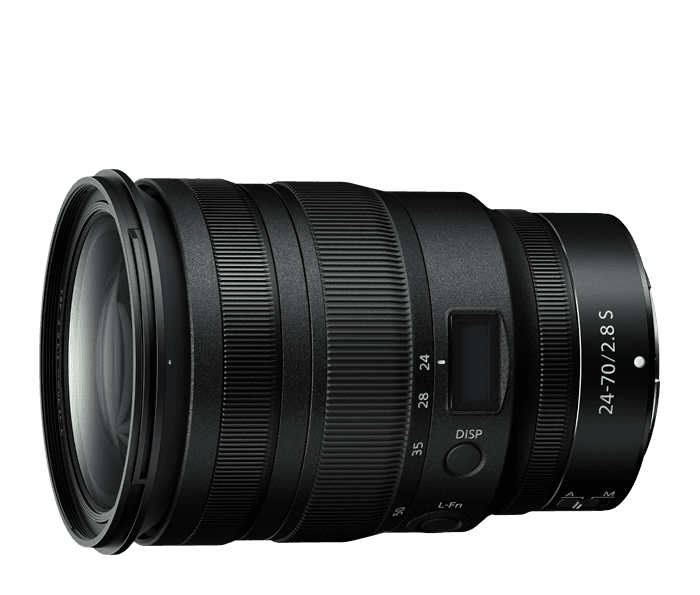
On its own list, the Sigma sits behind three first-party options. The Sony FE 24-70mm f/2.8 GM II at rank one is the benchmark it's measured against throughout this review — sharper at the extremes and with fewer AF limitations on Sony bodies, at roughly double the price. The Nikon Z 24-70mm f/2.8 S at rank three takes a different design approach entirely: Photography Life noted its externally-zooming barrel as "the one downside to the lens's build quality," a trade-off the Sigma's fully internal-feeling zoom avoids, though the two aren't cross-shoppable across mounts.
For L-mount and Sony E-mount shooters specifically weighing value against the ceiling of first-party performance, the Sigma remains the standard zoom Gavler recommends buying first.
The Gavler verdict
A 9.2, reflecting a rare consensus: expert and community scores are effectively tied because reviewers agree on both halves of the story — genuinely excellent sharpness and autofocus, and genuinely higher distortion than the class leader. Dustin Abbott's summary captures it best: roughly 90 percent of the Sony GM II's performance for about half its price. If you shoot Sony E-mount or L-mount and don't need the last few percent of corner sharpness or flagship-body AF features, this is the 24-70mm f/2.8 to buy.
Common Questions
For E-mount and L-mount shooters who don't need first-party glass, yes. It ranks fourth on Gavler's Best Standard Zoom Lenses list with a 9.2, and Dustin Abbott measured 'at least 90% of the GM's overall performance while costing essentially 50% of the price.' The honest trade-off is more distortion and vignetting than the Sony GM II, corrected automatically in most workflows.
Closer than the price gap suggests. Cameralabs's Gordon Laing tested both and wrote that the Sigma 'comes close to Sony's own 24-70 G Master II which is the best 24-70 2.8 I've tested to date. The Sony still enjoys a mild edge in sharpness, particularly at 70mm f2.8, but I was struck how close they were overall.' At roughly half the Sony's price, that's a strong case for the Sigma unless you need the absolute best.
Digital Camera World found 'room for slight improvement in extreme edge/corner sharpness when using wide apertures at both ends of the zoom range,' and Cameralabs noted that as a third-party lens it 'won't support the fastest burst speeds with AFC on the top Sony bodies, and won't support focus breathing correction either.' Neither is a dealbreaker for most shooters.
Where to Buy.
Prices checked regularly
90-day price history
Price History
Steady at $1,199 for the entire 90-day tracking window — no increases, no discounts, across 91 tracked days.
Tracked daily across retailers. Vote Want itabove and we’ll alert you the moment the price drops.
Some links are affiliate links — Gavler may earn a commission. This never affects rankings or scores. Learn more.
Precision Engineering
Prime-Like Sharpness
DCW rated its center resolution good enough to impress if it came from a prime lens — outstanding wide open at every focal length.
HLA AF, Minimal Breathing
The linear HLA motor delivers fast, well-damped focus pulls with very little focus breathing for video work.
GM Performance, Half the Price
Abbott measured roughly 90% of Sony's GM II performance at about 50% of the cost; 11 rounded blades and an 82mm filter thread.
Technical Specifications
The Scoreboard
Expert consensus (91) and community (92) are effectively tied: multiple outlets call it the best non-first-party 24-70 ever made, praising sharpness and AF, while docking it for higher distortion and vignetting than the Sony GM II and Tamron 28-75 G2.
Cast Your Vote
Do you think Sigma 24-70mm f/2.8 DG DN II Art deserves the #4 spot in Best Standard Zoom Lenses?
Global Critique
“We'd be impressed at these center sharpness scores if they were from a prime lens. So considering they're from a zoom, the Sigma Mark II's performance is simply outstanding, even wide open, and at all focal lengths.”
“There's room for slight improvement in extreme edge/corner sharpness when using wide apertures at both ends of the zoom range, but that's the only weakness in lens sharpness here.”
“Autofocus pulls were fast, smooth, and well damped. No hunting or settling, and in the middle of the range where I did my test (about 35mm) I saw very little focus breathing.”
“It also retains a core Sigma strength by offering up a lens that gives you at least 90% of the GM's overall performance while costing essentially 50% of the price.”
More from Best Standard Zoom Lenses.
See how other top picks compare in this category.

Do You Need f/2.8, or Do You Need 105?
A trinity hangtag is the wrong first question. f/2.8 through 70, or f/4 through 105, is the range you work. Then shop Gavler's live ranking.
The Best Camera Lenses in 2026, Ranked by the Photographers Who Shoot Them
Sony, Canon, Nikon, Sigma, Tamron, Fuji — Gavler's community ranks the lenses worth buying, from a $629 prime to a $2,798 pro telephoto.