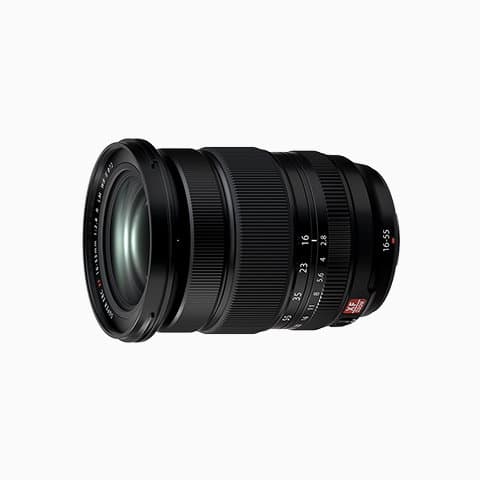
Fujifilm XF 16-55mm f/2.8 R LM WR II.
The redesigned f/2.8 constant standard zoom — dramatically smaller, lighter, and sharper than the original, with faster linear-motor autofocus.
The Verdict.
Gavler Meta-Score
“The rare Mark II that is better by subtraction: Fujifilm cut the weight from 655g to 410g and made it noticeably sharper (Digital Camera World) while keeping the constant f/2.8. Two caveats — there is still no image stabilization, and it relies more on in-camera correction for pronounced distortion at both ends.”
The Gavler Verdict
The Gavler Review.
Fujifilm XF 16-55mm f/2.8 R LM WR II Review: Better by Subtraction
The Fujifilm XF 16-55mm f/2.8 R LM WR II ranks number 9 on Gavler's Best Standard Zoom Lenses list with an 8.4, and it's a rare case of a Mark II lens getting better mainly by cutting weight. Digital Camera World was "really impressed" that the redesign is "very noticeably smaller, lighter and sharper than the original," and PetaPixel put hard numbers on the transformation: the lens drops from "23.1 ounces (655 grams) down to 14.5 ounces (410 grams)." The catch is that Fujifilm didn't add stabilization to make up for the lighter build, and the smaller barrel leans harder on in-camera correction for genuinely pronounced distortion.
What it is
Fujifilm's pro standard zoom covers a 16-55mm range — 24-84mm full-frame equivalent — at a constant f/2.8, built from 16 elements in 11 groups with an 11-blade rounded aperture. The headline change from the original is entirely mechanical: linear motors replace the old focus system, and the whole barrel has been re-engineered to shed nearly 40% of its mass. The filter thread shrinks accordingly, from 77mm on the original down to 72mm, and the minimum focus distance holds at a workable 0.30m.
At $1,199, it sits at the top of Fujifilm's standard zoom lineup, undercutting the roughly $2,200 Panasonic Lumix S PRO 24-70mm f/2.8 on L-mount by nearly half while covering a comparable role for X-series bodies. Digital Camera World's full lab review confirms the price held steady from the original despite the redesign — a meaningful detail, since Fujifilm could easily have charged more for the engineering work involved in the weight cut.
In use
The autofocus upgrade is where the Mark II earns its keep day to day. Fstoppers found that in practical tests, "the autofocus tracks seamlessly, keeping subjects sharp without significant delay" — a meaningful improvement for event and documentary shooters who need the lens to keep pace with unpredictable subjects. PetaPixel's pre-production hands-on backs this up, describing autofocus as fast and confident across the zoom range.
The weight cut is the lens's real selling point, and it's not subtle in the hand. PetaPixel calls the 245-gram reduction "a huge change to the handling of this fast, general-purpose zoom" — the difference between a lens you tolerate on an X-T5 for a full day of shooting and one you actively forget is there. Digital Camera World's optical testing found the sharpness genuinely improved over the original too, catering to Fujifilm's newer 40-megapixel sensors where the older design's resolving power started to show its age.
The honest weak point is distortion. Digital Camera World's lab tests found "there's very heavy barrel distortion at the most wide-angle zoom setting," with pincushion distortion becoming "much more noticeable towards the long end of the zoom range." Their verdict is direct: "the Mark II lens relies more heavily on automatic in-camera corrections for distortion" than the original did — meaning RAW shooters who skip lens profiles in post will see more uncorrected warping than they might expect from a lens at this price.
Strengths
- A genuinely transformative weight cut. PetaPixel's measured drop from 655g to 410g isn't a marketing number — it changes how the lens feels mounted on smaller X-series bodies for a full day of shooting.
- Sharper optics on newer sensors. Digital Camera World's testing confirmed real resolving-power gains that specifically benefit Fujifilm's 40MP bodies, where the original lens was starting to show its limits.
- Autofocus that actually tracks. Fstoppers' verdict that AF "tracks seamlessly... without significant delay" reflects a real upgrade from linear motors, useful for anyone shooting moving subjects rather than static scenes.
The trade-offs — who should skip it
- No optical stabilization, full stop. Digital Camera World lists it plainly as a con. On an IBIS body like the X-T5 or X-H2 this is a non-issue; on the X-T30 or older non-stabilized bodies, it's a real limitation for handheld low light.
- Distortion that needs correcting. The "very pronounced" native barrel and pincushion distortion Digital Camera World measured means this lens is designed around software correction, not optical perfection — fine for JPEG shooters, an extra step for RAW workflows.
- Ordinary close-focus performance. PetaPixel notes this lens "isn't going to win any close-up awards" — if close-range work matters to you, it's not the strength here.
How it compares
On the same Best Standard Zoom Lenses list, the Nikon Z 24-120mm f/4 S ranks 8, one spot above the Fuji — a different mount and a slower f/4 aperture, but Photography Life calls it "one of the best all-around midrange zooms" it has tested, often selling under $1,000. It's the closest thing to a value-per-dollar rival, even across systems. Within the same list, the Panasonic Lumix S PRO 24-70mm f/2.8 at rank 10 shows what the alternative looks like when a manufacturer prioritizes build over portability: Leica-certified optics and full weather sealing, but at 935 grams — more than double the Fuji's weight, for a full-frame system rather than APS-C.
Within Fujifilm's own X-mount lineup, there's no real competition — this is the standard zoom Fujifilm wants professional and enthusiast X-series shooters to buy, and at 410 grams it's hard to argue against unless stabilization or minimal distortion are non-negotiable for your work.
The Gavler verdict
An 8.4 that reflects a lens made meaningfully better through disciplined engineering rather than added features. Digital Camera World's own summary — "It's almost perfect..." — captures the consensus: sharper, dramatically lighter, and priced the same as before, undercut only by the absence of stabilization and distortion correction that leans harder on software than optics. For X-system documentary, event, and travel shooters who want f/2.8 without carrying a brick, this is still the lens to buy; anyone who needs in-lens stabilization on a non-IBIS body should look elsewhere.
Common Questions
For X-system shooters who want a genuinely portable f/2.8 standard zoom, yes. Digital Camera World was 'really impressed' that the Mark II is 'very noticeably smaller, lighter and sharper than the original,' and PetaPixel measured the weight drop from 655 grams to 410 grams. It ranks number 9 on Gavler's Best Standard Zoom Lenses list with an 8.4 at $1,199.
No — Digital Camera World lists 'no optical stabilization' as one of its three cons, and the lens leans entirely on in-body stabilization from bodies like the X-T5 or X-H2. It's a non-issue on IBIS-equipped cameras, but a real limitation on older or IBIS-less X-series bodies.
More than you'd want from in-camera JPEGs left uncorrected. Digital Camera World found 'very pronounced' native barrel and pincushion distortion at the short and long ends and listed 'relies on auto distortion correction' as a con — RAW shooters should expect to lean on lens profiles.
Where to Buy.
Prices checked regularly
90-day price history
Price History
Steady at $1,199 for the entire 90-day tracking window — no increases, no discounts, across 91 tracked days.
Tracked daily across retailers. Vote Want itabove and we’ll alert you the moment the price drops.
Some links are affiliate links — Gavler may earn a commission. This never affects rankings or scores. Learn more.
Precision Engineering
410g, 245g Lighter
PetaPixel measured the drop from 655g to 410g versus the original — a transformation in handling on X-T5 and X-H2 bodies.
Smaller, Lighter, and Sharper
DCW found the Mark II very noticeably smaller, lighter and sharper than the original while keeping the constant f/2.8; 72mm filter, down from 77mm.
Faster Linear-Motor Autofocus
LM autofocus that Fstoppers found tracks seamlessly, keeping subjects sharp without significant delay.
Technical Specifications
The Scoreboard
Community (88) and expert consensus (87) both improve on the original: reviewers credit the dramatic weight cut and sharper optics, while noting the Mark II still omits optical stabilization and leans more on in-camera correction for distortion. The weight and AF figures draw partly on PetaPixel's pre-production hands-on.
Cast Your Vote
Do you think Fujifilm XF 16-55mm f/2.8 R LM WR II deserves the #9 spot in Best Standard Zoom Lenses?
Global Critique
“I'm really impressed that the Fujifilm XF 16-55mm f/2.8 R LM WR II is very noticeably smaller, lighter and sharper than the original version of the lens.”
“The downsizing comes at a price however and, based on our lab test results, the Mark II lens relies more heavily on automatic in-camera corrections for distortion. Native barrel and pincushion distortion are very pronounced towards the short and long ends of the zoom range respectively.”
“Fujifilm drastically cut the weight of the new version from 23.1 ounces (655 grams) down to 14.5 ounces (410 grams) which represents a huge change to the handling of this fast, general-purpose zoom.”
“In practical tests, the autofocus tracks seamlessly, keeping subjects sharp without significant delay.”
More from Best Standard Zoom Lenses.
See how other top picks compare in this category.

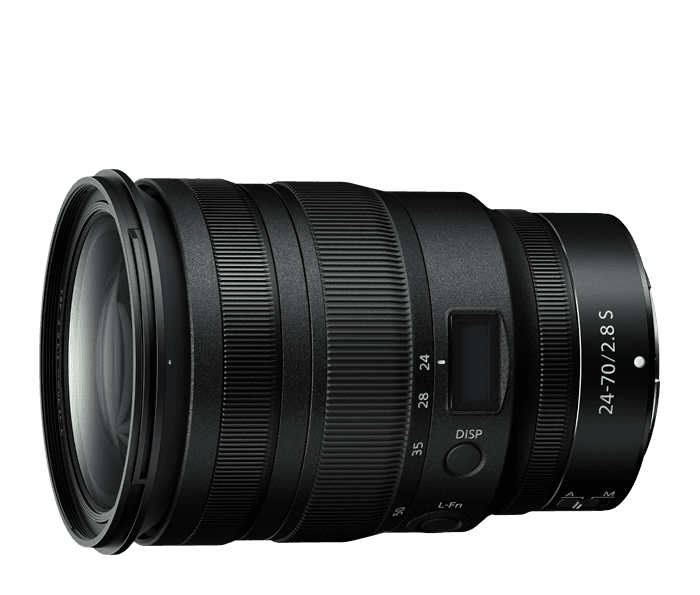
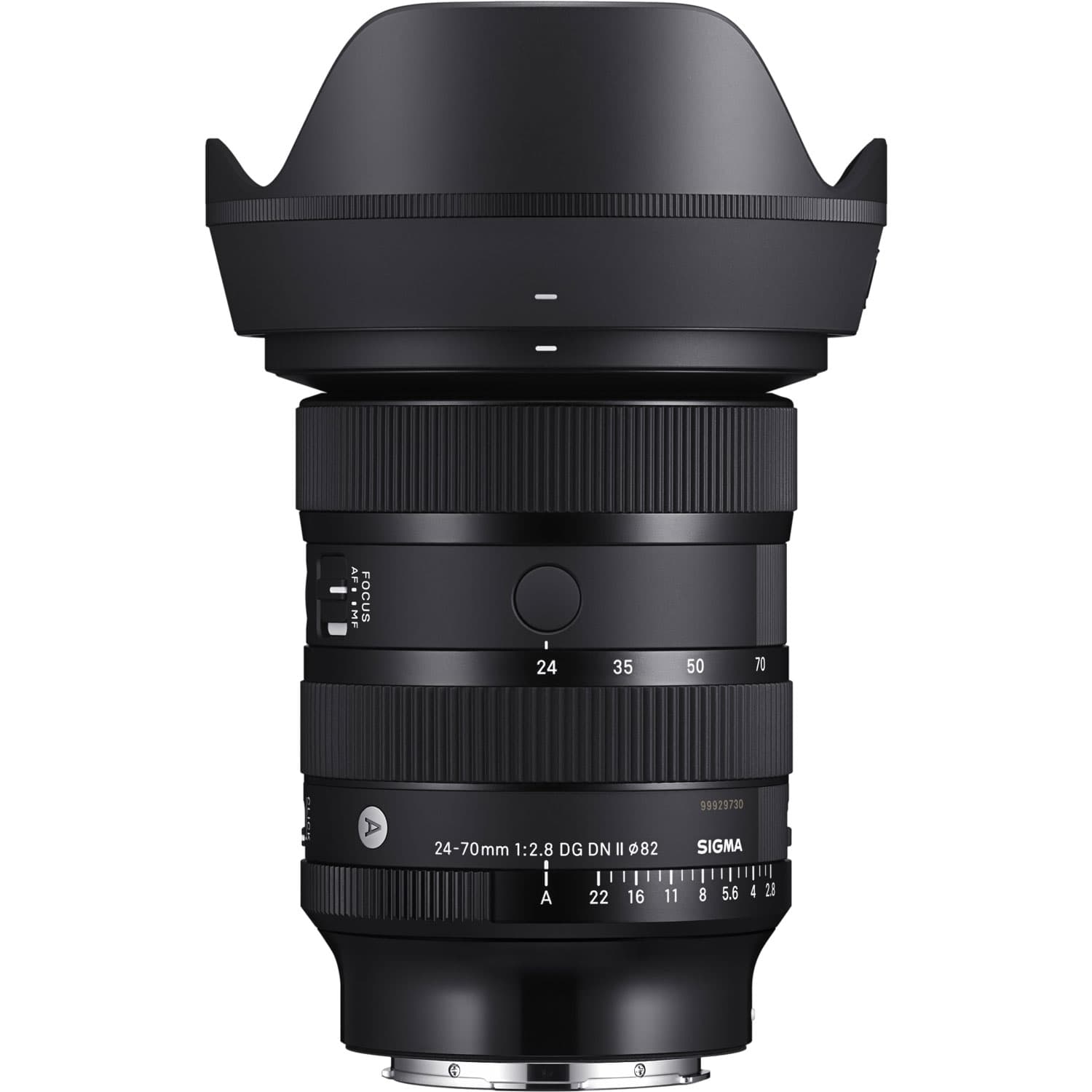
Do You Need f/2.8, or Do You Need 105?
A trinity hangtag is the wrong first question. f/2.8 through 70, or f/4 through 105, is the range you work. Then shop Gavler's live ranking.
The Best Camera Lenses in 2026, Ranked by the Photographers Who Shoot Them
Sony, Canon, Nikon, Sigma, Tamron, Fuji — Gavler's community ranks the lenses worth buying, from a $629 prime to a $2,798 pro telephoto.