The Best Beach Umbrellas in 2026, Ranked by the People Who Have Chased One Down the Sand
Wind-tested ballast bases, billowing canopies, and stake-out shades — the beach umbrellas worth packing for the 2026 summer, ranked by the community.
For something as simple as a piece of fabric on a pole, the beach umbrella is a surprisingly easy product to get wrong. The wrong umbrella will spend half your day fighting the wind, half blocking the breeze you actually want, and the other half cartwheeling toward the water while you chase it across the sand. The right umbrella does none of those things — and the difference between the two has very little to do with price. A $250 Shibumi Shade and a $55 Tommy Bahama solve different problems, and a $200 Sun Ninja Beach Tent solves a third one entirely.
The 2026 beach umbrella market really comes down to three approaches: wind-powered canopies that use the breeze as structure, ballast-base umbrellas that solve wind with sheer weight, and stake-out tents that solve it by laying low and anchoring at four corners. We're now into peak beach season, and Amazon Prime Day (June 23–26) overlapping the Fourth of July sales is the best in-season chance at a real discount — but the strongest models (Shibumi, beachBUB, Sun Ninja) go to backorder fast once school lets out, so buy the one you want when you see stock rather than waiting for a deeper cut, and give yourself a low-key weekend to learn the setup before a real vacation. Gavler's community has ranked ten beach umbrellas and shade systems — from a $45 budget tilt umbrella to a $296 commercial-grade marine-acrylic flagship — by lived experience on the sand. The picks below pull from the live Best Beach Umbrellas list.
How the Rankings Work
One vote per person on the Best Beach Umbrellas list. The instruction is simple: pick the umbrella you would actually pack for your next beach day. Because the list spans single-pole umbrellas, ballast-base umbrellas, and stake-out tent canopies, picks from different form factors compete on the same page — judged on whether the thing does its job in real conditions rather than separated by category. The result is a ranking built on beach days, not on product copy.
The Top Picks
Shibumi Shade — The Wind-Powered Canopy
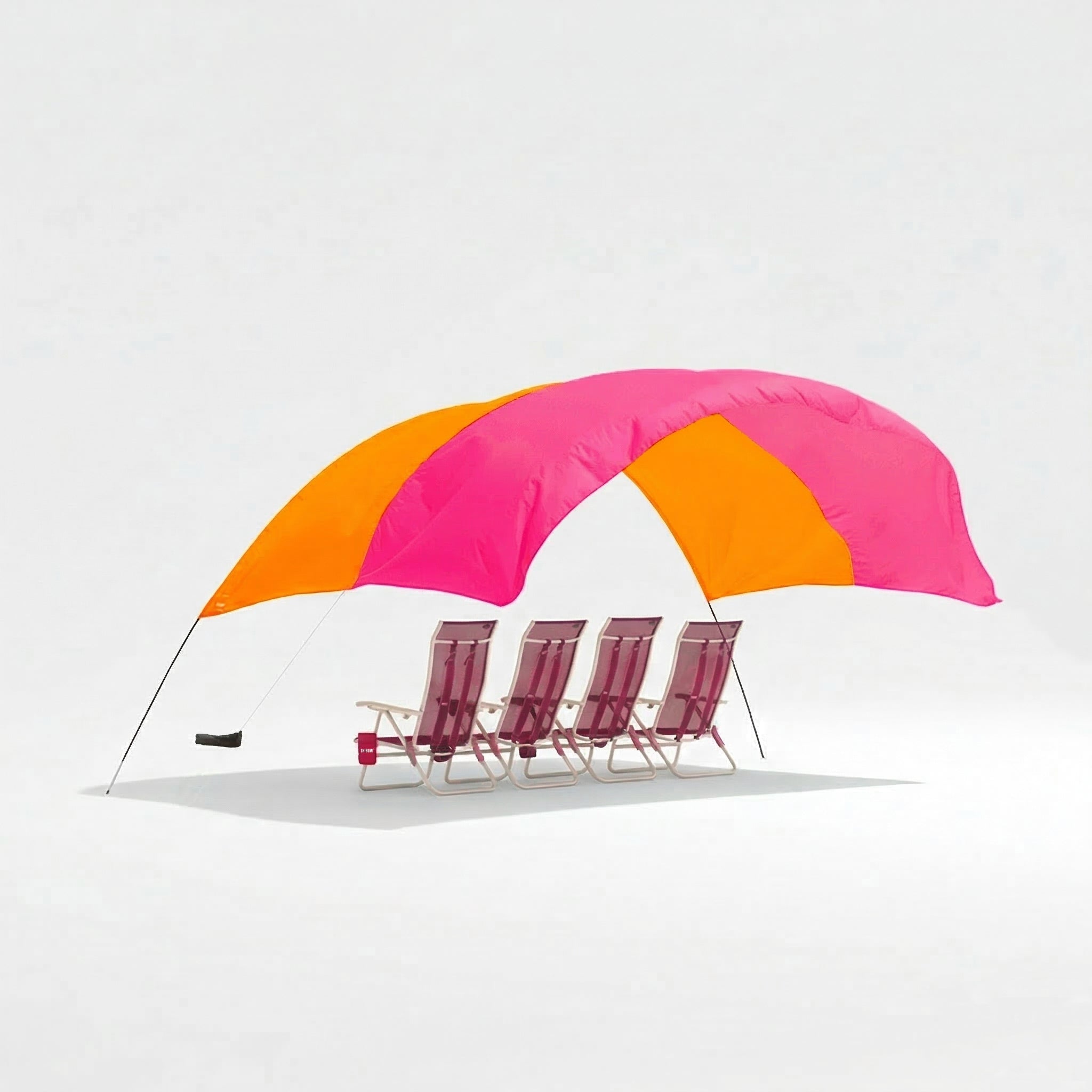
Shibumi Shade
A single-pole canopy that catches the breeze to billow into the largest shaded footprint of anything tested, and gets more stable as wind picks up rather than less.
Amazon affiliate · price subject to change
The Shibumi is the umbrella that turned beach shade into an engineering problem. The single curved pole anchors in the sand and a UPF 50+ canopy catches the breeze, billowing into a shape that gets more stable as the wind picks up, not less — the design works with as little as 3 mph of wind, which means coastal beach conditions are exactly where it shines. At four pounds, it is the easiest serious shade you can carry, and one person can set it up in about a minute. The honest catch is that it relies on the breeze, so dead-calm inland lake beaches are not its native habitat, and the $250 price is higher than most spike umbrellas. For coastal beach days, nothing else combines this much shade with this little hassle. A 9.4 score puts it first.
beachBUB All-In-One — The Stability Gold Standard
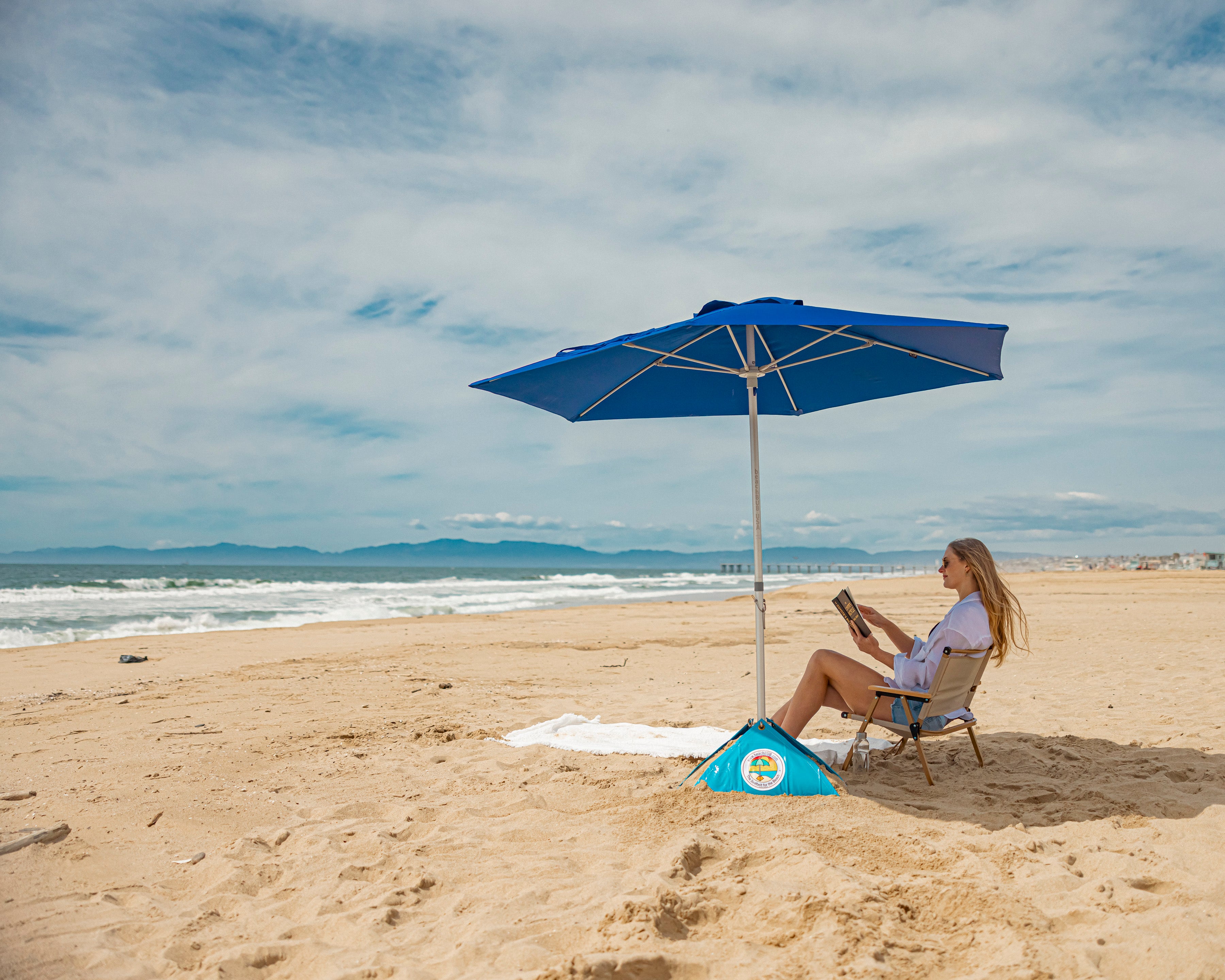
beachBUB All-In-One
Its fillable ballast base is tested to 44 mph (beyond ASTM), so it stays planted on days that send ordinary spike umbrellas cartwheeling down the sand.
Amazon affiliate · price subject to change
The beachBUB solved the single biggest failure of beach umbrellas: staying in the ground. Instead of a pole jammed into loose sand, it seats the umbrella in a wide, fillable ballast base that you load with sand on site. That weighted foundation is independently wind-tested to 44 mph — beyond the ASTM standard — which is why Wirecutter, Travel + Leisure, and Gear Junkie all single it out as the high-wind pick. The 7.5-foot UPF 50+ canopy is supported by sturdy fiberglass ribs, and the brand backs the base with a lifetime warranty. The cost is setup effort: you carry the base and fill it at the beach, which is more work than planting a spike. For anyone who has chased a runaway umbrella down the sand, the trade is easy. A 9.2 score.
Tommy Bahama Sand Anchor 7' — The Mainstream Default
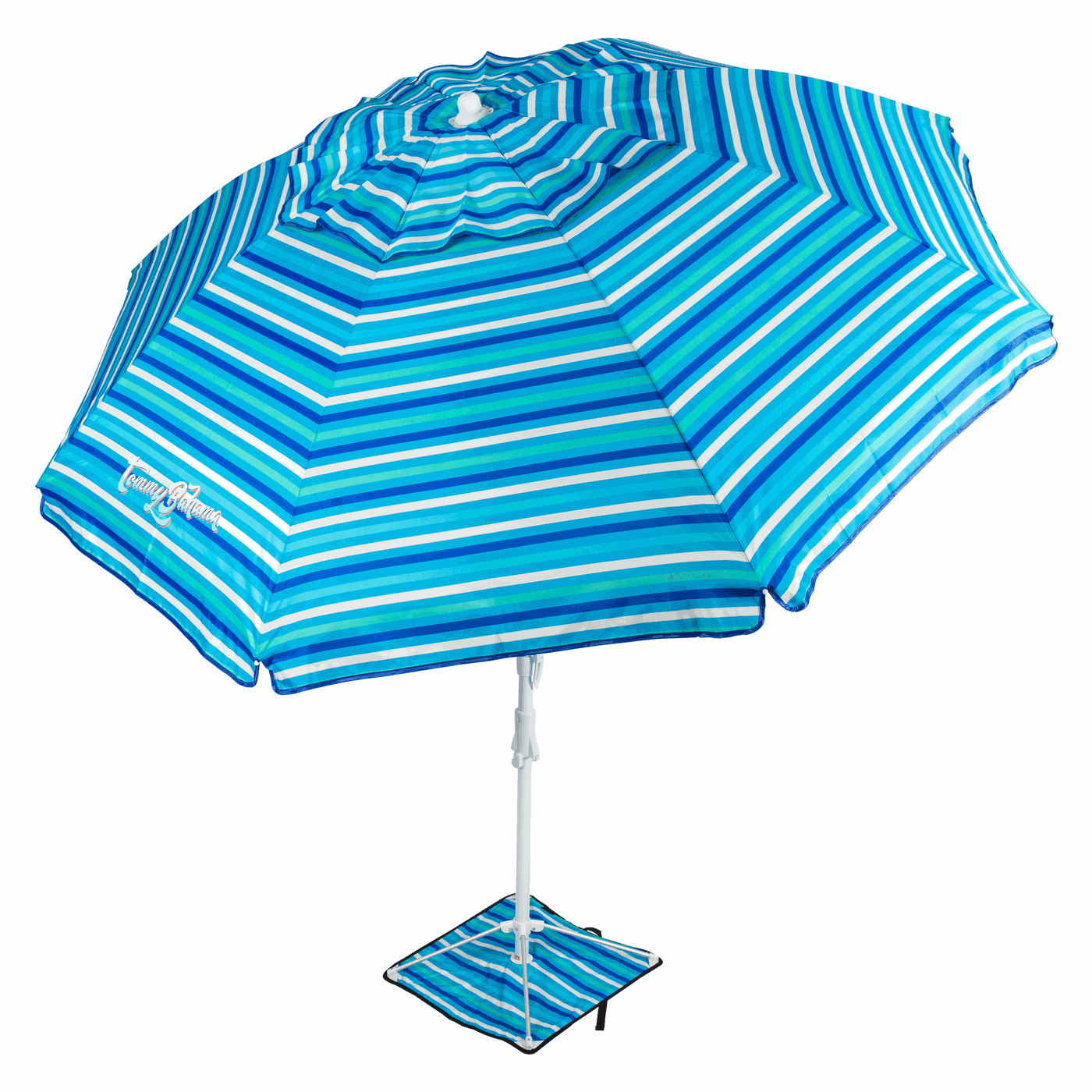
Tommy Bahama Sand Anchor 7'
Integrated screw-in sand anchor, reliable tilt, and a vented SPF 100+ canopy at a price that makes it the one most beachgoers should just buy.
Amazon affiliate · price subject to change
The Tommy Bahama Sand Anchor is the umbrella most people picture when they think "beach umbrella," and it earns the ubiquity. An integrated screw-in sand anchor threads into the beach for far more secure hold than a plain spike, the pole tilts to chase the sun through the day, and the vented canopy is rated SPF 100+. It is not the most wind-proof or the largest-coverage option here — a strong gust can still test the anchor, and the 7-foot canopy shades one or two chairs rather than a group. But for the price, the blend of easy setup, decent wind resistance, sun protection, and tilt is the best all-around value for a typical beach day, which is why it is the default recommendation for most buyers. A 9.0 score.
Coolibar Titanium Beach Umbrella — The Sun-Protection Specialist
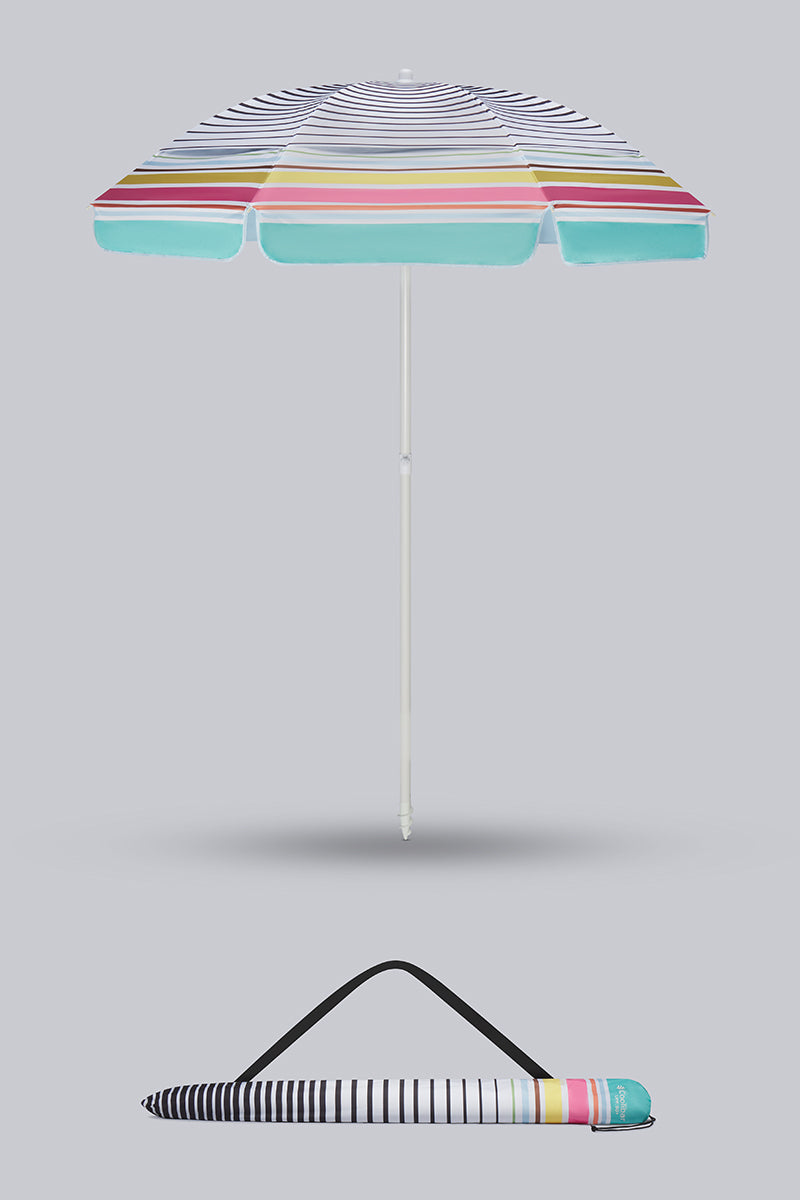
Coolibar Intego Beach Umbrella
Dermatologist-recommended UPF 50+ fabric that blocks ~98% of UVA/UVB — the choice when shade quality matters more than packed size.
Amazon affiliate · price subject to change
The Coolibar comes from a brand that built its business on dermatologist-recommended sun protection, and the umbrella is engineered around that one job. The canopy is rated to block 98 percent of UVA and UVB and carries a UPF 50+ certification, which is the difference between a real day at the beach and a sunburn through the shade. It is built well — solid aluminum frame, vented top, reliable tilt — but it is not the windiest or largest-footprint umbrella here, and the price is at the premium end of mainstream. For families with kids, anyone with fair skin, or anyone who has had a bad sun day, the spec that matters is the one Coolibar leads on. An 8.8 score.
Sport-Brella XL — The Half-Tent Hybrid
Sport-Brella XL
Zip-down side panels, wind windows, and stakes turn it into a near-enclosed shelter — the pick for families who want wind, sun, and sand-spray protection in one.
Amazon affiliate · price subject to change
The Sport-Brella XL is what you buy when one product needs to handle sun, wind, and the occasional summer storm. The nine-foot canopy combines an umbrella body with zip-down side panels, wind windows for ventilation, and ground stakes — set it up properly and it becomes a near-enclosed shelter rather than just an overhead shade. Reviewers consistently note it handles wind better than a spike umbrella thanks to the stake-out anchor points, and the UPF protection blocks well over 99 percent of UVA/UVB. The trade-offs are size in pack and setup time — it is bulkier than a traditional umbrella and takes a few extra minutes to anchor — but for families wanting one product that handles a full beach day, it is the right answer. An 8.6 score.
Solbello Sun Shade — The Wind-Driven Easy Setup
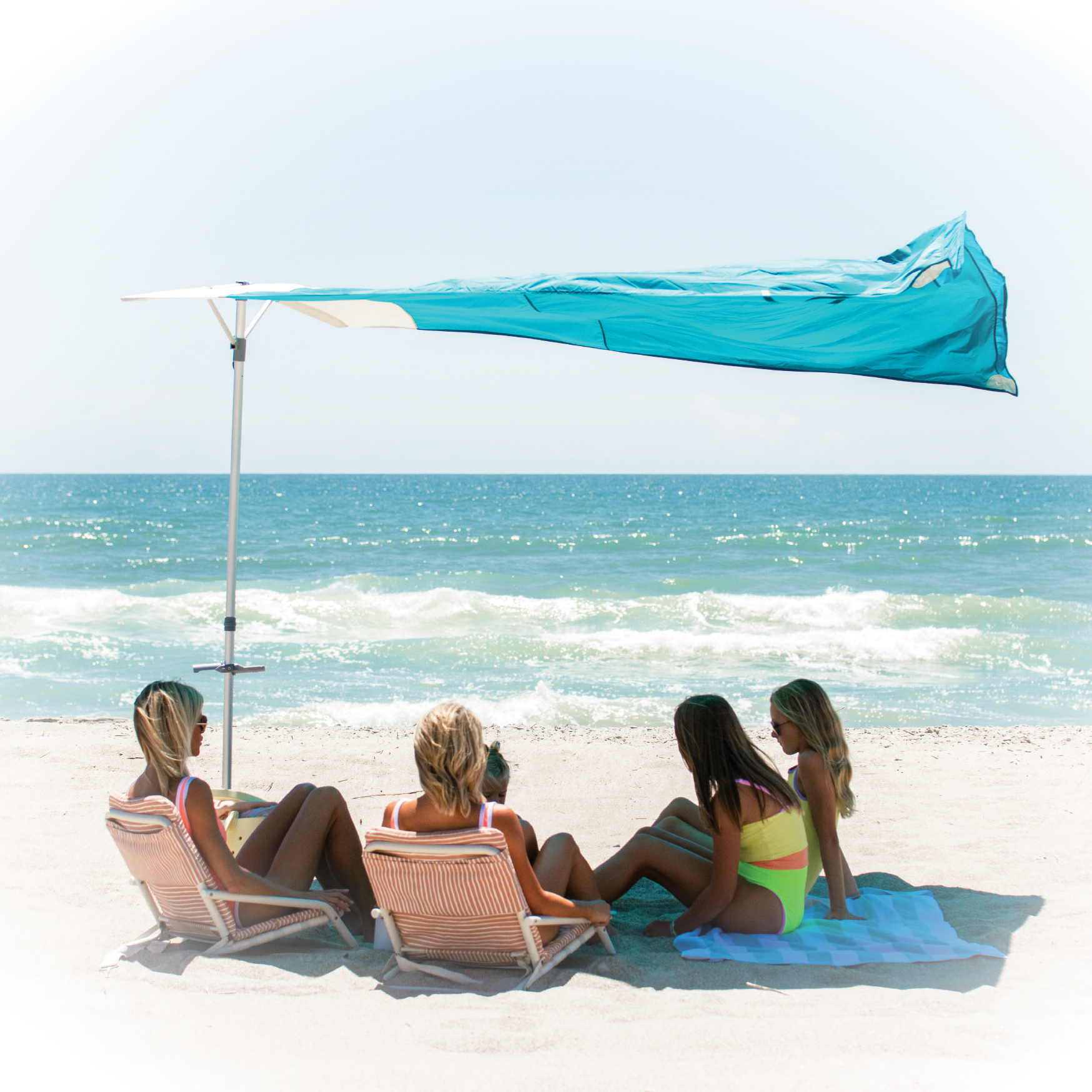
Solbello Sun Shade
Wind-driven design that sets up in under a minute and uses gusts as little as 4 mph to lift the canopy — the only beach shade that gets better the windier it gets.
Amazon affiliate · price subject to change
The Solbello takes the Shibumi-style wind-powered approach and rebuilds it with a focus on setup speed and budget-conscious pricing. The canopy is engineered to flex through gusts rather than fight them, the single pole plants quickly, and the whole thing goes from bag to standing in under a minute. The shade footprint is smaller than the Shibumi's at full billow, and the cloth construction does not feel quite as premium, but at well under half the price it is the easiest entry into a serious wind-powered design. For coastal beachgoers who have heard about the Shibumi but balk at the price, this is the value alternative. An 8.5 score.
Frankford Commercial-Grade Beach Umbrella — The Buy-It-For-A-Decade Premium
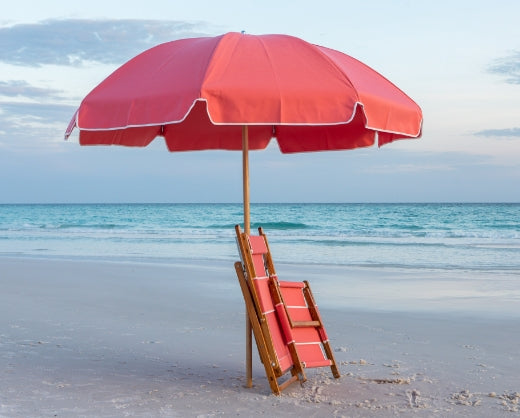
Frankford Commercial-Grade Beach Umbrella
A 7.5-ft canopy of 9-oz marine-grade acrylic fabric over flexible fiberglass ribs and a long-grain ash pole — the umbrella resorts trust, sold for home use with a 5-year fade warranty.
Amazon affiliate · price subject to change
The Frankford is what resorts and beach clubs use, and the build shows it. A marine-grade acrylic canopy holds its UV-blocking property and color far longer than the polyester budget umbrellas degrade in a season or two, the heavy aluminum frame is built to commercial spec, and the proportions throw a meaningfully larger shaded footprint than any consumer-grade umbrella here. At $296 it is far from cheap, but the math works out for a beach house, a frequently-rented vacation home, or anyone who has bought and broken three Tommy Bahamas and is done with the cycle. The catch is portability — it is heavy and bulky, designed to live at one location rather than commute back and forth in a beach bag. An 8.4 score.
Neso Grande Beach Tent — The Pack-Down Portability Champion
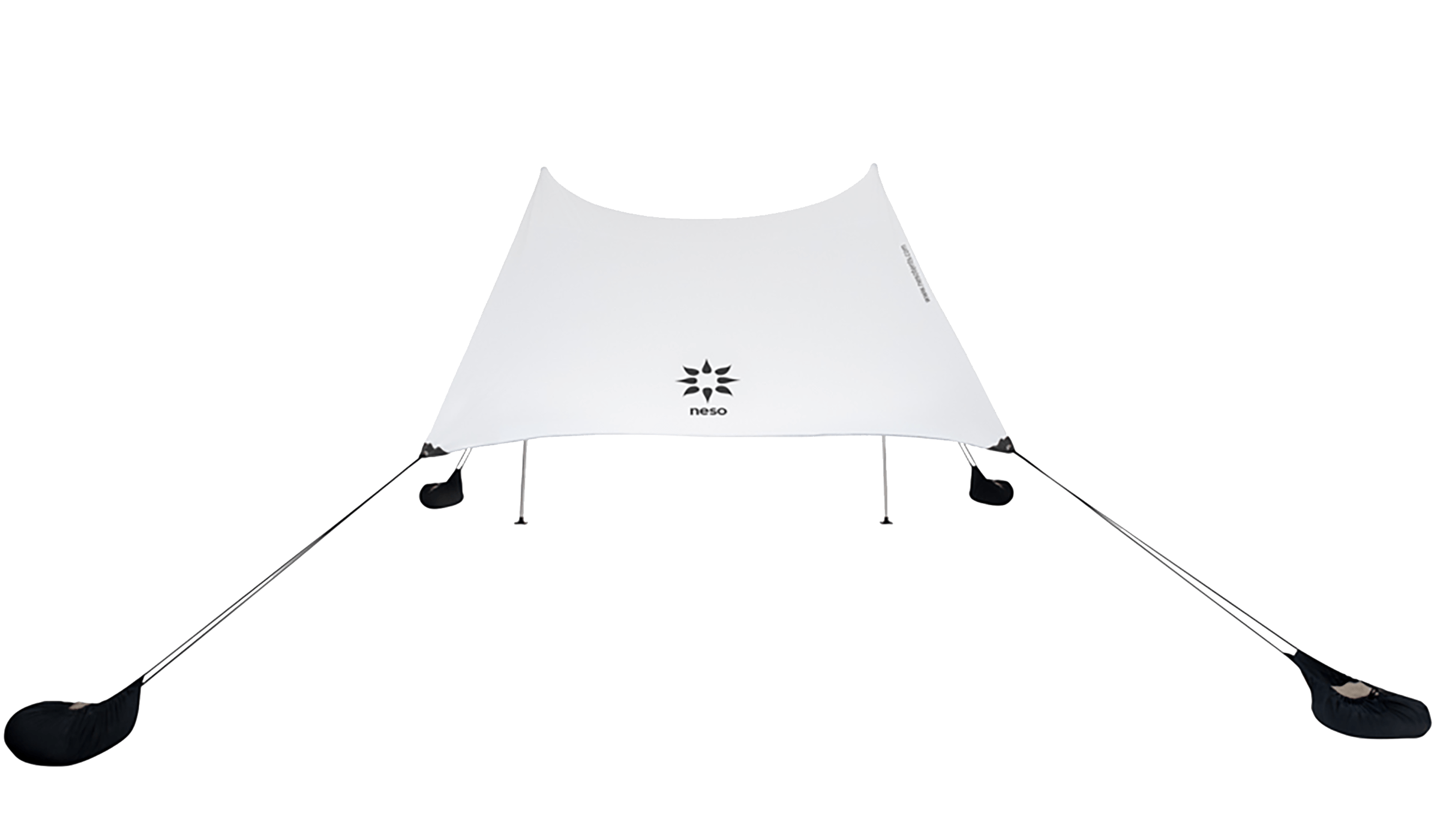
Neso Grande Beach Tent
A pole-free stake-out canopy (9'×9', 6.5 lb) in UPF 50+ nylon/Lycra that packs to a 19.5-inch sack and anchors with four sand-filled corner pockets — the portability champion for hike-in beaches.
Amazon affiliate · price subject to change
The Neso Grande is the pole-free stake-out canopy for people who carry their gear in. At nine by nine feet of footprint and 6.5 pounds total, it packs to a small drawstring sack you can throw in a backpack — which is the difference between bringing real shade to a hike-in beach and resigning yourself to a beach towel. Anchoring uses sand-filled corner pockets rather than stakes, so it works on any beach without specialized hardware. The trade-off is the same one every stake-out tent has: it relies on the four corner anchors holding the canopy taut, so a sloppy setup in heavy wind will sag. For walking trips and hike-in beaches, no umbrella here packs smaller. An 8.3 score.
Sun Ninja Beach Tent — The Group Base Camp
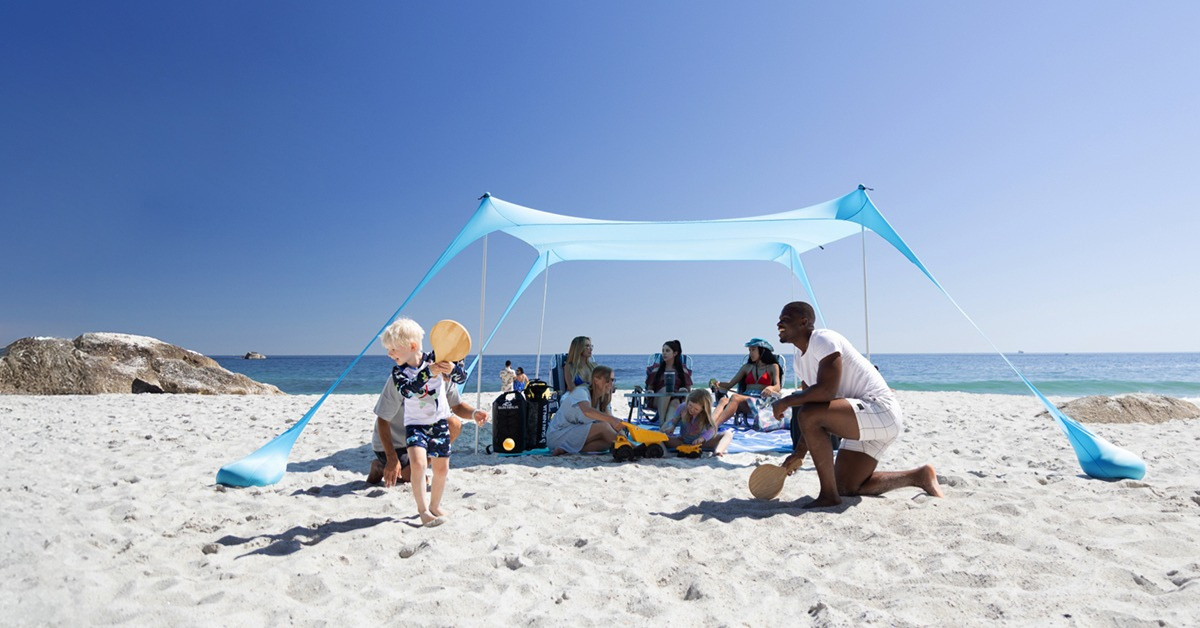
Sun Ninja Beach Tent
The Wirecutter Best Sunshade for Maximum Protection — a 7×7.5-ft, 7.2-lb UPF 50+ stake-out canopy anchored with four sandbags, with the widest editorial endorsement on this list.
Amazon affiliate · price subject to change
The Sun Ninja became a crowd favorite because it solves group-shade differently than every umbrella does. A four-pole tent canopy held taut by sand-filled corner pockets throws one of the largest shaded footprints you can carry — comfortably four to six people depending on the size you buy — at a price that is a fraction of the premium umbrellas. Reviewers consistently note it stands up to wind better than spike umbrellas because the wind has to fight four anchor points instead of one. The trade-off is setup: it takes longer than an umbrella and is much easier with a second person to hold tension while you stake. For a family or a group of friends posting up at one spot for the day, it is the right answer. An 8.1 score.
Rio Beach Wind Resistant Tilt Umbrella — The Budget Benchmark
Rio Beach Wind Resistant Tilt Umbrella
A 6-foot UPF 50+ polyester canopy with integrated ANCHORX sand screw, wind vent, and push-button tilt — Outoria-endorsed budget pick that handles around 17 mph sustained gusts when properly anchored.
Amazon affiliate · price subject to change
The Rio is the umbrella that proves you do not have to spend a hundred dollars to get a competent beach umbrella. An integrated sand-anchor screw, a wind-vented tilting canopy, and a reasonable UV-blocking rating cover most of what mainstream buyers want — at well under half the price of the Tommy Bahama Sand Anchor. It is not as sturdy in the frame, the fabric will not last as many seasons of saltwater and sun, and the tilt mechanism feels every bit of the price. But for an occasional beachgoer who needs an umbrella for the few days a year they are on the sand, it is the right tool. A 7.9 score.
Which One Should You Buy?
For coastal beaches with consistent breeze, the Shibumi Shade is the best umbrella you can buy — and the Solbello Sun Shade is the budget alternative that gets you most of the way there. For absolute stability in serious wind, the beachBUB All-In-One is the engineered answer. For most people on most beaches, the Tommy Bahama Sand Anchor 7' is still the mainstream default, and the Rio Beach Wind Resistant Tilt Umbrella is the budget version of the same idea. The Coolibar Titanium is the pick when sun protection is the top priority — kids, fair skin, full-day exposure. For groups, families, and full-day base camps, the stake-out designs win: the Sun Ninja Beach Tent for groups, the Neso Grande for hike-in portability, and the Sport-Brella XL when you need shelter from sun, wind, and weather in one product. The Frankford Commercial-Grade is the buy-it-once option for a beach house.
Cast your vote and see where the community ranks each pick on the full Best Beach Umbrellas list — or browse the rest of the Outdoor coverage for adjacent summer essentials, including the Best Camping Tents for when the beach day becomes a beach weekend.
See all 10 products ranked by the community
Best Beach Umbrellas
See Full Rankings →248 community votes cast
Common Questions
The Shibumi Shade tops Gavler's community ranking with a 9.4 score because it solved the problem nobody else has solved: it gets more stable as the wind picks up, not less. The single-pole canopy catches as little as 3 mph of breeze to billow into the largest shaded footprint on this list, and at four pounds with a one-minute setup it is the easiest serious shade you can carry to the sand. If the wind is the dealbreaker for you and you want the most engineered solution, the beachBUB All-In-One — Wirecutter's high-wind pick, tested to 44 mph — is the alternative. For the price most people are willing to spend and the average beach day most people actually have, the Tommy Bahama Sand Anchor 7' is still the safest mainstream buy.
Two designs solve the wind problem in opposite ways. The beachBUB All-In-One uses a fillable ballast base — you load it with sand on site, and the weighted foundation is tested to 44 mph (beyond the ASTM safety standard). It is the answer when the umbrella absolutely cannot move. The Shibumi Shade attacks the same problem from the other side: instead of fighting the wind, the canopy uses it as structure, billowing taut from as little as 3 mph of breeze and becoming more stable, not less, as gusts increase. The Solbello Sun Shade splits the difference with a flexible wind-driven design that flexes through gusts instead of fighting them. The wrong answer is a basic spike-anchored umbrella in a strong onshore wind — they cartwheel.
They solve the same problem differently. The Shibumi is a single-pole wind-powered canopy — four pounds, one-person setup in about a minute, billows into shape on the breeze. The Sun Ninja is a four-corner stake-out tent — heavier and a two-person setup, but it offers a larger fixed-shape footprint and works in zero wind because it does not rely on the breeze for structure. Buy the Shibumi if you make short, frequent beach trips alone or as a couple and want the lightest, fastest serious shade. Buy the Sun Ninja if you stake out a group base camp for the day, especially in heavy-shade or no-wind conditions. The Shibumi is also about $130 more, so the value math favors the Sun Ninja for larger groups.
Yes, more than most buyers realize. A standard polyester beach umbrella may block as little as 60-70 percent of UV; a UPF 50+ canopy blocks 98 percent or more, which is the difference between a sunburn through the shade and a real day at the beach. The Coolibar Titanium is the dermatologist-recommended specialist — its canopy is rated to block 98 percent of UVA/UVB and carries a UPF 50+ certification. The Tommy Bahama Sand Anchor 7' vented canopy is SPF 100+ rated. Both Shibumi and Sun Ninja are UPF 50+. The Frankford Commercial-Grade uses marine-grade acrylic, which holds its UV-blocking property far longer than budget polyester that degrades after a couple of seasons. If you have kids on the beach, treat the UPF rating as non-negotiable.
The Sun Ninja Beach Tent and Neso Grande Beach Tent are the footprint champions among portable options — both pole-free stake-out designs that throw a much larger shaded area than a traditional umbrella. The Sport-Brella XL is a different shape — nine feet across with zip-down side panels that turn it into a half-tent shelter for sun, wind, and spray protection in one. Among classic umbrellas, the Frankford Commercial-Grade is the largest at the premium end — a marine-grade acrylic canopy on a heavy aluminum frame that is genuinely resort-spec, which is why it costs three to four times what a Tommy Bahama goes for. For a family of four or more, the stake-out designs are almost always the better answer than a single umbrella.
Late May through mid-June is the right window. Memorial Day sales are still running at Amazon, REI, Target, and Dick's through the first week of June, and the strongest models — the Shibumi Shade, the beachBUB, and the Sun Ninja — sell out fast once schools let out. The Sun Ninja in particular has seen multi-week backorders in past summers. Father's Day promotions through June 21 are the other natural discount window. Buying now also gives you a chance to test the setup on a low-key weekend before a real vacation, which matters more for stake-out tents than for spike umbrellas. The worst time to shop is the week of July 4, when prices firm up and selection collapses.
Rankings come from community votes by people who actually take these to the beach — vacationers, parents, beachfront homeowners, daily walkers. Each person gets one vote on the Best Beach Umbrellas list, judging the same simple question: which umbrella would you pack for your next beach day? The roster spans single-pole wind-powered canopies, ballast-base umbrellas, traditional spike umbrellas, and stake-out tent canopies — judged side by side on real performance rather than separated by category. No affiliate commissions or manufacturer sponsorships influence the order, and the expert and community scores sit next to each pick on the live list.
Products Mentioned
Jump to the full ranking and community verdict for each pick named above.
- Shibumi ShadeOutdoor · Best Beach Umbrellas
- Sun Ninja Beach TentOutdoor · Best Beach Umbrellas
- beachBUB All-In-OneOutdoor · Best Beach Umbrellas
- Tommy Bahama Sand Anchor 7'Outdoor · Best Beach Umbrellas
- Sport-Brella XLOutdoor · Best Beach Umbrellas
- Solbello Sun ShadeOutdoor · Best Beach Umbrellas
- Frankford Commercial-Grade Beach UmbrellaOutdoor · Best Beach Umbrellas
- Neso Grande Beach TentOutdoor · Best Beach Umbrellas
- Rio Beach Wind Resistant Tilt UmbrellaOutdoor · Best Beach Umbrellas