Solbello Sun Shade.
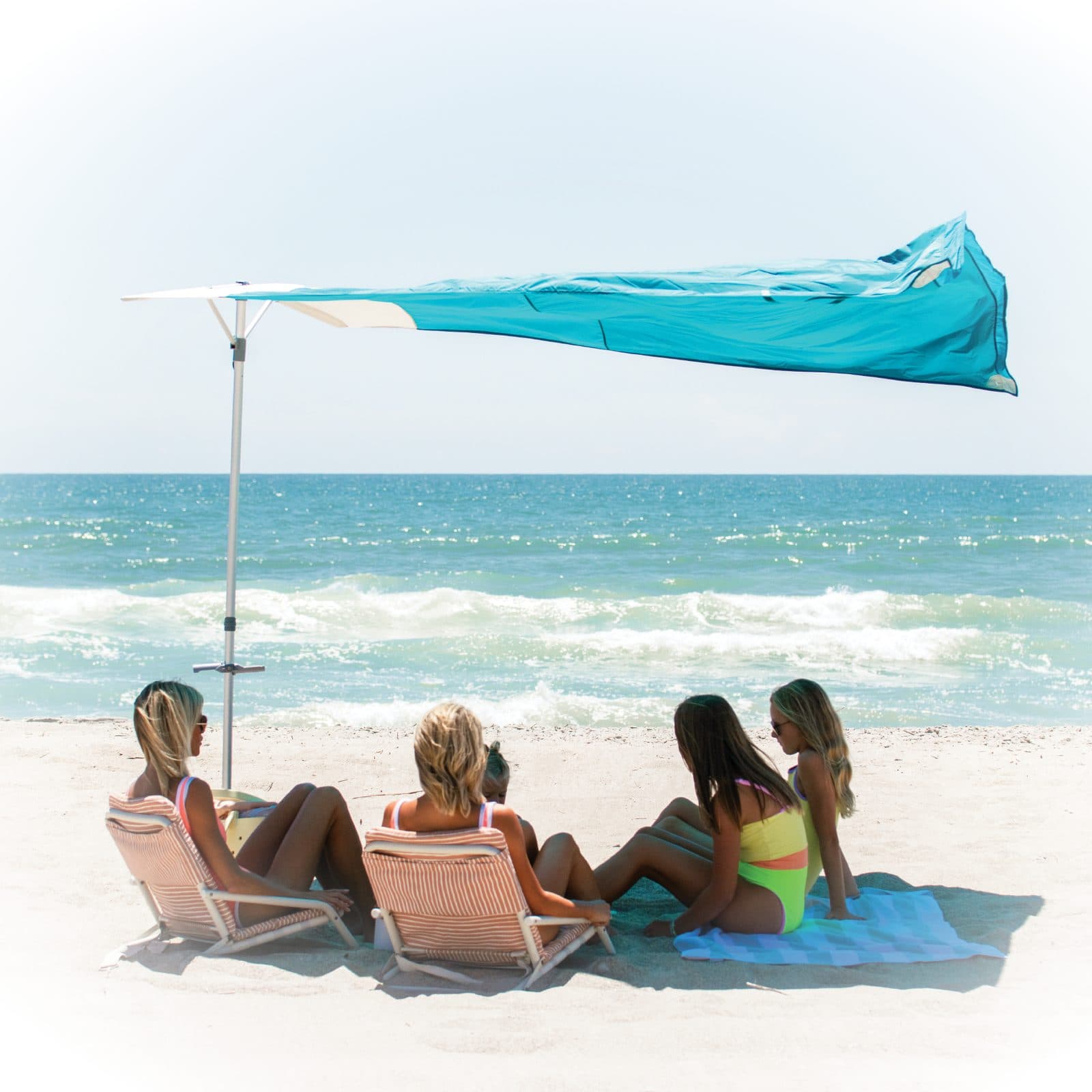
Wind-driven design that sets up in under a minute and uses gusts as little as 4 mph to lift the canopy — the only beach shade that gets better the windier it gets.
The Verdict.
Gavler Meta-Score
“The shade that gets better the windier it gets. 4 mph is enough to lift it, 25 mph won't pluck it, and it self-adjusts as the breeze shifts — no resetting, no chasing the sun. The catch is that the shaded area moves with the wind, so on a still day you'll want the included No Wind Kit.”
The Gavler Verdict
The Gavler Review.
Solbello Sun Shade Review: The Beach Shade That Wants the Wind to Blow
The Solbello Sun Shade ranks sixth on Gavler's Best Beach Umbrellas list with an 8.5, and it's the one entry on the list that treats wind as fuel rather than a threat. The patented wind-driven design needs as little as 4 mph of breeze to lift the canopy above the user, and independent testing from The Atlantic Current documented stable performance through gusts up to 25 mph: "Tested in everything from light seaside breezes to gusts of up to 25 miles per hour, and it performed wonderfully every time, offering excellent shade for two people even when the sun was directly above." The trade-off is real and specific — the shaded footprint moves with the wind, which means a still day requires a workaround.
What it is
Most beach shade fights the wind: heavier bases, deeper stakes, lower profiles. Solbello inverts that logic. The canopy is engineered to catch a breeze as light as 4 mph and use that lift to hold itself above the user, self-orienting as wind direction shifts rather than requiring manual repositioning — no chasing the sun, no resetting the angle every time the breeze turns. A newer QuietEdge edge treatment addresses a documented complaint from earlier wind-driven shade designs: flap noise in stronger gusts, which the redesigned edge is built to reduce.
The umbrella carries a UPF 50+ rating and sets up in under a minute, with Solbello including a No Wind Kit — corner stakes designed specifically for days without enough breeze to activate the lift mechanism — as a workaround for the design's one clear limitation.
In use
The Atlantic Current's testing is the strongest evidence behind this product's score precisely because it covers a wide wind range rather than a single condition: from "light seaside breezes" up through 25 mph gusts, with the reviewer reporting the shade "performed wonderfully every time." That range matters — a lot of wind-resistant gear claims are tested only at the extremes, and this review specifically credits consistent performance across the full spectrum a beachgoer might actually encounter over a day at the coast.
The self-adjusting behavior is the other genuinely differentiated feature. A Solbello reviewer aggregate cited in Gavler's verified product data frames it directly against conventional umbrellas: "If the wind changes you don't have to move it — unlike a regular umbrella which you have to adjust to the wind to keep it from being plucked up, Solbello adjusts to the wind automatically." For a beach day where the breeze shifts direction over several hours — a common pattern as onshore winds build through the afternoon — that's a meaningful reduction in the babysitting a normal umbrella demands.
Strengths
The core engineering claim is the standout: this is the only entry on Gavler's beach umbrella list that gets more useful, not less, as wind picks up, and The Atlantic Current's independent testing backs that claim across a realistic range of conditions rather than a single cherry-picked scenario. The QuietEdge treatment addressing flap noise is a specific, credible refinement — it's the kind of second-generation fix that suggests Solbello is iterating based on real complaints rather than just marketing an unchanged product. Setup speed (under a minute) and the automatic wind-direction adjustment round out a genuinely different value proposition from anything else on the list.
The trade-offs — who should skip it
The wind-dependent design cuts both ways, and Gavler's verified scoring note is direct about it: "the shaded footprint shifts with the breeze; the included No Wind Kit is the still-day workaround." That's an honest way to frame a real limitation — on a genuinely calm day, this umbrella doesn't behave like a standard pole umbrella unless you deploy the No Wind Kit, which adds a setup step the core design is supposed to avoid. Buyers who want a shade that stays in exactly one fixed spot regardless of conditions, or who frequent beaches known for still air, should weigh this carefully before buying.
It's also worth noting that several of the strongest claims about this product — including the "only wind-driven umbrella" positioning — come from Solbello's own materials or aggregated reviewer sentiment rather than a named, independent test the way The Atlantic Current's 25 mph gust testing is. The Atlantic Current quote is solid independent evidence; the broader marketing framing around it should be read with that distinction in mind.
How it compares
The Shibumi Shade at rank one on the same list takes a related but distinct approach — a single-pole canopy that billows into the largest shaded footprint on Gavler's list and gets steadier as wind builds, widely cited across beach-gear roundups for exactly that wind behavior. The key difference is stability versus stationary coverage: Shibumi needs a steady breeze to perform but throws a bigger patch of shade once it's working, while Solbello's smaller footprint self-adjusts to shifting wind direction rather than relying on one consistent airflow. For buyers who want wind resistance without any dependency on the breeze actually blowing, the Sport-Brella XL at rank five uses ground stakes and a three-sided zip design that Wirecutter found held firm in coastal wind through structural geometry rather than active wind engagement — a heavier, bulkier, but wind-independent alternative.
The Gavler verdict
The Solbello Sun Shade solves a specific, real problem: conventional umbrellas fight wind and often lose, while this one is engineered to work with it. The Atlantic Current's independent testing across a 25 mph range gives that claim real credibility, not just marketing language. The catch is honest and worth taking seriously — on a still day, you're deploying the No Wind Kit rather than getting the umbrella's core advantage, and the shaded area moves rather than staying fixed. For breezy coastal trips where every other umbrella becomes a fight, this is the pick on Gavler's list. For calm, protected beaches, a conventional design will serve you more predictably.
Common Questions
Yes, specifically for breezy beach trips. It ranks sixth on Gavler's Best Beach Umbrellas list with an 8.5. The Atlantic Current tested it 'in everything from light seaside breezes to gusts of up to 25 miles per hour, and it performed wonderfully every time, offering excellent shade for two people even when the sun was directly above.'
Not on its own — this is the umbrella's core trade-off. The wind-driven design needs a breeze, as little as 4 mph, to lift and hold the canopy. Solbello ships a No Wind Kit with corner stakes specifically to handle still-air days, so buyers should plan on using that accessory rather than expecting the umbrella to work like a standard pole umbrella in dead calm.
A standard umbrella treats wind as a threat to fight with weight and anchoring; the Solbello uses wind as the mechanism that lifts and holds the canopy in place, and it self-adjusts as wind direction shifts rather than requiring you to reposition it. The trade-off is that the shaded area moves with the breeze instead of staying fixed over one spot.
Where to Buy.
Prices checked regularly
90-day price history
Price History
Steady at $130 for the entire 90-day tracking window — no increases, no discounts, across 91 tracked days.
Tracked daily across retailers. Vote Want itabove and we’ll alert you the moment the price drops.
Some links are affiliate links — Gavler may earn a commission. This never affects rankings or scores. Learn more.
Precision Engineering
Wind-Driven Lift From 4 mph
Patented design uses breeze as little as 4 mph to lift and hold the canopy above the user — wind is the engine, not the enemy.
Self-Adjusting in Shifting Wind
Re-orients automatically as the wind direction changes, removing the chase-the-sun adjustment every conventional umbrella requires.
QuietEdge Treatment
Patent-pending edge design cuts the flap-noise issue earlier wind-driven shades had in stronger gusts.
Stable Through 25 mph Gusts
Independent Atlantic Current testing documented stable shade through gusts as strong as 25 mph without blowing away.
Technical Specifications
The Scoreboard
Praised as the rare beach shade that improves with wind (Atlantic Current tested through 25 mph gusts). Common note: shaded footprint shifts with the breeze; the included No Wind Kit is the still-day workaround.
Cast Your Vote
Do you think Solbello Sun Shade deserves the #6 spot in Best Beach Umbrellas?
Global Critique
“Tested in everything from light seaside breezes to gusts of up to 25 miles per hour, and it performed wonderfully every time, offering excellent shade for two people even when the sun was directly above.”
“The only wind-driven umbrella and the only shade to fully work with the wind and cannot fly away in strong winds or gusts. As little as 4 mph is all that is needed to float the shade effortlessly above you.”
“If the wind changes you don't have to move it — unlike a regular umbrella which you have to adjust to the wind to keep it from being plucked up, Solbello adjusts to the wind automatically.”
More from Best Beach Umbrellas.
See how other top picks compare in this category.
Beach Umbrellas Finally Have a Wind Safety Standard. Almost Nobody Is Following It.
A windblown beach umbrella is a real injury hazard — and there's now an ASTM standard for which ones stay planted in a gust. Most on Amazon still ignore it.
The Best Beach Umbrellas in 2026, Ranked by the People Who Have Chased One Down the Sand
Wind-tested ballast bases, billowing canopies, and stake-out shades — the beach umbrellas worth packing for the 2026 summer, ranked by the community.