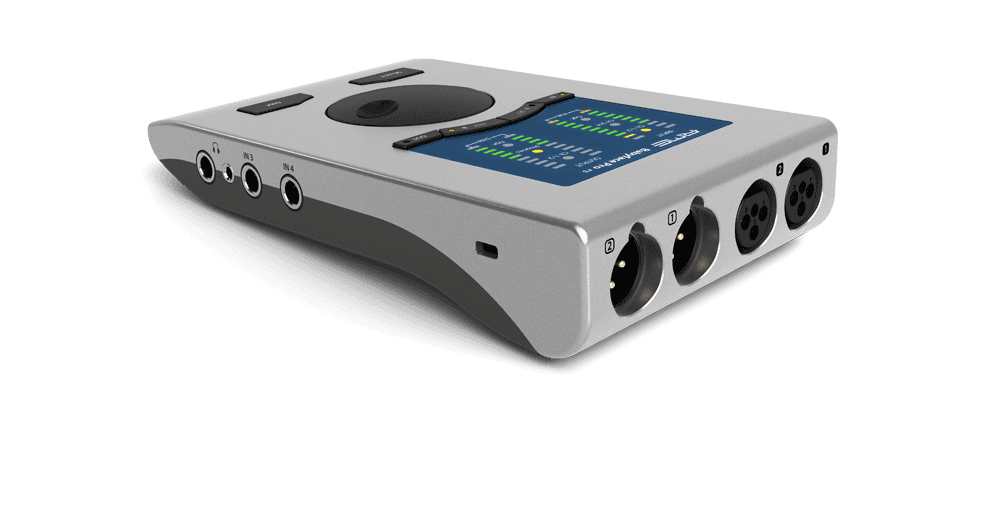
RME Babyface Pro FS.
RME's TotalMix FX routing and rock-solid drivers make the Babyface Pro FS the professional's choice for mission-critical audio.
The Verdict.
Gavler Meta-Score
“The Babyface Pro FS is the professional's choice — the interface you trust when your career depends on it. TotalMix FX provides routing power that no competitor matches, the drivers are legendarily stable, and the Femto Second clocking delivers measurably superior audio quality. It is expensive, portable, and absolutely reliable.”
The Gavler Verdict
The Gavler Review.
RME Babyface Pro FS Review: The Interface You Trust When Failure Isn't an Option
The RME Babyface Pro FS ranks number six on Gavler's Best Audio Interfaces list with a 9.0, and it earns that spot on reputation as much as spec sheet — RME's driver stability is the benchmark every other manufacturer gets measured against. Sound On Sound's review closes with a simple verdict: "what's not to like?" It's for professionals — touring engineers, broadcast operators, studio owners — for whom an interface crashing mid-session isn't an inconvenience but a career problem. The catch, which Sound On Sound flags directly in its own pros-and-cons breakdown, is a couple of small but real oversights: non-locking XLR connectors and no ability to power an iPad for remote control.
What it is
The Babyface Pro FS is built on two pillars RME has spent decades earning: TotalMix FX, the most powerful and flexible routing software in the audio interface world, and drivers stable enough that professionals treat "it just works" as a baseline expectation rather than a selling point. The "FS" in the name refers to Femto Second-accurate clocking — SteadyClock FS, the same circuit RME developed for its flagship ADI-2 Pro FS. Sound On Sound's technical explanation is precise: jitter is normally quoted in nanoseconds or picoseconds, but SteadyClock FS measures fluctuation in femtoseconds, an order of magnitude improvement that translates to measurably lower distortion and a wider stereo image.
Four analog inputs include two preamps with 76dB of gain range, while twelve analog and digital outputs — including ADAT optical — give the Babyface Pro FS more routing flexibility than any other portable interface at this size. Sound On Sound's measurements confirm real generational improvement: microphone input signal-to-noise ratio improved from 112.2 to 113.7dB, inputs 3 and 4 improved from 114 to 116.3dB, and headphone output power rose from 70 to 90mW with a 10dB THD improvement. At 345 grams in a machined aluminum chassis with USB bus power, it's built for travel — the whole unit ships in a case Sound On Sound compares to "a Bosch power drill, which would survive being run over by a tank."
In use
Sound On Sound's overall sound quality assessment is unambiguous: "in terms of sound quality, the Babyface Pro FS is as transparent, clear and pristine as we've come to expect... whether recording guitar, voice or synthesizers I had absolutely no complaints." That's from a reviewer directly comparing it to the earlier Babyface Pro, and the improvements are real if incremental — most users won't hear the difference in signal-to-noise ratio directly, but they'll benefit from the lower latency and improved headphone output power.
Latency performance is where the Babyface Pro FS separates itself technically. Using the Oblique Audio Round-Trip Latency Utility, Sound On Sound measured "3.1ms with 48 samples at 44.1kHz, 2.9ms with 96 samples at 96kHz and 2.8ms with 192 samples at 192kHz" — figures the review notes are "significantly smaller than the previous Babyface Pro" and comparable to RME's flagship UFX running over USB 3.0. Crucially, the review points out that many competing interfaces advertise low buffer sizes but use hidden buffers that inflate real-world latency beyond what's advertised — RME's numbers are the actual, honest figures.
TotalMix FX itself gets a more mixed treatment. Sound On Sound is candid: "having installed many RME products on many systems I'm very familiar with the somewhat impenetrable nature of the TotalMix FX software, which can frustrate casual users and reviewers alike." That's meaningful criticism from a reviewer who clearly respects the product overall — the routing power is real, but so is the learning curve, and the review notes that sound comes out of the headphone jack by default so new users at least aren't stuck at square one.
Strengths
- Industry-benchmark driver stability. RME's reputation for rock-solid, low-latency drivers across macOS and Windows is earned, not marketed — it's the reason professionals default to RME when reliability can't be compromised.
- Femto Second clocking that delivers measurable improvement. SteadyClock FS produces genuinely lower jitter than conventional clocking, backed by Sound On Sound's own signal-to-noise measurements.
- The most powerful routing software in the category. TotalMix FX runs entirely on the interface's DSP, enabling complex cue mixes and monitor routing with zero added CPU load — a genuine professional-grade capability.
- Honest, class-leading latency figures. RME publishes real, achievable buffer performance rather than numbers that only work with hidden buffering tricks.
The trade-offs — who should skip it
- The XLR inputs don't lock. Sound On Sound's own pros-and-cons list flags this directly as a con — a surprising oversight on a $899 interface marketed partly for stage and live use, where a cable working loose mid-performance is a real risk.
- It can't power an iPad over USB. Also a direct Sound On Sound criticism — the iPad remote app is a genuinely useful feature for live and studio use, but you'll need a separate power source for the tablet.
- TotalMix FX has a real learning curve. Sound On Sound calls it "somewhat impenetrable," and Gavler's own community scores reflect the same friction — this is not a plug-and-play interface for a beginner's first purchase.
- Only two mic preamps for $899. Community feedback flags this directly: the price is steep for a two-preamp interface when some competitors offer more inputs at a fraction of the cost.
How it compares
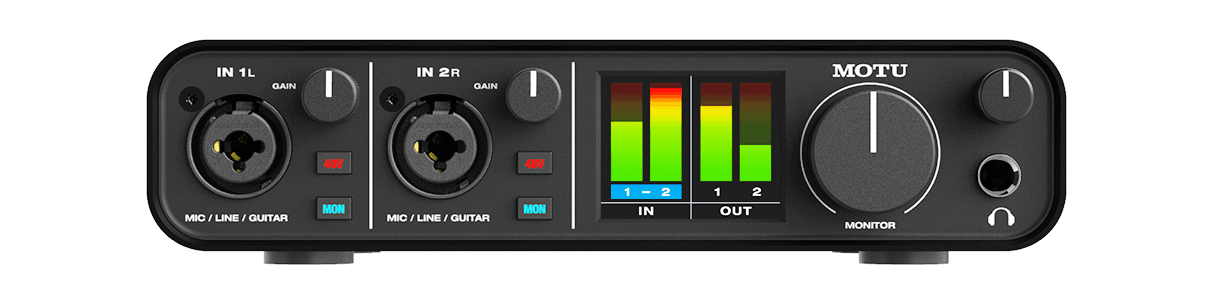
Within the same list, the Babyface Pro FS sits one rank below the SSL 2+, which costs $600 less and trades RME's routing power and reliability pedigree for genuine SSL console character via its Legacy 4K analog circuit — a very different value proposition aimed at tracking character rather than mission-critical routing flexibility. One rank below the Babyface Pro FS, the PreSonus Studio 24c targets an entirely different buyer: a first-time producer who wants a bundled DAW and simple software rather than TotalMix's steep but powerful learning curve. The RME's natural competitor is really the MOTU M2 two ranks up, which shares RME's reputation for driver reliability at a fraction of the price, though without TotalMix's routing depth or the Femto Second clocking.
The Gavler verdict
A 9.0, driven by an exceptional 96 expert consensus score reflecting RME's reputation for reliability, tempered by community feedback about TotalMix's learning curve and the high price for a two-preamp interface. The RME Babyface Pro FS is the interface you buy when your income depends on the gear not failing — the drivers are legendarily stable, the Femto Second clocking delivers measurable audio improvements, and TotalMix FX provides routing power no competitor matches. It's not the easiest interface to learn, and the non-locking XLRs are a genuine oversight at this price, but for professionals who need absolute reliability, it remains worth the investment.
Common Questions
Yes, for professionals who need mission-critical reliability and can use TotalMix FX's routing power. Sound On Sound's review concluded 'the Babyface Pro FS is as transparent, clear and pristine as expected' and summarized the whole package as 'what's not to like?' At $899 it ranks sixth on Gavler's Best Audio Interfaces list with a 9.0 — the honest catch is only two mic preamps for that price, plus a genuinely steep TotalMix learning curve.
TotalMix FX is RME's onboard routing and mixing software, running entirely on the interface's own DSP with zero added CPU load on your computer. It lets you build custom monitor and cue mixes with per-channel EQ, dynamics, reverb, and delay, and route any input to any output independently of what your DAW is doing — genuinely useful for live performers building in-ear mixes or studios running multiple musician cue feeds. Sound On Sound calls it 'somewhat impenetrable' for new users, which is the software's real trade-off: power at the cost of a learning curve.
Buy the SSL 2+ if you want analog console character and a lower $299 price with only a slightly less robust feature set. Buy the Babyface Pro FS if reliability and routing flexibility are non-negotiable for your work — RME's driver stability is the industry benchmark, and TotalMix FX offers routing power no other interface in this price range matches, at nearly triple the SSL's cost.
Yes. Sound On Sound's own pros-and-cons summary lists the XLR inputs as non-locking connectors — a genuine oversight on a $899 professional interface meant for stage use — and notes it can't power an iPad for the remote-control app over USB. Community feedback also flags the TotalMix FX learning curve as steep, and the two-preamp count is limited for the price versus interfaces with four or more inputs.
Where to Buy.
Prices checked regularly
90-day price history
Price History
Steady at $899 for the entire 90-day tracking window — no increases, no discounts, across 91 tracked days.
Tracked daily across retailers. Vote Want itabove and we’ll alert you the moment the price drops.
Some links are affiliate links — Gavler may earn a commission. This never affects rankings or scores. Learn more.
Precision Engineering
TotalMix FX
Fully independent routing matrix with per-channel EQ, dynamics, reverb, and delay — all processed on onboard DSP with zero CPU load.
Femto Second Clocking
Ultra-low-jitter clock generation delivers measurably lower distortion and wider stereo imaging than conventional clock circuits.
Bus-Powered Portable
345-gram machined aluminum chassis with USB bus power — professional-grade audio in a travel-ready package.
Technical Specifications
The Scoreboard
Expert scores are exceptional — RME's reliability and TotalMix FX are revered in professional circles. Community scores reflect the steep learning curve of TotalMix and the high price for a 2-preamp interface.
Cast Your Vote
Do you think RME Babyface Pro FS deserves the #6 spot in Best Audio Interfaces?
Global Critique
“The Babyface Pro FS is as transparent, clear and pristine as expected in terms of sound quality. The latency figures and audio performance have always been top-notch and it's the stability at these levels that continues to shine.”
“The first change is the inclusion of the SteadyClock FS circuit from the ADI-2 Pro FS, which is RME's proprietary clocking technology that clocks things more precisely than anything has ever been clocked before.”
“The Babyface Pro FS takes a great thing and makes it even better. All the outputs on the Babyface Pro FS are DC coupled, so you can use them as CV outputs from your DAW to control analogue synths or Eurorack.”
More from Best Audio Interfaces.
See how other top picks compare in this category.
How to Choose an Audio Interface You'll Actually Use
I/O hangtags are the wrong first question. Start with 2-in USB vs more I/O, preamp class, and DSP vs clean. Then shop Gavler's live ranking.
The Best Audio Interfaces in 2026, Ranked by the Producers Who Track Through Them Every Day
Universal Audio, Focusrite, Audient, MOTU, SSL, RME. Gavler ranks the interfaces worth buying — from a $129 portable to the $1,099 standard.