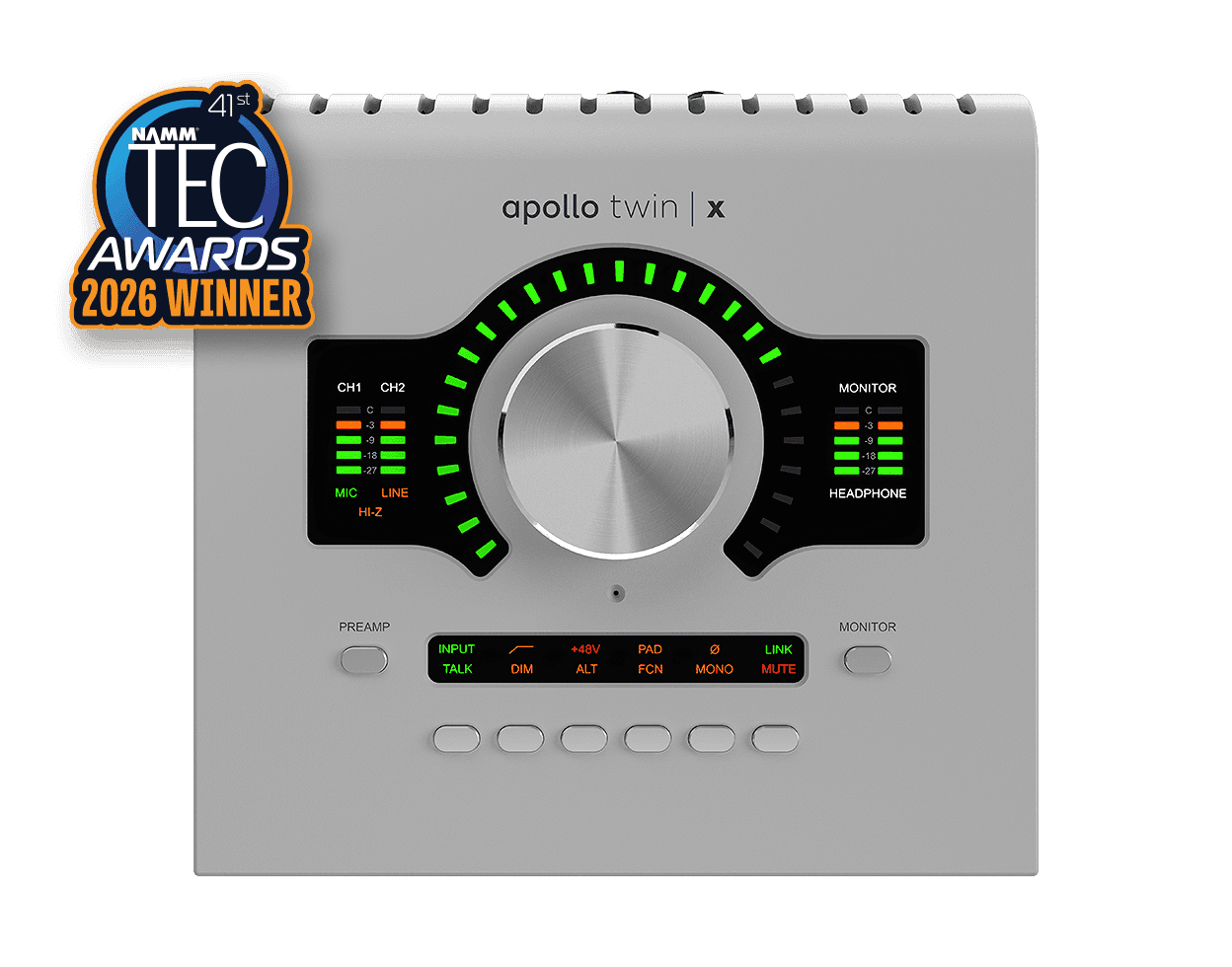
Universal Audio Apollo Twin X.
UA's Apollo Twin X runs classic Neve and API preamp emulations with near-zero latency on dedicated SHARC processors.
The Verdict.
Gavler Meta-Score
“The Apollo Twin X is the audio interface you buy to stop buying audio interfaces. Unison preamp modeling transforms how your microphones sound at the source, the converter quality is reference-grade, and the UAD ecosystem provides plugins that professionals use on major-label records. At $1,099, it is an investment — but one that eliminates the urge to upgrade.”
The Gavler Verdict
The Gavler Review.
Universal Audio Apollo Twin X Review: The Interface That Stops the Upgrade Cycle
The Universal Audio Apollo Twin X sits at number one on our Best Audio Interfaces list with a 9.7, and the pitch is unusual for a piece of gear: buy this one and stop shopping for interfaces. Unison preamp modeling changes how microphones actually behave at the point of capture, the AD/DA converters are the same class used in Universal Audio's flagship units, and the onboard DSP means you can track through vintage preamp emulations without taxing your computer. Buy it if you're a serious home-studio producer who wants an interface that won't become the weak link in your signal chain for years. If $1,099 is more commitment than you need right now, the Focusrite Scarlett 2i2 4th Gen is the honest, cheaper alternative. For anyone building a studio meant to last, the Apollo Twin X is the default.
What it actually is
The Apollo Twin X is a two-input Thunderbolt 3 interface built around Universal Audio's signature technology: Unison preamp modeling. Dedicated SHARC DSP processors run real-time emulations of classic analog preamps — Neve 1073, API Vision, Avalon VT-737, and dozens more — and critically, this isn't a plugin coloring the signal after the fact. Unison modeling changes the actual impedance and gain staging of the physical preamp circuit, meaning a microphone plugged into a Neve emulation genuinely behaves differently than the same mic plugged into an API emulation, before a single sample is recorded.
The two Unison-enabled preamps offer 127dB of dynamic range, connected over Thunderbolt 3 for rock-solid low-latency performance. A built-in headphone amp drives studio headphones with real authority, and the front panel — a large monitor knob with talkback and input selection — is designed to feel like a scaled-down mixing console rather than a USB accessory. At $1,099, it's priced like the long-term investment it's meant to be.
In use
The converter quality is where the Apollo Twin X separates itself from interfaces at half the price. Sweetwater's editorial team called out "top-shelf sound quality through upgraded elite-class AD/DA conversion," noting that "the Twin X's updated AD/DA conversion has taken the interface far beyond its predecessors, with an incredibly smooth signal path and a 127 dB dynamic range." That's not a marginal bump — it's the difference between an interface that colors your recordings and one that gets out of the way entirely.
Higher Hz's testing lands on the same conclusion from a value angle: "well worth the money, with preamps, design, and capabilities in real-time processing that make it a worthwhile investment." And Universal Audio's own technical framing is worth taking seriously here because it's verifiable in use — "sub-2ms latency and ample expandability through ultra-fast Thunderbolt 3 connectivity" means tracking through Unison-modeled preamps and UAD plugins in real time, not after the fact, with latency low enough that performers don't notice it.
The practical workflow benefit is dedicated DSP. Because the Unison preamp modeling and UAD plugin processing run on the interface's onboard SHARC chips rather than your computer's CPU, you can track vocals through a modeled 1073 preamp and a compressor plugin simultaneously without your DAW's CPU meter climbing. That's a real difference from software-only interfaces, where heavy plugin chains during tracking mean added latency or dropped buffers.
Where it shines
- Preamp modeling that changes the signal at the source. Unison isn't EQ-after-the-fact — it alters how the physical circuit interacts with your microphone, which is a fundamentally different (and more convincing) kind of emulation.
- Converters that won't become the bottleneck. 127dB of dynamic range is reference-grade, meaning the interface is never the reason a recording sounds thin or noisy — your mic and room become the limiting factors, which is exactly where they should be.
- DSP headroom for tracking-time processing. Running UAD plugins on dedicated SHARC chips instead of your CPU means you can process while you record without latency penalties — a meaningful workflow advantage for vocalists and instrumentalists who want to hear themselves through a finished chain while performing.
The trade-offs — who should skip it
This is a career-length investment, not an entry-level purchase, and the honest reasons to look elsewhere are specific:
- You're just getting started. At $1,099, the Apollo Twin X is a significant outlay for someone still learning to record. The Focusrite Scarlett 2i2 4th Gen delivers 120dB of dynamic range and rock-solid drivers for $189 — a fraction of the cost, more than enough interface for someone building foundational skills.
- The UAD plugin cost is real and ongoing. The interface's starter bundle is a taste, not the full picture. Getting the most out of Unison modeling means budgeting for plugins the way you'd budget for outboard gear — a cost the sticker price doesn't fully convey.
- You need more than two inputs. The Twin X is built for solo producers and vocalists tracking one or two sources at a time. If you regularly record full bands or need more simultaneous inputs, look further up Universal Audio's Apollo line.
How it compares
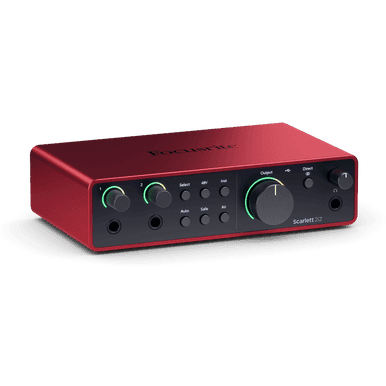
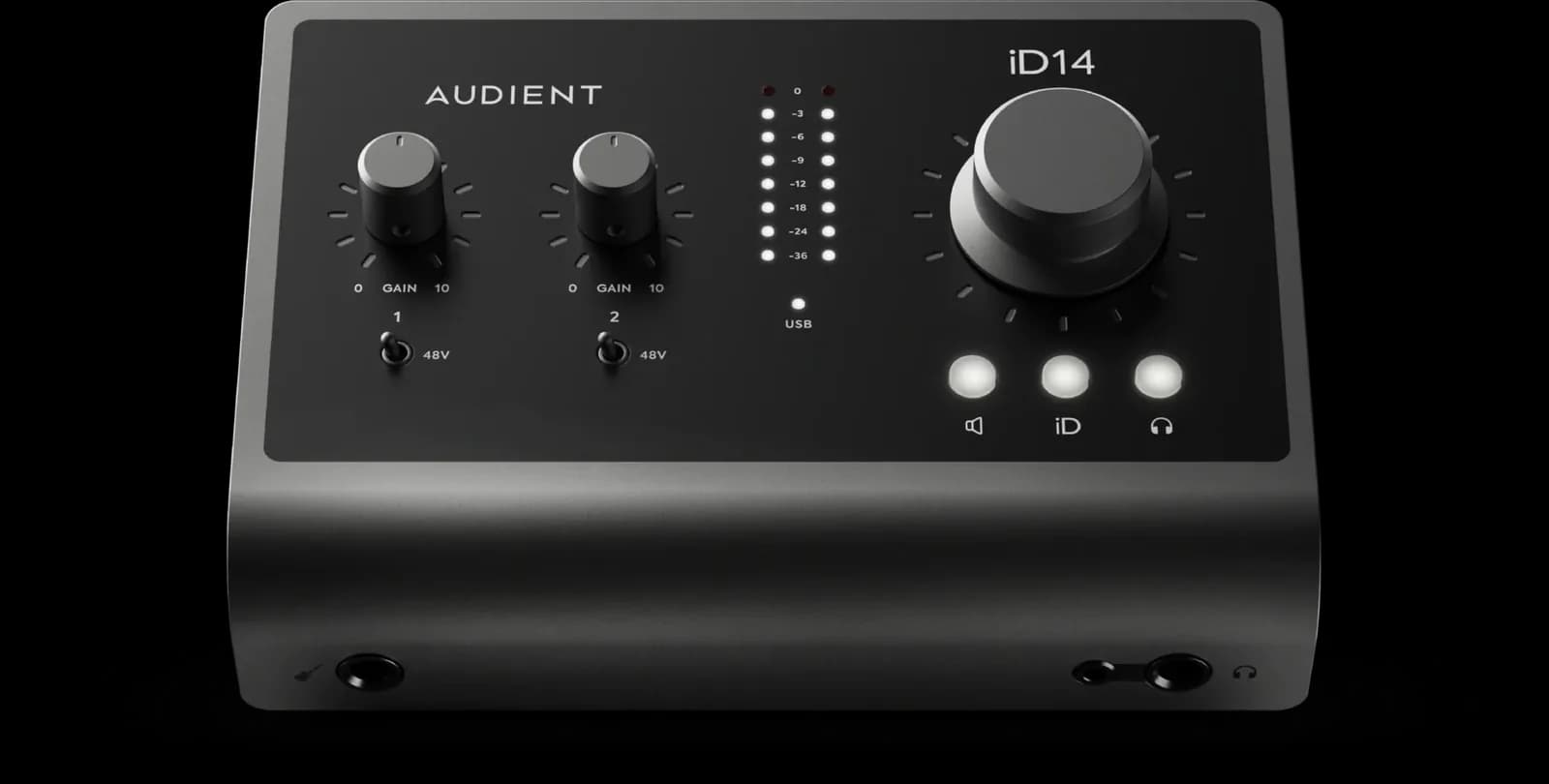
Within its own list, the neighbors below it tell the value story clearly. The Focusrite Scarlett 2i2 4th Gen at rank two costs a sixth of the price and delivers class-leading driver stability and a 120dB dynamic range — the right call for beginners, podcasters, and anyone who doesn't need Unison modeling. The Audient iD14 MkII at rank three splits the difference: console-grade Class-A preamps inherited from Audient's large-format mixing desks, at $249, for engineers who want better-than-entry-level preamp character without the Apollo Twin X's full price or plugin ecosystem commitment.
The Apollo Twin X's case isn't that it's the only good interface on the list — it clearly isn't — it's that it's the one built to be the last interface you buy. The others are excellent tools; this one is a platform.
The Gavler verdict
A 9.7, reflecting near-universal expert consensus that this is the best home-studio interface money can buy, tempered only slightly by the reality of ongoing plugin costs. The Universal Audio Apollo Twin X earns its price through Unison preamp modeling that changes microphone behavior at the source, reference-grade 127dB converters, and dedicated DSP that keeps CPU-taxing plugin chains out of your tracking signal path. Buy it if you're committed to a home studio for the long haul and want gear that won't need replacing as your ears and skills improve. If that commitment isn't there yet, start with the Scarlett 2i2 and upgrade later — the Apollo Twin X will still be waiting, and it will still be the interface that stops the upgrade cycle for good.
Common Questions
For producers serious about tracking and mixing, yes. It ranks first on Gavler's Best Audio Interfaces list with a 9.7, and Unison preamp modeling plus reference-grade 127dB converters mean the interface itself stops being a limiting factor in your signal chain. The catch is the $1,099 price and the fact that UAD plugins — the software that unlocks the Unison modeling's full potential — are sold separately.
Unison uses dedicated SHARC DSP processors to change the physical impedance and gain staging of the Apollo Twin X's preamps to emulate classic hardware like the Neve 1073 or API Vision. It's not an EQ plugin applied after the fact — the microphone itself responds differently in real time, before the signal is even recorded. For anyone tracking vocals or instruments through emulated vintage preamps, it's a genuine, audible difference, not a marketing claim.
Buy the Scarlett 2i2 if you're starting out or on a budget — at $189 it's the safest, most proven entry point with excellent driver stability. Buy the Apollo Twin X if you're a working producer who wants Unison preamp modeling, dedicated DSP that runs UAD plugins without loading your computer's CPU, and converter quality built to last a career. The gap in price is real; so is the gap in what each interface is built to do.
Yes — the interface ships with a starter plugin bundle, but the full UAD catalog of vintage preamp and processor emulations is sold separately. This is the interface's most common criticism: the hardware is a one-time cost, but getting the most out of the Unison preamps and onboard DSP processing means budgeting for plugins over time, the same way you would build out a hardware rack.
Where to Buy.
Prices checked regularly
90-day price history
Price History
Steady at $1,099 for the entire 90-day tracking window — no increases, no discounts, across 91 tracked days.
Tracked daily across retailers. Vote Want itabove and we’ll alert you the moment the price drops.
Some links are affiliate links — Gavler may earn a commission. This never affects rankings or scores. Learn more.
Precision Engineering
Unison Preamp Modeling
Dedicated SHARC DSP runs real-time preamp emulations that change the physical impedance and gain staging to match classic hardware.
127dB Dynamic Range
Reference-grade AD/DA converters deliver transparency that ensures the interface is never the weak link in your signal chain.
Console-Style Design
Large monitor knob, talkback button, and input selection create a scaled-down console workflow on the desktop.
Technical Specifications
The Scoreboard
Expert consensus is near-universal: the Apollo Twin X is the best home studio interface available. Community scores are slightly lower due to the price and the additional cost of UAD plugins, which are sold separately.
Cast Your Vote
Do you think Universal Audio Apollo Twin X deserves the #1 spot in Best Audio Interfaces?
Global Critique
“Top-shelf sound quality through upgraded elite-class AD/DA conversion. The Twin X's updated AD/DA conversion has taken the interface far beyond its predecessors, with an incredibly smooth signal path and a 127 dB dynamic range.”
“Universal Audio's Apollo Twin X is well worth the money, with preamps, design, and capabilities in real-time processing that make it a worthwhile investment.”
“Dual Unison preamps allow you to track through models of the industry's most legendary hardware. The interface offers sub-2ms latency and ample expandability through ultra-fast Thunderbolt 3 connectivity.”
More from Best Audio Interfaces.
See how other top picks compare in this category.
How to Choose an Audio Interface You'll Actually Use
I/O hangtags are the wrong first question. Start with 2-in USB vs more I/O, preamp class, and DSP vs clean. Then shop Gavler's live ranking.
The Best Audio Interfaces in 2026, Ranked by the Producers Who Track Through Them Every Day
Universal Audio, Focusrite, Audient, MOTU, SSL, RME. Gavler ranks the interfaces worth buying — from a $129 portable to the $1,099 standard.