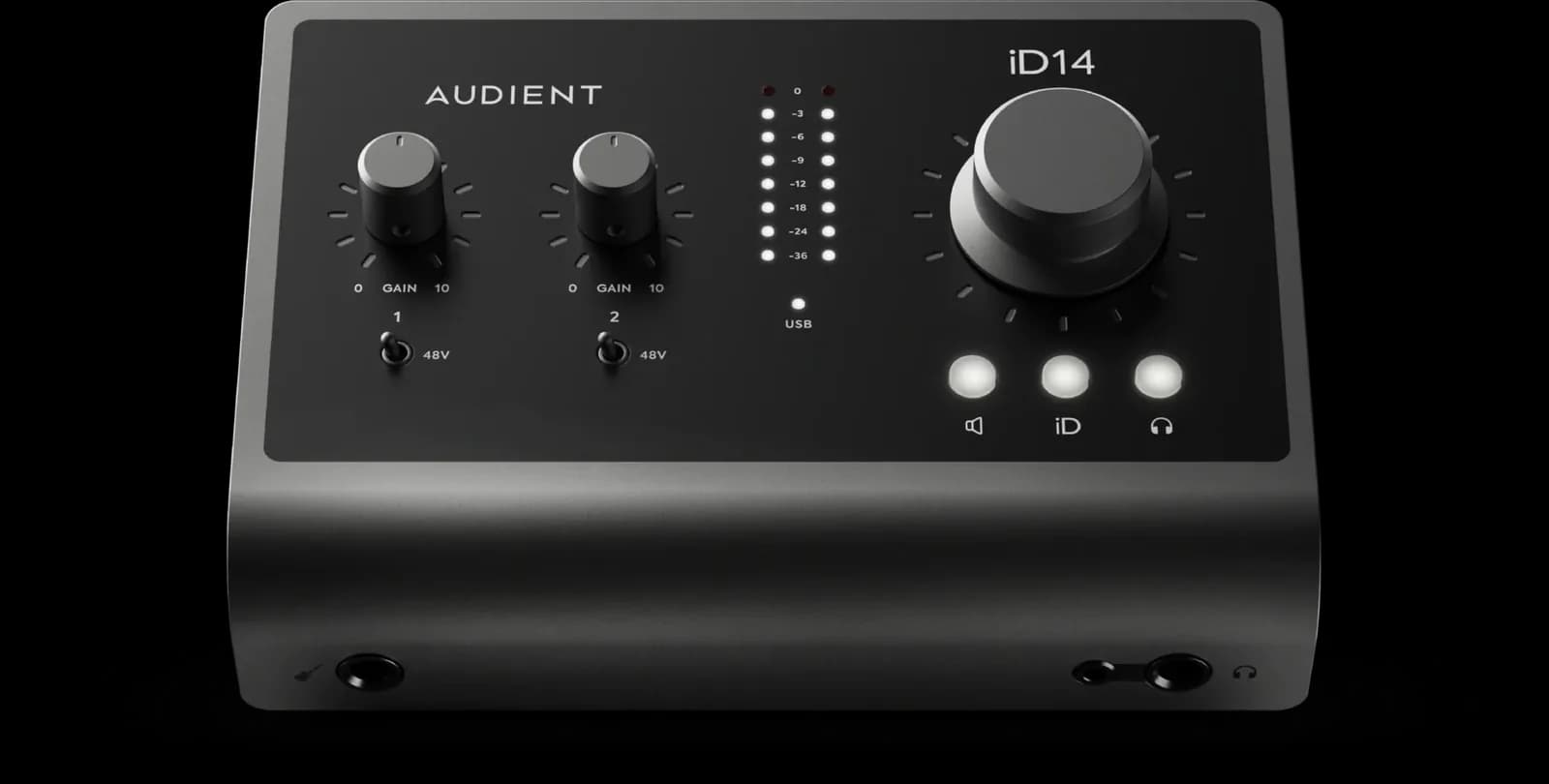
Audient iD14 MkII.
Audient's large-format console preamp heritage delivers a rich, open sound that punches well above the iD14's price.
The Verdict.
Gavler Meta-Score
“The iD14 MkII is the interface that sounds like it costs twice as much. Audient's console-grade preamps capture vocals and instruments with a richness and dimensionality that budget interfaces cannot match. The JFET DI is the best instrument input at this price, and the scroll-wheel monitor controller makes daily mixing a pleasure. For quality-conscious producers, it is the clear step up from entry-level.”
The Gavler Verdict
The Gavler Review.
Audient iD14 MkII Review: The Interface That Sounds Like It Costs Twice As Much
The Audient iD14 MkII sits at rank three on our Best Audio Interfaces list with a 9.4, and the reason is straightforward: it's the interface that sounds like it costs twice its $249 price. Audient built its reputation on large-format recording consoles, and the iD14 MkII inherits the same discrete Class-A preamp topology from the company's ASP8024 console — a genuine trickle-down of professional studio DNA into a desktop box. Buy it if you've outgrown the flat, reliable sound of an entry-level interface and want vocals and acoustic instruments to have real richness at the source. If you just need something that works flawlessly on day one without a learning curve, the Focusrite Scarlett 2i2 4th Gen at rank two remains the safer starting point.
What it actually is
The iD14 MkII is built around two microphone preamps with 60dB of gain, using the same discrete Class-A topology found in Audient's five-figure recording consoles. That's not a marketing footnote — the sonic difference between a Class-A discrete preamp and a typical op-amp-based budget preamp is audible, and it shows up specifically in how vocals and acoustic instruments retain dimensionality rather than getting flattened.
Alongside the preamps, the iD14 MkII features a JFET instrument DI that emulates the impedance behavior of a vintage tube amp input, an ESS Sabre DAC for the monitoring path, dual headphone outputs (front and rear), and a large scroll-wheel monitor controller on the top panel that replaces the small knobs most competing interfaces use. It connects over USB-C and runs through Audient's iD mixer software for routing and low-latency monitoring. At $249, it costs $60 more than the class-leading Scarlett 2i2 4th Gen — a real but modest premium for meaningfully different preamp character.
In use
MusicRadar's review of the iD14 MkII was direct about where the value lives: "The Audient ID14 MkII packs a real punch for an interface at this price point. The preamps are sonically clean and transparent, and the improved headphone amp is satisfyingly loud and dynamic. An excellent upgrade that is a better unit all round than its predecessor." That's a meaningful claim from a generation-on-generation comparison — the MkII isn't a cosmetic refresh, it's a real improvement on an already well-regarded design.
Sound On Sound's joint review of the iD4 and iD14 MkII line put the value proposition in category terms: "These interfaces don't bring anything particularly new or innovative to the table, but the sound quality is exemplary, and the feature set brings them in line with our modern needs for streaming and podcasting. It's the flawless sound and solid build quality that will put the iD4 MkII or iD14 MkII on your desk." That's a useful, honest framing — nobody is claiming the iD14 MkII reinvents the audio interface. It wins on execution: sound quality and build, not gimmicks.
MusicTech's review focused on the concrete spec upgrades in the MkII revision: "better dynamic range, improved signal-to-noise ratio, more connectivity, and an improved headphone output. The iD14 has also become exclusively bus powered." Losing the external power supply requirement is a small, practical win — one less cable, one less thing that can fail on a mobile rig.
In daily use, the scroll-wheel monitor controller is the feature that turns up unprompted in almost every hands-on account — it's simply a better physical interaction than a small recessed knob, and for something you touch dozens of times a session, that matters more than it sounds like it should.
Where it shines
- Console-grade preamp character. The discrete Class-A design captures vocals and acoustic instruments with a richness and openness that budget interfaces flatten out — the single biggest reason to pay the premium over an entry-level unit.
- A genuinely useful JFET DI. Guitar and bass plugged straight in get a warmer, more responsive starting tone than the typical solid-state DI, which matters for anyone re-amping or building a tone from a clean DI signal.
- Monitoring quality punches above its price. The ESS Sabre DAC delivers a transparent, clean monitoring path, and the improved headphone amp is loud and dynamic enough to drive demanding studio headphones properly.
- A monitor controller that's actually pleasant to use daily. The scroll wheel is a small design decision that pays off every single session.
The trade-offs — who should skip it
The iD14 MkII isn't the right pick for everyone shopping this category:
- The iD mixer software has a real learning curve. Reviewers and the scoreNote on this product consistently flag that Audient's routing software is less intuitive than Focusrite's — if you want to plug in and start recording within minutes with zero setup friction, the Scarlett 2i2 is the smoother on-ramp.
- It costs more than the class benchmark. At $249 versus $189 for the Scarlett 2i2 4th Gen, the premium only pays off if you can actually hear — and care about — the preamp difference. A beginner recording podcasts or voiceover won't get proportional value from the upgrade.
- Two inputs is still a ceiling. Like most interfaces in this bracket, the iD14 MkII tops out at two simultaneous inputs. Producers regularly tracking full bands or multiple simultaneous sources need to look at a larger-format interface like the Universal Audio Apollo Twin X.
How it compares
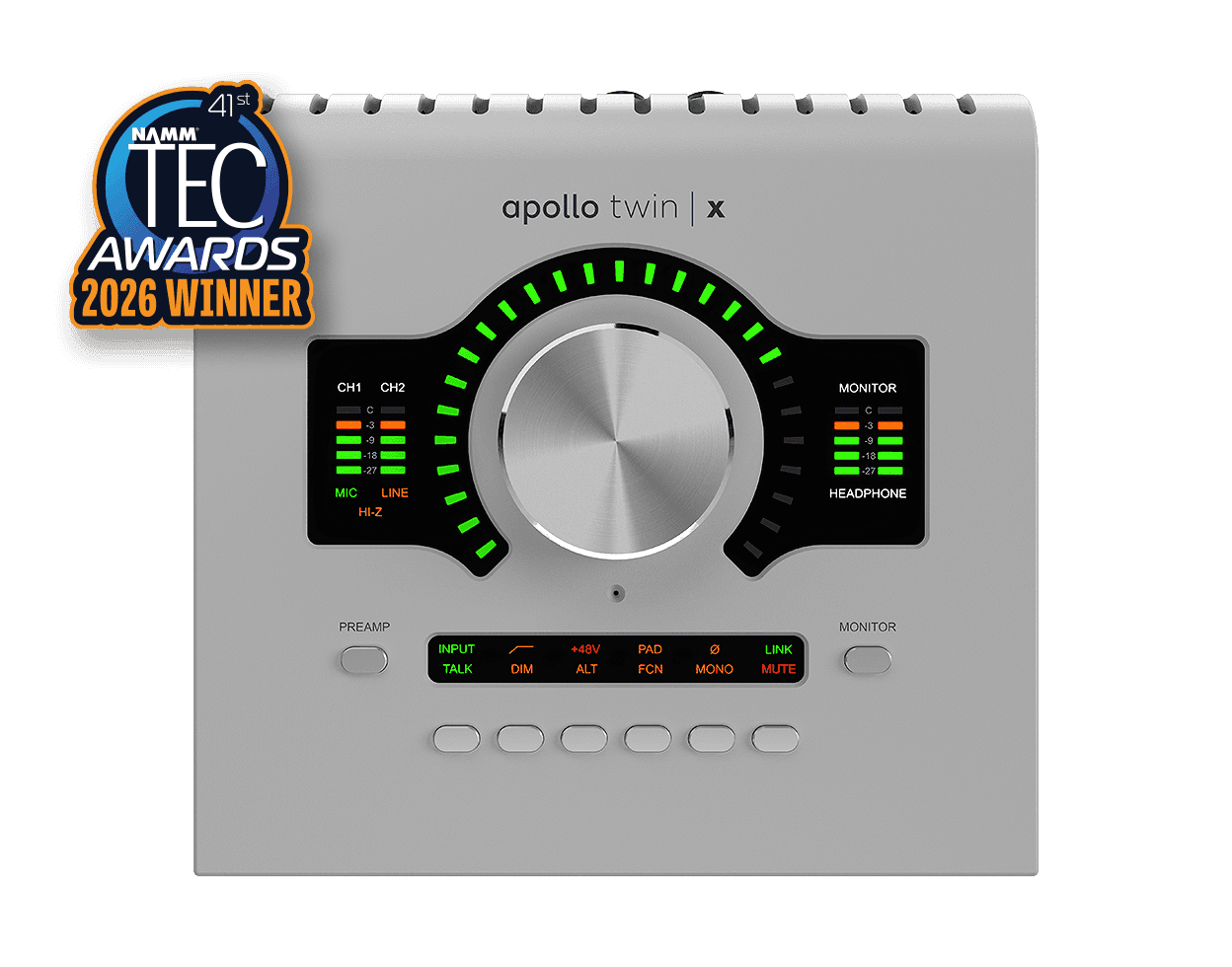
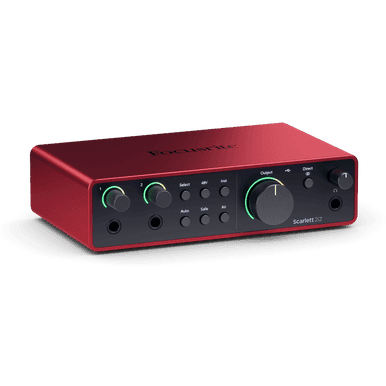
Within its own list, the iD14 MkII sits between two very different philosophies. The Universal Audio Apollo Twin X at rank one costs $1,099 and adds real-time DSP-modeled vintage preamp emulations plus the UAD plugin ecosystem — the pick for producers who want an interface that eliminates the upgrade cycle entirely, at a serious price. The Focusrite Scarlett 2i2 4th Gen at rank two costs $189 and wins on driver stability, auto-gain simplicity, and a decade of proven reliability — the safe, default recommendation for anyone starting out. The iD14 MkII's case is the middle ground done right: real console-inherited preamp character for a modest premium over the Scarlett, without the Apollo's five-figure-console price tag or software complexity.
The Gavler verdict
A 9.4, reflecting an interface that delivers a genuinely different, better sound than its price bracket typically allows. The Audient iD14 MkII is the clear step-up pick for vocalists, acoustic musicians, and producers who have already learned what a mediocre preamp sounds like and want to hear the difference a console pedigree makes. If you're just starting out, save the $60 and get the Scarlett 2i2 first — but the moment you notice your recordings sound thinner than the source material, the iD14 MkII is the upgrade that actually fixes it.
Common Questions
Yes, for anyone who has outgrown an entry-level interface and can hear the difference a better preamp makes. It ranks third on Gavler's Best Audio Interfaces list with a 9.4, and at $249 it delivers console-grade Class-A preamp quality inherited from Audient's ASP8024 large-format recording console. The trade-off is that the iD mixer software is less intuitive than Focusrite's, and at $60 more than the Scarlett 2i2, it's a step up rather than an entry point.
For preamp quality and DI character, yes — the iD14 MkII's discrete Class-A preamps and JFET instrument input deliver a richer, more dimensional sound than the Scarlett's clean, reliable circuitry. The Scarlett 2i2 remains the safer, cheaper, more beginner-friendly choice at $189 with best-in-class driver stability and auto-gain. The iD14 MkII is the pick once you know what you're listening for and want more character at the source.
Most competing interfaces use solid-state DI circuits that are transparent but flat. The iD14 MkII's JFET DI emulates the impedance characteristics of a vintage tube amplifier input, which produces a warmer, more responsive tone straight from a guitar or bass. It's not a full amp simulation, but it gives re-amping and plugin processing a noticeably better starting point than a typical budget DI.
That depends on your workflow. The iD14 MkII's two mic preamps are the right call if you regularly record two sources at once — a vocalist and an acoustic guitar, or a stereo pair — or want the flexibility for future sessions. Solo vocalists or producers who only ever track one source at a time can save money with Audient's single-preamp iD4 and get the same preamp character in a smaller footprint.
Where to Buy.
Prices checked regularly
90-day price history
Price History
Steady at $249 for the entire 90-day tracking window — no increases, no discounts, across 91 tracked days.
Tracked daily across retailers. Vote Want itabove and we’ll alert you the moment the price drops.
Some links are affiliate links — Gavler may earn a commission. This never affects rankings or scores. Learn more.
Precision Engineering
Console-Grade Preamps
Discrete Class-A microphone preamps inherited from Audient's ASP8024 large-format console deliver rich, open sound.
JFET Instrument DI
Vintage tube-style impedance characteristics produce warmer, more responsive guitar and bass DI recordings.
Scroll-Wheel Monitor
Large scroll-wheel controller provides precise, tactile monitor volume control that feels like a dedicated controller.
Technical Specifications
The Scoreboard
Experts consistently rank the iD14 MkII's preamps as the best in its class. Community appreciates the build quality and scroll-wheel controller. Some note the software mixer is less intuitive than Focusrite's.
Cast Your Vote
Do you think Audient iD14 MkII deserves the #3 spot in Best Audio Interfaces?
Global Critique
“The Audient ID14 MkII packs a real punch for an interface at this price point. The preamps are sonically clean and transparent, and the improved headphone amp is satisfyingly loud and dynamic. An excellent upgrade that is a better unit all round than its predecessor.”
“These interfaces don't bring anything particularly new or innovative to the table, but the sound quality is exemplary, and the feature set brings them in line with our modern needs for streaming and podcasting. It's the flawless sound and solid build quality that will put the iD4 MkII or iD14 MkII on your desk.”
“The mk2 upgrade means better dynamic range, improved signal-to-noise ratio, more connectivity, and an improved headphone output. The iD14 has also become exclusively bus powered.”
More from Best Audio Interfaces.
See how other top picks compare in this category.
How to Choose an Audio Interface You'll Actually Use
I/O hangtags are the wrong first question. Start with 2-in USB vs more I/O, preamp class, and DSP vs clean. Then shop Gavler's live ranking.
The Best Audio Interfaces in 2026, Ranked by the Producers Who Track Through Them Every Day
Universal Audio, Focusrite, Audient, MOTU, SSL, RME. Gavler ranks the interfaces worth buying — from a $129 portable to the $1,099 standard.