The Best Backpacking Stoves in 2026, Ranked by the Hikers Who Cook on Them
Jetboil, MSR, Soto, BRS, Trangia. Gavler's thru-hikers rank the stoves worth carrying in 2026 — by boil time, wind resistance, weight, and fuel reality.
Published June 2026 — peak trail season is here. Below: the backpacking stoves from Gavler's Best Backpacking Stoves list worth carrying this summer, ranked by community vote and sorted by what the stove needs to do.
The 2026 backpacking stove market has stratified cleanly. Jetboil still owns the boil-fast integrated category — the Flash is the OutdoorGearLab, CleverHiker, GearJunkie, Backpacker Magazine, and Treeline Review consensus pick for backpackers who want hot water in 100 seconds and nothing else. MSR's PocketRocket Deluxe and Soto's WindMaster split the standalone canister category along the wind-and-cold axis: pressure-regulation versus micro-regulation, fast boil versus exposed-site reliability. BRS 3000T continues its decade-running run as the controversial sub-ounce gram-counter pick that thousands of thru-hikers have actually used for full PCT and AT seasons. And the alcohol stove category — Trail Designs and Trangia at the front — survives the canister era because nothing else on the list weighs less than 5 oz including fuel.
What follows are the picks from Gavler's Best Backpacking Stoves list worth buying for the 2026 trail season, ranked by community vote and sorted by what the stove needs to do — boil water fast in any weather, cook real food in camp, drop to sub-ounce weight for a thru-hike, or close the sub-50-dollar tier with a stove that cannot break.
The Boil-Fast Default — Jetboil Flash $120
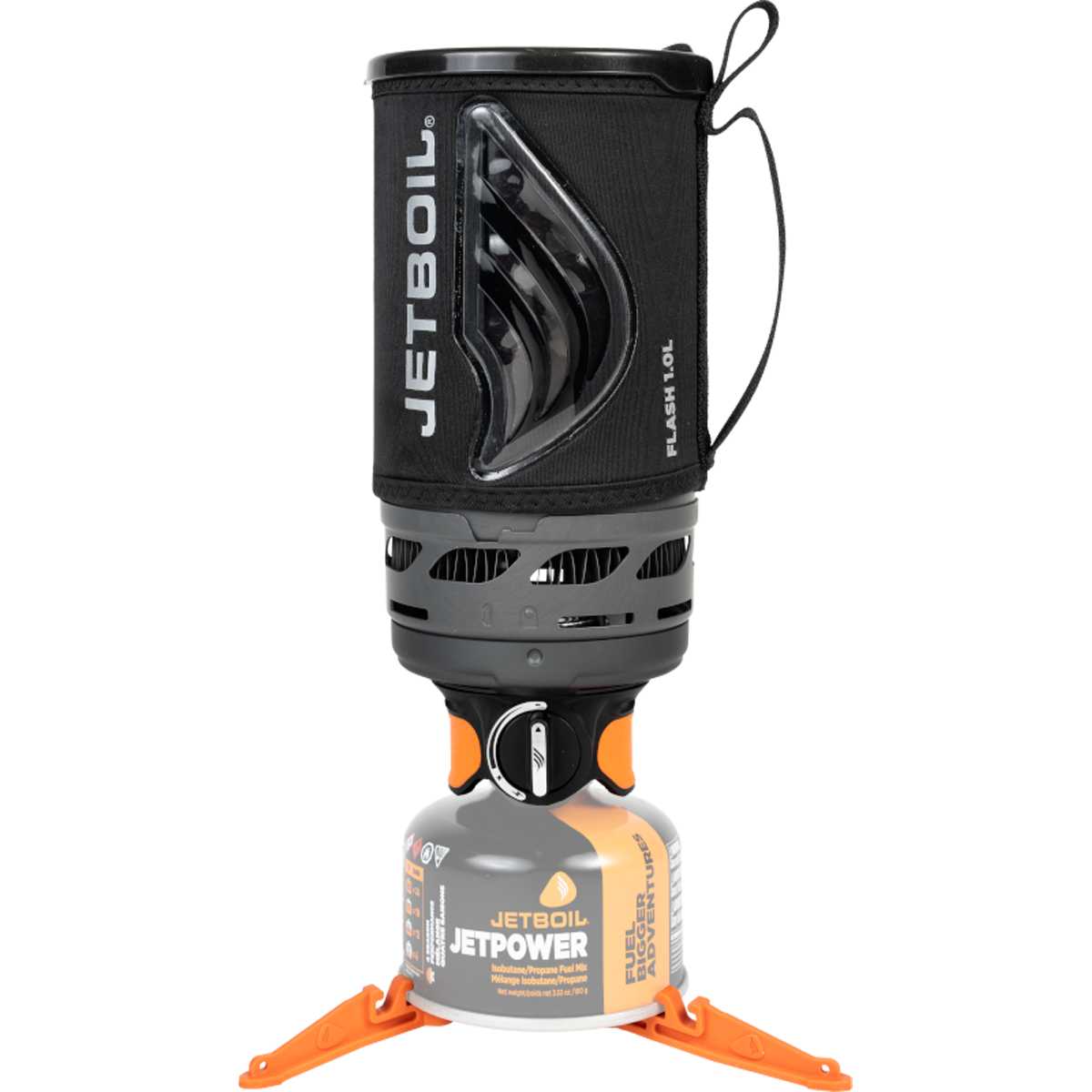
Jetboil Flash
Integrated canister cook system that boils 16 oz of water in 100 seconds. The default stove for backpackers who want hot food fast without fussing with separate pots.
Amazon affiliate · price subject to change
If the menu is freeze-dried meals and coffee, this is the stove. The Jetboil Flash is the integrated cook system that turned the category from niche to default — 16 oz of water to a rolling boil in 100 seconds flat, roughly half what a standalone canister stove and separate pot need to do the same job. The FluxRing heat exchanger on the bottom of the 1-liter insulated cup transfers heat so efficiently that the Flash delivers roughly 20 percent better fuel efficiency than a non-integrated setup, which means fewer canisters carried over a thru-hike. The burner, cup, and igniter nest into a single self-contained pack that weighs 13.1 oz total.
The Flash ranks first on Gavler with a 9.6 community score. The trade-off is simmer control — the on-off valve does not handle heat-sensitive cooking, which means scrambled eggs, oatmeal, and sauce-based meals belong on the MiniMo or a standalone stove. The Flash is also heavier than a separated ultralight stove-and-pot combo. For the 80 percent of backpackers whose cooking ambitions start and end at boiling water, the Flash is the rational endpoint. For the 20 percent who want to cook real food in camp, see the MiniMo below.
The Ultralight Canister Standard — MSR PocketRocket Deluxe $55
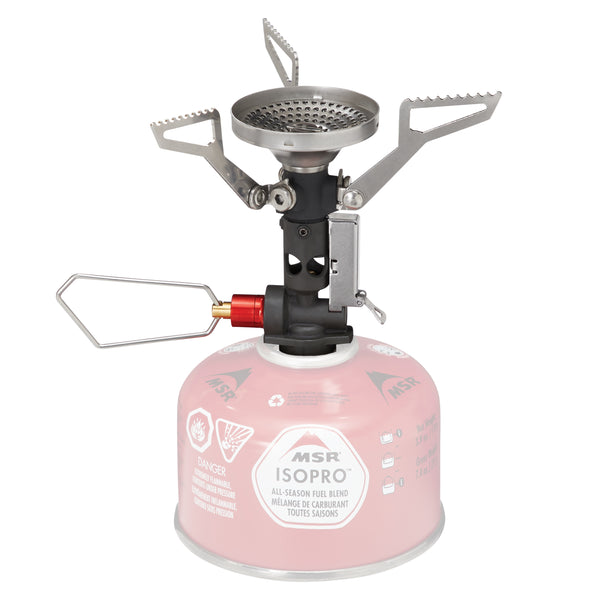
MSR PocketRocket Deluxe
2.9 oz canister stove with a pressure regulator for consistent flame in cold weather and low-fuel conditions. The ultralight standard-bearer.
Amazon affiliate · price subject to change
The PocketRocket Deluxe is the evolution of the stove that defined the ultralight canister category. At 2.9 oz, it is one of the lightest full-featured canister stoves in production — light enough that gram-counters carry it without guilt, featured enough that it handles the conditions that defeat bare-bones picks like the BRS 3000T. The pressure regulator is the headline upgrade over the original PocketRocket — standard canister stoves lose output as the fuel canister empties and as temperatures drop, and the Deluxe's regulator maintains consistent flame output down to roughly 20 degrees Fahrenheit and through the last quarter of the canister, which is the exact scenario where budget canister stoves fail.
The PocketRocket Deluxe ranks second on Gavler with a 9.5 community score. The pot supports fold out to accommodate pots up to 2.5 L — larger than the Soto WindMaster's 1.5 L range — and the built-in piezo igniter eliminates the need to carry a lighter as backup. GearJunkie's head-to-head test put the PocketRocket Deluxe at a 3 minutes 41 second boil time versus the WindMaster's 4 minutes 19 seconds; in calm conditions, it is the fastest standalone canister stove on this list. For sheltered three-season backpacking, two-person cook setups, and any context where wind is not the primary problem, the PocketRocket Deluxe is the consensus pick. For exposed alpine sites, the WindMaster earns the upgrade below.
The Wind-and-Cold Specialist — Soto WindMaster $65
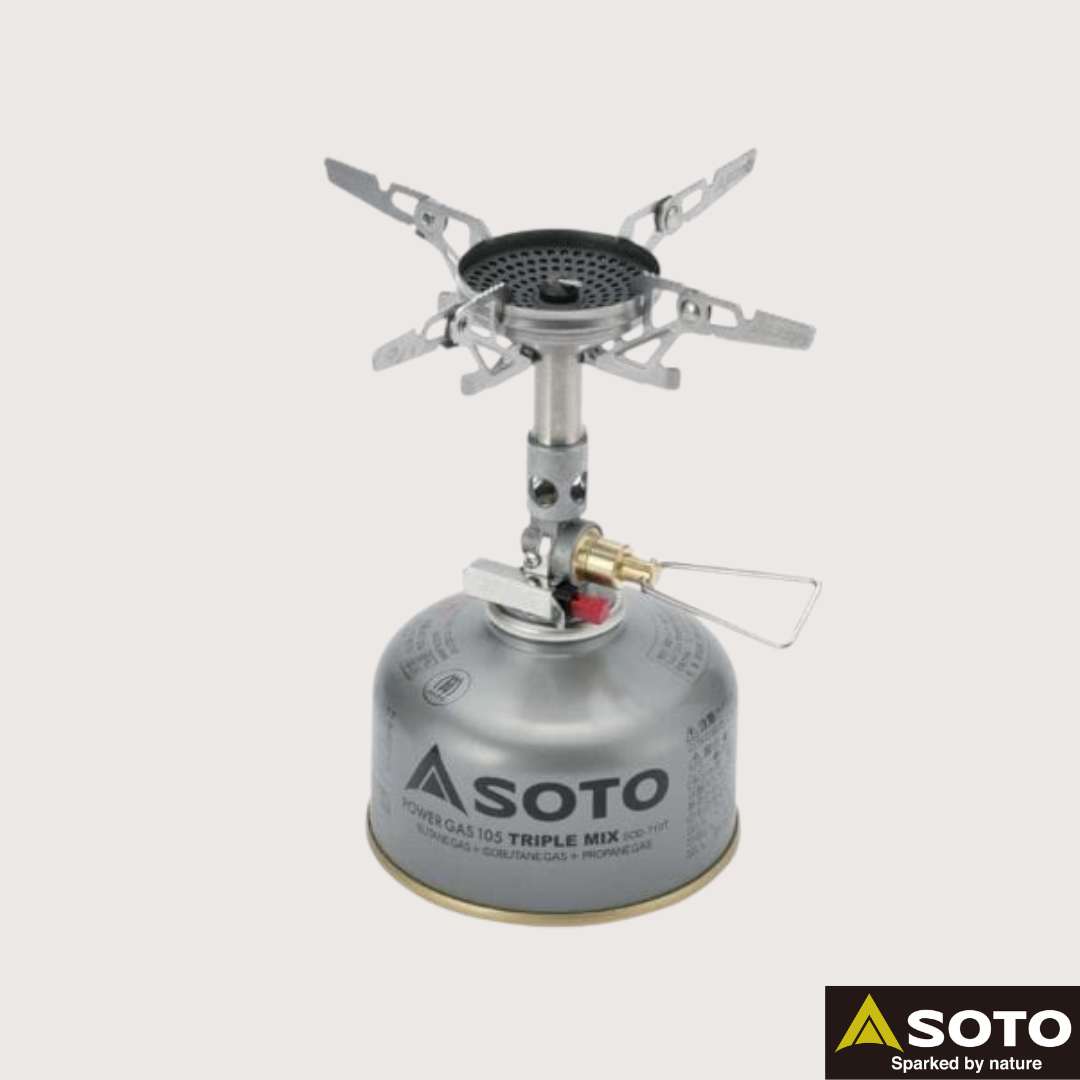
Soto WindMaster
Micro-regulator technology delivers consistent output in wind and cold that defeat competing canister stoves. The stove that actually works above treeline.
Amazon affiliate · price subject to change
The WindMaster is the canister stove that experienced alpine backpackers carry when conditions matter more than gram-counting. Soto's micro-regulator technology is a step beyond the PocketRocket Deluxe's pressure regulator — it maintains flame output not just in cold and low-fuel conditions, but in the wind exposure that makes above-treeline cooking genuinely difficult with conventional canister stoves. The concave burner head is the key design element: where standard canister stoves use a flat or slightly domed burner that wind strips heat from, the WindMaster's recessed burner head creates a natural windbreak that keeps the flame centered on the pot.
The WindMaster ranks third on Gavler with a 9.3 community score. In testing across multiple outlets including OutdoorGearLab, GearJunkie, and Treeline Review, the WindMaster boils water in 15 to 20 mph winds that completely defeat the PocketRocket and BRS 3000T — GearJunkie's review concluded the SOTO was hands down the champ in wind, displaying wind resistance that means you'll be eating sooner. At 2.3 oz without the TriFlex pot support, the WindMaster is also lighter than the PocketRocket Deluxe while handling harsher conditions. The trade-off is the smaller pot-support range (0.5 L to 1.5 L) and the $10 price premium. For solo alpine hikers, exposed campsites, and shoulder-season trips where wind and cold combine, the WindMaster is the right answer.
The Gram-Counter's Controversial Pick — BRS 3000T $20
BRS 3000T
0.9 oz titanium stove that costs $20. The controversial gram-counter pick that works surprisingly well as a primary stove for solo thru-hikers.
Amazon affiliate · price subject to change
The BRS 3000T is the stove that ultralight forums argue about endlessly. At 0.9 oz and roughly $20, it is the lightest and cheapest canister stove in production — a titanium marvel of Chinese manufacturing that weighs less than an AA battery and costs less than a restaurant meal. The controversy is whether something this cheap and this light can be a credible primary stove. The answer, backed by thousands of PCT and AT thru-hiker trip reports, is yes — with caveats. The BRS 3000T boils water reliably in calm, warm conditions. It has no pressure regulator, no built-in igniter, no windscreen, and notably tippy pot supports for anything over 1 liter. Performance degrades sharply in wind and cold.
The BRS 3000T ranks fourth on Gavler with a 9.2 community score — community ratings outpace editorial because thru-hikers grade it on weight-to-function ratio. CleverHiker, OutdoorGearLab, and Backpacker have all called out the durability lottery: some units last a full thru-hike, others fail after a few hundred boils. For the experienced UL thru-hiker who understands the trade-offs, cooks in sheltered sites, and carries a lighter as backup, the 2 oz of weight savings versus the PocketRocket Deluxe and the $35 of cost savings make the math work. For beginners, winter trips, or wet weather, step up to the PocketRocket Deluxe or Snow Peak LiteMax for sub-2 oz weight without the regulation compromises.
The Expedition Multi-Fuel Pick — MSR WhisperLite Universal $110
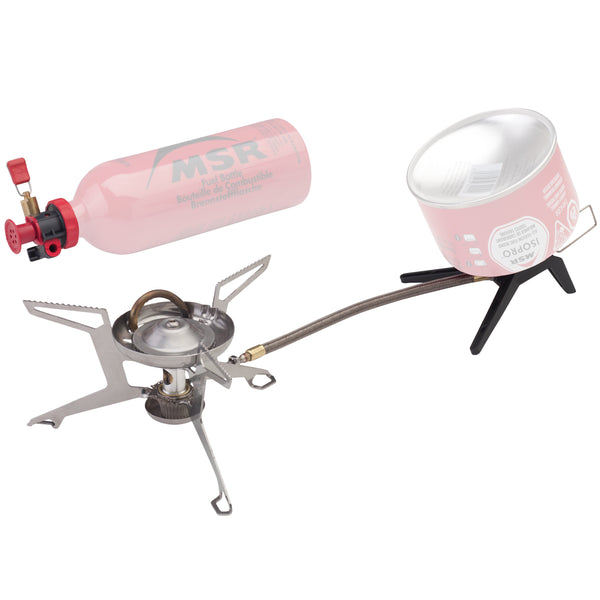
MSR WhisperLite Universal
Multi-fuel stove that burns canister gas, white gas, kerosene, and unleaded auto fuel. The expedition-grade pick for international travel and extreme cold.
Amazon affiliate · price subject to change
The WhisperLite Universal is the stove you carry when you do not know what fuel will be available. It burns isobutane-propane canisters, white gas, kerosene, and unleaded auto fuel — making it the only stove on this list that works in any country, at any altitude, in any temperature. For international backpacking expeditions, high-altitude mountaineering, and winter trips where canister stoves fail because the fuel does not vaporize below 20 degrees Fahrenheit, the WhisperLite Universal is the industry standard. White gas mode operates reliably down to minus 40 degrees Fahrenheit. Kerosene is available in remote villages worldwide where isobutane canisters do not exist.
The WhisperLite Universal ranks fifth on Gavler with a 9.1 community score. At 11 oz, the Universal is significantly heavier than ultralight canister stoves, and the priming-with-liquid-fuel ritual is messier and slower than push-button ignition. The trade-off is justified when conditions demand it — this is not a stove for the Appalachian Trail in July; it is the stove for Patagonia in August or the Himalayas in October. MSR has been making WhisperLite stoves since 1984 and the Universal has been field-tested on every continent. Field-cleanable jets, replaceable O-rings, and the shaker-jet system that prevents clogging with dirty fuels make it the most field-maintainable stove in production.
The Cooking-First Integrated Pick — Jetboil MiniMo $135
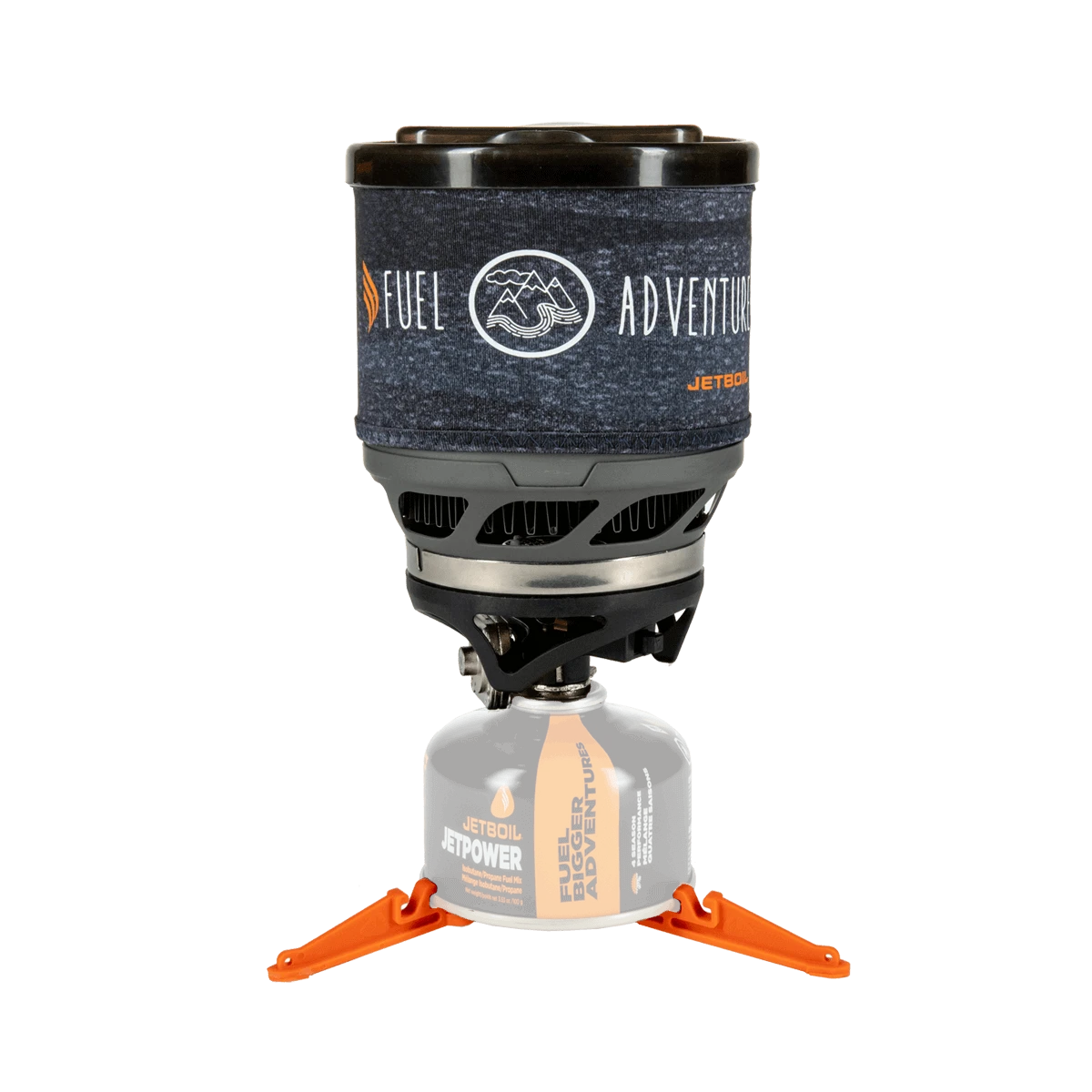
Jetboil MiniMo
Wider pot diameter and simmer control turn the Jetboil platform into a real cooking system. The integrated stove for backpackers who cook actual meals.
Amazon affiliate · price subject to change
The MiniMo is the answer to the Flash's biggest limitation: you cannot actually cook with the Flash. Where the Flash is a boil-only machine, the MiniMo adds a precision simmer valve and a wider, shallower 1-liter cup that turns the Jetboil platform into something you can actually cook meals in. Scrambled eggs, oatmeal, ramen with real ingredients — the MiniMo handles heat-sensitive cooking that the Flash's on-off valve cannot. The wider 5-inch cup diameter, versus the Flash's 4.1 inches, makes a practical difference that specs do not fully capture: food heats more evenly, stirring is easier, and the eating experience is closer to a real bowl than a tall cylinder.
The MiniMo ranks sixth on Gavler with a 9.0 community score. CleverHiker called the MiniMo a fantastic option, especially for cooking rather than just boiling backcountry meals, and the new simmer control makes it easier to fine-tune the size of your flame when cooking. The trade-off versus the Flash is 1.5 oz of added weight, $15 of added price, and a slightly slower boil (roughly 4.5 minutes for 16 oz versus the Flash's 100 seconds) because the wider pot distributes heat over a larger area. For backpackers who are tired of freeze-dried pouches and want to cook real food on trail without carrying a separate pot-and-stove system, the MiniMo is the right Jetboil.
The UL Alcohol System — Trail Designs Caldera Cone $40
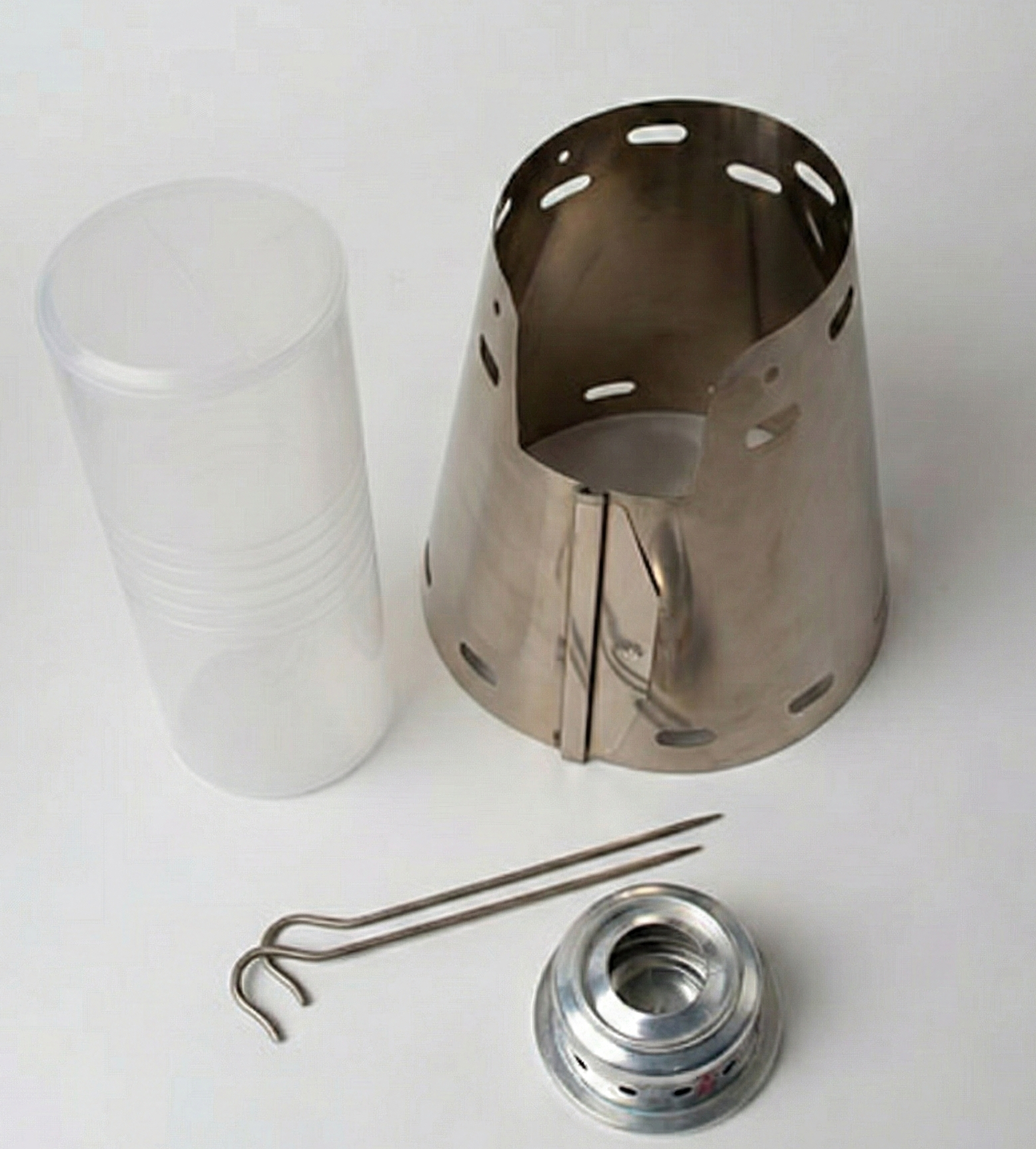
Trail Designs Caldera Cone
Aluminum cone windscreen and pot-support system optimized for alcohol stoves. The cottage-engineered setup that makes alcohol stoves actually practical.
Amazon affiliate · price subject to change
The Caldera Cone is not just a stove — it is a system that solves the fundamental problem with alcohol stoves: they are impractical without a proper windscreen and pot support. The cone is a custom-rolled aluminum sheet sized to your specific pot model, creating a chimney effect that channels heat from an alcohol burner directly into the pot base while blocking wind from all directions. The result is an alcohol cooking system that approaches canister-stove efficiency in calm conditions. Trail Designs manufactures each cone to match a specific pot — you order by pot name (Toaks 550 ml, Snow Peak 600, etc.) and receive a cone with millimeter-precision fit.
The Caldera Cone ranks seventh on Gavler with an 8.8 community score. Total system weight — cone, alcohol burner, and pot — typically comes in under 5 oz, which is lighter than any canister stove system including the fuel canister. Section Hiker and the cottage-build alcohol community both concluded the Caldera Cone outperforms a Trangia for a fraction of the weight thanks to the chimney effect. The limitations are the same as all alcohol stoves: slower boil times (7 to 10 minutes for 16 oz), no simmer control, and the growing list of fire-ban restrictions that prohibit open-flame stoves on California and Pacific Northwest trails through summer. For UL thru-hikers prioritizing total system weight over convenience, on trails without fire restrictions, the Caldera Cone remains the gold standard.
The Stove That Cannot Break — Trangia Spirit Burner $15
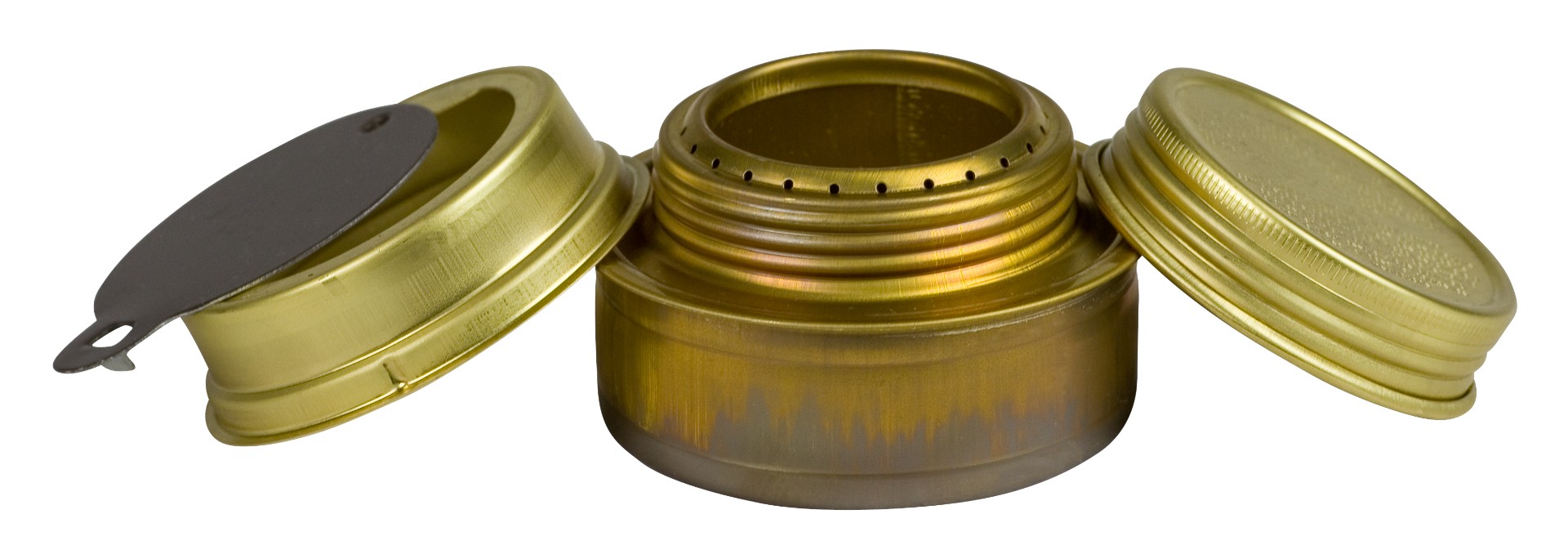
Trangia Spirit Burner
Swedish-made brass alcohol burner with a 50+ year production history. The simplest, most reliable stove on this list — no moving parts, nothing to break.
Amazon affiliate · price subject to change
The Trangia Spirit Burner has been manufactured in Sweden since the 1950s, making it the oldest continuously-produced backpacking stove design in the world. The design is almost comically simple: a brass cup with a perforated ring that vaporizes denatured alcohol into a ring of blue flames. No valves, no jets, no moving parts, no igniter. Fill it with fuel, light it with a match or lighter, cook. The Spirit Burner cannot break because there is nothing to break. It cannot clog because there are no jets. It cannot fail to ignite because there is no piezo mechanism. Trangia owners report using the same burner for decades without replacement, which makes the $15 price point feel almost absurd.
The Trangia Spirit Burner ranks eighth on Gavler with an 8.6 community score. Boil times run 8 to 12 minutes for 16 oz depending on conditions and windscreen setup, and there is no simmer control in the basic configuration (Trangia's optional simmer ring adds rudimentary adjustment). The fuel — denatured alcohol — is heavier per BTU than isobutane, so total carry weight for a week of cooking exceeds canister systems. The Spirit Burner is the right stove for minimalist backpackers, bushcrafters, and international travelers who value absolute reliability over speed or weight. It pairs beautifully with the Trail Designs Caldera Cone for ultralight use, or with Trangia's own windscreen-and-pot systems for a self-contained kit.
The Premium Ultralight — Snow Peak LiteMax $45
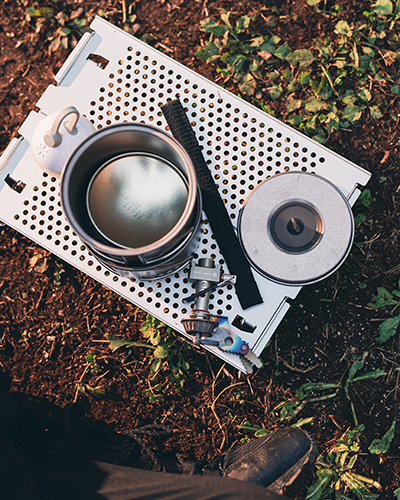
Snow Peak LiteMax
1.9 oz titanium canister stove with auto-ignition. Premium Japanese engineering for the ultralight backpacker who wants piezo ignition without carrying a lighter.
Amazon affiliate · price subject to change
The Snow Peak LiteMax is the premium ultralight canister stove — Japanese-engineered titanium at 1.9 oz, bridging the gap between the BRS 3000T's bare-bones minimalism and the PocketRocket Deluxe's full feature set. Snow Peak's manufacturing quality is evident in the details: pot supports that fold smoothly and lock positively, tight tolerances on the brass-and-titanium burner, and the heritage of a Japanese outdoor brand that has been making backcountry gear since 1958. OutdoorGearLab named the LiteMax a Premium Pick award for the Ultralight Backpacker, citing its simple operation, adjustable flame, and sub-two-ounce weight.
The LiteMax ranks ninth on Gavler with an 8.4 community score. Note one correction worth flagging: while older product copy describes the LiteMax with auto-ignition, the current production unit does not include a piezo igniter — OutdoorGearLab's 2026 review confirms the absence of an igniter switch is one of the design choices that keeps the stove light. Boil times run around 6 minutes for 1 liter in calm conditions, and wind performance is poor due to side burning ports. The LiteMax is the right stove for the quality-conscious ultralight backpacker who appreciates Japanese build quality and is willing to carry a lighter. For raw weight savings, the BRS 3000T is half the weight at half the price; for wind and cold performance, the PocketRocket Deluxe and WindMaster are better picks at similar weight.
The Emergency Minimalist — Esbit Pocket Stove $13
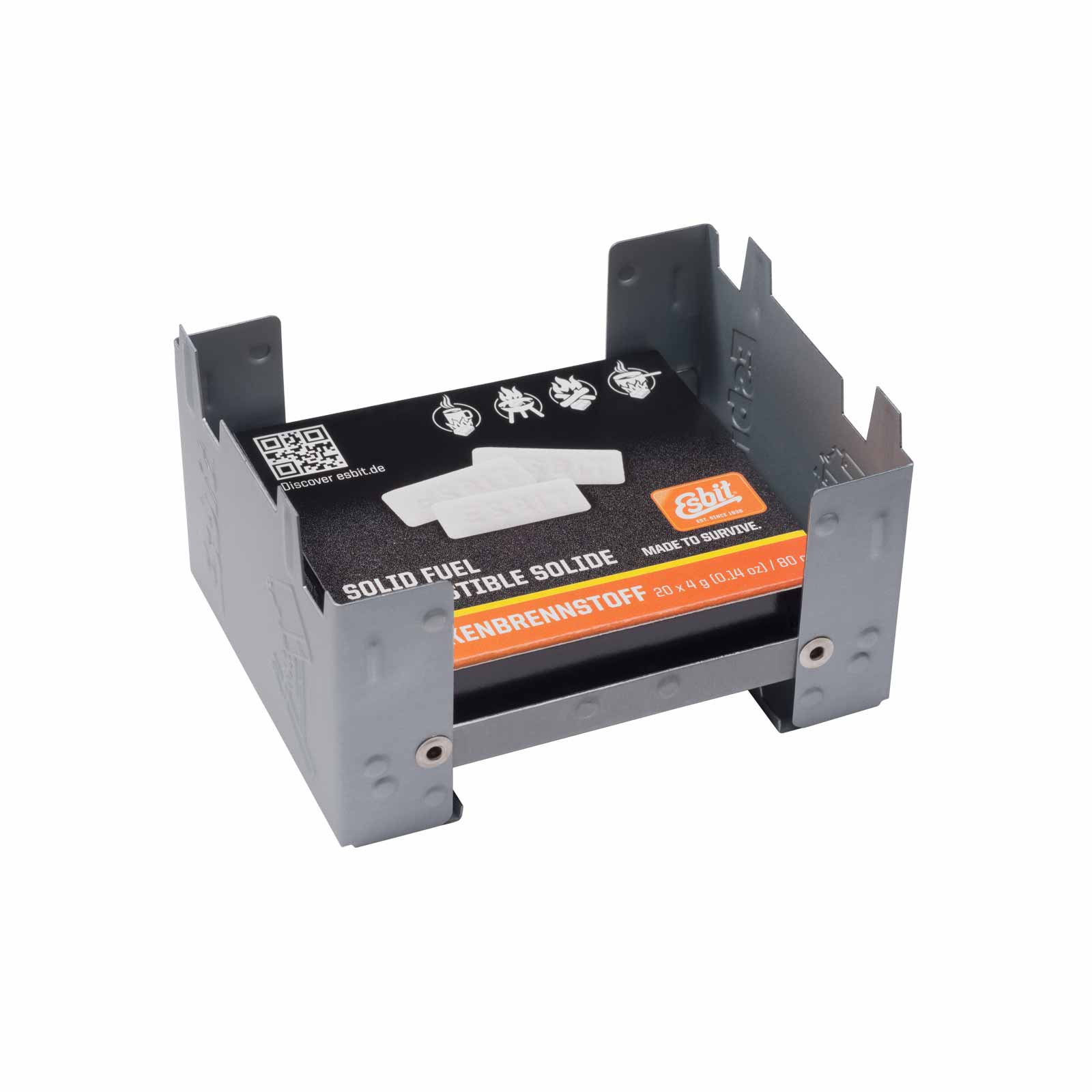
Esbit Pocket Stove
Folding solid-fuel stove that weighs 3.25 oz and costs $13. The emergency backup and gram-counter primary for hikers who only need to boil water.
Amazon affiliate · price subject to change
The Esbit Pocket Stove is the stove category's minimalist endpoint. A folding steel case that opens to become a pot stand, with Esbit solid-fuel tablets that burn with a nearly invisible blue flame. At 3.25 oz for the stove and roughly 0.5 oz per fuel tablet, it is the lightest possible cooking system for hikers who need hot water once or twice per day and nothing more. Tablets burn for approximately 12 minutes each, producing enough heat to boil 16 oz of water in calm conditions. There is no flame control — you light the tablet and it burns until consumed. Tablets are individually packaged in waterproof packaging and store for ten years or more if kept dry.
The Esbit Pocket Stove ranks tenth on Gavler with an 8.2 community score. The cultural role of the Esbit stove is larger than its market share — it is the stove that European military forces have carried for decades, that mountaineers stash as backup, and that ultralight purists defend on forums. The Pocket Stove at $13 is the cheapest entry to backcountry cooking, period. For emergency preparedness, an Esbit stove in the bottom of a pack weighs almost nothing and provides hot-water capability when your primary stove fails. For extreme UL thru-hikers who have optimized every other gram and only need to make coffee and rehydrate meals, it is a credible primary. For everyone else, it is the redundant backup that pays for itself the first time a piezo igniter fails in the rain.
What the 2026 Trail Season Demands
For the Pacific Crest Trail thru-hiker shopping for a one-stove setup that handles Mojave heat through Sierra storm cells, the Jetboil Flash and MSR PocketRocket Deluxe are the consensus picks — the Flash for boil-only speed and fuel efficiency, the PocketRocket Deluxe for standalone weight and pressure-regulated cold performance. For above-treeline alpine routes and shoulder-season wind, the Soto WindMaster is the only canister stove that genuinely earns its place. For winter mountaineering and international expeditions, the MSR WhisperLite Universal remains the multi-fuel standard nothing else credibly replaces. For real cooking in camp — eggs, oatmeal, sauce-based meals — the Jetboil MiniMo is the integrated pick worth the weight penalty. For UL gram-counters who understand the trade-offs and trails without fire restrictions, the BRS 3000T at 0.9 oz or the Trail Designs Caldera Cone alcohol system close the sub-50-dollar tier with weight savings that compound over 2,650 miles.
Cross-references: pair the stove with the Best Backpacking Packs pick, the Best Backpacking Sleeping Bags pick, the Best Backpacking Sleeping Pads pick, and the Best Backpacking Tents pick from Gavler for the full thru-hiker kit.
The vote is yours. See where these stoves rank and add your own pick to the Best Backpacking Stoves list. One vote per person, no affiliate-driven rankings, no sponsorships — just what the people cooking on them recommend.
See all 10 products ranked by the community
Best Backpacking Stoves
See Full Rankings →270 community votes cast
Common Questions
For most backpackers, the Jetboil Flash at $120 is the consensus pick — OutdoorGearLab, CleverHiker, Backpacker Magazine, GearJunkie, and Treeline Review all rank it at or near the top of their 2026 roundups for the same reason. The FluxRing heat exchanger boils 16 oz of water in 100 seconds, the integrated cup-and-burner pack nests into a single self-contained unit, and the 20 percent fuel-efficiency advantage over standalone systems pays itself back over a multi-day trip. The closest standalone alternative is the MSR PocketRocket Deluxe at $55 — 2.9 oz, pressure-regulated for cold and low-fuel performance, and the most popular ultralight standalone canister stove in production. If wind exposure is the primary problem, the Soto WindMaster at $65 is the canister stove that genuinely works above treeline. For real backcountry cooking beyond boiling water, the Jetboil MiniMo at $135 trades 1.5 oz and a slower boil for a precision simmer valve and a wider cup.
PocketRocket Deluxe for fast boil and big pots; WindMaster for wind and cold. In direct comparison testing GearJunkie clocked the PocketRocket Deluxe at a 3 minutes 41 second boil time versus the WindMaster's 4 minutes 19 seconds, but the WindMaster used less fuel for the same job. The real differentiator is wind: the WindMaster's concave burner head and micro-regulator boil water in 15 to 20 mph winds that effectively defeat the PocketRocket. The other trade-off is pot size — the PocketRocket Deluxe supports pots up to 2.5 L; the WindMaster's TriFlex tops out around 1.5 L. For sheltered three-season cooking and group sizes above two, the PocketRocket Deluxe is the right pick. For solo alpine hikers, exposed sites, and shoulder-season conditions, the WindMaster earns the upgrade.
Yes, in three-season conditions, for hikers who understand the trade-offs. The BRS 3000T weighs 0.9 oz and costs around $20 — the lightest and cheapest canister stove in production. It has no pressure regulator, no piezo igniter, and no wind resistance, which means performance drops with cold temperatures, low-fuel canisters, and exposed campsites. Outdoor Gear Lab summarizes it as the lightest model in their review with no igniter, crazy light, small, and affordable, though pot stability is limited. Thousands of PCT and AT thru-hikers have completed thru-hikes on the BRS 3000T; durability is the gamble — some last a full thru-hike, others fail in a few hundred boils. For experienced hikers carrying a lighter as backup who cook in sheltered sites and value the 2 oz of weight savings versus the PocketRocket Deluxe, the math works. For beginners, winter trips, or wet-weather conditions, step up to the PocketRocket Deluxe or Soto WindMaster.
Three correct answers for three different priorities. Canister stoves like the PocketRocket Deluxe and Soto WindMaster are the default for most three-season backpackers — fast boil, easy ignition, no priming, and no fuel-availability issues in North America. Integrated cook systems like the Jetboil Flash and MiniMo are the rational pick for boil-only or simmer-capable cooking with the best fuel efficiency of any category, at the cost of weight and packed volume. Alcohol stoves like the Trail Designs Caldera Cone and Trangia Spirit Burner are the ultralight thru-hiker pick — sub-2 oz systems that eliminate the fuel-canister weight problem entirely and run on denatured alcohol available from any hardware store. The trade-off is slow boil times (8 to 12 minutes) and a growing list of fire-ban restrictions that prohibit open-flame alcohol stoves on California and Pacific Northwest trails through summer.
Flash for boil-only speed; MiniMo for real cooking. The Flash is the faster, lighter, cheaper integrated cook system — 13.1 oz, $120, and a 100-second boil time that beats every other stove on the list. It has no simmer control. The MiniMo adds a precision simmer valve and a wider 5-inch cup that lets the platform handle scrambled eggs, oatmeal, and sauce-based meals that the Flash cannot, at the cost of 1.5 oz of added weight and $15 of added price. CleverHiker calls the MiniMo a fantastic option, especially for cooking rather than just boiling. For backpackers whose menu is freeze-dried meals and coffee, the Flash is the right call. For backpackers who eat real food on trail, the MiniMo is the upgrade.
Yes, for experienced UL thru-hikers in trails and seasons where fire bans permit it. The Trail Designs Caldera Cone with a Trangia Spirit Burner is a sub-5 oz total cooking system including pot — lighter than any canister stove including its fuel. Reviewers including Section Hiker and the cottage-build alcohol community confirm the Caldera Cone outperforms a Trangia for a fraction of the weight thanks to the chimney effect that channels heat back into the pot. The system fails in three scenarios: fire bans that prohibit open flames (now common on California and PCT segments through summer), wet or windy conditions where alcohol's slow boil times become unworkable, and group cooking where alcohol's BTU output cannot keep up. For solo backpackers on trails without fire restrictions who prioritize total system weight over speed, the Caldera Cone remains the gold standard. For everyone else, a canister stove is the lower-risk pick.
The Esbit Pocket Stove at $13 for solid fuel, or the Trangia Spirit Burner at $15 for alcohol. The Esbit is a folding steel case with solid-fuel tablets that burn for roughly 12 minutes each — the cheapest path to backcountry hot water, with no liquid fuel to leak and no canister to carry. The trade-off is slow boil times (8 to 12 minutes) and no flame control. The Trangia Spirit Burner is the Swedish brass alcohol burner that has been in continuous production since the 1950s; with no moving parts and no jets, it is the most reliable stove on this list and the only stove that genuinely lasts a lifetime. Both are right for emergency backup and minimalist solo cooking. For a credible primary canister stove on a budget, the BRS 3000T at $20 is the next step up — and for $35 more, the MSR PocketRocket Deluxe is the stove most experienced UL backpackers eventually buy.
Products Mentioned
Jump to the full ranking and community verdict for each pick named above.
- BRS 3000TBackpacking · Best Backpacking Stoves
- Jetboil FlashBackpacking · Best Backpacking Stoves
- MSR PocketRocket DeluxeBackpacking · Best Backpacking Stoves
- Soto WindMasterBackpacking · Best Backpacking Stoves
- Snow Peak LiteMaxBackpacking · Best Backpacking Stoves
- MSR WhisperLite UniversalBackpacking · Best Backpacking Stoves
- Jetboil MiniMoBackpacking · Best Backpacking Stoves
- Trail Designs Caldera ConeBackpacking · Best Backpacking Stoves
- Trangia Spirit BurnerBackpacking · Best Backpacking Stoves
- Esbit Pocket StoveBackpacking · Best Backpacking Stoves