The Best 3D Printers in 2026, Ranked by People Who Actually Print
Bambu Lab vs Prusa vs Creality. Gavler's makers have voted on the printers worth buying in 2026 — ranked by real-world reliability, not spec sheets.
The 3D printing landscape in 2026 looks nothing like it did three years ago. Print speeds have tripled. Multi-material printing actually works now. And the gap between "hobbyist toy" and "engineering tool" has effectively closed for anyone willing to spend more than $500.
But with Bambu Lab, Prusa, Creality, and a dozen others all fighting for your money, the signal-to-noise ratio in reviews is terrible. So we went to the people who run these machines daily. Gavler's 3D printer rankings come from makers who've burned through spools, unclogged nozzles, and printed everything from prototypes to cosplay armor. Their votes. Their rankings.
How We Rank: One Vote, One Printer
Every Gavler user gets exactly one vote on our Best 3D Printers list. Pick the machine you'd recommend above all others. Changed your setup? Move your vote. The result is a living ranking built on what real users stand behind right now.
The Top 3: What the Community Chose
1. Bambu Lab P2S — The Speed King
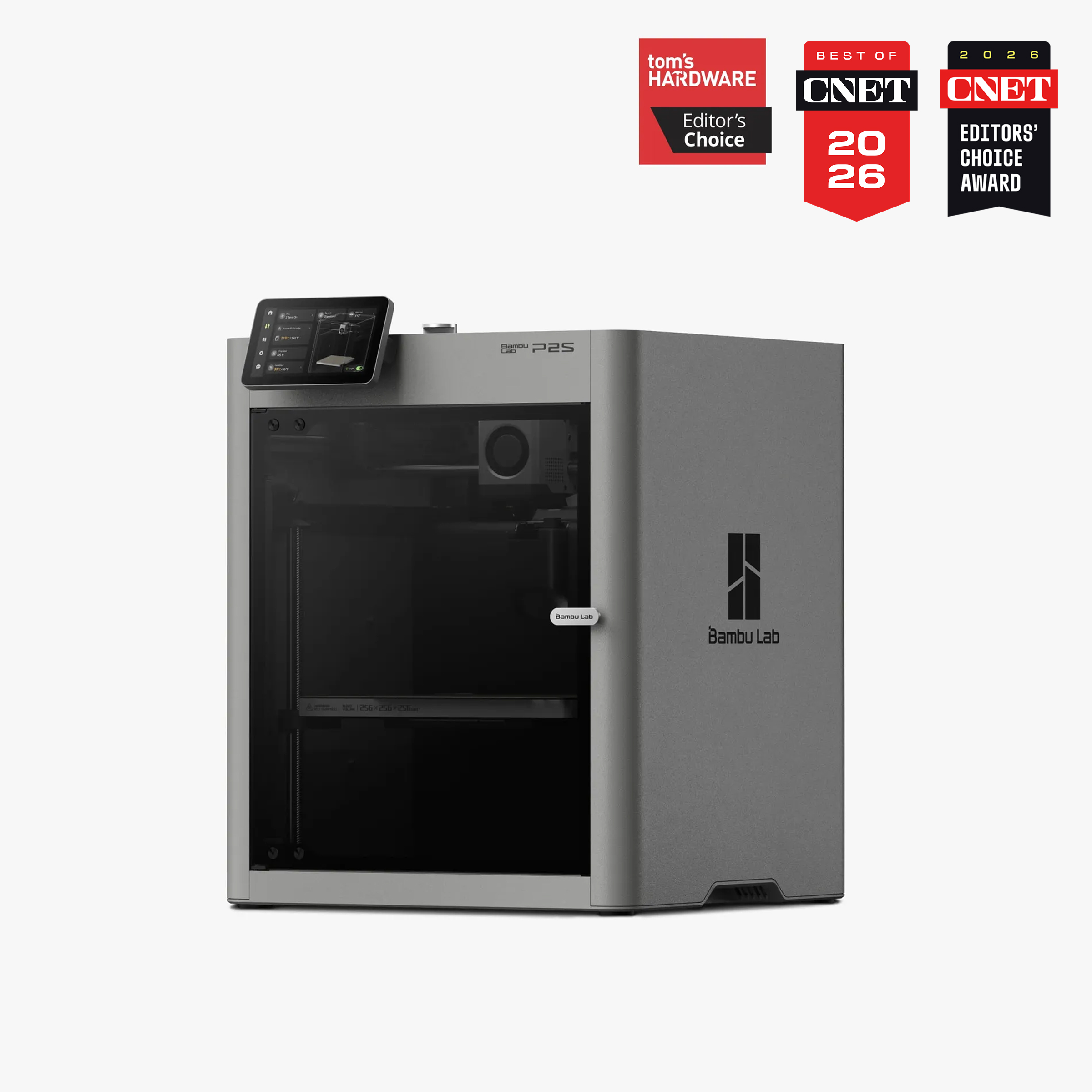
Bambu Lab P2S
A meaningful upgrade with a servo extruder delivering 70% more extrusion force and a completely redesigned interface.
Amazon affiliate · price subject to change
A 9.7 score tells the story. The P2S took everything the community loved about Bambu's original P1 line — the speed, the automatic calibration, the "it just works" setup — and pushed it further. We're talking 500mm/s print speeds that actually produce clean parts, not just impressive timelapse videos. The integrated AMS system handles multi-material prints with a reliability that felt impossible two years ago.
The community votes for the P2S because it collapses the gap between "start a print" and "hold a finished part" better than anything else on the market. When your printer finishes jobs in a third of the time, you iterate faster, you experiment more, and you actually use the thing.
2. Prusa Core One — The Open-Source Standard
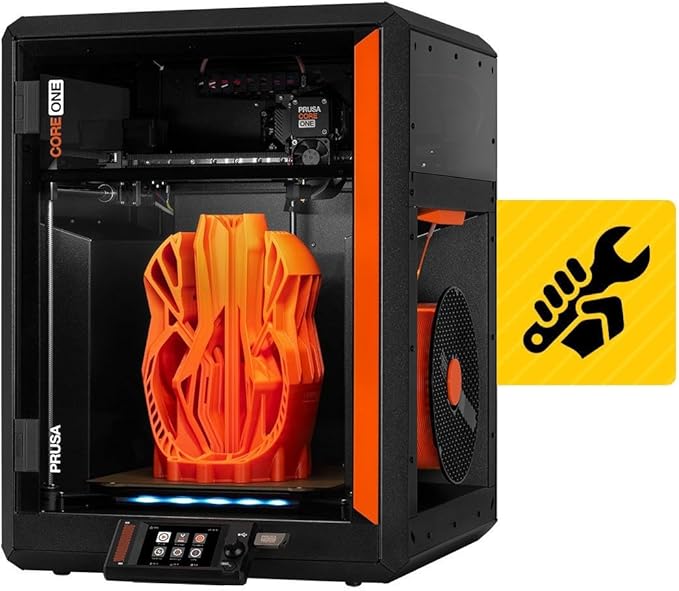
Prusa Core One
Prusa's engineering excellence shines in this ultra-fast, remarkably precise workhorse.
Amazon affiliate · price subject to change
Prusa's answer to the Bambu revolution is the Core One, and the community has placed it at 9.6 — barely behind the P2S and ahead of everything else. This is significant. Prusa doesn't compete on speed alone. They compete on philosophy: open-source firmware, user-repairable design, no cloud dependency, and a decade-long track record of supporting their machines with updates.
The Core One is genuinely fast now — not P2S fast, but fast enough that the speed gap is no longer the deciding factor. What tips the scales for many voters is knowing they own their machine completely. No subscription anxiety. No firmware lock-in. No wondering what happens if the company pivots.
3. Bambu Lab P1S — The Value Play
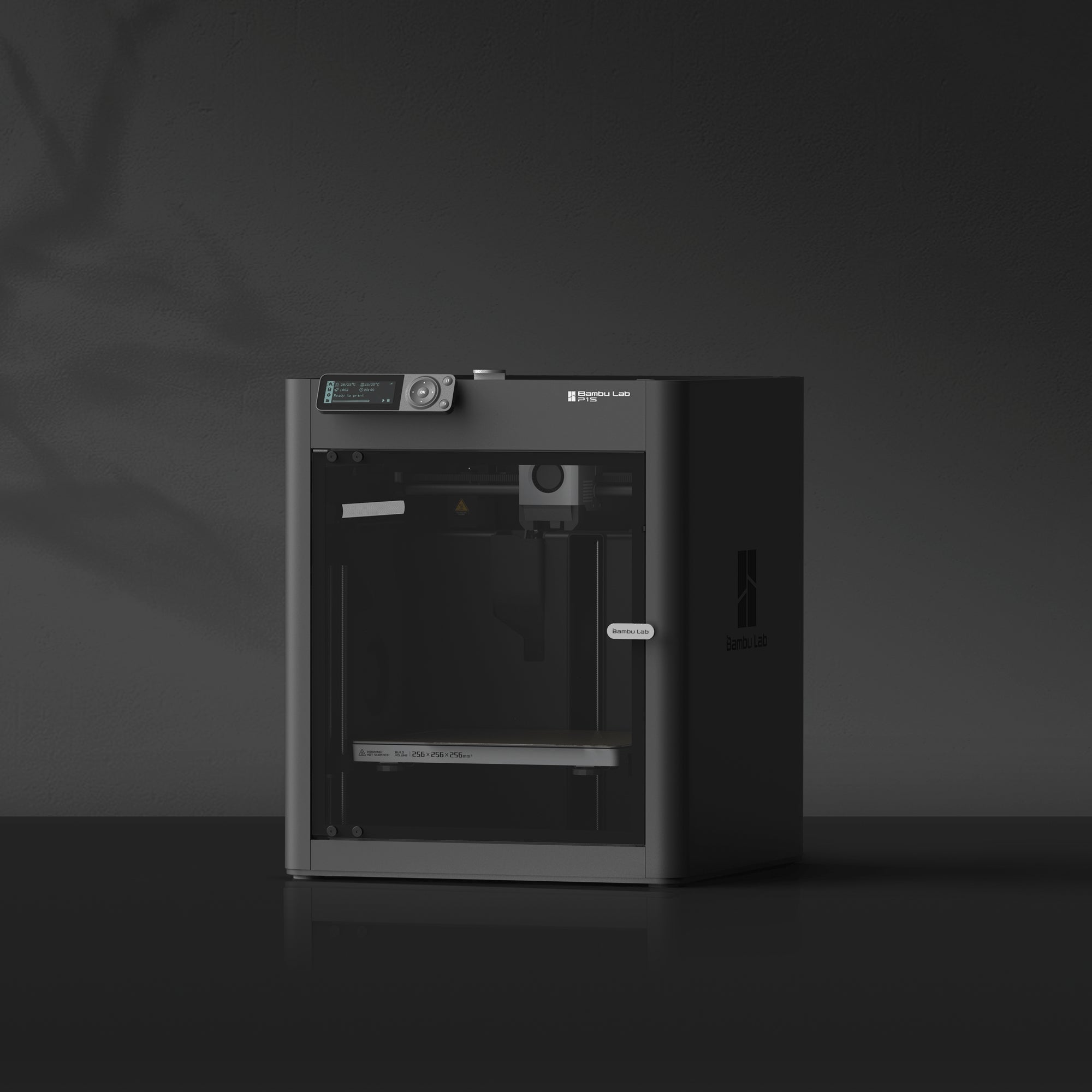
Bambu Lab P1S
Speed and reliability make it the bestseller for a reason — the printer most hobbyists should actually buy.
Amazon affiliate · price subject to change
The P1S is the machine that brought Bambu Lab from "interesting newcomer" to "industry standard." At a lower price point than the P2S, it still delivers the core Bambu experience: fast printing, automatic bed leveling, vibration compensation, and an enclosed chamber that handles engineering materials without drama.
Scoring 9.5, the community sees the P1S as the best value in the category. It's the printer people buy when they want 85% of the P2S at a meaningfully lower price — and for most prints, you genuinely cannot tell the difference.
The Materials Question
One pattern in the community data is clear: enclosed printers dominate the rankings. The days of open-frame PLA-only printing are over for serious makers. ABS, ASA, PETG, TPU, nylon — these materials require temperature control, and the top-ranked printers all deliver it.
Multi-material printing is the other shift. The ability to print supports in dissolvable material, or combine flexible and rigid filaments in a single part, has moved from "party trick" to "essential workflow." Both Bambu's AMS and Prusa's MMU systems earn praise from the community, though Bambu's implementation gets the edge for reliability.
Buying Guide: What Actually Matters
Speed is real now, not marketing. The top printers genuinely print 3-5x faster than machines from 2023. This isn't a spec sheet number — it's the difference between a 6-hour print and a 90-minute print. For iterative work, this changes everything.
Enclosed chambers are non-negotiable for serious printing. If you plan to print anything beyond PLA, you need an enclosure. Warping, layer adhesion issues, and fumes are all solved by a proper enclosed build chamber. Every top-ranked printer has one.
Open-source vs. closed ecosystem is a real choice. Bambu Lab makes incredible printers, but their firmware is proprietary and their slicer pushes you toward their ecosystem. Prusa is fully open. Neither approach is wrong — but decide what matters to you before buying.
Budget for filament, not just the printer. A $700 printer that sits idle because you're rationing $30 spools defeats the purpose. Budget at least $200 for an initial filament stock across multiple materials. The printer is the beginning of the cost, not the end.
What's New Since January
The 3D printing market has not stayed still since this list was first published. Three developments are worth flagging without disturbing the community ranking above.
The Bambu Lab X2D is the headline launch of the year. Announced and shipped on April 14 at $649 base / $899 for the AMS combo, the X2D is structurally the dual-nozzle, dual-extruder successor to the original X1 Carbon — a 256 × 256 × 260 mm enclosed CoreXY with hardened steel rods, a three-layer filtration system, an AI camera, and a switching mechanism that lifts the unused nozzle out of the way to eliminate filament purge waste. Reviewers from Tom's Hardware and Toms3D have converged on the same read: the $899 combo is aggressively priced for what it is, and Bambu is using the launch to apply pressure on the rest of the market. The X2D doesn't unseat the P2S as the community's top pick — voters haven't lived with it long enough — but if you're buying today and the dual-nozzle workflow matters to you, it deserves serious consideration. We've flagged it to the curator for list inclusion once community votes accumulate.
The Bambu H2D is a category of one. Already at rank #6 on the community list, the H2D is worth re-flagging because it's not really competing with the printers above it — it's a $1,899-and-up multifunction machine that combines CoreXY 3D printing with an optional laser engraver, a blade cutter, and a pen plotter on the same gantry. If your workflow includes anything beyond pure FDM printing, it's the only printer in this list that can collapse a CNC bench's worth of tools into one footprint. The Laser Combo at $2,799 is the configuration to look at if that's the use case.
Elegoo's Centauri Carbon is the budget pick to watch. Per Tom's Hardware, the Centauri Carbon has emerged as the most-cited Bambu alternative at the entry tier — a 500 mm/s enclosed CoreXY in the $290-350 range that does most of what the P1S does for less than half the price. The Centauri Carbon 2, with multi-material support, was revealed for Q1 2026 release and is now shipping. The Creality Ender-3 V4 Combo at rank #9 is still the multicolor budget pick on the community list, but Elegoo's positioning at this price tier is real and the curator should be evaluating Centauri Carbon for future ranking inclusion.
What This Doesn't Change
The community ranking above is unchanged because the votes haven't moved. The P2S, the Core One, and the P1S still hit the same workflow targets they did at launch — speed, open-source philosophy, and accessible multi-material respectively — and the X2D's arrival doesn't invalidate any of them. If you bought a P2S in January, you didn't buy the wrong machine. The X2D is a sidegrade with a different feature emphasis (dual nozzles vs the P2S's single-extruder simplicity), not a clean upgrade. For a head-to-head walkthrough of the Bambu lineup, Toms3D's review is the deepest current breakdown.
The structural takeaway four months in is the same one we wrote in January, just more pronounced: the gap between hobbyist and professional has effectively closed at every price tier from $200 to $3,500, and the question is no longer "can a consumer printer do this" — it's "which workflow do you want." Speed (Bambu), philosophy (Prusa), value (Elegoo), or production (H2D-class multifunction). Pick one. They all work.
Architecture first — enclosed FDM vs heated-chamber vs resin vat vs a $199 kit — in the 3D-printer buying guide. This page is the ranking.
See all 10 products ranked by the community
Best 3D Printers
See Full Rankings →337 community votes cast
Common Questions
According to Gavler's community of makers, the Bambu Lab P2S is the top-ranked 3D printer in 2026 with a 9.7 score. It combines blazing print speed with exceptional reliability and multi-material support. For those who value open-source firmware and repairability, the Prusa Core One at 9.6 is the community's second choice.
It depends on your priorities. Bambu Lab printers are faster out of the box and more polished as consumer products. Prusa printers are fully open-source, easier to repair, and give you complete control over firmware and upgrades. The community ranks both highly — Bambu for speed and polish, Prusa for transparency and long-term ownership.
Excellent printers start around $500-700 with machines like the Bambu Lab P1S. The $700-1200 range is the sweet spot where you get enclosed chambers, multi-material capability, and serious speed. Above that, you're into prosumer territory with features most hobbyists won't need.
Entry-level printers handle PLA and PETG easily. Mid-range enclosed printers like the P2S and Core One can print ABS, ASA, TPU, and nylon. The enclosed build chambers are critical — they maintain consistent temperature, which prevents warping with temperature-sensitive materials.
Rankings are determined entirely by community votes. Each user gets one vote on the Best 3D Printers list — pick the one printer you'd recommend above all others. No affiliate commissions or sponsorships influence the rankings.
Products Mentioned
Jump to the full ranking and community verdict for each pick named above.