Prusa Core One.
Prusa's engineering excellence shines in this ultra-fast, remarkably precise workhorse.
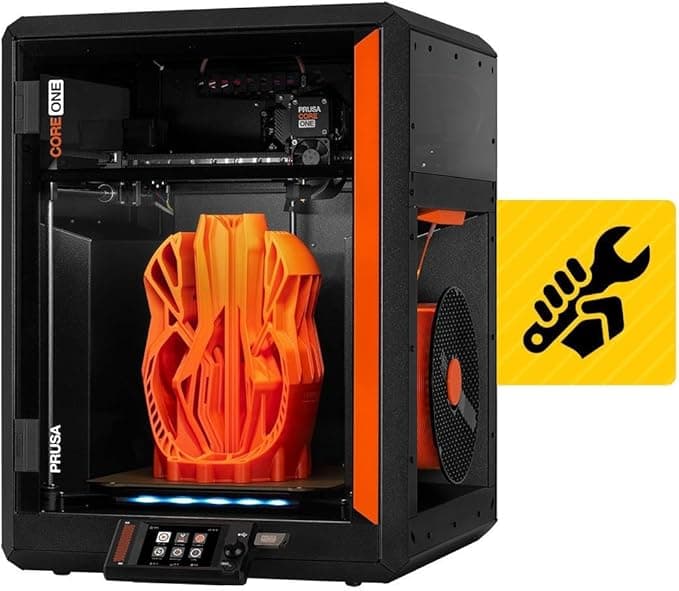
The Verdict.
Gavler Meta-Score
“The Core One answers the question Prusa users have asked for years: what would a fully enclosed CoreXY Prusa look like? The answer is a tank. The steel exoskeleton, active chamber control, and Nextruder extruder produce prints with dimensional accuracy that hobbyist printers rarely achieve. The open-source firmware and replaceable-everything design mean this printer will still be running — and still be supported — in five years. At $1,199 it's not cheap, but reliability has a compounding value that spec sheets don't capture.”
The Gavler Verdict
The Gavler Review.
Prusa Core One Review: An All-Steel CoreXY Built to Outlast the Category
The Prusa Core One sits at number two on our Best 3D Printers list with a 9.6, and it answers a question Prusa's community has asked for years: what would a fully enclosed CoreXY machine from the most trusted name in open-source 3D printing actually look like? The answer is a tank — an all-steel exoskeleton frame, active chamber control, and firmware you can read, modify, and repair for as long as you own the printer. Buy it if you want a printer engineered to still be running, and still be supported, in five years. Skip it if raw speed and price-per-print matter more to you than repairability — the Bambu Lab P2S beats it on both at roughly half the cost.
What it actually is
The Core One is Prusa's answer to a decade of reliability data applied to a from-scratch CoreXY design. The all-steel exoskeleton frame — nothing welded or glued — is the defining structural choice: it provides rigidity that flexing aluminum extrusion frames can't match, and every component is designed to be field-replaceable rather than sealed into a disposable module.
The enclosed chamber reaches 55°C with active temperature control, which matters for ABS and ASA prints that warp badly in open-air printers, and can be actively held under 30°C for PLA. Print speed runs roughly 20 percent faster than Prusa's own MK4S, driven by CoreXY kinematics paired with the proven Nextruder direct-drive extruder. Automatic calibration handles bed leveling, input shaping, and pressure advance without manual tuning — a real departure from the manual-first-layer culture around earlier Prusa machines.
At $949 as a kit or $1,199 assembled, it costs roughly double the Bambu Lab P2S. That premium buys Prusa's legendary support infrastructure, a design built around easy field maintenance, and firmware that is fully open-source rather than tied to a manufacturer's cloud ecosystem.
In use
The build quality is the first thing every reviewer lands on. TechRadar called the steel exoskeleton "nearly indestructible, and nothing is welded or glued — designed for easy maintenance from day one," which is the through-line for the whole machine: this is a printer designed to be opened up and fixed, not replaced.
Tom's Hardware's assessment captures the value proposition precisely: "Arguably the most complete enclosed prosumer printer available — the combination of active chamber control, automatic calibration, and Prusa's legendary support makes it a standout." 3D PUT frames the price question directly and answers it in the Core One's favor: "Is this CoreXY printer worth the price? For anyone who values repairability and open-source firmware, absolutely." 3D Tech Valley's take zeroes in on what changed from the original Core One release: "Reliable, fast, and finally future-proof. The Core One Plus fixes every complaint about the original."
Day to day, the combination of active chamber control and automatic calibration means the printer behaves consistently across materials without the manual tuning that engineering-filament printing usually demands on open-frame machines.
Where it shines
- Built for a decade, not a product cycle. The all-steel exoskeleton and field-replaceable-everything design philosophy mean the Core One is engineered to be maintained, not discarded, when a part eventually wears out.
- Active chamber control up to 55°C. That range covers genuinely demanding engineering filaments — ABS, ASA, and beyond — without aftermarket enclosure mods, while still cooling for clean PLA prints.
- Fully open-source firmware. PrusaSlicer and the printer's firmware are open, which means the Core One's usefulness doesn't depend on any single company's cloud service staying online or a subscription staying active.
The trade-offs — who should skip it
This is the most durable, most repairable printer on the list — not the fastest or cheapest, and the honest reasons to look elsewhere are specific:
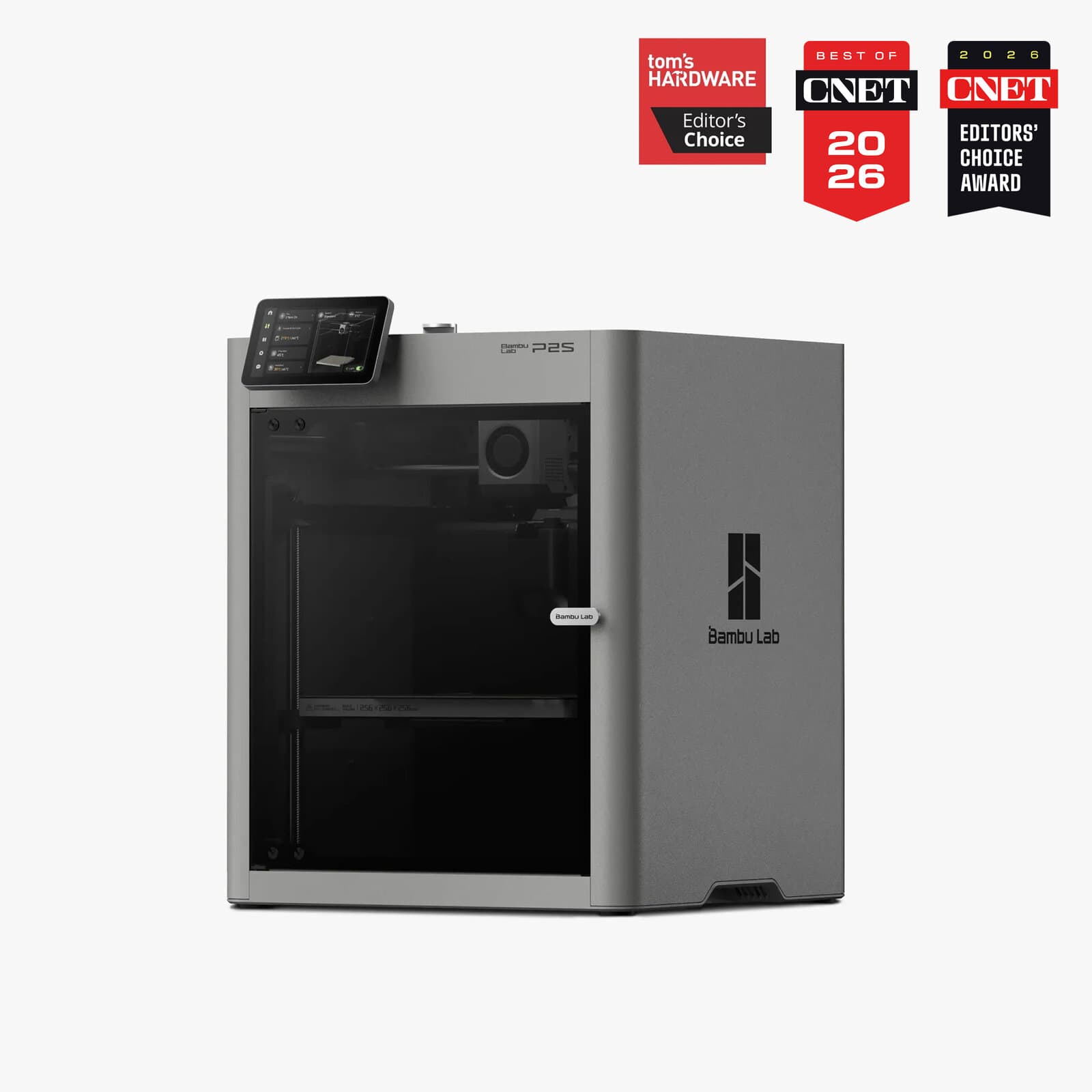
- You're optimizing for speed and value. The Bambu Lab P2S costs roughly half as much, prints notably faster, and covers a comparable build volume with a servo extruder that handles demanding filaments well. If raw capability-per-dollar is the priority, the P2S wins.
- You need more build volume. At 250 x 220 x 270mm, the Core One's chamber is actually slightly smaller than the P2S's 256mm cube. Neither is a large-format printer.
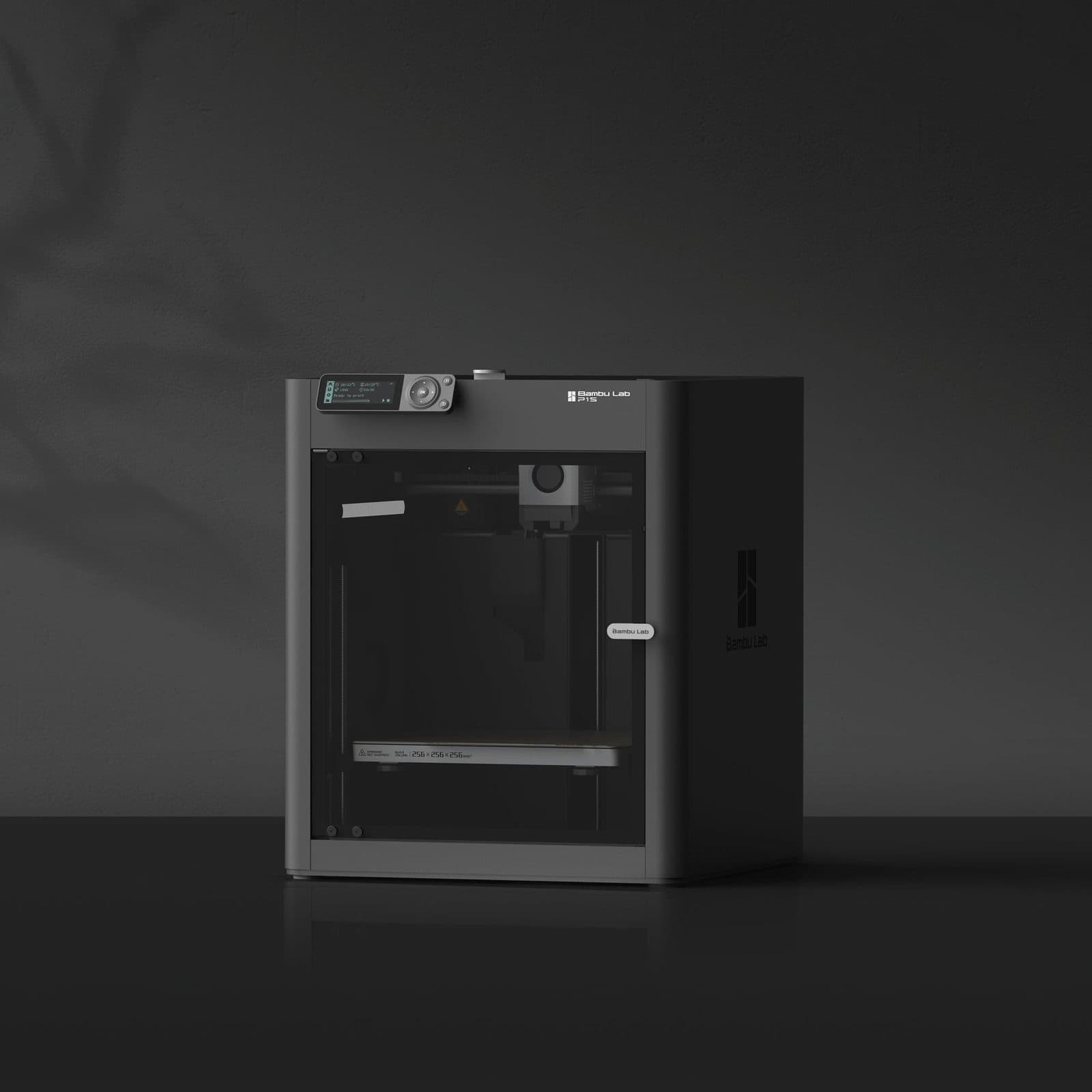
- You're on a tight budget. Even the $949 kit price is a real premium over entry-level enclosed printers like the Bambu Lab P1S at $399. If you're printing PLA occasionally and don't have a strong repairability preference, that's the more practical starting point.
How it compares
The Core One's closest rival sits directly above it on the list: the Bambu Lab P2S at rank one, priced at $599 with a faster print speed ceiling and a comparable build volume, backed by a DynaSense servo extruder that handles demanding filaments without the Core One's open-source premium. The trade Prusa is asking buyers to make is explicit — pay roughly double for a steel frame, field-repairability, and firmware independence instead of Bambu's faster, cheaper, more closed ecosystem. For makers who've been burned by disposable hardware before, or who simply want to own their printer's whole stack, that trade is worth making. For everyone optimizing purely for speed and value, the P2S is the better buy.
The Gavler verdict
A 9.6, with a 96 expert consensus that edges slightly ahead of a 94 community rating — the small gap traces to buyers weighing the smaller build volume and the premium over Bambu alternatives against the durability payoff. The Core One isn't trying to win a spec sheet; it's trying to be the printer you're still running, unmodified and fully supported, five years from now. If that's the bet you want to make, the Core One is close to the only printer on this list built explicitly to win it. If you just want the fastest, most capable printer for the money today, buy the Bambu Lab P2S instead.
Common Questions
For makers who value repairability and long-term support over spec-sheet speed, yes. It ranks second on Gavler's Best 3D Printers list with a 9.6, built on an all-steel exoskeleton frame, active chamber control up to 55 degrees Celsius, and fully open-source firmware. The honest caveat is price: at 1,199 dollars assembled it costs roughly double the class-leading Bambu Lab P2S, and the smaller 250 x 220 x 270mm build volume means you're paying more for durability and openness, not raw capability.
The kit runs about 949 dollars and the assembled unit about 1,199 dollars. Buy the kit if you're comfortable with a multi-hour build and want to understand the machine you'll eventually be servicing yourself — Prusa's field-maintenance philosophy means every component is designed to be replaceable, and building it once is the fastest way to learn that. Buy assembled if you want to be printing the same day you unbox it.
Buy the P2S if speed and value are what you're optimizing for — it's 599 dollars, meaningfully faster, and has a comparable build volume. Buy the Core One if you want a printer engineered for a decade of field maintenance, fully open-source firmware independent of any one company's cloud ecosystem, and Prusa's long-standing support and community infrastructure. The Core One's premium is a bet on repairability and openness, not raw print speed.
No. Automatic bed leveling, input shaping, and pressure advance calibration all run without manual tuning, which is a meaningful change from earlier Prusa machines that leaned on manual first-layer calibration. Combined with the Nextruder direct-drive extruder, the Core One is close to plug-and-play despite its open, field-serviceable design.
Where to Buy.
Prices checked regularly
90-day price history
Price History
Steady at $1,299 for the entire 90-day tracking window — no increases, no discounts, across 91 tracked days.
Tracked daily across retailers. Vote Want itabove and we’ll alert you the moment the price drops.
Some links are affiliate links — Gavler may earn a commission. This never affects rankings or scores. Learn more.
Precision Engineering
All-Steel Exoskeleton Frame
Nothing welded or glued — the steel case provides CoreXY rigidity that aluminum extrusion frames can't match, and every component is field-replaceable.
Active Chamber Control (55°C)
Enclosed chamber with active heating to 55°C for engineering filaments or cooling under 30°C for PLA — eliminates warping without aftermarket modifications.
Nextruder + Auto Calibration
Proven Nextruder extruder with automatic bed leveling, input shaping, and pressure advance calibration — no manual tuning required.
Technical Specifications
The Scoreboard
Experts praise the build quality and active chamber control as best-in-class for the price. Community scores slightly lower due to the smaller build volume than competitors and the premium over Bambu Lab alternatives.
Cast Your Vote
Do you think Prusa Core One deserves the #2 spot in Best 3D Printers?
Global Critique
“Arguably the most complete enclosed prosumer printer available — the combination of active chamber control, automatic calibration, and Prusa's legendary support makes it a standout.”
“The all-steel exoskeleton frame is nearly indestructible, and nothing is welded or glued — designed for easy maintenance from day one.”
“Is this CoreXY printer worth the price? For anyone who values repairability and open-source firmware, absolutely.”
“Reliable, fast, and finally future-proof. The Core One Plus fixes every complaint about the original.”
More from Best 3D Printers.
See how other top picks compare in this category.
Filament Appliance, Resin Vat, or a $199 Kit?
A 500 mm/s hangtag is the wrong first question. Enclosed FDM vs heated-chamber vs resin vat vs a $199 kit comes first. Then shop Gavler's live ranking.
The Best 3D Printers in 2026, Ranked by People Who Actually Print
Bambu Lab vs Prusa vs Creality. Gavler's makers have voted on the printers worth buying in 2026 — ranked by real-world reliability, not spec sheets.