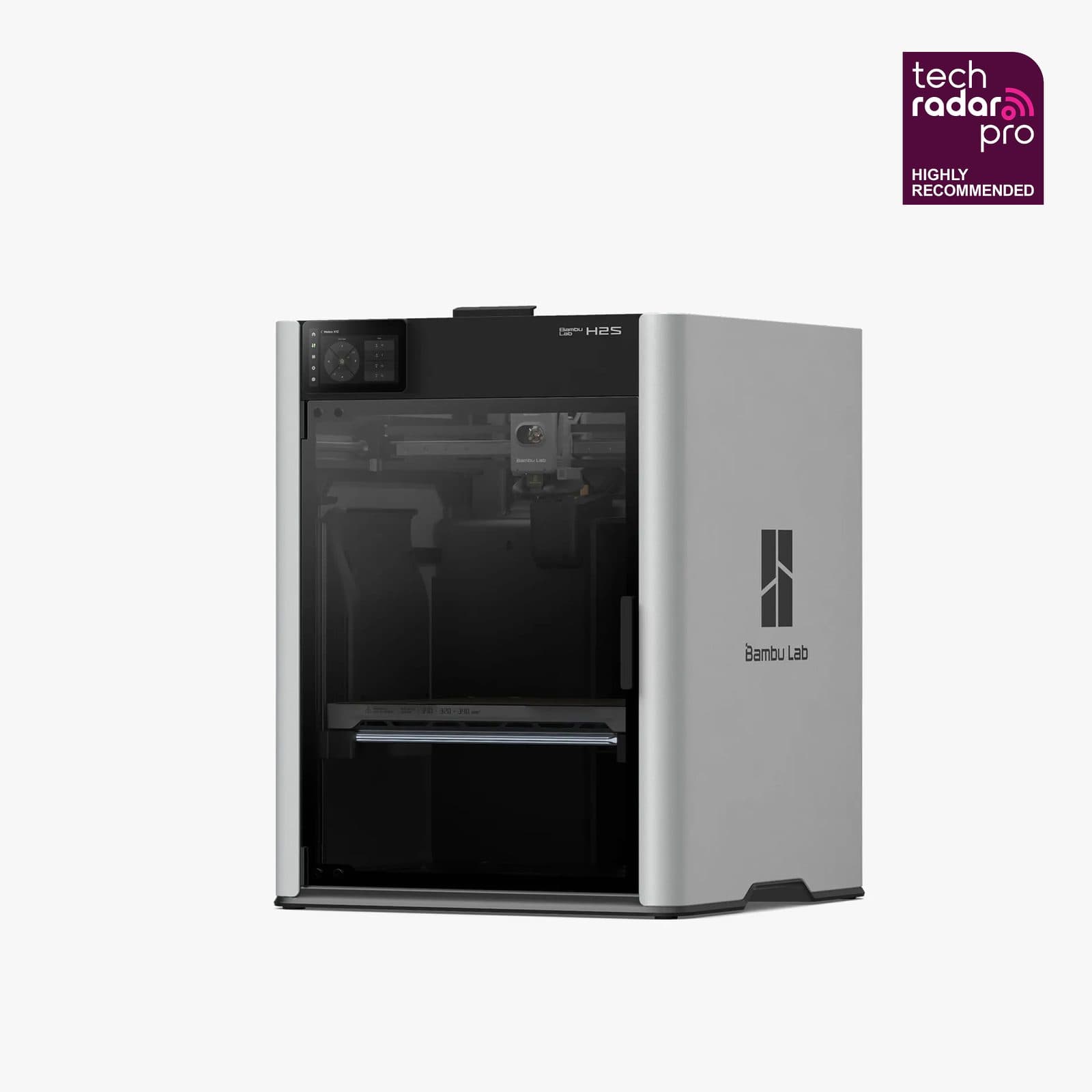
Bambu Lab H2S.
Active 65°C chamber and a CoreXY frame built around engineering materials — the printer that turns PA-CF and PET-CF from a science project into a workflow.
The Verdict.
Gavler Meta-Score
“Pay for the H2S only if your filament shelf has carbon fiber on it. The active 65°C chamber genuinely fixes the warping problem that defeats most consumer printers on engineering materials — but if you're printing PLA and PETG, the P2S delivers identical quality at half the price.”
The Gavler Verdict
The Gavler Review.
Bambu Lab H2S Review: The Printer That Makes Carbon Fiber Filament Behave
The Bambu Lab H2S sits at number four on our Best 3D Printers list with a 9.4, and it's the most specialized printer on that list by design. Its defining feature is an actively heated chamber that holds the build environment at up to 65°C — the temperature delta that engineering filaments like carbon-fiber and glass-fiber composites need to crystallize correctly without warping. Buy it if your filament shelf includes PA-CF, PET-CF, or similar composites. Skip it if you print mostly PLA and PETG — the Bambu Lab P2S delivers identical quality on those materials at roughly half the price.
What it actually is
The H2S solves a problem that has quietly ruined countless weekends for makers experimenting with carbon-fiber filament: passively-heated or unheated enclosures simply can't sustain the temperature delta that high-temperature engineering materials need to crystallize properly during cooling. Print PA-CF or PET-CF in a standard enclosure and you'll fight warping and interlayer delamination no matter how carefully you tune the rest of the print. The H2S's actively heated chamber holds the build environment at up to 65°C — a sustained, controlled temperature most enclosed consumer printers, including Bambu's own P-series, aren't built to maintain.
The CoreXY frame is dimensionally larger than the P-series lineup, with a build volume that genuinely accommodates parts previously requiring splitting into halves and bonding together. Bambu addresses the second common failure mode of consumer engineering printing with hardware, not just heat: a hardened nozzle, hardened extruder gears, and a full-metal hotend rated for continuous printing of abrasive composites — materials that would otherwise shred standard hardware within a few hundred print hours.
At $1,249, the H2S is priced for a specific workflow, not general hobbyist use: small-batch functional parts, tooling fixtures, drone frames, and prototype enclosures that need to survive heat or impact stress that PLA and PETG simply can't handle.
In use
All3DP's review identifies exactly what separates the H2S from the rest of Bambu's lineup: "The actively heated chamber is the feature that separates the H2S from every other Bambu printer — it makes carbon-fiber filaments behave the way they're supposed to." That's a precise way to frame the value proposition — this isn't a printer that does everything better, it's a printer that fixes one specific, well-known failure mode.
3D Printing Industry's assessment addresses the hardware durability side directly: "Bambu Lab's hardened hotend and extruder gear path mean you can run abrasive composites continuously without watching for nozzle wear every few hundred hours." That continuous-duty framing matters — it's the difference between a printer that can technically handle carbon fiber for one print and one that's rated to run abrasive materials as a routine part of a production workflow.
Tom's Hardware's review is the most useful for a buyer trying to decide whether they need this printer at all: "If you're not printing engineering filaments, you don't need the H2S. The P-series prints PLA and PETG with the same quality at a fraction of the cost." Hackaday's take frames the value from the other direction, for the buyer who does need it: "The H2S is the cheapest way into reliable engineering-grade printing without stepping up to industrial brands." Taken together, the reviews describe a printer that's either exactly right for you or entirely unnecessary — there's very little middle ground.
Where it shines
- The active 65°C chamber genuinely solves the warping and delamination problem that defeats most consumer printers attempting carbon-fiber and glass-fiber composites — this isn't a marginal improvement, it's the difference between failed and successful prints on these materials.
- Hardened hotend and extruder hardware are rated for continuous abrasive-filament printing, not just occasional use — a real distinction for anyone running composites as part of a regular workflow rather than an experiment.
- It's meaningfully cheaper than stepping up to industrial engineering-printer brands like Stratasys or Markforged, while delivering validated compatibility with the same category of materials.
The trade-offs — who should skip it
This is the right printer for a specific workflow, not a general-purpose upgrade:
- You print mostly PLA, PETG, or TPU. The Bambu Lab P2S matches the H2S's print quality on standard materials at $599 — roughly half the H2S's price — with a servo extruder that already handles TPU well.
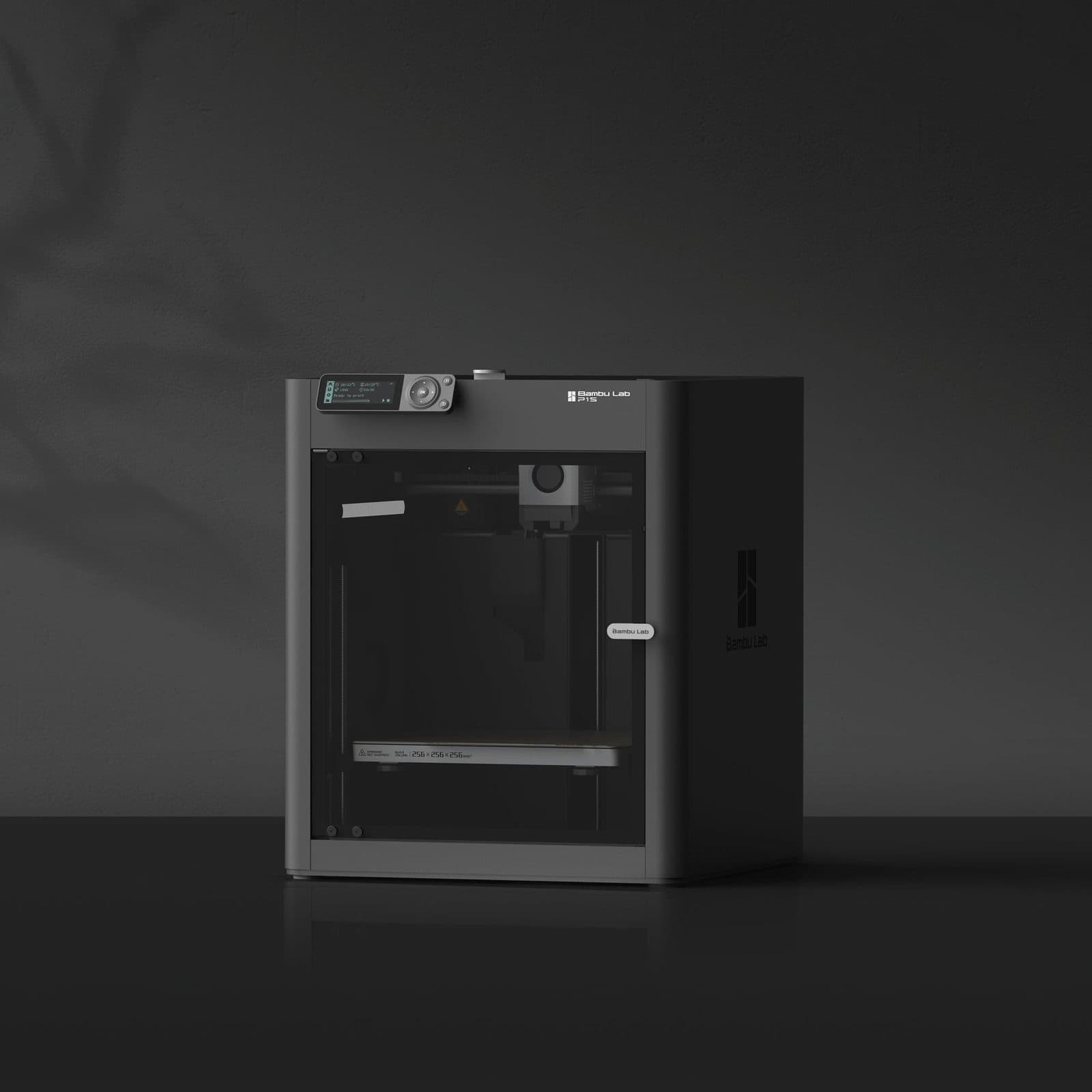
- You're new to 3D printing and don't yet know if you'll need engineering filaments. The Bambu Lab P1S is the better starting point at $399, with the enclosed CoreXY fundamentals that cover the overwhelming majority of hobbyist use cases.
- You want the largest possible standard-material build volume without the engineering-material premium. The H2S's larger frame is built around engineering-material demands specifically, not as a general size upgrade.
How it compares
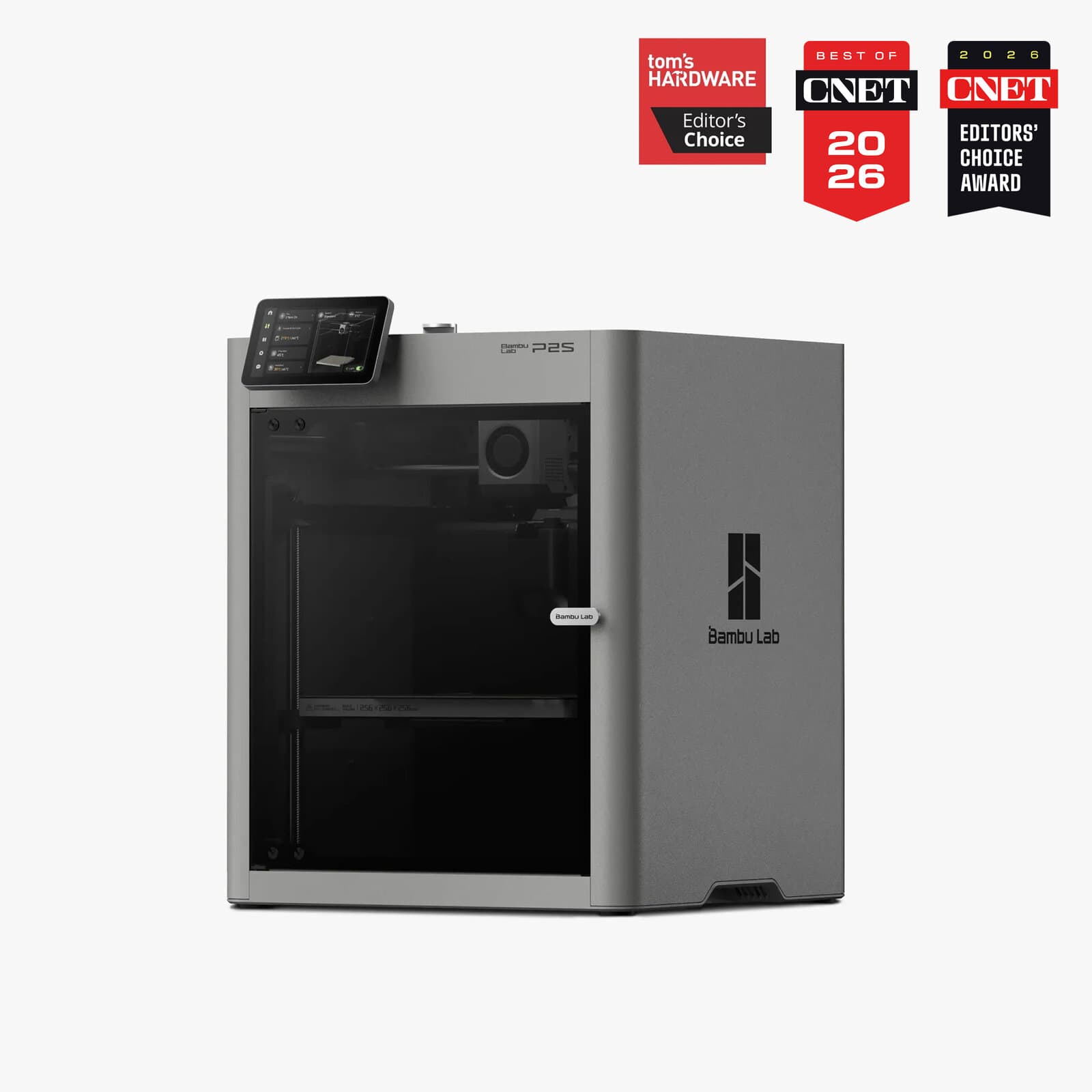
On its own list, the H2S sits below two Bambu siblings built for different jobs. The Bambu Lab P2S at rank one is the all-around pick — a servo extruder, enclosed chamber, and AMS 2 Pro support that cover PLA through TPU and light carbon-fiber work at $599. The Bambu Lab P1S at rank three is the accessible entry point at $399, delivering roughly 90% of the P2S's quality on standard materials.
The H2S doesn't compete with either on general-purpose value — it competes with a much smaller pool of engineering-grade printers, where its $1,249 price is genuinely the cheapest credible entry point into continuous, reliable carbon-fiber and glass-fiber printing.
The Gavler verdict
A 9.4, with a 94 expert consensus that the product's own scoreNote describes as "high but narrow" — reviewers consistently praise the chamber and hardware, but just as consistently flag that it's overkill for hobbyist filaments. The 92 community rating reflects strong satisfaction specifically among the intended audience: makers who actually print engineering composites. Pay for the H2S only if your filament shelf has carbon fiber on it. If it doesn't, the P2S delivers identical quality on the materials you're actually printing, for half the price.
Common Questions
Only if you actually print engineering filaments. It ranks fourth on Gavler's Best 3D Printers list with a 9.4, built around an actively heated 65°C chamber that lets carbon-fiber and glass-fiber composites crystallize properly without warping — a real problem in passively-heated enclosures. At $1,249, it's overkill for anyone printing mostly PLA and PETG, where the cheaper Bambu Lab P2S delivers identical quality.
High-temperature engineering composites specifically: PA-CF, PET-CF, PPS-CF, and ABS-GF. These materials need sustained chamber heat to crystallize correctly without warping or delaminating between layers — a temperature delta most enclosed consumer printers, including Bambu's own P-series, can't sustain. Standard materials like PLA and PETG see no meaningful quality improvement on the H2S versus cheaper Bambu printers.
Buy the P2S if you print mostly PLA, PETG, ABS, or ASA — it delivers the same quality as the H2S on those materials for roughly half the price. Buy the H2S only if your filament shelf includes carbon-fiber or glass-fiber composites; its actively heated 65°C chamber and hardened hotend are specifically engineered to handle those materials reliably, which the P2S is not built to do continuously.
No — that's the point of the machine. It ships with a hardened nozzle, hardened extruder gears, and a full-metal hotend rated for continuous printing of abrasive carbon-fiber and glass-fiber composites without the premature wear that would shred standard hardware within a few hundred print hours on a typical consumer printer.
Where to Buy.
Prices checked regularly
90-day price history
Price History
Steady at $1,249 for the entire 90-day tracking window — no increases, no discounts, across 91 tracked days.
Tracked daily across retailers. Vote Want itabove and we’ll alert you the moment the price drops.
Some links are affiliate links — Gavler may earn a commission. This never affects rankings or scores. Learn more.
Precision Engineering
Active 65°C Heated Chamber
Holds the build environment at up to 65°C — the temperature delta engineering filaments need to crystallize without warping or interlayer delamination.
Hardened Hotend & Extruder
Hardened nozzle, hardened extruder gears, and full-metal hotend rated for continuous printing of abrasive carbon-fiber and glass-fiber composites without premature wear.
Engineering Material Compatibility
Validated for PA-CF, PET-CF, PPS-CF, ABS-GF, and other high-temperature composites — not a workaround, a supported workflow.
Technical Specifications
The Scoreboard
Expert consensus is high but narrow — reviewers consistently flag that the H2S is overkill for hobbyist filaments and only justifies its price for makers who actually print engineering composites. Community rating reflects strong satisfaction among that intended audience and limited review coverage outside it.
Cast Your Vote
Do you think Bambu Lab H2S deserves the #4 spot in Best 3D Printers?
Global Critique
“The actively heated chamber is the feature that separates the H2S from every other Bambu printer — it makes carbon-fiber filaments behave the way they're supposed to.”
“Bambu Lab's hardened hotend and extruder gear path mean you can run abrasive composites continuously without watching for nozzle wear every few hundred hours.”
“If you're not printing engineering filaments, you don't need the H2S. The P-series prints PLA and PETG with the same quality at a fraction of the cost.”
“The H2S is the cheapest way into reliable engineering-grade printing without stepping up to industrial brands.”
More from Best 3D Printers.
See how other top picks compare in this category.
Filament Appliance, Resin Vat, or a $199 Kit?
A 500 mm/s hangtag is the wrong first question. Enclosed FDM vs heated-chamber vs resin vat vs a $199 kit comes first. Then shop Gavler's live ranking.
The Best 3D Printers in 2026, Ranked by People Who Actually Print
Bambu Lab vs Prusa vs Creality. Gavler's makers have voted on the printers worth buying in 2026 — ranked by real-world reliability, not spec sheets.