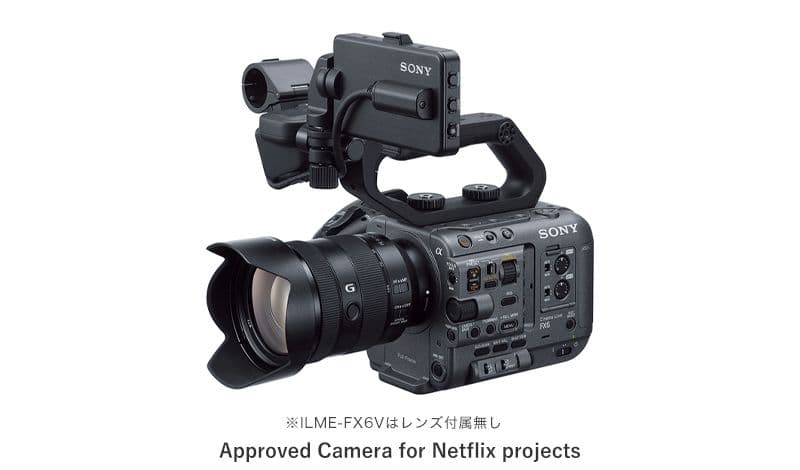
Sony FX6.
Full-frame Super 35 cinema with dual base ISO, internal NDs, and the same color science as the FX9. The documentary and event shooter's workhorse.
The Verdict.
Gavler Meta-Score
“The FX6 is the professional's FX3: everything the smaller camera does well, plus built-in NDs, a smart grip, and a body designed for 12-hour shoot days. If you shoot documentary, events, or corporate video professionally and need a camera that works without accessories, the FX6 is the most complete single-body solution Sony makes.”
The Gavler Verdict
The Gavler Review.
Sony FX6 Review: The Full-Frame Middle Child of Sony's Cinema Line
The Sony FX6 ranks 4th on Gavler's Best Cinema Cameras list with a 9.1, and it earns that spot by doing something no other camera in Sony's lineup quite manages: squeezing FX9-adjacent broadcast features — SDI output, BNC timecode, a genuinely excellent electronic variable ND — into a body barely larger than an FX3. Digital Camera World's Adam Duckworth, who gave it a full 5-star rating at launch, called it "a stunning cinema camera, not just for its own exceptional feature set and performance, but for its ground-breaking price point too." That price point has moved since launch — the FX6 now lists at $6,998 body-only across major retailers, up from its original $5,999 — but the core case still holds. This is the camera Sony built for shooters who've outgrown the FX3's mirrorless-adjacent limits but don't need, or can't justify, the FX9's $11,000 price tag.
Context: between the FX3 and the FX9
Sony's Cinema Line runs FX3, FX6, FX9, VENICE in ascending order of price and production-set ambition, and the FX6 is deliberately positioned as the bridge camera. Newsshooter's Matthew Allard, who tested it head-to-head against the FX3 and the a7S III, put it bluntly: the FX6 "is a lot more expensive than an FX3, but in my opinion, it is far better suited to shooting video than an FX3 or an a7S III." It adds SDI, BNC timecode, a physical electronic-ND scroll wheel, and importable user LUTs — none of which the FX3 offers — while staying close to FX3-and-a7S-III territory on sensor and autofocus performance. Sony told Allard directly that the FX6 and a7S III sensors "utilize the same technology," and the FX6 shares the a7S III's BIONZ XR processor as well.
That positions the FX6 for documentary crews, corporate and event shooters, and small production teams who need broadcast-standard I/O without stepping up to FX9 money. It's not the camera for narrative productions chasing 6K oversampling or interlaced delivery — that's FX9 territory, per Digital Camera World's verdict — and it's not the lightest option for a true one-person gimbal rig, which is still the FX3's job.
In use: ND, low light, color, and autofocus
The electronic variable ND is the FX6's signature feature, adjustable in the 1/4 to 1/128 range (roughly 2 to 7 stops) via a dedicated scroll wheel, with an Auto ND mode that holds shutter speed and aperture locked while the camera compensates exposure. Newsshooter's verdict was unambiguous: "The Electronic Variable ND system on the Sony cameras is really impressive. It is simple and easy to use and one of the FX6's stand-out features." It's a real differentiator against Sony's own FX3, which has no built-in ND at all.
Low-light performance benefits from the sensor's low pixel count and large photosites. Sony markets a base ISO of 800 and a "High Sensitivity" mode at 12,800 — notably, Sony avoids calling this a true dual native ISO system, and Allard pushed the company on whether dynamic range suffers at the higher setting. He was told it's "fairly comparable" to base ISO, a claim his own Xyla chart testing broadly supported: filmmaker Alister Chapman, in the review No Film School summarized as "definitive," counted roughly 15 one-stop steps of dynamic range at both 800 and 12,800 ISO, noting noise "is very low" at base and increases — with some DR loss — at the high-sensitivity setting. Chapman also measured the sensor's large ~8.3-micron pixel pitch as the reason for a fast sensor readout and correspondingly minimal rolling shutter, in the range of 9 milliseconds — a genuine strength rather than a weakness for a full-frame sensor at this price.
Color out of the box leans on S-Cinetone, the same profile used across FX9 and VENICE for cross-camera matching. Testing it against a color chart, Newsshooter found "the S-Cinetone color reproduction is very neutral and accurate," with no visible color cast on a white reference chip — a meaningful claim for anyone building a multi-camera Cinema Line kit and needing footage to intercut cleanly.
Autofocus is inherited from Sony's Alpha stills line, and both outlets that tested it extensively came away impressed. Chapman called it "amazing," saying the FX6 "in most cases focuses better than he can" and rarely hunts before locking on — a meaningful distinction from AF systems that visibly search. Allard's side-by-side against the Canon C70's iTR AF X system found both cameras performed well, "but I did find that the Sony system tended to pick up faces quicker than the Canon," while noting the C70 could track the back of a subject's head — something the FX6's face/eye system can't do. Allard also stress-tested low-light AF by stopping down a lens until exposure fell to roughly 10 IRE and found the autofocus remained usable well into that range.
Strengths
- Electronic variable ND — genuinely one of the camera's defining features, smooth, stepless, and easy to operate one-handed via the dedicated wheel.
- Fast, reliable Alpha-grade autofocus — 627-point phase detection that both Chapman and Allard rated highly for interviews, run-and-gun, and low-light work, without the visible hunting that plagues lesser systems.
- Minimal rolling shutter for a full-frame sensor — the low-megapixel, fast-readout design keeps rolling shutter around 9ms, competitive with much smaller-sensor cameras.
- RAW without the FX9's extension-kit tax — 16-bit linear RAW over SDI/HDMI to an Atomos Shogun 7 or Ninja V, with no need for the FX9's $2,495 XDCA extension unit to get there.
- Broadcast-grade I/O in a compact body — 12G/6G/3G-SDI, BNC timecode in/out, and dual CFexpress Type A/SDXC slots that the FX3 simply doesn't offer.
Trade-offs — who should skip it
The most consequential design flaw, flagged clearly by Newsshooter, is audio: the XLR inputs live entirely on the removable top handle, and there's no 3.5mm input on the camera body itself. Pull the handle off for gimbal work and you're left with what Allard called nothing better than "a scratch mic" — a real problem for a camera explicitly marketed at solo operators who need to strip down for handheld or gimbal shooting. Build quality drew similar criticism: the internal magnesium chassis is solid, but Allard found "the outsider casing feels pretty cheap," and singled out the LCD monitor mount as "the weakest link on the camera" — loose enough that an attached loupe wants to droop under its own weight.
There's no internal RAW recording (Digital Camera World listed this as a headline con), no in-body image stabilization, and no EVF — you're composing off a 3.5-inch touchscreen only. CFexpress Type A cards, required for the fastest frame rates, remain expensive and hard to find compared to the SD cards Canon's C70 uses. And because the FX6 uses a comparatively low-megapixel 4K sensor rather than the FX9's oversampled 6K chip, its Super 35 crop mode is limited to HD only — a real constraint for documentary and event shooters who lean on a crop mode for extra reach, and a point in the FX9's favor for anyone who needs it. Sony's menu system also draws consistent complaints; Allard summed it up as "too long, confusing, and not well thought out," though he found Canon's C70 menus no better.
Skip the FX6 if body-only audio flexibility matters more than a top handle, if you need internal RAW or in-body stabilization, or if your budget realistically caps out well under $7,000 — at that price, the FX3 delivers most of the same sensor and color science for meaningfully less.
How it compares
One rank up on this list, the Sony FX3 is the smaller, cheaper sibling built around nearly the same sensor and autofocus system, but it skips SDI, BNC timecode, and — most notably — the FX6's built-in electronic ND. Choose the FX3 if portability and price are the priority; choose the FX6 if you need broadcast I/O or prefer the FX6's dedicated ND and audio controls over the FX3's more mirrorless-style operation.
Against the Canon EOS C70, ranked one spot below, the comparison is closer than the full-frame-versus-Super-35 sensor difference might suggest. Newsshooter's direct side-by-side found real trade-offs in both directions: the FX6 wins on full-frame low-light character, mounting points, and its variable ND implementation, while the C70 counters with a more tactile build, RF-mount access to Canon glass, and a traditional ND wheel some shooters simply prefer to Sony's electronic system. Which camera wins comes down to lens ecosystem and whether full-frame depth of field is worth the FX6's audio and build-quality compromises.
The Gavler verdict
A 9.1 — the FX6 remains one of the smartest full-frame cinema cameras for documentary, event, and corporate shooters who need broadcast-standard I/O without FX9 money. The electronic variable ND, Alpha-grade autofocus, and minimal rolling shutter are real, field-tested strengths, not spec-sheet claims. The handle-dependent audio design and rising price — now $6,998 rather than the $5,999 it launched at — are the honest asterisks. For solo shooters chasing maximum portability, the FX3 remains the sharper buy; for teams that need SDI, timecode, and a proper variable ND built in, the FX6 still earns its spot on our Best Cinema Cameras list.
Common Questions
Body only, the FX6 is currently listed at $6,998 across Amazon, Best Buy, Walmart, Adorama, and B&H — noticeably above the $5,999 the camera launched at in late 2020. The kit with a 24-105mm F4 G lens runs $8,298 at B&H. Budget accordingly if you're pricing this against older reviews or launch-era coverage.
Not officially, and it's a distinction worth knowing. Sony gives the FX6 a base ISO of 800 and a 'High Sensitivity' mode at 12,800 that behaves similarly to dual native ISO, but Sony specifically avoids that label. Newsshooter's Matthew Allard pressed Sony on whether dynamic range drops in the high-sensitivity mode and was told it's comparable to base ISO — a claim that held up reasonably well in his own testing.
Yes, with one real caveat on audio. The electronic variable ND, fast Alpha-derived autofocus, and compact body make it a strong one-person camera. But the XLR inputs live on the removable top handle rather than the camera body — Newsshooter called the lack of a body-mounted 3.5mm input 'a massive design blunder,' since removing the handle for gimbal work also removes your ability to record real audio.
The FX3 is smaller, cheaper, and shares nearly the same sensor and autofocus, but it lacks the FX6's SDI output, BNC timecode, and electronic variable ND. If you need those broadcast-workflow features or prefer physical audio and ND controls over a fully mirrorless-style body, the FX6 is the better tool. If portability and price matter more, the FX3 — ranked number 1 on Gavler's list — is the smarter buy for most solo shooters.
The FX6 wins on full-frame low-light performance, a genuinely excellent variable ND system, and more mounting points; the C70 counters with better build-quality details, a locked-in ND wheel some shooters prefer, and RF-mount access to Canon glass. Newsshooter's direct hands-on comparison of the two found no clear winner overall — it comes down to mount ecosystem and whether you need full-frame depth of field.
Only externally. The FX6 outputs 16-bit linear RAW over SDI or HDMI to an Atomos Shogun 7 or a Ninja V with the AtomX SDI module, which converts it to 12-bit ProRes RAW — a real advantage over the FX9, which requires Sony's $2,495 XDCA-FX9 extension unit to do the same thing. There is no internal RAW recording option, which Digital Camera World listed as a headline con.
Where to Buy.
Prices checked regularly
90-day price history
Price History
Steady at $5,999 for the entire 90-day tracking window — no increases, no discounts, across 91 tracked days.
Tracked daily across retailers. Vote Want itabove and we’ll alert you the moment the price drops.
Some links are affiliate links — Gavler may earn a commission. This never affects rankings or scores. Learn more.
Precision Engineering
Full-Frame 10.2MP Sensor
Large photosites maximize light gathering for exceptional low-noise performance, with dual base ISO at 800 and 12,800.
Electronic Variable ND
Built-in variable ND filter from 1/4 to 1/128 with smooth, stepless control — no external filters needed.
Smart Grip with Controls
Detachable smart grip with integrated zoom rocker, record trigger, and assignable buttons for single-operator shooting.
Technical Specifications
The Scoreboard
Experts consistently praise the built-in variable ND and S-Cinetone color matching with the Venice line. The $5,999 price and competition from the cheaper FX3 slightly temper community enthusiasm, though working professionals regard it as essential.
Cast Your Vote
Do you think Sony FX6 deserves the #4 spot in Best Cinema Cameras?
Global Critique
“The FX6 is the documentary filmmaker's dream camera. Built-in NDs, S-Cinetone, and dual base ISO in a shoulder-friendly body.”
“Sony's variable ND is the best implementation in any cinema camera. Smooth, predictable, and optically neutral.”
“For multi-camera productions mixing FX3, FX6, and FX9, the color consistency is remarkable. They cut together perfectly.”
More from Best Cinema Cameras.
See how other top picks compare in this category.
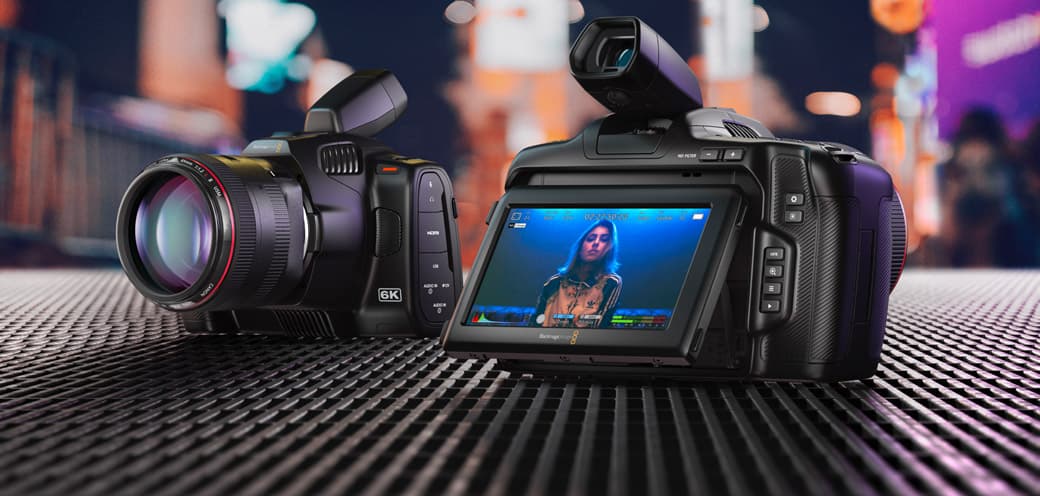
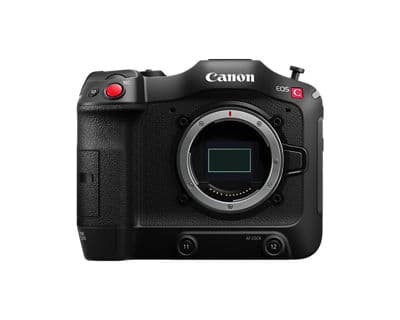
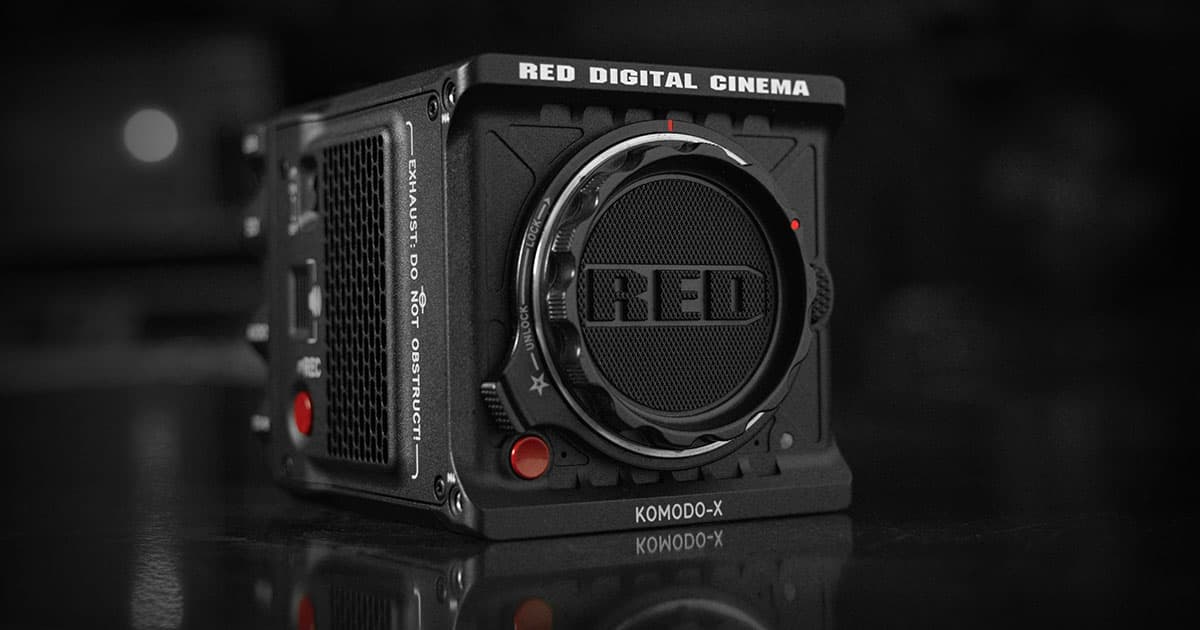
A Compact Cinema Body, an ND Workhorse, or a RAW Cube?
A 12K hangtag is the wrong first question. Compact cinema body, ND workhorse, or RAW cube is the camera. Then shop Gavler's live ranking.
Sony's New FX5 Gives the Compact Cinema Camera Everything the FX3 Was Missing — For $1,000 More
Sony's FX5 adds a stacked sensor, 5K Open Gate, and internal RAW — the compact FX line's biggest leap. But it drops photo mode and still has no built-in ND.
The Best Cinema Cameras in 2026, Ranked by the Filmmakers Who Shoot Them
From a $1,795 Blackmagic Pocket 6K to a 12K full-frame flagship, Gavler's community ranks the cinema cameras worth buying in 2026.