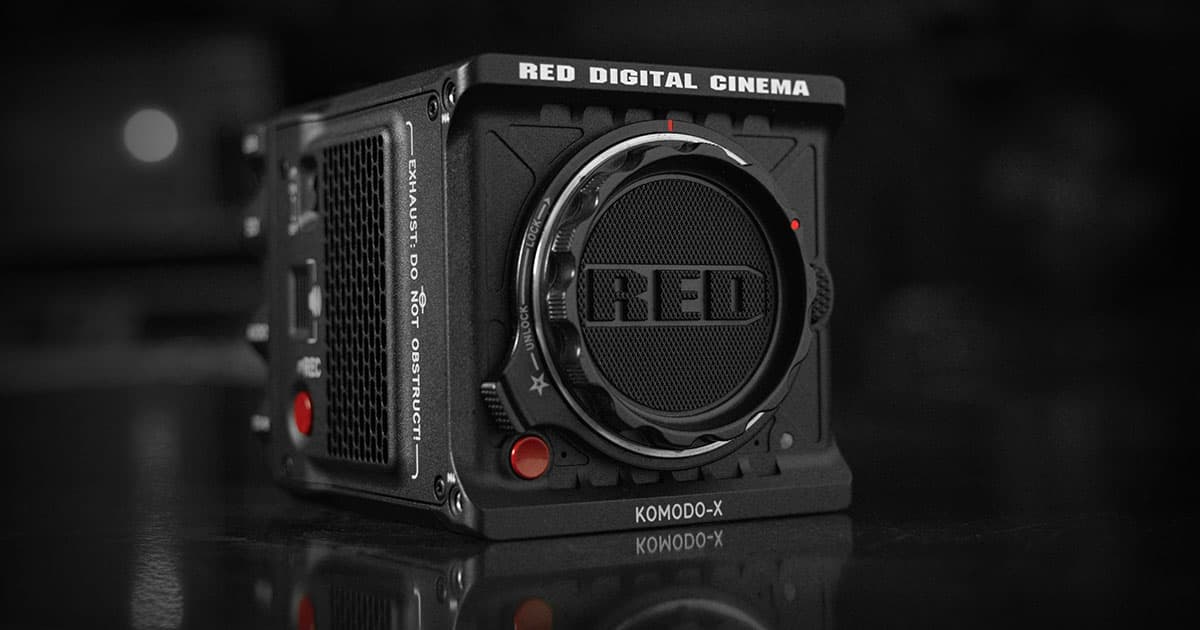
RED Komodo-X.
6K global-shutter Super 35 sensor in a cube body. Genuine RED RAW workflow at the lowest price point RED has ever offered.
The Verdict.
Gavler Meta-Score
“The Komodo-X democratizes RED ownership without compromising the image pipeline. The global shutter is transformative for handheld and action work, and REDCODE RAW remains one of the most respected codecs in professional post-production. The modular body means higher accessory costs, but the flexibility is unmatched.”
The Gavler Verdict
The Gavler Review.
RED Komodo-X Review: Global Shutter REDCODE RAW, at a Real System Cost
The RED Komodo-X earns its number 5 spot on Gavler's Best Cinema Cameras list with a score of 9.0, and it does it on the strength of one feature nothing else at this price touches: a true global shutter on a 6K Super 35 sensor, paired with RED's REDCODE RAW workflow. RED permanently cut the body price by $3,000 — about 30 percent — in September 2024, bringing it down from its $9,995 launch price to a current $6,995, which meaningfully changes who this camera makes sense for. It's still not a turnkey camera. The body price is a starting point, not a budget, and reviewers and RED's own accessory catalog agree that a cage, extra media, and possibly a mount adapter aren't optional extras so much as the actual cost of using it. For indie filmmakers and boutique production houses who specifically need global shutter and RAW, that's a fair trade. For everyone else, it's worth reading the fine print first.
Context: RED's accessible bridge into REDCODE RAW
RED built the Komodo-X to sit between the entry-level Komodo and the flagship V-RAPTOR line. As RED President Jarred Land put it at launch, "with its global shutter, increased frame rates and improved audio and power infrastructure, the KOMODO-X is our new all-around workhorse that fills a much-needed gap in our lineup between the 6K KOMODO and our mighty 8K V-RAPTOR." It keeps the ultracompact Komodo body — RED lists it at roughly 5.09 x 3.99 x 3.75 inches and 2.62 pounds body-only — while adding a redesigned sensor, 12G-SDI output, USB-C with Wi-Fi, and an integrated micro V-Lock battery plate that accepts professional batteries without an adapter.
The September 2024 price cut wasn't incidental. It landed as RED, now owned by Nikon, pushed to widen its customer base. RED Digital Cinema CEO Keiji Oishi framed it directly: "RED always strives to create an accessible and reliable avenue for artists at any level to get their hands on premier cinema grade imaging technology... The KOMODO remains one of the most versatile and powerful camera systems that RED has ever developed, and democratizing image capture technology at this level will always remain part of RED's DNA." That positioning tracks with who actually buys this camera: solo and small-crew indie filmmakers, documentary and wildlife shooters who need a compact global-shutter body, and boutique production houses that want RAW flexibility without committing to a full V-RAPTOR kit.
In use and performance
The headline feature is the global shutter, and it does what a global shutter is supposed to do: no jello distortion on whip pans, no skew on fast-moving subjects, and clean sync with LED volumes and other flickering light sources — the Komodo-X supports frame-accurate PTP or tri-level genlock sync specifically for that kind of multicamera and virtual-production work. RED advertises 16.5 stops of dynamic range on the redesigned sensor, and the camera doubles the original Komodo's frame-rate ceiling: 6K up to 80fps, 5K up to 96fps, 4K up to 120fps, and 2K up to 240fps, all recordable in REDCODE RAW.
Digital Camera World's Kalum Carter, who went hands-on with the Komodo-X at a Nikon and RED event, summed up the in-person impression well: "I was surprised by just how compact this cinema camera is. For a cinema camera with a 6K global shutter sensor, it's almost absurd for how portable it feels. This is exactly why so many wildlife filmmakers swear by it, as it gives you uncompromised image quality without the burden of a massive rig in the field." That's a real, recurring theme in how the camera gets used: strapped to gimbals, mounted in tight documentary setups, or run by a one- or two-person crew that needs global shutter without a shoulder-rig-sized body.
Autofocus exists — the RF and Z mounts carry full lens communication with phase-detect AF — but it's clearly a secondary feature RED is still refining rather than a mirrorless-grade system. RED's 2.2.4 and later firmware updates added a dedicated face-detection toggle button and improved face-tracking with "a larger recognition area and cleaner transitions," per Digital Camera World's coverage of the update — incremental, ongoing work rather than a finished feature. Treat autofocus here as a convenience for run-and-gun documentary work, not a replacement for a focus puller on anything demanding.
Strengths
- True global shutter. No rolling-shutter artifacts on pans, drone work, or LED volume shoots — a feature that's still rare below five figures.
- Real frame-rate headroom. 6K80, 4K120, and 2K240 give editors slow-motion options the original Komodo simply didn't have.
- REDCODE RAW workflow. R3D remains one of the most flexible RAW codecs in post, and the camera is Netflix-approved.
- Meaningfully more affordable than it was. The permanent $3,000 price cut is real and current — $6,995 body-only, verified directly against RED's authorized retailers.
- Native lens flexibility. The locking RF mount (and, as of 2025, a Nikon Z mount variant) opens up a deep, mainstream lens ecosystem without adapters for RF and Z shooters specifically.
- Compact enough to matter. At 2.62 pounds body-only, it fits gimbal and drone work that a full-size cinema body can't.
Trade-offs — who should skip it
The body price is the easy number to quote and the least useful one for budgeting. RED's own Komodo-X Starter Pack — two Nano-V batteries, an outrigger handle, and two 1TB CFexpress cards — lists at $8,995, and the Production Pack runs $11,995. That's before a cage, and reviewers and RED's own accessory partners treat a cage as close to mandatory here: the "brain only" design has minimal built-in ergonomics or I/O protection, which is exactly why SmallRig, Wooden Camera, and Tilta all sell Komodo-X-specific cage systems rather than treating it as an afterthought accessory.
Media costs are real, too. The camera moved off RED's older proprietary CFast and MINI-MAG formats to a single CFexpress Type B slot, which is a genuine improvement in cost-per-gigabyte and offload speed — but 6K REDCODE RAW at 24fps still consumes roughly 1TB per hour, according to B&H's own capacity guidance. Compressed ProRes or lower-resolution RAW stretches that considerably further, but shooters who want the full RAW workflow need to budget for several large CFexpress cards plus a real backup routine, not just the two 1TB cards in the starter kit.
Lens mount flexibility has a real asterisk: there's no native PL version. RED sells its own RF-to-PL adapter with a built-in electronic ND for roughly $3,500, and cheaper third-party PL adapters exist, but cine-lens shooters are buying extra glass-path hardware no matter which route they take. Audio is another spot to budget around — the locking 5-pin connector needs an adapter to accept standard XLR or 3.5mm microphones, and RED's own guidance is that the camera's built-in audio path is meant for scratch reference, not production sound. And because REDCODE RAW is RED's own codec, editing and color workflows lean on RED-aware tools (Resolve, Premiere with the right plugin path) rather than the more universal ProRes pipeline — a real, if familiar, ecosystem commitment for anyone new to RED.
Skip the Komodo-X if you need a single-box, minimal-accessory solution you can buy once and start shooting with, if PL glass is your primary lens investment, or if the total system cost — likely $9,000 to $13,000 once media, a cage, and power are accounted for — doesn't pencil out against your budget.
How it compares
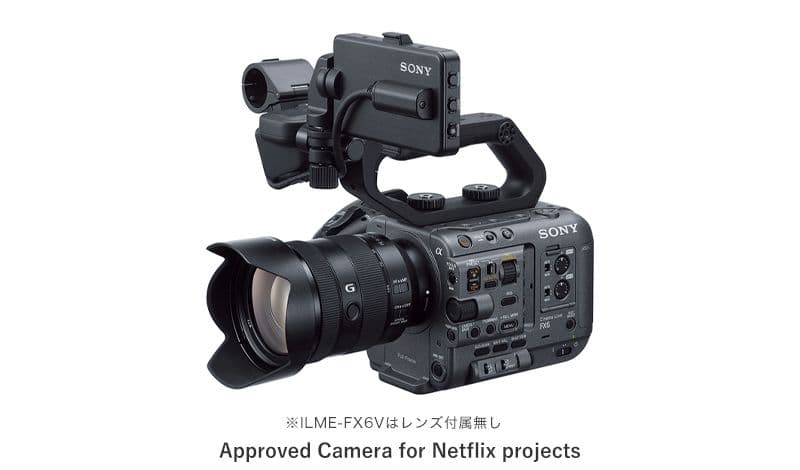
Ranked number 1 on this list, the Sony FX3 takes the opposite approach entirely: no global shutter, no native RAW recording, but a genuinely turnkey full-frame body with the best autofocus in this category and a real-world price around $3,898 — well under half of the Komodo-X once accessories are factored in. Choose the FX3 if you need to shoot solo with minimal rigging and don't need global shutter or RAW specifically.
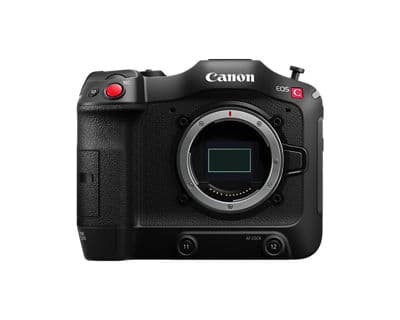
The Canon EOS C70, ranked number 3, splits the difference in a different direction. At $5,499 it undercuts the Komodo-X's body price while adding built-in ND filters and Dual Pixel autofocus the Komodo-X doesn't match — but it's Super 35 with a rolling shutter and Canon's Cinema RAW Light rather than true global shutter and full REDCODE RAW. If built-in ND and dependable autofocus matter more to your workflow than global shutter, the C70 is the more complete out-of-box tool; if global shutter and RAW flexibility are the actual requirement, the Komodo-X is doing something neither of those cameras can.
The Gavler verdict
A 9.0. The Komodo-X earns its rank by delivering a feature — true global shutter — that nothing else on this list offers at anywhere near its price, and RED's 2024 price cut made that feature genuinely more attainable than it used to be. But this is a camera that rewards buyers who go in with eyes open about total system cost: the cage, the media, the possible mount adapter, and the REDCODE workflow commitment are all real line items, not hypothetical ones. For indie filmmakers and boutique production houses who specifically need global shutter and RAW, it remains one of the best tools available under $10,000 all-in. For anyone who just wants excellent cinema footage without assembling a system around it, the FX3 or C70 will get there faster and cheaper.
Common Questions
For indie filmmakers and boutique production houses who specifically want true global shutter and a REDCODE RAW workflow, yes. RED cut the body price by $3,000 (about 30%) in September 2024, bringing it to a permanent $6,995, which makes it a genuinely more accessible entry point into RED's ecosystem than it was at launch. The caveat is that the body price is just the starting line — budget for media, a cage, and possibly a mount adapter before you're actually shooting.
The body alone is $6,995, but RED's own Starter Pack (two Nano-V batteries, an Outrigger handle, and two 1TB CFexpress cards) runs $8,995, and the Production Pack is $11,995. That's before a cage — which the compact 'brain only' design makes close to mandatory for ergonomics and I/O — from the likes of SmallRig, Wooden Camera, or Tilta, all of which sell Komodo-X-specific systems.
No. That's a legacy format from RED's older DSMC2 cameras and the original Komodo. The Komodo-X has a single CFexpress Type B slot, which is faster to offload and cheaper per gigabyte than RED's older proprietary media, though 6K REDCODE RAW at 24fps still fills roughly 1TB per hour, so a serious shoot day means multiple large cards and a real backup workflow.
Not natively. The Komodo-X ships with a locking Canon RF mount (and, since 2025, a Nikon Z mount version), not RED's own proprietary mount, and there is no PL version. RED sells an RF-to-PL adapter with a built-in electronic ND for around $3,500, and third-party adapters from companies like Wooden Camera exist at lower cost, but PL shooters are buying an extra piece of glass-path hardware either way.
They're not really solving the same problem. The FX3, Gavler's number 1 cinema camera, is a nearly-turnkey full-frame body with best-in-class autofocus that you can run solo out of the box. The Komodo-X trades that turnkey simplicity for true global shutter and RAW workflow flexibility, at close to double the FX3's real-world price once you're honest about accessories. Choose the FX3 if you need to shoot alone with minimal rigging; choose the Komodo-X if global shutter and REDCODE RAW are non-negotiable for your work.
Where to Buy.
Prices checked regularly
90-day price history
Price History
Steady at $9,995 for the entire 90-day tracking window — no increases, no discounts, across 91 tracked days.
Tracked daily across retailers. Vote Want itabove and we’ll alert you the moment the price drops.
Some links are affiliate links — Gavler may earn a commission. This never affects rankings or scores. Learn more.
Precision Engineering
6K Global Shutter Sensor
Super 35 sensor with true global shutter eliminates rolling shutter distortion entirely — clean motion at any pan speed.
Modular Cube Body
Compact aluminum chassis designed for custom rigging — mount it on gimbals, drones, Steadicams, or studio rigs.
REDCODE RAW
Industry-standard compressed RAW codec with visually lossless quality at manageable file sizes, native support in all major NLEs.
Technical Specifications
The Scoreboard
Experts praise the global shutter and REDCODE RAW as genuine differentiators. Community scores reflect the high total system cost when lenses, media, and accessories are included, and the proprietary ecosystem that RED maintains.
Cast Your Vote
Do you think RED Komodo-X deserves the #5 spot in Best Cinema Cameras?
Global Critique
“The global shutter changes everything. No more jello, no more careful panning — just shoot.”
“RED at under $10K with a global shutter. Five years ago, this would have been inconceivable.”
“REDCODE RAW remains the gold standard for post-production flexibility. The Komodo-X puts it within reach of indie budgets.”
More from Best Cinema Cameras.
See how other top picks compare in this category.
A Compact Cinema Body, an ND Workhorse, or a RAW Cube?
A 12K hangtag is the wrong first question. Compact cinema body, ND workhorse, or RAW cube is the camera. Then shop Gavler's live ranking.
Sony's New FX5 Gives the Compact Cinema Camera Everything the FX3 Was Missing — For $1,000 More
Sony's FX5 adds a stacked sensor, 5K Open Gate, and internal RAW — the compact FX line's biggest leap. But it drops photo mode and still has no built-in ND.
The Best Cinema Cameras in 2026, Ranked by the Filmmakers Who Shoot Them
From a $1,795 Blackmagic Pocket 6K to a 12K full-frame flagship, Gavler's community ranks the cinema cameras worth buying in 2026.