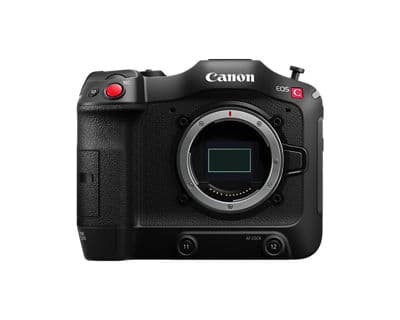
Canon EOS C70.
Super 35 cinema sensor in an RF-mount body with built-in NDs and Dual Pixel AF. The most accessible C-series cinema camera Canon has made.
The Verdict.
Gavler Meta-Score
“The C70 is Canon's smartest cinema play: take the proven C300 III sensor, drop it into an RF-mount body, and add built-in NDs. For Canon RF shooters, it's the obvious cinema upgrade path. Dual Pixel AF and Cinema RAW Light make it equally capable for run-and-gun documentary and controlled narrative work.”
The Gavler Verdict
The Gavler Review.
Canon EOS C70 Review: The RF-Mount Cinema Camera Built Around the C300 III Sensor
The Canon EOS C70 earns its 9.2 by doing something Canon had never quite managed before: putting a genuine Cinema EOS sensor into a body a solo shooter can actually run alone. It takes the Super 35mm Dual Gain Output sensor from the $11,000 C300 Mark III, wraps it in a compact RF-mount body with built-in electronic ND filters, and prices the whole thing at $5,499 — roughly half of what the camera whose guts it borrows costs. The trade-offs are real: no EVF, no SDI output, and a RAW recording option that Canon didn't ship until a firmware update well after launch. But for Canon RF shooters who want cinema-grade image quality without cinema-grade complexity, the C70 remains one of the smartest plays in this category.
What it is
The C70 sits at an odd intersection in Canon's lineup, and that's deliberate. Canon's Cinema EOS line (C200, C300 III, C500 II) has always used EF mount and looked like a "real" cinema camera — handle on top, shoulder-rig ergonomics, modular accessories. Canon's RF-mount mirrorless bodies (the R5, R6, and siblings) shoot excellent video but are still built around stills-camera priorities. The C70, announced in September 2020, was Canon's answer to the gap between them: the first Cinema EOS camera with a built-in RF mount, built around a DSLR-style grip instead of a shoulder-rig body.
What makes that more than a marketing exercise is what's inside. The C70 uses the exact same Super 35mm DGO sensor, Digic DV7 processor, and Dual Pixel CMOS AF (plus EOS iTR AF X head-tracking, borrowed from the 1D X Mark III) as the C300 Mark III. As Newsshooter's Erik Naso put it after his hands-on: "The C70 is basically a smaller C300 MKIII on the inside." That shared DNA is the whole value proposition — you're not buying a scaled-down image, you're buying the same image in a smaller, cheaper, RF-mount package.
In use
Reviewers who've actually shot with the C70 land on the same conclusion from different angles. Digital Camera World's James Artaius, who gave the camera a five-star rating, wrote that "aside from one major difference — the fact that it doesn't record RAW — the Canon EOS C70 really is a C300 Mark III in a smaller, sleeker body. It has the exact same sensor, so you can expect the exact same performance." He singled out the built-in NDs specifically: the "2-, 4- and 6-stop physical NDs (expandable to 10-stop digitally) perform brilliantly while only introducing a very minor effect on color."
ProVideo Coalition's Kenny McMillan, reviewing the camera after roughly a year of real use, was even more direct: "First off, the image is fantastic... The compressed files are incredibly gradable, no macroblocking or anything to speak of, smooth gradations between colors and exposure levels, plenty of latitude and all with a very low noise floor." He added that "you'd never know just by pushing the footage around in post that the image came from such an affordable 'prosumer' camera."
Autofocus draws consistent praise, with one real caveat. McMillan called face and head tracking "blazingly quick," noting the camera can track five or more faces in frame and toggle between them. But he also flagged inconsistency in low-contrast situations: "I noticed it would immediately start hunting if I tried to focus on my black cat in some situations, even during the day." Naso separately noted hearing secondhand reports that C70 autofocus "doesn't perform well in lowlight situations... compared to other Cinema EOS cameras," though he wasn't able to verify it firsthand on his loaner unit.
Strengths
- Shared sensor, half the price. The same DGO Super 35 sensor and image pipeline as the C300 Mark III, at roughly half its cost — Canon's clearest "more camera for the money" argument in this category.
- Best-in-class built-in ND. A 2/4/6-stop physical wheel extendable to 10 stops digitally, changeable in an instant via side buttons or the touchscreen — no front filters, no fumbling.
- RF mount on a cinema body. Full access to Canon's growing RF glass lineup (and EF lenses via adapter), something no other Cinema EOS camera offered before the C70.
- Real dual-XLR audio. Two mini-XLR inputs with 48V phantom power plus a 3.5mm input — genuine production-grade audio I/O in a body this small.
- Autofocus that actually works for one-person crews. Dual Pixel CMOS AF with iTR AF X head tracking means a solo shooter can trust focus on interviews and run-and-gun work without a dedicated focus puller.
Trade-offs — who should skip it
The C70's compromises are the flip side of its size and price, and reviewers are consistent about naming them. There's no SDI output — HDMI only — which will bother anyone plugging into a traditional broadcast or multi-cam monitoring chain. There's no EVF; you're shooting off a 3.5-inch articulating touchscreen, which Naso found workable thanks to Dual Pixel focus assist but fatiguing "for longer periods of time," and genuinely difficult in direct sun without an add-on viewfinder. Digital Camera World also flagged SD card reliability as a real-world concern, reporting corrupted files on 32GB SanDisk Extreme Pro cards during testing (Newsshooter separately had issues with a 64GB Angelbird card), which means budgeting for Canon's recommended V90-rated media rather than whatever's cheapest.
The bigger structural trade-off is RAW. At launch, the C70 didn't record RAW at all — Digital Camera World listed it as a headline "con" in 2020, and Canon told Newsshooter at the time that RAW shooters should look at the C200 instead. Canon added internal Cinema RAW Light LT recording via a 2022 firmware update, so that gap has closed, but buyers should know it wasn't there on day one and still isn't the full Cinema RAW Light of the C300 III. And because the C70 runs a Super 35 sensor rather than full-frame, it carries a 1.46x-1.53x crop that shooters chasing shallow full-frame depth of field, or the widest possible field of view, will feel — especially against full-frame competitors on this same list.
Skip the C70 if you need SDI monitoring on a multi-cam broadcast set, if an EVF is non-negotiable for your shooting style, or if full-frame low-light and depth-of-field characteristics matter more to you than built-in NDs and RF-mount flexibility.
How it compares
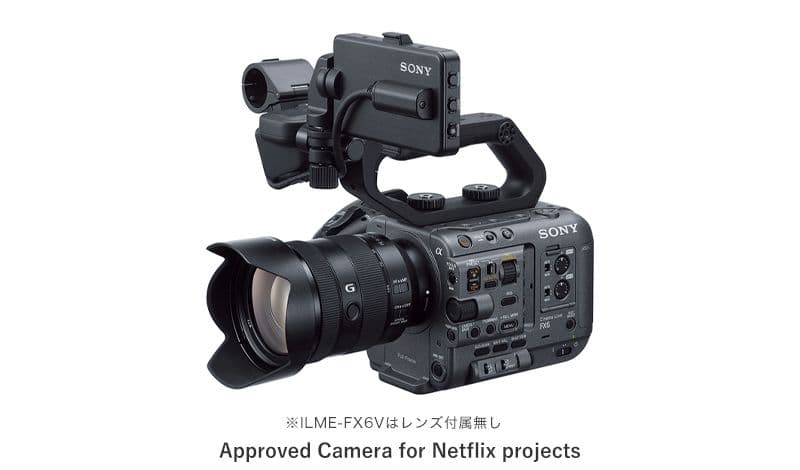
Ranked one spot above on Gavler's Best Cinema Cameras list, the Sony FX3 takes the opposite approach: a full-frame sensor in an even smaller, EVF-less body, without built-in ND filters as standard. The FX3 wins on low-light full-frame character and outright portability; the C70 wins on built-in ND, dual-XLR audio, and RF-mount access to Canon's glass. If your work leans toward controlled narrative and interviews where NDs and audio I/O matter more than an extra stop of full-frame shallow depth, the C70 is the more complete tool out of the box.
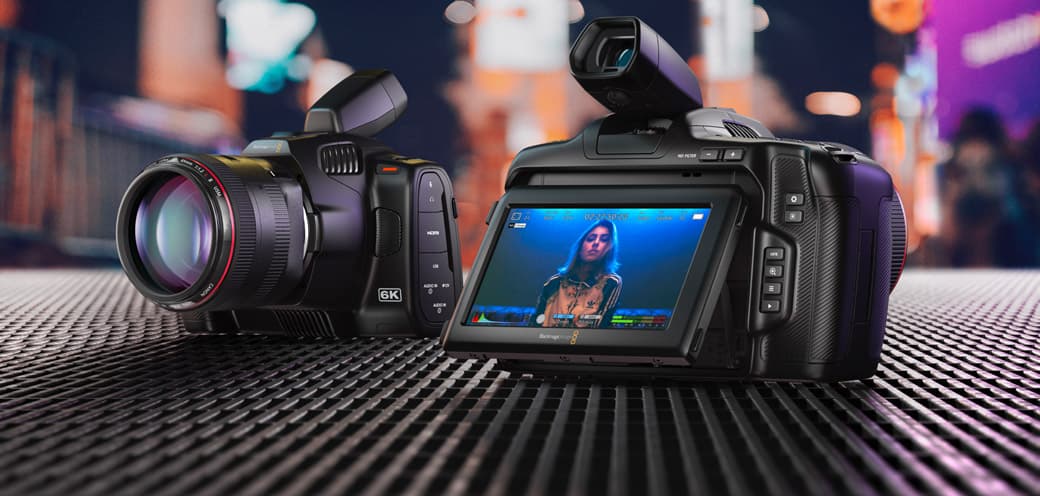
Just below it on the list, the Blackmagic Pocket Cinema Camera 6K G2 plays a different game entirely — a larger Super 35 sensor with native Blackmagic RAW, aimed at shooters who prioritize post-production flexibility and are comfortable building out a rig with external monitoring and power. The C70 is the more turnkey, run-and-gun-ready camera of the two; the Pocket 6K G2 rewards shooters who want maximum RAW latitude and don't mind assembling more of the system themselves.
The Gavler verdict
The Canon EOS C70 remains a smart, deliberate piece of engineering: take a proven cinema sensor, put it in a body one person can actually operate, and price it at half the cost of the camera it borrows from. Built-in NDs, real XLR audio, and dependable Dual Pixel autofocus make it an easy recommendation for solo documentary and run-and-gun shooters already invested in Canon RF glass. The lack of SDI and EVF, the SD card fussiness some reviewers hit, and RAW recording that arrived late via firmware rather than at launch are the honest asterisks. At 9.2, it's not the most versatile camera on this list for every scenario — but for the RF-mount shooter it's built for, it's very hard to beat. See where it lands against the rest of the field on our Best Cinema Cameras list.
Common Questions
Not at launch — reviewers in 2020 and early 2021 consistently flagged 'no RAW' as the camera's biggest limitation, since Canon reserved that for the pricier C300 Mark III and C500 Mark II. That changed with a 2022 firmware update that added internal Cinema RAW Light LT recording to SD cards. So yes, the C70 shoots RAW today, but it's worth knowing that capability arrived after launch rather than being a day-one feature.
Super 35mm. It uses the same 26.2 x 13.8mm Dual Gain Output sensor as the Canon C300 Mark III, which carries roughly a 1.46x crop in 4K DCI. That's a real trade-off against full-frame rivals like the Sony FX3 if shallow depth of field or wide-angle coverage matters to your work, though it's also part of why the C70's built-in ND system and lens compatibility work as well as they do.
They share the same DGO sensor, Digic DV7 processor, and Dual Pixel autofocus, so image quality is functionally identical. The C300 III adds an EVF, SDI output, CFexpress media, and interchangeable EF mount for roughly double the price. The C70 trades those for a smaller RF-mount body, SD card recording, and a $5,499 price tag — about half of what the C300 III costs.
Yes, and reviewers across the board single it out as one of the camera's best features. It's a physical 2-, 4-, or 6-stop ND wheel that Canon extends to 10 stops digitally, adjustable through dedicated side buttons or the touchscreen without ever breaking your lens setup.
Yes — this is where reviewers consistently say the C70 earns its keep. ProVideo Coalition's Kenny McMillan called it 'a perfect video camera for a solo-operator or indie production,' and its Dual Pixel autofocus, built-in ND, and mirrorless-style ergonomics make it easy to run without a full crew.
Where to Buy.
Prices checked regularly
90-day price history
Price History
Steady at $5,499 for the entire 90-day tracking window — no increases, no discounts, across 91 tracked days.
Tracked daily across retailers. Vote Want itabove and we’ll alert you the moment the price drops.
Some links are affiliate links — Gavler may earn a commission. This never affects rankings or scores. Learn more.
Precision Engineering
DGO Super 35 Sensor
Dual Gain Output sensor reads each photosite at two gain levels simultaneously, delivering 16+ stops of dynamic range.
Built-In Electronic ND
Stepless ND from 2 to 10 stops — smooth, motorized adjustment without external filters or matte boxes.
RF Mount Native
Full compatibility with Canon RF lenses — no adapter needed, full electronic communication for AF, IS, and metadata.
Technical Specifications
The Scoreboard
Experts praise the RF mount integration and built-in NDs as genuine workflow improvements over adapted solutions. Some community feedback notes the Super 35 crop and $5,499 price when full-frame alternatives exist at similar price points.
Cast Your Vote
Do you think Canon EOS C70 deserves the #3 spot in Best Cinema Cameras?
Global Critique
“The C70 is the camera Canon's RF lens owners have been waiting for. Native mount, built-in NDs, and Cinema EOS image quality.”
“Canon's Dual Gain Output sensor delivers dynamic range that competing Super 35 cameras simply cannot match.”
“For documentary shooters in the Canon ecosystem, the C70 is the most complete cinema package under $6,000.”
More from Best Cinema Cameras.
See how other top picks compare in this category.
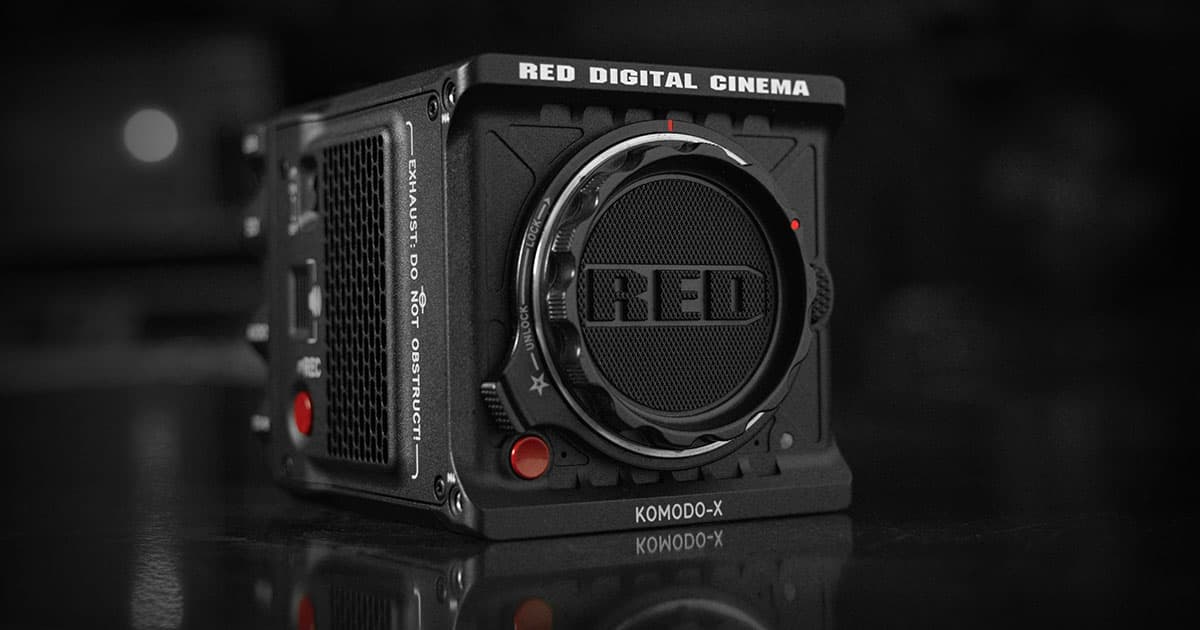
A Compact Cinema Body, an ND Workhorse, or a RAW Cube?
A 12K hangtag is the wrong first question. Compact cinema body, ND workhorse, or RAW cube is the camera. Then shop Gavler's live ranking.
Sony's New FX5 Gives the Compact Cinema Camera Everything the FX3 Was Missing — For $1,000 More
Sony's FX5 adds a stacked sensor, 5K Open Gate, and internal RAW — the compact FX line's biggest leap. But it drops photo mode and still has no built-in ND.
The Best Cinema Cameras in 2026, Ranked by the Filmmakers Who Shoot Them
From a $1,795 Blackmagic Pocket 6K to a 12K full-frame flagship, Gavler's community ranks the cinema cameras worth buying in 2026.