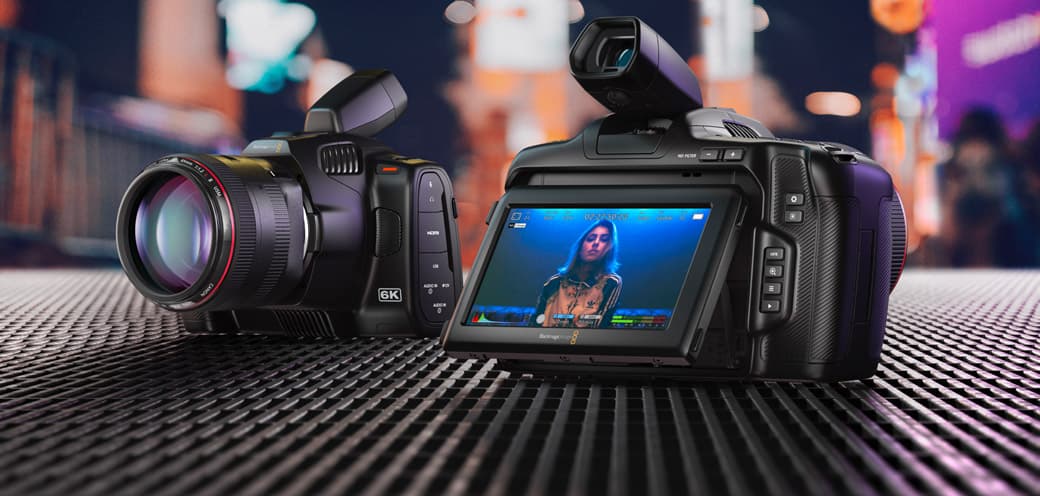
Blackmagic Pocket Cinema Camera 6K G2.
Super 35 sensor, 13 stops of dynamic range, internal Blackmagic RAW, and a free copy of DaVinci Resolve Studio. Unmatched value in cinema.
The Verdict.
Gavler Meta-Score
“The BMPCC 6K G2 remains the best value proposition in cinema cameras. The image quality rivals cameras costing three to five times more, and the included DaVinci Resolve Studio license means your total cost of ownership for a cinema-grade production workflow starts under $2,000. Manual focus and limited battery life are real constraints, but they're the same constraints every cinema camera imposed before autofocus became standard.”
The Gavler Verdict
The Gavler Review.
Blackmagic Pocket Cinema Camera 6K G2 Review
The Blackmagic Pocket Cinema Camera 6K G2 earns its spot near the top of our cinema camera rankings for a reason most mirrorless shooters underestimate: it isn't trying to be a mirrorless camera at all. It's a genuine cinema tool — Super 35 sensor, 13 stops of dynamic range, Blackmagic RAW recording, and a bundled DaVinci Resolve Studio license — wearing a body that merely looks like a beefed-up DSLR. Digital Camera World's Rod Lawton put it plainly in his review: it's "extraordinary value for money," with "plenty of mirrorless cameras that cost more than this and do a lot less from a filmmaker's point of view." But that value comes with a specific, non-negotiable trade-off — no continuous autofocus, no in-body stabilization, and battery life that still requires planning around. This is a camera for people who already know how to pull focus and light a scene, not a camera that will do those jobs for them.
What it is, and where it fits
Blackmagic built its reputation by selling cinema-grade capture at prices that undercut the category by a wide margin, and the 6K G2 continues that tradition directly. It's positioned as the mid-tier option in Blackmagic's Pocket Cinema line, sitting below the pricier 6K Pro and above the aging 4K original — and per Videomaker's side-by-side comparison, the G2 and the Pro are "virtually identical" in sensor, recording formats, and body, with the roughly $500 gap buying built-in motorized ND filters and a brighter screen on the Pro. Skip those two things, and the G2 gets you the same 6144x3456 Super 35 sensor, the same 13 stops of dynamic range, and the same Canon EF lens mount for less money.
That EF mount matters more than it might seem. Digital Camera World notes Canon EF is "second only in popularity to the PL mount" in cinema production, which means the G2 plugs into a huge, mature ecosystem of cine and stills glass rather than locking buyers into a proprietary system. It's a deliberate positioning choice: rather than compete feature-for-feature with autofocus-driven hybrids from Sony, Canon, and Panasonic, Blackmagic is betting that a segment of filmmakers still wants a purpose-built cinema camera, workflow and all, at a fraction of the URSA-tier price.
In use: exceptional image, demanding everything else
Every reviewer who has actually shot with the 6K G2 arrives at the same split verdict: the image is outstanding, and almost everything else asks something of the operator. Videomaker's Jason Miller called the result "a cinematic image that is competitive with cinema cameras that cost much more than the modestly priced BMPCC 6K G2," praising the natural highlight roll-off and "very filmic skin tones." Digital Camera World, working from raw unfinished clips, noted the footage held "a lot of shadow and highlight detail" even before grading. That image quality is the entire reason to buy this camera — everything else on the spec sheet exists in service of protecting it.
The compromises show up the moment you try to shoot it like a hybrid camera. Autofocus is contrast-detect only, locked to the center of the frame, with no ability to move a focus point or track a subject. PetaPixel's reviewer, working alongside documentary cinematographer Josh Litle, concluded it's "more helpful to think of this as an autofocus assist" than real continuous AF — you rack to a starting point, then pull focus manually from there. Videomaker was blunter, calling the system "a letdown, especially when compared to the Sony FX30, which is priced at about the same price and has one of the best face-tracking systems on the market."
Stabilization follows the same pattern. There's no IBIS, and while the camera now records gyroscope data that DaVinci Resolve can use for post-production stabilization, Digital Camera World flagged the obvious downside: "you won't be able to see how well this has worked until you get down to editing, but by then it's too late." Rolling shutter is a real, measurable weakness too — Videomaker found that "any subtle movement from side to side will create a very obvious jello effect," a result of the sensor's comparatively slow readout speed.
Strengths
- Genuinely cinema-grade RAW image quality. Multiple reviewers independently describe footage that rivals cameras costing considerably more, with clean shadows, natural roll-off, and 13 stops of measured dynamic range.
- DaVinci Resolve Studio included. A professional color-grading license, bundled at no extra cost, which meaningfully lowers the total price of a serious post-production pipeline.
- Best-in-class menu and interface. Digital Camera World called the touchscreen interface "a joy to use," and Videomaker said the same design lets a first-time user "know it inside and out" within thirty minutes.
- Flexible recording media. Beyond CFast and SD UHS-II slots, the camera can record Blackmagic RAW directly to an inexpensive external SSD over USB-C — a workflow both PetaPixel and Videomaker singled out as a real practical advantage over pricier CFexpress-only systems.
- Wide EF lens compatibility. The Canon EF mount opens the camera to a deep, mature pool of cinema and stills glass rather than a narrow proprietary system.
Trade-offs: who should skip it
This is not a run-and-gun camera, and reviewers are unanimous that treating it like one leads to disappointment. There's no built-in ND filter — that's reserved for the pricier 6K Pro — so outdoor shooting means budgeting for lens-mounted variable NDs. The rear screen, per Digital Camera World's outdoor testing, was "almost impossible to see" in bright sunlight even at maximum brightness, which pushes serious outdoor shooters toward the optional EVF or an external monitor. Battery life, while improved from earlier Pocket Cinema generations, still tops out around an hour of continuous recording per charge on the standard NP-F570-style battery, according to Videomaker's testing — workable with spares and a grip, but not a camera you hand someone for an unplanned all-day shoot. And the rolling shutter, combined with the lack of stabilization, means handheld footage without a proper rig or gimbal is genuinely difficult to use.
If your priority is a camera that autofocuses reliably on a moving subject, tracks eyes, and shoots handheld without a rig, this isn't that camera — buy a mirrorless hybrid instead. The 6K G2 rewards filmmakers running planned productions with time to light, focus, and rig properly.
How it compares
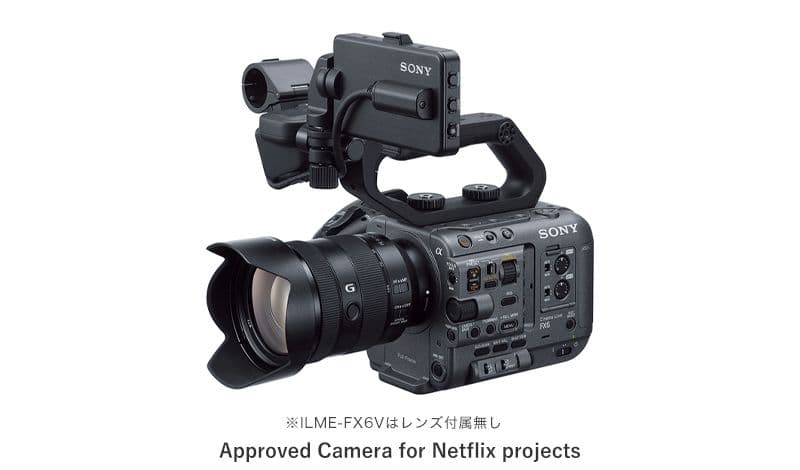
On our Best Cinema Cameras list, the 6K G2 sits just behind the Sony FX3, and the contrast is instructive: the FX3 trades some of the BMPCC's RAW image ceiling for full-frame low-light performance, real continuous autofocus, and a form factor built to be shot handheld without a rig — exactly the areas where the G2 asks the most of its operator. If autofocus and run-and-gun flexibility matter more to your workflow than squeezing out the last stop of dynamic range, the FX3 is the safer choice.
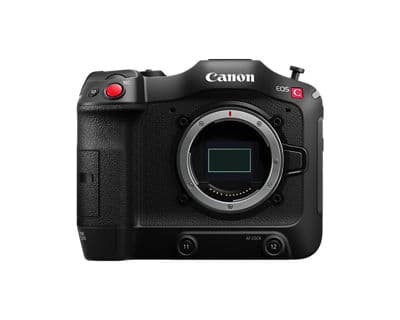
Ranked just below on the same list, the Canon EOS C70 is the closer philosophical match — a purpose-built cinema camera rather than a repurposed hybrid — but it leans on Canon's Dual Pixel autofocus and RF mount ecosystem, addressing the exact autofocus weakness reviewers consistently flag on the BMPCC. That makes the C70 the pick for shooters who want cinema-camera ergonomics without giving up reliable autofocus, while the 6K G2 remains the pick for anyone chasing the lowest possible price-per-stop of dynamic range.
The Gavler verdict
The Blackmagic Pocket Cinema Camera 6K G2 earns its 9.4 by doing one thing better than almost anything else near its price: delivering a genuinely cinema-grade RAW image, complete with a bundled Resolve Studio license, for a fraction of what comparable image quality costs elsewhere. That's a real, verifiable achievement, echoed across every hands-on review we found. But it's a specialist's tool. No continuous autofocus, no in-body stabilization, a screen that struggles outdoors, and battery life that demands planning — these aren't nitpicks, they're the price of admission for the image quality. Buyers who already work in a deliberate, planned production style will find the 6K G2 hard to beat for the money. Buyers looking for a do-everything hybrid should look elsewhere on our Best Cinema Cameras list.
Common Questions
For anyone building a RAW-capable cinema workflow on a budget, yes. Digital Camera World's Rod Lawton called it 'extraordinary value for money,' noting there are mirrorless cameras that cost more and do a lot less from a filmmaker's point of view. The trade is that it demands skill and a proper rig to get the best out of it — it isn't a grab-and-go hybrid.
It has contrast-detect autofocus, not the phase-detect continuous tracking found on modern mirrorless cameras. It only focuses on the center of the frame and hunts noticeably when it engages. PetaPixel's testers described it as 'more helpful to think of this as an autofocus assist' than true continuous AF, and Videomaker's review called it 'a letdown' next to the similarly priced Sony FX30.
According to Videomaker's side-by-side testing, the sensor, recording formats, and body are effectively identical — the roughly $500 gap buys built-in motorized ND filters and a brighter display on the Pro. The G2 skips both, which is the trade-off that keeps its price down.
Yes. Blackmagic bundles a DaVinci Resolve Studio activation key with the camera, confirmed in Digital Camera World's published spec sheet for the G2, which puts a professional color-grading suite into the total cost of ownership at no extra charge.
Modest but improved. Videomaker measured roughly an hour of continuous recording per NP-F570-style battery, up from about 25 minutes on the original Pocket Cinema Camera — real progress, but still short enough that a battery grip or external power is a practical necessity for a full shoot day.
Where to Buy.
Prices checked regularly
90-day price history
Price History
Steady at $1,795 for the entire 90-day tracking window — no increases, no discounts, across 91 tracked days.
Tracked daily across retailers. Vote Want itabove and we’ll alert you the moment the price drops.
Some links are affiliate links — Gavler may earn a commission. This never affects rankings or scores. Learn more.
Precision Engineering
Super 35 6K Sensor
6144x3456 sensor with 13 stops of dynamic range captures cinema-grade footage with rich color and natural highlight rolloff.
Blackmagic RAW
Compressed RAW codec maintains full sensor data at manageable file sizes — edit natively in DaVinci Resolve without transcoding.
DaVinci Resolve Studio Included
Every camera ships with a full license of the industry-standard color grading and editing suite — a $295 value.
Technical Specifications
The Scoreboard
Community scores are exceptionally high due to the price-to-image-quality ratio. Experts note the contrast-detect AF and limited battery life as real-world limitations that don't affect the final image but do affect shooting workflow.
Cast Your Vote
Do you think Blackmagic Pocket Cinema Camera 6K G2 deserves the #2 spot in Best Cinema Cameras?
Global Critique
“No other camera under $2,000 produces images this cinematic. The value proposition is almost absurd.”
“Blackmagic RAW is the codec every filmmaker should be shooting. And DaVinci Resolve is included. At $1,795.”
“The image quality embarrasses cameras at three times the price. The workflow demands are the price of admission.”
More from Best Cinema Cameras.
See how other top picks compare in this category.
A Compact Cinema Body, an ND Workhorse, or a RAW Cube?
A 12K hangtag is the wrong first question. Compact cinema body, ND workhorse, or RAW cube is the camera. Then shop Gavler's live ranking.
Sony's New FX5 Gives the Compact Cinema Camera Everything the FX3 Was Missing — For $1,000 More
Sony's FX5 adds a stacked sensor, 5K Open Gate, and internal RAW — the compact FX line's biggest leap. But it drops photo mode and still has no built-in ND.
The Best Cinema Cameras in 2026, Ranked by the Filmmakers Who Shoot Them
From a $1,795 Blackmagic Pocket 6K to a 12K full-frame flagship, Gavler's community ranks the cinema cameras worth buying in 2026.