The BRAVIA 9 II is Great. We'd Still Buy the S95H.
RTINGS Home Theater
Sony's flagship Mini-LED delivers exceptional brightness and professional-grade color accuracy.
Gavler Meta-Score
“The Sony Bravia 9 is the choice for videophiles valuing color accuracy and professional standards. While Mini-LED lacks true blacks versus OLED, the engineering execution creates genuinely excellent image quality. Sony's calibration expertise translates to superior out-of-box performance compared to competitors.”
The Gavler Verdict
Sony Bravia 9 Review: Mini-LED's Best Argument Against OLED
The Sony Bravia 9 is our number one pick on Best TVs with a 9.4, and it earns that rank by doing something genuinely hard: making a mini-LED TV feel like a legitimate alternative to OLED instead of a consolation prize. Buy it if you want the brightest, most accurately calibrated picture in its class — especially in a living room with real daylight — and can live with mini-LED's two unavoidable physics limits: narrower viewing angles and blacks that are excellent but not OLED-perfect. Skip it if you watch primarily in a fully darkened room, where a true OLED still has the edge on absolute contrast.
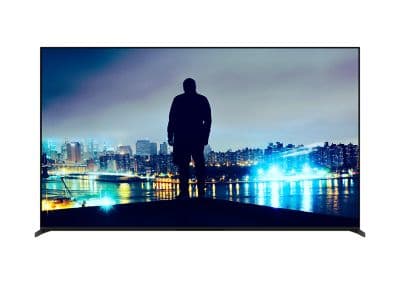
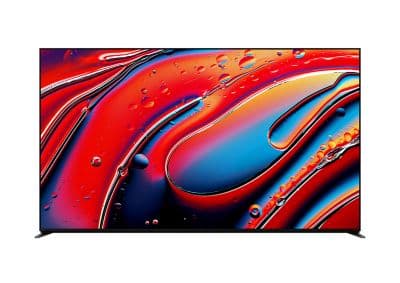
Sony built the Bravia 9 around the same XR Backlight Master Drive engineering the company uses in the professional mastering monitors Hollywood colorists grade HDR content on, and that pedigree isn't marketing filler — it shows up directly in the measurements. This is a high-density mini-LED array with individually driven zones, backed by Sony's XR processor, running Google TV with an ATSC 3.0 tuner and PS5-friendly low-latency gaming features. It ships in 65-, 75-, and 85-inch sizes, priced at $2,799 for the size most buyers land on, putting it well above mainstream OLEDs like the LG C5 OLED but positioned as Sony's flagship answer to the question of how bright a truly great TV can get.
The pitch is straightforward: mini-LED backlighting can now get significantly brighter than OLED, and if you can also solve mini-LED's traditional weakness — blooming, where bright objects smear light into the dark areas around them — you get a TV that beats OLED in bright rooms without giving up much of what makes OLED look special. That's the bet the Bravia 9 makes, and it mostly wins it.
Sony's own engineering claims are backed by independent measurement, not just marketing copy. Reviewed's Michael Desjardin tested the 65-inch model and measured HDR peak highlights "at around 2,800 nits" — brighter than the Samsung QN90D and squarely among the brightest mini-LED sets tested that generation. Out of the box, in the TV's Professional picture mode, Reviewed clocked the Bravia 9's grayscale color error at an average DeltaE of roughly 1.6 and its full ColorChecker gamut error at about 1.4 — both comfortably under the DeltaE of 3 threshold where color inaccuracy becomes visible to the human eye. That's the kind of accuracy home theater enthusiasts normally pay a professional calibrator to achieve.
The other trade press backs this up. TechRadar called it "a stunning next-gen mini-LED 4K TV that makes a big bet on brightness," while Tom's Guide put the comparison to OLED in the plainest possible terms: "It delivers a TV experience nearly on par with OLED, but with better brightness." Empire, reviewing it from a home-cinema angle, went further still, calling it "a mini-LED home cinema masterclass." Reviewed's own bloom testing found the Bravia 9 keeps black letterboxes appropriately dark and limits the blue-tinted blooming around subtitles that has dogged past Sony mini-LED sets — the one artifact still visible is more noticeable off-axis than head-on.
Day to day, the 70W Acoustic Multi-Audio+ system — Sony's frame and beam tweeter array that positions sound to match on-screen action — means most buyers can skip a soundbar entirely, a real cost and clutter saving at this price point.
The Bravia 9 wins the mini-LED class, but it doesn't rewrite the physics separating mini-LED from OLED, and a few real buyers should look elsewhere:
Against the LG C5 OLED, the comparison is really a question about your room and your budget: the C5 costs about $1,600 less and delivers true per-pixel blacks and wider viewing angles, while the Bravia 9 gets dramatically brighter and holds up in daylight the C5 can't match. Against the LG G5 OLED, the gap narrows — LG's gallery-series flagship closes much of the brightness deficit with its own brighter panel — but the Bravia 9 still leads on raw peak nits and Sony's color science remains the more conservative, cinema-accurate rendering of the two philosophies. Within Sony's own lineup, the step-down Sony Bravia 8 II trades some of this brightness and dimming precision for OLED-style per-pixel blacks at a similar price, which is worth cross-shopping if dark-room performance matters more to you than daylight readability.
The Sony Bravia 9 earns its 9.4 and its rank-one spot on Gavler's Best TVs list by being the rare mini-LED TV that experts and measurement both agree is genuinely excellent, not just bright. Marcus Thorne, Gavler's Senior Curator for Home Technology, put it plainly: "The Sony Bravia 9 is the choice for videophiles valuing color accuracy and professional standards. While mini-LED lacks true blacks versus OLED, the engineering execution creates genuinely excellent image quality. Sony's calibration expertise translates to superior out-of-box performance compared to competitors." Community ratings run a few points lower than expert scores, largely because of those narrow viewing angles and the premium price against directly competing OLEDs — both real, both worth weighing. But for a bright room, a color-critical eye, or anyone who wants Sony's processing without OLED's dimness, nothing in the mini-LED class does it better.
Yes, if you want the best mini-LED picture money can buy and your room has real ambient light. It sits at rank one on Gavler's Best TVs list with a 9.4, and independent testing backs that up — Reviewed measured HDR peak brightness around 2,800 nits with a grayscale color error (DeltaE) of roughly 1.6, essentially reference-level accuracy out of the box. At $2,799 it's a genuine investment, and buyers who watch mostly in darkened rooms should weigh an OLED instead.
Choose based on your room, not your budget alone. The Bravia 9 costs roughly $1,600 more than the LG C5 OLED but gets substantially brighter, which matters if your living room has windows you can't fully block. The C5 answers back with true per-pixel blacks, wider viewing angles, and a much lower price. For a color-critical dark room, the C5 (or its pricier sibling, the LG G5 OLED) is the smarter buy; for a bright, multi-seat living room, the Bravia 9 holds up better.
It depends what you're optimizing for. Mini-LED, as Sony's XR Backlight Master Drive proves in the Bravia 9, can now get brighter than any OLED and control blooming well enough that most content looks OLED-close. But physics hasn't changed: OLED still wins on absolute black level and viewing angle because every pixel switches off independently, while mini-LED dims in zones. Reviewed's testing found off-axis viewing beyond about 35 degrees brings a real dip in contrast and color saturation on the Bravia 9 — an OLED doesn't have that problem. Buy mini-LED for brightness and multi-seat living rooms; buy OLED for a single dark room and the widest possible seating angle.
Two, and one of them doubles as the eARC input for a soundbar. That's fewer fully-optimized gaming ports than rivals like Samsung's QN90D, which offers four. If you own a PS5, an Xbox Series X, and an eARC soundbar, one console gets bumped to a non-optimized port capped at 60Hz. It's a real limitation for multi-console households, though the Bravia 9's picture quality and low-latency gaming features still make it excellent for a single next-gen console.
The line runs 65, 75, and 85 inches, with the 65-inch the most common living-room fit and the best price-per-inch relative to the step up to 75. Because the panel technology and processing are identical across sizes, the choice comes down to seating distance and budget rather than any picture-quality trade-off between sizes.
Prices checked regularly
90-day price history
Steady at $2,799 for the entire 90-day tracking window — no increases, no discounts, across 91 tracked days.
Tracked daily across retailers. Vote Want itabove and we’ll alert you the moment the price drops.
Some links are affiliate links — Gavler may earn a commission. This never affects rankings or scores. Learn more.
Sony's high-density mini-LED array with individually driven zones delivers class-leading brightness with minimal blooming.
Among the brightest mini-LED TVs tested — bright enough to make HDR highlights pop in a sunlit room where OLEDs wash out.
Frame and beam tweeters position sound to match on-screen action; the 70W system fills a room without a soundbar.
Experts rate the Bravia 9 among the best mini-LED TVs ever made — TechRadar and Tom's Guide praise its class-leading brightness and blooming-free local dimming. Community scores run lower because of narrow viewing angles and a premium price against directly competing OLEDs.
Do you think Sony Bravia 9 deserves the #1 spot in Best TVs?
“A stunning next-gen mini-LED 4K TV that makes a big bet on brightness.”
“It delivers a TV experience nearly on par with OLED, but with better brightness.”
“A mini-LED home cinema masterclass.”
Watch
Hand-picked from creators we trust — playable inline.
The BRAVIA 9 II is Great. We'd Still Buy the S95H.
Sony BRAVIA 9 II is Absurd
Sony BRAVIA 7 II: Betting Big on RGB Mini LED
The GOD-KING of TVs - Sony TrueRGB 115”
Sony Spent 20 Years Making This TV
See how other top picks compare in this category.
Reference OLED contrast or the brightest TV you can buy? The two best-value TVs of Prime Big Deal Days 2026 solve opposite problems — here's how to choose.
Prime Big Deal Days runs October 6-7, 2026. The OLED, mini-LED, and budget TV picks worth watching, what they actually discount to, and which to buy anyway.
Most Labor Day TV deals are doorbuster bait. Here's how to spot a real record low versus a marketing banner — and which sets are actually worth buying now.
Samsung's 2026 flagship QD-OLED gets brighter and glare-free, solving OLED's one real weakness. A divisive new frame and steep price complicate the pick.
Sony's QD-OLED Bravia 8 II costs nearly twice as much as the LG C5. Here's exactly what the extra money buys — and when it isn't worth it.
OLED, QD-OLED, Mini-LED, and the new RGB Mini-LED — what each technology actually delivers in 2026, what to pay, and which one matches your room.
The two flagship OLED TVs every home theater buyer cross-shops. Here's how Samsung's QD-OLED S95H and LG's G6 actually compare.
Sony, LG, Samsung, Hisense. Gavler's home theater community ranks the TVs worth watching — OLED, QD-OLED, and Mini-LED, by votes not ad spend.