The Best TVs in 2026, Ranked by People Who Actually Watch on Them
Sony, LG, Samsung, Hisense. Gavler's home theater community ranks the TVs worth watching — OLED, QD-OLED, and Mini-LED, by votes not ad spend.
Buying a TV in 2026 should be simple — the technology has never been better. Instead, it's a maze of panel types, backlighting acronyms, and spec sheet one-upmanship that makes the actual viewing experience feel like an afterthought. Every brand claims "the best picture." Every reviewer has a different pick depending on which calibration metric they worship.
So we asked the people who stare at these screens every evening. Gavler's TV rankings come from viewers, gamers, and home theater obsessives who've lived with their sets through movie marathons, console sessions, and the unforgiving test of daytime sports viewing. Their votes. Their rankings.
How We Rank: One Vote, One TV
Every Gavler user gets a single vote on the Best TVs list. Pick the TV you'd recommend above all others. Upgraded your set? Move your vote. The result is a ranking that reflects real-world satisfaction — not lab measurements.
The Top 3: What the Community Chose
1. Sony Bravia 9 — The Picture Purist's Pick
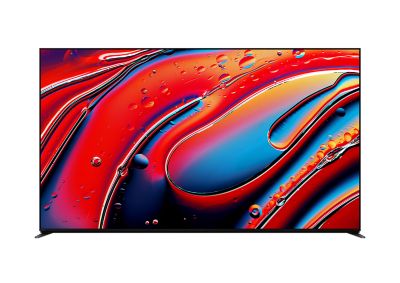
Sony Bravia 9
Sony's flagship Mini-LED delivers exceptional brightness and professional-grade color accuracy.
Amazon affiliate · price subject to change
The Bravia 9 takes the top spot at 9.4, and the reason is Sony's processing. The hardware is excellent — a Mini-LED backlight with thousands of dimming zones that approaches OLED-level contrast — but it's the X1 processor that separates this TV from everything else. Upscaling is almost supernatural. Motion handling is the smoothest in the business. And color accuracy out of the box is so good that professional calibrators have said there's barely anything to adjust.
The community votes for the Bravia 9 because it makes everything look better. Not just reference-quality Dolby Vision content — your old DVDs, your compressed streaming, your janky live sports feeds. Sony's processing polishes everything it touches.
2. LG C5 OLED — The People's Champion
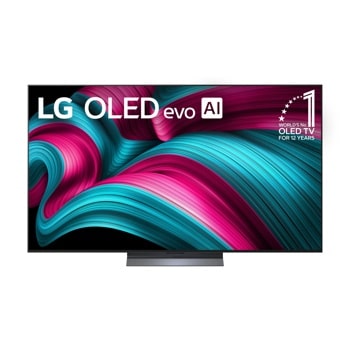
LG C5 OLED
Fourth-gen evo panel with Alpha 9 AI Gen8 processor, 144Hz, and the same gaming-ready feature set that made the C4 legendary.
Amazon affiliate · price subject to change
The C-series has been LG's best-selling OLED for years, and the C5 continues the tradition of delivering 95% of the flagship experience at a price that doesn't require a second mortgage. Self-lit OLED pixels mean perfect blacks and infinite contrast. Four HDMI 2.1 ports with 4K/120Hz support make it the best gaming TV on this list. And the webOS smart platform, while not perfect, gets the job done.
At 9.3, the community positions the C5 as the TV that makes the most people happy. It's the recommendation you give when someone asks "which TV should I buy?" without any other context.
3. LG G5 OLED — The Gallery Statement
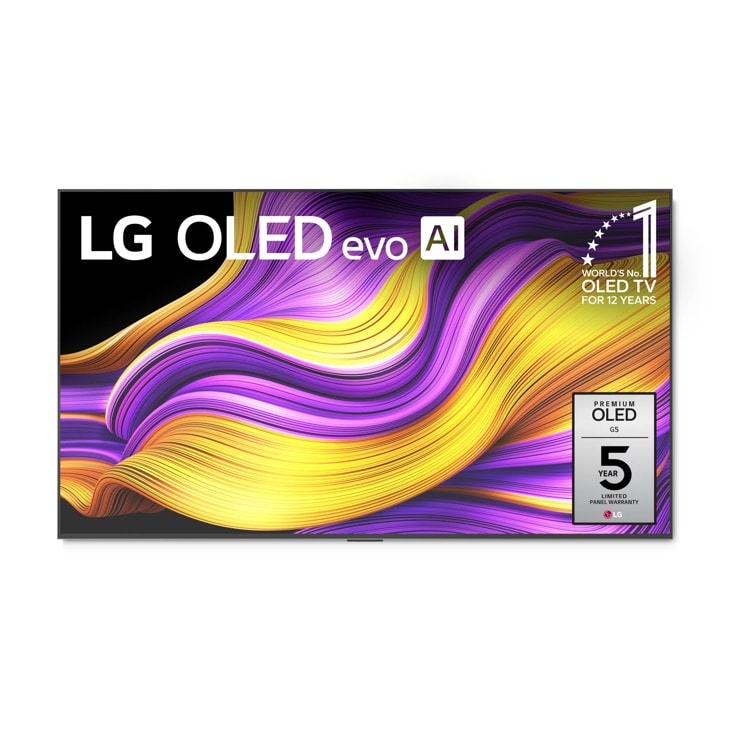
LG G5 OLED
Gallery-series flagship with enhanced brightness, flush-mount design, and the same Alpha 9 Gen8 processor as the C5.
Amazon affiliate · price subject to change
The G5 is LG's showcase for what OLED can do when price is less of a constraint. MLA (Micro Lens Array) technology pushes peak brightness well beyond the C5, making it competitive with Mini-LED in bright rooms while retaining all the advantages of OLED. The flush-mount gallery design looks stunning on a wall. And the Alpha 11 processor handles AI upscaling and tone mapping with visible refinement over the C5's chip.
At 9.2, the community respects it — but many voters feel the C5 delivers enough of the experience at a meaningfully lower price. The G5 is for the viewer who wants the best OLED available and is willing to pay the premium.
The Gaming Factor
One trend the community data reveals clearly: gaming performance heavily influences TV satisfaction in 2026. Four HDMI 2.1 ports, VRR (Variable Refresh Rate), ALLM (Auto Low Latency Mode), and sub-10ms input lag have gone from "nice to have" to "non-negotiable" for a significant chunk of voters. All three top-ranked TVs deliver here, but the LG C5 gets the most gaming-specific praise for its combination of low input lag and OLED response times.
If you're primarily a gamer, the C5 is probably your TV. The community has essentially decided this.
Buying Guide: What Actually Matters
Room brightness should drive your panel choice. OLED is king in controlled lighting. In a sun-drenched living room with lots of windows, Mini-LED's raw brightness advantage becomes meaningful. The Sony Bravia 9 handles bright rooms better than any OLED. The LG C5 looks best when you control the light.
Size up, not spec up. A 65-inch TV with a good panel will deliver a more immersive experience than a 55-inch TV with a better panel. If your budget forces a choice between premium panel technology at 55 inches or good panel technology at 65 inches, go bigger. The community consistently reports that size matters more than marginal picture quality differences.
Smart TV platforms are all mediocre. Google TV, webOS, Tizen — none of them are great. If you care about the smart TV experience, budget $50-150 for an Apple TV 4K or Nvidia Shield and use the TV as a display. The built-in apps work fine for casual use.
Don't obsess over refresh rate for non-gaming. 120Hz is nice for sports and scrolling, but the vast majority of content — streaming, movies, broadcast TV — is 24-60fps. If you don't game, a 60Hz panel at a lower price point is a perfectly rational choice.
What's New for 2026
Three things have changed since this list was first published, and they're worth flagging without disturbing the community ranking above.
The LG B5 OLED has emerged as the best budget OLED of 2026 — and it's now on the list. As of May 2026 the LG B5 OLED is live at rank #11 on Best TVs, the first community-rated entry-tier OLED on the ranking. Tom's Guide, TechRadar, and BGR all converge on the same pick — the B5 hits four HDMI 2.1 ports, 4K/120Hz on every input, and Alpha 8 AI processing for a 65-inch MSRP of $1,999 that has been routinely discounted to $1,399, with the 48-inch model hitting $599 in promotional windows. Brightness is the obvious cap — the B-series sits below the C5 by a meaningful margin in HDR highlights — but for a light-controlled room or a secondary set, the B5 is the OLED entry point that didn't exist when this list was originally written.
RGB Mini-LED is now buyable, though only at the flagship tier. Hisense's UR9 and TCL's RM9L pair red-green-blue mini-LED backlights with peak brightness in the 4,000-6,000 nit range and BT.2020 color coverage approaching 100%. The pricing — $3,499 and up for the UR9, $8,000+ for the RM9L — keeps RGB Mini-LED out of mainstream consideration through 2026, but the technology now genuinely exists rather than being a CES demo. We've kept it off the main list intentionally; the community hasn't lived with these panels long enough to vote, and the value-to-performance gap with current OLED and conventional Mini-LED won't close until at least 2027. We dig into the panel-tech decision in the TV Buying Guide 2026.
LG's 2026 C6H is on the way. It will replace the C5 as LG's mainstream OLED later this year. Until it ships and accumulates real-world reviews, the C5 is still the right pick at this price tier — and historically, the prior-year C-series gets discounted hard the moment its successor lands, which is the buying window worth waiting for if you're not in a hurry.
Memorial Day Buying Notes
Memorial Day (Monday, May 25) is the cleanest TV-deal window of the first half of the year, and 2026 is no exception. The structural reason: brands have just released their 2026 flagships, which pushes 2025 models — the very TVs ranked #1 through #5 above — into clearance pricing. Per TechRadar's Memorial Day TV deals coverage, the deal cycle opens roughly May 14 and peaks May 22-25, with the steepest discounts landing on the last weekend.
A few specifics worth tracking. The LG C5 OLED 65-inch has been hitting $1,299 (down from a $2,699 MSRP) at Amazon and Best Buy ahead of the holiday — that is the price that makes it the no-brainer recommendation for most rooms. The Sony Bravia 9 65-inch typically discounts $300-500 off its $2,799 list during Memorial Day; flagship Sony rarely cuts more aggressively than that, so don't wait for a bigger drop that probably isn't coming. Samsung's S95-series QD-OLED has been moving in the $3,499 range for the 77-inch model with stackable Samsung-store promo codes that run through May 17. The TCL QM7K (rank #9 on the list, the value Mini-LED pick) has gone as low as $499 for the 55-inch — that's the budget-tier deal the holiday is best known for.
Two anti-patterns to avoid. Don't buy a 2026 model on Memorial Day; the 2025 panels are objectively better deals because they've been calibrated, reviewed, and discounted, and their successors won't accumulate enough delta to justify the premium until next year's clearance. And don't chase a "doorbuster" no-name brand on a 75-inch panel for $399 — those panels exist, but they don't carry the panel-quality, processing, or audio that the recommendations above are ranked on, and Gavler's community has been consistent that buyers regret them within 12 months.
For the panel-tech walkthrough that explains why these picks rank where they do, the TV Buying Guide 2026 is the companion piece to this list — OLED, QD-OLED, Mini-LED, and the new RGB Mini-LED tier, decoded.
Common Questions
According to Gavler's community of home theater enthusiasts, the Sony Bravia 9 is the top-ranked TV in 2026 with a 9.4 score. Its combination of Mini-LED backlighting, exceptional processing, and cinematic color accuracy makes it the TV serious viewers recommend most. For OLED fans, the LG C5 at 9.3 offers the best balance of picture quality and price.
OLED delivers perfect blacks, infinite contrast, and wide viewing angles. Mini-LED gets brighter and handles full-screen bright content better without risk of burn-in. The community ranks both technologies highly — the Sony Bravia 9 (Mini-LED) and LG C5 (OLED) are separated by just 0.1 points. Your room brightness and content habits should drive the decision.
For most living rooms with a viewing distance of 6-9 feet, 65 inches is the sweet spot. At 9-12 feet, go 75 or 77 inches. Sitting closer than 6 feet, 55 inches works. The community consensus is clear: almost everyone who upgrades to a bigger size says they should have gone bigger sooner.
Modern OLED panels from LG (used in both LG and Sony OLEDs) have dramatically improved burn-in resistance. For normal varied viewing — movies, shows, gaming — it's essentially a non-issue. If you display static content (news tickers, HUDs) for 8+ hours daily, Mini-LED is the safer choice. For everyone else, the community says stop worrying about it.
Rankings are determined entirely by community votes. Each user gets one vote on the Best TVs list — pick the one TV you'd recommend above all others. No affiliate commissions or sponsorships influence the rankings.
Products Mentioned
Jump to the full ranking and community verdict for each pick named above.