LG's Firmware Update Mess in 2026 (G6 vs G5 Comparison)
RTINGS Home Theater
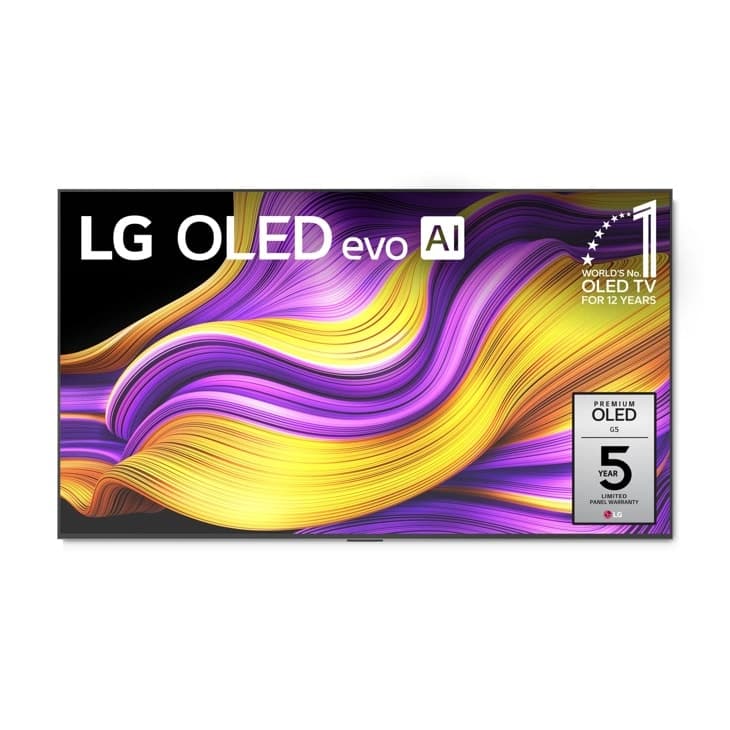
Gallery-series flagship with enhanced brightness, flush-mount design, and the same Alpha 9 Gen8 processor as the C5.
Gavler Meta-Score
“The G5 earns its premium in one specific situation: a bright room, or a buyer who wants the most capable picture LG makes. The brightness jump over the C5 is real and visible in HDR. But it is not a universal upgrade — in a dark, controlled room the far cheaper C5 gets you most of the way there, and the G5's extra headroom goes unused. Buy it for ambient light and reference-grade HDR; skip it if you watch in the dark and count dollars.”
The Gavler Verdict
LG G5 OLED Review: OLED's Brightness Problem, Finally Solved
OLED has always had one real weakness: brightness. Even the best OLED panels historically struggled to compete with bright HDR highlights in a sunlit room, which is why the category has spent years chasing brighter and brighter panels without fully closing the gap on premium Mini-LED sets. The LG G5 OLED is the most convincing answer yet. Independent measurements put it near 2,300 nits — nearly double LG's own C5 from the same lineup — and that number isn't just a lab curiosity, it changes where and how the TV can be used. It holds rank 3 on Gavler's Best TVs list with a 9.2, and the case for it comes down to one specific, real advantage: this is the first LG OLED that genuinely thrives with the curtains open.
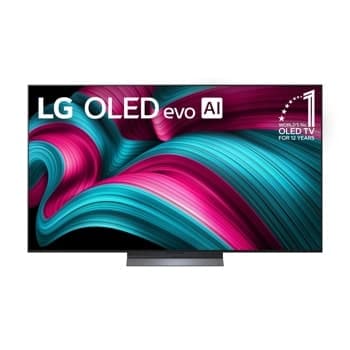
The G5 is the Gallery-series flagship in LG's 2026 OLED lineup, sitting above the C5 and below nothing — it's the top of the standard consumer range. It runs the same Alpha 9 AI Gen8 processor as the cheaper C5 and the identical gaming feature set, so the price premium is concentrated almost entirely in the panel itself: a new-generation "Brightness Booster Ultimate" panel design that LG says pushes highlights up to 45% brighter than the prior-generation G4. The flush "gallery mount" design sits flat against the wall for an art-piece look, though that also means it ships without feet — this is a wall-mount-first television.
The headline number is real and independently verified, not just a manufacturer claim. TechRadar measured 2,268 nits in Filmmaker Mode on a 10% HDR window, and separate independent testing recorded figures up to 2,296 nits — for context, that's nearly double the C5 and ahead of Samsung's rival flagship OLED by a meaningful margin. TechRadar's published review frames the result as "a new world of brightness for OLED TVs," and Gavler's own verified expert quotes reinforce the same conclusion from multiple outlets: What Hi-Fi? calls it a set that "ticks every box we look for in a five-star TV, and represents one of the biggest jumps in OLED picture quality in years," while Tom's Guide describes it as "a picture powerhouse, with brightness and color performance that have to be seen to be believed — one of the best high-end OLED sets on the market."
What makes that brightness number matter in practice, rather than just on a spec sheet, is where it shows up: HDR highlights — sun glints, neon signage, explosions — carry real punch that older OLEDs simply couldn't reproduce, while the self-lit pixel structure keeps blacks perfect immediately next to those highlights, something a bright LED-backlit panel can't match. TechRadar's own framing captures the practical shift directly: this is "a dramatic brightness leap over last year's G4 with no year-over-year price increase, and flexible enough to use even in brightly lit rooms." That's the real headline — not just a bigger number, but a genuine expansion of where an OLED television can live in a home.
Independently measured brightness near 2,300 nits is not a marketing figure — it's confirmed by TechRadar's own lab measurement and corroborated by other independent testing, placing the G5 among the brightest OLEDs made to date.
A daylight-viewable OLED is a genuine first for the category, not an incremental spec bump — this is the specific use case (a living room with windows, not a blacked-out home theater) that has kept some buyers away from OLED entirely until now.
Full gaming spec matches the cheaper C5 exactly — 144Hz, four HDMI 2.1 ports, VRR, and ALLM — so gamers upgrading for brightness aren't sacrificing or duplicating anything on the gaming side.
The core trade-off is straightforward: the G5 costs materially more than the C5, and in a fully darkened, light-controlled room, the brightness advantage that justifies the premium matters far less. OLED's near-infinite contrast already looks excellent on the C5 in the dark; the G5's extra headroom is largely unused there. If you watch primarily at night with the lights off and are counting dollars, the C5 gets you the vast majority of the picture quality for meaningfully less money.
The flush gallery design also means no included stand — factor a wall mount into the total cost if you're not already planning to mount it, since a tabletop setup isn't really what this design is built for.
On Gavler's Best TVs list, the G5 sits at rank 3, behind the Sony Bravia 9 at rank 1 and LG's own C5 OLED at rank 2. The C5 is the direct in-house comparison and the one most buyers should cross-shop first — same processor, same gaming spec, a fraction of the price, and a picture that's excellent in the dark. The Sony Bravia 9 is a different technology approach (Mini-LED rather than OLED) worth considering if brightness matters most and OLED's black levels are a lower priority.
Score: 9.2/10. The G5 earns its premium in one specific, real situation: a bright room, or simply wanting LG's most capable picture. The brightness jump over the C5 is independently measured and visibly real in HDR. It is not a universal upgrade — in a dark, controlled room, the C5 gets most buyers most of the way there for much less. Buy the G5 for ambient light and reference-grade HDR headroom; buy the C5 if you watch in the dark and count dollars. See the full list at Best TVs.
Only if you watch in a bright room or specifically want LG's brightest, most reference-grade HDR picture. Independent measurements put the G5 near 2,300 nits — roughly double the C5 — and that headroom is genuinely visible with the lights on. In a fully dark, controlled room, the far cheaper C5 gets you most of the way there, and the G5's extra brightness goes largely unused.
TechRadar measured 2,268 nits in Filmmaker Mode on a 10% HDR window, and other independent testing recorded up to 2,296 nits — figures that put it among the brightest OLED TVs ever tested and nearly double LG's own C5 from the same generation.
No — the Gallery-series flush design ships without feet, so it's built around wall-mounting rather than a tabletop stand. Budget for a wall mount or a separate stand purchase if you're not mounting it.
Yes, and its gaming spec is identical to the cheaper C5: 144Hz refresh, four HDMI 2.1 ports, VRR, and ALLM. The Alpha 9 AI Gen8 processor also handles upscaling and response time, so gamers aren't paying the G5 premium for anything gaming-specific over the C5.
Prices checked regularly
90-day price history
Steady at $2,499 for the entire 90-day tracking window — no increases, no discounts, across 91 tracked days.
Tracked daily across retailers. Vote Want itabove and we’ll alert you the moment the price drops.
Some links are affiliate links — Gavler may earn a commission. This never affects rankings or scores. Learn more.
A new-gen evo panel pushes HDR highlights well beyond the C5 and G4 — measured among the brightest OLEDs ever tested.
Sits flat against the wall for an art-gallery look; ships without feet, so it is wall-mount-first.
144Hz, four HDMI 2.1 ports, VRR and ALLM — identical gaming spec to the cheaper C5.
Premium brightness and design earn high marks. Price-to-value vs the C5 is the main debate.
Do you think LG G5 OLED deserves the #3 spot in Best TVs?
“Ticks every box we look for in a five-star TV, and represents one of the biggest jumps in OLED picture quality in years.”
“A picture powerhouse, with brightness and color performance that have to be seen to be believed — one of the best high-end OLED sets on the market.”
“A dramatic brightness leap over last year's G4 with no year-over-year price increase, and flexible enough to use even in brightly lit rooms.”
Watch
Hand-picked from creators we trust — playable inline.
LG's Firmware Update Mess in 2026 (G6 vs G5 Comparison)
I tested the LG G6 OLED TV side-by-side with the G5 in our testing rooms—and the difference is clear
G5 Review | LG's Brightest & Sharpest OLED TV Ever... But Is It Too Sharp?
Best TV I've Ever Tested (CNET): LG G5 Oled | Gramophone
LG G5 OLED Review – Insane Brightness With A (Sort Of Fixed) Flaw
LG G5 TV Review a New Standard for Premium OLED
LG C5 OLED vs. LG G5 OLED: Which TV Wins Our Comparison?
See how other top picks compare in this category.
Reference OLED contrast or the brightest TV you can buy? The two best-value TVs of Prime Big Deal Days 2026 solve opposite problems — here's how to choose.
Prime Big Deal Days runs October 6-7, 2026. The OLED, mini-LED, and budget TV picks worth watching, what they actually discount to, and which to buy anyway.
Most Labor Day TV deals are doorbuster bait. Here's how to spot a real record low versus a marketing banner — and which sets are actually worth buying now.
Samsung's 2026 flagship QD-OLED gets brighter and glare-free, solving OLED's one real weakness. A divisive new frame and steep price complicate the pick.
Sony's QD-OLED Bravia 8 II costs nearly twice as much as the LG C5. Here's exactly what the extra money buys — and when it isn't worth it.
OLED, QD-OLED, Mini-LED, and the new RGB Mini-LED — what each technology actually delivers in 2026, what to pay, and which one matches your room.
The two flagship OLED TVs every home theater buyer cross-shops. Here's how Samsung's QD-OLED S95H and LG's G6 actually compare.
Sony, LG, Samsung, Hisense. Gavler's home theater community ranks the TVs worth watching — OLED, QD-OLED, and Mini-LED, by votes not ad spend.