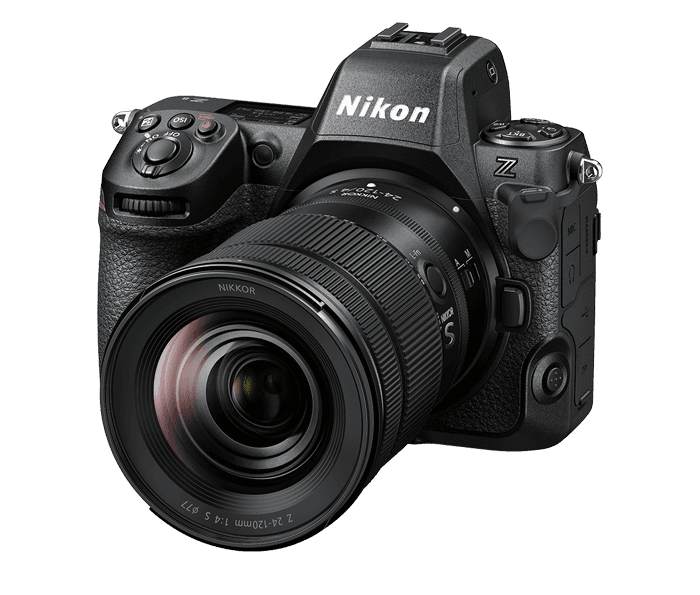
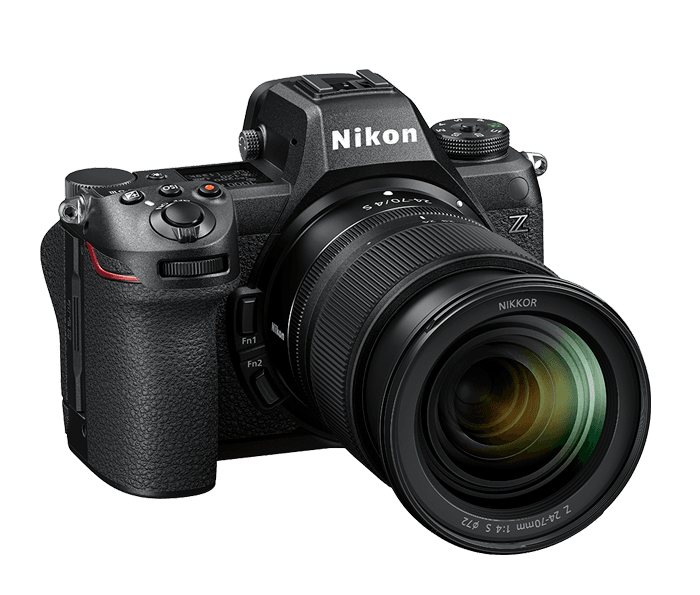
Nikon Z8.
45.7MP stacked sensor, 20fps burst, 8K60 — the Z9 in a smaller body.
The Verdict.
Gavler Meta-Score
“This is Z9 pro-sports speed and 45.7MP landscape resolution, undiluted, in a body that costs about $2,000 less and drops the integrated grip. The catch is size: it is appreciably bigger and heavier than a Sony a1, so wildlife, event, and studio shooters will love it while travelers are better served by the lighter Z6 III.”
The Gavler Verdict
The Gavler Review.
Nikon Z8 Review: Flagship Z9 Speed, Prosumer Price
The Nikon Z8 ranks sixth on Gavler's Best Mirrorless Cameras list with an 8.4, and DPReview didn't hedge in its own verdict: this is "the best mirrorless camera Nikon yet made" and "perhaps the most complete camera we've yet tested." Buy it if you shoot wildlife, sports, or events and want Z9-level speed and resolution for around $2,000 less than Nikon's flagship. Skip it if you need a light travel kit — the Z8 is appreciably bigger and heavier than a Sony a1, and Nikon's own lighter Z6 III is the better fit for that job.
What it is
The Z8 takes the sensor, processor, and autofocus system out of Nikon's flagship Z9 and drops them into a body roughly a third smaller, cutting the integrated vertical grip in the process. It exists to answer a specific question: what if you wanted Z9 performance without carrying a Z9 or paying Z9 money? The 45.7MP stacked CMOS sensor is the same one doing the work in the Z9, and it reads out fast enough to eliminate the mechanical shutter from the camera entirely.
That sensor speed is the whole story. Because readout is so fast, the Z8 shoots blackout-free 20fps raw bursts, offers an electronic-only shutter to 1/32,000 sec, and holds a buffer deep enough to clear more than 1,000 JPEGs before it has to catch its breath. For a camera aimed at a prosumer price point, that's flagship-tier hardware with no meaningful throttling.
In use
DPReview's testing frames the Z8 as a camera that behaves like two bodies in one: the dynamic range and resolution of a landscape camera paired with the tracking speed and frame rate of a dedicated sports body. "For all the types of shooting we've tried, the Z8 has been utterly confidence-inspiring," the review notes — a meaningful statement from a publication that tests across genres rather than optimizing for one.
Subject-detection autofocus is a core part of that confidence. The 493-point hybrid system covers people, animals, birds, and now a dedicated airplane mode, tracking consistently enough that DPReview describes the experience as letting you "concentrate on composition" rather than fighting the camera to find and hold focus. Video is a genuine strength too — internal 8K/60 in N-RAW and oversampled 4K/60 put it ahead of most competitors that treat video as a secondary feature bolted onto a stills-first body.
The one place DPReview's enthusiasm cools is size and portability: "it's a commitment to carry all that capability with you, and it wouldn't be our first choice for travel." That's not a knock on image quality or speed — it's an honest acknowledgment that the Z8 is built to be carried by people who need what it does, not by people optimizing for a light bag.
Strengths
Real-world numbers back up the "most complete camera" framing rather than just adjectives. Twenty frames per second in raw, completely blackout-free, is still rare outside true flagship bodies — and the Z8 delivers it at a body-only price around $2,000 below the Z9. The 493-point AF system's airplane-detection mode is a specific, unusual addition that signals how far subject-recognition has moved beyond "people and animals." And 8K/60 internal video in N-RAW format puts serious video capability inside a camera most buyers are choosing primarily for stills.
The trade-offs — who should skip it
- You want a light travel or everyday-carry body. At 910g, the Z8 is meaningfully heavier than competitors in its price class, and DPReview is explicit that it "wouldn't be our first choice for travel." Nikon's own Z6 III is the better fit for that use case.
- Viewfinder resolution matters to you. DPReview flags the EVF as lower-resolution than rivals, even while praising its low lag — a real trade-off for anyone who spends most of their shooting time with an eye to the finder.
- You're not shooting action, wildlife, or events. The Z8's core strengths — burst speed, buffer depth, and tracking AF — are built for subjects that move. A studio or landscape-only shooter is paying for capability they won't use.
How it compares
On Gavler's Best Mirrorless Cameras list, the Z8 sits directly below the Sony FX30 at rank five, a video-first cinema camera that trades stills versatility for S-Cinetone color science — a useful contrast if video, not stills, is the priority. Two ranks up, the Canon EOS R5 Mark II is the closest direct rival in the flagship-speed-at-a-discount category. For buyers who decide the Z8's size isn't worth it, Nikon's own smaller, lighter body on the same list is the natural downgrade path.
The Gavler verdict
An 8.4 that reflects genuine, DPReview-backed enthusiasm for what the Z8 does — Z9 speed and resolution at a real discount — trimmed for the bulk and viewfinder resolution that keep it from being an unconditional recommendation. If you shoot wildlife, sports, or events and don't need a travel-light kit, this is about as complete a camera as $3,800 buys right now.
Common Questions
Yes, if you shoot wildlife, sports, or events and want Z9 performance without the Z9's integrated grip or price. It ranks sixth on Gavler's Best Mirrorless Cameras list with an 8.4. DPReview called it 'the best mirrorless camera Nikon yet made' and 'perhaps the most complete camera we've yet tested' — the caveats are size and a lower-resolution viewfinder than rivals.
Functionally, yes. It shares the Z9's 45.7MP stacked sensor, processor, and 493-point autofocus system, dropping only the integrated vertical grip. You get the same blackout-free 20fps raw bursts and 8K/60 video for roughly $2,000 less.
The Z8 is noticeably larger and heavier than the a1, and its viewfinder resolution trails Sony's, so travel-first shooters may prefer the a1 or Nikon's own lighter Z6 III. But for wildlife, event, and sports shooters chasing flagship-grade speed and resolution at a lower price, DPReview and Gavler both rate the Z8's all-round capability as hard to beat.
Where to Buy.
Prices checked regularly
90-day price history
Price History
Steady at $3,497 for the entire 90-day tracking window — no increases, no discounts, across 91 tracked days.
Tracked daily across retailers. Vote Want itabove and we’ll alert you the moment the price drops.
Some links are affiliate links — Gavler may earn a commission. This never affects rankings or scores. Learn more.
Precision Engineering
45.7MP Stacked CMOS
Fast sensor readout drops the mechanical shutter entirely, enabling 20fps raw bursts and blackout-free shooting up to 120fps in 11MP JPEG.
8K/60 + Oversampled 4K
Internal 8K/60 in N-RAW, 8K/30 ProRes, and oversampled 4K/60, with 4K capture up to 120fps for slow motion.
493-Point Subject AF
Deep-learning detection for people, animals, birds and a dedicated airplane mode, tracking across the full frame.
Technical Specifications
The Scoreboard
DPReview called the Z8 'the best mirrorless camera Nikon yet made' and 'perhaps the most complete camera we've yet tested.' Our 8.4 reflects that all-round strength, trimmed for the bulk and lower-resolution EVF that keep it from being a travel-first pick.
Cast Your Vote
Do you think Nikon Z8 deserves the #6 spot in Best Mirrorless Cameras?
Global Critique
“The Z8 is the best mirrorless camera Nikon yet made, and arguably the best camera it's ever produced.”
“It's perhaps the most complete camera we've yet tested.”
“For all the types of shooting we've tried, the Z8 has been utterly confidence-inspiring.”
“It's a commitment to carry all that capability with you, and it wouldn't be our first choice for travel.”
More from Best Mirrorless Cameras.
See how other top picks compare in this category.
Should You Buy Full-Frame, or Spend That Money on Glass?
Match the sensor to the work — full-frame, APS-C, or Micro Four Thirds — then leave money for lenses. Shop Gavler's live ranking.
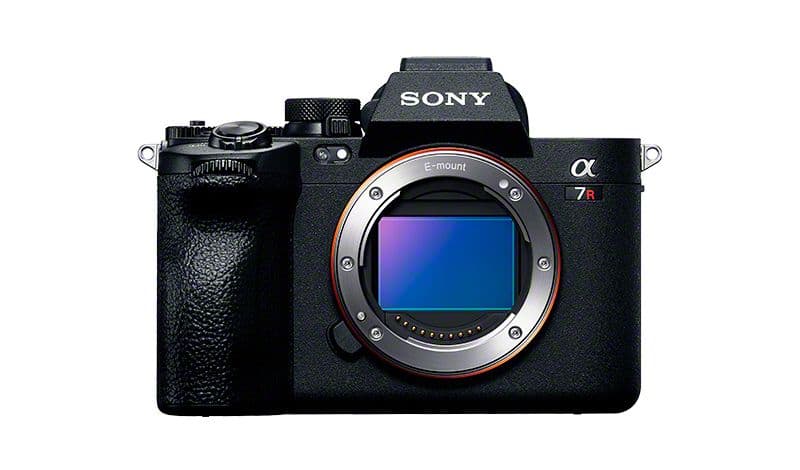
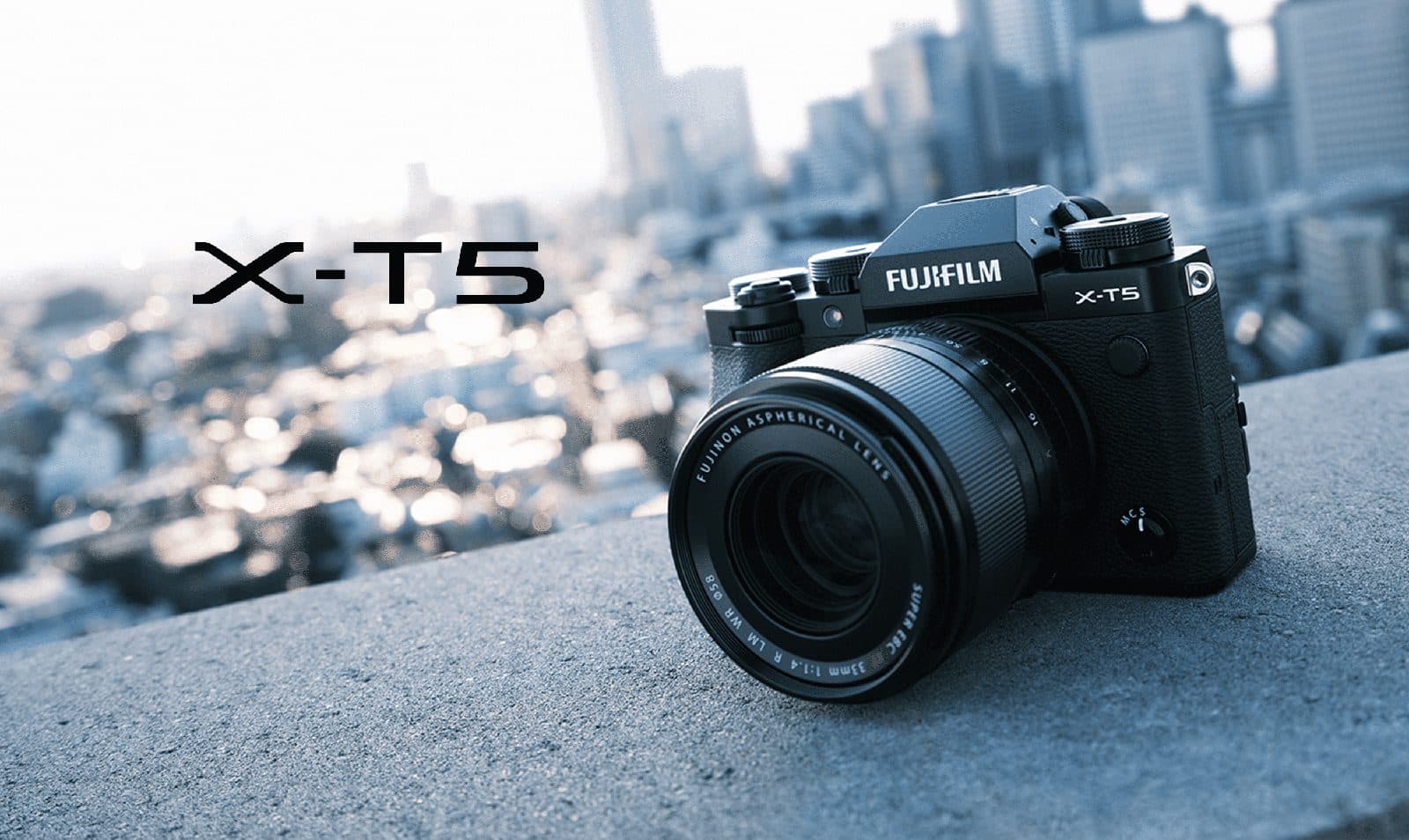
Sony A7R V vs Fujifilm X-T5: Resolution Monster or the Camera You Actually Enjoy Shooting?
Sony's 61MP A7R V vs Fujifilm's 40MP X-T5, refreshed for Prime Day 2026 with successors on the calendar. Which fits your portfolio, your bag, and your timing.
The Best Mirrorless Cameras in 2026, Ranked by Photographers Who Shoot Daily
Sony A7R V, Fujifilm X-T5, Canon R5 II, Nikon Z9. Gavler's photographers rank the mirrorless cameras worth shooting — APS-C through full-frame.