Sony A7R V vs Fujifilm X-T5: Resolution Monster or the Camera You Actually Enjoy Shooting?
Sony's 61MP A7R V vs Fujifilm's 40MP X-T5, refreshed for Prime Day 2026 with successors on the calendar. Which fits your portfolio, your bag, and your timing.
Published April 2026, refreshed June 2026 — Father's Day is T-5, Amazon Prime Day is T-7, and rumored successors are 11 months out for the Sony and 3 months out for the Fuji. Below: how the Sony A7R V and the Fujifilm X-T5 — rank 1 and rank 2 on Gavler's Best Mirrorless Cameras list — actually compare with the successor calendar in mind.
The Sony A7R V and Fujifilm X-T5 sit at rank 1 and rank 2 on Gavler's Best Mirrorless Cameras list, and they represent the most philosophically different top-two pairing in any category on the site. One is a 61MP full-frame resolution machine. The other is a 40MP APS-C camera that makes you fall in love with the process of taking pictures. They barely compete on specs — and that is exactly why this comparison matters.
What's Changed in 2026
Three meaningful shifts since this comparison first ran in April:
- The Sony A7R VI is rumored to announce around May 13, 2026 with a 67MP stacked CMOS sensor (or an 80MP sensor depending on which leak you believe), a refined body with improved heat management, and a NYC launch event. A successor's announcement-and-launch window historically widens A7R V discounts through the summer — Sony tends to clear inventory aggressively in the 6-12 weeks after a new body announcement. If the A7R VI lands on the May 13 date, the A7R V's effective street price is likely to drop another $300-$500 through Prime Day and into the fall.
- The Fujifilm X-T6 is rumored for September 2026 with the same 40MP X-Trans CMOS sensor plus the new X-Processor 6, tri-band Wi-Fi 6, and improved subject-detection autofocus. A Vietnamese retailer listing also floated a 40MP X-Trans CMOS 6 HR BSI sensor with 200MP Pixel Shift and 8K — that one is unconfirmed. The takeaway: the X-T6 is a performance-pass upgrade, not a resolution-pass upgrade. If 40MP is enough, the X-T5 is still the right camera. If you specifically want the new processor and faster autofocus, wait the 3 months.
- Lens economics are still pulling buyers toward Fuji. The X-T5 system can be built out with a 23mm f/2, 35mm f/2, 56mm f/1.4 prime trio for under $1,800 — three modern fast primes in a kit total that costs less than the Sony body alone. The Sony GM and G primes remain extraordinary but the entry cost to get into the system at quality continues to be the largest practical gap between the two ecosystems.
The Case for the Sony A7R V ($3,898)
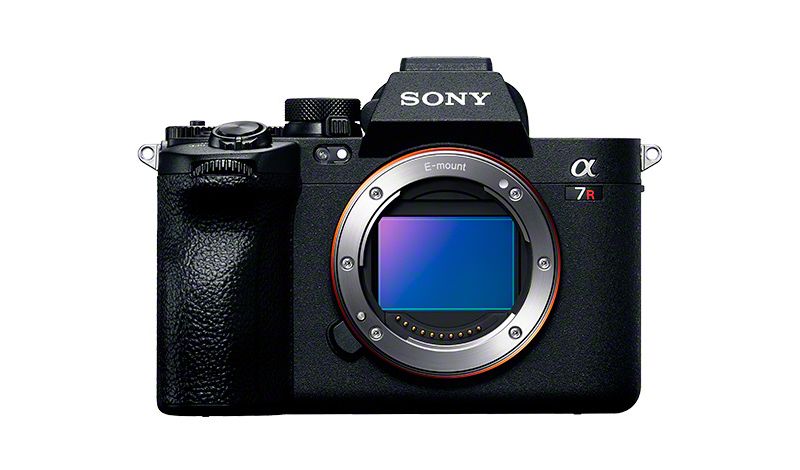
Sony A7R V
The highest-resolution full-frame mirrorless with AI-powered subject recognition and 8K oversampled 4K video.
Amazon affiliate · price subject to change
The A7R V exists for photographers who need every pixel. Its 61MP full-frame sensor captures detail that no APS-C sensor can match. Crop into a landscape shot, extract a tight portrait from a wide frame, print at billboard sizes — the A7R V provides headroom that the X-T5 physically cannot.
But resolution is table stakes for this camera. The real story is Sony's dedicated AI processing unit, which powers the most intelligent autofocus system in any mirrorless body. It does not just track eyes — it recognizes subject types and predicts movement. For wildlife photographers who need a bird's eye tracked through branches, or event shooters working fast in unpredictable conditions, this focus system is the reason to buy. The 8-stop in-body image stabilization, 8K video, and dual CFexpress Type A slots round out a camera that genuinely does everything well.
The trade-offs: it is bigger, heavier, and the full-frame lens ecosystem is correspondingly larger and more expensive. Sony's menu system has improved but still is not fun. The JPEG output, while accurate, lacks the character that makes you want to skip Lightroom entirely. And with the A7R VI 11 months out, this body is sitting in the awkward "last-generation flagship" window where street pricing is about to slip meaningfully.
The Case for the Fujifilm X-T5 ($1,699)
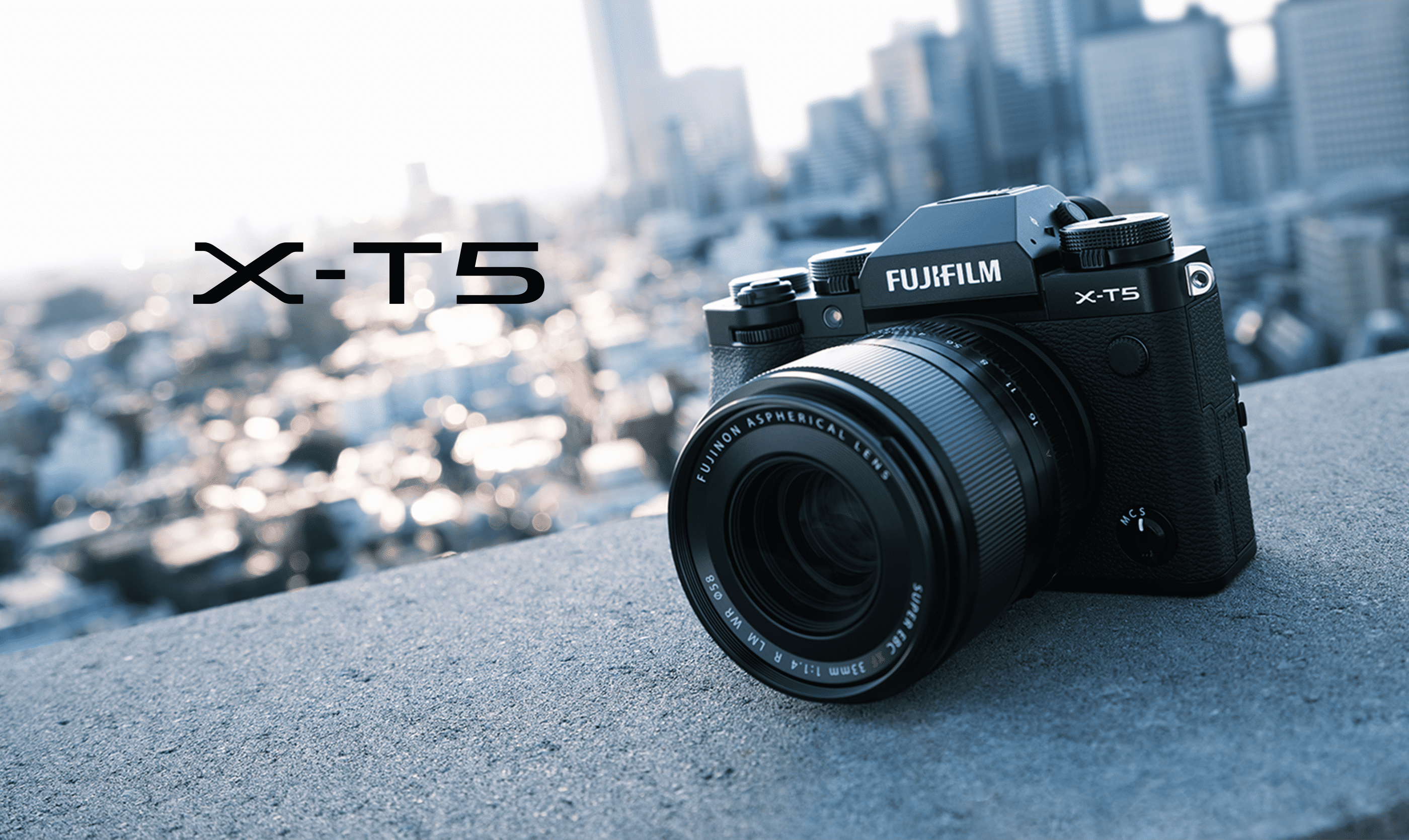
Fujifilm X-T5
Tactile analog controls and Fuji's iconic color science make this the most enjoyable camera to shoot with.
Amazon affiliate · price subject to change
The X-T5 is the camera that reminds you photography is supposed to be enjoyable. Physical dials for shutter speed, ISO, and exposure compensation — not menu screens, not mode wheels. Film simulations — Velvia, Classic Neg, Nostalgic Neg, Acros — that produce JPEGs straight out of camera that people mistake for hours of editing. A body that is 166 grams lighter and noticeably more compact, with lenses to match.
At 40.2MP on an APS-C sensor, the X-T5 is not short on resolution either. For anything short of extreme cropping or massive commercial prints, the X-T5's files hold up beautifully. The X-Trans sensor's unique color filter array produces a rendering quality that many photographers prefer to full-frame Bayer sensors despite the size disadvantage. And the X-mount lens lineup — particularly the f/2 prime trio (23mm, 35mm, 56mm) and the new XF 30mm f/2.8 Macro — gives Fuji a price-to-quality ratio in lenses that Sony cannot currently match.
The trade-offs: autofocus tracking cannot match Sony's AI system, especially with erratic subjects. Low-light performance hits a ceiling sooner. And if you need 8K video, advanced computational photography features, or third-party AF-protocol support, the X-T5 is a stills-first camera that does not pretend otherwise.
The Third-Door Cross-Shop — Canon EOS R5 Mark II ($4,299)
Canon EOS R5 Mark II
Stacked sensor, 30fps burst, 8K/60fps, Eye Control AF — DPReview's Gear of the Year.
Amazon affiliate · price subject to change
If the comparison is really "resolution flagship vs character-first camera," the Canon EOS R5 Mark II at rank 3 on the Best Mirrorless Cameras list deserves a look as the third option. 45MP stacked sensor, dual-pixel AF II with the most intuitive subject detection of any mirrorless body (different philosophy from Sony's AI engine, but equally capable in practice), 8K30 video, and IBIS at 8.5 stops. It costs $400 more than the A7R V but unifies stills and video in a way the A7R V technically does, but practically less elegantly. For working hybrid shooters, the R5 II is the most common upgrade path from either the Sony or the Fuji.
What to Actually Care About
Most spec comparisons miss the point. The decision tree is short:
- Commercial print work, billboards, large gallery output? A7R V. The 61MP files crop and enlarge in ways nothing else in this price range matches.
- Wildlife, sports, fast-action shooting? A7R V. The AI autofocus is the category benchmark.
- Street, travel, documentary, social-content? X-T5. The smaller body, faster shooting workflow, and JPEG character pull weight on real assignments.
- Already in the Fuji ecosystem with X-mount lenses? X-T5. The lens investment is the sunk cost worth respecting.
- First serious camera, no system lock-in yet? X-T5 plus the 23mm f/2 and 56mm f/1.4 primes. Best entry point in any current system at this quality level.
- Hybrid stills-and-video work? Canon R5 Mark II. The Sony is video-capable; the Canon is video-native.
- Can wait 3 months for the X-T6 or 11 months for the A7R VI? Wait. Both successors are confirmed-enough to plan around. Buy lenses now, body later.
Father's Day & Prime Day Buying Window — T-5 / T-7
Father's Day lands June 21 and Prime Day runs June 23-26 this year. Sony has historically discounted the A7R V more aggressively as the A7R VI approaches — the body has already seen $300-$500 cuts through early 2026, and Prime Day is likely to deepen those discounts to roughly $3,398-$3,498. The Fujifilm X-T5 is more discount-resistant; expect $100-$200 off at B&H, Adorama, and Amazon, sometimes bundled with the 16-50mm kit lens or the 18-55mm f/2.8-4 kit lens. The Canon R5 Mark II rarely discounts deeply during Prime Day — Canon prefers to discount during its own September anniversary windows.
Third-party lens deals (Sigma, Tamron, TTArtisan) are often the better Prime Day target than camera bodies. Sigma Art primes for E-mount routinely hit 20-25 percent off; Tamron 28-75mm f/2.8 G2 for E-mount and 17-70mm f/2.8 for X-mount both deal aggressively. If the body is already on a launch-discount track, redirect the Prime Day budget toward glass.
The Verdict
Buy the Sony A7R V if you shoot commercially, print large, or need the most capable autofocus system available. The resolution and AI tracking are unmatched, and the impending A7R VI launch means street prices are likely to fall to historic lows through summer.
Buy the Fujifilm X-T5 if you want the best shooting experience in mirrorless, love the look of film simulations, travel with your camera, or simply refuse to spend $3,900 on a body when $1,699 gets you 90 percent of the image quality in a more enjoyable package. The X-T6 is 3 months out and a performance-pass not a resolution-pass — the X-T5 is the right camera now and stays the right camera after the successor.
Buy the Canon EOS R5 Mark II instead if your work is genuinely hybrid stills-and-video and you need a body that does both at full professional quality.
The Gavler community gives the edge to Sony — 32 votes to 28 — but this is a close race that reflects a genuine philosophical split. See the full rankings on the Best Mirrorless Cameras list, and vote for the approach you believe in.
See all 10 products ranked by the community
Best Mirrorless Cameras
See Full Rankings →303 community votes cast
Common Questions
It depends on what you shoot and how you shoot it. The Sony A7R V wins on resolution (61MP vs 40MP), autofocus intelligence, and video versatility. The Fujifilm X-T5 wins on size, weight, shooting experience, and in-camera color science with its film simulations. For landscape, commercial, and large-format print work where resolution is king, the Sony. For street, travel, documentary, and anyone who wants to spend less time in post-processing, the Fuji.
Depends on how soon you actually need a camera. The Sony A7R VI is rumored to announce around May 13, 2026 with a 67MP stacked sensor — meaning availability and retail discounts on the A7R V are likely to widen through the summer. The Fujifilm X-T6 is rumored for September 2026 with the same 40MP sensor plus the new X-Processor 6, Wi-Fi 6, and improved autofocus. If you can wait, the X-T6 is a performance-pass-not-resolution-pass upgrade — meaningful but not transformative. If you need to shoot this season, the X-T5 and A7R V are still excellent and increasingly discounted.
The Sony A7R V retails for approximately $3,898 body-only. The Fujifilm X-T5 retails for approximately $1,699 body-only — less than half the price. Factor in smaller, lighter, and cheaper APS-C lenses for the Fuji, and the total system cost gap widens further. Both should see meaningful Prime Day cuts (June 23-26) with Sony historically discounting A7R-class bodies more aggressively as a successor approaches launch.
Yes. The Fujifilm X-T5's 40.2MP X-Trans CMOS 5 HR sensor produces files with exceptional detail and dynamic range. For prints up to about 24 by 36 inches and nearly all digital use, the quality difference from full-frame is negligible. Full-frame still wins in extreme low-light, when the shallowest possible depth of field matters, and when extreme cropping for wildlife or sports tele work is non-negotiable.
The Sony A7R V has a significant autofocus advantage. Its dedicated AI processing unit recognizes humans, animals, birds, insects, cars, trains, and planes with remarkable accuracy. The Fujifilm X-T5's autofocus is competent and improved over previous generations, but it cannot match Sony's subject tracking consistency, especially for fast-moving or erratic subjects. The rumored X-T6 closes part of this gap but the Sony AI system remains the category benchmark.
Yes for the Sony A7R V, moderately for the Fujifilm X-T5. Sony historically discounts the A7R V more aggressively as the A7R VI successor approaches launch — the A7R V has already seen $300-$500 cuts through early 2026, and Prime Day 2026 (June 23-26) is likely to deepen those discounts. Fujifilm is less aggressive on Prime Day; the X-T5 typically sees $100-$200 off at B&H and Adorama, sometimes bundled with a 16-50mm or 18-55mm kit lens. Lens deals from third parties (Sigma, Tamron) are often the better Prime Day target if the body is already discounted at MAP.
On Gavler's Best Mirrorless Cameras list, the Sony A7R V holds rank 1 with a 9.7 community score, and the Fujifilm X-T5 is rank 2 with a 9.5. The [Canon EOS R5 Mark II](/products/canon-eos-r5-mark-ii) at rank 3 (9.3) is the most common third cross-shop in this price band. Rankings are decided entirely by community votes — one person, one vote, no affiliate influence.
Products Mentioned
Jump to the full ranking and community verdict for each pick named above.
Related Articles
Should You Buy Full-Frame, or Spend That Money on Glass?
6 min read
ComparisonDreame X60 Max Ultra vs Roborock Saros 20: The Two Best Robot Vacuums Fail in Opposite Places
6 min read
ComparisonLG C5 vs Hisense U9N: The Two Best-Value TVs of Prime Big Deal Days Answer Opposite Questions
6 min read