The Best Portable Air Conditioners in 2026, Ranked by the People Who Actually Live With Them
From a $600 dual-hose inverter benchmark to a $200 budget cooler, the portable air conditioners worth buying for the 2026 summer, ranked by the community.
There are two kinds of room a portable air conditioner solves for. The first is the room without ductwork — a finished basement, a converted attic, a third-floor bedroom where the central system never quite reaches. The second is the room where you cannot install anything permanent — a rental, a dorm, a home office in a corner that needs to be cool for a few months a year. For both, a portable AC is the answer, and in 2026 the gap between a good one and a bad one is enormous. The right unit will drop a room ten degrees in under thirty minutes and run quiet enough to sleep through. The wrong unit will run all afternoon and barely keep the room from warming up.
The difference comes down to two things: dual-hose versus single-hose construction, and inverter versus fixed-speed compressor. Get those two right and the rest is detail. Get them wrong and you bought a loud, expensive fan. Late June is also a good window to buy — Amazon Prime Day (June 23–26) and the Fourth of July sales are live, and portable ACs are one of the categories that genuinely discount during Prime Day — but the strongest models (Midea Duo, Whynter NEX, LG dual-inverter) go to backorder fast once the first real heat wave hits, so buy ahead of the heat rather than during it. Gavler's community has ranked ten portable air conditioners — from the dual-hose inverter flagships that RTINGS and Wirecutter agree on, down to the budget single-hose that still earns its place — by lived summer experience. The picks below pull from the live Best Portable Air Conditioners list.
How the Rankings Work
One vote per person on the Best Portable Air Conditioners list. The instruction is simple: pick the unit you would actually buy again to cool the room you put it in. Because the list spans from a $200 budget cooler to a $650 premium inverter, picks at different price tiers compete on the same page — judged on whether the unit does the job it is sized for, not on whether it can outspec a unit twice its price. The result is a ranking built on summers lived with these things, not on marketing copy.
The Top Picks
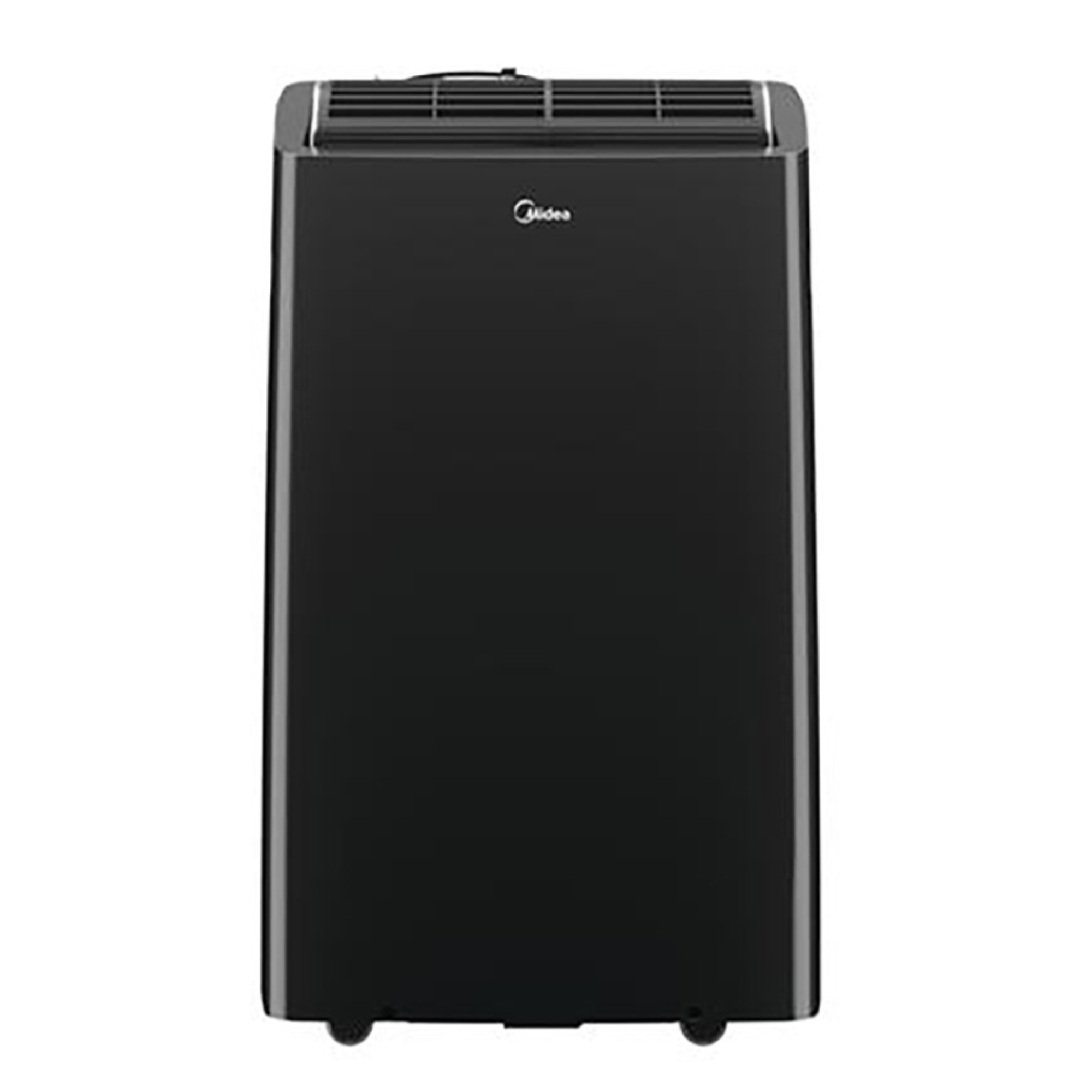
Midea Duo MAP14S1TBL — The Benchmark
Midea Duo MAP14S1TBL
A dual-hose inverter that posts the highest measured cooling capacity and best efficiency of any portable tested, yet stays near refrigerator-quiet on high.
Amazon affiliate · price subject to change
The Midea Duo is the unit that reset what a portable AC is allowed to be. The dual-hose design draws outdoor air for condenser cooling instead of pulling room air out the window, so the room is not constantly leaking cold to make up for the exhaust. An inverter compressor ramps up and down to hold a target temperature instead of hard-cycling, which is why it stays near refrigerator-quiet on high — Tech Gear Lab measured roughly 55 dBA from four feet. Reviewers from RTINGS to Wirecutter use it as the reference point against which other portables are measured. It is heavier and a few minutes slower to set up than a basic single-hose, and it is not the cheapest unit here. For any room over 300 sq ft, it is the one to buy. A 9.5 score puts it first.
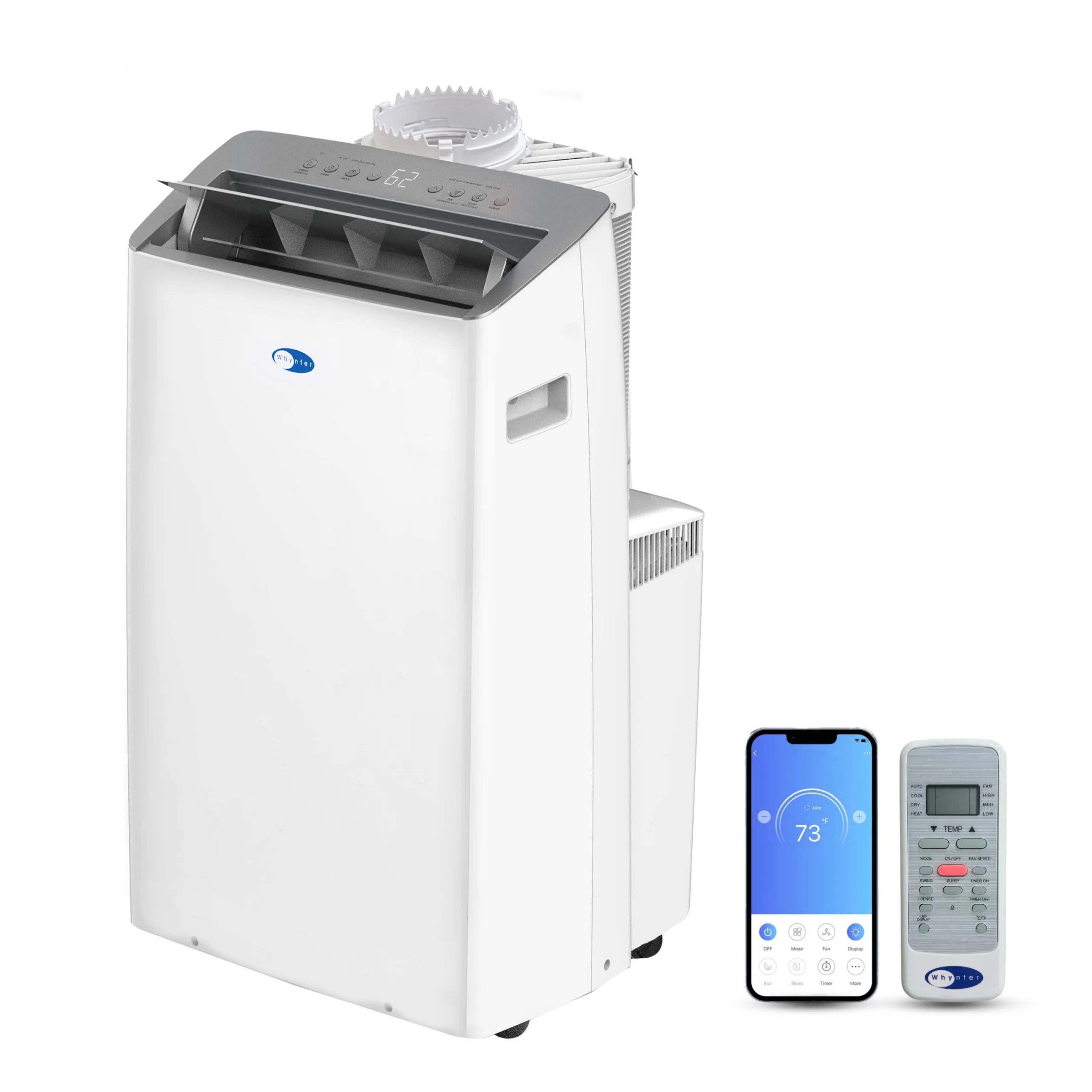
Whynter NEX ARC-1230WN — The Big-Room Heavy Hitter
Whynter NEX ARC-1230WN
A 14,000 BTU (12,000 SACC) dual-hose inverter rated to 600 sq ft — the one to buy when you need to drop the temperature in a big, sun-baked room fast.
Amazon affiliate · price subject to change
The Whynter NEX is what you buy when the Midea Duo is not quite enough. RTINGS picked it as their #1 portable AC on test, citing top-of-class cooling capacity, top-end inverter efficiency, and 58 dBA fan-on-high — quieter than nearly every fixed-speed unit they have measured. The dual hose-inside-a-hose design saves a bit of clutter behind the unit, the NetHome Plus app integrates with Alexa and Google Home, and the 600-sq-ft rating is one of the highest you can buy in a portable form factor. The honest catches are weight (74 lb) and a window kit reviewers describe as stiff. For a south-facing living room or a hot finished basement, no other portable cools harder. A 9.3 score.
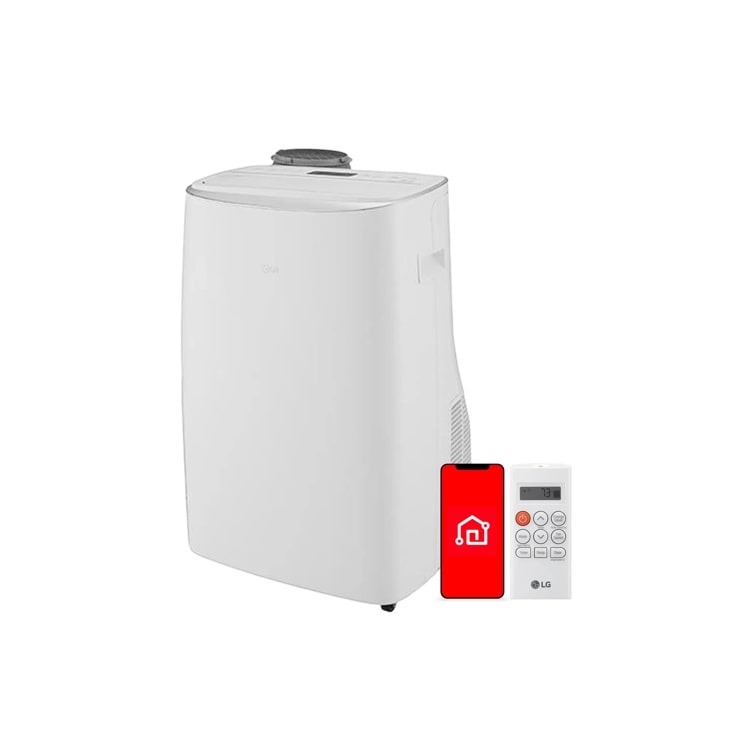
LG LP1419IVSM DUAL Inverter — The Quiet Smart Pick
LG LP1419IVSM DUAL Inverter
LG's dual-inverter compressor runs notably quieter than fixed-speed rivals and pairs with ThinQ app and voice control — the default if low noise and app scheduling matter most.
Amazon affiliate · price subject to change
The LG dual-inverter is the choice when the unit has to live in a bedroom. Independent testers measure the low fan setting around 44 dB — quieter than the room it cools — and the dual-inverter compressor is 35 percent more efficient than comparable fixed-speed units, which Consumer Reports confirms on the power-draw test. ThinQ app control with full Alexa and Google Assistant integration means you can pre-cool the room from the driveway. It is a single-hose unit, which costs it a small efficiency tax compared to the Midea Duo and Whynter NEX in raw cooling speed, but the noise floor and smart-home polish make it the easy first pick for anyone whose AC sits five feet from the bed. A 9.1 score.
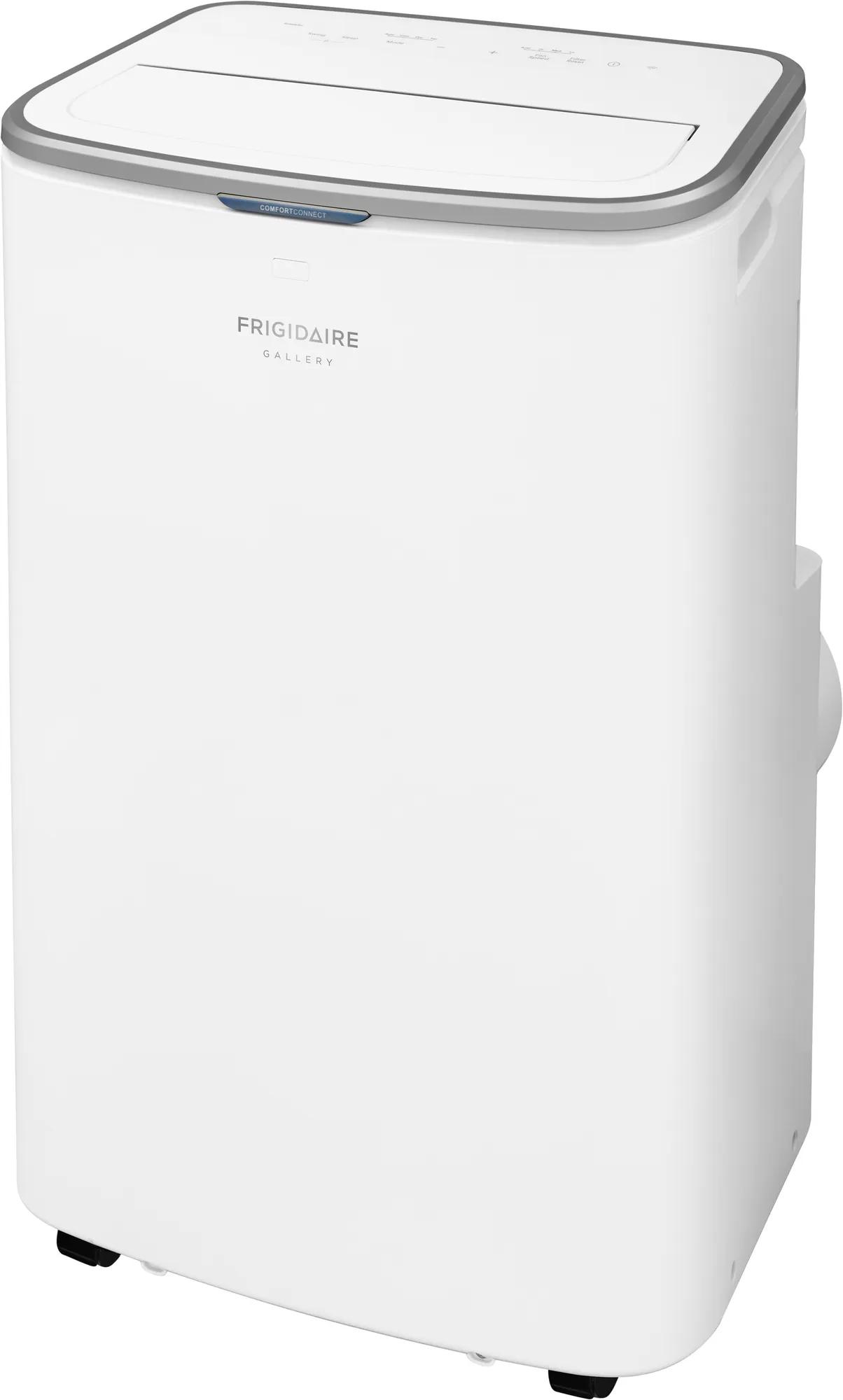
Frigidaire Gallery 3-in-1 Smart Inverter — The Widest Coverage
Frigidaire Gallery 3-in-1 Smart Inverter
13,000 BTU ASHRAE / 8,000 BTU SACC rated to ~600 sq ft, with an inverter compressor that keeps it quiet for its size and SmartHQ/Alexa control built in.
Amazon affiliate · price subject to change
The Frigidaire Gallery is the easy answer when the room is big but the wall outlet is a basic 115V circuit. At 14,000 ASHRAE BTU it covers up to around 700 sq ft on paper, the inverter compressor holds it quieter than other fixed-speed 14,000 BTU rivals, and the SmartHQ app pairs cleanly with Alexa. It also bundles dehumidifier and fan modes in the same shell, which earns it the 3-in-1 label honestly rather than as marketing. The catch is single-hose construction, which costs it a small efficiency margin against the Midea Duo and Whynter NEX in side-by-side cooling-speed tests. For the price-versus-coverage trade-off, it is the value pick for the biggest rooms on this list. An 8.9 score.
Dreo AC515S — The Value Smart Pick
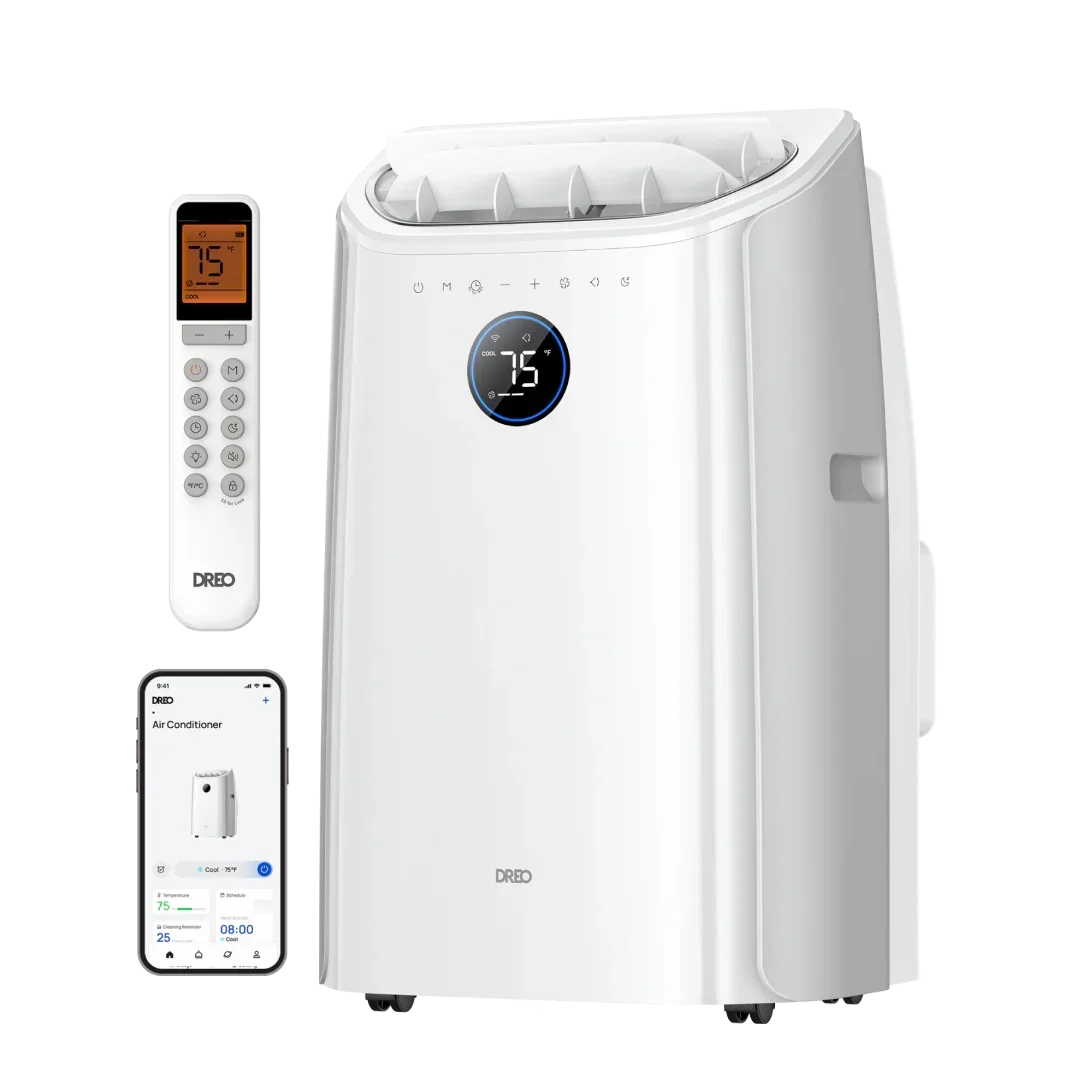
Dreo AC515S
12,000 BTU with drainage-free self-evaporation, full app and voice control, and a genuinely quiet bedroom mode — frequently the most-discounted capable unit at its tier.
Amazon affiliate · price subject to change
Dreo has become the Anker of the portable AC market — well-built smart appliances that consistently undercut the legacy brands on price. The AC515S is 12,000 BTU with drainage-free self-evaporation, a genuinely quiet bedroom mode, and full Dreo app plus Alexa and Google Assistant control. The cooling output is honest for its rating, and the unit lands at sale pricing more often than any other capable inverter here — frequently the most-discounted real performer at its tier on Amazon Prime and Memorial Day events. The trade-off is that the build feels half a step behind LG and Frigidaire in plastics and panel finish. For the dollar, it is the easiest recommendation on the list. An 8.7 score.
De'Longhi Pinguino — The Whisper-Quiet Specialist
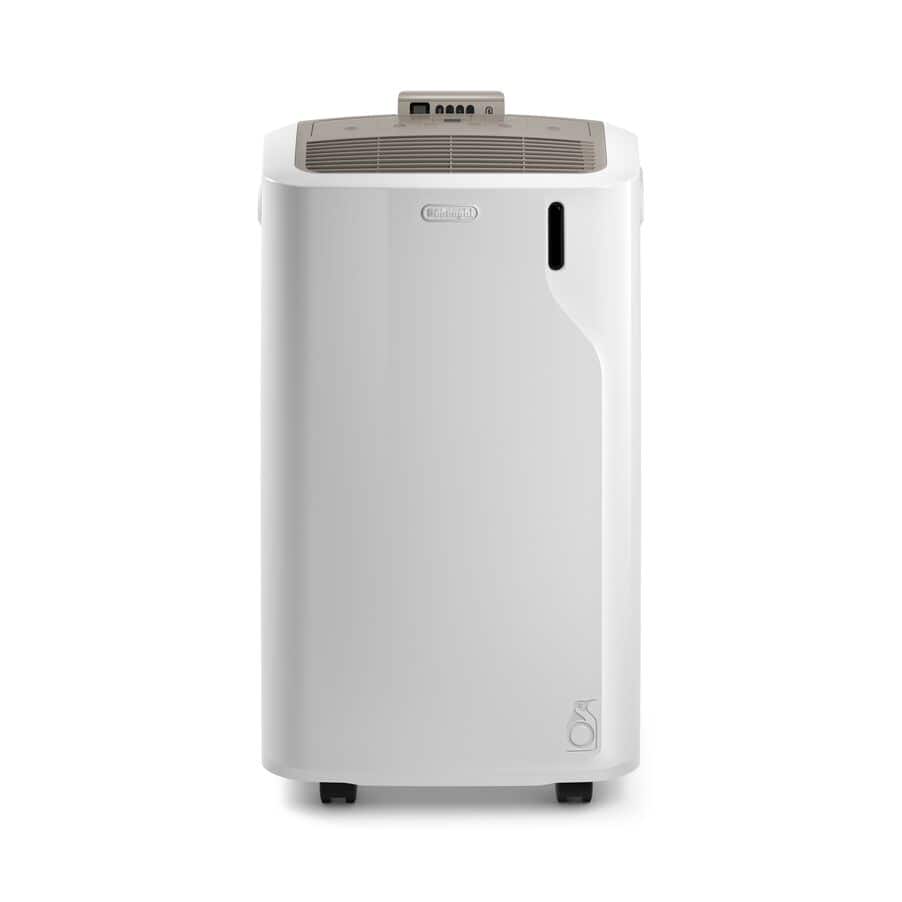
De'Longhi Pinguino
De'Longhi's Silent tuning and built-in thermostat make it the pick when noise is the dealbreaker, with a strong built-in dehumidifier for shoulder-season humidity.
Amazon affiliate · price subject to change
De'Longhi's Pinguino is the unit that turns up first whenever someone asks for the quietest portable AC, period. The Silent tuning is not marketing — the compressor and fan curves are deliberately biased toward noise floor instead of peak cooling speed, and a strong built-in dehumidifier handles shoulder-season humidity without running the compressor at full output. It will cool a midsize bedroom or home office reliably, but it is not the unit to buy for a hot south-facing living room — the spec sheet trades raw BTU for acoustic discretion. For the light sleeper or the work-from-home office where a louder AC would be a daily annoyance, it is the answer. An 8.5 score.
Whynter ARC-14S — The Workhorse Value
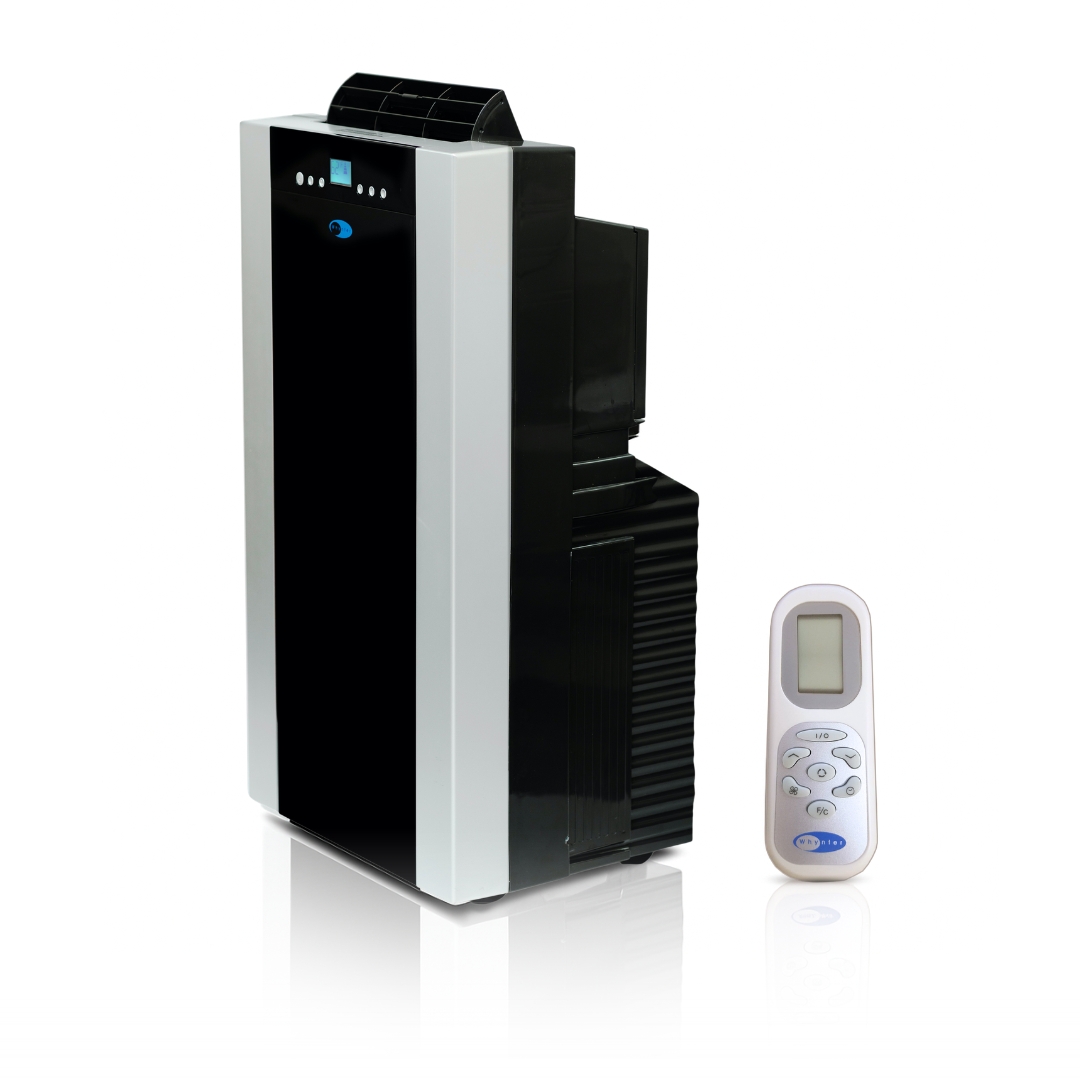
Whynter ARC-14S
A fixed-speed dual-hose unit (a perennial Best Overall pick) that trades inverter efficiency for a lower price and a reputation for running for years — the best value in serious dual-hose cooling.
Amazon affiliate · price subject to change
The Whynter ARC-14S has been a perennial Best Overall pick across review sites for years, and it earned that with a simpler equation: a fixed-speed dual-hose 14,000 BTU unit at a price that undercuts every inverter here. It does not have an app and it does not modulate output, but the dual-hose construction means it still cools more efficiently than any single-hose unit at the same BTU rating, and Whynter has a long track record of these units running for years without service. If you want serious cooling capacity and you do not need smart features or whisper-quiet operation, this is where the money goes the furthest. An 8.3 score.
Hisense 8,000 BTU Dual-Hose Heat Pump — The Four-Season Compact
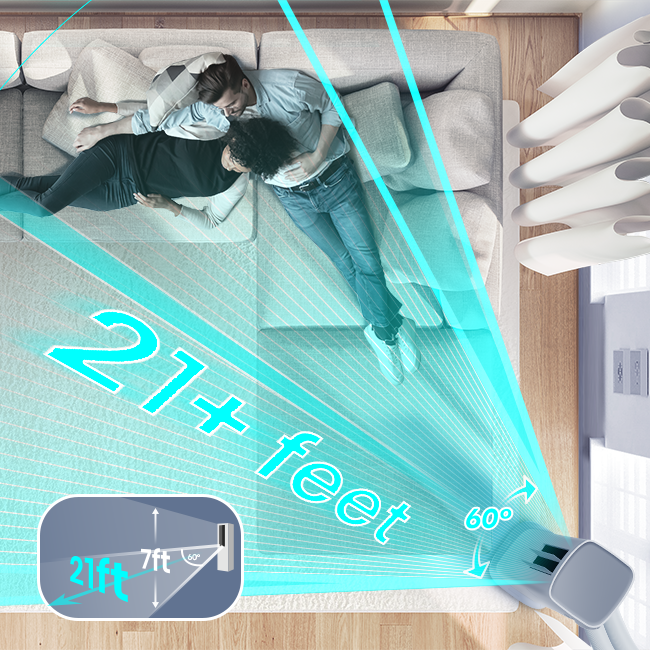
Hisense Smart Tower 8,000 BTU Heat/Cool Dual-Hose (APT0825UW1WD)
A dual-hose 8,000 BTU smart-inverter tower that runs as both AC and heat pump, with a vertical cross-flow fan throwing air over 21 feet — earns its closet space in spring and fall too, not just July.
Amazon affiliate · price subject to change
This Hisense is the rare unit that earns its closet space year-round. It is a dual-hose 8,000 BTU portable — efficient for its size class — and it adds a heat-pump heating mode that runs the same refrigeration cycle in reverse, so the same unit handles a cool spring morning or a chilly fall night. Sized right for a single room up to about 550 sq ft, it is a smart pick for a finished basement or guest room that needs supplementary climate control across more than just July and August. The trade-off is that the heat pump caps out around 40°F outdoors; below that, it falls back to resistive heat strips that are far less efficient. An 8.1 score.
Black+Decker BPACT05SM — The Small-Room Default
The Black+Decker is what you buy when a 14,000 BTU unit would be overkill. Compact, lightweight enough to roll between rooms on a Tuesday and a Saturday, and priced low enough that it almost qualifies as an impulse buy in the back of a Home Depot. It includes timer, sleep, and auto modes — the things a bedroom AC actually needs — and at 5,000-8,000 BTU SACC it is sized correctly for a 250-350 sq ft room rather than oversized for the spec sheet. Single-hose, fixed-speed, and noisier than the inverter picks here, but cheaper than all of them and exactly the right tool for a single small room. A 7.9 score.
Shinco 8,000 BTU Portable AC — The Budget Benchmark
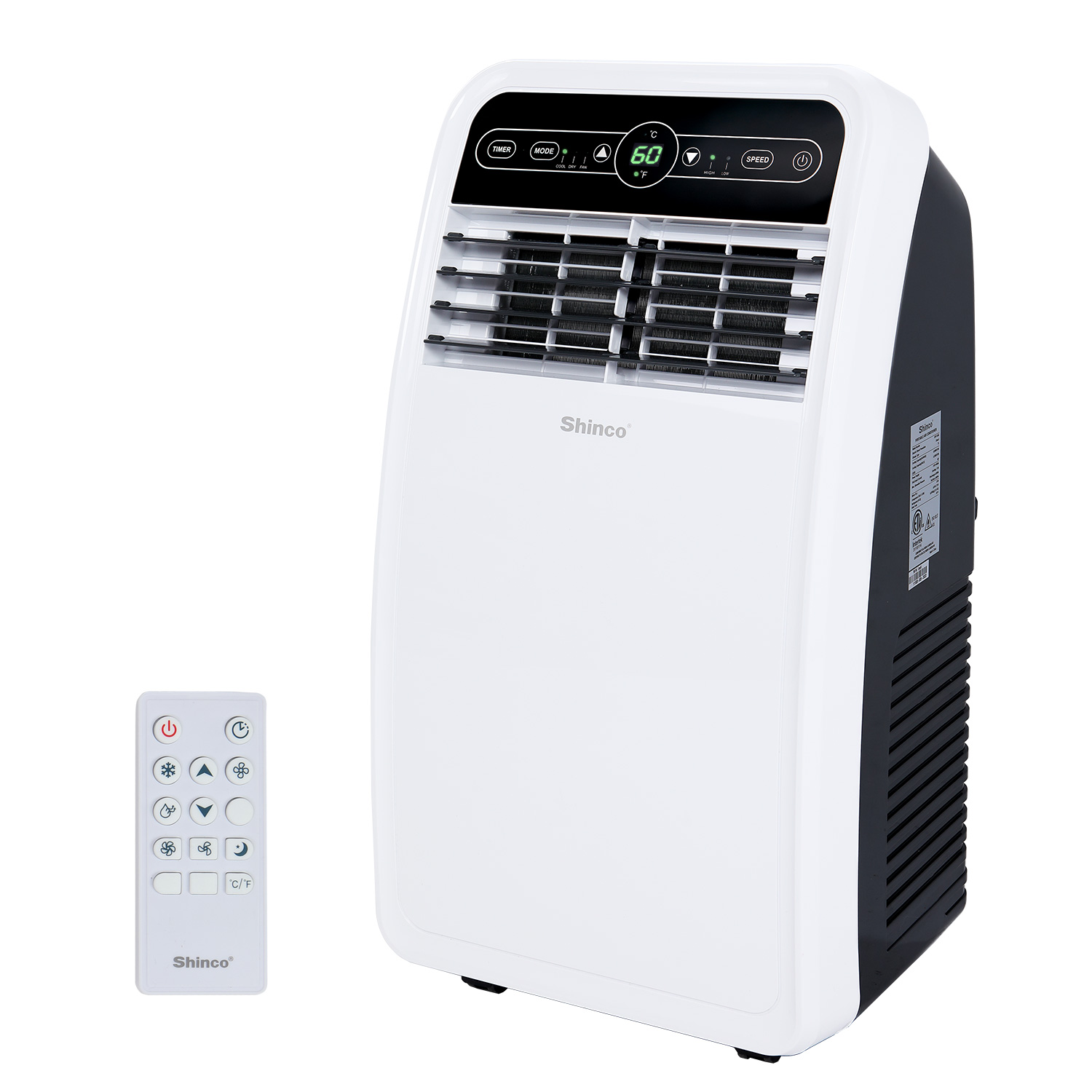
Shinco 8,000 BTU Portable AC
A no-frills 8,000 BTU ASHRAE / 4,550 BTU SACC single-hose 3-in-1 for rooms up to ~200 sq ft, weighing ~42 lb; sets up in roughly 5 minutes, cools modestly but real, and lands around $200.
Amazon affiliate · price subject to change
The Shinco is the unit that proves cooling does not have to cost much. A no-frills single-hose 3-in-1 (cool, fan, dehumidify) that delivers real cooling output for around $200 — less than half what the cheapest LG dual-inverter goes for. The catch is honest: this is the loudest unit on the list, and light sleepers will notice it from across the room. It is also fixed-speed, which means it cycles all the way on and all the way off rather than modulating. For a daytime-use room — a home office, a workshop, a garage gym — where noise is not the deciding factor, nothing else cools this cheaply. A 7.6 score.
Which One Should You Buy?
Architecture first — dual-hose vs single-hose, then inverter vs fixed-speed, then SACC not the ASHRAE hangtag. The full decision tree is in our Portable Air Conditioner Buying Guide. Then buy from the live Best Portable Air Conditioners ranking.
If the room is over 300 sq ft and you want one unit that does everything well, the Midea Duo is the easy answer — and the Whynter NEX ARC-1230WN is the upgrade if the room is bigger or hotter. For a quiet bedroom unit with smart-home polish, the LG LP1419IVSM is the pick; the De'Longhi Pinguino is the dedicated noise-first specialist. The Frigidaire Gallery is the value choice when you need to cover the widest room on a single 115V outlet, and the Dreo AC515S is the value choice when the budget is tight but you still want an inverter compressor and app control. For a four-season room that needs heating help in spring and fall, the Hisense 8,000 BTU dual-hose heat pump does both. The fixed-speed Whynter ARC-14S is still the workhorse value pick for serious BTU at a lower price, and the Black+Decker BPACT05SM and Shinco 8,000 BTU are the right answers when the room is small or the budget is tight.
Cast your vote and see where the community ranks each unit on the full Best Portable Air Conditioners list — or browse the rest of the Home & Kitchen coverage for adjacent summer-comfort picks, including the Best Air Purifiers for managing the smoke and pollen the AC is going to recirculate all summer.
See all 10 products ranked by the community
Best Portable Air Conditioners
See Full Rankings →262 community votes cast
Common Questions
The Midea Duo MAP14S1TBL tops Gavler's community ranking with a 9.5 score, and the reason is simple: it is the unit that other portables get compared to. Its dual-hose design pulls outdoor air for condenser cooling instead of sucking already-conditioned air out the window, and the inverter compressor modulates output instead of hard-cycling, which is what lets it cool faster and run quieter than the single-hose units that dominate the budget shelf. Independent testers from RTINGS to Wirecutter to Consumer Reports rate it among the most capable portables on the market. Trade-offs: it is heavier and pricier than a basic single-hose unit, and the twin hoses take a few extra minutes to set up. For anything larger than a small bedroom, it is the one to buy.
It matters more than almost anything else on the spec sheet. A single-hose portable AC pulls air from the room, runs it across the condenser, and pushes it outside through one hose. To replace that air, the room sucks unconditioned outdoor air in through every crack and door gap, which means the AC is partly cooling air it is also pumping in. A dual-hose unit takes the second air stream from outside, which is what makes it noticeably faster and more efficient in the same room. Wirecutter, RTINGS, and Consumer Reports all consistently rank dual-hose models above single-hose at the same BTU rating. If your room is over about 300 sq ft, dual-hose is worth the price difference.
Use SACC (Seasonally Adjusted Cooling Capacity) BTU, not ASHRAE — SACC is the DOE-standardized rating that more honestly reflects real-world performance in a room with a portable's heat losses. Rough guide: under 250 sq ft, a 5,000-8,000 SACC BTU unit; 250-450 sq ft, 8,000-12,000 SACC BTU; 450-650 sq ft, 12,000-14,000 SACC BTU. Sun exposure adds about 10 percent; a hot kitchen adds another 4,000 BTU. Buying oversized is not the safe choice — an oversized unit cycles too short to dehumidify properly and leaves a room cold and clammy. The Midea Duo, Whynter NEX, and LG dual-inverter are the safe picks for the biggest rooms; the Hisense 8,000 and Black+Decker units are sized right for bedrooms and offices.
Inverter compressors are the single biggest factor here, because they ramp up and down instead of hard-cycling on and off the way fixed-speed units do. Among the picks here, the LG LP1419IVSM dual-inverter has a measured low setting around 44 dB — quieter than most window units — and the De'Longhi Pinguino is the dedicated noise-first choice with its Silent tuning. The Midea Duo and Whynter NEX are also relatively quiet for their size class, both measured in the mid-to-high 50s dBA at full output. Anything fixed-speed and under $300 will be louder; the budget Shinco is the loudest pick on this list and is best for daytime use rather than light-sleeper bedrooms.
Yes — every portable AC on this list has to vent hot air outside, almost always through a window kit that comes in the box. Without that vent, the unit is just blowing the heat it removed from the room back into the room. There is no such thing as a ventless portable air conditioner that actually cools; the units marketed that way are evaporative coolers (swamp coolers), which only help in low-humidity climates and are an entirely different product. If you cannot vent out a window, vent through a sliding-door kit, a drop ceiling, or a wall plate — but venting is mandatory.
Late May through early June is one of the two best windows of the year. Memorial Day promos are still active at Amazon, Home Depot, Lowe's, and Best Buy through the first week of June, and the manufacturers have not yet sold through inventory at peak demand. Once the first real heat wave hits, the strongest models go to backorder fast — the Midea Duo, Whynter NEX, and LG dual-inverter all saw multi-week stock-outs during the summer of 2025. Father's Day promotions through June 21 are the other natural discount window. The worst time to shop is the first 90-degree week, when prices spike and selection collapses.
Rankings come from community votes by people who actually own and use these units through real summers. Each person gets one vote on the Best Portable Air Conditioners list, judging the question every buyer cares about: does this thing cool the room you put it in without wrecking your power bill or keeping you awake? The roster spans from a $200 budget single-hose to a $650 premium dual-inverter — judged on the same question rather than separated by price tier. No affiliate commissions or manufacturer sponsorships influence the order, and the expert and community scores sit next to each pick on the live list.
Products Mentioned
Jump to the full ranking and community verdict for each pick named above.
- Midea Duo MAP14S1TBLHome & Kitchen · Best Portable Air Conditioners
- Whynter NEX ARC-1230WNHome & Kitchen · Best Portable Air Conditioners
- LG LP1419IVSM DUAL InverterHome & Kitchen · Best Portable Air Conditioners
- Frigidaire Gallery 3-in-1 Smart InverterHome & Kitchen · Best Portable Air Conditioners
- Dreo AC515SHome & Kitchen · Best Portable Air Conditioners
- De'Longhi PinguinoHome & Kitchen · Best Portable Air Conditioners
- Whynter ARC-14SHome & Kitchen · Best Portable Air Conditioners
- Shinco 8,000 BTU Portable ACHome & Kitchen · Best Portable Air Conditioners