The Best Air Purifiers in 2026, Ranked by People Who Breathe Better
Dyson, Blueair, Coway, Levoit, IQAir. Gavler's community ranks the air purifiers worth buying for allergies, wildfire smoke, and everyday indoor air.
Air quality isn't something most people think about until they have to. A wildfire season, a new baby, a sudden allergy diagnosis — and suddenly you're comparing CADR ratings at midnight wondering what you've been inhaling.
The problem is that air purifier marketing is almost entirely vibes. "Removes 99.99% of particles" means nothing without context. So Gavler's community cuts through it: real people, one vote each, picking the purifier they'd actually recommend. Here's what they chose.
Spring 2026: Why This List Matters Right Now
Two things make early May the right time to either upgrade or rethink the purifier in your home. First, tree pollen has just peaked across most of the U.S. and grass pollen takes over for the rest of the month — the back-to-back hand-off that allergy sufferers know as the worst stretch of the year. Second, the West is heading into another long wildfire season, and the past three years have made clear that smoke now reaches well beyond the immediate fire perimeter; East Coast and Midwest readers learned in 2023 and 2024 that a Canadian wildfire plume can push PM2.5 above 200 in cities that have never thought of themselves as fire-adjacent.
The community's top picks in 2026 reflect that dual-threat reality. Every machine in the top five clears the True HEPA bar (particles down to 0.3 microns), and the top three pair it with serious carbon stages that handle smoke odor as well as the particulate. The Dyson Big Quiet's catalytic formaldehyde destruction, the Blueair Blue Max 3350i's HEPASilent Ultra coverage, and the Coway Airmega 400S's dual-HEPA architecture each solve the problem differently — but all three earn their rankings because owners run them through pollen storms and smoke events and keep voting for them.
If you bought a purifier before 2024, it's worth checking what's changed. Filter media, smart sensors, and motor efficiency have all moved meaningfully in the last 18 months, and the value tier in particular (Levoit, Winix, Coway) is doing more for less.
How We Rank: Votes, Not Ad Spend
Every Gavler user gets one vote on the Best Air Purifiers list. Pick the purifier you trust with your air. Changed machines? Move your vote. The rankings reflect what people stand behind today — not what they were excited about at launch.
The Top 3: What the Community Chose
1. Dyson Purifier Big Quiet Formaldehyde — The Air Quality Flagship
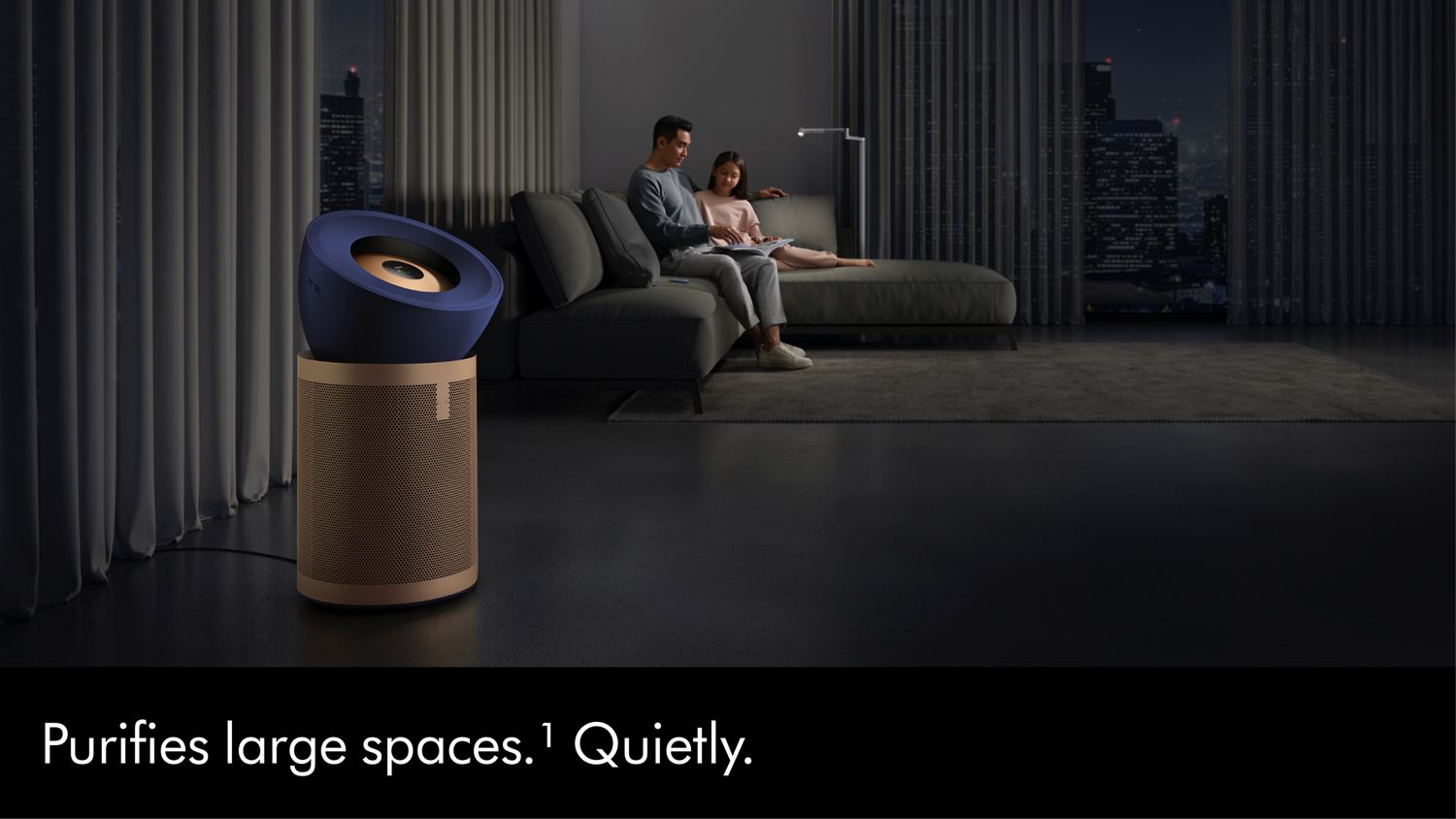
Dyson Purifier Big Quiet Formaldehyde
Dyson's flagship purifier with catalytic formaldehyde destruction, sealed HEPA H13, and whisper-quiet operation.
Amazon affiliate · price subject to change
The name is a mouthful. The performance is exceptional. Dyson's Big Quiet covers rooms up to 1,100 square feet, runs at whisper-quiet levels even on higher settings, and does something no other consumer purifier does well: it catalytically destroys formaldehyde — the VOC that off-gasses from furniture, flooring, and paint for years.
At 9.7, the community has spoken emphatically. The HEPA H13 filter catches the particles, the carbon filter handles odors, and the catalytic filter handles formaldehyde continuously without replacement. The real-time air quality display and app integration mean you can actually see your air getting cleaner.
2. Blueair Blue Max 3350i — The Set-It-and-Forget-It Pick
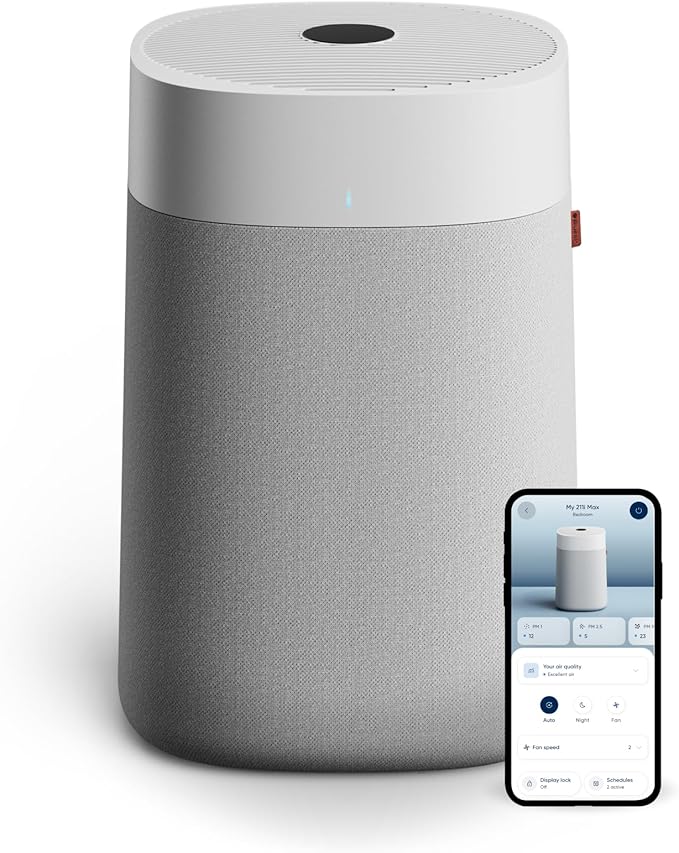
Blueair Blue Max 3350i
HEPA Silent filtration covers up to 2,592 sq ft with smart sensors and whisper-quiet operation.
Amazon affiliate · price subject to change
Blueair doesn't chase headlines. They make purifiers that work, quietly and reliably, and the Blue Max 3350i is their best expression of that philosophy. HEPASilent Ultra technology combines mechanical and electrostatic filtration, achieving HEPA-level performance at lower fan speeds — which means less noise for the same clean air delivery rate.
The 9.4 score reflects a community that values substance over flash. The 3350i handles rooms up to 700 square feet, integrates with smart home systems, and the filter changes are dead simple. It's the purifier people recommend when asked "which one should I just buy and stop thinking about?"
3. Coway Airmega 400S — The Value Champion
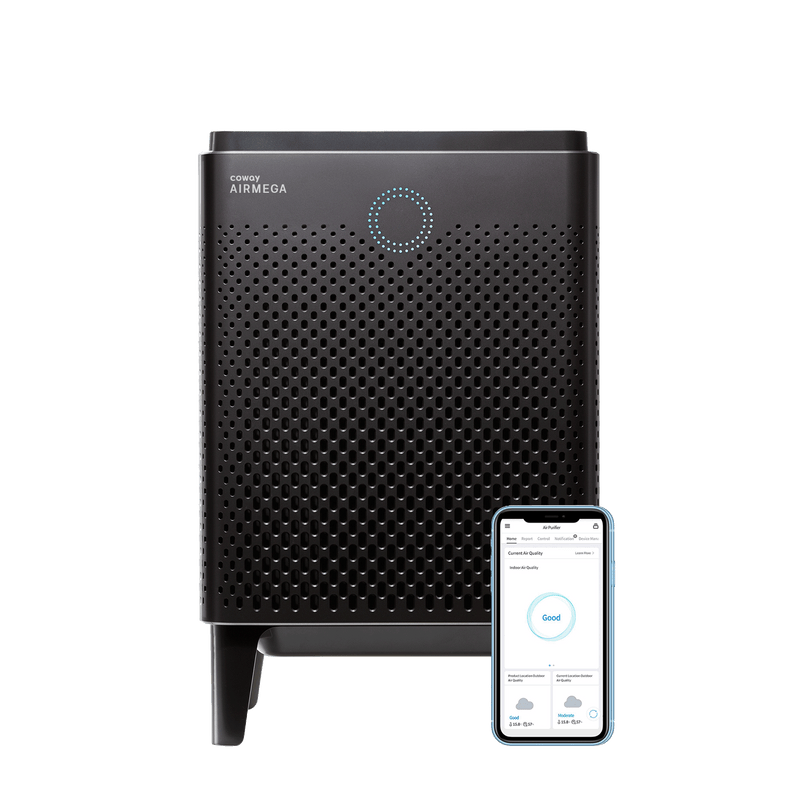
Coway Airmega 400S
Covers 1,560 sq ft with dual HEPA filters and a color-changing air quality ring.
Amazon affiliate · price subject to change
Coway has been making excellent air purifiers for years, and the Airmega 400S is the model that keeps accumulating community votes. Dual HEPA filters, 1,560 square feet of coverage, smart mode that adjusts fan speed based on real-time air quality, and an eco mode that shuts the fan off entirely when the air is clean.
At 9.2, the Airmega 400S punches above its price point. It costs significantly less than the Dyson, covers more square footage, and delivers filtration performance that satisfies even the most demanding users.
The Value Pick: Levoit Core 600S
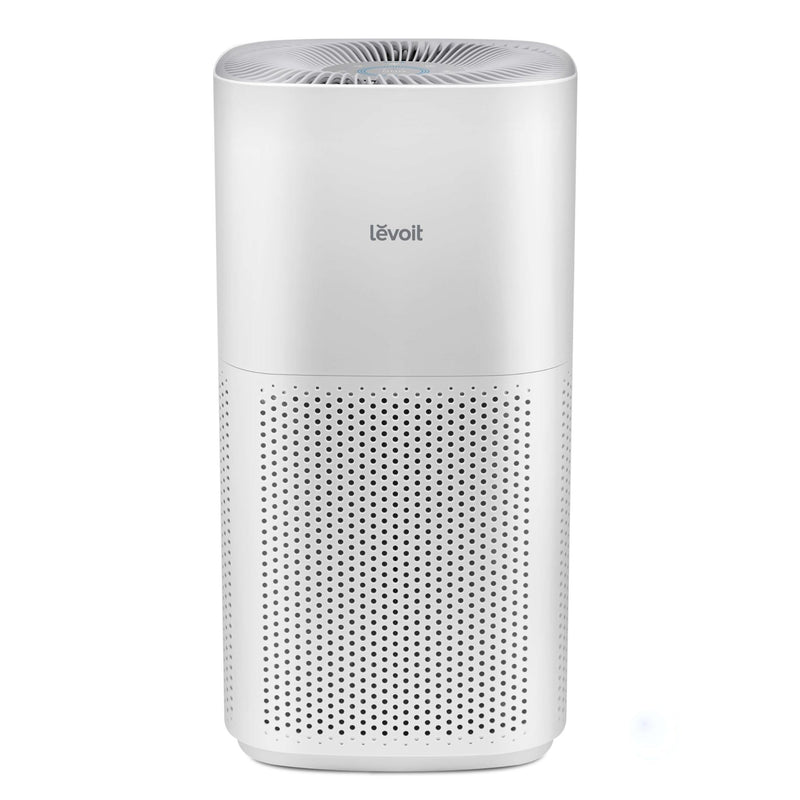
Levoit Core 600S
True HEPA H13 filtration with smart app control and whisper-quiet operation at just 26 dB.
Amazon affiliate · price subject to change
If the Dyson is the answer when money is no object, the Levoit Core 600S is the answer for everyone else. At a fraction of the flagship price, it delivers genuine HEPA H13 filtration — the same medical-grade tier as the Dyson — covers 635 square feet, and runs at just 26 dB on its lowest setting. That makes it the rare large-room purifier that's actually quiet enough to sleep next to.
Smart features at this price tier are usually thin or broken. The 600S is the exception: VeSync app control with scheduling and auto mode actually works, the laser PM2.5 sensor is responsive enough to react to a kitchen splatter from across the room, and Alexa and Google Assistant integrations are first-party rather than tacked-on. At 8.9 with a 93 community rating, this is the purifier the community recommends when the question is "I want HEPA H13 and a smart sensor without spending Dyson money." For most bedrooms, home offices, and mid-sized living rooms, it's the right buy in 2026.
The Hidden Cost: Filter Economics
One thing the community consistently calls out is filter replacement costs. A $300 purifier with $80 annual filter costs will outspend a $500 purifier with $40 filters within three years. The Dyson Big Quiet's never-replace catalytic filter is a genuine advantage here — and the Coway's filter indicator prevents unnecessary early replacements.
Buying Guide: What Actually Matters
CADR is the only spec that matters for comparison. Clean Air Delivery Rate tells you how much filtered air the purifier delivers per minute. Higher CADR means faster cleaning. Ignore vague claims about "purification technology" and compare CADR numbers for smoke, dust, and pollen.
Noise level is the spec most people forget. A purifier that's too loud to sleep next to won't get used. Check the decibel rating at the speed you'll actually run it. The Dyson Big Quiet lives up to its name — under 40 dB on most settings. The Blueair's HEPASilent technology is similarly quiet for its output.
Skip ionizers and UV-C gimmicks. True HEPA filtration with activated carbon is the proven combination. Ionizers can produce trace ozone, and UV-C at consumer power levels doesn't meaningfully contribute to air cleaning. The community's top picks all rely on proven mechanical filtration.
When Wildfire Smoke Is the Threat
If you live anywhere downwind of the West, a Canadian boreal forest, or a chronic burn-prone region, the right purifier looks slightly different than the right pollen purifier. Wildfire smoke is dominated by ultrafine PM2.5 and a heavy load of organic VOCs that carbon filters have to keep up with for days at a time. The IQAir HealthPro Plus is the community's go-to for severe smoke because its HyperHEPA captures particles down to 0.003 microns and the V5-Cell gas stage is one of the largest carbon beds in any consumer purifier. The Coway Airmega 400S and Blueair Blue Max 3350i are also strong choices and significantly cheaper.
What matters most is over-sizing. During a heavy smoke event, you want the purifier rated for at least double your room size, running on auto, with the carbon filter no older than six months. Buying a unit rated exactly for your room is fine for daily use; it's not enough headroom for a smoke episode that pushes outdoor PM2.5 above 150.
See the Full Ranking
Architecture first — bedroom-quiet vs living-room CADR vs open-plan, then the filter stack. The full decision tree is in our Air Purifier Buying Guide. Then buy from the live Best Air Purifiers ranking.
These five top picks are the most-voted purifiers, but the community ranks ten machines in total — including the Honeywell HPA300 budget champion, the Smartmi Air Purifier 2 for HomeKit households, and the Alen BreatheSmart 75i for whole-home coverage with a lifetime warranty. The full list, with current scores and prices, is on Gavler's Best Air Purifiers page. If you've owned any of these long enough to have an opinion, cast your vote — that's how the rankings stay current.
See all 10 products ranked by the community
Best Air Purifiers
See Full Rankings →318 community votes cast
Common Questions
According to Gavler's community, the Dyson Purifier Big Quiet Formaldehyde is the top-rated air purifier in 2026 with a 9.7 score. Its combination of HEPA H13 filtration, catalytic formaldehyde destruction, whisper-quiet operation up to 1,076 sq ft, and real-time air quality readouts sets it apart from the competition.
Yes — provided they use true HEPA filtration. Machines like the Dyson Big Quiet, Blueair Blue Max 3350i, Coway Airmega 400S, and Levoit Core 600S all capture 99.97% of particles down to 0.3 microns, including tree and grass pollen, dust mites, mold spores, and pet dander. Community members who run a properly sized HEPA purifier through the spring tree-pollen peak and the late-spring grass-pollen peak consistently report noticeable improvement.
For wildfire smoke (PM2.5 and ultrafine particles), prioritize a True HEPA or HEPA H13 filter paired with a generously sized activated carbon stage for the smoke odor. The Coway Airmega 400S, Blueair Blue Max 3350i, and IQAir HealthPro Plus are the community's top wildfire-season picks because they combine high CADR with deep carbon beds. The IQAir's HyperHEPA captures particles down to 0.003 microns, which matters during heavy smoke events when ultrafine particles dominate.
Filter replacement is the main ongoing cost. HEPA filters typically run $40-80 per year depending on the model. The Blueair Blue Max 3350i uses a combined particle and carbon filter that's around $50 every six months. The Dyson Big Quiet's catalytic formaldehyde filter never needs replacing, which offsets its higher upfront cost. The Levoit Core 600S sits at the low end at roughly $40 a year.
Rankings are determined entirely by community votes. Each user gets one vote on the Best Air Purifiers list — pick the one purifier you'd recommend above all others. No affiliate commissions or sponsorships influence the rankings.
Match the purifier's rated coverage area to your room size, not just its square-footage claim. For bedrooms under 300 sq ft, the Levoit Core 600S or Smartmi Air Purifier 2 are well-matched and quiet enough to sleep next to. For living areas of 400-800 sq ft, look at the Coway Airmega 400S or Winix 5510. For open-concept spaces above 1,000 sq ft, the Dyson Big Quiet (1,076 sq ft), Blueair Blue Max 3350i (2,592 sq ft), or Alen BreatheSmart 75i (1,300 sq ft) are the durable choices.
Yes — and the auto modes on top picks like the Coway 400S, Blueair Blue Max 3350i, and Dyson Big Quiet are designed for it. Auto mode ramps fan speed up when particle counts spike (pollen storms, cooking, smoke drift) and back down when air quality clears. Filter life is rated for 24/7 operation. Turning a purifier off overnight defeats the bedroom-air case it's there to make in the first place.
Products Mentioned
Jump to the full ranking and community verdict for each pick named above.
- Blueair Blue Max 3350iHome & Kitchen · Best Air Purifiers
- Coway Airmega 400SHome & Kitchen · Best Air Purifiers
- Dyson Purifier Big Quiet FormaldehydeHome & Kitchen · Best Air Purifiers
- Levoit Core 600SHome & Kitchen · Best Air Purifiers
- IQAir HealthPro PlusHome & Kitchen · Best Air Purifiers
- Honeywell HPA300Home & Kitchen · Best Air Purifiers
- Smartmi Air Purifier 2Home & Kitchen · Best Air Purifiers
- Alen BreatheSmart 75iHome & Kitchen · Best Air Purifiers