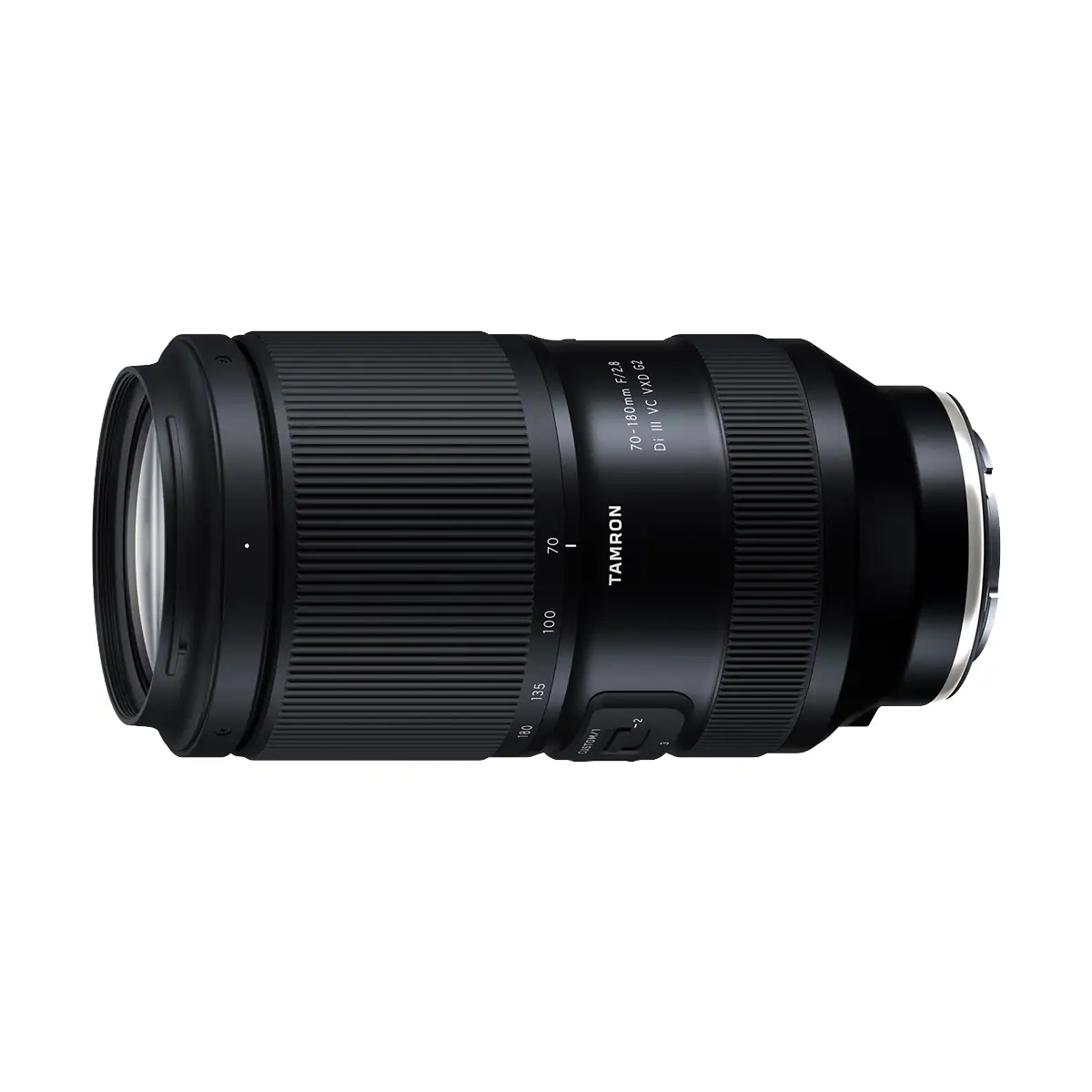
Tamron 70-180mm f/2.8 Di III VXD G2.
Compact, fast, and a third lighter than first-party 70-200s. The travel-friendly telephoto for E-mount and Z-mount hybrid shooters.
The Verdict.
Gavler Meta-Score
“The travel-friendly fast telephoto: at 855g and 156.5mm it's the lightest, shortest f/2.8 in its class, and the G2 finally adds VC stabilization the G1 lacked, plus superb wide-open sharpness and a 0.30m close focus. The trade-offs are real — 180mm not 200mm, an extending plasticky barrel, and heavy reliance on distortion correction. Buy it if you'll actually carry it; step up for reach, build, or a tripod collar.”
The Gavler Verdict
The Gavler Review.
Tamron 70-180mm f/2.8 Di III VXD G2 Review: Light, Sharp, and Missing 20mm
The Tamron 70-180mm f/2.8 Di III VXD G2 ranks number 9 on Gavler's Best Telephoto Zoom Lenses list with an 8.4, and it's built around a simple pitch: give up 20mm of reach and get a fast telephoto light enough to actually carry. OpticalLimits calls it "by quite a margin the most lightweight lens of its class" at 855 grams, and Amateur Photographer found the sharpness "absolutely superb through the zoom range, even at f/2.8." The G2 update finally adds stabilization the original lacked — though independent testing suggests it underdelivers against Tamron's own claims.
What it is
Tamron's second-generation compact telephoto covers 70-180mm at a constant f/2.8, built from 20 elements in 15 groups with a 9-blade rounded aperture. At 855g and just 156.5mm long, it's over 4cm shorter than Sony's FE 70-200mm f/2.8 GM II, and Cameralabs' side-by-side measurements confirm it stays meaningfully smaller even when it extends to 180mm — the barrel grows by 27mm when zoomed, but the fully extended lens is still shorter than the fixed-length Sony. It shares a compact 67mm filter thread with Tamron's other f/2.8 E-mount zooms, a deliberate design choice that saves cost across the lineup.
The G2's headline addition over the original G1 is VC (Vibration Compensation) optical stabilization — a feature Tamron simply left out of the first generation. At $1,299, it undercuts Sony's own 70-200mm f/2.8 GM II by roughly half; Cameralabs' pricing comparison puts the Sony at nearly $2,800 by contrast. A 0.30m minimum focus distance at 70mm delivers 1:2.5 magnification, tighter than most lenses in this class, though that comes with a genuinely short working distance.
In use
Sharpness is where this lens earns its reputation. Amateur Photographer's real-world testing found it "absolutely superb through the zoom range, even at f/2.8," and autofocus draws similar praise: "rapid, accurate, and essentially silent," per the same review. Cameralabs' repeatability testing backs this up technically, measuring 98.8% focus accuracy across 40 shots at 180mm with no outliers, and focus breathing measured at just 0.4% — low enough that video shooters pulling focus won't notice a frame-size shift.
The new VC stabilization is a genuine addition, but Cameralabs' controlled handheld testing found it doesn't quite deliver on its promise. Testing 200 shots at 180mm across a range of shutter speeds, they measured roughly a 3-stop real-world advantage — usable, but not exceptional. Their conclusion is candid: "I had certainly hoped for more as these results are not better than what the Tamron 70-180mm f2.8 G1 had achieved — without the aid of VC," suggesting the stabilization system isn't yet matching Tamron's claimed 5-stop figure on newer Sony bodies. Cameralabs also found the lens isn't perfectly parfocal — refocusing is recommended after changing focal length for stills work, though the effect is minor enough that fast video zoom pulls are the main place it would show up.
OpticalLimits' technical testing flags the other honest limitation: "high vignetting and high distortions, although image autocorrection can compensate for this effectively." The fundamental bokeh quality is good, they note, but "the rendering of out-of-focus highlights can be very rough" — a real, if secondary, knock against an otherwise clean optical performer.
Strengths
- The lightest fast telephoto in its class by a real margin. OpticalLimits' "by quite a margin" isn't hyperbole — at 855g and 156.5mm, this is a lens you'll actually bring on a full day of shooting rather than leave in the bag.
- Genuinely excellent sharpness wide open. Amateur Photographer's "absolutely superb through the zoom range, even at f/2.8" reflects real optical performance, not just a good spec sheet.
- Near-macro close focus at 70mm. A 0.30m minimum focus distance and 1:2.5 magnification give this lens versatility that most 70-200-class zooms simply can't match.
The trade-offs — who should skip it
- No teleconverter compatibility. Cameralabs is direct about this being the lens's single biggest disadvantage — if you need to extend reach with a 1.4x or 2x converter, this lens can't do it.
- Stops at 180mm, and the stabilization undersells its own spec. You lose the last 20mm that a full 70-200mm offers, and Cameralabs' real-world VC testing came in below Tamron's claimed 5-stop performance.
- An extending, plastic-feeling barrel with real vignetting. OpticalLimits' "high vignetting and high distortions" plus rough out-of-focus highlight rendering are the price of the compact, lightweight design.
How it compares
On the same Best Telephoto Zoom Lenses list, the Sigma 70-200mm f/2.8 DG DN OS Sports ranks 8, just above the Tamron — OpticalLimits pegs it at "95% of the Sony GM II" for the full 200mm reach and teleconverter support, but at 1,335g it's among the heaviest in its class, nearly 500 grams more than the Tamron. The two lenses represent opposite bets on the same trade-off: reach and versatility versus portability. Further down the list, the Fujifilm XF 70-300mm f/4-5.6 R LM OIS WR at rank 10 solves a similar problem for X-mount shooters with a slower, cheaper superzoom rather than a fast constant-aperture design.
For Sony and Nikon full-frame shooters specifically weighing this against a first-party 70-200mm f/2.8, the calculus is straightforward: if you'll actually carry a telephoto zoom every day rather than leave it at home, the Tamron's weight advantage may be worth more than the reach and teleconverter support you give up.
The Gavler verdict
An 8.4 built on genuinely excellent optics in a genuinely portable package — the rare fast telephoto that photographers will actually carry rather than reserve for planned shoots. The compromises are real and specific: no teleconverter support, an extending barrel that feels a step below flagship build quality, and image stabilization that Cameralabs' own testing found didn't clearly beat the unstabilized original. Buy it if a light, sharp, f/2.8 zoom you'll actually bring beats maximum reach and pro-grade extras; step up to a full 70-200mm if you need that last 20mm or teleconverter flexibility.
Common Questions
For photographers who want a fast telephoto they'll actually carry, yes. OpticalLimits calls it 'by quite a margin the most lightweight lens of its class' at 855g, and Amateur Photographer found sharpness 'absolutely superb through the zoom range, even at f/2.8.' It ranks 9 on Gavler's Best Telephoto Zoom Lenses list with an 8.4 at $1,299.
Real, but modest. Cameralabs measured roughly a 3-stop handheld advantage at 180mm in controlled testing and noted, 'I had certainly hoped for more as these results are not better than what the Tamron 70-180mm f2.8 G1 had achieved — without the aid of VC.' It helps, but don't expect class-leading numbers.
Buy the Tamron if size and weight matter more than the last 20mm of reach — Cameralabs measured it 200g lighter than Sony's GM II at less than half the price. Step up to a 70-200mm if you need teleconverter support: Cameralabs flags the Tamron's 'biggest disadvantage is the incompatibility with teleconverters.'
Where to Buy.
Prices checked regularly
90-day price history
Price History
Steady at $1,299 for the entire 90-day tracking window — no increases, no discounts, across 91 tracked days.
Tracked daily across retailers. Vote Want itabove and we’ll alert you the moment the price drops.
Some links are affiliate links — Gavler may earn a commission. This never affects rankings or scores. Learn more.
Precision Engineering
855g — Lightest in Its Class
OpticalLimits calls it "by quite a margin the most lightweight lens of its class" at 855g and just 156.5mm — over 4cm shorter than Sony's 70-200mm f/2.8 GM II.
New VC Stabilization on the G2
The G2 adds Tamron VC optical image stabilization the original G1 lacked — OpticalLimits "welcomed" it as closing the gap with rivals, and it pairs with in-body IS.
0.30m Close Focus at 70mm
A 0.30m minimum focus at 70mm (1:2.6, ~0.38x) enables near-macro framing few 70-200-class lenses can match, driven by rapid, near-silent VXD linear autofocus.
Technical Specifications
The Scoreboard
Community 87 slightly leads expert 86: owners reward the class-lightest weight and the newly added VC stabilization, while reviewers hold a touch back for the 180mm (not 200mm) reach, the extending plasticky build, and vignetting/distortion that relies on software correction.
Cast Your Vote
Do you think Tamron 70-180mm f/2.8 Di III VXD G2 deserves the #9 spot in Best Telephoto Zoom Lenses?
Global Critique
“At just 855g, it's – by quite a margin – the most lightweight lens of its class. It's also incredibly short at just 156.5mm – that's more than 4cm shorter than Sony's FE 70-200mm f/2.8 GM II.”
“At normal shooting distances, sharpness is absolutely superb through the zoom range, even at f/2.8.”
“I've been impressed by the Tamron 70-180mm f/2.8 G2's autofocus performance. It's rapid, accurate, and essentially silent.”
“On the downside, there's the high vignetting and high distortions, although image autocorrection can compensate for this effectively. The fundamental quality of the bokeh is good, but the rendering of out-of-focus highlights can be very rough.”
More from Best Telephoto Zoom Lenses.
See how other top picks compare in this category.
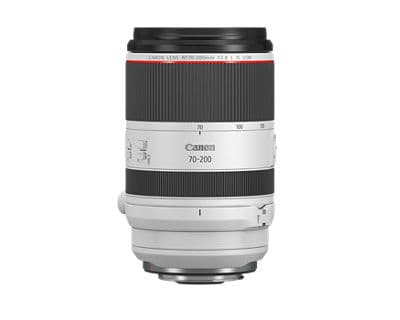

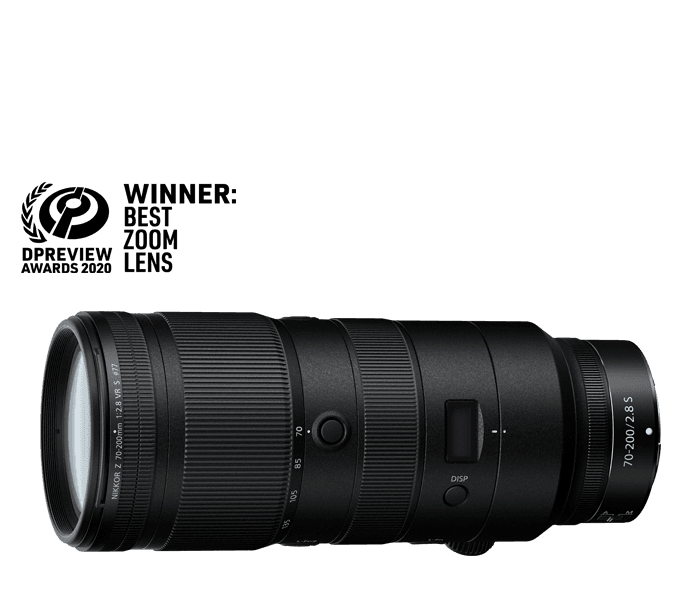
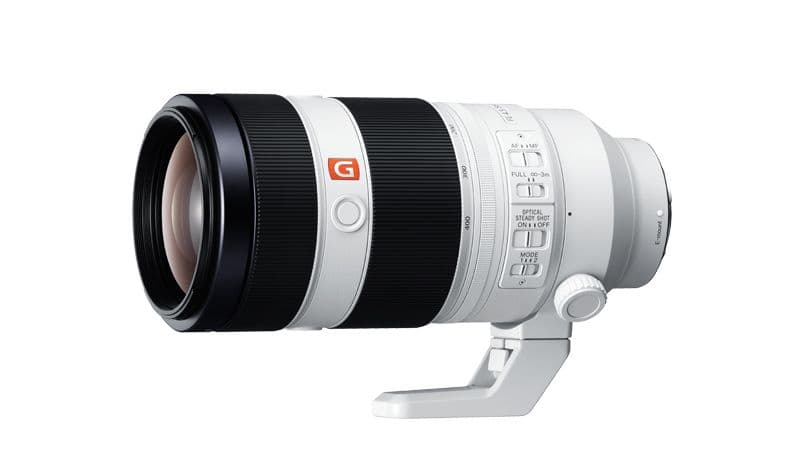
Is This a 70-200 Day, or a 600mm Day?
A 70-200 hangtag is the wrong first question. Events at f/2.8, or wildlife at 500–600mm, is the reach you work. Then shop Gavler's live ranking.
Samyang's 60-180mm f/2.8 Is the Cheapest Way Into Sony's f/2.8 Telephoto Club
Samyang's AF 60-180mm f/2.8 FE gives Sony a constant-aperture telephoto for about $1,000 and 730g — a third the price of the 70-200mm GM atop our list.